

The Use of Artificial Intelligence in Tribology—A Perspective
Open accessThe DOI matches its Crossref record; 31 of the 32 references it cites were found in a registry or an index.
Abstract
Artificial intelligence and, in particular, machine learning methods have gained notable attention in the tribological community due to their ability to predict tribologically relevant parameters such as, for instance, the coefficient of friction or the oil film thickness. This perspective aims at highlighting some of the recent advances achieved by implementing artificial intelligence, specifically artificial neutral networks, towards tribological research. The presentation and discussion of successful case studies using these approaches in a tribological context clearly demonstrates their ability to accurately and efficiently predict these tribological characteristics. Regarding future research directions and trends, we emphasis on the extended use of artificial intelligence and machine learning concepts in the field of tribology including the characterization of the resulting surface topography and the design of lubricated systems.
Overview
The claims and statistics of this paper haven’t been checked yet.
Free: it reads the open-access text and checks the first 5 claims that cite a source we can check. Create a free account to check every claim.
Integrity signals
Registry
Cites
Statistics
Figures
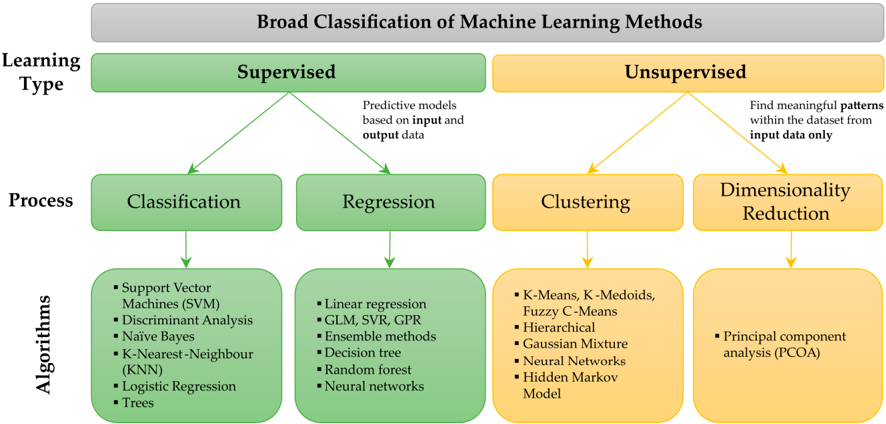
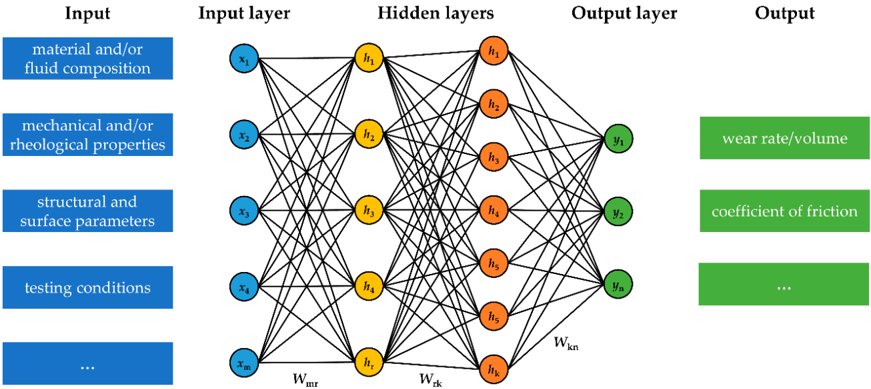
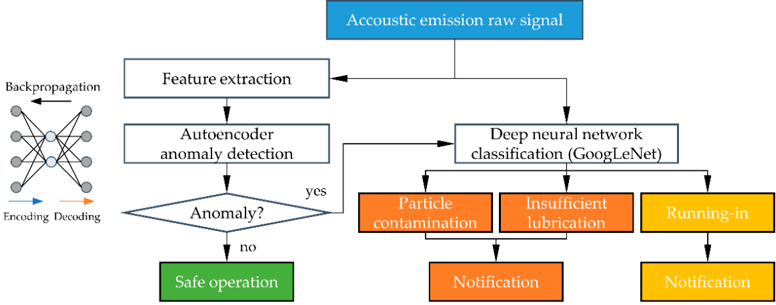
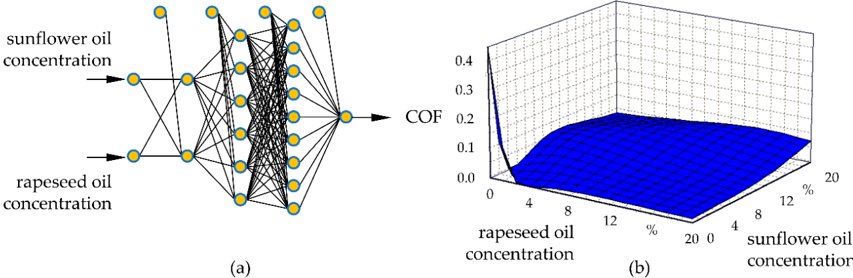
Verification
Claims the paper makes
The claims and statistics of this paper haven’t been checked yet.
Free: it reads the open-access text and checks the first 5 claims that cite a source we can check. Create a free account to check every claim.
Claims other papers make about this one
Each is checked against this paper’s own text: does it say what the citing paper says it does?
The source backs part of the claim, not all of it — or backs it for a different population, condition or comparison.
In the citing paper
“Nevertheless, ML approaches have not yet been adapted to predict lubricant film parameters in EHL contacts as a function of standard input variables, as is also accomplished by the well-known proximity equations [4, 39], see Fig. 2.”
From Predicting EHL film thickness parameters by machine learning approaches (2023) · cites this paper as [39]
Experimental — accuracy not yet measured
Self-check
Percentages, sums and reported differences re-computed from the paper’s own numbers.
The self-check needs the paper’s full text.
Citations
Cites
Bayesian Reasoning and Machine Learning
Barber, D. (2012) · Cambridge University Press eBooks · doi:10.1017/cbo9780511804779 · Cited by 1,631
What Are Artificial Neural Networks?
Krogh, A. (2008) · Nature Biotechnology · doi:10.1038/nbt1386 · Cited by 844 · cited 2×
“Machines are able to learn by modifying the thresholds of each model neuron, when a new example is introduced, until the thresholds reach a point to where they don’t change much [6].”
BackgroundEl Kadi, H. (2006) · Composite Structures · doi:10.1016/j.compstruct.2005.01.020 · Cited by 244 · cited 1×
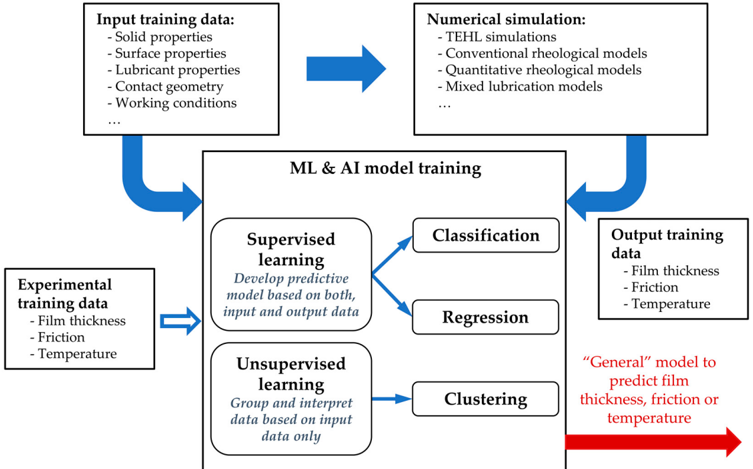
“This dataset can for example be incorporated to develop an ANN (Figure 2), which can be used for further optimization [8,10].”
MethodKönig, F., Sous, C., Ouald Chaib, A., & Jacobs, G. (2021) · Tribology International · doi:10.1016/j.triboint.2020.106811 · Cited by 152 · cited 1×
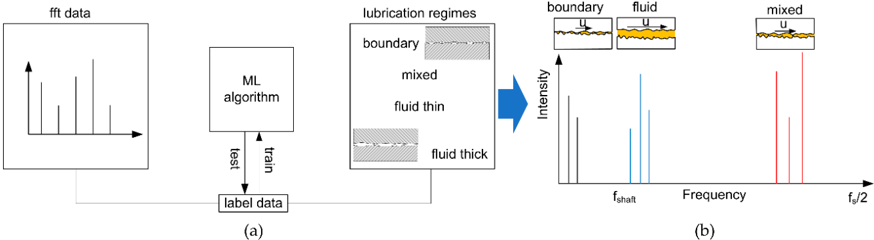
“Framework of the machine learning approach from [13].”
MethodFriedrich, K., Reinicke, R., & Zhang, Z. (2002) · Proceedings of the Institution of Mechanical Engineers, Part J: Journal of Engineering Tribology · doi:10.1243/135065002762355334 · Cited by 107 · cited 2×
“Correlation between material properties and testing conditions using artificial neural networks. from [7,8].”
MethodSenatore, A., D’Agostino, V., Giuda, R. D., & Petrone, V. (2011) · Tribology International · doi:10.1016/j.triboint.2011.05.022 · Cited by 99 · cited 1×
“[22] developed an EBP model to study the tribological behavior of different brakes and clutch materials thus elucidating the influence of different materials, loading, sliding and acceleration conditions.”
BackgroundArtificial Neural Networks (ANNs) as a Novel Modeling Technique in Tribology
Argatov, I. (2019) · Frontiers in Mechanical Engineering · doi:10.3389/fmech.2019.00030 · Cited by 97 · cited 1×
“This dataset can for example be incorporated to develop an ANN (Figure 2), which can be used for further optimization [8,10].”
MethodUsing neural networks for the diagnosis of localized defects in ball bearings
Subrahmanyam, M., & Sujatha, C. (1997) · Tribology International · doi:10.1016/s0301-679x(97)00056-x · Cited by 93 · cited 1×
“Shortly after, Subrahmanyam and Sujatha [12] applied two ANN approaches, namely a multilayered feed forward neural network trained with supervised error back propagation (EBP) technique and an unsupervised adaptive resonance theory-2 (ART2) based neural network for the detection and diagnosis of localized defects in b…”
MethodMarian, M., Bartz, M., Wartzack, S., & Rosenkranz, A. (2020) · Lubricants · doi:10.3390/lubricants8100095 · Cited by 92 · cited 2×
“, film thickness, friction, temp ratur rise, leakag , among others) of different types of bearings and other lubricated systems [32].”
BackgroundSelf-citationNeural network prediction of disc brake performance
Aleksendrić, D., & Barton, D. C. (2009) · Tribology International · doi:10.1016/j.triboint.2009.03.005 · Cited by 88
Research works printed but not linked: 3
- 2. James, G.; Witten, D.; Hastie, T.; Tibshirani, R. An Introduction to Statistical Learning: With Applications in R ; Springer: Basel, Switzerland, 2017; ISBN 978-1-4614-7138-7.
- 3. Murphy, K.P. Machine Learning: A Probabilistic Perspective ; MIT Press: Cambridge, UK, 2013; ISBN 978-0262018029.
- 5. Bishop, C.M. Pattern Recognition and Machine Learning ; Springer: New York, NY, USA, 2016; ISBN 978-0-387-31073-2.
Cited by
Perspectives of 2D MXene Tribology
Rosenkranz, A., Righi, M. C., Sumant, A. V., Anasori, B., & Mochalin, V. N. (2023) · Advanced Materials · doi:10.1002/adma.202207757 · Cited by 331
Self-citationCurrent Trends and Applications of Machine Learning in Tribology—A Review
Marian, M., & Tremmel, S. (2021) · Lubricants · doi:10.3390/lubricants9090086 · Cited by 238
“While other reviews were more generic [10], had a more concise scope [5], or focused on a specific technique (i.”
BackgroundSelf-citationSolid Lubrication at High-Temperatures—A Review
Kumar, R., Hussainova, I., Rahmani, R., & Antonov, M. (2022) · Materials · doi:10.3390/ma15051695 · Cited by 203
“Clubbing with other areas such as information technology is believed to make advancements in ‘self‐diagnosis’ and ‘repair’ through the use of artificial intelligence [3,136,137].”
BackgroundNumerical micro-texture optimization for lubricated contacts—A critical discussion
Marian, M., Almqvist, A., Rosenkranz, A., & Fillon, M. (2022) · Friction · doi:10.1007/s40544-022-0609-6 · Cited by 160
Self-citationThe Role of Machine Learning in Tribology: A Systematic Review
Paturi, U. M. R., Palakurthy, S. T., & Reddy, N. S. (2022) · Archives of Computational Methods in Engineering · doi:10.1007/s11831-022-09841-5 · Cited by 167
A review of recent advances and applications of machine learning in tribology
Sose, A. T., Joshi, S. Y., Kunche, L. K., Wang, F., & Deshmukh, S. A. (2023) · Physical Chemistry Chemical Physics · doi:10.1039/d2cp03692d · Cited by 130
Advances in self-powered sports monitoring sensors based on triboelectric nanogenerators
Sun, F., Zhu, Y., Jia, C., Zhao, T., Chu, L., & Mao, Y. (2023) · Journal of Energy Chemistry · doi:10.1016/j.jechem.2022.12.024 · Cited by 118
Tribo-informatics approaches in tribology research: A review
Yin, N., Xing, Z., He, K., & Zhang, Z. (2023) · Friction · doi:10.1007/s40544-022-0596-7 · Cited by 93
AI for tribology: Present and future
Yin, N., Yang, P., Liu, S., Pan, S., & Zhang, Z. (2024) · Friction · doi:10.1007/s40544-024-0879-2 · Cited by 109
Kumar, R., Rezapourian, M., Rahmani, R., Maurya, H. S., Kamboj, N., & Hussainova, I. (2024) · Biomimetics · doi:10.3390/biomimetics9040209 · Cited by 91
Rough Surface Contact Modelling—A Review
Taylor, R. I. (2022) · Lubricants · doi:10.3390/lubricants10050098 · Cited by 93
Physics-Informed Machine Learning—An Emerging Trend in Tribology
Marian, M., & Tremmel, S. (2023) · Lubricants · doi:10.3390/lubricants11110463 · Cited by 88
Self-citationPredicting EHL film thickness parameters by machine learning approaches
Marian, M., Mursak, J., Bartz, M., Profito, F. J., Rosenkranz, A., & Wartzack, S. (2023) · Friction · doi:10.1007/s40544-022-0641-6 · Cited by 76
“Nevertheless, ML approaches have not yet been adapted to predict lubricant film parameters in EHL contacts as a function of standard input variables, as is also accomplished by the well-known proximity equations [4, 39], see Fig.”
BackgroundMethodSelf-citationBaş, H., & Karabacak, Y. E. (2023) · Tribology International · doi:10.1016/j.triboint.2023.108592 · Cited by 80
Application of physics-informed neural network in the analysis of hydrodynamic lubrication
Yang, Z., Guo, L., & Wong, P. L. (2022) · Friction · doi:10.1007/s40544-022-0658-x · Cited by 75
“Recently, advances in neural networks have stridden ahead and brought their impact to the edge of tribology research [11].”
BackgroundPhysics-informed neural networks for the Reynolds equation with cavitation modeling
Rom, M. (2022) · Tribology International · doi:10.1016/j.triboint.2022.108141 · Cited by 79
Kumar, R., Kariminejad, A., Antonov, M., Goljandin, D., Klimczyk, P., & Hussainova, I. (2023) · Sustainability · doi:10.3390/su151612249 · Cited by 72
Combining surface textures and MXene coatings—towards enhanced wear-resistance and durability
Rosenkranz, A., & Marian, M. (2022) · Surface Topography Metrology and Properties · doi:10.1088/2051-672x/ac7f4a · Cited by 62
Self-citationTribological properties and machine learning prediction of FeCoCrNiAlN high entropy coatings
Jia, B., Wan, Q., Yan, L., Luo, Y., Wei, Q., Niu, C., Yang, B., Li, S., & Meng, L. (2023) · Surface and Coatings Technology · doi:10.1016/j.surfcoat.2023.130341 · Cited by 56
Triboinformatics: machine learning algorithms and data topology methods for tribology
Hasan, M. S., & Nosonovsky, M. (2022) · Surface Innovations · doi:10.1680/jsuin.22.00027 · Cited by 59
Shah, R., Jaramillo, R., Thomas, G., Rayhan, M. T., Hossain, N., Kchaou, M., Profito, F. J., & Rosenkranz, A. (2025) · Advanced Engineering Materials · doi:10.1002/adem.202401944 · Cited by 53
Self-citationZheng, K., Le, Q., Pan, L., & Huang, J. (2026) · Wear · doi:10.1016/j.wear.2026.206536 · Cited by 48
Zhao, C., Long, R., Zhang, Y., Wang, Y., & Wang, Y. (2022) · Tribology International · doi:10.1016/j.triboint.2022.107861 · Cited by 45
Singh, J. (2021) · Industrial Lubrication and Tribology · doi:10.1108/ilt-04-2020-0147 · Cited by 42
Baş, H., & Karabacak, Y. E. (2023) · Tribology International · doi:10.1016/j.triboint.2023.108336 · Cited by 41
A comprehensive review and trends in lubrication modelling
Ardah, S., Profito, F. J., & Dini, D. (2025) · Advances in Colloid and Interface Science · doi:10.1016/j.cis.2025.103492 · Cited by 43
Self-citationSingh, A., Wolf, M., Jacobs, G., & König, F. (2023) · Tribology International · doi:10.1016/j.triboint.2022.108166 · Cited by 38
Hess, N., & Shang, L. (2022) · Journal of Tribology · doi:10.1115/1.4053815 · Cited by 37
Recent Progress of Machine Learning Algorithms for the Oil and Lubricant Industry
Rahman, M. H., Shahriar, S., & Menezes, P. L. (2023) · Lubricants · doi:10.3390/lubricants11070289 · Cited by 35
Ravitej, Y. P., Mohan, C. B., & Gangadharaiah, A. M. (2022) · Tribology in Industry · doi:10.24874/ti.1223.11.21.03 · Cited by 33
“Generally the most preferred way of obtaining the predictive solution by providing the input and target values is by training the algorithm using artificial neural networks [30].”
Artificial neural network for tilting pad journal bearing characterization
Gheller, E., Chatterton, S., Panara, D., Turini, G., & Pennacchi, P. (2023) · Tribology International · doi:10.1016/j.triboint.2023.108833 · Cited by 34
Grinding performance and acoustic emissions of structured CVD diamond micro-grinding tools
Jia, J., Guo, B., Zhang, Q., Zhang, Z., Guo, Z., Meng, Q., Zhao, Q., Zhang, Q., & Zeng, Z. (2023) · Journal of Materials Processing Technology · doi:10.1016/j.jmatprotec.2023.118011 · Cited by 34
Akl, S. Y., Elsoudy, S., Abdel‐Rehim, A. A., Salem, S., & Ellis, M. (2021) · Lubricants · doi:10.3390/lubricants9090085 · Cited by 31
Tošić, M., Marian, M., Habchi, W., Lohner, T., & Stahl, K. (2024) · Tribology International · doi:10.1016/j.triboint.2024.109940 · Cited by 33
Self-citationProst, J., Cihak-Bayr, U., Neacşu, I. A., Grundtner, R., Pirker, F., & Vorlaufer, G. (2021) · Lubricants · doi:10.3390/lubricants9050050 · Cited by 31
“[20] gives a comprehensive overview of the various application fields and methods in tribology and shows the extended use of AI and ML techniques in the field of tribology as a future perspective.”
BackgroundHerwig, N., Peng, Z., & Borghesani, P. (2023) · Tribology International · doi:10.1016/j.triboint.2023.108670 · Cited by 28
Beyond smoothness: the art of surface texturing battling against friction
Xiao, Q., Wang, X., Wang, Y., Zheng, W., Xu, J., Luo, X., Sun, J., & Zhang, L. (2024) · International Journal of Extreme Manufacturing · doi:10.1088/2631-7990/ad9c01 · Cited by 35
“Machine learning (ML) [127], such as artificial neural networks (ANN) [128, 129], transfer learning methods [130], and support vector machines [131], can predict the output of complex nonlinear friction systems without relying on human expertise, generating potential optimal microtexture patterns…”
Trzepieciński, T., & Najm, S. M. (2022) · Materials · doi:10.3390/ma15249022 · Cited by 28
“Machine learning (ML) has been applied using various artificial neural network techniques in a number of applications in tribology [42,43].”
Tribology of 2D black phosphorus – Current state-of-the-art and future potential
Boidi, G., Ronai, B., Heift, D., Benini, F., Varga, M., Righi, M. C., & Rosenkranz, A. (2024) · Advances in Colloid and Interface Science · doi:10.1016/j.cis.2024.103180 · Cited by 26
Self-citationWirsching, S., Marian, M., Bartz, M., Stahl, T., & Wartzack, S. (2021) · Lubricants · doi:10.3390/lubricants9070067 · Cited by 25
“In principle, the design space and modern manufacturing possibilities may offer much more options, which can be assessed with the aid of contact simulation tools as well as numerical machine learning and multi-objective optimization algorithms [22].”
BackgroundSelf-citationNajm, S. M., Trzepieciński, T., & Kowalik, M. (2022) · The International Journal of Advanced Manufacturing Technology · doi:10.1007/s00170-022-10544-1 · Cited by 28
“The results of the research by Bhaumik and Kamaraj [40] showed that ANN and multi-criteria decision-making approaches can be used in the analysis of a blend of biodegradable lubricants in investigating its tribological properties and in reducing the [43].”
BackgroundResult“Lubrication Brain” ― A machine learning framework of lubrication oil molecule design
Zhou, R., Ma, R., Bao, L., Cai, M., Zhou, F., Li, W., & Wang, X. (2023) · Tribology International · doi:10.1016/j.triboint.2023.108381 · Cited by 26
Current and Future Trends in Tribological Research
Johns-Rahnejat, P. M., Rahmani, R., & Rahnejat, H. (2023) · Lubricants · doi:10.3390/lubricants11090391 · Cited by 25
Patel, J. R., Chauhan, K. V., Rawal, S. K., Patel, N. P., & Subhedar, D. G. (2025) · Lubricants · doi:10.3390/lubricants13100440 · Cited by 24
“…design and predictive tribology simulations can significantly reduce trial-and-error experimentation, optimize formulations for specific applications, and forecast long-term performance under diverse operating conditions, thereby improving resource efficiency and reducing development costs [95,96].”
Karabacak, Y. E., & Baş, H. (2022) · Measurement · doi:10.1016/j.measurement.2022.111756 · Cited by 25
Application of artificial intelligence for the prediction of plain journal bearings performance
Badawi, M. A., Awad, T. H., & Fahham, I. M. E. (2022) · Alexandria Engineering Journal · doi:10.1016/j.aej.2022.02.041 · Cited by 23
Yan, Y., Du, J., Ren, S., & Shao, M. (2024) · Polymers · doi:10.3390/polym16030356 · Cited by 24
“To tackle the above problems, researchers have conducted extensive research [11,12].”
BackgroundWilińska, I., & Wilkanowicz, S. I. (2025) · Energies · doi:10.3390/en18154006 · Cited by 25
The Promise of Solid Lubricants for a Sustainable Future
Grützmacher, P. G., Voevodin, A. A., Korényi-Both, A. L., Righi, M. C., DellaCorte, C., Bagcivan, N., Erdemir, A., & Gachot, C. (2025) · Advanced Materials · doi:10.1002/adma.202500867 · Cited by 31
Design of Amorphous Carbon Coatings Using Gaussian Processes and Advanced Data Visualization
Sauer, C., Rothammer, B., Pottin, N., Bartz, M., Schleich, B., & Wartzack, S. J. (2022) · Lubricants · doi:10.3390/lubricants10020022 · Cited by 22
Trzepieciński, T., Szpunar, M., & Kaščák, Ľ. (2021) · Materials · doi:10.3390/ma14102570 · Cited by 21
Machine Learning in Tribology—More than Buzzwords?
Tremmel, S., & Marian, M. (2022) · Lubricants · doi:10.3390/lubricants10040068 · Cited by 22
“[1] opened the SI by highlighting successful case studies using AI methods in a tribological context, e.”
BackgroundMethodSelf-citationPrajapati, D. K., Katiyar, J. K., & Prakash, C. (2023) · Industrial Lubrication and Tribology · doi:10.1108/ilt-04-2023-0121 · Cited by 19
Trzepieciński, T., Szwajka, K., & Szewczyk, M. (2024) · Lubricants · doi:10.3390/lubricants12020050 · Cited by 19
Singh, J., Singh, S., Vasudev, H., & Katiyar, J. K. (2024) · Tribology International · doi:10.1016/j.triboint.2024.109924 · Cited by 19
Multiscale convolutional neural network and decision fusion for rolling bearing fault diagnosis
Lv, D., Wang, H., & Che, C. (2021) · Industrial Lubrication and Tribology · doi:10.1108/ilt-09-2020-0335 · Cited by 19
Prakash, R. Y., Ramakumar, B. V. N., Keshavamurthy, R., Patil, S., Kumar, V. V., & Hiriyannaiah, A. (2025) · Proceedings of the Institution of Mechanical Engineers Part J Journal of Engineering Tribology · doi:10.1177/13506501251367549 · Cited by 17
Li, Y., Liu, B., Zhang, Z., Ouyang, W., Shi, W., Chang, Z., Hu, Z., Zhang, K., & Wei, B. (2025) · Ceramics International · doi:10.1016/j.ceramint.2025.09.355 · Cited by 17
Classification and spectrum optimization method of grease based on infrared spectrum
Feng, X., Xia, Y., Xie, P., & Li, X. (2023) · Friction · doi:10.1007/s40544-023-0786-y · Cited by 17
Swarm intelligence algorithms for optimising sliding wear of nanocomposites
Fountas, N. A., Kechagias, J. D., & Vaxevanidis, N. M. (2024) · Tribology and Materials · doi:10.46793/tribomat.2024.004 · Cited by 17
Viitala, R., Miettinen, M., Márquez, R., Hämäläinen, A., Karhinen, A., BARRIOS, N. A., González, R., Pal, L., Jameel, H., & Holmberg, K. (2025) · Renewable and Sustainable Energy Reviews · doi:10.1016/j.rser.2025.115809 · Cited by 20
Machine Learning Approach for Application-Tailored Nanolubricants’ Design
Kałużny, J., Świetlicka, A., Wojciechowski, Ł., Boncel, S., Kinal, G., Runka, T., Nowicki, M., Stepanenko, O., Gapiński, B., Leśniewicz, J., et al. (2022) · Nanomaterials · doi:10.3390/nano12101765 · Cited by 19
“Therefore, there is an urgent need to test a new approach to the application-tailored design of nanolubricants that is based on machine learning algorithms (MLAs) [42,43].”
BackgroundTime-delay neural network modeling of the running-in wear process
Argatov, I., & Jin, X. (2022) · Tribology International · doi:10.1016/j.triboint.2022.108021 · Cited by 16
Advances in Intelligent Sports Based on Triboelectric Nanogenerators
Ding, Z., Wang, X., Huang, C., Choi, K., & Choi, D. (2024) · Nanoenergy Advances · doi:10.3390/nanoenergyadv4030016 · Cited by 17
Prost, J., Boidi, G., Puhwein, A. M., Varga, M., & Vorlaufer, G. (2023) · Tribology International · doi:10.1016/j.triboint.2023.108464 · Cited by 17
Sensors and tribological systems: applications for industry 4.0
Rouf, S., Raina, A., Haq, M. I. U., & Naveed, N. (2021) · Industrial Robot the international journal of robotics research and application · doi:10.1108/ir-10-2021-0225 · Cited by 15
Boundary Lubricity of Vegetable-Oil-Derived Trimethylolpropane (TMP) Ester
Lee, C. T., Lee, M. B., Chong, W. W. F., Ng, J.-H., Wong, K. J., & Chong, C. T. (2022) · Lubricants · doi:10.3390/lubricants10120346 · Cited by 20
“Machine learning allows complex processes to be systematically quantified in an efficient manner [25], suitable for tribological systems, often involving multiphysics phenomena.”
BackgroundA hybrid data-driven approach for the analysis of hydrodynamic lubrication
Yang, Z., & Wong, P. L. (2023) · Proceedings of the Institution of Mechanical Engineers Part J Journal of Engineering Tribology · doi:10.1177/13506501231214584 · Cited by 15
The role of simulation and modeling in artificial intelligence: A review
Kumar, A. (2023) · Advances in Complex Systems · doi:10.1142/s1793962324300024 · Cited by 16
Simulation of lubrication on rough surfaces with multiscale lubrication neural networks
Tang, Y., Huang, L., Wu, L., & Meng, X. (2025) · Science China Technological Sciences · doi:10.1007/s11431-024-2873-2 · Cited by 15
Evaluating Wear Volume of Oligoether Esters with an Interpretable Machine Learning Approach
Wang, H., Zhang, C., Yu, X., & Li, Y. (2023) · Tribology Letters · doi:10.1007/s11249-023-01715-6 · Cited by 15
“[41] reviewed further research and future directions of ML in tribology, followed by Paturi et al.”
BackgroundUsing artificial neural networks to accelerate thermo-elastohydrodynamic lubrication simulations
Kaliafetis, F., Ardah, S., Ewen, J. P., & Dini, D. (2025) · Tribology International · doi:10.1016/j.triboint.2025.110978 · Cited by 16
Trzepieciński, T., Najm, S. M., Ibrahim, O. M., & Kowalik, M. (2023) · Materials · doi:10.3390/ma16155207 · Cited by 15
Long, R., Ma, Q., Jin, Z., Zhang, Y., Han, H., Sun, S., & Du, X. (2022) · Industrial Lubrication and Tribology · doi:10.1108/ilt-04-2022-0150 · Cited by 14
Katiyar, J. K., & Rao, T. V. V. L. N. (2025) · Tribology International · doi:10.1016/j.triboint.2025.111075 · Cited by 13
Saha, D., & Satapathy, B. K. (2022) · Journal of Tribology · doi:10.1115/1.4055131 · Cited by 13
Prediction of contact response using boundary element method (BEM) for different surface topography
Prajapati, D. K., Prakash, C., Saxena, K. K., Gupta, M., & Mehta, J. S. (2023) · International Journal on Interactive Design and Manufacturing (IJIDeM) · doi:10.1007/s12008-023-01290-z · Cited by 13
Habchi, W., & Bair, S. S. (2024) · Tribology Letters · doi:10.1007/s11249-024-01937-2 · Cited by 16
“Their enhanced regression capabilities made them popular within the scientific community in general, and more recently in Tribology, more particularly in lubrication [14–16].”
Chen, S., Cheng, G., Guo, F., Jia, X., & Wen, X. (2024) · Journal of Tribology · doi:10.1115/1.4066947 · Cited by 12
Predictive Modeling of Real Contact Area on Rough Surfaces Using Deep Artificial Neural Network
Suman, S., & Prajapati, D. K. (2025) · Journal of Tribology · doi:10.1115/1.4068057 · Cited by 12
Saleh, A., Jacobs, G., Katre, D., Lehmann, B., & Lucassen, M. (2025) · Lubricants · doi:10.3390/lubricants13080360 · Cited by 13
“The recent integration of Machine Learning (ML) in tribology has enabled efficient exploration and real-time classification of complex processes within tribological systems [28–30].”
Machine learning in tribology: A review on framework, case studies, and future perspectives
Yadong, L. I., Liu, B., Chang, Z., Zhang, Z., Ouyang, W., Liu, Z., Jiang, Q., Liu, Y., Huang, A. W., Wu, Y., et al. (2026) · Journal of Manufacturing Processes · doi:10.1016/j.jmapro.2026.01.029 · Cited by 16
Simulation of Misaligned Journal Bearings Using Neural Networks
Kokkinidis, K. A., & Nikolakopoulos, P. G. (2022) · Tribology in Industry · doi:10.24874/ti.1078.03.21.10 · Cited by 12
Baş, H., & Karabacak, Y. E. (2023) · Proceedings of the Institution of Mechanical Engineers Part J Journal of Engineering Tribology · doi:10.1177/13506501231196355 · Cited by 13
“ML can be applied to tribology to analyze and predict tribological features.(50) ML techniques have the capability to analyze tribological data and construct models for the purpose of discovering tribological characteristics.”
BackgroundData-driven design of brake pad composites for high-speed trains
Wu, L., Zhang, P., Xu, B., Liu, J., Yin, H., Zhang, L., Jiang, X. F., Zhang, C., Zhang, R., Wang, Y., et al. (2023) · Journal of Materials Research and Technology · doi:10.1016/j.jmrt.2023.09.280 · Cited by 12
Quamar, D., & Sarkar, C. (2023) · Tribology International · doi:10.1016/j.triboint.2023.109188 · Cited by 12
Rossopoulos, G. N., & Papadopoulos, C. I. (2024) · Proceedings of the Institution of Mechanical Engineers Part J Journal of Engineering Tribology · doi:10.1177/13506501241232457 · Cited by 11
Tian, Y., Zheng, B., Khan, M., & Yang, Y. (2025) · Processes · doi:10.3390/pr13061762 · Cited by 10
Prediction of ball-on-plate friction and wear by ANN with data-driven optimization
Kovalev, A. V., Tian, Y., & Meng, Y. (2024) · Friction · doi:10.1007/s40544-023-0803-1 · Cited by 10
“Recent reviews on the application of ANN techniques in tribology [3–6] have prospected wide areas to which deep learning (DL) techniques can be efficiently applied.”
Research on recognition method of wear debris based on YOLO V5S network
Shi, X., Cui, C., He, S., Xie, X., Sun, Y., & Qin, C. (2022) · Industrial Lubrication and Tribology · doi:10.1108/ilt-08-2021-0334 · Cited by 10
Strablegg, C., Summer, F., Renhart, P., & Grün, F. (2023) · Lubricants · doi:10.3390/lubricants11020037 · Cited by 10
Predicting Abrasion Resistance in Thermoplastic Polyurethanes Using Machine Learning
Zahmatkesh, S., Esmaeili, H., Valerio, A. T., & Rizvi, R. R. (2025) · Journal of Applied Polymer Science · doi:10.1002/app.57619 · Cited by 10
He, K., Ma, Y., & Zhang, Z. (2023) · Journal of Tribology · doi:10.1115/1.4063186 · Cited by 9
Sun, W., Wu, N., Shao, X., Deng, L., Li, Y., Wang, B., & Zhang, J. (2024) · Wear · doi:10.1016/j.wear.2024.205592 · Cited by 9
A Semantic Annotation Pipeline towards the Generation of Knowledge Graphs in Tribology
Kügler, P., Marian, M., Dorsch, R., Schleich, B., & Wartzack, S. J. (2022) · Lubricants · doi:10.3390/lubricants10020018 · Cited by 9
“and more employed in the analysis, design, optimization, or monitoring of tribological systems in various fields [3], ranging from composite materials [4], drive technology [5,6], manufacturing [7], surface engineering [8,9], or lubricant formulation [10,11].”
MethodSelf-citationShahnawaz, S., Mufti, R. A., Ali, M. A., Zaman, U. K. U., Baqai, A. A., Zahid, R., Aslam, J., & Bhutta, M. U. (2025) · Journal of Tribology · doi:10.1115/1.4069031 · Cited by 8
Jebali, B., Gennesseaux, M. L., & Kane, M. (2026) · Surface Topography Metrology and Properties · doi:10.1088/2051-672x/ae38fb · Cited by 8
Li, J., Li, S., Zhang, W., Wei, B., & Yang, Q. (2022) · Lubricants · doi:10.3390/lubricants10100265 · Cited by 10
“In recent years, artificial intelligence methods and strategies have been increasingly developed to explore the complex tribological characteristics [27,28].”
BackgroundMulti-objective design optimization of hydrodynamic journal bearings using a hybrid approach
Shaltout, M. L., & Hegazi, H. A. (2021) · Industrial Lubrication and Tribology · doi:10.1108/ilt-05-2021-0194 · Cited by 8
Hossain, N., Chowdhury, M. A., Masum, A. A., Islam, M. S., Shahin, M., Irfan, O. M., & Djavanroodi, F. (2021) · Materials · doi:10.3390/ma14195732 · Cited by 8
Metadata
- Authors
- Rosenkranz, A., Marian, M., Profito, F. J., Aragon, N., & Shah, R.
- Affiliations
- University of Chile (CL)
- Friedrich-Alexander-Universität Erlangen-Nürnberg (DE)
- Universidade de São Paulo (BR)
- Koehler Instrument Company, Holtsville, NY 11742, USA
- Corresponding author
- Rosenkranz, Andreas
- Marian, Max
- Venue
- Lubricants
- Publisher
- MDPI AG
- Published
- 2020-12-26
- Volume
- 9
- Issue
- 1
- Pages
- 2
- ISSN
- 2075-4442 (ISSN-L)
- OpenAlex
- W3113471983
- Cited by
- 187
- References
- 32
- Citations by year
- 2026: 30 · 2025: 40 · 2024: 26 · 2023: 37 · 2022: 40 · 2021: 14
- FWCI
- 11.19
- Type
- journal article
- Language
- en
- Open access
- gold
- doi.org
- Licence
- Locations
- Lubricants (publishedVersion, cc-by)
- DOAJ (DOAJ: Directory of Open Access Journals) (submittedVersion, cc-by-sa)
- OPUS FAU (Kooperativer Bibliotheksverbund Berlin-Brandenburg (KOBV), on behalf of the Universitätsbibliothek Erlangen-Nürnberg) (submittedVersion, cc-by)
- Funders
- CONICYT-ANID (Fondecyt Iniciacion 11180121)
- VID of the University of Chile (U-Inicia UI 013/2018)
- Topics
- Physical Sciences › Engineering › Mechanical Engineering › Tribology and Lubrication Engineering
- Physical Sciences › Engineering › Mechanical Engineering › Lubricants and Their Additives
- Physical Sciences › Materials Science › Materials Chemistry › Machine Learning in Materials Science
- Keywords
- machine learning, artificial neural networks, oil film thickness, surface topography characterization
About these checks
Registry, retraction, Cites and statistics results are computed, not judged, with one exception: a printed reference that no index lists is read once by a model before it counts as a citation error. Claims are extracted by a model and kept only when their quote appears verbatim in the text; each cited source is then checked, with a model’s help, for whether it says what the claim relies on. Those verdicts can be wrong — read the claim’s quote and the cited source before relying on one.
Statistics and arithmetic are recomputed, not judged.
Confidence bands are shown only for fields calibrated on our annotated test set. None is calibrated yet, so no band is shown.
What counts as a claim ›How we measure confidence ›How we check this ›
Are you an author, or do you see a problem with this page? Request a review
Data sources
Bibliographic data: Semantic Scholar, OpenAlex, Crossref.
Contains information from the Semantic Scholar Academic Graph Datasets, made available under the ODC Attribution License (ODC-BY 1.0).
Semantic Scholar’s data is described in: Kinney, R., et al. (2023). The Semantic Scholar Open Data Platform. arXiv:2301.10140.
