

Fundamentals of Physics-Informed Neural Networks Applied to Solve the Reynolds Boundary Value Problem
Open accessPublished version of a preprint
The DOI matches its Crossref record; 14 of the 14 references it cites were found in a registry or an index.
Abstract
This paper presents a complete derivation and design of a physics-informed neural network (PINN) applicable to solve initial and boundary value problems described by linear ordinary differential equations. The objective with this technical note is not to develop a numerical solution procedure which is more accurate and efficient than standard finite element- or finite difference-based methods, but to give a fully explicit mathematical description of a PINN and to present an application example in the context of hydrodynamic lubrication. It is, however, worth noticing that the PINN developed herein, contrary to FEM and FDM, is a meshless method and that training does not require big data which is typical in machine learning.
Overview
The claims and statistics of this paper haven’t been checked yet.
Free: it reads the open-access text and checks the first 5 claims that cite a source we can check. Create a free account to check every claim.
Integrity signals
Registry
Cites
Statistics
Figures
Verification
Claims the paper makes
The claims and statistics of this paper haven’t been checked yet.
Free: it reads the open-access text and checks the first 5 claims that cite a source we can check. Create a free account to check every claim.
Self-check
Percentages, sums and reported differences re-computed from the paper’s own numbers.
The self-check needs the paper’s full text.
Citations
Cites
Physics-informed machine learning
Karniadakis, G. E., Kevrekidis, I. G., Lu, L., Perdikaris, P., Wang, S., & Yang, L. (2021) · Nature Reviews Physics · doi:10.1038/s42254-021-00314-5 · Cited by 8,718 · cited 8×
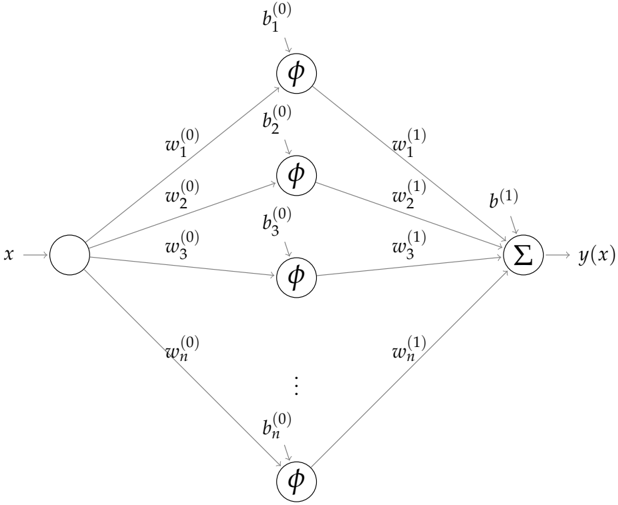
“That is, the weights w (0) i and bias b (0) i for the nodes in the hidden layer and the weights w (1) i , i = 1 .”
BackgroundInfluentialAn overview of gradient descent optimization algorithms
Ruder, S. (2016) · arXiv · doi:10.48550/arxiv.1609.04747 · Cited by 4,962 · cited 1×
“i=1 w (1) i φ ( b (0) i )) + b((1)), (13)”
DeepXDE: A Deep Learning Library for Solving Differential Equations
Lu, L., Meng, X., Mao, Z., & Karniadakis, G. E. (2021) · SIAM Review · doi:10.1137/19m1274067 · Cited by 2,512
Automatic Differentiation in Machine Learning: a Survey
Baydin, A. G., Pearlmutter, B. A., Radul, A., & Siskind, J. M. (2015) · Maynooth University ePrints and eTheses Archive (Maynooth University) · Cited by 2,026
Mesh Free Methods: Moving Beyond the Finite Element Method
Liu, & Karamanlidis (2003) · Applied Mechanics Reviews · doi:10.1115/1.1553432 · Cited by 1,924
Automatic differentiation in machine learning: a survey
Baydin, A. G., Pearlmutter, B. A., Radul, A., & Siskind, J. M. (2015) · arXiv (Cornell University) · doi:10.4230/lipics.ecoop.2019.25 · Cited by 823
Mesh Free Methods: Moving Beyond the Finite Element Method
Liu, G. R. (2002) · CRC Press eBooks · doi:10.1201/9781420040586 · Cited by 336
Introduction to Automatic Differentiation and MATLAB Object-Oriented Programming
Neidinger, R. D. (2010) · SIAM Review · doi:10.1137/080743627 · Cited by 271
A Robust-Equitable Measure for Feature Ranking and Selection
Ding, A. A., Dy, J., Li, Y., & Chang, Y. (2017) · Journal of Machine Learning Research · Cited by 76
Applying physics informed neural network for flow data assimilation
Bai, X., Wang, Y., & Zhang, W. (2020) · Journal of Hydrodynamics · doi:10.1007/s42241-020-0077-2 · Cited by 50 · cited 1×
“and, because of (2), a consecutive differentiation then yields”
Background
Research works printed but not linked: 2
- Reynolds, O. On the theory of lubrication and its application to Mr. Beauchamps tower's experiments, including an experimental determination of the viscosity of olive oil. Philos. Trans. R. Soc. Lond. A 1886, 177, 157-234.
- Cauchy, A.M. Méthode générale pour la résolution des systèmes d'équations simultanées. Comp. Rend. Sci. Paris 1847, 25, 536-538.
Cited by
Current Trends and Applications of Machine Learning in Tribology—A Review
Marian, M., & Tremmel, S. (2021) · Lubricants · doi:10.3390/lubricants9090086 · Cited by 238
Physics-Informed Machine Learning—An Emerging Trend in Tribology
Marian, M., & Tremmel, S. (2023) · Lubricants · doi:10.3390/lubricants11110463 · Cited by 88
Predicting EHL film thickness parameters by machine learning approaches
Marian, M., Mursak, J., Bartz, M., Profito, F. J., Rosenkranz, A., & Wartzack, S. (2023) · Friction · doi:10.1007/s40544-022-0641-6 · Cited by 76
“Even though there are first physics-informed ML approaches to predict the behavior of lubricated contacts [64], most of the work done so far was data-driven based upon designs of experiments (DoE) [40, 65].”
BackgroundApplication of physics-informed neural network in the analysis of hydrodynamic lubrication
Yang, Z., Guo, L., & Wong, P. L. (2022) · Friction · doi:10.1007/s40544-022-0658-x · Cited by 75
“According to Zubov et al. [8] and Almqvist [20], PINN has the merit of being a meshless method, which overcomes the “curse of dimension” [21] that the classical methods, such as FEM, face.”
MethodPhysics-informed neural networks for the Reynolds equation with cavitation modeling
Rom, M. (2022) · Tribology International · doi:10.1016/j.triboint.2022.108141 · Cited by 79
A comprehensive review and trends in lubrication modelling
Ardah, S., Profito, F. J., & Dini, D. (2025) · Advances in Colloid and Interface Science · doi:10.1016/j.cis.2025.103492 · Cited by 43
Application of Tribological Artificial Neural Networks in Machine Elements
Walker, J., Questa, H., Raman, A., Ahmed, M., Mohammadpour, M., Bewsher, S. R., & Offner, G. (2023) · Tribology Letters · doi:10.1007/s11249-022-01673-5 · Cited by 39
Bharadwaja, B. V. S. S., Nabian, M. A., Sharma, B., Choudhry, S., & Alankar, A. (2022) · Integrating materials and manufacturing innovation · doi:10.1007/s40192-022-00283-2 · Cited by 43
HL-nets: Physics-informed neural networks for hydrodynamic lubrication with cavitation
Cheng, Y., He, Q., Huang, W., Liu, Y., Li, Y., & Li, D. (2023) · Tribology International · doi:10.1016/j.triboint.2023.108871 · Cited by 40
Modeling in tribology: Recent advances, applications, and open questions
Pastewka, L., Vakis, A. I., Eder, S. J., Aghababaei, R., Almqvist, A., Carbone, G., Chandross, M., Dini, D., Ehrich, H. J., Ewen, J. P., et al. (2025) · Tribology International · doi:10.1016/j.triboint.2025.111326 · Cited by 50
Self-citationXi, Y., Deng, J., & Li, Y. (2024) · Friction · doi:10.1007/s40544-023-0791-1 · Cited by 35
“For example, the pioneering work of Almqvist, he firstly employed the methodology of PINNs to solve the 1D Reynolds equation [23].”
Machine Learning for Film Thickness Prediction in Elastohydrodynamic Lubricated Elliptical Contacts
Issa, J., El Hajj, A., Vergne, P., & Habchi, W. (2023) · Lubricants · doi:10.3390/lubricants11120497 · Cited by 30
“For instance, physics-informed neural networks (PINNs), which do not necessarily require a training dataset, have been used to solve hydrodynamic lubrication problems [28,29].”
BackgroundXi, Y., Deng, J., & Li, Y. (2023) · Industrial Lubrication and Tribology · doi:10.1108/ilt-02-2023-0045 · Cited by 29
Physics-Informed Neural Networks for the Reynolds Equation with Transient Cavitation Modeling
Brumand‐Poor, F., Barlog, F., Plückhahn, N., Thebelt, M., Bauer, N., & Schmitz, K. (2024) · Lubricants · doi:10.3390/lubricants12110365 · Cited by 31
Physics-informed neural networks for differential equation solutions: A comprehensive review
Khanra, S., Kukreja, V. K., & Bala, I. (2026) · Neurocomputing · doi:10.1016/j.neucom.2026.133317 · Cited by 27
Machine Learning in Tribology—More than Buzzwords?
Tremmel, S., & Marian, M. (2022) · Lubricants · doi:10.3390/lubricants10040068 · Cited by 22
“We are pleased that the SI has collected ten articles including a perspective [1], a technical note [2], seven original research articles [3–9], and a review [10].”
BackgroundMethodBrumand‐Poor, F., Bauer, N., Plückhahn, N., Thebelt, M., Woyda, S., & Schmitz, K. (2024) · Lubricants · doi:10.3390/lubricants12040122 · Cited by 24
“The initial publication on the application of PINNs to solve a simplified variant of the Reynolds equation was by Almqvist in 2021 [3].”
MethodBrumand‐Poor, F., Azanledji, F. K., Plückhahn, N., Barlog, F., Boden, L., & Schmitz, K. (2025) · Advanced Modeling and Simulation in Engineering Sciences · doi:10.1186/s40323-025-00283-9 · Cited by 15
A hybrid data-driven approach for the analysis of hydrodynamic lubrication
Yang, Z., & Wong, P. L. (2023) · Proceedings of the Institution of Mechanical Engineers Part J Journal of Engineering Tribology · doi:10.1177/13506501231214584 · Cited by 15
“With PINN, Almqvist 5 solved the one-dimensional Reynolds equation and obtained the pressure distribution of a slider bearing.”
MethodSimulation of lubrication on rough surfaces with multiscale lubrication neural networks
Tang, Y., Huang, L., Wu, L., & Meng, X. (2025) · Science China Technological Sciences · doi:10.1007/s11431-024-2873-2 · Cited by 15
Zhou, G., Zhan, M., Huang, D., Lyu, X., & Yan, K. (2024) · Industrial Lubrication and Tribology · doi:10.1108/ilt-07-2024-0277 · Cited by 14
Kim, J., Khan, H. U., Khan, M. I., Asghar, Z., & Zeeshan, A. (2026) · International Journal for Computational Methods in Engineering Science and Mechanics · doi:10.1080/15502287.2025.2606706 · Cited by 15
“Almqvist [29] examined the physics-based machine learning to discourse the Reynolds boundary-value problem.”
Saleh, A., Jacobs, G., Katre, D., Lehmann, B., & Lucassen, M. (2025) · Lubricants · doi:10.3390/lubricants13080360 · Cited by 13
“The potential of using the PINN approach in tribology was initially highlighted by Almqvist’s pioneering work [38], which introduced PINNs for solving a simplified form of the Reynolds equation in a linear slider, assuming a one-dimensional flow of an incompressible and iso-viscous fluid.”
Xi, Y., & Sun, R. (2024) · Proceedings of the Institution of Mechanical Engineers Part J Journal of Engineering Tribology · doi:10.1177/13506501241291403 · Cited by 11
“Almqvist 22 applied the PINNs method to solve the 1D Reynolds equation and the second order ordinary differential equations with Reynolds boundary value problems.”
Zhao, W., Tong, X., Cai, M., Li, H., & Song, T. (2025) · Physics of Fluids · doi:10.1063/5.0272392 · Cited by 10
Prediction of ball-on-plate friction and wear by ANN with data-driven optimization
Kovalev, A. V., Tian, Y., & Meng, Y. (2024) · Friction · doi:10.1007/s40544-023-0803-1 · Cited by 10
“The ability to apply the PINN techniques to lubricated contact has been investigated by Almqvist [39] to solve the Reynolds boundary problem, by Wang and Tsai [40] to predict the maximum pressure in thermos-hydrodynamic contacts, by Marian [41] to predict the film thickness in EHL contact.”
A novelty solution for orthotropic composite plate based on physics informed neural network
Minh, H.-L., Sang-To, T., Le-Van, B., & Cuong‐Le, T. (2025) · ENGINEERING Structure and Civil Engineering · doi:10.1007/s11709-025-1178-3 · Cited by 9
Zheng, K., Zhang, X., Du, K., Li, S., Zhang, J., Wu, W. H., Xu, B., Yang, H., & Zhang, C. (2025) · Tribology International · doi:10.1016/j.triboint.2025.111589 · Cited by 9
A Physics-Informed Neural Network Approach Towards Cyber Attack Detection in Vehicle Platoons
Vyas, S. D., Padisala, S. K., & Dey, S. (2023) · Proceedings of the ... American Control Conference/Proceedings of the American Control Conference · doi:10.23919/acc55779.2023.10155846 · Cited by 11
Physics-informed neural network for hydrodynamic lubrication with film thickness discontinuity
Guan, B., He, Q., Hu, Y., Hu, Y., & Zheng, Z. (2024) · Friction · doi:10.26599/frict.2025.9441035 · Cited by 8
Diverse methods of incorporating physics into neural networks: A comprehensive review
Rajabi, M. M., Fahs, M., Bajgiran, M. M., Younès, A., & Lehmann, F. (2026) · Journal of Hydrology · doi:10.1016/j.jhydrol.2025.134903 · Cited by 9
Hou, Z., Wu, Z., Li, Z., & Zhang, Z. (2026) · Tribology International · doi:10.1016/j.triboint.2026.111702 · Cited by 8
da Silva, A. I. B., Lenzi, V., Pyrlin, S., Carvalho, S., Cavaleiro, A., & Marques, L. S. A. (2023) · Physical Review Applied · doi:10.1103/physrevapplied.19.054078 · Cited by 9
Zhao, Y., Fu, Z., & Zhao, J. (2024) · Friction · doi:10.26599/frict.2025.9441062 · Cited by 7
Heterogeneous inverse design for adsorption desalination via data-free deep learning
Li, M., Zhao, Y., Long, R., Liu, Z., & Liu, W. (2024) · Applied Thermal Engineering · doi:10.1016/j.applthermaleng.2024.125334 · Cited by 7
Zhao, S., Hou, L., Yang, R., & Zhou, G. (2026) · Tribology International · doi:10.1016/j.triboint.2026.112270 · Cited by 6
FAST COMPUTATION OF LUBRICATED CONTACTS: A PHYSICS- INFORMED DEEP LEARNING APPROACH
Brumand‐Poor, F., Bauer, N., Plückhahn, N., & Schmitz, K. (2024) · International Fluid Power Conference (IFK) · doi:10.13052/rp-9788770042222c19 · Cited by 12
Qiu, H., Tinsley, L., & Ompusunggu, A. P. (2026) · Tribology International · doi:10.1016/j.triboint.2026.112049 · Cited by 4
Huang, S., Lian, S., Chu, S., Li, C., Wang, Z., Jiang, Z., & Mao, Z. (2026) · Tribology International · doi:10.1016/j.triboint.2026.111909 · Cited by 3
Cuando la física y la inteligencia artificial se unen para modelar fluidos
López, Z. S., Cortes, G. B. D., & Zacarías, G. D. (2024) · doi:10.22201/iim.rma.2024.41.48 · Cited by 2
Mishra, S. S., Aggarwal, S., & Sutaria, B. M. (2025) · Engineering Research Express · doi:10.1088/2631-8695/add790 · Cited by 2
Kokhanovskiy, A. Y., Dorogin, L. M., Egorova, X., Antonov, E. V., & Андреевич, С. Д. (2025) · Reviews on advanced materials and technologies · doi:10.17586/2687-0568-2025-7-2-88-104 · Cited by 2
Liu, W., Liu, Y., Li, H., & Zhang, Z. (2025) · Engineering Analysis with Boundary Elements · doi:10.1016/j.enganabound.2025.106596 · Cited by 2
Physics-Informed Generative Self-Attention Framework for Sliding Bearing Fault Diagnosis
Cai, M., Liu, Y., Zhao, J., Wang, W., & Pedrycz, W. (2026) · IEEE Sensors Journal · doi:10.1109/jsen.2025.3647676 · Cited by 2
“Recently, physics-informed neural networks (PINNs) were applied to the Reynolds equation [27], [28], [29], [30], [31].”
Gao, H., Fang, H., Liu, H., Tong, Y., Yang, D., & Ouyang, X. (2025) · Scandinavian International Conference on Fluid Power (SICFP) · doi:10.13052/rp-9788743808251a11 · Cited by 2
Approximation of forces of fluid film bearing lubricating layer using machine learning methods
Kazakov, Y., Stebakov, I. N., Shutin, D., & Алексеевич, С. Л. (2023) · Вестник Самарского государственного аэрокосмического университета им. академика С.П. Королёва (национального исследовательского университета) · doi:10.18287/2541-7533-2023-22-3-108-121 · Cited by 1
Teaching Tribology and Engineering Mechanics with the Julia Programming Language
Geike, T. (2025) · Advanced structured materials · doi:10.1007/978-3-031-75641-2_21 · Cited by 1
Carcass condemnation prediction using artificial neural networks in poultry slaughterhouses
de Carvalho, F. E. D. S., Salle, F. D. O., Borges, K. A., de Carvalho, K. B. M., Furian, T. Q., & Salle, C. T. P. (2025) · Research in Veterinary Science · doi:10.1016/j.rvsc.2025.105884 · Cited by 1
Fan, H., Yap, S. P., Zhang, S., & El‐Shafie, A. (2025) · Computer Modeling in Engineering & Sciences · doi:10.32604/cmes.2025.070880 · Cited by 1
Ding, H., Lv, F., Chen, X., Wang, J., Zou, D., Tian, J., & Gao, G. (2026) · Physics of Fluids · doi:10.1063/5.0315537 · Cited by 1
Brumand‐Poor, F., Plückhahn, N., & Schmitz, K. (2026) · Lecture notes in computational science and engineering · doi:10.1007/978-3-032-16253-3_4 · Cited by 2
Application of Machine Learning in Simulation Models and Optimal Controllers for Fluid Film Bearings
Kazakov, Y., Stebakov, I. N., Shutin, D., & Алексеевич, С. Л. (2023) · Mechanisms and machine science · doi:10.1007/978-3-031-40455-9_18 · Cited by 1
Agatho, T. P., Pranowo, P., & Emanuel, A. W. R. (2023) · International Conference on Information & Communication Technology and System (ICTS) · doi:10.1109/icts58770.2023.10330864 · Cited by 1
“PINNs have been applied in recent cases, i.e., lubricants [6, 7], active cooling [8], traffic state estimation [9], pandemic dispersion [10], and some fluid cases [11].”
MethodHL-nets: Physics-informed neural networks for hydrodynamic lubrication with cavitationPreprint
Cheng, Y., He, Q., Huang, W., Liu, Y., Li, Y., & Li, D. (2022) · arXiv (Cornell University) · doi:10.48550/arxiv.2304.10476
“For example, Almqvist [45] and Zhao et al. [46] used PINNs to solve the one-and two-dimensional steady-state Reynolds equation for a linear slider.”
Evaluation of Forces in Dynamically Loaded Journal Bearings Using Feedforward Neural Networks
Smolík, L., Rendl, J., & Bulín, R. (2012) · Springer proceedings in mathematics & statistics · doi:10.1007/978-3-031-56496-3_40
Deevijit, C., Kiatsiriroat, T., Deethayat, T., & Asanakham, A. (2025) · Journal of Current Science and Technology · doi:10.59796/jcst.v15n4.2025.145
Applications of Artificial Intelligence in Tribology
Truong, Q. N., & Vu, V. Q. (2025) · Lecture notes in networks and systems · doi:10.1007/978-3-032-03859-3_20
Physics-Informed Neural Networks for Approximating the Solution of the 1D Poisson Equation
Navarrete, E. A. C., & Cortes, G. B. D. (2026) · Springer eBooks · doi:10.1007/978-3-032-08894-9_10
Brumand‐Poor, F., Puntigam, G. M., Hofmeister, M., & Schmitz, K. (2026) · Lubricants · doi:10.3390/lubricants14020053
Zhang, P., Li, W., & Feng, K. (2026) · Scientia Sinica Technologica · doi:10.1360/sst-2025-0436
Generative deep learning for hydrodynamic lubrication prediction by a deconvolutional neural network
Zhao, Y., Huang, Z., Guo, S., Fu, Z., & Lin, Y. (2026) · Friction · doi:10.26599/frict.2026.9441239
Kou, X., Zhu, H., Lin, J., Wang, B., & Wei, Y. (2026) · Journal of Tribology · doi:10.1115/1.4071479 · Cited by 2
Neural Network Solutions for First-Order Differential Equations: A Physics-Informed Perspective
Audu, K. J., Kayode, O. A., Samuel, F., Inuolaji, M., & Yahaya, Y. A. (2026) · Journal of Engineering and Basic Sciences · doi:10.54709/joebs.1836617
Hierarchical gradient-aware PINN for high-gradient thermo-hydrodynamic fields of sliding bearings
Xing, Q., Ni, J., Sun, Y., Wu, X., & Zheng, H. (2026) · International Communications in Heat and Mass Transfer · doi:10.1016/j.icheatmasstransfer.2026.111381
Brumand‐Poor, F., Konstantinov, A., Hui, D. L. M., Guntermann, E., Wirtz, J., & Schmitz, K. (2026) · doi:10.13052/rp-9788743814771a59
Elastohydrodynamic Lubrication
Wang, W., & He, Z. (2026) · Elsevier eBooks · doi:10.1016/b978-0-443-30138-4.00061-3
Kaliafetis, F., Ardah, S., Ewen, J. P., & Dini, D. (2026) · Friction · doi:10.26599/frict.2026.9441306
Saleh, A., Jacobs, G., Chen, W., Lucassen, M., & Lehmann, B. (2026) · Lubricants · doi:10.3390/lubricants14070278
“The potential of PINNs in tribology was first demonstrated by Almqvist et al. [41], who applied the approach to solve a simplified one-dimensional Reynolds equation for an incompressible and isoviscous fluid in a linear slider bearing.”
Hu, Y. S., Chao, Q., Wang, W. H., Zhong, Y., Sun, S., Li, C., & Liu, C. (2026) · Tribology International · doi:10.1016/j.triboint.2026.112494
Rahul, A. K., Barman, P., & Rao, P. S. (2026) · Tribology International · doi:10.1016/j.triboint.2026.112513
Sohn, G. C., Bao, J., Ning, F., & Dongbo, E. K. K. (2026) · IEEE Access · doi:10.1109/access.2026.3725226
A parameterized multi-dimensional physics-informed neural network for hydrodynamic lubrication
Zhao, W., Feng, S., He, Q., Zhu, G., Huang, L., Ren, Z., & Huang, W. (2026) · Engineering Analysis with Boundary Elements · doi:10.1016/j.enganabound.2026.106988
Sikarwar, A. S., Ansari, N. A., & Singh, P. (2026) · Tribology International · doi:10.1016/j.triboint.2026.112656
He, W. E. N., Dai, H., Zhang, G., He, Q., Gao, R., Cui, Q., Yang, T., & Gong, C. (2026) · Journal of Applied Geophysics · doi:10.1016/j.jappgeo.2026.106515
Puntigam, G. M., Hui, D. L. M., Brumand‐Poor, F., & Schmitz, K. (2026) · International Sealing Conference (ISC) · doi:10.61319/fzg68fws
Shi, X., Zhao, X., & Zhang, S. (2026) · Tribology International · doi:10.1016/j.triboint.2026.112829
Xi, Y., & Chen, X. (2026) · Engineering Analysis with Boundary Elements · doi:10.1016/j.enganabound.2026.107121
Brumand‐Poor, F., Puntigam, G. M., Hui, D. L. M., Kotte, T., Rom, M., & Schmitz, K. (2026) · Computers & Fluids · doi:10.1016/j.compfluid.2026.107337
Metadata
- Authors
- Almqvist, A.
- Affiliations
- Luleå University of Technology (SE)
- Corresponding author
- Almqvist, Andreas
- ORCID
- Almqvist, Andreas
- Venue
- Lubricants
- Publisher
- MDPI AG
- Published
- 2021-08-19
- Volume
- 9
- Issue
- 8
- Pages
- 82
- ISSN
- 2075-4442 (ISSN-L)
- OpenAlex
- W3194496059
- Cited by
- 71
- References
- 14
- Citations by year
- 2026: 25 · 2025: 15 · 2024: 12 · 2023: 10 · 2022: 7 · 2021: 1
- FWCI
- 2.97
- Type
- journal article
- Language
- en
- Open access
- gold
- doi.org
- Licence
- Locations
- Lubricants (publishedVersion, cc-by)
- Preprints.org (acceptedVersion, cc-by)
- DOAJ (DOAJ: Directory of Open Access Journals) (submittedVersion, cc-by-sa)
- Funders
- Vetenskapsrådet (2019-04293)
- Topics
- Physical Sciences › Physics and Astronomy › Statistical and Nonlinear Physics › Model Reduction and Neural Networks
- Physical Sciences › Computer Science › Artificial Intelligence › Neural Networks and Applications
- Physical Sciences › Environmental Science › Environmental Engineering › Hydrological Forecasting Using AI
- Keywords
- physics-informed neural networks, Reynolds equation, hydrodynamic lubrication, linear ordinary differential equations, initial-boundary value problem, meshless methods
About these checks
Registry, retraction, Cites and statistics results are computed, not judged, with one exception: a printed reference that no index lists is read once by a model before it counts as a citation error. Claims are extracted by a model and kept only when their quote appears verbatim in the text; each cited source is then checked, with a model’s help, for whether it says what the claim relies on. Those verdicts can be wrong — read the claim’s quote and the cited source before relying on one.
Statistics and arithmetic are recomputed, not judged.
Confidence bands are shown only for fields calibrated on our annotated test set. None is calibrated yet, so no band is shown.
What counts as a claim ›How we measure confidence ›How we check this ›
Are you an author, or do you see a problem with this page? Request a review
Data sources
Bibliographic data: Semantic Scholar, OpenAlex, Crossref.
Contains information from the Semantic Scholar Academic Graph Datasets, made available under the ODC Attribution License (ODC-BY 1.0).
Semantic Scholar’s data is described in: Kinney, R., et al. (2023). The Semantic Scholar Open Data Platform. arXiv:2301.10140.
