

Fundamentals of Physics-Informed Neural Networks Applied to Solve the Reynolds Boundary Value Problem
Open accessPublished version of a preprint
The DOI matches its Crossref record; 14 of the 14 references it cites were found in a registry or an index.
Abstract
This paper presents a complete derivation and design of a physics-informed neural network (PINN) applicable to solve initial and boundary value problems described by linear ordinary differential equations. The objective with this technical note is not to develop a numerical solution procedure which is more accurate and efficient than standard finite element- or finite difference-based methods, but to give a fully explicit mathematical description of a PINN and to present an application example in the context of hydrodynamic lubrication. It is, however, worth noticing that the PINN developed herein, contrary to FEM and FDM, is a meshless method and that training does not require big data which is typical in machine learning.
Overview
The claims and statistics of this paper haven’t been checked yet.
Free: it reads the open-access text and checks the first 5 claims that cite a source we can check. Create a free account to check every claim.
Integrity signals
Registry
Cites
Statistics
Figures
Verification
Claims the paper makes
The claims and statistics of this paper haven’t been checked yet.
Free: it reads the open-access text and checks the first 5 claims that cite a source we can check. Create a free account to check every claim.
Self-check
Percentages, sums and reported differences re-computed from the paper’s own numbers.
The self-check needs the paper’s full text.
Citations
Cites
Physics-informed machine learning
Karniadakis, G. E., Kevrekidis, I. G., Lu, L., Perdikaris, P., Wang, S., & Yang, L. (2021) · Nature Reviews Physics · doi:10.1038/s42254-021-00314-5 · Cited by 8,718 · cited 8×
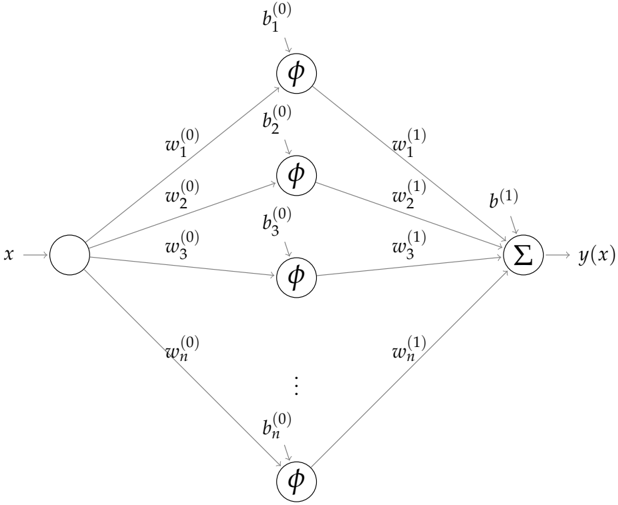
“That is, the weights w (0) i and bias b (0) i for the nodes in the hidden layer and the weights w (1) i , i = 1 .”
BackgroundInfluentialAn overview of gradient descent optimization algorithms
Ruder, S. (2016) · arXiv · doi:10.48550/arxiv.1609.04747 · Cited by 4,962 · cited 1×
“i=1 w (1) i φ ( b (0) i )) + b((1)), (13)”
DeepXDE: A Deep Learning Library for Solving Differential Equations
Lu, L., Meng, X., Mao, Z., & Karniadakis, G. E. (2021) · SIAM Review · doi:10.1137/19m1274067 · Cited by 2,512
Automatic Differentiation in Machine Learning: a Survey
Baydin, A. G., Pearlmutter, B. A., Radul, A., & Siskind, J. M. (2015) · Maynooth University ePrints and eTheses Archive (Maynooth University) · Cited by 2,026
Mesh Free Methods: Moving Beyond the Finite Element Method
Liu, & Karamanlidis (2003) · Applied Mechanics Reviews · doi:10.1115/1.1553432 · Cited by 1,924
Automatic differentiation in machine learning: a survey
Baydin, A. G., Pearlmutter, B. A., Radul, A., & Siskind, J. M. (2015) · arXiv (Cornell University) · doi:10.4230/lipics.ecoop.2019.25 · Cited by 823
Mesh Free Methods: Moving Beyond the Finite Element Method
Liu, G. R. (2002) · CRC Press eBooks · doi:10.1201/9781420040586 · Cited by 336
Introduction to Automatic Differentiation and MATLAB Object-Oriented Programming
Neidinger, R. D. (2010) · SIAM Review · doi:10.1137/080743627 · Cited by 271
A Robust-Equitable Measure for Feature Ranking and Selection
Ding, A. A., Dy, J., Li, Y., & Chang, Y. (2017) · Journal of Machine Learning Research · Cited by 69
Applying physics informed neural network for flow data assimilation
Bai, X., Wang, Y., & Zhang, W. (2020) · Journal of Hydrodynamics · doi:10.1007/s42241-020-0077-2 · Cited by 50 · cited 1×
“and, because of (2), a consecutive differentiation then yields”
BackgroundNew insights on lubrication theory for compressible fluids
Almqvist, A., Burtseva, E., Pérez–Ràfols, F., & Wall, P. (2019) · International Journal of Engineering Science · doi:10.1016/j.ijengsci.2019.103170 · Cited by 18 · cited 2×
“By means of (6), a cost function suitable for solving (8) may be generated by”
BackgroundSelf-citationAlmqvist, A., Burtseva, E., Rajagopal, K. R., & Wall, P. (2020) · Proceedings of the Institution of Mechanical Engineers Part J Journal of Engineering Tribology · doi:10.1177/1350650120973800 · Cited by 13 · cited 7×
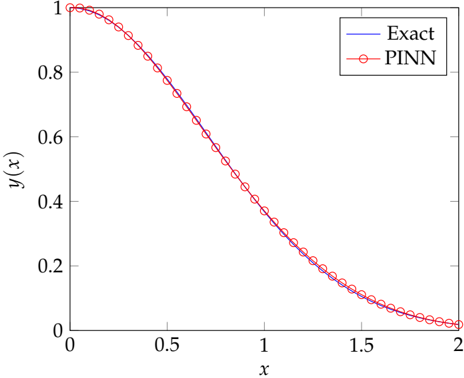
“Parameters used to defined the PINN to for the IVP in (8).”
BackgroundMethodSelf-citationAlmqvist, A., Burtseva, E., Rajagopal, K. R., & Wall, P. (2020) · Proceedings of the Institution of Mechanical Engineers Part J Journal of Engineering Tribology · doi:10.1177/1350650120973792 · Cited by 12
Self-citationScientific Computing with Applications in Tribology : A course compendium
Almqvist, A., & Pérez–Ràfols, F. (2019) · KTH Publication Database DiVA (KTH Royal Institute of Technology) · Cited by 5
Self-citation
Research works printed but not linked: 2
- Reynolds, O. On the theory of lubrication and its application to Mr. Beauchamps tower's experiments, including an experimental determination of the viscosity of olive oil. Philos. Trans. R. Soc. Lond. A 1886, 177, 157-234.
- Cauchy, A.M. Méthode générale pour la résolution des systèmes d'équations simultanées. Comp. Rend. Sci. Paris 1847, 25, 536-538.
Cited by
Current Trends and Applications of Machine Learning in Tribology—A Review
Marian, M., & Tremmel, S. (2021) · Lubricants · doi:10.3390/lubricants9090086 · Cited by 238
Physics-Informed Machine Learning—An Emerging Trend in Tribology
Marian, M., & Tremmel, S. (2023) · Lubricants · doi:10.3390/lubricants11110463 · Cited by 88
Predicting EHL film thickness parameters by machine learning approaches
Marian, M., Mursak, J., Bartz, M., Profito, F. J., Rosenkranz, A., & Wartzack, S. (2023) · Friction · doi:10.1007/s40544-022-0641-6 · Cited by 76
“Even though there are first physics-informed ML approaches to predict the behavior of lubricated contacts [64], most of the work done so far was data-driven based upon designs of experiments (DoE) [40, 65].”
BackgroundApplication of physics-informed neural network in the analysis of hydrodynamic lubrication
Yang, Z., Guo, L., & Wong, P. L. (2022) · Friction · doi:10.1007/s40544-022-0658-x · Cited by 75
“According to Zubov et al. [8] and Almqvist [20], PINN has the merit of being a meshless method, which overcomes the “curse of dimension” [21] that the classical methods, such as FEM, face.”
MethodPhysics-informed neural networks for the Reynolds equation with cavitation modeling
Rom, M. (2022) · Tribology International · doi:10.1016/j.triboint.2022.108141 · Cited by 79
Metadata
- Authors
- Almqvist, A.
- Affiliations
- Luleå University of Technology (SE)
- Corresponding author
- Almqvist, Andreas
- ORCID
- Almqvist, Andreas
- Venue
- Lubricants
- Publisher
- MDPI AG
- Published
- 2021-08-19
- Volume
- 9
- Issue
- 8
- Pages
- 82
- ISSN
- 2075-4442 (ISSN-L)
- OpenAlex
- W3194496059
- Cited by
- 71
- References
- 14
- Citations by year
- 2026: 25 · 2025: 15 · 2024: 12 · 2023: 10 · 2022: 7 · 2021: 1
- FWCI
- 2.97
- Type
- journal article
- Language
- en
- Open access
- gold
- doi.org
- Licence
- Locations
- Lubricants (publishedVersion, cc-by)
- Preprints.org (acceptedVersion, cc-by)
- DOAJ (DOAJ: Directory of Open Access Journals) (submittedVersion, cc-by-sa)
- Funders
- Vetenskapsrådet (2019-04293)
- Topics
- Physical Sciences › Physics and Astronomy › Statistical and Nonlinear Physics › Model Reduction and Neural Networks
- Physical Sciences › Computer Science › Artificial Intelligence › Neural Networks and Applications
- Physical Sciences › Environmental Science › Environmental Engineering › Hydrological Forecasting Using AI
- Keywords
- physics-informed neural networks, Reynolds equation, hydrodynamic lubrication, linear ordinary differential equations, initial-boundary value problem, meshless methods
About these checks
Registry, retraction, Cites and statistics results are computed, not judged, with one exception: a printed reference that no index lists is read once by a model before it counts as a citation error. Claims are extracted by a model and kept only when their quote appears verbatim in the text; each cited source is then checked, with a model’s help, for whether it says what the claim relies on. Those verdicts can be wrong — read the claim’s quote and the cited source before relying on one.
Statistics and arithmetic are recomputed, not judged.
Confidence bands are shown only for fields calibrated on our annotated test set. None is calibrated yet, so no band is shown.
What counts as a claim ›How we measure confidence ›How we check this ›
Are you an author, or do you see a problem with this page? Request a review
Data sources
Bibliographic data: Semantic Scholar, OpenAlex, Crossref.
Contains information from the Semantic Scholar Academic Graph Datasets, made available under the ODC Attribution License (ODC-BY 1.0).
Semantic Scholar’s data is described in: Kinney, R., et al. (2023). The Semantic Scholar Open Data Platform. arXiv:2301.10140.
