

The DOI matches its Crossref record.
Investigation of the Effect of Induction Heating on Asphalt Binder Aging in Steel Fibers Modified Asphalt Concrete
Abstract
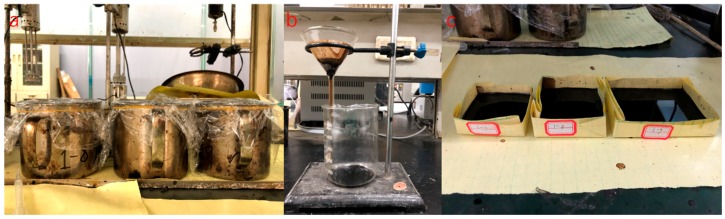
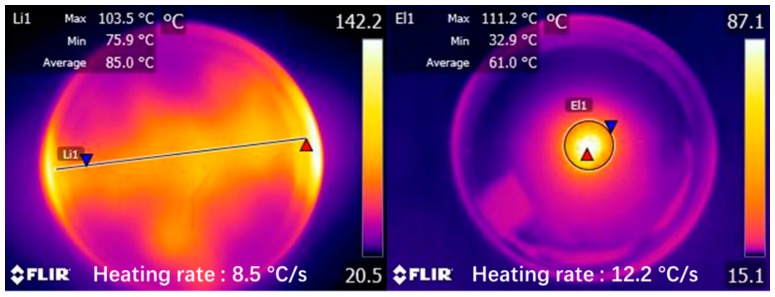
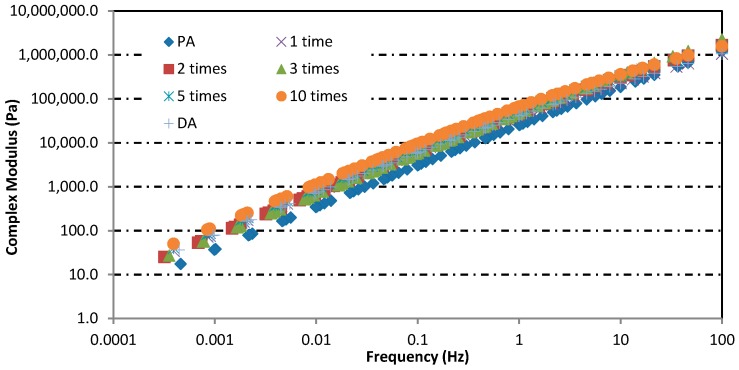
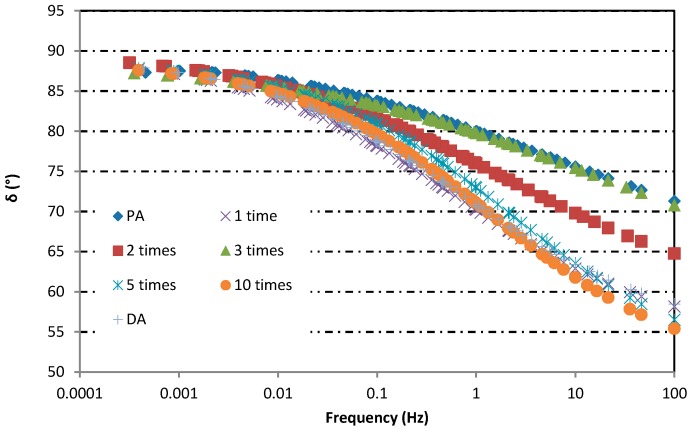
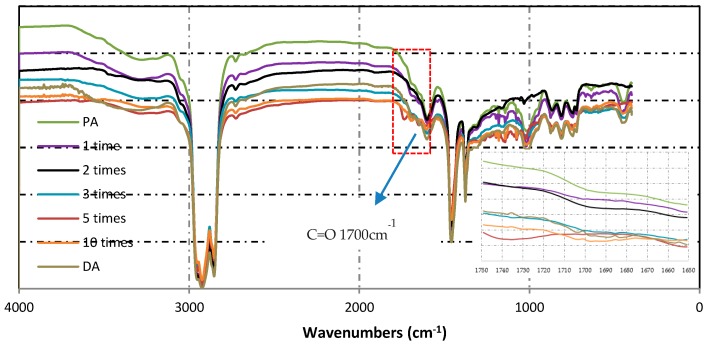
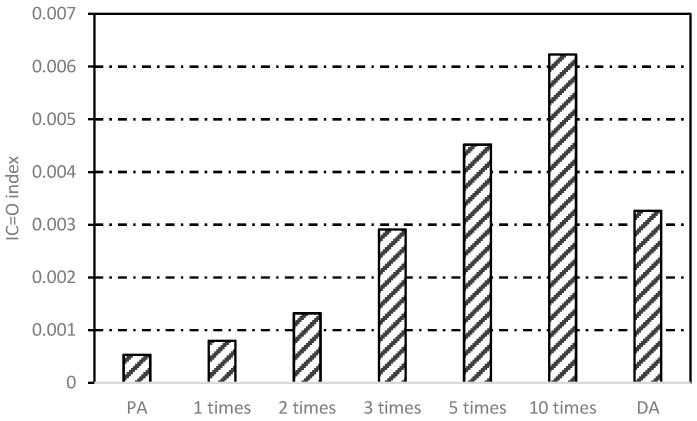
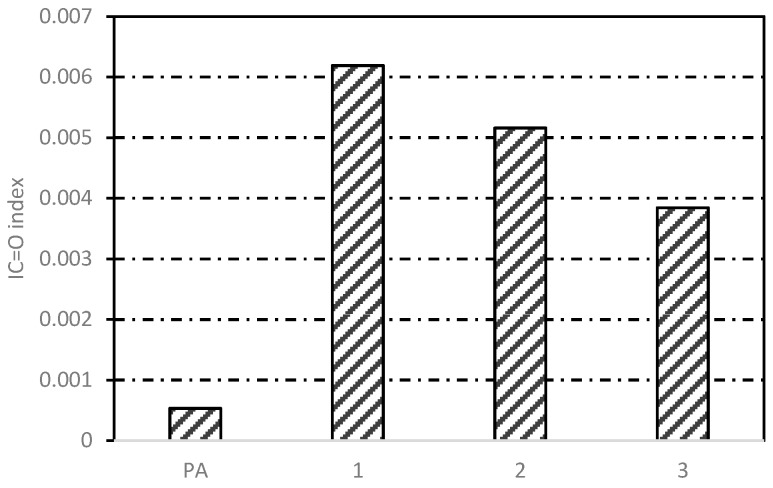
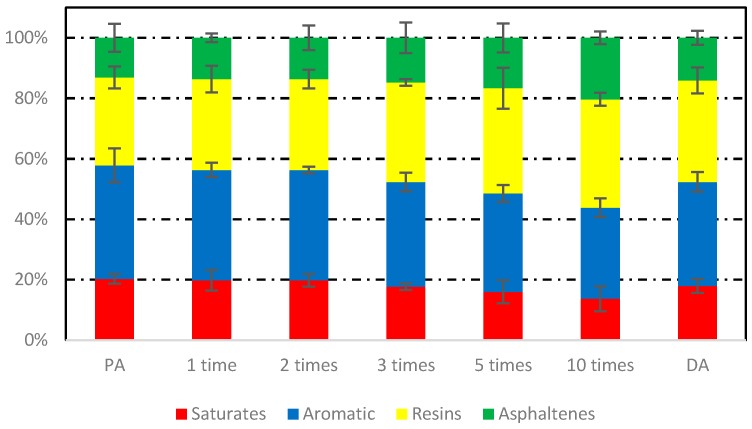
Induction heating is a valuable technology to repair asphalt concrete damage inside. However, in the process of induction heating, induced particles will release a large amount of heat to act on asphalt binder in a short time. The purpose of this paper was to study the effect of induction heating on asphalt binder aging in steel fibers modified asphalt concrete. The experiments were divided into two parts: induction heating of Dramix steel fibers coated with asphalt binder (DA) and steel wool fibers modified asphalt concrete. After induction heating, the asphalt binders in the samples were extracted for testing aging indices with Fourier Transform Infrared (FTIR), Dynamic Shear Rheometer (DSR), and Four-Components Analysis (FCA) tests. The aging of asphalt binder was analyzed identifying the change of chemical structure, the diversification of rheological properties, and the difference of component. The experiments showed that the binder inside asphalt concrete began aging during induction heating due to thermal oxygen reaction and volatilization of light components. However, there was no peak value of the carbonyl index after induction heating of ten cycles, and the carbonyl index of DA was equivalent to that of binder in asphalt concrete after three induction heating cycles, which indicated the relatively closed environment inside asphalt concrete can inhibit the occurrence of the aging reaction.
Overview
The claims and statistics of this paper haven’t been checked yet.
Run the check — free, no account needed. It reads the open-access text and checks the sources it cites.
Integrity signals
Registry
Cites
Statistics
Figures

Verification
Claims the paper makes
The claims and statistics of this paper haven’t been checked yet.
Run the check — free, no account needed. It reads the open-access text and checks the sources it cites.
Claims other papers make about this one
Each is checked against this paper’s own text: does it say what the citing paper says it does?
In the citing paper
“The technological parameters required variations in broad ranges in output power of 10-200 kW, inductor currents up to thousands of amps, low or high inductor voltages and resonant frequencies up to 300 kHz.”
Self-check
Percentages, sums and reported differences re-computed from the paper’s own numbers.
The self-check needs the paper’s full text.
Citations
Cites
No references could be resolved yet.
Research works printed but not linked: 28
- Liu, 2011, Induction healing of asphalt mastic and porous asphalt concrete, Constr. Build. Mater., 25, 3746, 10.1016/j.conbuildmat.2011.04.016 · DOI
- Liu, 2010, Induction heating of electrically conductive porous asphalt concrete, Constr. Build. Mater., 24, 1207, 10.1016/j.conbuildmat.2009.12.019 · DOI
- Garcia, 2016, Self-healing of asphalt mixture by microwave and induction heating, Mater. Des., 106, 404, 10.1016/j.matdes.2016.05.095 · DOI
- Liu, Q., Chen, C., Li, B., Sun, Y., and Li, H. (2018). Heating Characteristics and Induced Healing Efficiencies of Asphalt Mixture via Induction and Microwave Heating. Materials, 11. · DOI
- Castro, 2006, Fatigue and Healing of Asphalt Mixtures: Discriminate Analysis of Fatigue Curves, Transp. Eng., 132, 168, 10.1061/(ASCE)0733-947X(2006)132:2(168) · DOI
- Phillips, M.C. (1999, January 3–6). Multi-step models for fatigue and healing, and binder properties involved in healing. Proceedings of the Eurobitume Workshop on Performance Related Properties for Bituminous Binders, Kirchberg, Luxembourg.
- Little, 2007, Exploring mechanisms of healing in asphalt mixtures and quantifying its impact, Self Healing Materials, Volume 100, 205, 10.1007/978-1-4020-6250-6_10 · DOI
- Kringos, N., Schmets, A., Pauli, T., and Scarpas, T. (2009, January 9–11). A finite element base chemo-mechanical model to similate healing in bitumen. Proceedings of the International Workshop on Chemo-mechanics of Bituminous materials, Delft, The Netherlands.
- 2011, Self-healing of open cracks in asphalt mastic, Fuel, 93, 264
- Schlangen, 2012, A simple model to define induction heating in asphalt mastic, Constr. Build. Mater., 31, 38, 10.1016/j.conbuildmat.2011.12.046 · DOI
- Liu, 2013, Characterization of the material from the induction healing porous asphalt concrete trial section, Mater. Struct., 46, 831, 10.1617/s11527-012-9936-9 · DOI
- Liu, 2013, Induction heating of asphalt mastic for crack control, Constr. Build. Mater., 4, 345, 10.1016/j.conbuildmat.2012.11.075 · DOI
- Liu, 2014, Unravelling Porous Asphalt Concrete with Induction Heating, Constr. Build. Mater., 71, 152, 10.1016/j.conbuildmat.2014.08.048 · DOI
- Liu, 2012, Evaluation of the induction healing effect of porous asphalt concrete through four-point bending fatigue test, Constr. Build. Mater., 29, 403, 10.1016/j.conbuildmat.2011.10.058 · DOI
- Garcia, 2009, Two Ways of Closing Cracks on Asphalt Concrete Pavements: Microcapsules and Induction Heating, Key Eng. Mater., 417, 573, 10.4028/www.scientific.net/KEM.417-418.573 · DOI
- Partl, 2013, Experimental evaluation of dense asphalt concrete properties for induction heating purposes, Constr. Build. Mater., 46, 48, 10.1016/j.conbuildmat.2013.04.030 · DOI
- Schlangen, 2011, Induction heating of mastic containing conductive fibers and fillers, Mater. Struct., 44, 499, 10.1617/s11527-010-9644-2 · DOI
- Menozzi, 2015, Induction healing of fatigue damage in asphalt test samples, Constr. Build. Mater., 74, 162, 10.1016/j.conbuildmat.2014.10.034 · DOI
- Bueno, 2013, Induction healing of dense asphalt concrete. Constr, Build. Mater., 49, 1, 10.1016/j.conbuildmat.2013.07.105 · DOI
- Huo, 2001, A study on change of family composition and properties of Liaoshu paving asphalt on aging, J. Petroleum Sci. Technol., 19, 651, 10.1081/LFT-100105280 · DOI
- Liu, 2015, Effect of ultraviolet aging on rheology and chemistry of LDH-modified bitumen, Materials, 8, 5238, 10.3390/ma8085238 · DOI
- Pang, L., Zhang, X., Wu, S., Ye, Y., and Li, Y. (2018). Influence of water solute exposure on the chemical evolution and rheological properties of asphalt. Materials, 11. · DOI
- Li, 2019, Study on the gradient heating and healing behaviors of asphalt concrete induced by induction heating, Constr. Build. Mater., 208, 638, 10.1016/j.conbuildmat.2019.03.052 · DOI
- Zeng, 2015, The temperature effects in aging index of asphalt during UV aging process, Constr. Build. Mater., 93, 1125, 10.1016/j.conbuildmat.2015.05.022 · DOI
- Lamontagne, 2001, Comparison by Fourier transform infrared (FTIR) spectroscopy of different ageing techniques: Application to road bitumens, Fuel, 80, 483, 10.1016/S0016-2361(00)00121-6 · DOI
- Liu, 2013, Evaluating the rheological properties of PMB-containing RA binders from surface-layer asphalt mixtures to be recycled, Constr. Build. Mater., 49, 8, 10.1016/j.conbuildmat.2013.08.012 · DOI
- Li, 2018, Investigation of sodium stearate organically modified LDHs effect on the anti-aging properties of asphalt binder, Constr. Build. Mater., 172, 509, 10.1016/j.conbuildmat.2018.03.181 · DOI
- Li, 2018, Investigation of the effect of Mg-Al-LDH on pavement performance and aging resistance of styrene-butadiene-styrene modified asphalt, Constr. Build. Mater., 172, 584, 10.1016/j.conbuildmat.2018.03.280 · DOI
Cited by
Dimitrov, B., Hayatleh, K., Barker, S., & Collier, G. (2021) · Electricity · doi:10.3390/electricity2040026 · Cited by 3
Metadata
- Authors
- Li, H., Yu, J., Wu, S., Liu, Q., Li, Y., Wu, Y., & Xu, H.
- Venue
- Materials
- Publisher
- MDPI AG
- Published
- 2019-04-01
- Volume
- 12
- Issue
- 7
- Pages
- 1067
- ISSN
- 1996-1944
- PMC
- PMC6479477
- Cited by
- 28
- References
- 0
- Language
- en
- Funders
- National Key R&D Program of China (2017YFE0111600)
- National Natural Science Foundation of China (51778515&51508433)
About these checks
Registry, retraction, Cites and statistics results are computed, not judged, with one exception: a printed reference that no index lists is read once by a model before it counts as a citation error. Claims are extracted by a model and kept only when their quote appears verbatim in the text; each cited source is then checked, with a model’s help, for whether it says what the claim relies on. Those verdicts can be wrong — read the claim’s quote and the cited source before relying on one.
Statistics and arithmetic are recomputed, not judged.
Confidence bands are shown only for fields calibrated on our annotated test set. None is calibrated yet, so no band is shown.
What counts as a claim ›How we measure confidence ›How we check this ›
Are you an author, or do you see a problem with this page? Request a review
How to cite
Cite CoChat for the checks on this page, and the paper for its own findings.
- This page
- CoChat. (2026). Citation check: Investigation of the Effect of Induction Heating on Asphalt Binder Aging in Steel Fibers Modified Asphalt Concrete. https://app.cochat.ai/papers/10.3390/ma12071067
- The paper
- Li, H., Yu, J., Wu, S., Liu, Q., Li, Y., Wu, Y., & Xu, H. (2019). Investigation of the Effect of Induction Heating on Asphalt Binder Aging in Steel Fibers Modified Asphalt Concrete. Materials. https://doi.org/10.3390/ma12071067
Data sources
Bibliographic data: Semantic Scholar, OpenAlex, Crossref.
Contains information from the Semantic Scholar Academic Graph Datasets, made available under the ODC Attribution License (ODC-BY 1.0).
Semantic Scholar’s data is described in: Kinney, R., et al. (2023). The Semantic Scholar Open Data Platform. arXiv:2301.10140.
