

Sulfate Resistance of Recycled Aggregate Concrete with GGBS and Fly Ash-Based Geopolymer
Open accessThe DOI matches its Crossref record; 64 of the 65 references it cites were found in a registry or an index, and 1 are not checked yet; none of the 28 sources its claims cite is checked for support yet.
Abstract
There is a constant drive for the development of ultra-high-performance concrete using modern green engineering technologies. These concretes have to exhibit enhanced durability and incorporate energy-saving and environment-friendly functions. The object of this work was to develop a green concrete with an improved sulfate resistance. In this new type of concrete, recycled aggregates from construction and demolition (C&D) waste were used as coarse aggregates, and granulated blast furnace slag (GGBS) and fly ash-based geopolymer were used to totally replace the cement in concrete. This study focused on the sulfate resistance of this geopolymer recycled aggregate concrete (GRAC). A series of measurements including compression, X-ray diffraction (XRD), and scanning electron microscopy (SEM) tests were conducted to investigate the physical properties and hydration mechanisms of the GRAC after different exposure cycles in a sulfate environment. The results indicate that the GRAC with a higher content of GGBS had a lower mass loss and a higher residual compressive strength after the sulfate exposure. The proposed GRACs, showing an excellent sulfate resistance, can be used in construction projects in sulfate environments and hence can reduce the need for cement as well as the disposal of C&D wastes.
Checked 2026-11-27 · 1 reference not checked yet
Overview
CoChat Summary
TL;DR
This study developed geopolymer recycled aggregate concrete (GRAC) using recycled coarse aggregates and GGBS/fly ash-based geopolymer to fully replace cement, then tested its sulfate resistance under wetting–drying cycles in 5% Na2SO4. GRAC showed better sulfate resistance than OPC-based natural and recycled aggregate concretes, with higher GGBS content improving residual compressive strength and reducing mass loss/cracking.
Key findings
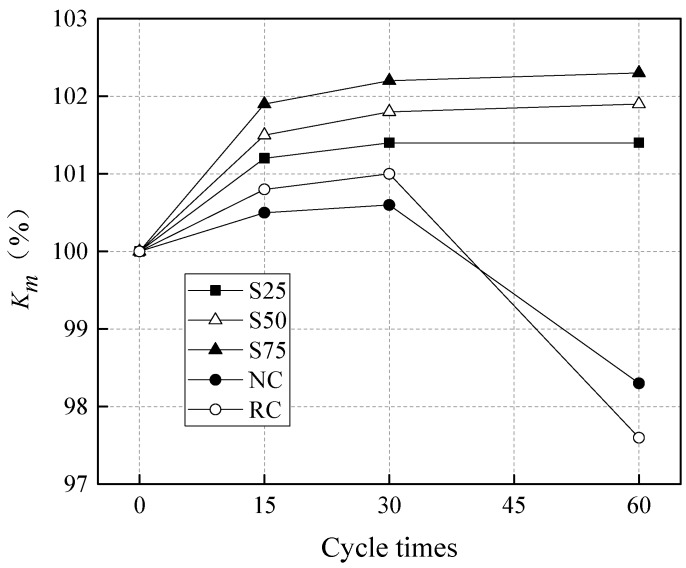
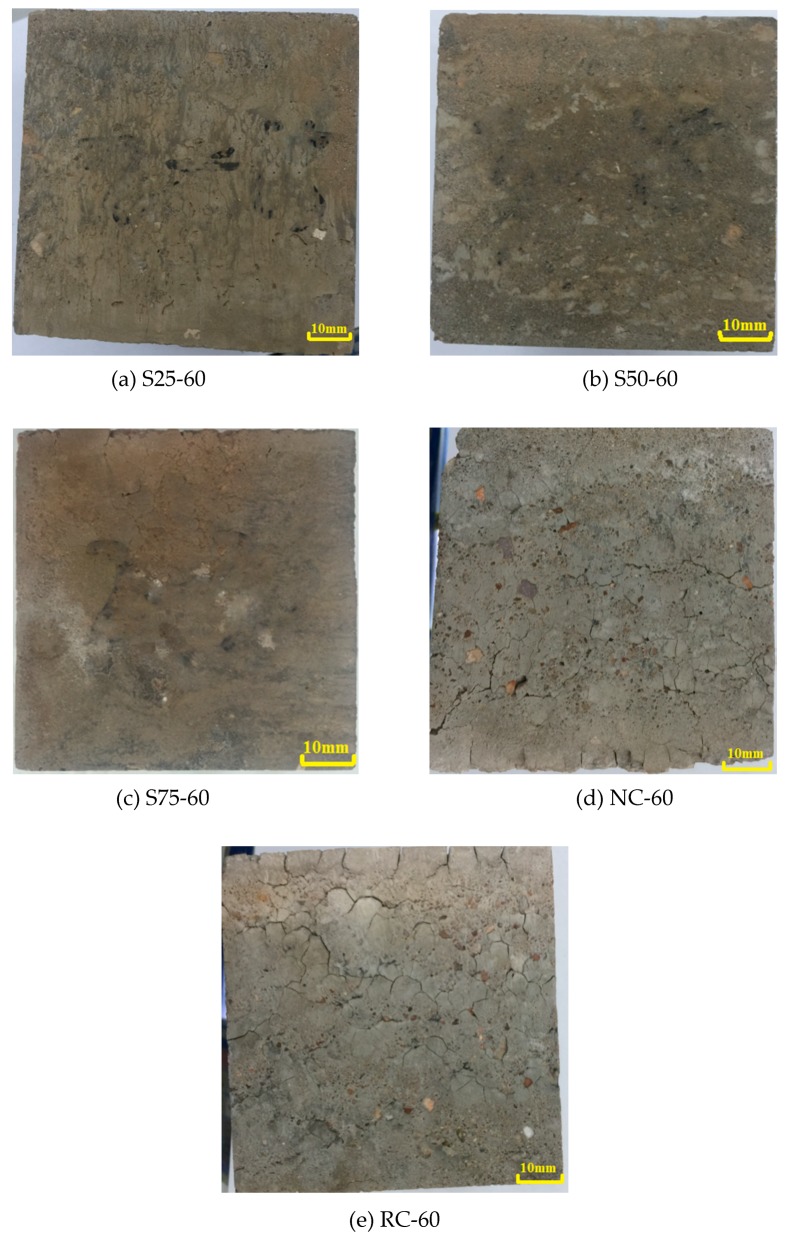
- GRAC mixes S25, S50, and S75 had Km values above 100 and gained mass up to 60 sulfate attack cycles, whereas NC and RC gained mass only up to 30 cycles and then lost mass significantly from 30 to 60 cycles; GRAC also had fewer surface cracks than RC and NC after 60 cycles.
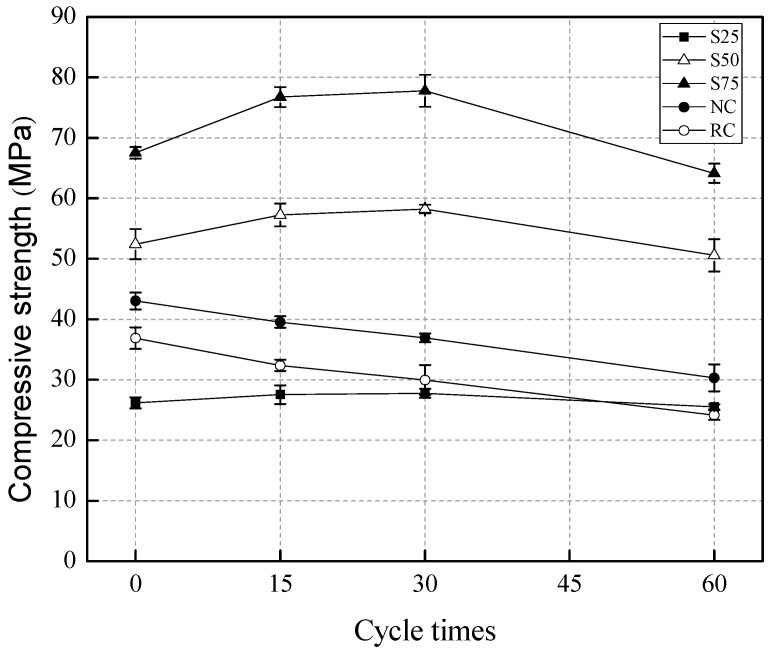
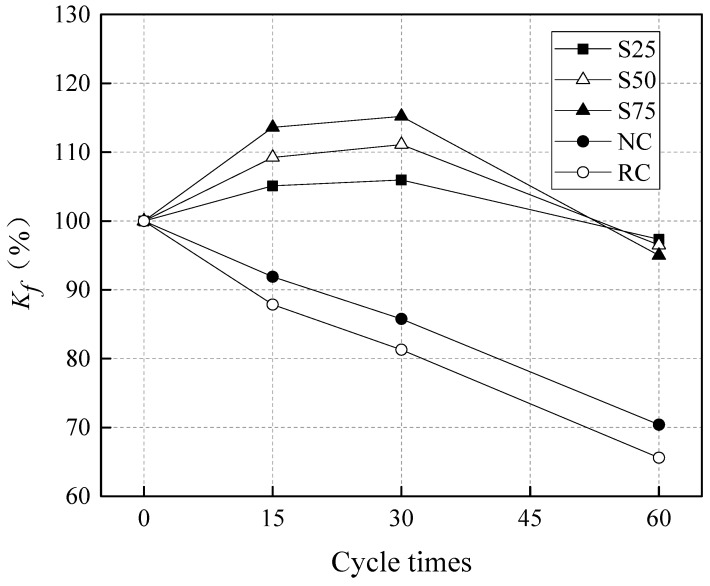
- Increasing GGBS content improved sulfate resistance: Km increases for S25/S50/S75 were 1.2/1.5/1.9% (0–15 cycles), 0.2/0.3/0.3% (15–30 cycles), and 0.0/0.1/0.1% (30–60 cycles). Kf after 15 and 30 cycles increased by 5.1% and 11.1% for S25, 6.0% and 13.6% for S50, and 9.2% and 15.2% for S75; after 60 cycles Kf decreased by 2.7%, 3.5%, and 5.0%, respectively.
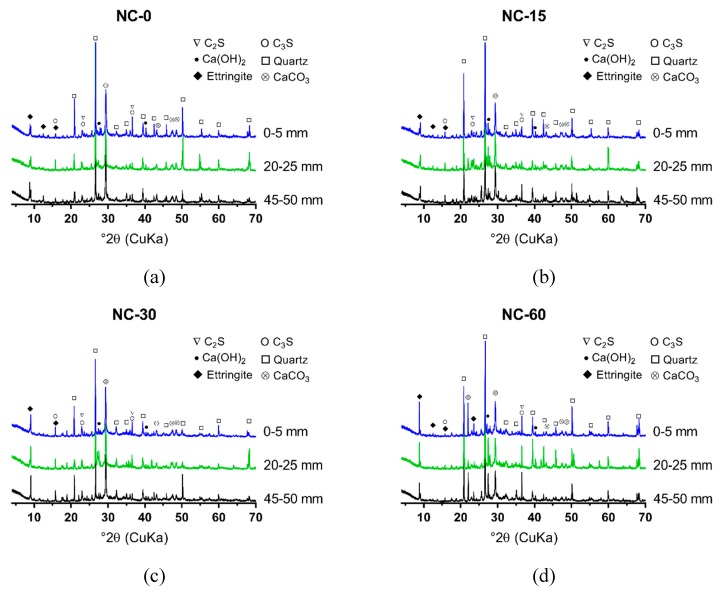
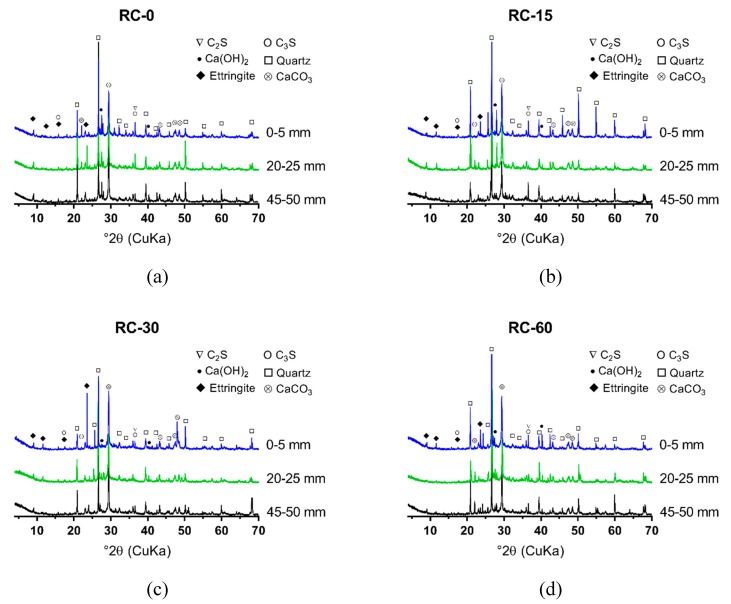
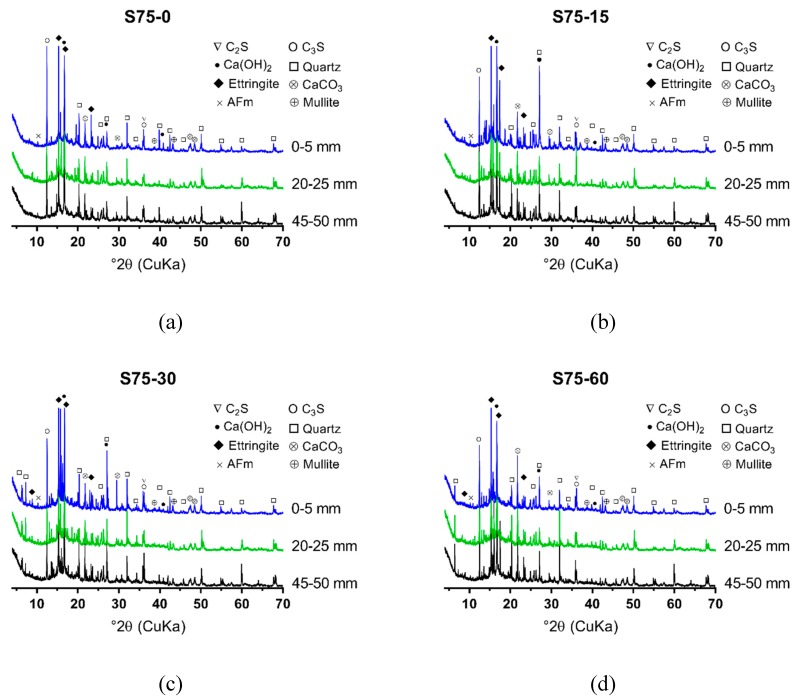
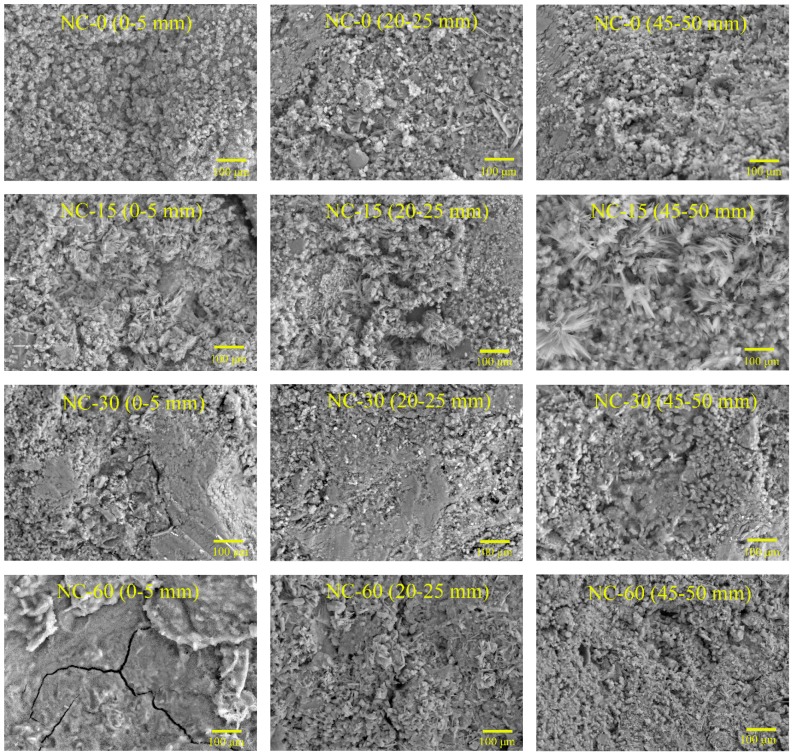
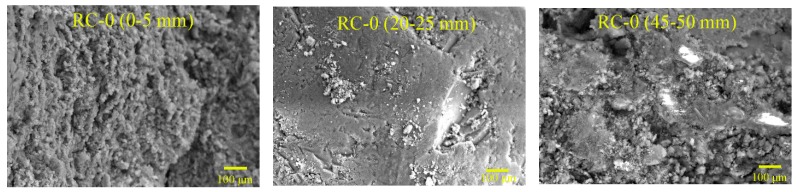
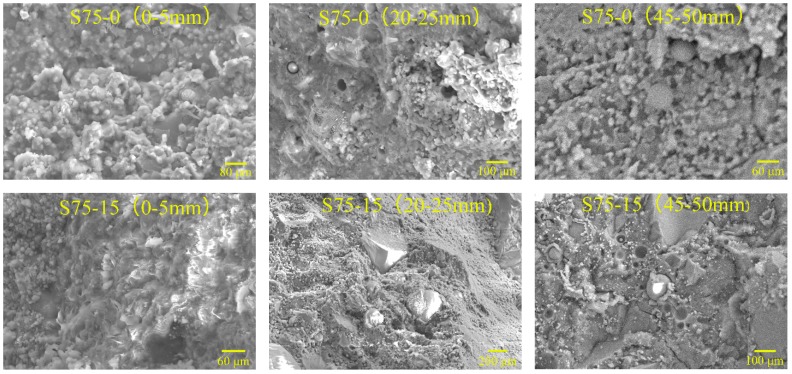
- S75 had 165% and 112% higher residual compressive strength after 60 cycles than RC and NC, respectively. XRD/SEM attributed this to a denser geopolymer matrix, initial ettringite filling pores, and enhanced ITZ; after 30 cycles ettringite increased closer to the attack surface and micro-cracks formed, with S75 showing micro-cracks only after 30 cycles and fewer/smaller cracks than NC/RC even after 60 cycles.
- The paper concludes that GRAC with GGBS and fly ash at a proportion of 3:1 might have more than double the residual compressive strength after 60 cycles of sulfate attack compared with cement-based concrete.
Methods
- Five mixes were tested: NC (OPC + natural coarse aggregate), RC (OPC + recycled coarse aggregate), and S25/S50/S75 (geopolymer with recycled coarse aggregate and three GGBS contents). There were 20 groups = 5 mixes × 4 sulfate attack cycles, each with 3 replicas of 100 mm × 100 mm × 100 mm cubes; W/B was 0.5 and retarding water reducer was fixed at 1.5%. Geopolymer specimens were demolded after 24 h, steam-cured at 80 °C for 24 h, then standard-cured; NC and RC were standard-cured.
- Sulfate attack followed GB/T 50082: after 26 days, specimens were oven-dried at 80 ± 5 °C for 24 h, weighed, then exposed to 5% Na2SO4 wetting–drying cycles (wetting 15 h; drying 30 min air + 6 h at 80 °C + 2 h cooling; about 24 h per cycle; solution replaced weekly). After target cycles, specimens were oven-dried, weighed, and tested in axial compression at 0.5 MPa/s.
- XRD and SEM were conducted on samples from 0–5 mm, 20–25 mm, and 45–50 mm below the surface. XRD used 1.5 g of powder passing a 48 µm sieve, scanned at 4°/min from 4° to 80° (2θ); SEM used a LYRA 3 XMU electron microscope.
Limitations
- The paper does not state an explicit limitations section; it only notes that limited information was available on GRAC durability/sulfate resistance, which is framed as a research gap rather than a study limitation.
- Evident from the text: the sulfate exposure used only one concentration (5% Na2SO4), one W/B (0.5), and up to 60 wetting–drying cycles, so other sulfate environments, concentrations, and longer-term or field exposures are not covered.
- Evident from the text: XRD/SEM results are reported as patterns and micrographs rather than quantified phase contents, and the study focuses on one recycled coarse aggregate source (demolished concrete with original compressive strength 20–30 MPa) and one aggregate size range (5–20 mm).
Model-written summary. Check it against the paper before relying on it.
Integrity signals
Registry
Cites
Statistics
Figures
Verification
Claims the paper makes
0 Valid · 0 Not valid · 18 Not checked · 105 Own results and interpretations
A result the paper states — it cites no source for it, so there is none to check. The quote shows it is in the paper.
In the paper
“before sulfate attack, all geopolymer concretes showed less weight, compared to the NC and RC.”
§ Sulfate Resistance of Recycled Aggregate Concrete with GGBS and Fly Ash-Based Geopolymer > 4. Results and Discussions > 4.1. Mass Loss after Exposure to Sulfate Attack
plain- Asserted: passes — The authors put it forward as true.
- Checkable: passes — It can be checked against evidence.
- Load-bearing: unclear — It is unclear whether the paper’s conclusions depend on it.
- Based: passes — The paper gives a reason why it holds.
A result the paper reports from its own data — it cites no other source for it, so there is none to check. The quote shows it is in the paper.
In the paper
“In NC, the cracks propagated in a line-like pattern.”
§ Sulfate Resistance of Recycled Aggregate Concrete with GGBS and Fly Ash-Based Geopolymer > 4. Results and Discussions > 4.2. Appearance Change after Exposure
plain- Asserted: passes — The authors put it forward as true.
- Checkable: passes — It can be checked against evidence.
- Load-bearing: unclear — It is unclear whether the paper’s conclusions depend on it.
- Based: passes — The paper gives a reason why it holds.
A result the paper states — it cites no source for it, so there is none to check. The quote shows it is in the paper.
In the paper
“For NC and RC, the compressive strength decreased continuously from 15 to 60 cycles of sulfate attack.”
§ Sulfate Resistance of Recycled Aggregate Concrete with GGBS and Fly Ash-Based Geopolymer > 4. Results and Discussions > 4.3. Residual Compressive Strength after Sulfate Attack
plainstates a cause- Asserted: passes — The authors put it forward as true.
- Checkable: passes — It can be checked against evidence.
- Load-bearing: passes — The paper’s conclusions depend on it.
- Based: passes — The paper gives a reason why it holds.
A result the paper states — it cites no source for it, so there is none to check. The quote shows it is in the paper.
In the paper
“It can be seen that the Km values of GRAC increased with the increase of the GGBS content, especially from 0 to 15 cycles of sulfate attack.”
§ Sulfate Resistance of Recycled Aggregate Concrete with GGBS and Fly Ash-Based Geopolymer > 4. Results and Discussions > 4.1. Mass Loss after Exposure to Sulfate Attack
plainstates a cause- Asserted: passes — The authors put it forward as true.
- Checkable: passes — It can be checked against evidence.
- Load-bearing: unclear — It is unclear whether the paper’s conclusions depend on it.
- Based: passes — The paper gives a reason why it holds.
A result the paper reports from its own data — it cites no other source for it, so there is none to check. The quote shows it is in the paper.
In the paper
“in the GRACs, it was hard to see any large cracks like those in RC and NC.”
§ Sulfate Resistance of Recycled Aggregate Concrete with GGBS and Fly Ash-Based Geopolymer > 4. Results and Discussions > 4.2. Appearance Change after Exposure
plain- Asserted: passes — The authors put it forward as true.
- Checkable: passes — It can be checked against evidence.
- Load-bearing: passes — The paper’s conclusions depend on it.
- Based: passes — The paper gives a reason why it holds.
73 more claims
Create a free account to see all 123 claims and to verify the 28 references still open.
- It may state two separate claims as one. 31
- Probably not a substantial claim. 16
Citations
Cites
The role of inorganic polymer technology in the development of ‘green concrete’
Duxson, P., Provis, J. L., Lukey, G. C., & van Deventer, J. S. J. (2007) · Cement and Concrete Research · doi:10.1016/j.cemconres.2007.08.018 · Cited by 1,998
On the Development of Fly Ash-Based Geopolymer Concrete
(2004) · ACI Materials Journal · doi:10.14359/13485 · Cited by 1,254
Performance enhancement of recycled concrete aggregate – A review
Shi, C., Li, Y., Zhang, J., Li, W., Chong, L., & Xie, Z. (2016) · Journal of Cleaner Production · doi:10.1016/j.jclepro.2015.08.057 · Cited by 1,157
Composition and microstructure of alkali activated fly ash binder: Effect of the activator
Fernández-Jiménez, A., & Palomo, A. (2005) · Cement and Concrete Research · doi:10.1016/j.cemconres.2005.03.003 · Cited by 1,144
The mechanical properties of fly ash-based geopolymer concrete with alkaline activators
Ryu, G. S., Lee, Y. B., Koh, K. T., & Chung, Y. S. (2013) · Construction and Building Materials · doi:10.1016/j.conbuildmat.2013.05.069 · Cited by 927
Fly Ash-Based Geopolymer Concrete
Hardjito, D., Wallah, S. E., Sumajouw, D. M. J., & Rangan, B. V. (2005) · Australian Journal of Structural Engineering · doi:10.1080/13287982.2005.11464946 · Cited by 885
Role of slag in microstructural development and hardening of fly ash-slag geopolymer
Puligilla, S., & Mondal, P. (2012) · Cement and Concrete Research · doi:10.1016/j.cemconres.2012.10.004 · Cited by 625
Durability of alkali-activated fly ash cementitious materials
Fernandez-Jimenez, A., García-Lodeiro, I., & Palomo, A. (2007) · Journal of Materials Science · doi:10.1007/s10853-006-0584-8 · Cited by 593
Resistance of alkali-activated slag concrete to acid attack
Bakharev, T., Sanjayan, J. G., & Cheng, Y.-B. (2003) · Cement and Concrete Research · doi:10.1016/s0008-8846(03)00125-x · Cited by 586
Xie, J., Wang, J., Rao, R., Wang, C., & Fang, C. (2019) · Composites Part B: Engineering · doi:10.1016/j.compositesb.2018.11.067 · Cited by 581
Self-citation
Research works printed but not linked: 4
- Grzegorz A. Piotr W. Krzysztof S. Geopolymer building composites-technology, properties and perspectives Ochrona Przed Korozją 2018 61 57 61
- Davidovits J. Geopolymer cements to minimise carbon-dioxide greenhouse-warming Ceram. Trans. 1993 37 165 182
- Chinese National Standards GB175-2007: Common Portland Cement China Architecture and Building Press Beijing, China 2007
- Chinese National Standards GB T 50082-2009: Standard for Test Methods of Long-Term Performance and Durability of Ordinary Concrete China Architecture & Building Press Beijing, China 2009
Cited by
Amran, M., Debbarma, S., & Ozbakkaloglu, T. (2021) · Construction and Building Materials · doi:10.1016/j.conbuildmat.2020.121857 · Cited by 532
Durability of low-carbon geopolymer concrete: A critical review
Zhang, B. (2024) · Sustainable materials and technologies · doi:10.1016/j.susmat.2024.e00882 · Cited by 221
Wang, J., Xie, J., Wang, C., Zhao, J., Liu, F., & Fang, C. (2020) · Construction and Building Materials · doi:10.1016/j.conbuildmat.2020.118540 · Cited by 191
Self-citationXie, J., Chen, W., Wang, J., Fang, C., Zhang, B., & Liu, F. (2019) · Construction and Building Materials · doi:10.1016/j.conbuildmat.2019.07.311 · Cited by 177
Self-citationGeopolymer concrete with treated recycled aggregates: Macro and microstructural behavior
Pawluczuk, E., Kalinowska-Wichrowska, K., Jiménez, J. R., Fernández, J. M., & Suescum-Morales, D. (2021) · Journal of Building Engineering · doi:10.1016/j.jobe.2021.103317 · Cited by 143
Yue, G., Ma, Z., Liu, M., Liang, C., & Ba, G. (2020) · Construction and Building Materials · doi:10.1016/j.conbuildmat.2020.118419 · Cited by 128
Liang, G., Yao, W., & Wei, Y. (2023) · The Science of The Total Environment · doi:10.1016/j.scitotenv.2023.165090 · Cited by 123
Zhang, B., Feng, Y., Xie, J., Lai, D., Yu, T., & Huang, D. (2021) · Construction and Building Materials · doi:10.1016/j.conbuildmat.2021.125248 · Cited by 113
Self-citationEffects of calcium bicarbonate on the properties of ordinary Portland cement paste
Wang, Y., He, F., Wang, J., Wang, C., & Xiong, Z. (2019) · Construction and Building Materials · doi:10.1016/j.conbuildmat.2019.07.262 · Cited by 99
Self-citationUğurlu, A. İ., Karakoç, M. B., & Özcan, A. (2021) · Construction and Building Materials · doi:10.1016/j.conbuildmat.2021.124246 · Cited by 96
Feng, Y., Xue, Z., Zhang, B., Xie, J., Chen, C., Tan, J., & Zhao, C. (2023) · Journal of Building Engineering · doi:10.1016/j.jobe.2023.106387 · Cited by 89
Self-citationPerformances of Using Geopolymers Made with Various Stabilizers for Deep Mixing
Çanakçı, H., Güllü, H., & Alhashemy, A. (2019) · Materials · doi:10.3390/ma12162542 · Cited by 88
Xie, J., Zhao, J., Wang, J., Fang, C., Yuan, B., & Wu, Y. (2022) · Construction and Building Materials · doi:10.1016/j.conbuildmat.2022.127359 · Cited by 83
Self-citationEffects of fibres on ultra-lightweight high strength concrete: Dynamic behaviour and microstructures
Zhang, B., Feng, Y., Xie, J., He, J., Zhang, Y., Cai, C., Huang, D., & Li, L. (2022) · Cement and Concrete Composites · doi:10.1016/j.cemconcomp.2022.104417 · Cited by 79
Self-citationXie, F., Li, J., Zhao, G., Wang, C., Wang, Y., & Zhou, P. (2021) · Construction and Building Materials · doi:10.1016/j.conbuildmat.2021.123771 · Cited by 78
Self-citationYaragal, S. C., Kumar, B. C., & Jitin, C. (2019) · Sustainable materials and technologies · doi:10.1016/j.susmat.2019.e00137 · Cited by 77
Solidification and stabilization of hazardous wastes using geopolymers as sustainable binders
Singh, R., & Budarayavalasa, S. (2021) · Journal of Material Cycles and Waste Management · doi:10.1007/s10163-021-01245-0 · Cited by 64
Shi, X., Feng, Y., Zhang, Y., & Su, Y. (2023) · Construction and Building Materials · doi:10.1016/j.conbuildmat.2023.133052 · Cited by 56
Al-Baghdadi, H. M. (2021) · Case Studies in Construction Materials · doi:10.1016/j.cscm.2021.e00527 · Cited by 55
Development of metakaolin based high strength recycled aggregate geopolymer concrete
Gopalakrishna, B., & Pasla, D. (2023) · Construction and Building Materials · doi:10.1016/j.conbuildmat.2023.131810 · Cited by 53
Gopalakrishna, B., & Pasla, D. (2024) · Journal of Materials in Civil Engineering · doi:10.1061/jmcee7.mteng-17067 · Cited by 52
Drying shrinkage of geopolymeric recycled aggregate concrete
Xu, W., Tang, Z., Song, Y., Xie, Y., Lei, B., Yu, H., Long, G., & Kai, M.-F. (2023) · Construction and Building Materials · doi:10.1016/j.conbuildmat.2023.132220 · Cited by 52
Concrete waste-derived aggregate for concrete manufacture
Liu, Z., Yuan, X., Zhao, Y., Chew, J. W., & Wang, H. (2022) · Journal of Cleaner Production · doi:10.1016/j.jclepro.2022.130637 · Cited by 51
Zheng, Y., & Xiao, Y. (2023) · Construction and Building Materials · doi:10.1016/j.conbuildmat.2022.130257 · Cited by 51
Da-tian, Y., Wang, P., Chen, W., Liu, L., Huang, Y., Xiang, X., Wang, G., & Wu, J. (2025) · Construction and Building Materials · doi:10.1016/j.conbuildmat.2025.140471 · Cited by 47
Sulfate resistance of class C/class F fly ash geopolymers
Jiao, Z., Li, X., Yu, Q., Yao, Q., & Hu, P. (2023) · Journal of Materials Research and Technology · doi:10.1016/j.jmrt.2023.01.131 · Cited by 46
Mechanical Behavior of Fine Recycled Concrete Aggregate Concrete with the Mineral Admixtures
Ju, M., Jeong, J.-G., Palou, M. T., & Park, K. (2020) · Materials · doi:10.3390/ma13102264 · Cited by 46
Properties of a New Insulation Material Glass Bubble in Geopolymer Concrete
Shahedan, N. F., Abdullah, M. M. A. B., Mahmed, N., Kusbiantoro, A., Tammas‐Williams, S., Li, L.-Y., Aziz, I. H., Vizureanu, P., Wysłocki, J. J., Błoch, K., et al. (2021) · Materials · doi:10.3390/ma14040809 · Cited by 43
Compactness and hardened properties of machine-made sand mortar with aggregate micro fines
He, H., Wang, Y., & Wang, J. (2020) · Construction and Building Materials · doi:10.1016/j.conbuildmat.2020.118828 · Cited by 43
Self-citationEstimation of chloride diffusion coefficient from water permeability test of cementitious materials
Xie, J., Wang, J., Li, M., Xu, L., Xiang, D., Wang, Y., He, H., Zhu, Y., & Zhao, J. (2022) · Construction and Building Materials · doi:10.1016/j.conbuildmat.2022.127816 · Cited by 39
Self-citationZhang, G.-Y., Bae, S., Lin, R.-S., & Wang, X.-Y. (2021) · Polymers · doi:10.3390/polym13213797 · Cited by 39
Oyebisi, S. O., Ede, A. N., Olutoge, F. A., & Ngene, B. U. (2020) · Materials Today Communications · doi:10.1016/j.mtcomm.2020.101356 · Cited by 38
Bai, W., Lu, X., Yuan, C., Guan, J., Xie, C., & Cao, K. (2023) · Journal of Building Engineering · doi:10.1016/j.jobe.2023.106413 · Cited by 11
Falah, M. W., Hussein, S. H., Saad, M. A., Ali, Z. H., Tran, T. H., Ghoniem, R. M., & Ewees, A. A. (2022) · Complexity · doi:10.1155/2022/5433474 · Cited by 38
Lakew, A. M., Canpolat, O., AL-MASHHADANI, M. M. M., Uysal, M., Niş, A., Aygörmez, Y., & Bayati, M. (2023) · European Journal of Environmental and Civil engineering · doi:10.1080/19648189.2023.2189468 · Cited by 35
Landa-Sánchez, A., Bosch, J., Baltazar-Zamora, M. Á., René Croche, B., Landa-Ruiz, L., Santiago-Hurtado, G., Moreno-Landeros, V. M., Olguín-Coca, J., López-Léon, L. D., Bastidas, J. M., et al. (2020) · Materials · doi:10.3390/ma13194345 · Cited by 35
Eryılmaz, K., & Polat, R. (2024) · Journal of Building Engineering · doi:10.1016/j.jobe.2024.110512 · Cited by 33
Sharma, N., Seema, Paruthi, S., Khan, A. H., Almalki, A., Zeyad, A. M., & El-Abbasy, A. A. A. (2025) · REVIEWS ON ADVANCED MATERIALS SCIENCE · doi:10.1515/rams-2025-0142 · Cited by 33
Singh, H., Tiwary, A. K., & Singh, S. (2023) · Construction and Building Materials · doi:10.1016/j.conbuildmat.2023.132088 · Cited by 33
Singh, P. K., & Rajhans, P. (2025) · Journal of Building Engineering · doi:10.1016/j.jobe.2025.111867 · Cited by 31
Durability characteristics of slag based geopolymer concrete modified with crumb rubber
Orhan, T. Y., Karakoç, M. B., & Özcan, A. (2023) · Construction and Building Materials · doi:10.1016/j.conbuildmat.2023.132851 · Cited by 31
Santillán, L. R., Locati, F., Villagrán-Zaccardi, Y. A., & Zega, C. J. (2020) · Materiales de Construcción · doi:10.3989/mc.2020.06319 · Cited by 18
The Fabrication of Geopolymer Foam Composites Incorporating Coke Dust Waste
Buczkowska, K. E., Chi, H. L., Louda, P., Szczypiński, M. M., Bakalová, T., Pacyniak, T., & Prałat, K. (2020) · Processes · doi:10.3390/pr8091052 · Cited by 30
Recent Advances in Fly Ash- and Slag-Based Geopolymer Cements
Mohammed, T. O., Haq, A. U., Harun, M. Z. B., & Fanijo, E. O. (2025) · Sustainability · doi:10.3390/su172411167 · Cited by 29
Dominguez-Santos, D., Mora-Meliá, D., Pincheira, G., Ballesteros‐Pérez, P., & Retamal-Bravo, C. (2019) · Materials · doi:10.3390/ma12091500 · Cited by 29
Performance for Fly Ash Reinforced HDPE Composites over the Ageing of Material Components
Alghamdi, M. N. (2022) · Polymers · doi:10.3390/polym14142913 · Cited by 28
An investigation of the durability of ultra-lightweight high-strength geopolymeric composites
Chen, F., Zhao, J., Zhong, H., Feng, Y., Chen, C., & Xie, J. (2023) · Journal of Building Engineering · doi:10.1016/j.jobe.2023.107990 · Cited by 22
Self-citationYu, J. L., Sim, S., Song, H., Kim, D., Jang, K., Jeon, D., Cho, S., & Oh, J. E. (2023) · International Journal of Concrete Structures and Materials · doi:10.1186/s40069-023-00591-7 · Cited by 22
Bai, W., Wang, X., Yuan, C., Guan, J., Cao, K., & Xie, C. (2024) · Engineering Fracture Mechanics · doi:10.1016/j.engfracmech.2024.110303 · Cited by 22
Fractal Cracking Patterns in Concretes Exposed to Sulfate Attack
Yao, J., Chen, J., & Lu, C. (2019) · Materials · doi:10.3390/ma12142338 · Cited by 22
Nukah, P. D., Abbey, S. J., Booth, C. A., & Nounu, G. (2023) · Construction and Building Materials · doi:10.1016/j.conbuildmat.2023.133290 · Cited by 21
Determination of the Thermal Parameters of Geopolymers Modified with Iron Powder
Prałat, K., Ciemnicka, J., Koper, A., Szczypiński, M. M., Łoś, P., Vu, N. V., Le, V. S., Rapiejko, C., Ercoli, R., & Buczkowska, K. E. (2022) · Polymers · doi:10.3390/polym14102009 · Cited by 20
Arora, S., Jangra, P., Pham, T. M., & Lim, Y. Y. (2022) · Sustainability · doi:10.3390/su141710948 · Cited by 18
Damage-based ion transport in recycled aggregate concrete under external sulfate attack
Jin, L., Wang, Z., Wu, T., Xie, Z., & Xue, P. (2024) · Construction and Building Materials · doi:10.1016/j.conbuildmat.2024.137944 · Cited by 18
Evaluating Properties and Applications of Innovative Recycled Aggregate Concrete
Sahani, K., Kunwar, A., Dhakal, P., Kunwar, A., Sahani, S. K., Pandey, B. K., & Pandey, D. (2025) · Engineering Reports · doi:10.1002/eng2.70251 · Cited by 18
Zhong, W. L., Wang, G., Xi, Y., & Fan, L. (2023) · Journal of Building Engineering · doi:10.1016/j.jobe.2023.106268 · Cited by 18
Wu, H., Yang, D., Wang, C., & Ma, Z. (2022) · Journal of Materials in Civil Engineering · doi:10.1061/(asce)mt.1943-5533.0004657 · Cited by 17
Self-citationLiu, K., Fu, K., Bao, J., Chen, C., Zhang, R., & Sang, Y. (2025) · Journal of Building Engineering · doi:10.1016/j.jobe.2024.111664 · Cited by 17
Dominguez-Santos, D., & Bravo, J. A. M. (2022) · Engineering Failure Analysis · doi:10.1016/j.engfailanal.2022.106461 · Cited by 16
Li, Z., Xi, L., & Sun, G. (2025) · Journal of Building Engineering · doi:10.1016/j.jobe.2025.112990 · Cited by 16
Ding, Y., Bai, Y., Dai, J., & Shi, C.-J. (2020) · Materials · doi:10.3390/ma13225200 · Cited by 16
Curing Effect on Durability of Cement Mortar with GGBS: Experimental and Numerical Study
Ghostine, R., Bur, N., Feugeas, F., & Hoteit, I. (2022) · Materials · doi:10.3390/ma15134394 · Cited by 15
Behera, A., Pratap, B., Kumar, P., Rout, M., & Sembeta, R. Y. (2025) · Scientific Reports · doi:10.1038/s41598-025-30430-6 · Cited by 14
Jiang, Z. P., Zhao, C., Xie, J., Tan, Y., Li, S., & Lu, Z. (2023) · Polymer Composites · doi:10.1002/pc.27713 · Cited by 14
Self-citationSingh, G. V. P. B., & Prasad, V. D. (2024) · Environmental Science and Pollution Research · doi:10.1007/s11356-024-35715-3 · Cited by 12
Yang, Z., Zhao, S., Li, X., Yang, S., & Zhang, K. (2025) · Journal of environmental chemical engineering · doi:10.1016/j.jece.2025.118007 · Cited by 12
Lee, J., Lee, T., Choi, H., & Lee, D. (2020) · Applied Sciences · doi:10.3390/app10196944 · Cited by 12
Benli, A., Tetik, O., Öz, A., Yar, A., & Kaplan, G. (2026) · Construction and Building Materials · doi:10.1016/j.conbuildmat.2026.145526 · Cited by 11
Experimental Research and Application of Geopolymer in Soft Soil Foundation Treatment
Yao, J., Qiu, H., He, H., Chen, X., & Hao, G. (2019) · Sustainable civil infrastructures · doi:10.1007/978-3-030-34242-5_8 · Cited by 11
Numerical Studies on Damage Behavior of Recycled Aggregate Concrete Based on a 3D Model
Wang, Y., Zhao, H., Xu, M., Chunyang, W., Fu, J., Gao, L., & Kamel, M. M. A. (2020) · Materials · doi:10.3390/ma13020355 · Cited by 11
A state-of-the-art review on fracture properties of geopolymer composites
Zhang, P., Zhu, Y., Yuan, W., Zheng, J., & Gao, Z. G. (2024) · Theoretical and Applied Fracture Mechanics · doi:10.1016/j.tafmec.2024.104480 · Cited by 11
Fan, L., Zhong, W. L., Wang, G., & Xi, Y. (2023) · Journal of Zhejiang University. Science A · doi:10.1631/jzus.a2200437 · Cited by 10
Mesoscale-based thermal investigation of unsaturated recycled aggregate concrete
Jin, L., Qiao, L., Wang, Y., Wu, T., & Lu, X. (2024) · Applied Thermal Engineering · doi:10.1016/j.applthermaleng.2024.125339 · Cited by 10
Cho, Y.-K., Kim, J. H., Jung, S.-H., Chung, Y., & Jeong, Y. (2019) · Materials · doi:10.3390/ma12213547 · Cited by 9
Ghazouani, N., Elhadi, K. M., & Raza, A. B. M. (2026) · European Journal of Environmental and Civil engineering · doi:10.1080/19648189.2026.2645692 · Cited by 8
Dominguez-Santos, D., Pallarés, F. J., & Llanos, P. (2021) · Mechanics of Advanced Materials and Structures · doi:10.1080/15376494.2021.1988190 · Cited by 8
Ranjan, R., Himanshu, & Ramaswamy, A. (2026) · Construction and Building Materials · doi:10.1016/j.conbuildmat.2026.145151 · Cited by 7
Chaitanya, B. K., Madhavi, Y., Venkatesh, C., Durga, C. S. S., Gowd, S. C., & Mitikie, B. B. (2026) · Scientific Reports · doi:10.1038/s41598-026-45095-y · Cited by 7
Darvishan, E., Adabi, M., & Amani, A. (2023) · Journal of Materials in Civil Engineering · doi:10.1061/jmcee7.mteng-15144 · Cited by 7
Zhang, Y. T., Zhong, W. L., Tu, L. J., & Fan, L. F. (2026) · Construction and Building Materials · doi:10.1016/j.conbuildmat.2026.146538 · Cited by 6
Kandasamy, A., Ramesh, B., Khazaleh, M. A., & Athiappan, K. (2025) · Journal of Environmental Nanotechnology · doi:10.13074/jent.2025.03.2511289 · Cited by 6
A Review of the Performance Properties of Geopolymer Pavement-Quality Concrete
Chelluri, S., Hossiney, N., Chandra, K., Bekoe, P. A., & Tia, M. L. (2025) · Construction Materials · doi:10.3390/constrmater5030049 · Cited by 5
Optimisation of mechanical properties and pore structure of lightweight geopolymer concrete
Zhong, W. L., Wang, H., Zhao, X., Li, J., & Fan, L. (2024) · Magazine of Concrete Research · doi:10.1680/jmacr.23.00295 · Cited by 5
Ahmed, A. (2022) · Research & Development in Material Science · doi:10.31031/rdms.2022.18.000935 · Cited by 5
Sustainable Cementitious Materials for Civil and Transportation Engineering
Wang, J., Xie, J., & Liu, Y. (2023) · Materials · doi:10.3390/ma16186290 · Cited by 5
Self-citationInvestigation of Properties of Concrete Produced with Recycled Aggregates
Kaplan, G. (2021) · Journal of Cement Based Composites · doi:10.36937/cebacom.2020.002.005 · Cited by 4
Zainuddin, A. N., Mukri, M., & Sidek, N. (2022) · International Journal of Sustainable Construction Engineering Technology · doi:10.30880/ijscet.2022.13.01.006 · Cited by 4
Lou, Y., Ma, S., Wang, Y., Wu, W., & Wang, X. (2024) · Advances in Cement Research · doi:10.1680/jadcr.24.00010 · Cited by 4
Effect of Burn Joss Paper Ash on Properties of Ground-Granulated Blast Furnace-Based Slag Geopolymer
Kuo, W., Juang, C.-U., & Chen, Z.-R. (2020) · Applied Sciences · doi:10.3390/app10144877 · Cited by 4
Manhanpally, N., Nagarajan, P., Saha, S., Das, S., & Thomas, B. S. (2026) · Sustainable Chemistry and Pharmacy · doi:10.1016/j.scp.2026.102493 · Cited by 3
Lyu, S., Xiao, J., Singh, A., & Ye, T. (2023) · Journal of Asian Concrete Federation · doi:10.18702/acf.2023.9.2.33 · Cited by 3
Lai, C., Zhang, P., Dai, X., & Zheng, Y. (2026) · Gels · doi:10.3390/gels12030215 · Cited by 3
Aksüt, Y. S., Çullu, M., & Yetgin, Ş. (2025) · Journal of Sustainable Cement-Based Materials · doi:10.1080/21650373.2025.2521808 · Cited by 3
Du, T., Chen, Q., Chen, J., Chen, H., Cai, H., & Xie, B. (2024) · International Journal of Pavement Engineering · doi:10.1080/10298436.2023.2300938 · Cited by 3
Shahedan, N. F., Abdullah, M. M. A. B., Mahmed, N., Yun-Ming, L., Rahim, S. Z. A., Aziz, I. H., Kadir, A. B. A., Sandu, A. V., & Ghazali, M. F. (2022) · Archives of Metallurgy and Materials · doi:10.24425/amm.2022.137493 · Cited by 3
Yergol, R., Patil, B. S., Biradar, A., & Choudhary, R. K. (2024) · Journal of The Institution of Engineers (India) Series D · doi:10.1007/s40033-024-00742-4 · Cited by 3
Bashir, A., Haruna, S. I., Ibrhim, Y. E., & Abba, S. I. (2025) · Innovative Infrastructure Solutions · doi:10.1007/s41062-025-02209-1 · Cited by 2
Sulfate Resistance and Alkali-Silica Reaction of Recycled Aggregate Concrete
Dahri, S. A. (2022) · Quaid-e-Awam University Research Journal of Engineering Science & Technology · doi:10.52584/qrj.2002.16 · Cited by 2
Lin, H., Lin, W.-S., Lin, X., Sun, X., Bi, Y., Wang, M., & Fu, X.-L. (2025) · Geomechanics and Geophysics for Geo-Energy and Geo-Resources · doi:10.1007/s40948-025-01048-9 · Cited by 2
Panigrahi, M., Ganguly, R. I., & Dash, R. R. (2023) · Wiley eBooks · doi:10.1002/9781394167975.ch5 · Cited by 2
Metadata
- Authors
- Xie, J., Zhao, J., Wang, J., Wang, C., Huang, P., & Fang, C.
- Affiliations
- Guangdong University of Technology (CN)
- New York University Abu Dhabi (AE)
- South China University of Technology (CN)
- Corresponding author
- Wang, Junjie
- Venue
- Materials
- Publisher
- MDPI AG
- Published
- 2019-04-16
- Volume
- 12
- Issue
- 8
- Pages
- 1247
- ISSN
- 1996-1944 (ISSN-L)
- PMC
- PMC6515352
- OpenAlex
- W2937675841
- Cited by
- 129
- References
- 64
- Citations by year
- 2026: 20 · 2025: 18 · 2024: 14 · 2023: 26 · 2022: 17 · 2021: 13 · 2020: 13 · 2019: 8
- FWCI
- 8.38
- Type
- journal article
- Language
- en
- Open access
- gold
- dx.doi.org
- Licence
- Locations
- Materials (publishedVersion, cc-by)
- PubMed Central (publishedVersion, cc-by)
- PubMed (publishedVersion)
- Funders
- Science and Technology Planning Project of Guangdong Province (2017B020238006)
- Science and Technology Project Foundation of Guangzhou (201704030057 and 201707010364)
- Topics
- Physical Sciences › Engineering › Civil and Structural Engineering › Concrete and Cement Materials Research
- Physical Sciences › Engineering › Building and Construction › Recycled Aggregate Concrete Performance
- Physical Sciences › Engineering › Building and Construction › Materials Engineering and Processing
- Keywords
- sulfate resistance, recycled aggregate concrete, geopolymer, granulated blast furnace slag, fly ash, construction and demolition waste, cement replacement, compressive strength, mass loss, hydration mechanism, sustainable concrete
About these checks
Registry, retraction, Cites and statistics results are computed, not judged, with one exception: a printed reference that no index lists is read once by a model before it counts as a citation error. Claims are extracted by a model and kept only when their quote appears verbatim in the text; each cited source is then checked, with a model’s help, for whether it says what the claim relies on. Those verdicts can be wrong — read the claim’s quote and the cited source before relying on one.
A language model drew the claims from the paper on 2026-11-27, under version 3 of the claim definition (model deepseek-v4.1-flash, prompt extract-v3).
A second model labelled each claim on 2026-11-27 (model jev-1.13-20260917, definition revision gold-guideline-v0.2).
Statistics and arithmetic are recomputed, not judged.
Confidence bands are shown only for fields calibrated on our annotated test set. None is calibrated yet, so no band is shown.
What counts as a claim ›How we measure confidence ›How we check this ›
Are you an author, or do you see a problem with this page? Request a review
Data sources
Bibliographic data: Semantic Scholar, OpenAlex, Crossref.
Contains information from the Semantic Scholar Academic Graph Datasets, made available under the ODC Attribution License (ODC-BY 1.0).
Semantic Scholar’s data is described in: Kinney, R., et al. (2023). The Semantic Scholar Open Data Platform. arXiv:2301.10140.
