

The DOI matches its Crossref record; 1 of the 1 references it cites were found in a registry or an index.
The Chitosan Implementation into Cotton and Polyester/Cotton Blend Fabrics
Abstract
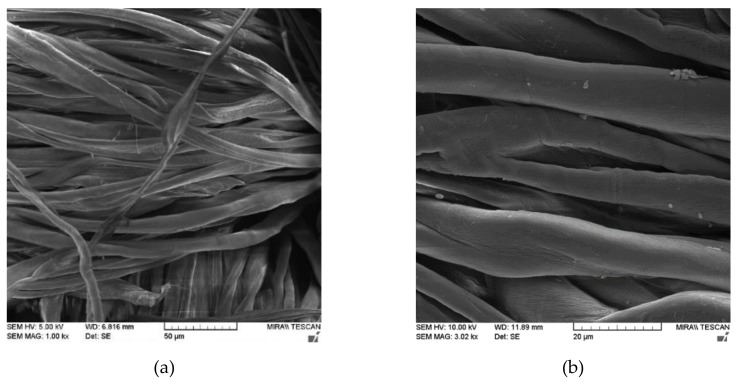
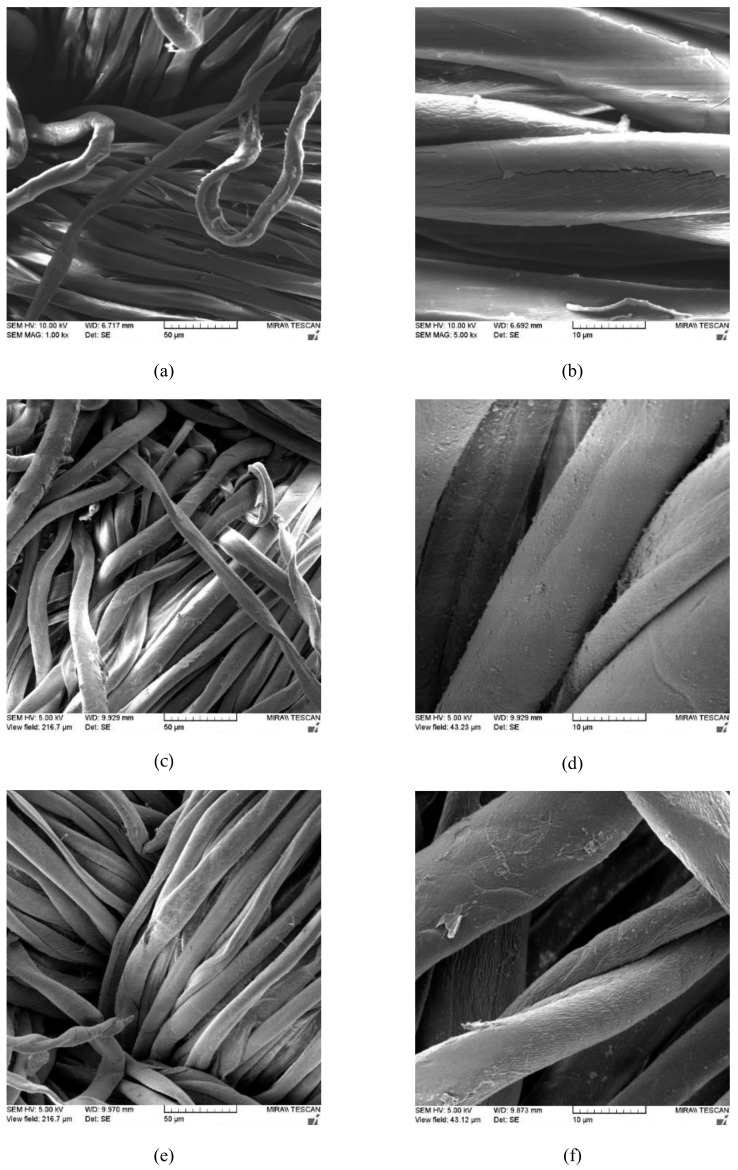
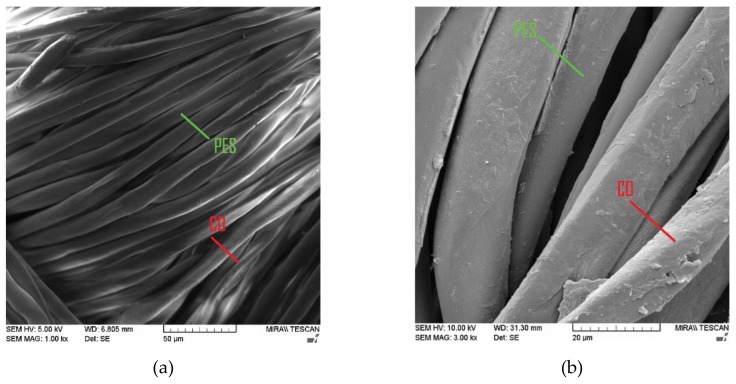
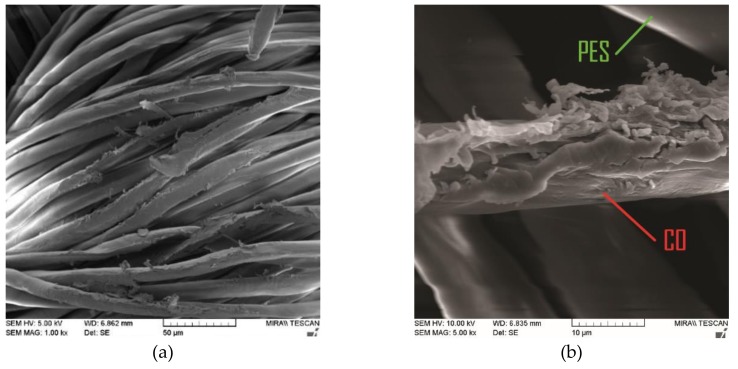
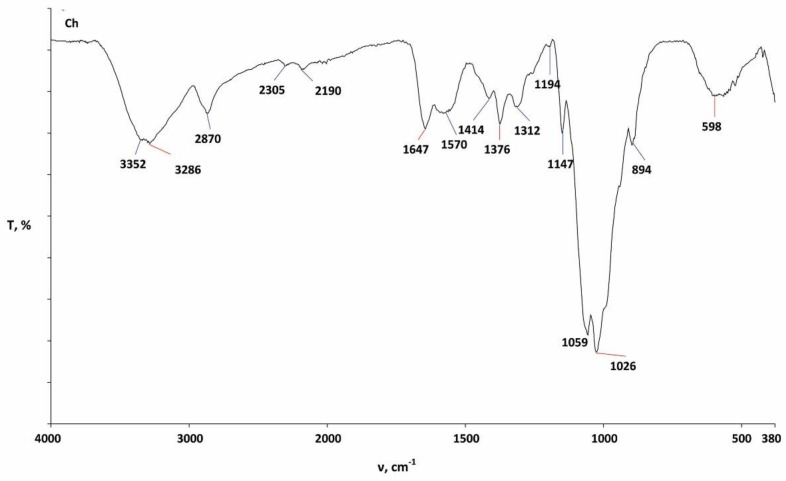
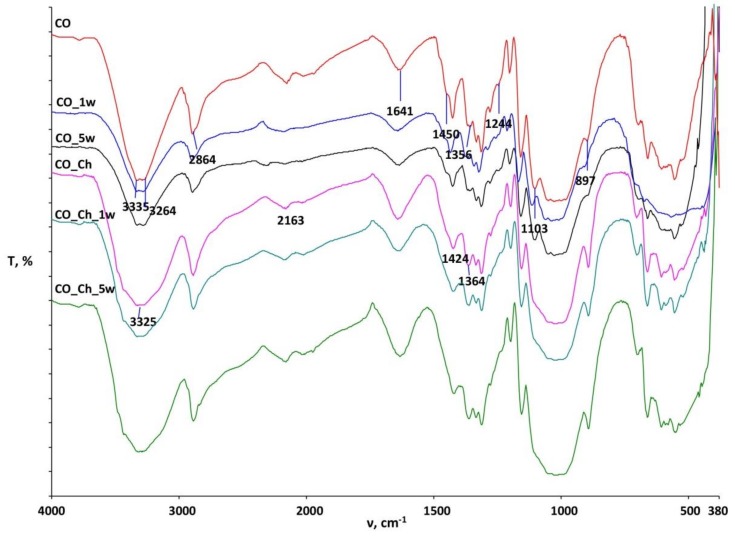
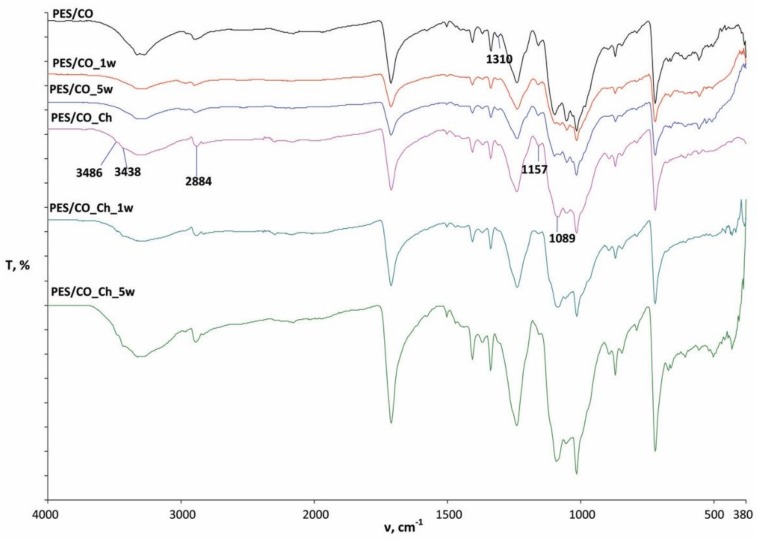
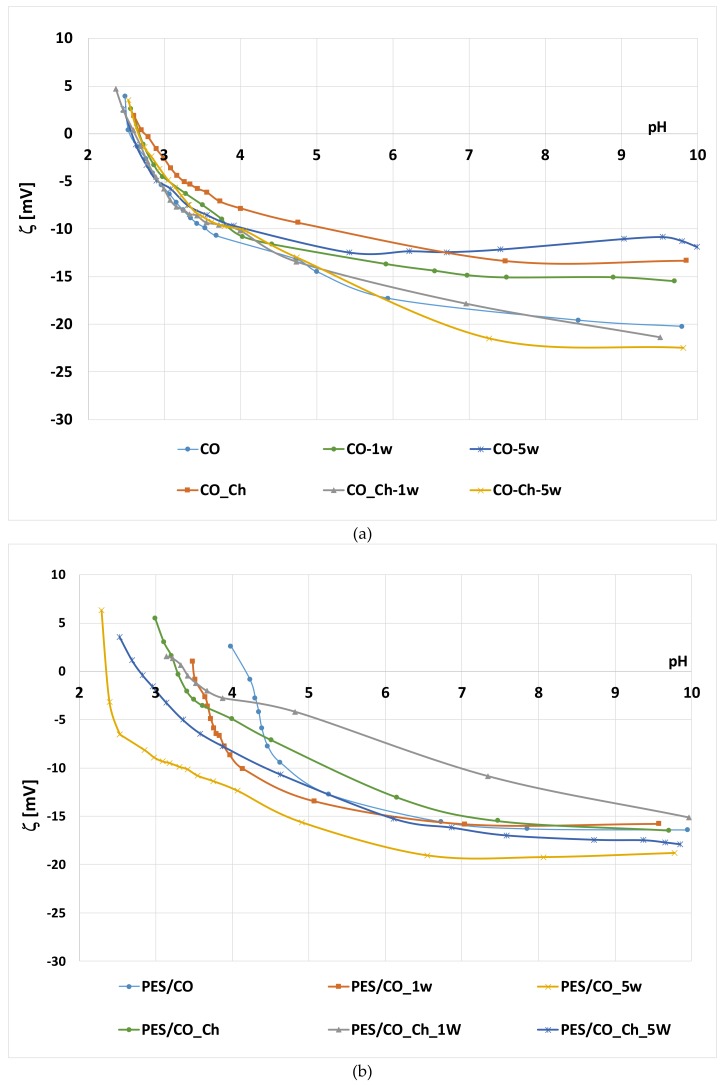
Chitosan is an environmentally friendly agent that is used to achieve the antimicrobial properties of textiles. Nowadays, the binding of chitosan to the textiles has been thoroughly researched due to the increasing demands on the stability of achieved properties during the textile care processes. Most crosslinking agents for chitosan are not safe for humans or environment, such as glutaric aldehyde (GA) and formaldehyde derivatives. Eco-friendly polycarboxyilic acids (PCAs) are usually used in after-treatment. In this work, chitosan powder was dissolved in citric acid with sodium hydrophosphite (SHP) as a catalyst. Standard cotton (CO) and polyester/cotton (PES/CO) fabrics were pretreated in 20% NaOH, similar to mercerization, in order to open the structure of the cotton fibers and hydrolyze polyester fibers, continued by finishing in the gelatin chitosan bath. Afterwards, the hot rinsing process, followed by drying and curing, closed the achieved structure. The main objective was to achieve durable antimicrobial properties to multiple maintenance cycles CO and PES/CO fabric in order to apply it in a hospital environment. The characterization of fabrics was performed after treatment, first and fifth washing cycles according ISO 6330:2012 by field emission scanning electron microscopy (FE-SEM), Fourier transform infrared spectroscopy (FTIR-ATR), electrokinetic analysis (EKA), by the determination of tensile properties and mechanical damage (wear), and the antimicrobial activity. The application of 20% NaOH led to the swelling and mercerization of cotton cellulose, and hydrolysis of polyester, resulting in better mechanical properties. It has been confirmed that the chitosan particles were well implemented into the cotton fiber and onto to the polyester component of PES/CO blend. The presence of chitosan was confirmed after five washing cycles, but in lower quantity. However, achieved antimicrobial activity is persistent.
Overview
The claims and statistics of this paper haven’t been checked yet.
Run the check — free, no account needed. It reads the open-access text and checks the sources it cites.
Integrity signals
Registry
Cites
Statistics
Figures
Verification
Claims the paper makes
The claims and statistics of this paper haven’t been checked yet.
Run the check — free, no account needed. It reads the open-access text and checks the sources it cites.
Claims other papers make about this one
Each is checked against this paper’s own text: does it say what the citing paper says it does?
The cited source says what the claim attributes to it.
In the citing paper
“Both chitin and chitosan have attracted tremendous attention in various fields, such as food technology,31 textile industry,127 and diverse medical and pharmaceutical applications including wound healing,32 tissue engineering33 and gene delivery.34”
From Current Advances in Chitosan Nanoparticles Based Oral Drug Delivery for Colorectal Cancer Treatment (2022) · cites this paper as [127]
Self-check
Percentages, sums and reported differences re-computed from the paper’s own numbers.
The self-check needs the paper’s full text.
Citations
Cites
Dinand, E., Vignon, M., Chanzy, H., & Heux, L. (2002) · Cellulose · doi:10.1023/a:1015877021688 · Cited by 285
Research works printed but not linked: 49
- Struszczyk, 2002, Chitin and Chitosan Part I. Properties and production, Polimery, 47, 316, 10.14314/polimery.2002.316 · DOI
- He, X., Li, K., Xing, R., Liu, S., Hu, L., and Li, P. (2016). The production of fully deacetylated chitosan by compression method. Egypt. J. Aquat. Res., 75–81. · DOI
- Knittel, 2006, Chitosans for permanent antimicrobial finish on textiles, Lenzinger Berichte, 85, 124
- Elhendawy, 2005, The antimicrobial activity of cotton fabrics treated with different crosslinking agents and chitosan, Carbohyd. Polym., 60, 421, 10.1016/j.carbpol.2005.02.019 · DOI
- Lim, 2004, Application of a fiber-reactive chitosan derivative to cotton fabric as an antimicrobial textile finish, Carbohydate Polym., 56, 227, 10.1016/j.carbpol.2004.02.005 · DOI
- Tarbuk, 2017, Boguń: Implementation of Chitosan into Cotton Fabric, Tekstilec, 60, 296, 10.14502/Tekstilec2017.60.296-301 · DOI
- Elnashar, M. (2010). Cellulose Fibres Functionalised by Chitosan: Characterization and Application, Chapter 9. Biopolymers, InTechOpen. · DOI
- Fras, 2009, Protonation behavior of cotton fabric with irreversibly adsorbed chitosan: A potentiometric titration study, Carbohydr. Polym., 78, 36, 10.1016/j.carbpol.2009.04.011 · DOI
- Sujka, W., Draczynski, Z., Kolesinska, B., Latanska, I., Jastrzebski, Z., Rybak, Z., and Zywicka, B. (2019). Influence of Porous Dressings Based on Butyric-Acetic Chitin Co-Polymer on Biological Processes In Vitro and In Vivo. Materials, 23. · DOI
- Kucharska, 2016, Modification of Cellulose Products by the Use of Chitosan and Chitosan-Alginate Nano-Particles, Autex Res. J., 16, 1, 10.1515/aut-2015-0059 · DOI
- Gutowska, 2016, Chitosan-Modifed Cellulosic Nonwoven for Application in Gynecology. Impact of the Modifcation Upon Chemical Purity, Structure and Antibacterial Properties, Fibres Text. East. Eur., 24, 210, 10.5604/12303666.1226224 · DOI
- Bano, 2017, Chitosan: A potential biopolymer for wound management, Int. J. Biol. Macromol., 102, 380, 10.1016/j.ijbiomac.2017.04.047 · DOI
- Korica, M., Peršin, Z., Trifunović, S., Mihajlovski, K., Nikolić, T., Maletić, S., Fras Zemljič, L., and Kostić, M.M. (2019). Influence of Different Pretreatments on the Antibacterial Properties of Chitosan Functionalized Viscose Fabric: TEMPO Oxidation and Coating with TEMPO Oxidized Cellulose Nanofibrils. Materials, 26. · DOI
- Walawska, 2003, Dyeing Polyester and Cotton-Polyester Fabrics by Means of Direct Dyestuffs after Chitosan Treatment, Fibres Text. East. Eur., 11, 71
- Zhang, 2003, Antibacterial Properties of Cotton Fabrics Treated with Chitosan, Text. Res. J., 73, 1103, 10.1177/004051750307301213 · DOI
- Enescu, 2008, Use of Chitosan in Surface Modification of Textile Materials, Rom. Biotechnol. Lett., 13, 4037
- Sauperl, 2015, Chemical Binding of Chitosan and Chitosan Nanoparticles onto Oxidized Cellulose, J. Eng. Fibers Fabr., 10, 70
- 2003, Surface treatment of cotton fabrics with chitosan, Coloration Technol., 119, 241, 10.1111/j.1478-4408.2003.tb00179.x · DOI
- Alonso, 2009, Cross-linking chitosan into UV-irradiated cellulose fibers for the preparation of antimicrobial-finished textiles, Carbohydr. Polym., 77, 536, 10.1016/j.carbpol.2009.01.027 · DOI
- Hsieh, 2003, A spectroscopic analysis of the reaction mechanism of polycarboxylic acids’ crosslinking with chitosan and cotton fabric, Cellul. Chem. Technol., 37, 359
- Yang, 1997, Ester Crosslinking of Cotton Fabric by Polymeric Carboxylic Acids and Citric Acid, Text. Res. J., 67, 334, 10.1177/004051759706700505 · DOI
- Sunder, 2014, Croslinking of Chitosan with Cotton using Polycarboxylic Acids, Int. J. Eng. Res. Technol., 3, 1769
- Chung, 1998, Durable Press and Antimicrobial Finishing of Cotton Fabrics with a Citric Acid and Chitosan Treatment, Text. Res. J., 68, 772, 10.1177/004051759806801011 · DOI
- Noppakundilograt, 2010, Modified chitosan pretreatment of polyester fabric for printing by ink jet ink, Carbohydr. Polym., 82, 1124, 10.1016/j.carbpol.2010.06.040 · DOI
- Canal, 2009, One-bath one-dye class dyeing of PES/cotton blends after corona and chitosan treatment, Fibers Polym., 10, 466, 10.1007/s12221-009-0466-1 · DOI
- Zeiger, 2005, Genetic toxicity and carcinogenicity studies of glutaraldehyde—A review, Mutat. Res./Rev. Mutat. Res., 589, 136, 10.1016/j.mrrev.2005.01.001 · DOI
- Speer, 1980, Biological effects of residual glutaraldehyde in glutaraldehyde-tanned collagen biomaterials, J. Biomed. Mater. Res., 14, 753, 10.1002/jbm.820140607 · DOI
- Davidson, 1943, The Rate of Change in the Properties of Cotton Cellulose Under the Prolonged Action of Acids, J. Text. Inst. Trans., 34, T87, 10.1080/19447024308659271 · DOI
- 1968, Cotton mercerization, Tekstil, 17, 495
- Roy Choudhury, A.K. (2017). Acid–Alkali Finish. Principles of Textile Finishing, Woodhead Publishing. · DOI
- 1997, Cellulose: The structure slowly unravels, Cellulose, 4, 173, 10.1023/A:1018431705579 · DOI
- Klemm, 2005, Cellulose: Fascinating Biopolymer and Sustainable Raw Material, Angew. Chem., 44, 3358, 10.1002/anie.200460587 · DOI · Paper page
- Tarbuk, 2004, Dekanić, T. Electropositve Cotton, Tekstil, 53, 47
- Tarbuk, 2014, Novel cotton cellulose by cationisation during the mercerisation process—Part 1: Chemical and morphological changes, Cellulose, 21, 2167, 10.1007/s10570-014-0245-z · DOI
- Tarbuk, 2014, Novel cotton cellulose by cationisation during the mercerisation process—Part 2: Interface phenomena, Cellulose, 21, 2089, 10.1007/s10570-014-0194-6 · DOI
- Tarbuk, 2006, Influence of Fluorescent Whitening Agent on Ultraviolet Protection of Pretreated Cotton, AATCC Rev., 6, 44
- Tarbuk, 2005, Electrokinetic Properties of Textile Fabrics, Coloration Technol., 121, 221, 10.1111/j.1478-4408.2005.tb00277.x · DOI
- Dekanić, T. (2014). Influence of Fluorescent Compounds on the Properties of Cotton Fabrics in Washing Process (In Croatian Utjecaj Fluorescentnih Spojeva na Svojstva Pamučnih Tekstilija u Procesu Pranja). [Ph.D. Thesis, University of Zagreb Faculty of Textile Technology].
- 2016, Impact of washing and sterilization on properties of fabrics used for medical applications, Indian J. Fibre Text. Res., 41, 426
- Aryabadie, 2015, Antimicrobial and Dyeing studies of treated cotton fabrics by prepared Chitosan-PAMAM Dendrimer/Ag Nano-emulsion, Fibers Polym., 16, 2529, 10.1007/s12221-015-4928-3 · DOI
- Yue, 2013, Transitional Properties of Cotton Fibers from Cellulose I to Cellulose II Structure, BioResources, 8, 6460, 10.15376/biores.8.4.6460-6471 · DOI
- Wanule, 2014, Extraction and FTIR Analysis of Chitosan from American cockroach, Periplaneta Americana, Int. J. Eng. Sci. Innov. Technol., 3, 299
- Brugnerotto, 2001, An infrared investigation in relation with chitin and chitosan characterization, Polymer, 42, 3569, 10.1016/S0032-3861(00)00713-8 · DOI
- Lv, 2014, Preparation and properties of polyester fabrics grafted with O-carboxymethyl chitosan, Carbohydr. Polym., 113, 344, 10.1016/j.carbpol.2014.06.088 · DOI
- Chung, 2004, Characterization of cotton fabric scouring by FT-IR ATR spectroscopy, Carbohydr. Polym., 58, 417, 10.1016/j.carbpol.2004.08.005 · DOI
- Strand, 1999, Surface Characterization and Adsorption Abilities of Cellulose Fibers, Polym. Eng. Sci., 39, 1412, 10.1002/pen.11532 · DOI
- Luxbacher, 2016, The zeta potential of textile fabrics: A review, Tekstil, 65, 346
- Luxbacher, T. (2012). Electrokinetic Properties of Natural Fibres. Handbook of Natural Fibres, Woodhead Publishing. Processing and Applications. · DOI
- 2014, Cumulative effects of washing on properties of cotton fabrics and their blends, Househ. Pers. Care Today, 9, 26
Cited by
Sorted by citations
Current Advances in Chitosan Nanoparticles Based Oral Drug Delivery for Colorectal Cancer Treatment
Choukaife, H., Seyam, S., Alallam, B., Doolaanea, A. A., & Alfatama, M. (2022) · International Journal of Nanomedicine · doi:10.2147/ijn.s375229 · Cited by 127
Metadata
- Authors
- Flinčec Grgac, S., Tarbuk, A., Dekanić, T., Sujka, W., & Draczyński, Z.
- Venue
- Materials
- Publisher
- MDPI AG
- Published
- 2020-04-01
- Volume
- 13
- Issue
- 7
- Pages
- 1616
- ISSN
- 1996-1944
- PMC
- PMC7178377
- Cited by
- 60
- References
- 1
- Language
- en
- Funders
- Hrvatska Zaklada za Znanost (UIP-2017-05-8780 HPROTEX)
About these checks
Registry, retraction, Cites and statistics results are computed, not judged, with one exception: a printed reference that no index lists is read once by a model before it counts as a citation error. Claims are extracted by a model and kept only when their quote appears verbatim in the text; each cited source is then checked, with a model’s help, for whether it says what the claim relies on. Those verdicts can be wrong — read the claim’s quote and the cited source before relying on one.
Statistics and arithmetic are recomputed, not judged.
Confidence bands are shown only for fields calibrated on our annotated test set. None is calibrated yet, so no band is shown.
What counts as a claim ›How we measure confidence ›How we check this ›
Are you an author, or do you see a problem with this page? Request a review
