

Steel Slag-Enhanced Cement-Stabilized Recycled Aggregate Bases: Mechanical Performance and PINN-Based Sulfate Diffusion Prediction
Open accessThe DOI matches its Crossref record; 52 of the 52 references it cites were found in a registry or an index; none of the 31 sources its claims cite is checked for support yet.
Abstract
The application of cement-stabilized recycled aggregate (CSR) in pavement bases is constrained by the high porosity and low strength of recycled aggregate (RA), whereas sulfate transport and durability mechanisms are less reported. To address this issue, this study incorporated high-strength and potentially reactive steel slag aggregate (SSA) into CSR to develop steel slag-enhanced cement-stabilized recycled aggregate (CSRS). The mechanical performance of the mixtures was evaluated through unconfined compressive strength (UCS) and indirect tensile strength (ITS) tests, and their durability was assessed using thermal shrinkage and sulfate resistance tests. In addition, a sulfate prediction model based on a physics-informed neural network (PINN) was developed. The results showed that, compared with CSR, the 7-day and 28-day UCS of CSRS increased by 6.7% and 16.0%, respectively, and the ITS increased by 4.3% and 5.9%. Thermal shrinkage tests indicated that CSR and CSRS, incorporating RA and SSA, exhibited slightly higher thermal shrinkage strain than cement-stabilized natural aggregate (CSN). During sulfate attack, SSA significantly improved the sulfate resistance of CSR, with the sulfate resistance coefficient of CSRS increasing by 18.8% compared to CSR. Furthermore, the PINN model predicted that, in 3%, 5%, and 7% sodium sulfate solutions, the sulfate concentration at a 1 mm depth in CSRS was reduced by 35.6%, 21.8%, and 29.4%, respectively, compared to CSR, with an average relative error below 14%, confirming its reliability. Therefore, these findings demonstrate that the incorporation of SSA markedly enhances the mechanical properties and sulfate resistance of CSR, and that the PINN model provides an effective tool for accurate simulation and prediction of sulfate diffusion.
Overview
CoChat Summary
TL;DR
Incorporating steel slag aggregate (SSA) into cement-stabilized recycled aggregate (CSR) improved unconfined compressive strength, indirect tensile strength, and sulfate resistance, though it slightly increased thermal shrinkage sensitivity. A physics-informed neural network (PINN) diffusion–reaction model predicted sulfate transport in these mixtures with average relative errors below 14%.
Key findings
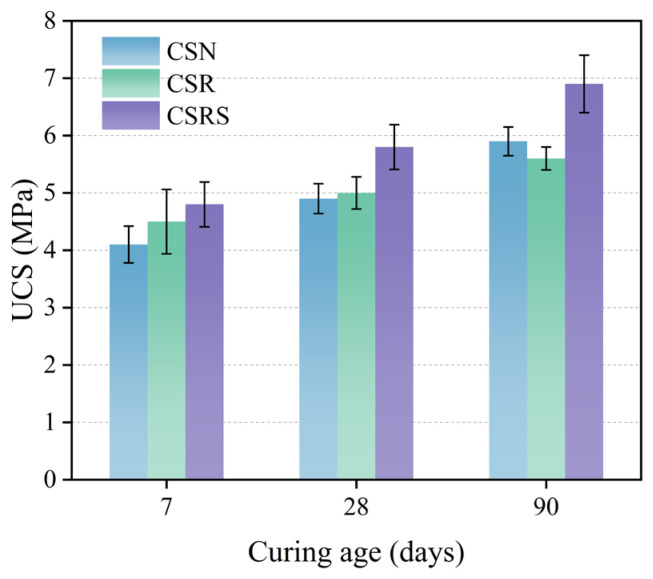
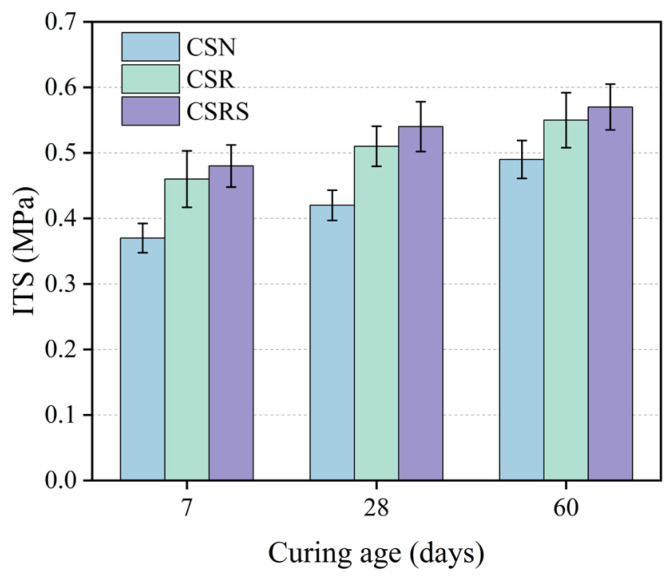
- Compared with CSR, the UCS of CSRS increased by 6.7%, 16.0%, and 23.2% at 7, 28, and 90 days, and ITS increased by 4.3%, 5.9%, and 3.6% at 7, 28, and 90 days.
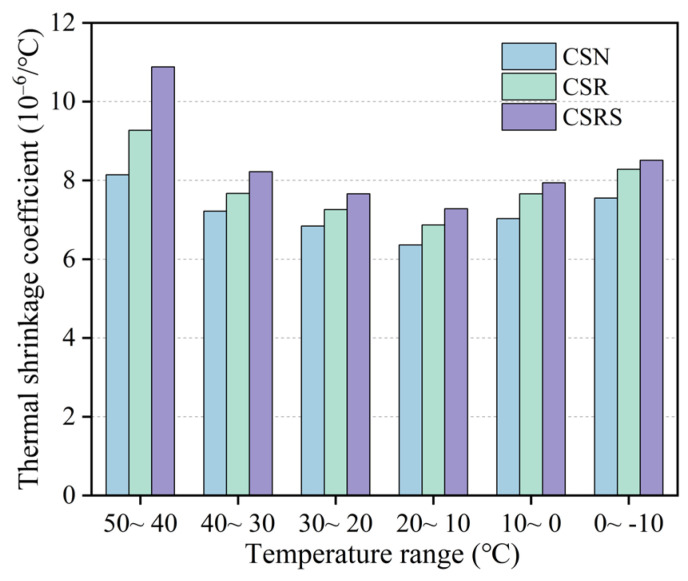
- Thermal shrinkage sensitivity rose with waste incorporation: average thermal shrinkage coefficients were 7.19 × 10⁻⁶/°C (CSN), 7.84 × 10⁻⁶/°C (CSR), and 8.42 × 10⁻⁶/°C (CSRS), i.e., increases of 9.0% and 17.1% over CSN.
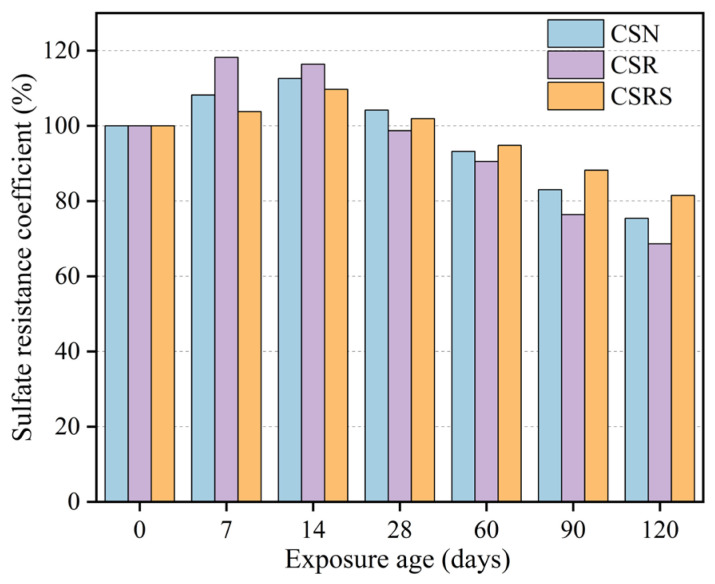
- During sulfate attack, CSRS consistently showed the highest sulfate resistance coefficient; at 120 days it was 18.8% higher than CSR (81.5% vs. 68.6%), while CSN was 75.4%.
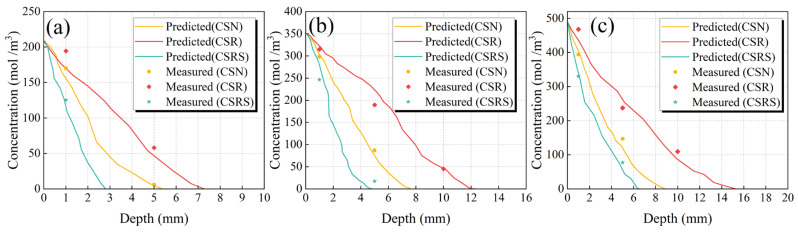
- The PINN model predicted that at 1 mm depth, sulfate concentrations in CSRS were lower than in CSR by 35.6%, 21.8%, and 29.4% under 3%, 5%, and 7% Na₂SO₄ solutions, with average relative errors of 13.9%, 8.3%, and 12.8% respectively.
Methods
- Three mixture groups were prepared: CSN (control, no RA or SSA), CSR (RA only), and CSRS (RA + SSA), with RA at 48.5% and SSA at 17% selected from a prior D-optimal mixture design; six parallel specimens per group, cured at 20 °C and >95% RH.
- Mechanical and durability testing comprised UCS and ITS tests (150 mm diameter × 150 mm cylinders, 1 mm/min loading), thermal shrinkage via the strain-gauge method from 40 °C down to −10 °C, and sulfate resistance via dynamic elastic modulus (resonance method) on 100 × 100 × 400 mm beams immersed in 10% Na₂SO₄, with the sulfate resistance coefficient Kf = En/E0 × 100%.
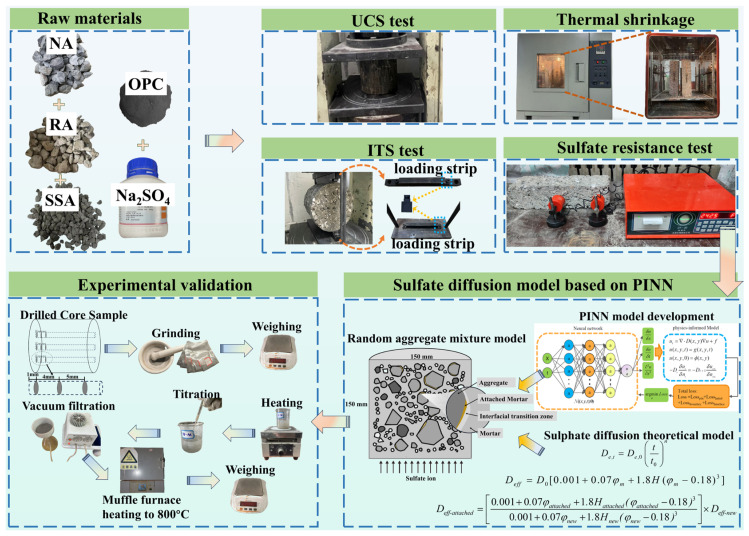
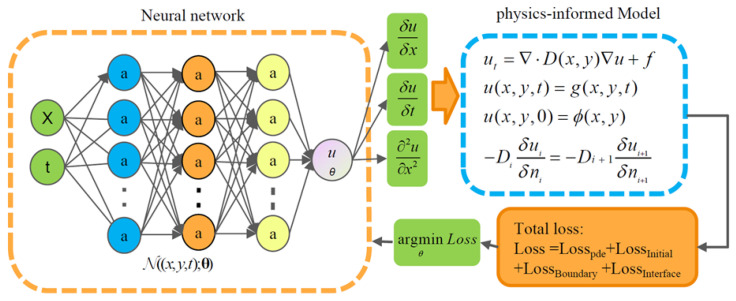
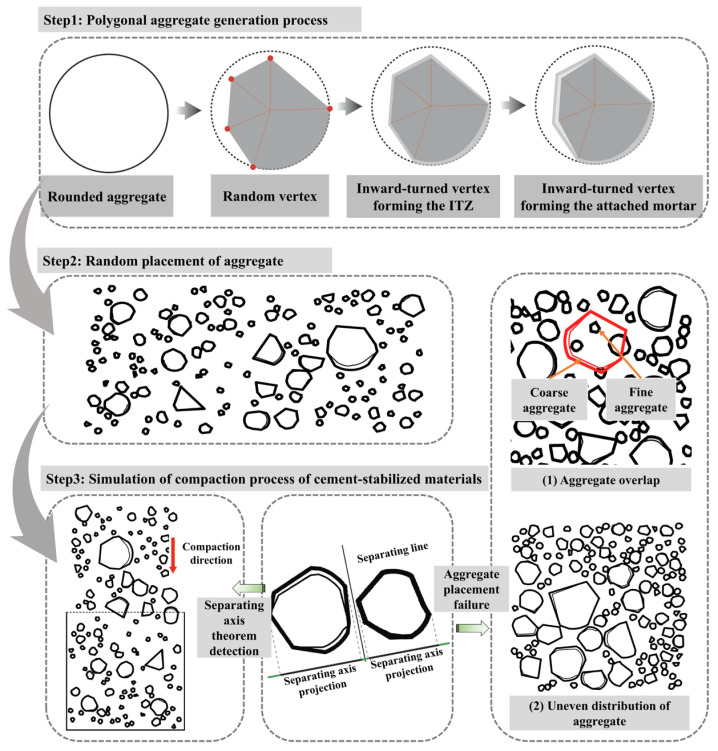
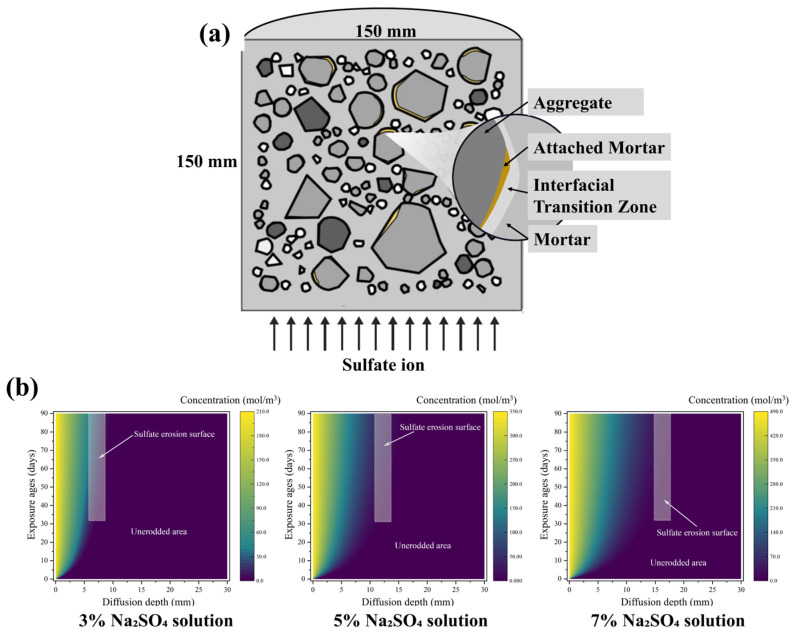
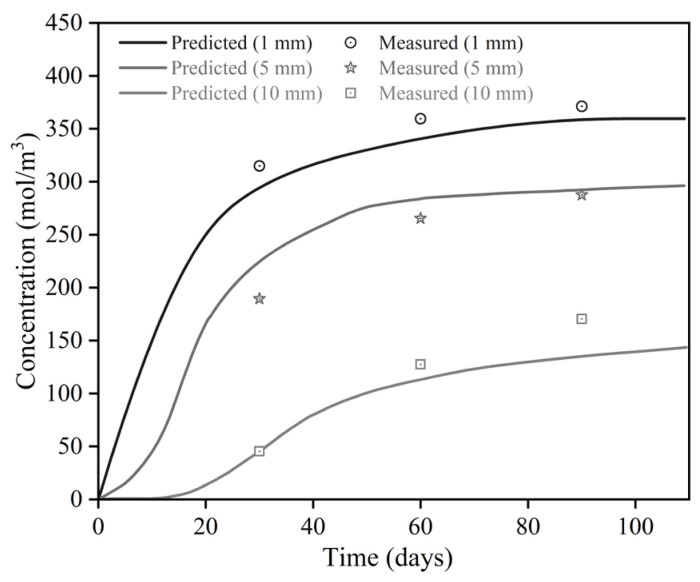
- Sulfate diffusion was modeled with a PINN solving Fick's second law with a reaction term (k = 3.05), using a fully connected feedforward network with four hidden layers of 50 neurons, tanh activation, Adam optimizer (learning rate 1 × 10⁻³, 15,000 epochs), and an interface-continuity loss term; a random polygon aggregate model represented the mesostructure, and predictions were validated against BaSO₄ titration measurements on cores taken at 1, 5, and 10 mm depths after 30, 60, and 90 days in 5% Na₂SO₄.
Limitations
- The paper states that the model focuses solely on sulfate diffusion and that future research should investigate the coupled effects of cement type and content, sulfate diffusion, and the evolution of mechanical indicators such as dynamic modulus and sulfate resistance coefficients.
- The paper attributes PINN prediction deviations (maximum error 20.7% at 10 mm after 90 days) to experimental variability, sampling errors, non-uniformity of material phases, and the simplified representation of ITZs in the model.
- The paper notes that increased thermal shrinkage from SSA incorporation is a potential risk in regions with large temperature fluctuations, requiring control of SSA content and shrinkage mitigation measures; the text also makes evident that the study used a single RA replacement ratio (48.5%) and SSA content (17%), so the reported trends are not demonstrated across other mix proportions.
Model-written summary. Check it against the paper before relying on it.
Integrity signals
Registry
Cites
Statistics
Figures
Verification
Claims the paper makes
0 Valid · 0 Not valid · 17 Not checked · 82 Own results and interpretations
A result the paper reports from its own data — it cites no other source for it, so there is none to check. The quote shows it is in the paper.
In the paper
“the ITS increased by 4.3% and 5.9%”
§ Steel Slag-Enhanced Cement-Stabilized Recycled Aggregate Bases: Mechanical Performance and PINN-Based Sulfate Diffusion Prediction > Abstract
plainstates a cause- Asserted: passes — The authors put it forward as true.
- Checkable: passes — It can be checked against evidence.
- Load-bearing: passes — The paper’s conclusions depend on it.
- Based: passes — The paper gives a reason why it holds.
A result the paper states — it cites no source for it, so there is none to check. The quote shows it is in the paper.
In the paper
“The UCS of all mixtures increased continuously with curing age”
§ Steel Slag-Enhanced Cement-Stabilized Recycled Aggregate Bases: Mechanical Performance and PINN-Based Sulfate Diffusion Prediction > 3. Results > 3.1. Unconfined Compressive Strength Analysis
plainstates a cause- Asserted: passes — The authors put it forward as true.
- Checkable: passes — It can be checked against evidence.
- Load-bearing: unclear — It is unclear whether the paper’s conclusions depend on it.
- Based: passes — The paper gives a reason why it holds.
A result the paper states — it cites no source for it, so there is none to check. The quote shows it is in the paper.
In the paper
“The incorporation of SSA further improved the UCS of the mixtures at all curing ages.”
§ Steel Slag-Enhanced Cement-Stabilized Recycled Aggregate Bases: Mechanical Performance and PINN-Based Sulfate Diffusion Prediction > 3. Results > 3.1. Unconfined Compressive Strength Analysis
plainstates a cause- Asserted: passes — The authors put it forward as true.
- Checkable: passes — It can be checked against evidence.
- Load-bearing: passes — The paper’s conclusions depend on it.
- Based: passes — The paper gives a reason why it holds.
A result the paper reports from its own data — it cites no other source for it, so there is none to check. The quote shows it is in the paper.
In the paper
“Thermal shrinkage tests indicated that CSR and CSRS, incorporating RA and SSA, exhibited slightly higher thermal shrinkage strain than cement-stabilized natural aggregate (CSN).”
§ Steel Slag-Enhanced Cement-Stabilized Recycled Aggregate Bases: Mechanical Performance and PINN-Based Sulfate Diffusion Prediction > Abstract
hedgedstates an association- Asserted: passes — The authors put it forward as true.
- Checkable: passes — It can be checked against evidence.
- Load-bearing: unclear — It is unclear whether the paper’s conclusions depend on it.
- Based: passes — The paper gives a reason why it holds.
A result the paper reports from its own data — it cites no other source for it, so there is none to check. The quote shows it is in the paper.
In the paper
“the sulfate concentration at a 1 mm depth in CSRS was reduced by 35.6%, 21.8%, and 29.4%, respectively, compared to CSR”
§ Steel Slag-Enhanced Cement-Stabilized Recycled Aggregate Bases: Mechanical Performance and PINN-Based Sulfate Diffusion Prediction > Abstract
plainstates a cause- Asserted: passes — The authors put it forward as true.
- Checkable: passes — It can be checked against evidence.
- Load-bearing: passes — The paper’s conclusions depend on it.
- Based: passes — The paper gives a reason why it holds.
- Rests on 3 assumptions not shown here.
52 more claims
Create a free account to see all 99 claims and to verify the 31 references still open.
- It may state two separate claims as one. 38
- Probably not a substantial claim. 3
- The quote only partly states this claim. 1
Self-check
Percentages, sums and reported differences re-computed from the paper’s own numbers.
Each contradiction between two passages listed here was confirmed by an independent check.
Rated major: it would touch a result — a value a result rests on, reported and recomputed p-values on opposite sides of the significance level, two passages that conflict with no sign which is right, or a cited work retracted before this paper was published.
In the paper
§ Steel Slag-Enhanced Cement-Stabilized Recycled Aggregate Bases: Mechanical Performance and PINN-Based Sulfate Diffusion Prediction > 3. Results > 3.4. Sulfate Resistance Analysis
“Throughout the entire exposure period, CSRS consistently exhibited the highest sulfate resistance coefficient”
§ Steel Slag-Enhanced Cement-Stabilized Recycled Aggregate Bases: Mechanical Performance and PINN-Based Sulfate Diffusion Prediction > 3. Results > 3.4. Sulfate Resistance Analysis
“CSR reached its maximum coefficient of 118.2% at 7 days, whereas CSN and CSRS reached their peak values of 112.6% and 109.7% at 14 days, respectively.”
Rated minor: it would not touch a result — a value no result rests on, a p-value that stays on the same side of the significance level, or a conflict that is clerical, resolved elsewhere in the paper, or outside its own findings.
In the paper
§ Steel Slag-Enhanced Cement-Stabilized Recycled Aggregate Bases: Mechanical Performance and PINN-Based Sulfate Diffusion Prediction > 4. Conclusions
“For ITS, CSRS exhibited increases of 4.3%, 5.9%, and 3.6% at 7, 28, and 60 days, respectively.”
§ Steel Slag-Enhanced Cement-Stabilized Recycled Aggregate Bases: Mechanical Performance and PINN-Based Sulfate Diffusion Prediction > 3. Results > 3.2. Indirect Tensile Strength Analysis
“CSRS showed additional increases of 4.3%, 5.9%, and 3.6% over CSR at the corresponding ages.”
Rated minor: it would not touch a result — a value no result rests on, a p-value that stays on the same side of the significance level, or a conflict that is clerical, resolved elsewhere in the paper, or outside its own findings.
In the paper
§ Steel Slag-Enhanced Cement-Stabilized Recycled Aggregate Bases: Mechanical Performance and PINN-Based Sulfate Diffusion Prediction > 2. Materials and Methods > 2.3. Experimental Program
“The temperature in the environmental chamber was first set to 40 °C and kept for 3 h to ensure the specimen reached the same temperature as the chamber.”
§ Steel Slag-Enhanced Cement-Stabilized Recycled Aggregate Bases: Mechanical Performance and PINN-Based Sulfate Diffusion Prediction > 3. Results > 3.3. Thermal Shrinkage Performance Analysis
“Table 5 and Figure 8 show the variations in the thermal shrinkage coefficient of CSN, CSR, and CSRS within the temperature range of 50 °C to −10 °C.”
Rated minor: it would not touch a result — a value no result rests on, a p-value that stays on the same side of the significance level, or a conflict that is clerical, resolved elsewhere in the paper, or outside its own findings.
In the paper
§ Steel Slag-Enhanced Cement-Stabilized Recycled Aggregate Bases: Mechanical Performance and PINN-Based Sulfate Diffusion Prediction > 2. Materials and Methods > 2.3. Experimental Program
“The differential mechanism is used to obtain the first-order partial derivative ∂uθ/∂x and second-order partial derivative ∂uθ/∂t of the predicted value (uθ) for (x,t), which are then substituted into Equation (6).”
§ Steel Slag-Enhanced Cement-Stabilized Recycled Aggregate Bases: Mechanical Performance and PINN-Based Sulfate Diffusion Prediction > 2. Materials and Methods > 2.3. Experimental Program
“(6) {(∂ut)/(∂t)=D0⋅(((∂)²u)/(∂x²))+f, x∈Ω,”
Rated minor: it would not touch a result — a value no result rests on, a p-value that stays on the same side of the significance level, or a conflict that is clerical, resolved elsewhere in the paper, or outside its own findings.
In the paper
§ Steel Slag-Enhanced Cement-Stabilized Recycled Aggregate Bases: Mechanical Performance and PINN-Based Sulfate Diffusion Prediction > 2. Materials and Methods > 2.3. Experimental Program
“For ITZ2, the interface between SSA and new mortar, the coefficient was determined based on the porosity measured by Chen et al. [23], as shown in Equation (13).”
§ Steel Slag-Enhanced Cement-Stabilized Recycled Aggregate Bases: Mechanical Performance and PINN-Based Sulfate Diffusion Prediction > 2. Materials and Methods > 2.3. Experimental Program
“The boundary conditions were defined in Equation (13), and the generated diffusion model, along with the resulting concentration distributions, is presented in Figure 5.”
Citations
Cites
Akhtar, A., & Sarmah, A. K. (2018) · Journal of Cleaner Production · doi:10.1016/j.jclepro.2018.03.085 · Cited by 1,250 · cited 1×
“…the ongoing global urbanization and the continuous expansion of infrastructure construction, the generation of construction and demolition (C&D) waste has increased markedly and has become one of the main sources of solid waste, typically accounting for 30~40% of the total solid waste output [1,2].”
Steel slag in China: Treatment, recycling, and management
Guo, J., Bao, Y., & Wang, M. (2018) · Waste Management · doi:10.1016/j.wasman.2018.04.045 · Cited by 961 · cited 1×
“The large-scale stockpiling of steel slag not only occupies land but also poses environmental risks [34–36].”
Construction and demolition waste best management practice in Europe
Gálvez-Martos, J.-L., Styles, D., Schoenberger, H., & Zeschmar-Lahl, B. (2018) · Resources, Conservation and Recycling · doi:10.1016/j.resconrec.2018.04.016 · Cited by 816 · cited 1×
“Through crushing, screening, and separation, waste concrete can be processed into RA, enabling the reduction, recycling, and environmentally sound disposal of C&D waste [3,4].”
Properties of interfacial transition zones in recycled aggregate concrete tested by nanoindentation
Xiao, J., Li, W., Sun, Z., Lange, D. A., & Shah, S. P. (2013) · Cement and Concrete Composites · doi:10.1016/j.cemconcomp.2013.01.006 · Cited by 682 · cited 1×
“According to the research by Xiao et al. [57], the ITZ thickness between new mortar and new aggregates is the same as that between new mortar and original aggregates, so the same parameters were used for ITZ 1 and ITZ 5 .”
Use of fine recycled concrete aggregates in concrete: A critical review
Nedeljković, M., Visser, J., Šavija, B., Valcke, S., & Schlangen, E. (2021) · Journal of Building Engineering · doi:10.1016/j.jobe.2021.102196 · Cited by 485 · cited 1×
“…the ongoing global urbanization and the continuous expansion of infrastructure construction, the generation of construction and demolition (C&D) waste has increased markedly and has become one of the main sources of solid waste, typically accounting for 30~40% of the total solid waste output [1,2].”
Influence of mixed recycled aggregate on the physical – mechanical properties of recycled concrete
Medina, C., Zhu, W., Howind, T., Sánchez de Rojas, M. I., & Frías, M. (2014) · Journal of Cleaner Production · doi:10.1016/j.jclepro.2014.01.002 · Cited by 352 · cited 1×
“Medina et al. [11] found that when RA replaced 25% and 50% of NA in concrete, its workability was not affected, whereas the density, compressive strength, and durability decreased as the replacement ratio increased.”
Production, characterisation, utilisation, and beneficial soil application of steel slag: A review
O’Connor, J., Nguyen, T. B. T., Honeyands, T., Monaghan, B., O’Dea, D., Rinklebe, J., Vinu, A., Hoang, S. A., Singh, G., Kirkham, M. B., et al. (2021) · Journal of Hazardous Materials · doi:10.1016/j.jhazmat.2021.126478 · Cited by 228 · cited 1×
“Furthermore, Steel slag, a major by–product of the steelmaking process, is generated in significant quantities, typically accounting for 15–20% of crude steel production [32,33].”
Influence of aggregates on chloride diffusion coefficient into mortar
Caré, S. (2003) · Cement and Concrete Research · doi:10.1016/s0008-8846(03)00009-7 · Cited by 226
Application of steel slag in cement treated aggregate base course
Liu, J., Yu, B., & Wang, Q. (2020) · Journal of Cleaner Production · doi:10.1016/j.jclepro.2020.121733 · Cited by 177 · cited 1×
“Liu et al. [13] found that the UCS of cement-stabilized base mixtures increased with the SSA content, with the mixture containing 50% SSA exhibiting the highest UCS.”
A review of the application of steel slag in concrete
Li, Y., Liu, F., Yu, F., & Du, T. (2024) · Structures · doi:10.1016/j.istruc.2024.106352 · Cited by 132
Research works printed but not linked: 8
- JTG 3420-2020 Testing Methods of Cement and Concrete for Highway Engineering China Communications Press Beijing, China 2020
- JTG/T 2321-2021 Technical Specifications for Utilization of Construction Waste in Highway Engineering China Communications Press Beijing, China 2021
- GB/T 24175-2009 Test Method for Stability of Steel Slag China Standards Press Beijing, China 2009
- GB/T 25824-2010 Steel Slag for Road China Standards Press Beijing, China 2010
- JTG 3432-2024 Test Methods of Aggregates for Highway Engineering China Communications Press Beijing, China 2024
- JTG/T F20-2015 Technical Guidelines for Construction of Highway Roadbases China Communications Press Beijing, China 2015
- JTG 3441-2024 Test Methods of Materials Stabilized with Inorganic Binders for Highway Engineering China Communications Press Beijing, China 2024
- GB/T 50082-2024 Standard for Test Methods of Long-Term Performance and Durability of Concrete China Architecture & Building Press Beijing, China 2024
Cited by
Bashir, M. T., Lal, R., Almutairi, A., Khan, M. M. H., Alanazi, A. O., & Sikandar, M. A. (2026) · Scientific Reports · doi:10.1038/s41598-026-59400-2 · Cited by 2
“These characteristics enhance its micro-filler effect and pore-refinement capability within cementitious matrices 25,26 .”
Wang, X., Luo, L., Ran, J., Qin, Y., & He, Z. (2026) · Journal of Building Engineering · doi:10.1016/j.jobe.2026.117298 · Cited by 1
Self-citation
Metadata
- Authors
- Zeng, G., Li, H., Deng, Y., Wang, X., Fang, Y., & Liu, H.
- Affiliations
- Foshan Transportation Science and Technology Co., Ltd., Foshan 528041, China
- Chang'an University (CN)
- Corresponding author
- Wang, Xuancang
- Venue
- Materials
- Publisher
- MDPI AG
- Published
- 2026-01-29
- Volume
- 19
- Issue
- 3
- Pages
- 546
- ISSN
- 1996-1944 (ISSN-L)
- PMC
- PMC12897973
- OpenAlex
- W7126050003
- Cited by
- 2
- References
- 52
- Citations by year
- 2026: 2
- FWCI
- 3.47
- Type
- journal article
- Language
- en
- Open access
- gold
- doi.org
- Licence
- Locations
- Materials (publishedVersion, cc-by)
- PubMed Central (publishedVersion, cc-by)
- Europe PMC (PubMed Central) (publishedVersion, cc-by)
- PubMed (publishedVersion)
- Topics
- Physical Sciences › Engineering › Building and Construction › Recycled Aggregate Concrete Performance
- Physical Sciences › Engineering › Building and Construction › Materials Engineering and Processing
- Physical Sciences › Engineering › Civil and Structural Engineering › Geotechnical and construction materials studies
- Keywords
- steel slag aggregate, base course, sulfate diffusion, sulfate resistance, physics-informed neural networks, unconfined compressive strength, splitting tensile strength, thermal contraction, recycled aggregate, durability
About these checks
Registry, retraction, Cites and statistics results are computed, not judged, with one exception: a printed reference that no index lists is read once by a model before it counts as a citation error. Claims are extracted by a model and kept only when their quote appears verbatim in the text; each cited source is then checked, with a model’s help, for whether it says what the claim relies on. Those verdicts can be wrong — read the claim’s quote and the cited source before relying on one.
A language model drew the claims from the paper on 2026-11-27, under version 3 of the claim definition (model deepseek-v4.1-flash, prompt extract-v3).
A second model labelled each claim on 2026-11-27 (model jev-1.13-20260917, definition revision gold-guideline-v0.2).
Statistics and arithmetic are recomputed, not judged.
Confidence bands are shown only for fields calibrated on our annotated test set. None is calibrated yet, so no band is shown.
What counts as a claim ›How we measure confidence ›How we check this ›
Are you an author, or do you see a problem with this page? Request a review
How to cite
Cite CoChat for the checks on this page, and the paper for its own findings.
- This page
- CoChat. (2026). Citation check: Steel Slag-Enhanced Cement-Stabilized Recycled Aggregate Bases: Mechanical Performance and PINN-Based Sulfate Diffusion Prediction. https://app.cochat.ai/papers/10.3390/ma19030546
- The paper
- Zeng, G., Li, H., Deng, Y., Wang, X., Fang, Y., & Liu, H. (2026). Steel Slag-Enhanced Cement-Stabilized Recycled Aggregate Bases: Mechanical Performance and PINN-Based Sulfate Diffusion Prediction. Materials. https://doi.org/10.3390/ma19030546
Data sources
Bibliographic data: Semantic Scholar, OpenAlex, Crossref.
Contains information from the Semantic Scholar Academic Graph Datasets, made available under the ODC Attribution License (ODC-BY 1.0).
Semantic Scholar’s data is described in: Kinney, R., et al. (2023). The Semantic Scholar Open Data Platform. arXiv:2301.10140.
