

Recognizing Human Races through Machine Learning—A Multi-Network, Multi-Features Study
Open accessThe DOI matches its Crossref record; 57 of the 57 references it cites were found in a registry or an index.
Abstract
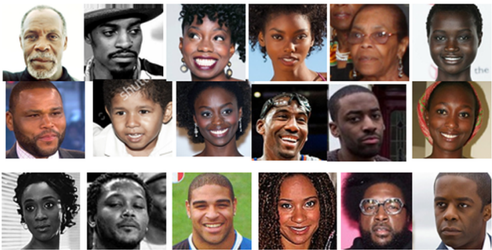
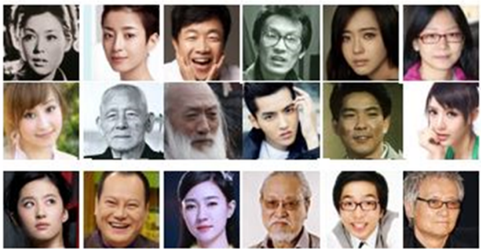
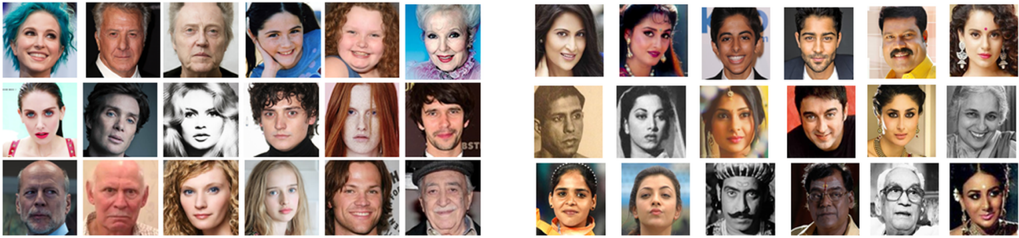
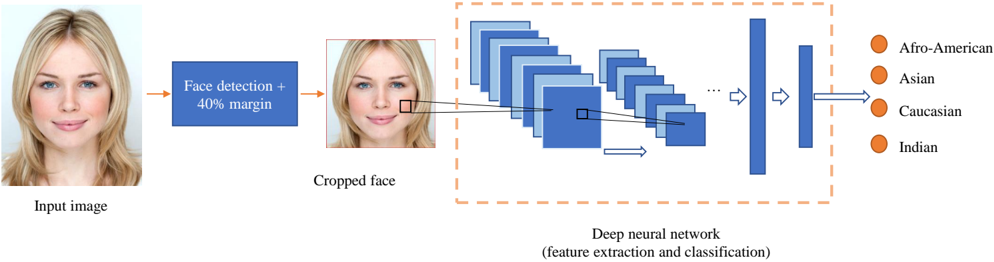
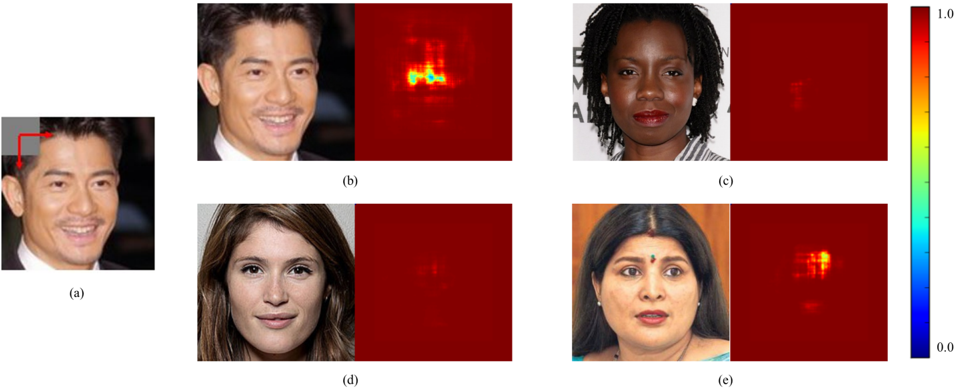
The human face holds a privileged position in multi-disciplinary research as it conveys much information—demographical attributes (age, race, gender, ethnicity), social signals, emotion expression, and so forth. Studies have shown that due to the distribution of ethnicity/race in training datasets, biometric algorithms suffer from “cross race effect”—their performance is better on subjects closer to the “country of origin” of the algorithm. The contributions of this paper are two-fold: (a) first, we gathered, annotated and made public a large-scale database of (over 175,000) facial images by automatically crawling the Internet for celebrities’ images belonging to various ethnicity/races, and (b) we trained and compared four state of the art convolutional neural networks on the problem of race and ethnicity classification. To the best of our knowledge, this is the largest, data-balanced, publicly-available face database annotated with race and ethnicity information. We also studied the impact of various face traits and image characteristics on the race/ethnicity deep learning classification methods and compared the obtained results with the ones extracted from psychological studies and anthropomorphic studies. Extensive tests were performed in order to determine the facial features to which the networks are sensitive to. These tests and a recognition rate of 96.64% on the problem of human race classification demonstrate the effectiveness of the proposed solution.
Overview
The claims and statistics of this paper haven’t been checked yet.
Free: it reads the open-access text and checks the first 5 claims that cite a source we can check. Create a free account to check every claim.
Integrity signals
Registry
Cites
Statistics
Figures















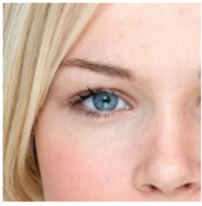

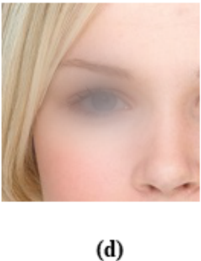
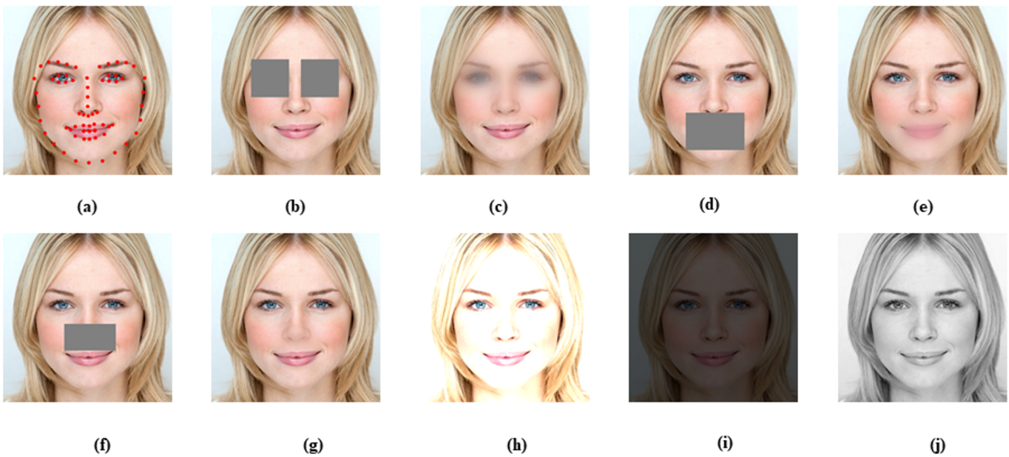
Verification
Claims the paper makes
The claims and statistics of this paper haven’t been checked yet.
Free: it reads the open-access text and checks the first 5 claims that cite a source we can check. Create a free account to check every claim.
Claims other papers make about this one
Each is checked against this paper’s own text: does it say what the citing paper says it does?
The cited source says what the claim attributes to it.
In the citing paper
“In [4], the authors developed and made available a large-scale library of over 175,000 photos of faces of celebrities from multiple ethnicities and races, which were used for training and testing.”
From Face Recognition Based on Deep Learning and FPGA for Ethnicity Identification (2022) · cites this paper as [4]
Self-check
Percentages, sums and reported differences re-computed from the paper’s own numbers.
The self-check needs the paper’s full text.
Citations
Cites
Deep Residual Learning for Image Recognition
He, K., Zhang, X., Ren, S., & Sun, J. (2016) · 2016 IEEE Conference on Computer Vision and Pattern Recognition (CVPR) · doi:10.1109/cvpr.2016.90 · Cited by 235,474 · cited 9×
“The best results are obtained by the Inception Resnet-v2 network (96.36% accuracy).”
MethodInfluentialVery Deep Convolutional Networks for Large-Scale Image Recognition
Simonyan, K., & Zisserman, A. (2014) · arXiv · doi:10.48550/arxiv.1409.1556 · Cited by 114,148 · cited 2×
“The Visual Geometry Group (VGG) from the Oxford University [22] performed a thorough evaluation of CNNs and their performance, by modifying and evaluating the performance of the VGG architecture by iteratively increasing its depth, that is, adding more convolutional layers (up to 19 layers).”
MethodImageNet classification with deep convolutional neural networks
Krizhevsky, A., Sutskever, I., & Hinton, G. E. (2017) · Communications of the ACM · doi:10.1145/3065386 · Cited by 112,155 · cited 1×
“In order to make this approach feasible, the size of the convolutional layers was significantly reduced (to 3 × 3 convolutional filters with 1 stride in all layers, as opposed to 11 × 11 receptive field with stride 4 in [29]).”
MethodImageNet Large Scale Visual Recognition Challenge
Russakovsky, O., Deng, J., Su, H., Krause, J., Satheesh, S., Ma, S., Huang, Z., Karpathy, A., Khosla, A., Bernstein, M., et al. (2015) · International Journal of Computer Vision · doi:10.1007/s11263-015-0816-y · Cited by 39,380 · cited 1×
“SENet architecture [24] is ranked first in the ImageNet Large Scale Visual Recognition Challenge (ILSVRC) in 2017 [26], bringing a relative improvement of roughly 25% over the winner of the previous year.”
BackgroundSqueeze-and-Excitation Networks
Hu, J., Shen, L., & Sun, G. (2018) · 2018 IEEE/CVF Conference on Computer Vision and Pattern Recognition · doi:10.1109/cvpr.2018.00745 · Cited by 35,667
Rethinking the Inception Architecture for Computer Vision
Szegedy, C., Vanhoucke, V., Ioffe, S., Shlens, J., & Wojna, Z. (2016) · 2016 IEEE Conference on Computer Vision and Pattern Recognition (CVPR) · doi:10.1109/cvpr.2016.308 · Cited by 32,138
MobileNetV2: Inverted Residuals and Linear Bottlenecks
Sandler, M., Howard, A., Zhu, M., Zhmoginov, A., & Chen, L.-C. (2018) · 2018 IEEE/CVF Conference on Computer Vision and Pattern Recognition · doi:10.1109/cvpr.2018.00474 · Cited by 28,755 · cited 1×
“Its successor, Mobilenet v2 [35] further improves the by introducing the inverted residual block.”
BackgroundBatch Normalization: Accelerating Deep Network Training by Reducing Internal Covariate Shift
Ioffe, S., & Szegedy, C. (2015) · arXiv · doi:10.48550/arxiv.1502.03167 · Cited by 27,818 · cited 1×
“The original architecture was iteratively improved [32,33], until the latest version Inception-v4 [23], which achieved 3.”
MethodRobust Real-Time Face Detection
Viola, P., & Jones, M. J. (2004) · International Journal of Computer Vision · doi:10.1023/b:visi.0000013087.49260.fb · Cited by 14,097
TensorFlow: Large-Scale Machine Learning on Heterogeneous Distributed Systems
Abadi, M., Agarwal, A., Barham, P., Brevdo, E., Chen, Z., Citro, C., Corrado, G. S., Davis, A., Dean, J., Devin, M., et al. (2016) · arXiv · doi:10.48550/arxiv.1603.04467 · Cited by 9,408 · cited 1×
“The code was written in python, and the CNNs were trained on Nvidia Tesla K40 GPUs using Google‘s tensorflow framework [46].”
Method
Research works printed but not linked: 2
- Tin, H.H.K., and Sein, M.M. (2013, January 21–23). Automatic Race Identification from Face Images in Myanmar. Proceedings of the The First International Conference on Energy Environment and Human Engineering (ICEEHE 2013), Yangon, Myanmar.
- Howard, A., Sandler, M., Chu, G., Chen, L.C., Chen, B., Tan, M., Wang, W., Zhu, Y., Pang, R., and Vasudevan, V. (November, January 27). Searching for mobilenetv3. Proceedings of the IEEE International Conference on Computer Vision, Seoul, Korea.
Cited by
Intelligent deep learning based ethnicity recognition and classification using facial images
Sunitha, G., Geetha, K., Neelakandan, S., Pundir, A. K. S., Hemalatha, S., & Kumar, V. (2022) · Image and Vision Computing · doi:10.1016/j.imavis.2022.104404 · Cited by 91
Face Recognition Based on Deep Learning and FPGA for Ethnicity Identification
AlBdairi, A. J. A., Xiao, Z., Alkhayyat, A., Humaidi, A. J., Fadhel, M. A., Taher, B. H., Alzubaidi, L., Santamaría, J., & Al-Shamma, O. (2022) · Applied Sciences · doi:10.3390/app12052605 · Cited by 54
Performance Analysis of Long Short-Term Memory Predictive Neural Networks on Time Series Data
Bolboacă, R., & Haller, P. (2023) · Mathematics · doi:10.3390/math11061432 · Cited by 58
Miao, H., Zhang, Y., Wang, D., & Feng, S. (2021) · Mathematics · doi:10.3390/math9121437 · Cited by 25
Automatic Ethnicity Classification from Middle Part of the Face Using Convolutional Neural Networks
Belcar, D., Grd, P., & Tomičić, I. (2022) · Informatics · doi:10.3390/informatics9010018 · Cited by 32
Metadata
- Authors
- Darabant, A. S., Borza, D., & Danescu, R.
- Affiliations
- Computer Science Department, Babes Bolyai University, 1st Mihail Kogălniceanu Street, 400084 Cluj-Napoca, Romania
- Babeș-Bolyai University (RO)
- Technical University of Cluj-Napoca (RO)
- Corresponding author
- Borza, Diana
- Venue
- Mathematics
- Publisher
- MDPI AG
- Published
- 2021-01-19
- Volume
- 9
- Issue
- 2
- Pages
- 195
- ISSN
- 2227-7390 (ISSN-L)
- OpenAlex
- W3122359801
- Cited by
- 24
- References
- 49
- Citations by year
- 2026: 2 · 2025: 4 · 2024: 5 · 2023: 6 · 2022: 4 · 2021: 3
- FWCI
- 1.62
- Type
- journal article
- Language
- en
- Open access
- gold
- doi.org
- Licence
- Locations
- Mathematics (publishedVersion, cc-by)
- RePEc: Research Papers in Economics (submittedVersion)
- DOAJ (DOAJ: Directory of Open Access Journals) (submittedVersion, cc-by-sa)
- Topics
- Physical Sciences › Computer Science › Computer Vision and Pattern Recognition › Face recognition and analysis
- Physical Sciences › Computer Science › Computer Vision and Pattern Recognition › Face and Expression Recognition
- Life Sciences › Neuroscience › Cognitive Neuroscience › Face Recognition and Perception
- Keywords
- racial classification, ethnic classification, face images, cross-race effect, convolutional neural networks, facial image database, celebrity image, image annotation
About these checks
Registry, retraction, Cites and statistics results are computed, not judged, with one exception: a printed reference that no index lists is read once by a model before it counts as a citation error. Claims are extracted by a model and kept only when their quote appears verbatim in the text; each cited source is then checked, with a model’s help, for whether it says what the claim relies on. Those verdicts can be wrong — read the claim’s quote and the cited source before relying on one.
Statistics and arithmetic are recomputed, not judged.
Confidence bands are shown only for fields calibrated on our annotated test set. None is calibrated yet, so no band is shown.
What counts as a claim ›How we measure confidence ›How we check this ›
Are you an author, or do you see a problem with this page? Request a review
How to cite
Cite CoChat for the checks on this page, and the paper for its own findings.
- This page
- CoChat. (2026). Citation check: Recognizing Human Races through Machine Learning—A Multi-Network, Multi-Features Study. https://app.cochat.ai/papers/10.3390/math9020195
- The paper
- Darabant, A. S., Borza, D., & Danescu, R. (2021). Recognizing Human Races through Machine Learning—A Multi-Network, Multi-Features Study. Mathematics. https://doi.org/10.3390/math9020195
Data sources
Bibliographic data: Semantic Scholar, OpenAlex, Crossref.
Contains information from the Semantic Scholar Academic Graph Datasets, made available under the ODC Attribution License (ODC-BY 1.0).
Semantic Scholar’s data is described in: Kinney, R., et al. (2023). The Semantic Scholar Open Data Platform. arXiv:2301.10140.
