

The Impact of GLP1 Agonists on Bone Metabolism: A Systematic Review
Open accessThe DOI matches its Crossref record; 54 of the 55 references it cites were found in a registry or an index.
Abstract
Background and Objectives: The association between diabetes mellitus and increased risk of bone fractures has led to the investigation of the impact of antidiabetic drugs on bone metabolism. Glucagon-like peptide-1 receptor agonists (GLP1RAs) are a relatively novel and promising class of anti-hyperglycemic drugs. In addition to their blood glucose lowering action, GLP1RAs seem to have additional pleiotropic properties such as a beneficial skeletal effect; although the underlying mechanisms are not completely understood. The present systematic review summarizes current evidence about GLP1RAs and their effects on bone metabolism and fracture. Methods: An extensive literature search was conducted based on electronic databases namely, PubMed, Google Scholar and Cochrane Central Register of Controlled Trials (CENTRAL) through October 2019 to January 2020 for articles related to bone mineral density, diabetes mellitus and GLP1RAs. We included articles published in English. Finally, we included four randomized controlled trials, three meta-analyses, a case-control study and a population-based cohort analysis. Results: Based on the articles included, the animal studies indicated the salutary skeletal effects of GLP1RAs in opposition to what has been commonly observed in human studies, showing that these agents have no impact on bone mineral density (BMD) and the turnover markers. Moreover, it was demonstrated that GLP1 was not associated with fracture risk as compared to other anti-hyperglycemic drugs. Conclusions: Findings from this systematic review have demonstrated the neutral impact of GLP1RAs on BMD. Moreover, further double-blind randomized controlled trials are needed to draw more meaningful and significant conclusions on the efficacy of GLP1RAs on BMD.
Overview
The claims and statistics of this paper haven’t been checked yet.
Free: it reads the open-access text and checks the first 5 claims that cite a source we can check. Create a free account to check every claim.
Integrity signals
Registry
Cites
Statistics
Figures
Verification
Claims the paper makes
The claims and statistics of this paper haven’t been checked yet.
Free: it reads the open-access text and checks the first 5 claims that cite a source we can check. Create a free account to check every claim.
Claims other papers make about this one
Each is checked against this paper’s own text: does it say what the citing paper says it does?
The source backs part of the claim, not all of it — or backs it for a different population, condition or comparison.
In the citing paper
“Interestingly, pre-clinical studies suggest that GLP1Ra-based therapies may positively impact bone health by promoting bone formation and reducing bone turnover; yet, currently available clinical data on effects of GLP1Ras on human bone metabolism are largely neutral (i.e., no consistent changes are observed in bone turnover biomarkers, bone mineral density (BMD), or fracture risk (12)).”
From G LP1Ra ‐based therapies and DXA ‐acquired musculoskeletal health outcomes: a focused meta‐analysis of placebo‐controlled trials (2025) · cites this paper as [12]
Experimental — accuracy not yet measuredThe source backs part of the claim, not all of it — or backs it for a different population, condition or comparison.
In the citing paper
“These limited findings align with pre-clinical data suggesting GLP1Ra-based therapies may positively impact bone health by promoting bone formation and reducing bone turnover (12, 44).”
From G LP1Ra ‐based therapies and DXA ‐acquired musculoskeletal health outcomes: a focused meta‐analysis of placebo‐controlled trials (2025) · cites this paper as [12]
Experimental — accuracy not yet measuredThe cited source says what the claim attributes to it.
In the citing paper
“Interestingly, pre-clinical studies suggest that GLP1Ra-based therapies may positively impact bone health by promoting bone formation and reducing bone turnover; yet, currently available clinical data on effects of GLP1Ras on human bone metabolism are largely neutral (i.e., no consistent changes are observed in bone turnover biomarkers, bone mineral density (BMD), or fracture risk (12)).”
From G LP1Ra ‐based therapies and DXA ‐acquired musculoskeletal health outcomes: a focused meta‐analysis of placebo‐controlled trials (2025) · cites this paper as [12]
In the citing paper
“therapies with second‐generation weight‐loss agents often result in a 2%–3% decrease in bone mass, increasing fracture risk [44]”
From Muscle Loss in Obesity Therapy as a Therapeutic Target: Trial Design and Endpoints for Regulatory Discussions (2025) · cites this paper as [44]
Self-check
Percentages, sums and reported differences re-computed from the paper’s own numbers.
The self-check needs the paper’s full text.
Citations
Cites
1 retracted
RETRACTED ARTICLE: Pluripotency of mesenchymal stem cells derived from adult marrow
Jiang, Y., Jahagirdar, B. N., Reinhardt, R. L., Schwartz, R. E., Keene, C. D., Ortiz-Gonzalez, X. R., Reyes, M., Lenvik, T., Lund, T., Blackstad, M., et al. (2002) · Nature · doi:10.1038/nature00870 · Cited by 5,518 · cited 2×
“tion of those cells to adipocytes) [18].”
RetractedHADJIDAKIS, D. J., & ANDROULAKIS, I. I. (2006) · Annals of the New York Academy of Sciences · doi:10.1196/annals.1365.035 · Cited by 1,360 · cited 1×
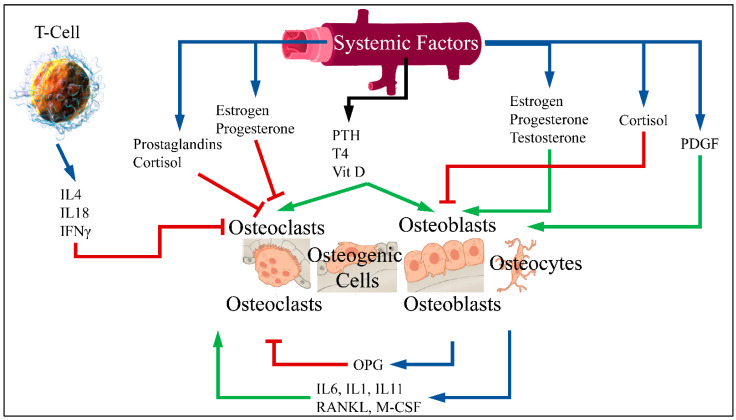
“Moreover, RANKL is bound by OPG, secreted by osteoblasts, which inhibits osteoclast differentiation [4,5] (Figure 1).”
BackgroundSystematic Review of Type 1 and Type 2 Diabetes Mellitus and Risk of Fracture
Janghorbani, M., Van Dam, R. M., Willett, W. C., & Hu, F. B. (2007) · American Journal of Epidemiology · doi:10.1093/aje/kwm106 · Cited by 1,209 · cited 1×
“Patients with diabetes mellitus are at an increased risk of fragility fractures [1].”
BackgroundOsteocyte control of bone formation via sclerostin, a novel BMP antagonist
Winkler, D. G. (2003) · The EMBO Journal · doi:10.1093/emboj/cdg599 · Cited by 1,112 · cited 2×
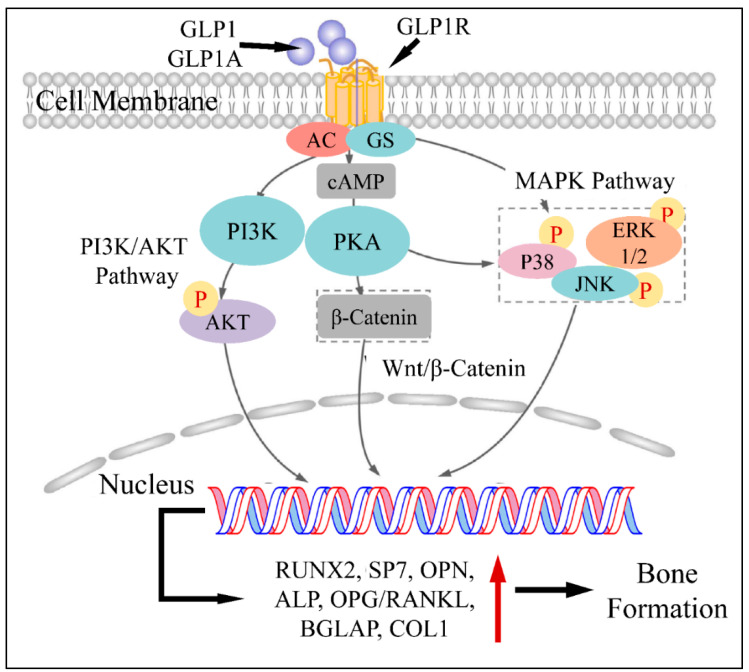
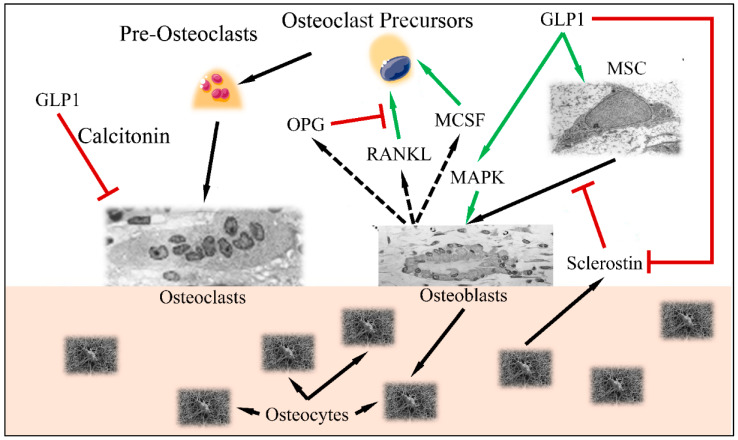
“On the other hand, GLP1 has been found to reduce SOST (sclerostin) mRNA levels, which i known to inhi it bone formation through suppression of the Wnt/nt Wnt known to inhibit bone formation through suppression of tin mRNA and COL1 [15].”
BackgroundMechanisms of diabetes mellitus-induced bone fragility
On behalf of the IOF Bone and Diabetes Working Group, Napoli, N., Chandran, M., Pierroz, D. D., Abrahamsen, B., Schwartz, A. V., & Ferrari, S. L. (2017) · Nature Reviews Endocrinology · doi:10.1038/nrendo.2016.153 · Cited by 1,107
Expression Profiling and Functional Analysis of Wnt Signaling Mechanisms in Mesenchymal Stem Cells
Etheridge, S. L., Spencer, G. J., Heath, D. J., & Genever, P. G. (2004) · STEM CELLS · doi:10.1634/stemcells.22-5-849 · Cited by 344 · cited 2×
“The canonical Wnt pathway, includes LPR5/6, β-catenin, GSK-3β and T cell factor activation which results in osteoblast differentiation and maturation [13,14].”
BackgroundThe Murine Glucagon-Like Peptide-1 Receptor Is Essential for Control of Bone Resorption
Yamada, C., Yamada, Y., Tsukiyama, K., Yamada, K., Udagawa, N., Takahashi, N., Tanaka, K., Drucker, D. J., Seino, Y., & Inagaki, N. (2008) · Endocrinology · doi:10.1210/en.2007-1292 · Cited by 318 · cited 3×
“Further on, GLP1 is able to decrease bone resorption through the calcitonin-dependent pathway [17].”
BackgroundInfluentialGlucagon‐like peptide‐1 receptor agonists in type 2 diabetes treatment: are they all the same?
Gentilella, R., Pechtner, V., Corcos, A., & Consoli, A. (2019) · Diabetes/Metabolism Research and Reviews · doi:10.1002/dmrr.3070 · Cited by 227
Su, B., Sheng, H., Zhang, M., Bu, L., Yang, P., Li, L., Li, F., Sheng, C., Han, Y., Qu, S., et al. (2015) · Endocrine · doi:10.1007/s12020-014-0361-4 · Cited by 203 · cited 2×
“Data revealed that liraglutide was associated with a decreased risk of fracture, while exenatide treatment was remarkably associated with an increased risk of fracture [41].”
BackgroundMa, X., Meng, J., Jia, M., Bi, L., Zhou, Y., Wang, Y., Hu, J., He, G., & Luo, X. (2013) · Journal of Bone and Mineral Research · doi:10.1002/jbmr.1898 · Cited by 200 · cited 5×
“In particular, it has been found that GLP1 agonists are able to reduce serum levels of C-terminal cross-linked telopeptide of type I collagen (CTX-1) and uri ary deoxypyridinoline (DPD)/creatinine ratio [16], thus inhibiting osteoclast action.”
BackgroundResultInfluential
Research works printed but not linked: 1
- Office of the Surgeon General (US) Bone Health and Osteoporosis: A Report of the Surgeon General Department of Health and Human Services Rockville, MD, USA 2004 20945569
Cited by
Jensen, S. B. K., Sørensen, V., Sandsdal, R. M., Lehmann, E. W., Lundgren, J. R., Juhl, C. R., Janus, C., Ternhamar, T., Stallknecht, B. M., Holst, J. J., et al. (2024) · JAMA Network Open · doi:10.1001/jamanetworkopen.2024.16775 · Cited by 155
Understanding the impact of diabetes on bone health: A clinical review
Sharma, P., Sharma, R., & Gaur, K. (2024) · Metabolism Open · doi:10.1016/j.metop.2024.100330 · Cited by 92
Tan, Y., Liu, S., & Tang, Q. (2025) · Acta Diabetologica · doi:10.1007/s00592-025-02468-5 · Cited by 77
“Contrastingly, a study by Daniilo-poulou et al. revealed no effect of GLP-1 receptor agonists on BMD and bone turnover markers in human studies, likely due to the small number of included studies and lack of quantitative analysis [43].”
Old, V. J., Davies, M. J., Papamargaritis, D., Choudhary, P., & Watson, E. L. (2025) · Journal of Cachexia, Sarcopenia and Muscle · doi:10.1002/jcsm.13677 · Cited by 55
Zhang, Y., Chen, G., Wang, W., Yang, D., Zhu, D., & Jing, Y. (2024) · Bone · doi:10.1016/j.bone.2024.117338 · Cited by 52
Bılgın, E., Venerito, V., & Bogdanos, D. P. (2025) · Autoimmunity Reviews · doi:10.1016/j.autrev.2025.103864 · Cited by 57
Wiener, J. M., Sanghvi, P. A., Vlastaris, K., Mroz, T. E., Belding, J., Kaelber, D. C., Olson, T. E., Francis, K. P., Adams, J. S., Bernthal, N. M., et al. (2025) · Spine · doi:10.1097/brs.0000000000005283 · Cited by 52
Beavers, K. M., Cortes, T. M., Foy, C. M., Dinkla, L., Reyes San Martin, F., Ard, J. D., Serra, M. C., & Beavers, D. P. (2025) · Obesity · doi:10.1002/oby.24172 · Cited by 41
“…health by promoting bone formation and reducing bone turnover; however, currently available clinical data on effects of GLP1Ras on human bone metabolism are largely neutral (i.e., no consistent changes are observed in bone turnover biomarkers, bone mineral density [BMD], or fracture risk) [12].”
Diabetes and Bone Health: A Comprehensive Review of Impacts and Mechanisms
Upadhyay, P., & Kumar, S. (2025) · Diabetes/Metabolism Research and Reviews · doi:10.1002/dmrr.70062 · Cited by 47
“For instance, exendin‐4, the first GLP‐1 mimetic approved for T2D treatment, has been shown to improve bone strength and prevent trabecular bone deterioration in animal models of bone loss [80].”
Pechmann, L. M., Pinheiro, F. I., Andrade, V. F. C., & Moreira, C. A. (2024) · Diabetology & Metabolic Syndrome · doi:10.1186/s13098-024-01412-x · Cited by 43
“Additionally, GLP-1 acts directly and indirectly on the Wnt/β-catenin pathway by reducing the mRNA levels of sclerostin, a known inhibitor of bone formation [55].”
BackgroundLee, V., Durkee, S. M., Ponce, B. A., Coutelle, N., Gerges, P. E., & Lima, D. (2025) · The Journal of Arthroplasty · doi:10.1016/j.arth.2025.07.015 · Cited by 28
Bone Fragility in Diabetes and its Management: A Narrative Review
Leungsuwan, D. S., & Chandran, M. (2024) · Drugs · doi:10.1007/s40265-024-02078-5 · Cited by 27
“In a systematic review, Daniilopoulou et al. found GLP1RAs to have a neutral effect on BMD [212].”
Effects of GLP‐1 Receptor Agonists in Alcohol Use Disorder
Klausen, M. K., Knudsen, G. M., Vilsbøll, T., & Fink‐Jensen, A. (2025) · Basic & Clinical Pharmacology & Toxicology · doi:10.1111/bcpt.70004 · Cited by 36
Bone Loss in Diabetes Mellitus: Diaporosis
Kupai, K., Kang, H. L., Pósa, A., Csonka, Á., Várkonyi, T. T., & Valkusz, Z. (2024) · International Journal of Molecular Sciences · doi:10.3390/ijms25137269 · Cited by 25
“Additionally, bone-related cells such as osteoblasts, osteocytes, and osteoclasts express GLP-1 receptors [106].”
BackgroundGLP-1 Receptor Agonists in Orthopaedic Surgery: Implications for Perioperative Care and Outcomes
Ramanathan, R., Lee, J. Y., Dalton, J., Lin, R. T., Lee, I., Gonzalez, C., Shaw, J. D., Schroeder, G. D., Kepler, C. K., Spitnale, M. J., et al. (2025) · Journal of Bone and Joint Surgery · doi:10.2106/jbjs.24.01287 · Cited by 17
Fahim, S. A., Attia, Y. M., Messiha, A. A., Nabawy, A. Y., Refaat, F., & El-Maadawy, W. H. (2025) · Biomedicine & Pharmacotherapy · doi:10.1016/j.biopha.2025.118731 · Cited by 23
Katzman, J. L., Haider, M. A., Cardillo, C., Rozell, J. C., Schwarzkopf, R. M., & Lajam, C. M. (2025) · The Journal of Arthroplasty · doi:10.1016/j.arth.2025.02.042 · Cited by 19
Saadi, M. S. S., Das, R., Ullas, A. M., Powell, D., Wilson, E., Myrtziou, I., Rakieh, C., & Kanakis, I. (2024) · International Journal of Molecular Sciences · doi:10.3390/ijms25147988 · Cited by 20
Exploring the Interplay between Vitamin D, Insulin Resistance, Obesity and Skeletal Health
Abed, M. N., Alassaf, F. A., & Qazzaz, M. E. (2024) · Journal of Bone Metabolism · doi:10.11005/jbm.2024.31.2.75 · Cited by 22
“[99 ] In the case of dentin phosphoprotein-4 inhibitors, recent findings might elucidate their favorable impact on BMD and the risk of osteoporosis.”
BackgroundEmerzian, S. R., Jóhannesdóttir, F., Yu, E. W.-Y., & Bouxsein, M. (2024) · JBMR Plus · doi:10.1093/jbmrpl/ziae003 · Cited by 14
“156 Indeed, one limitation of existing work is the confounding factor of diabetic treatments, which are accounted for differently in different studies and may contribute to the heterogeneity of skeletal outcomes in this population.”
BackgroundMaagensen, H., Helsted, M. M., Gasbjerg, L. S., Vilsbøll, T., & Knop, F. K. (2022) · Current Osteoporosis Reports · doi:10.1007/s11914-022-00767-2 · Cited by 16
“A clinical trial [54] and many animal models [55] have suggested that GLP-1RAs may have bone protective effects.”
BackgroundFracture events associated with GLP-1 receptor agonists in FDA adverse events reporting system
Xiao, Y., Zhou, M., & Xiao, W. (2024) · Acta Diabetologica · doi:10.1007/s00592-024-02415-w · Cited by 13
The effects of GIP, GLP-1 and GLP-2 on markers of bone turnover: a review of the gut–bone axis
Longo, M., Mathiesen, D. S., Gasbjerg, L. S., Esposito, K., Lund, A., & Knop, F. K. (2025) · Journal of Endocrinology · doi:10.1530/joe-24-0231 · Cited by 15
Tummala, S., Gibbs, D. L., Chavarria, J. C., Alder, J., Avramis, I., & Rizkalla, J. (2025) · Journal of Orthopaedics · doi:10.1016/j.jor.2025.05.018 · Cited by 17
Cipriani, C., Lauriero, G., Tripepi, G. L., Ferrari, S., Bover, J., Ravera, M., Barbuto, S., Cianciolo, G., Nicola, L. D., Brandi, M. L., et al. (2023) · Journal of Clinical Medicine · doi:10.3390/jcm12237260 · Cited by 14
“In rat models of T2DM, GLP-1RA treatment is associated with increases in the OPG/RANKL ratio, serum osteocalcin, and femoral BMD, stimulation of RUNX2 activity, and decreased expression of mRNA and serum levels of SOST/sclerostin [48].”
BackgroundInfluentialvon Haehling, S., Sato, R., Langer, H., Khan, M. S., Coats, A. J. S., Evans, W., Heymsfield, S., & Anker, S. D. (2025) · Journal of Cachexia, Sarcopenia and Muscle · doi:10.1002/jcsm.70147 · Cited by 10
Alenezi, B. T., Elfezzani, N., Uddin, R., Patel, H., Chester, S., Abdelmaksoud, A., Hussein, M. H., Zaitone, S. A., Fawzy, M. S., Aiash, H., et al. (2024) · Journal of Clinical Medicine · doi:10.3390/jcm13164896 · Cited by 13
“These findings underscore the importance of evaluating the role of GLP-1R agonists in bone metabolism in tandem with their effects on calcium homeostasis for optimal patient care and treatment optimization [10].”
BackgroundZaki, M. K., Abed, M. N., & Alassaf, F. A. (2024) · Journal of Bone Metabolism · doi:10.11005/jbm.2024.31.3.169 · Cited by 12
“[ 33] Furthermore, Henriksen et al. [21] demonstrated a reduction in nocturnal bone breakdown following the delivery of GLP-2 at 10 PM.”
MethodIs It Time for a New Algorithm for the Pharmacotherapy of Steroid-Induced Diabetes?
Ostrowska-Czyżewska, A., Zgliczyński, W., Papierska, L., & Mrozikiewicz‐Rakowska, B. (2024) · Journal of Clinical Medicine · doi:10.3390/jcm13195801 · Cited by 10
Exploring the multifaceted roles of GLP-1 receptor agonists; a comprehensive review
Hammad, B. F., Zafar, N., Ullah, M., Faisal, S. J., Iftikhar, F., Waheed, H., Muzaffar, M. W., Ahmed, K., Ashraf, F., Zahid, K., et al. (2025) · Frontiers in Clinical Diabetes and Healthcare · doi:10.3389/fcdhc.2025.1590530 · Cited by 14
The role of glucagon-like peptides in osteosarcopenia
Tufail, E., Sanyal, S., Mithal, A., Sanyal, S., & Chattopadhyay, N. (2024) · Journal of Endocrinology · doi:10.1530/joe-24-0210 · Cited by 12
Pharmacotherapy for older people with obesity
Boyle, L. D., Akbaş, F., Yazıcı, D., McGowan, B. M., & Yumuk, V. (2024) · European Journal of Internal Medicine · doi:10.1016/j.ejim.2024.05.006 · Cited by 10
The impact of semaglutide use for weight loss on transforaminal lumbar interbody fusion outcomes
Khalid, S. I., Mirpuri, P., Massaad, E., Wang, R., Elsamadicy, A. A., Shin, J. H., & Adogwa, O. (2025) · Clinical Neurology and Neurosurgery · doi:10.1016/j.clineuro.2025.108952 · Cited by 11
“…are challenging to interpret given that most have examined GLP-1 receptor agonism in the context of patients with diabetes, where the consensus is that these agents are not associated with fracture risk and may improve bone mineral density, likely secondary to improved glycemic control [18 – 20].”
Omurzakov, A., Omurzakov, A. M., Reddy, R. P., Megerian, M. F., White, A. E., Miller, M., Apostolakos, J. M., & Taylor, S. A. (2025) · Seminars in Arthroplasty JSES · doi:10.1053/j.sart.2025.06.001 · Cited by 9
Pal, B., & Chattopadhyay, M. (2024) · Journal of Diabetology · doi:10.4103/jod.jod_117_23 · Cited by 8
Effect of incretins on skeletal health
Starup‐Linde, J., Hygum, K., & Langdahl, B. L. (2023) · Current Opinion in Endocrinology Diabetes and Obesity · doi:10.1097/med.0000000000000813 · Cited by 6
“A recent systematic review including data from meta-analyses, randomized controlled trials, and observational studies concluded that treatment with GLP-1 RA does not impact BMD [37].”
InfluentialManaging Diabetes in Older Adults: Current Approaches in Long-Term Care Facilities
Idrees, T., Castro-Revoredo, I., KANTIPUDI, S. L., & Umpierrez, G. E. (2025) · Current Diabetes Reports · doi:10.1007/s11892-025-01583-5 · Cited by 6
“More recently, a sequential and single-arm study in Spain was conducted on the applicability of a telehealth system using CGM and smart insulin caps in lean body mass [77, 78], and have not conclusively determined their effects on bone mineral density [ 79, 80].”
Mobasheri, A., Henriques, J., & Collins, J. E. (2025) · Osteoarthritis Imaging · doi:10.1016/j.ostima.2025.100374 · Cited by 5
“…could potentially also have beneficial impacts on the BM microenvironmental niche in subchondral bone of obese individuals with OA in addition to their known effects on bone metabolism [113 – 115] and the recently reported pain and function benefits in persons with obesity and knee OA [116].”
Dinkla, L., Beavers, K. M., Robbins, R. N., Akpalu, D., Wherry, S. J., Miller, G., Beavers, D. P., Espinoza, S. E., Trejo, J., Stepanenko, A. R., et al. (2025) · Frontiers in Aging · doi:10.3389/fragi.2025.1691007 · Cited by 11
Constantine, E. P., Enthoven, L. F., Kahan, R., Pflug, E. M., & Lauder, A. S. (2025) · Journal of the American Academy of Orthopaedic Surgeons · doi:10.5435/jaaos-d-24-01505 · Cited by 7
Das, L., Bhadada, S. K., Arjunan, D., & Duseja, A. K. (2025) · Calcified Tissue International · doi:10.1007/s00223-025-01417-2 · Cited by 6
“Evidence from clinical studies has shown conflicting results, in the form of neutral or even decreased lumbar spine BMD [13, 14, 34].”
Du, J., Li, S., Wang, Z., Chen, H., Huang, L., Zhu, S., Zhu, S., Nie, C., Zheng, P., & Pan, Q. (2026) · Journal of Materials Chemistry B · doi:10.1039/d6tb00197a · Cited by 6
Lambrou, G. Ι., Samartzi, A., Vlachou, E. D., & Tsartsalis, A. N. (2025) · Medicines · doi:10.3390/medicines12020010 · Cited by 5
“The blue arrows imply production; red arrows imply inhibition; and green arrows imply stimulation) (figure adopted and reproduced from Daniilopoulou et al. (2022) [13] under the Creative Commons License CY 4.0 doi:10.3390/medicina58020224).”
InfluentialSelf-citationAhmad, T., Adil, M., Azharuddin, M., Ansari, S., Vohora, D., & Sharma, M. (2025) · Current Clinical Pharmacology · doi:10.2174/0127724328373328250624065307 · Cited by 2
Glucagon-Like Peptide-1 Receptor Agonists in Orthopedics: A Scoping Review of Emerging Applications
Regmi, A., Niraula, B. B., Sami, A., Iyengar, K. P., Baral, S., & Jain, V. K. (2025) · Indian Journal of Orthopaedics · doi:10.1007/s43465-025-01614-z · Cited by 3
“Beyond systemic benefits, recent clinical studies are also in favor of GLP-1 RAs, which may directly influence bone biology, cartilage metabolism, and tissue healing [7].”
GLP-1 Agonist Use Leads to Earlier Return of Bowel Function Following Lumbar Fusion
Fano, A. N., Oris, R. J., Dalton, J., Baidya, J., Ng, M. K., Baek, G., Tarawneh, O. H., Narayanan, R., Huang, R., Olson, J., et al. (2025) · Spine · doi:10.1097/brs.0000000000005598 · Cited by 4
Castagna, A., Pujia, C., Mazza, E., Maurotti, S., Ferro, Y., Rizzo, V., Formica, M., Conforto, R., Mercuri, C., Sciacqua, A., et al. (2026) · Nutrients · doi:10.3390/nu18020262 · Cited by 5
“GLP-1 receptor agonists (GLP-1RAs) may promote bone formation and inhibit resorption, with some evidence supporting their benefit in postmenopausal women [45,46].”
GLP-1 Receptor Agonists in Periodontology: Mechanisms, Clinical Evidence, and Implications for Care
Șufaru, I.-G., Vasiliu, B. C., Hăncianu, M., Stratul, Ş., Tatarciuc, M., Iovan, G., Tatarciuc, D., Rudnic, I., Hanu, D., Paduraru, S., et al. (2026) · Biomolecules · doi:10.3390/biom16060857 · Cited by 7
“It also aligns with recent periodontal reviews and studies, which suggest that the strongest current evidence supports bone-preserving effects in inflammatory–metabolic settings rather than confirmed regenerative effects in humans [80–82].”
Chen, H.-Y., Wu, J., Chu, Y.-H., Chen, T.-W., & Huang, C. (2026) · Osteoporosis International · doi:10.1007/s00198-026-08134-y · Cited by 5
“Experimental studies suggest that GLP-1 RAs can modulate bone remodeling by promoting osteo-blastic activity while suppressing osteoclast-mediated bone resorption [34].”
Beyond pounds: What else could be lost?
Idrees, T., & Umpierrez, G. E. (2023) · Journal of Diabetes and its Complications · doi:10.1016/j.jdiacomp.2023.108649 · Cited by 2
Afsharian, Y. P., Rahimnejad, M., Rabiee, S. M., Feizi, F., & Seitz, H. (2025) · Advanced Therapeutics · doi:10.1002/adtp.202400400 · Cited by 3
El‐Marasy, S. A., Abdel-Rahman, R. F., Abd‐Elsalam, R. M., Ogaly, H. A., & Allam, R. M. (2025) · Naunyn-Schmiedeberg s Archives of Pharmacology · doi:10.1007/s00210-025-04145-4 · Cited by 4
“Therefore, RANKL/RANK/OPG pathway plays a critical role in osteoporosis after menopause (Daniilopoulou et al. 2022).”
GLP1-receptor-agonisták a 2-es típusú diabetes vércukorcsökkentő kezelésében
Winkler, G. (2022) · Orvosi Hetilap · doi:10.1556/650.2022.32547 · Cited by 3
Baidya, J., Dalton, J., Baek, G., Fano, A. N., Oris, R. J., Huang, R., Herczeg, C. K., Olson, J., Ng, M., Green, W. A., et al. (2026) · European Spine Journal · doi:10.1007/s00586-026-09849-6 · Cited by 3
“In addition, previous work has described the positive impact that GRAs have on bone mineral density, which has been postulated to partially explain the positive outcomes in lumbar fusion patients [11, 12].”
Dardari, D. (2026) · Diabetes · doi:10.2337/db26-0064 · Cited by 1
Allen, M. R., Metzger, C. E., Chen, N. X., Tinsley, I. C., DiMarchi, R. D., O’Neill, K. D., Matter, E. K., & Moe, S. M. (2026) · Bone · doi:10.1016/j.bone.2026.117933 · Cited by 2
Bone and Rheumatic Disorders in Diabetes
Grey, A. B., & Dalbeth, N. (2024) · Wiley eBooks · doi:10.1002/9781119697473.ch59 · Cited by 1
Normand, É., Franco, A., Stefan Parent, D., Lombardi, G., Brayda‐Bruno, M., Colombini, A., Moreau, A., & Marcil, V. (2024) · Genes · doi:10.3390/genes15040481
“There is also evidence for an implication of GLP-1 and GLP-1R on bone formation and strength [32].”
BackgroundOn Patient Safety: Managing the Risks of Telehealth Prescribing
Rickert, J. B. (2025) · Clinical Orthopaedics and Related Research · doi:10.1097/corr.0000000000003522
GLP-1 Receptor Agonists in Spine Surgery: Current Evidence and Future Directions
Salazar, L. M., Alfonsi, S. P., Federico, V. P., & Sayari, A. J. (2025) · Contemporary Spine Surgery · doi:10.1097/01.css.0001113692.66197.4d
Research Progress in Fracture Risk Assessment and Treatment for T2DM Complicated with Osteoporosis
刘, 诗. (2025) · Advances in Clinical Medicine · doi:10.12677/acm.2025.1582310
New Antidiabetic Drugs: Effects on Bone
Orsi, E., & Resi, V. (2025) · Springer eBooks · doi:10.1007/978-3-032-01700-0_9
Brazilian guidelines for the management of osteoporosis in diabetes mellitus
de Paula, F. A., Silva, B. C. C., d’Alva, C. B., Ohe, M. N., Madeira, M., Farias, L. B. E., de Holanda, N. C. P., Gomes, N. D., Filho, R. L. D. S., Lauria, M. W., et al. (2025) · Diabetology & Metabolic Syndrome · doi:10.1186/s13098-025-02063-2
Katzman, J. L., Alpert, Z., Kennedy, M., Rozell, J. C., Schwarzkopf, R. M., & Lajam, C. M. (2026) · Archives of Orthopaedic and Trauma Surgery · doi:10.1007/s00402-025-06167-2
“GLP-1RAs, including semaglutide, have been hypoth - esized to promote bone formation and inhibit bone resorp - tion, which may enhance bone ingrowth and reduce aseptic loosening in cementless TKA [ 75 , 76].”
Diaz, M. E. C., Kim, G., & Vakharia, M. (2026) · Journal of the Academy of Nutrition and Dietetics · doi:10.1016/j.jand.2026.156317
Chang, Y. K., Lin, H.-M., & Chen, C.-M. (2026) · Global Spine Journal · doi:10.1177/21925682261442934
Kayali, H., Adio, A. A., Parmar, T., Sumiyoshi, N., & Boakye, L. A. T. (2026) · Journal of the American Academy of Orthopaedic Surgeons · doi:10.5435/jaaos-d-26-00153
Baur, A. J., Sasaki, J., Hallaron, D., Chmait, H. R., FANG, W. H., & Watson, T. S. (2026) · The Journal of Foot & Ankle Surgery · doi:10.1053/j.jfas.2026.05.015
Zarei, M., & Hajiani, Y. (2026) · Diabetology & Metabolic Syndrome · doi:10.1186/s13098-026-02196-y
“However, substantial heterogeneity in study populations, drug selection, dosing, follow-up duration, and fracture ascertainment limits the strength of these conclusions [163, 164].”
Huang, B., Xu, F., Yang, J., Wang, P.-X., Liu, Z., Liu, F.-R., Li, H., Yuan, L., Liu, J., & Lin, X. (2026) · Frontiers in Cell and Developmental Biology · doi:10.3389/fcell.2026.1811476
“…bone health and their exact usage prevalence in our cohort is unknown, the net magnitude and direction of this residual confounding cannot be reliably quantified, and therefore unmeasured confounding related to these drugs cannot be fully ruled out (Egger et al., 2016; Daniilopoulou et al., 2022).”
Muthu, S., Viswanathan, V. K., Ponnusamy, D. V. K., Samuel, M. S., Chandra, S. K. R., Sharun, K., Hiatt, L., Manoharan, S. R. R., & Theiss, S. M. (2026) · European Spine Journal · doi:10.1007/s00586-026-10205-x · Cited by 1
Mills, A. M., & Noble, E. E. (2026) · Appetite · doi:10.1016/j.appet.2026.108729
Alves, M. L. M., Costa, A. O. D. S. M., Costa, J. D. V. M., Garrido, G. A., Gonzalez, J. V. P., Ferreira, J. S. N., & Pereira, B. D. A. (2026) · North American Spine Society Journal (NASSJ) · doi:10.1016/j.xnsj.2026.100938
“The biologic plausibility of metabolic, inflammatory, and bone-related effects remains relevant, but available observational evidence does not establish a direct clinical benefit [ 2–7 ].”
InfluentialGu, S., Yang, S., Tian, Y., Hu, C., Wen, D., & Shi, Y. (2026) · Microchemical Journal · doi:10.1016/j.microc.2026.120076
Metadata
- Authors
- Daniilopoulou, I., Vlachou, E., Lambrou, G. I., Ntikoudi, A., Dokoutsidou, E., Fasoi, G., Govina, O., Kavga, A., & Tsartsalis, A. N.
- Affiliations
- University of West Attica (GR)
- Choremeio Research Laboratory, First Department of Pediatrics, National and Kapodistrian University of Athens, Thivon & Levadeias 8, 11527 Athens, Greece
- Athens Naval & Veterans Hospital (GR)
- Corresponding author
- Vlachou, Eugenia
- Tsartsalis, Athanasios N.
- ORCID
- Venue
- Medicina
- Publisher
- MDPI AG
- Published
- 2022-02-02
- Volume
- 58
- Issue
- 2
- Pages
- 224
- ISSN
- 1010-660X (ISSN-L)
- 1648-9144
- PMC
- PMC8878541
- OpenAlex
- W4210692687
- Semantic Scholar
- f1866b9fc82cacb684ccb88c669b7eee6ab3433c
- Cited by
- 74
- References
- 55
- Citations by year
- 2026: 18 · 2025: 32 · 2024: 19 · 2023: 3 · 2022: 2
- FWCI
- 3.06
- Type
- journal article
- Language
- en
- Open access
- gold
- doi.org
- Licence
- Locations
- Medicina (publishedVersion, cc-by)
- PubMed Central (publishedVersion, cc-by)
- PubMed (publishedVersion)
- DOAJ (DOAJ: Directory of Open Access Journals) (submittedVersion, cc-by-sa)
- Topics
- Health Sciences › Medicine › Orthopedics and Sports Medicine › Bone health and osteoporosis research
- Health Sciences › Medicine › Endocrinology, Diabetes and Metabolism › Diabetes Treatment and Management
- Life Sciences › Biochemistry, Genetics and Molecular Biology › Molecular Biology › Bone Metabolism and Diseases
- Keywords
- GLP-1 receptor agonists, bone metabolism, bone mineral density, fracture risk, diabetes mellitus, antidiabetic drugs, bone turnover markers, animal studies
- MeSH terms
- Animals, Blood Glucose, Diabetes Mellitus, Type 2, Humans, Hypoglycemic Agents, Case-Control Studies, Randomized Controlled Trials as Topic, Fractures, Bone
About these checks
Registry, retraction, Cites and statistics results are computed, not judged, with one exception: a printed reference that no index lists is read once by a model before it counts as a citation error. Claims are extracted by a model and kept only when their quote appears verbatim in the text; each cited source is then checked, with a model’s help, for whether it says what the claim relies on. Those verdicts can be wrong — read the claim’s quote and the cited source before relying on one.
Statistics and arithmetic are recomputed, not judged.
Confidence bands are shown only for fields calibrated on our annotated test set. None is calibrated yet, so no band is shown.
What counts as a claim ›How we measure confidence ›How we check this ›
Are you an author, or do you see a problem with this page? Request a review
Data sources
Bibliographic data: Semantic Scholar, OpenAlex, Crossref.
Contains information from the Semantic Scholar Academic Graph Datasets, made available under the ODC Attribution License (ODC-BY 1.0).
Semantic Scholar’s data is described in: Kinney, R., et al. (2023). The Semantic Scholar Open Data Platform. arXiv:2301.10140.
