

Trends in Sudden Death Among Schizophrenia Inpatients
Open accessThe DOI matches its Crossref record; 63 of the 63 references it cites were found in a registry or an index; 11 of the 25 sources its claims cite were checked for support.
Abstract
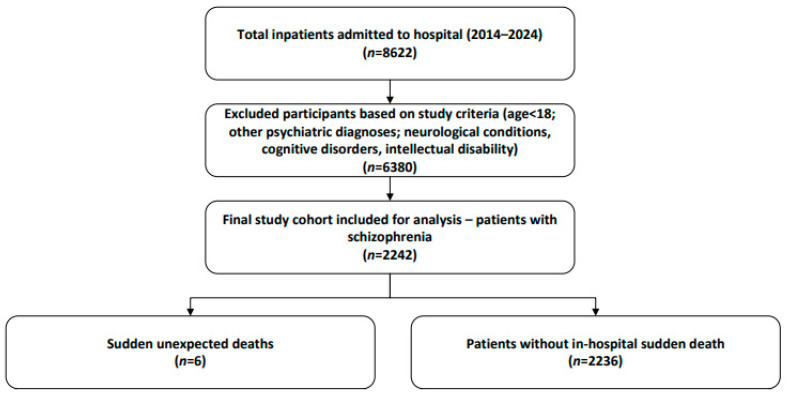
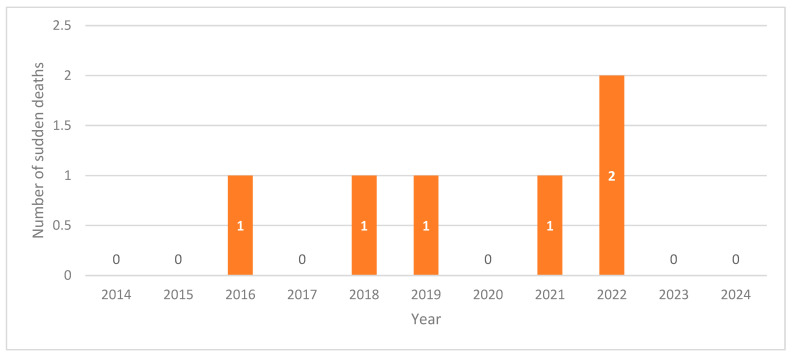
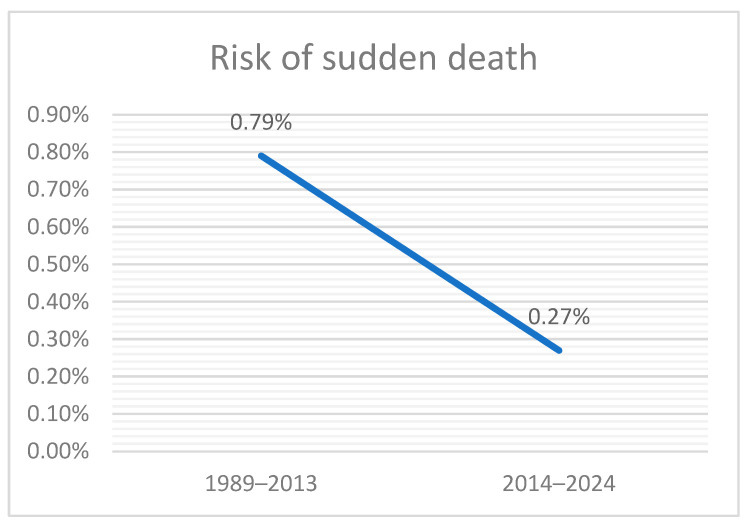
Background and Objectives: Schizophrenia is associated with a 15–20-year reduction in life expectancy, with cardiovascular disease as the leading cause. Sudden unexpected death is common in this population, often linked to structural heart disease, antipsychotic use, and overlapping cardiometabolic, autonomic, and drug-related factors. This study aimed to determine the incidence and causes of sudden unexpected death among schizophrenia inpatients between 2014 and 2024 and compare these findings with historical data from the same institution. Materials and Methods: We conducted a retrospective cohort study of schizophrenia inpatients admitted from January 2014 to December 2024. Hospital records were reviewed to identify sudden and unexpected deaths, verified by the Forensic Medicine Service Brașov. Sudden death was defined as death in an asymptomatic patient or within one hour of new symptom onset, excluding suicide, homicide, or accidental overdose. In accordance with Romanian legislation, an autopsy was performed in every case. Results: Over the 10-year period, six schizophrenia inpatients (mean age 53.2 ± 17.8 years) died suddenly. All had long-standing schizophrenia (mean illness duration 28.7 ± 17.7 years) and were receiving second-generation antipsychotics. Cardiovascular comorbidity was present in three cases. All patients received antipsychotic treatment within 24 h before death. No deaths occurred within the first 24 h of admission; one occurred within 48 h. Compared with the 1989–2013 cohort, which included 57 sudden deaths, the incidence during 2014–2024 declined substantially (0.27% vs. 0.79%). Conclusions: The incidence of sudden unexpected death among schizophrenia inpatients declined significantly over the past decade compared with the 1989–2013 cohort, reflecting improved multidisciplinary care, prompt transfer to general hospitals, and wider use of second-generation antipsychotics. Autopsy findings emphasize the continuing importance of cardiovascular disease and airway obstruction as preventable causes of sudden death in this population.
Overview
CoChat Summary
TL;DR
This retrospective single-centre cohort study found that sudden unexpected death among schizophrenia inpatients at a Romanian psychiatric hospital declined from 0.79% in 1989–2013 to 0.27% in 2014–2024. In the 2014–2024 cohort, deaths were still driven by preventable medical causes, especially cardiovascular disease and food bolus airway obstruction.
Key findings
- Among 2,242 schizophrenia inpatients admitted in 2014–2024, 6 died suddenly and unexpectedly; the incidence was 0.27% (95% CI 0.12–0.60%).
- In the 6 recent cases, causes of death were 2 mechanical asphyxia cases from food bolus airway obstruction, 3 cardiovascular deaths (pulmonary thromboembolism, myocardiosclerosis, acute myocardial infarction), and 1 bronchopneumonia.
- Compared with the hospital’s earlier 1989–2013 cohort (57/7,189; 0.79%, 95% CI 0.61–1.03%), the recent cohort had a lower risk of sudden death: RR 0.34 (95% CI 0.15–0.78), with significant tests reported as χ² = 6.34, p = 0.012 and Fisher’s exact p = 0.0068.
- Treatment patterns changed markedly across cohorts: first-generation antipsychotic use fell from 83.4% to 0%, while second-generation antipsychotic use rose from 15.7% to 100% among autopsy-confirmed cases.
Methods
- Retrospective observational cohort study at the Clinical Hospital of Psychiatry and Neurology, Brașov, Romania, covering 2014–2024.
- Included schizophrenia inpatients who died suddenly and unexpectedly during hospitalization; deaths were confirmed by the Forensic Medicine Service, and autopsy was performed in every case by legal medicine pathologists.
- Used descriptive statistics and group comparisons with prior published hospital data (1989–2013) using chi-square/Fisher’s exact tests for categorical variables and Student’s t-test for continuous variables.
Limitations
- The paper states the study is retrospective, so findings are correlational rather than causal.
- The number of events was small in the 2014–2024 cohort, limiting subgroup analyses and yielding relatively wide confidence intervals.
- Comparison with the earlier cohort was limited to autopsy-confirmed cases because detailed demographic data for the full 1989–2013 cohort were unavailable; this is stated in the paper.
- The text also makes evident that the study is single-centre and Romania-specific, which limits generalizability.
Model-written summary. Check it against the paper before relying on it.
Integrity signals
Registry
Cites
Statistics
Figures
Verification
Claims the paper makes
8 Valid · 1 Not valid · 15 Not checked · 59 Own results and interpretations
Every source the paper cites for this claim was checked and supports it.
In the paper
“prospective registry data show that individuals with schizophrenia are overrepresented among young SCD cases by more than tenfold, with higher burdens of cardiovascular risk factors, unwitnessed arrests, prolonged time-to-discovery, and asystole—all factors associated with poor survival outcomes [10].”
§ Trends in Sudden Death Among Schizophrenia Inpatients > 1. Introduction
What the sources say
- Supportedcites [10] Paratz E.D. van Heusden A. Zentner D. Morgan N. Smith K. Thompson T. James P. Connell V. Pflaumer A. Semsarian C. Sudden Cardiac Death in People With Schizophrenia: Higher Risk, Poorer Resuscitation Profiles, and Differing Pathologies JACC Clin. Electrophysiol. 2023 9 1310 1318 10.1016/j.jacep.2023.01.026 37558287 source
The Discussion reports that patients with schizophrenia account for 11% of the young SCD population studied, an 11-fold overrepresentation relative to their prevalence in the general population. The Conclusions specify that these were young SCD patients referred for forensic investigation. (LLM, conf=0.93)
plainstates an association- Asserted: passes — The authors put it forward as true.
- Checkable: passes — It can be checked against evidence.
- Load-bearing: unclear — It is unclear whether the paper’s conclusions depend on it.
- Based: passes — The paper gives a reason why it holds.
- Supported
A result the paper reports from its own data — it cites no other source for it, so there is none to check. The quote shows it is in the paper.
In the paper
“while one was due to bronchopneumonia.”
§ Trends in Sudden Death Among Schizophrenia Inpatients > 3. Results > 3.1. Causes of Death
plainSingle case- Asserted: passes — The authors put it forward as true.
- Checkable: passes — It can be checked against evidence.
- Load-bearing: unclear — It is unclear whether the paper’s conclusions depend on it.
- Based: passes — The paper gives a reason why it holds.
A result the paper reports from its own data — it cites no other source for it, so there is none to check. The quote shows it is in the paper.
In the paper
“All patients were prescribed second-generation antipsychotics (SGAs) in the 24 h preceding death.”
- Also stated in: § Abstract Background and Objectives: Schizophrenia is associated with a 15–20-year reduction in life expectancy, with cardiovascular disease as the leading cause. Sudden unexpected death is common in this population, often linked to structural heart disease, antipsychotic use, and overlapping cardiometabolic, autonomic, and drug-related factors. This study aimed to determine the incidence and causes of sudden unexpected death among schizophrenia inpatients between 2014 and 2024 and compare these findings with historical data from the same institution. Materials and Methods: We conducted a retrospective cohort study of schizophrenia inpatients admitted from January 2014 to December 2024. Hospital records were reviewed to identify sudden and unexpected deaths, verified by the Forensic Medicine Service Brașov. Sudden death was defined as death in an asymptomatic patient or within one hour of new symptom onset, excluding suicide, homicide, or accidental overdose. In accordance with Romanian legislation, an autopsy was performed in every case. Results: Over the 10-year period, six schizophrenia inpatients (mean age 53.2 ± 17.8 years) died suddenly. All had long-standing schizophrenia (mean illness duration 28.7 ± 17.7 years) and were receiving second-generation antipsychotics. Cardiovascular comorbidity was present in three cases. All patients received antipsychotic treatment within 24 h before death. No deaths occurred within the first 24 h of admission; one occurred within 48 h. Compared with the 1989–2013 cohort, which included 57 sudden deaths, the incidence during 2014–2024 declined substantially (0.27% vs. 0.79%). Conclusions: The incidence of sudden unexpected death among schizophrenia inpatients declined significantly over the past decade compared with the 1989–2013 cohort, reflecting improved multidisciplinary care, prompt transfer to general hospitals, and wider use of second-generation antipsychotics. Autopsy findings emphasize the continuing importance of cardiovascular disease and airway obstruction as preventable causes of sudden death in this population. · plain
“All had long-standing schizophrenia (mean illness duration 28.7 ± 17.7 years) and were receiving second-generation antipsychotics.”
§ Trends in Sudden Death Among Schizophrenia Inpatients > 3. Results
plain- Asserted: passes — The authors put it forward as true.
- Checkable: passes — It can be checked against evidence.
- Load-bearing: unclear — It is unclear whether the paper’s conclusions depend on it.
- Based: passes — The paper gives a reason why it holds.
- Also stated in: § Abstract Background and Objectives: Schizophrenia is associated with a 15–20-year reduction in life expectancy, with cardiovascular disease as the leading cause. Sudden unexpected death is common in this population, often linked to structural heart disease, antipsychotic use, and overlapping cardiometabolic, autonomic, and drug-related factors. This study aimed to determine the incidence and causes of sudden unexpected death among schizophrenia inpatients between 2014 and 2024 and compare these findings with historical data from the same institution. Materials and Methods: We conducted a retrospective cohort study of schizophrenia inpatients admitted from January 2014 to December 2024. Hospital records were reviewed to identify sudden and unexpected deaths, verified by the Forensic Medicine Service Brașov. Sudden death was defined as death in an asymptomatic patient or within one hour of new symptom onset, excluding suicide, homicide, or accidental overdose. In accordance with Romanian legislation, an autopsy was performed in every case. Results: Over the 10-year period, six schizophrenia inpatients (mean age 53.2 ± 17.8 years) died suddenly. All had long-standing schizophrenia (mean illness duration 28.7 ± 17.7 years) and were receiving second-generation antipsychotics. Cardiovascular comorbidity was present in three cases. All patients received antipsychotic treatment within 24 h before death. No deaths occurred within the first 24 h of admission; one occurred within 48 h. Compared with the 1989–2013 cohort, which included 57 sudden deaths, the incidence during 2014–2024 declined substantially (0.27% vs. 0.79%). Conclusions: The incidence of sudden unexpected death among schizophrenia inpatients declined significantly over the past decade compared with the 1989–2013 cohort, reflecting improved multidisciplinary care, prompt transfer to general hospitals, and wider use of second-generation antipsychotics. Autopsy findings emphasize the continuing importance of cardiovascular disease and airway obstruction as preventable causes of sudden death in this population. · plain
A result the paper reports from its own data — it cites no other source for it, so there is none to check. The quote shows it is in the paper.
In the paper
“The mean age at death was 53.2 years (SD = ±17.8).”
§ Trends in Sudden Death Among Schizophrenia Inpatients > 3. Results
plainn = 6- Asserted: passes — The authors put it forward as true.
- Checkable: passes — It can be checked against evidence.
- Load-bearing: unclear — It is unclear whether the paper’s conclusions depend on it.
- Based: passes — The paper gives a reason why it holds.
In the paper
“Compared with the 1989–2013 cohort, which included 57 sudden deaths, the incidence during 2014–2024 declined substantially (0.27% vs. 0.79%).”
- Also stated in: § Abstract Background and Objectives: Schizophrenia is associated with a 15–20-year reduction in life expectancy, with cardiovascular disease as the leading cause. Sudden unexpected death is common in this population, often linked to structural heart disease, antipsychotic use, and overlapping cardiometabolic, autonomic, and drug-related factors. This study aimed to determine the incidence and causes of sudden unexpected death among schizophrenia inpatients between 2014 and 2024 and compare these findings with historical data from the same institution. Materials and Methods: We conducted a retrospective cohort study of schizophrenia inpatients admitted from January 2014 to December 2024. Hospital records were reviewed to identify sudden and unexpected deaths, verified by the Forensic Medicine Service Brașov. Sudden death was defined as death in an asymptomatic patient or within one hour of new symptom onset, excluding suicide, homicide, or accidental overdose. In accordance with Romanian legislation, an autopsy was performed in every case. Results: Over the 10-year period, six schizophrenia inpatients (mean age 53.2 ± 17.8 years) died suddenly. All had long-standing schizophrenia (mean illness duration 28.7 ± 17.7 years) and were receiving second-generation antipsychotics. Cardiovascular comorbidity was present in three cases. All patients received antipsychotic treatment within 24 h before death. No deaths occurred within the first 24 h of admission; one occurred within 48 h. Compared with the 1989–2013 cohort, which included 57 sudden deaths, the incidence during 2014–2024 declined substantially (0.27% vs. 0.79%). Conclusions: The incidence of sudden unexpected death among schizophrenia inpatients declined significantly over the past decade compared with the 1989–2013 cohort, reflecting improved multidisciplinary care, prompt transfer to general hospitals, and wider use of second-generation antipsychotics. Autopsy findings emphasize the continuing importance of cardiovascular disease and airway obstruction as preventable causes of sudden death in this population. · plain
“The incidence of sudden unexpected death among schizophrenia inpatients declined significantly over the past decade compared with the 1989–2013 cohort”
§ Trends in Sudden Death Among Schizophrenia Inpatients > Abstract Background and Objectives: Schizophrenia is associated with a 15–20-year reduction in life expectancy, with cardiovascular disease as the leading cause. Sudden unexpected death is common in this population, often linked to structural heart disease, antipsychotic use, and overlapping cardiometabolic, autonomic, and drug-related factors. This study aimed to determine the incidence and causes of sudden unexpected death among schizophrenia inpatients between 2014 and 2024 and compare these findings with historical data from the same institution. Materials and Methods: We conducted a retrospective cohort study of schizophrenia inpatients admitted from January 2014 to December 2024. Hospital records were reviewed to identify sudden and unexpected deaths, verified by the Forensic Medicine Service Brașov. Sudden death was defined as death in an asymptomatic patient or within one hour of new symptom onset, excluding suicide, homicide, or accidental overdose. In accordance with Romanian legislation, an autopsy was performed in every case. Results: Over the 10-year period, six schizophrenia inpatients (mean age 53.2 ± 17.8 years) died suddenly. All had long-standing schizophrenia (mean illness duration 28.7 ± 17.7 years) and were receiving second-generation antipsychotics. Cardiovascular comorbidity was present in three cases. All patients received antipsychotic treatment within 24 h before death. No deaths occurred within the first 24 h of admission; one occurred within 48 h. Compared with the 1989–2013 cohort, which included 57 sudden deaths, the incidence during 2014–2024 declined substantially (0.27% vs. 0.79%). Conclusions: The incidence of sudden unexpected death among schizophrenia inpatients declined significantly over the past decade compared with the 1989–2013 cohort, reflecting improved multidisciplinary care, prompt transfer to general hospitals, and wider use of second-generation antipsychotics. Autopsy findings emphasize the continuing importance of cardiovascular disease and airway obstruction as preventable causes of sudden death in this population.
What the sources say
- Not checked — no full text of the sourcecites [6] Ifteni P. Correll C.U. Burtea V. Kane J.M. Manu P. Sudden unexpected death in schizophrenia: Autopsy findings in psychiatric inpatients Schizophr. Res. 2014 155 72 76 10.1016/j.schres.2014.03.011 24704220 source
plain- Asserted: passes — The authors put it forward as true.
- Checkable: passes — It can be checked against evidence.
- Load-bearing: passes — The paper’s conclusions depend on it.
- Based: passes — The paper gives a reason why it holds.
- Rests on an assumption not shown here.
- Also stated in: § Abstract Background and Objectives: Schizophrenia is associated with a 15–20-year reduction in life expectancy, with cardiovascular disease as the leading cause. Sudden unexpected death is common in this population, often linked to structural heart disease, antipsychotic use, and overlapping cardiometabolic, autonomic, and drug-related factors. This study aimed to determine the incidence and causes of sudden unexpected death among schizophrenia inpatients between 2014 and 2024 and compare these findings with historical data from the same institution. Materials and Methods: We conducted a retrospective cohort study of schizophrenia inpatients admitted from January 2014 to December 2024. Hospital records were reviewed to identify sudden and unexpected deaths, verified by the Forensic Medicine Service Brașov. Sudden death was defined as death in an asymptomatic patient or within one hour of new symptom onset, excluding suicide, homicide, or accidental overdose. In accordance with Romanian legislation, an autopsy was performed in every case. Results: Over the 10-year period, six schizophrenia inpatients (mean age 53.2 ± 17.8 years) died suddenly. All had long-standing schizophrenia (mean illness duration 28.7 ± 17.7 years) and were receiving second-generation antipsychotics. Cardiovascular comorbidity was present in three cases. All patients received antipsychotic treatment within 24 h before death. No deaths occurred within the first 24 h of admission; one occurred within 48 h. Compared with the 1989–2013 cohort, which included 57 sudden deaths, the incidence during 2014–2024 declined substantially (0.27% vs. 0.79%). Conclusions: The incidence of sudden unexpected death among schizophrenia inpatients declined significantly over the past decade compared with the 1989–2013 cohort, reflecting improved multidisciplinary care, prompt transfer to general hospitals, and wider use of second-generation antipsychotics. Autopsy findings emphasize the continuing importance of cardiovascular disease and airway obstruction as preventable causes of sudden death in this population. · plain
31 more claims
Create a free account to see all 83 claims and to verify the 1 reference still open.
- Probably not a substantial claim. 19
- It may state two separate claims as one. 37
- The quote only partly states this claim. 1
Citations
Cites
Zipes, D. P., & Wellens, H. J. J. (1998) · Circulation · doi:10.1161/01.cir.98.21.2334 · Cited by 2,744 · cited 1×
“Within this context, sudden unexpected death—classically defined as an unexpected death occurring within approximately one hour of symptom onset [3]—has been a persistent and alarming phenomenon among psychiatric inpatients with schizophrenia.”
Correll, C. U., Solmi, M., Veronese, N., Bortolato, B., Rosson, S., Santonastaso, P., Thapa‐Chhetri, N., Fornaro, M., Gallicchio, D., Collantoni, E., et al. (2017) · World Psychiatry · doi:10.1002/wps.20420 · Cited by 1,729 · cited 1×
“Schizophrenia is associated with one of the highest risks of premature mortality among psychiatric disorders, with a 15–20 year life expectancy gap [1].”
Atypical antipsychotic drugs and the risk of sudden cardiac death
Ray, W. A., Chung, C. P., Murray, K. T., Hall, K., & Stein, C. M. (2009) · New England Journal of Medicine · doi:10.1056/nejmoa0806994 · Cited by 1,194 · cited 1×
“Both first-generation (typical) and second-generation (atypical) antipsychotics can prolong cardiac repolarization (QT interval), increasing the risk of ventricular arrhythmias such as torsades de pointes [27,28].”
Diet, smoking and cardiovascular risk in people with schizophrenia: Descriptive study
McCreadie, R. G., & Scottish Schizophrenia Lifestyle Group (2003) · British Journal of Psychiatry · doi:10.1192/03-162 · Cited by 546
Ringen, P. A., Engh, J. A., Birkenaes, A. B., Dieset, I., & Andreassen, O. A. (2014) · Frontiers in Psychiatry · doi:10.3389/fpsyt.2014.00137 · Cited by 339 · cited 1×
“This improvement must also be considered in light of the well-documented vulnerability of patients with schizophrenia to cardiovascular disease, metabolic disturbances, and infectious illnesses [56,57].”
Hennessy, S., Bilker, W. B., Knauss, J. S., Margolis, D. J., Kimmel, S. E., Reynolds, R. F., Glasser, D. B., Morrison, M. F., & Strom, B. L. (2002) · BMJ · doi:10.1136/bmj.325.7372.1070 · Cited by 261 · cited 1×
“Early pharmacoepidemiological evidence from a large U.S. cohort study by Hennessy et al. (2002) [31] showed that patients with treated schizophrenia had a 1.7–3.2-fold higher rate of cardiac arrest and ventricular arrhythmia compared with non-psychiatric controls, with risk particularly elevated at…”
InfluentialAntipsychotics and the Risk of Sudden Cardiac Death
Straus, S. M. J. M., Bleumink, G. S., Dieleman, J. P., van der Lei, J., ‘t Jong, G. W., Kingma, J. H., Sturkenboom, M. C. J. M., & Stricker, B. H. C. (2004) · Archives of Internal Medicine · doi:10.1001/archinte.164.12.1293 · Cited by 260 · cited 1×
“Concerns about QT prolongation, torsades de pointes [45], and other arrhythmogenic effects have led to more cautious dosing and greater preference for SGAs and monotherapy when possible [46–48].”
Oxidative Stress‐Related Mechanisms in Schizophrenia Pathogenesis and New Treatment Perspectives
Ermakov, E. A., Dmitrieva, E. M., Parshukova, D. A., Kazantseva, D. V., Vasilieva, A. R., & Smirnova, L. P. (2021) · Oxidative Medicine and Cellular Longevity · doi:10.1155/2021/8881770 · Cited by 233
Sudden death in psychiatric patients
Ruschena, D., Mullen, P. E., Burgess, P., Cordner, S., Barry-Walsh, J., Drummer, O., Palmer, S., Browne, C., & Wallace, C. (1998) · British Journal of Psychiatry · doi:10.1192/bjp.172.4.331 · Cited by 217 · cited 1×
“Sudden unexpected death was defined as a rapid, unforeseen fatal event occurring in an otherwise stable inpatient or within one hour of new symptom onset, consistent with definitions used in psychiatric settings [6,41].”
The genetics underlying acquired long QT syndrome: impact for genetic screening
Itoh, H., Crotti, L., Aiba, T., Spazzolini, C., Denjoy, I., Fressart, V., Hayashi, K., Nakajima, T., Ohno, S., Makiyama, T., et al. (2016) · European Heart Journal · doi:10.1093/eurheartj/ehv695 · Cited by 213 · cited 1×
“Moreover, Itoh et al. (2016) [34] demonstrated that nearly one-third of patients with acquired long QT syndrome carry mutations in congenital LQTS genes, suggesting that latent genetic variants may predispose to drug-induced arrhythmias.”
Wu, C., Tsai, Y., & Tsai, H. (2015) · Journal of the American Heart Association · doi:10.1161/jaha.114.001568 · Cited by 191 · cited 1×
“…case-crossover study in over 17,000 patients and found a 1.5-fold higher risk of ventricular arrhythmia or sudden cardiac death during antipsychotic exposure, especially with short-term use and agents showing high hERG-blocking potency such as haloperidol, thioridazine, and risperidone [33].”
InfluentialReview: Mortality in schizophrenia: a measurable clinical endpoint
Bushe, C. J., Taylor, M., & Haukka, J. (2010) · Journal of Psychopharmacology · doi:10.1177/1359786810382468 · Cited by 185 · cited 1×
“Mortality in schizophrenia has been increasingly recognized as a measurable clinical endpoint, with causes of death primarily involving cardiovascular disease, cancer, and suicide [2].”
Mortality in Schizophrenia-Spectrum Disorders: Recent Advances in Understanding and Management
Peritogiannis, V., Ninou, A., & Samakouri, M. A. (2022) · Healthcare · doi:10.3390/healthcare10122366 · Cited by 136 · cited 1×
“They are also more likely to experience underdiagnosis and undertreatment of physical health conditions due to diagnostic overshadowing and fragmented care [58].”
Cicala, G., Barbieri, M. A., Spina, E., & de León, J. (2019) · Expert Review of Clinical Pharmacology · doi:10.1080/17512433.2019.1577134 · Cited by 119
Schizophrenia and sudden cardiac death—A review
Koponen, H., Alaräisänen, A., Saari, K., Pelkonen, O., Huikuri, H., Raatikainen, M. P., Savolainen, M., & Isohanni, M. (2008) · Nordic Journal of Psychiatry · doi:10.1080/08039480801959323 · Cited by 105 · cited 1×
“Concerns about QT prolongation, torsades de pointes [45], and other arrhythmogenic effects have led to more cautious dosing and greater preference for SGAs and monotherapy when possible [46–48].”
Haddad, P. M., Taylor, M., & Niaz, O. S. (2009) · British Journal of Psychiatry · doi:10.1192/bjp.195.52.s20 · Cited by 97
Sudden unexpected death in schizophrenia: Autopsy findings in psychiatric inpatients
Ifteni, P., Correll, C. U., Burtea, V., Kane, J. M., & Manu, P. (2014) · Schizophrenia Research · doi:10.1016/j.schres.2014.03.011 · Cited by 91 · cited 5×
“Detailed information was available for the 51 autopsied cases from the 1989–2013 cohort [6] and for all six cases identified in the 2014–2024 cohort.”
InfluentialSelf-citationSudden unexplained death in psychiatric in-patients
Appleby, L., Thomas, S., Ferrier, N., Lewis, G., Shaw, J., & Amos, T. (2000) · British Journal of Psychiatry · doi:10.1192/bjp.176.5.405 · Cited by 87 · cited 1×
“Sudden deaths in psychiatric hospitals have been documented for decades, but their causes remain poorly understood [4,5].”
Salvo, F., Pariente, A., Shakir, S., Robinson, P., Arnaud, M., Thomas, S., Raschi, E., Fourrier‐Réglat, A., Moore, N., Sturkenboom, M., et al. (2016) · Clinical Pharmacology & Therapeutics · doi:10.1002/cpt.250 · Cited by 83 · cited 1×
“A meta-analysis by Salvo et al. (2016) [32] confirmed that the risk of sudden cardiac or unexpected death varies across individual antipsychotics, with the highest odds observed for thioridazine, clozapine, risperidone, and haloperidol; this risk correlated with the degree of hERG potassium channel…”
Binder, M. D., Mazereel, V., Stroobants, M., Picker, L. D., Assche, K. V., & Detraux, J. (2022) · Frontiers in Psychiatry · doi:10.3389/fpsyt.2021.798554 · Cited by 83 · cited 1×
“The study period overlapped with the COVID-19 pandemic, during which patients with schizophrenia were shown to have increased susceptibility to infection and higher COVID-19–related mortality [49–51].”
Sudden deaths in psychiatric patients
Manu, P., Kane, J. M., & Correll, C. U. (2011) · The Journal of Clinical Psychiatry · doi:10.4088/jcp.10m06244gry · Cited by 80 · cited 2×
“Manu et al. (2011) [4] reported that unexplained sudden deaths in psychiatric patients were strongly associated with dyslipidaemia and diabetes as comorbidities, whereas the type of antipsychotic medication (first-vs. second-generation) did not fully account for the risk.”
Abnormal levels of vascular endothelial biomarkers in schizophrenia
Nguyen, T. T., Dev, S. I., Chen, G., Liou, S. C., Martin, A. S., Irwin, M. R., Carroll, J., Tu, X. M., Jeste, D. V., & Eyler, L. T. (2017) · European Archives of Psychiatry and Clinical Neuroscience · doi:10.1007/s00406-017-0842-6 · Cited by 76 · cited 1×
“These abnormalities are associated with higher blood pressure, insulin resistance, and overall cardiovascular risk, suggesting that endothelial dysfunction may play a key role in the vascular pathology of schizophrenia [12].”
Antipsychotics cardiotoxicity: What's known and what's next
Li, X.-Q., Tang, X.-R., & Li, L.-L. (2021) · World Journal of Psychiatry · doi:10.5498/wjp.v11.i10.736 · Cited by 73 · cited 1×
“Recent reviews highlight that antipsychotic cardiotoxicity involves not only QT prolongation but also direct myocardial injury, and suggest that newer agents or adjunct cardioprotective strategies may help reduce this risk [29,30].”
Bär, K.-J. (2015) · Frontiers in Neurology · doi:10.3389/fneur.2015.00139 · Cited by 71 · cited 1×
“This autonomic imbalance—typically manifesting as reduced heart rate variability and increased sympathetic tone—has been demonstrated in both acutely ill patients and their first-degree relatives, indicating a heritable component of cardiac dysregulation [14,15].”
Antipsychotic Agents and Sudden Cardiac Death — How Should We Manage the Risk?
Schneeweiss, S., & Avorn, J. (2009) · New England Journal of Medicine · doi:10.1056/nejme0809417 · Cited by 62 · cited 1×
“Antipsychotic medications have been another focus of etiologic research, given their known cardiometabolic side effects [26].”
Pneumonia Risk, Antipsychotic Dosing, and Anticholinergic Burden in Schizophrenia
Luykx, J. J., Correll, C. U., Manu, P., Tanskanen, A. J., Hasan, A., Tiihonen, J., & Taipale, H. T. (2024) · JAMA Psychiatry · doi:10.1001/jamapsychiatry.2024.1441 · Cited by 61 · cited 1×
“Recent studies show that antipsychotics with high anticholinergic burden, such as clozapine, quetiapine, and olanzapine, are associated with elevated pneumonia risk [52,53].”
Zhu, J., Hou, W., Xu, Y., Ji, F., Wang, G., Chen, C., Lin, C., Lin, X., Li, J., Zhuo, C., et al. (2019) · Psychiatry Research · doi:10.1016/j.psychres.2019.112598 · Cited by 56 · cited 1×
“Both first-generation (typical) and second-generation (atypical) antipsychotics can prolong cardiac repolarization (QT interval), increasing the risk of ventricular arrhythmias such as torsades de pointes [27,28].”
Postmortem analysis of cardiovascular deaths in schizophrenia: A 10-year review
Sweeting, J., Duflou, J., & Semsarian, C. (2013) · Schizophrenia Research · doi:10.1016/j.schres.2013.08.029 · Cited by 50 · cited 1×
“In a 10-year postmortem study, cardiovascular disease accounted for nearly a quarter of deaths in schizophrenia, while about 11% remained unexplained even after autopsy, pointing to the role of occult arrhythmogenic mechanisms [7].”
Analysis of COVID-19 Infection and Mortality Among Patients With Psychiatric Disorders, 2020
Teixeira, A. L., Krause, T. M., Ghosh, L., Shahani, L., Machado‐Vieira, R., Lane, S. D., Boerwinkle, E., & Soares, J. C. (2021) · JAMA Network Open · doi:10.1001/jamanetworkopen.2021.34969 · Cited by 49
Sudden cardiac death and antipsychotics. Part 1: Risk factors and mechanisms
Abdelmawla, N., & Mitchell, A. J. (2006) · Advances in Psychiatric Treatment · doi:10.1192/apt.12.1.35 · Cited by 46 · cited 1×
“Patients also experience higher rates of arrhythmia, syncope, and heart failure than the general population, indicating underlying autonomic dysfunction [13].”
Clozapine Induced Atrial Fibrillation
Low, R. A., Fuller, M. A., & Popli, A. (1998) · Journal of Clinical Psychopharmacology · doi:10.1097/00004714-199804000-00010 · Cited by 45
Chou, R., Lo, L., Liou, Y., Shu, J.-H., Hsu, H.-C., Liang, Y. S., Huang, C., Huang, P., Lin, S., Chen, J., et al. (2016) · International Journal of Cardiology · doi:10.1016/j.ijcard.2016.11.185 · Cited by 40
Lay, B., Nordt, C., & Rössler, W. (2007) · Schizophrenia Research · doi:10.1016/j.schres.2007.07.006 · Cited by 39 · cited 1×
“Over the past 35 years, psychiatric care has undergone a major structural transformation, including the development of community-based services and shorter hospital stays [55].”
Wu, C., Lin, C.-C., Chang, C., Wu, K.-Y., Liang, H., Huang, Y.-W., & Tsai, H. (2013) · The Journal of Clinical Psychiatry · doi:10.4088/jcp.12m08117 · Cited by 38 · cited 1×
“Beyond structural and genetic factors, dysregulation of cardiac ion channels and altered dopaminergic, serotonergic, and adrenergic receptor signalling—key targets of antipsychotic drugs—may further heighten arrhythmogenic vulnerability [20–23].”
The Association between Lifestyle Choices and Schizophrenia Symptoms
Kalinowska, S., Trześniowska-Drukała, B., Kłoda, K., Safranow, K., Misiak, B., Cyran, A., & Samochowiec, J. (2021) · Journal of Clinical Medicine · doi:10.3390/jcm10010165 · Cited by 38
Causes of Sudden Unexpected Death in Schizophrenia Patients: A Forensic Autopsy Population Study
Sun, D., Li, L., Zhang, X., Blanchard, T. G., Fowler, D. R., & Li, L. (2019) · American Journal of Forensic Medicine & Pathology · doi:10.1097/paf.0000000000000512 · Cited by 30 · cited 1×
“Similarly, a larger forensic autopsy series of 391 schizophrenia patients reported cardiovascular disease as the cause in nearly 79% of natural deaths, with cardiac arrhythmias confirmed in a subset, and about 9.7% still classified as undetermined despite complete postmortem investigation [8].”
InfluentialChen, X., Ma, L., Bo, Y., Xia, B., Guo, Y., Shang, Y., Yan, F., Huang, E., Shi, W., Ding, R., et al. (2025) · Forensic Science International · doi:10.1016/j.forsciint.2025.112646 · Cited by 30 · cited 2×
“More recently, single-nucleus RNA sequencing has identified CACNA1A overexpression in cardiomyocytes as a potential biomarker for sudden unexplained death in schizophrenia, implying a role for subtle ion-channel dysregulation in these cases [19].”
Díaz, J. C., Frenkel, D., & Aronow, W. S. (2020) · Expert Opinion on Drug Safety · doi:10.1080/14740338.2020.1745184 · Cited by 26 · cited 1×
“Concerns about QT prolongation, torsades de pointes [45], and other arrhythmogenic effects have led to more cautious dosing and greater preference for SGAs and monotherapy when possible [46–48].”
Ho, M. T. H., Chan, J. K. N., Chiu, W. C. Y., Tsang, L. L. W., Chan, K. S. W., Wong, M. M. C., Wong, H. H., Pang, P. F., & Chang, W. C. (2024) · European Neuropsychopharmacology · doi:10.1016/j.euroneuro.2024.11.002 · Cited by 25 · cited 1×
“This improvement must also be considered in light of the well-documented vulnerability of patients with schizophrenia to cardiovascular disease, metabolic disturbances, and infectious illnesses [56,57].”
Tang, C.-H., Ramcharran, D., Yang, C.-W. W., Chang, C.-C., Chuang, P.-Y., Qiu, H., & Chung, K.-H. (2021) · Schizophrenia Research · doi:10.1016/j.schres.2021.08.015 · Cited by 23 · cited 1×
“…that patients receiving first-generation oral antipsychotics had the highest mortality, whereas those treated with second-generation agents or long-acting injectables (LAIs) had significantly lower risks of death (adjusted hazard ratio for LAIs vs. oral first-generation agents ≈ 0.62) [44].”
InfluentialNationwide burden of sudden cardiac death among patients with a psychiatric disorder
Mujkanovic, J., Warming, P. E., Kessing, L. V., Køber, L. V., Winkel, B. G., Lynge, T. H., & Tfelt-Hansen, J. (2024) · Heart · doi:10.1136/heartjnl-2024-324092 · Cited by 14
Atrıal fıbrıllatıon due to olanzapıne overdose
Yaylacı, S., Tamer, A., Kocayiğit, İ., & Gunduz, H. (2011) · Clinical Toxicology · doi:10.3109/15563650.2011.588605 · Cited by 13 · cited 1×
“Beyond structural and genetic factors, dysregulation of cardiac ion channels and altered dopaminergic, serotonergic, and adrenergic receptor signalling—key targets of antipsychotic drugs—may further heighten arrhythmogenic vulnerability [20–23].”
Treur, J. L., Thijssen, A. B., Smit, D. J. A., Tadros, R., Veeneman, R. R., Denys, D. A. J. P., Vermeulen, J. M., Barc, J., Bergstedt, J., Pasman, J. A., et al. (2024) · The British Journal of Psychiatry · doi:10.1192/bjp.2024.165 · Cited by 12 · cited 1×
“More recent genetic studies have also found shared genetic factors between schizophrenia and arrhythmic disorders, especially Brugada syndrome, and showed that schizophrenia itself may increase the risk of abnormal heart rhythms and higher heart rate [17].”
Popa, A.-V., Ifteni, P. I., Țâbian, D., Petric, P. S., & Teodorescu, A. (2025) · Schizophrenia · doi:10.1038/s41537-025-00667-1 · Cited by 12 · cited 1×
“[43].”
Self-citationSudden Cardiac Death in Schizophrenia During Hospitalization: An Autopsy-Based Study
Chen, Y., Zhang, F., Yan, Y., Wang, S., Zhang, L., & Yan, F. (2022) · Frontiers in Psychiatry · doi:10.3389/fpsyt.2022.933025 · Cited by 11 · cited 1×
“Chen et al. (2022) [36] reported nine in-hospital SCD cases showing mainly ischemic or structural heart disease, with some unexplained deaths, emphasizing the need for continuous ECG monitoring during hospitalization.”
Sudden unexplained death in schizophrenia patients: An autopsy-based comparative study from China
Wang, S., He, M., Andersen, J., Lin, Y., Zhang, M., Liu, Z., & Li, L. (2023) · Asian Journal of Psychiatry · doi:10.1016/j.ajp.2022.103314 · Cited by 11 · cited 1×
“Autopsy-based data from China suggest that persistent psychiatric episodes are an independent risk factor for sudden unexplained death (OR ≈ 4.2), while clozapine treat-ment appears protective, reinforcing the importance of maintaining psychiatric stability to reduce sudden mortality risk [37].”
InfluentialInfections and mental diseases: from tuberculosis to COVID-19
RYBAKOWSKI, J. K. (2022) · Psychiatria Polska · doi:10.12740/pp/152125 · Cited by 10 · cited 1×
“Additionally, immunological alterations and lifestyle factors (e.g., smoking, poor diet, sedentary behavior) [59] increase susceptibility to infections such as tuberculosis, hepatitis, and pneumonia [60–62].”
Sudden Cardiac Death in People With Schizophrenia
Paratz, E. D., van Heusden, A., Zentner, D., Morgan, N., Smith, K., Thompson, T., James, P., Connell, V., Pflaumer, A., Semsarian, C., et al. (2023) · JACC. Clinical electrophysiology · doi:10.1016/j.jacep.2023.01.026 · Cited by 10 · cited 1×
“…registry data show that individuals with schizophrenia are overrepresented among young SCD cases by more than tenfold, with higher burdens of cardiovascular risk factors, unwitnessed arrests, prolonged time-to-discovery, and asystole— all factors associated with poor survival outcomes [10].”
Analysis of risk factors for hospital-acquired pneumonia in schizophrenia
Chen, Y., Ren, C.-Y., & Liao, Y. (2024) · Frontiers in Psychiatry · doi:10.3389/fpsyt.2024.1414332 · Cited by 10 · cited 1×
“Recent studies show that antipsychotics with high anticholinergic burden, such as clozapine, quetiapine, and olanzapine, are associated with elevated pneumonia risk [52,53].”
Aymerich, C., Pedruzo, B., de Pablo, G. S., Madaria, L., Goena, J., Sánchez‐Gistau, V., Fusar‐Poli, P., McGuire, P. K., Torres, M. Á. G., & Catalán, A. (2024) · BJPsych Open · doi:10.1192/bjo.2024.49 · Cited by 9 · cited 1×
“Additionally, immunological alterations and lifestyle factors (e.g., smoking, poor diet, sedentary behavior) [59] increase susceptibility to infections such as tuberculosis, hepatitis, and pneumonia [60–62].”
Increased mortality risk in people with schizophrenia in Lithuania 2001–2020
Drevinskaitė, M., Kačėnienė, A., Germanavičius, A., & Smailytė, G. (2025) · Schizophrenia · doi:10.1038/s41537-024-00549-y · Cited by 6 · cited 1×
“…(95% CI 1.88–2.04) and circulatory-disease SMR 2.17 (95% CI 2.05–2.30), with the authors concluding that people with schizophrenia have not shared in the mortality improvements seen in the general population and calling for systematic cardiovascular screening and other preventive measures [42].”
InfluentialRefisch, A., Schumann, A., Gupta, Y., Schulz, S., Voss, A., Malchow, B., & Bär, K. (2025) · Schizophrenia · doi:10.1038/s41537-025-00589-y · Cited by 6
Hsieh, K.-P., Liao, W.-L., Ho, P.-S., Lin, J.-W., Tung, C.-L., Yang, Y.-H., Hung, C.-S., & Tsai, J.-H. (2024) · Psychiatry Research · doi:10.1016/j.psychres.2024.116171 · Cited by 5 · cited 1×
“Recent nationwide data suggest that antipsychotic formulation may influence sudden cardiac death risk: compared with oral monotherapy, LAI monotherapy, and especially LAI– oral combinations were associated with higher SCD risk, particularly among patients with cardiovascular comorbidities [38].”
Esposito, M., Zuccarello, P., Sessa, F., Capasso, E., Giorgetti, A., Pesaresi, M., Salerno, M., Barbera, N., & Pomara, C. (2025) · Forensic Science Medicine and Pathology · doi:10.1007/s12024-025-01096-3 · Cited by 5 · cited 1×
“Supporting this, Esposito et al. (2025) [35] identified myocardial fibrosis and contraction band necrosis in young schizophrenia patients who died suddenly while on antipsychotic therapy, underscoring that antipsychotics can induce arrhythmogenic cardiac remodelling even in the absence of classic…”
Wang, M., Ma, Y., Shen, Z., Jiang, L., Zhang, X., Wei, X., Han, Z., Liu, H., & Yang, T. (2022) · Frontiers in Psychiatry · doi:10.3389/fpsyt.2022.925583 · Cited by 4 · cited 1×
“Scientometric analyses confirm that antipsychotic-induced sudden cardiac death remains a major research focus, with growing emphasis on understanding mechanisms, implementing safety monitoring, and refining risk–benefit assessment of newer agents such as clozapine and olanzapine [40].”
Cardiotoxicity of current antipsychotics: Newer antipsychotics or adjunct therapy?
Liu, Z., Zhang, M.-L., Tang, X.-R., Li, X., Wang, J., & Li, L. (2022) · World Journal of Psychiatry · doi:10.5498/wjp.v12.i8.1108 · Cited by 3
A Study of Sudden Cardiac Death in Schizophrenia
Vohra, J., Thompson, T., Morgan, N., Parsons, S., Zentner, D., Thompson, B., Verma, K., & Winship, I. (2025) · Heart Lung and Circulation · doi:10.1016/j.hlc.2024.11.011 · Cited by 3 · cited 1×
“A recent forensic-genomic study confirmed that most sudden deaths in schizophrenia are linked to structural heart disease or antipsychotic exposure, while only a minority remain unexplained, suggesting that rare inherited arrhythmia syndromes may account for some cases [18].”
Pre- and Post- COVID-19 Pandemic Pneumonia Rates in Hospitalized Schizophrenia Patients
Miron, A. A., Ifteni, P. I., Lungu, A.-E., Dragomirescu, E., Dima, L., & Teodorescu, A. (2025) · Medicina · doi:10.3390/medicina61071251 · Cited by 3 · cited 1×
“Additional work highlights sedation, dysphagia, and medical comorbidities as significant risk factors for hospital-acquired pneumonia [54].”
Self-citationPini, S., Raia, A., Carpita, B., Nardi, B., Benvenuti, M., Scatena, A., & Paolo, M. D. (2025) · Cureus · doi:10.7759/cureus.79813 · Cited by 3
Chen, X., Song, Z., Chen, X.-L., Bo, Y., & Li, L. (2024) · World Journal of Psychiatry · doi:10.5498/wjp.v14.i12.1988 · Cited by 2 · cited 1×
“Recent Mendelian randomization studies further suggest a bidirectional relationship between psychiatric illness and cardiac pathology, with hypertrophic cardiomyopathy identified as a mild but significant risk factor for schizophrenia [16].”
Rivas, J., Miranda, C., Restrepo, A., Hernández, M., Erazo, J. M., Martínez, M. J., Lasso, J., López, L., & Gómez-Mesa, J. E. (2025) · Actas Españolas de Psiquiatría · doi:10.62641/aep.v53i4.1904 · Cited by 2 · cited 1×
“Cardiovascular comorbidity is a central factor: up to 40% of all schizophrenia patients die of cardiovascular causes (including coronary artery disease, myocardial infarction, myocarditis), reflecting the high prevalence of metabolic syndrome, smoking, and other risk factors in this group [11].”
Kumar, M., Choudhary, H., & Chawla, N. (2024) · Psychiatry Research · doi:10.1016/j.psychres.2024.116299 · Cited by 1 · cited 1×
“These findings have generated discussion, including a recent letter to the editor [39] emphasizing that the results indicate association rather than causation, and highlighting the importance of considering diagnostic heterogeneity and illness severity when interpreting the data.”
Trends in schizophrenia-related mortality from 1999 to 2020: year, gender, and regional variations
Bhatti, H. F., Tahir, M., Faheem, M. S. B., Khabir, M., Tahir, A., Qureshi, M. A. A., Ashraf, D. A., Iqbal, M. S., & Samadi, S. (2025) · Annals of Medicine and Surgery · doi:10.1097/ms9.0000000000003449 · Cited by 1 · cited 1×
“The study period overlapped with the COVID-19 pandemic, during which patients with schizophrenia were shown to have increased susceptibility to infection and higher COVID-19–related mortality [49–51].”
Metadata
- Authors
- Popa, A.-V., Ifteni, P. I., Petric, P. S., Țâbian, D., & Teodorescu, A.
- Affiliations
- Transilvania University of Brașov (RO)
- Corresponding author
- Ifteni, Petru Iulian
- Venue
- Medicina
- Publisher
- MDPI AG
- Published
- 2025-11-22
- Volume
- 61
- Issue
- 12
- Pages
- 2081
- ISSN
- 1010-660X (ISSN-L)
- 1648-9144
- PMC
- PMC12734535
- OpenAlex
- W4416571710
- Cited by
- 0
- References
- 61
- FWCI
- 0.00
- Type
- journal article
- Language
- en
- Open access
- gold
- doi.org
- Licence
- Locations
- Medicina (publishedVersion, cc-by)
- PubMed (publishedVersion)
- PubMed Central (publishedVersion, cc-by)
- DOAJ (DOAJ: Directory of Open Access Journals) (submittedVersion, cc-by-sa)
- Topics
- Health Sciences › Medicine › Psychiatry and Mental health › Schizophrenia research and treatment
- Health Sciences › Medicine › Cardiology and Cardiovascular Medicine › Cardiac electrophysiology and arrhythmias
- Health Sciences › Medicine › Cardiology and Cardiovascular Medicine › Cardiac Health and Mental Health
- Keywords
- sudden unexpected death, schizophrenia, hospitalized patients, atypical antipsychotics, cardiovascular comorbidity, airway obstruction, incidence trends, autopsy findings, forensic medicine, life expectancy
- MeSH terms
- Adult, Aged, Cause of Death, Death, Sudden, Female, Humans, Inpatients, Male, Middle Aged, Retrospective Studies, Schizophrenia, Antipsychotic Agents, Cohort Studies, Incidence
About these checks
Registry, retraction, Cites and statistics results are computed, not judged, with one exception: a printed reference that no index lists is read once by a model before it counts as a citation error. Claims are extracted by a model and kept only when their quote appears verbatim in the text; each cited source is then checked, with a model’s help, for whether it says what the claim relies on. Those verdicts can be wrong — read the claim’s quote and the cited source before relying on one.
The claim verdicts this report counts are experimental: their accuracy is not yet measured.
A language model drew the claims from the paper on 2026-10-11, under version 3 of the claim definition (model deepseek-v4.1-flash, prompt extract-v3).
A second model labelled each claim on 2026-10-11 (model jev-1.13-20260917, definition revision gold-guideline-v0.2).
Cited sources are checked with a language model’s help (gpt-6-sol).
Statistics and arithmetic are recomputed, not judged.
Confidence bands are shown only for fields calibrated on our annotated test set. None is calibrated yet, so no band is shown.
What counts as a claim ›How we measure confidence ›How we check this ›
Are you an author, or do you see a problem with this page? Request a review
Data sources
Bibliographic data: Semantic Scholar, OpenAlex, Crossref.
Contains information from the Semantic Scholar Academic Graph Datasets, made available under the ODC Attribution License (ODC-BY 1.0).
Semantic Scholar’s data is described in: Kinney, R., et al. (2023). The Semantic Scholar Open Data Platform. arXiv:2301.10140.
