

The DOI matches its Crossref record; 66 of the 67 references it cites were found in a registry or an index.
Removal of Naturally Occurring Strontium by Nanofiltration/Reverse Osmosis from Groundwater
Open accessAbstract
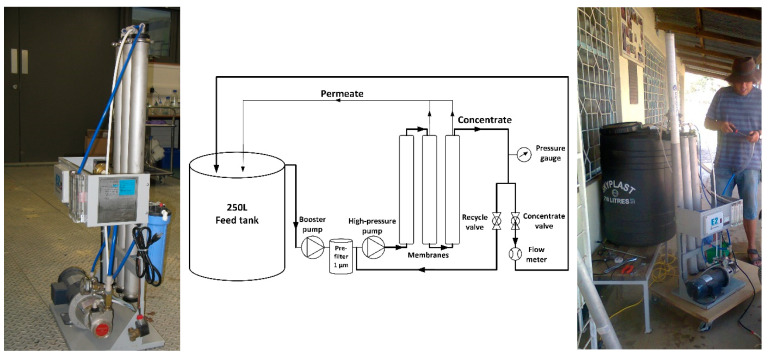
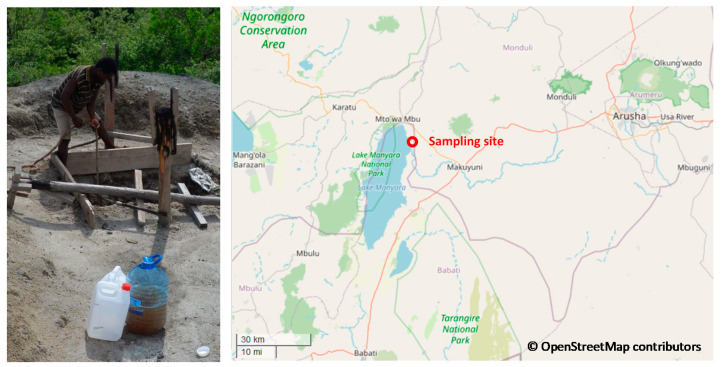
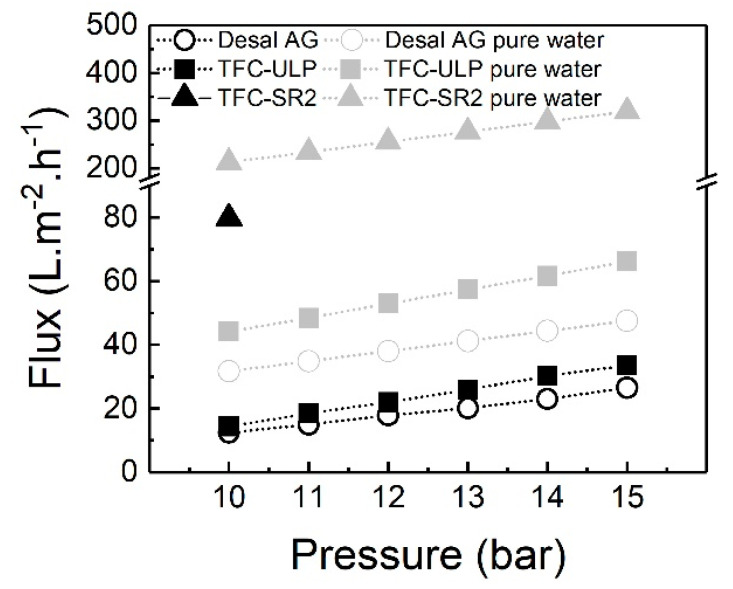
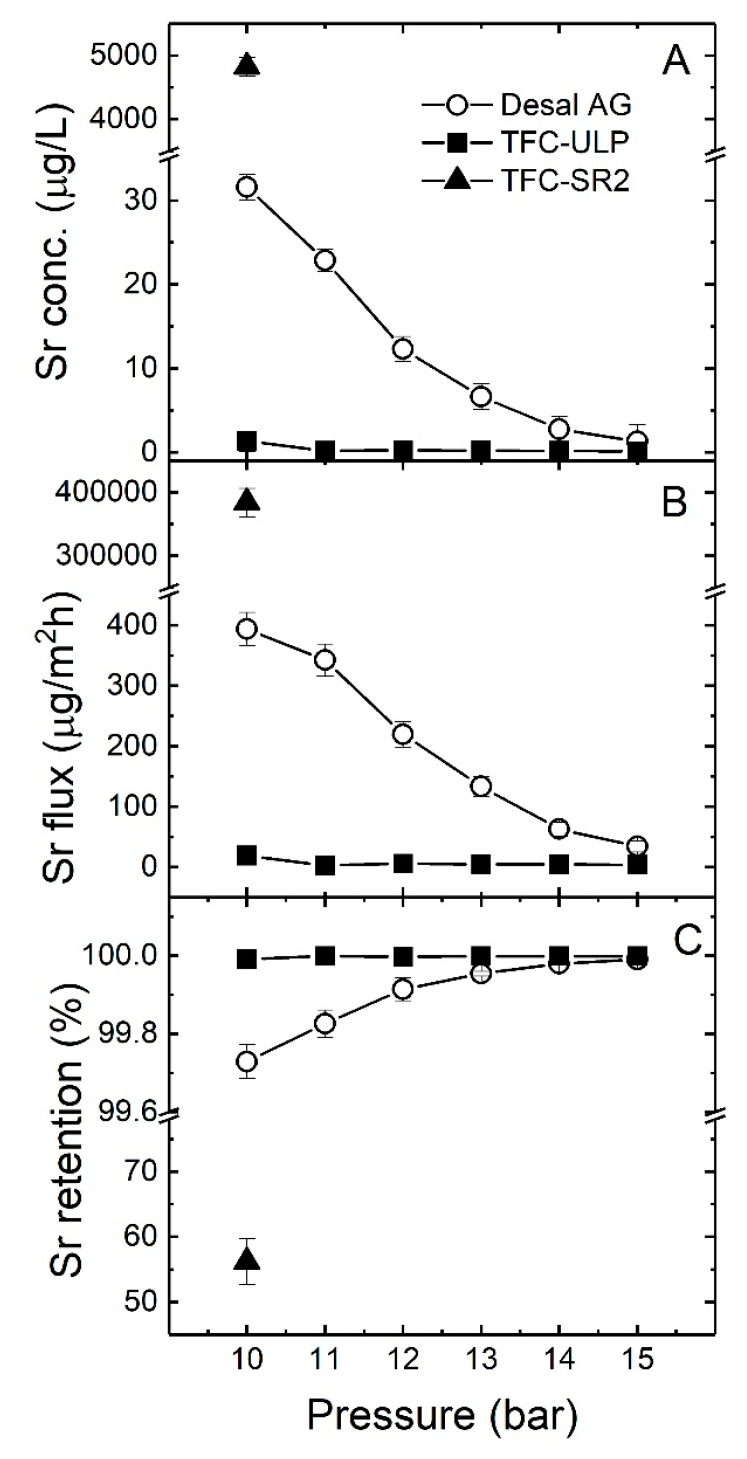
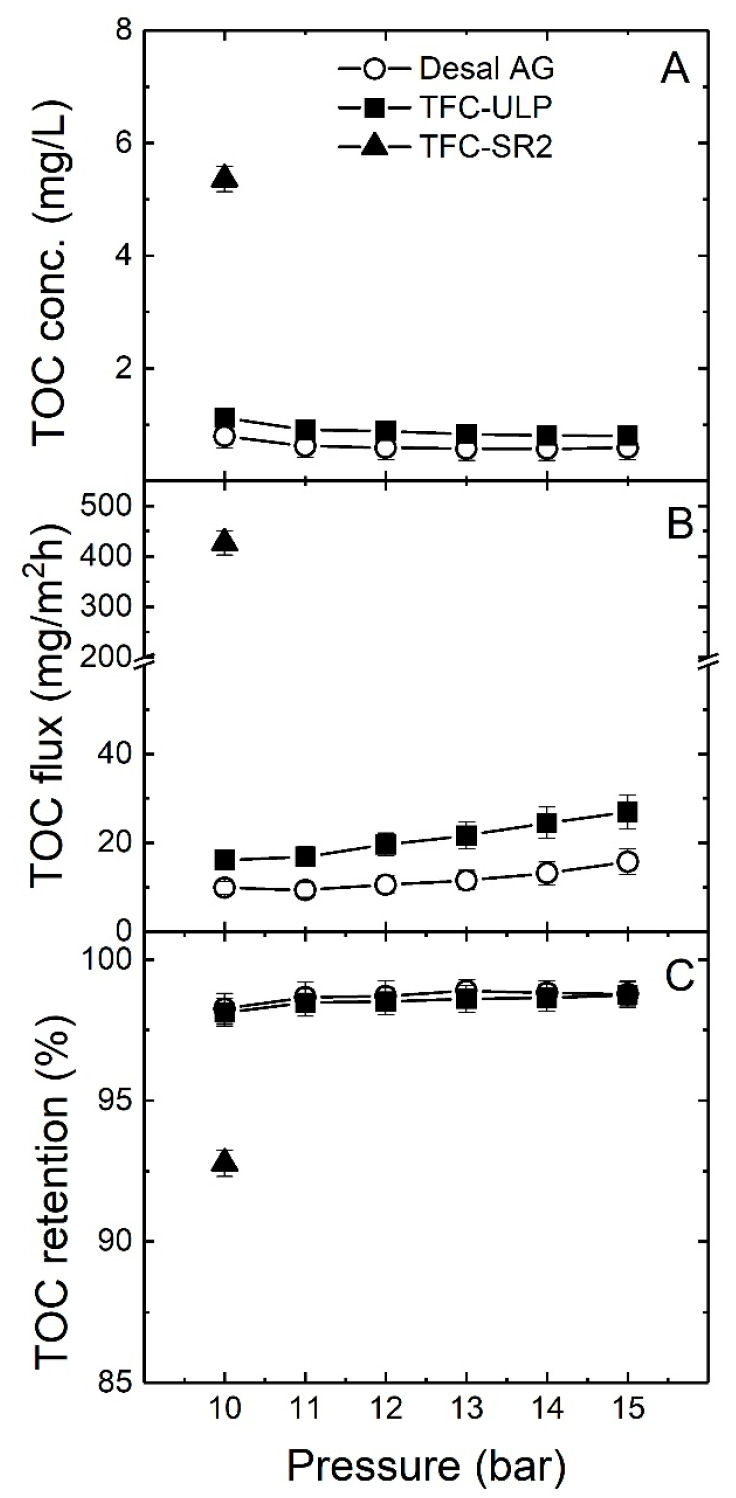
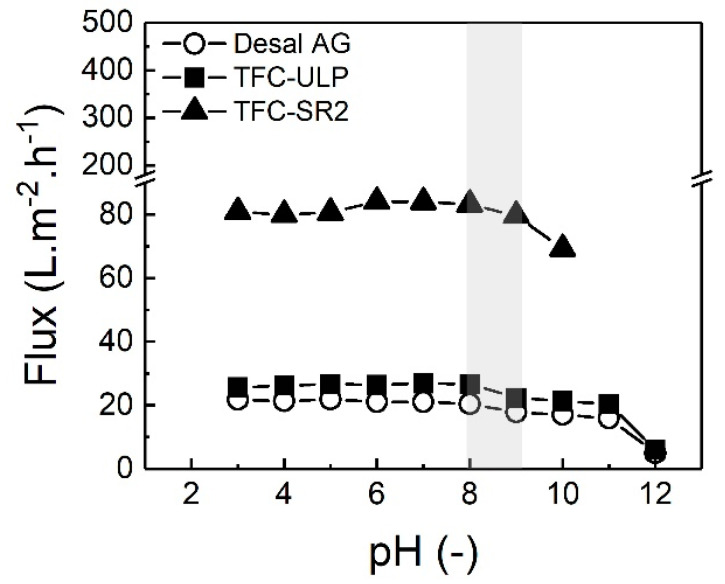
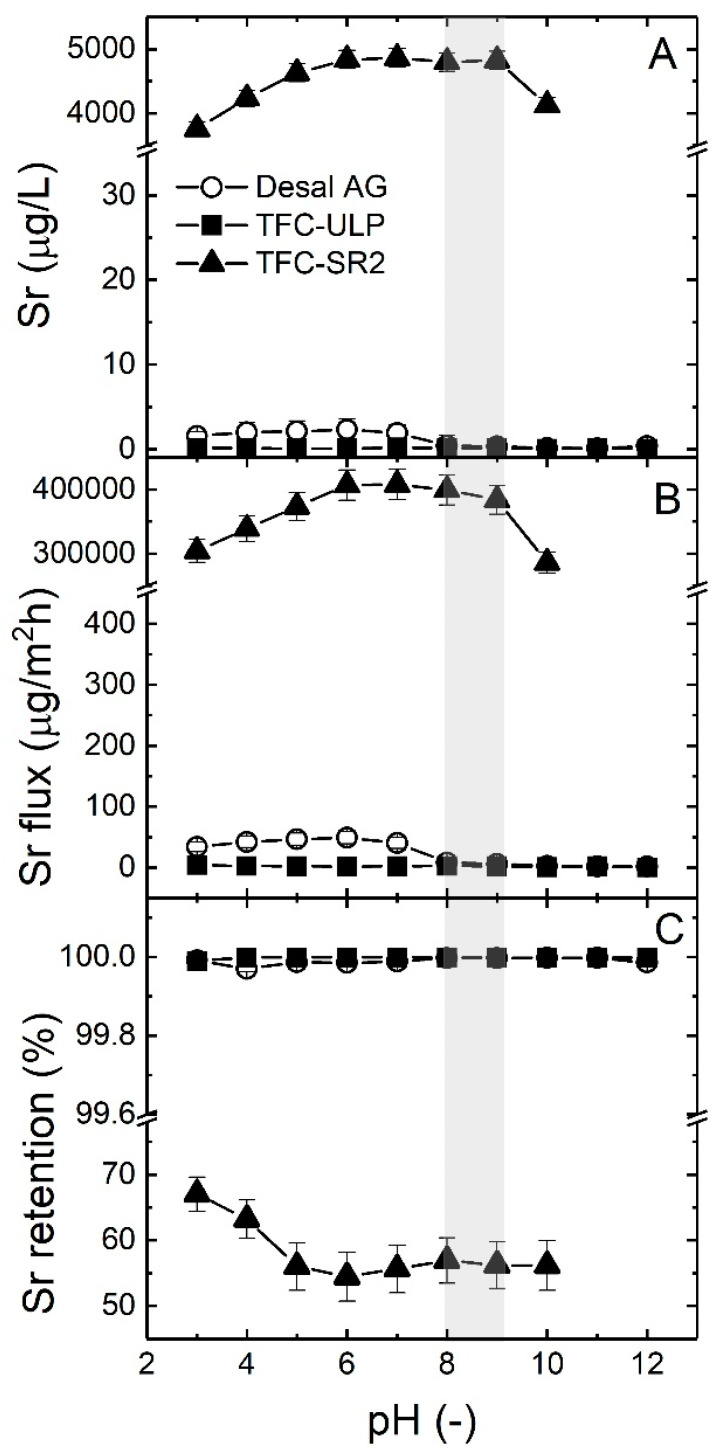
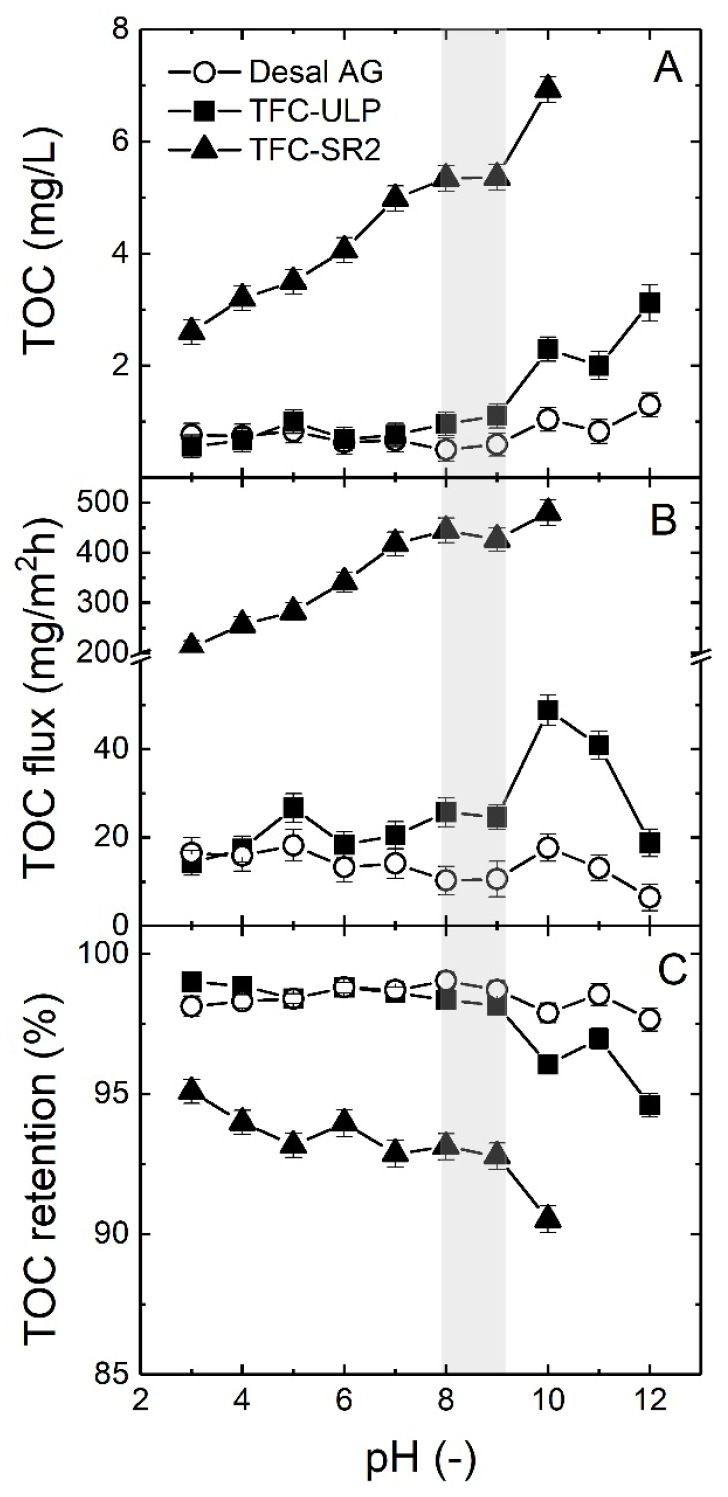
Removal of naturally occurring strontium (Sr) from groundwater is vital as excessive exposure may lead to bone growth problems in children. Nanofiltration/reverse osmosis (NF/RO) is commonly used in groundwater treatment due to the high effectiveness and simple maintenance of these pressure driven membrane processes. In this research, a pilot-scale NF/RO system was used to desalinate a natural groundwater sample containing high Sr concentration (10.3 mg/L) and “old” groundwater organic matter (70.9 mg/L) from Esilalei in northern Tanzania to understand the removal of strontium by NF/RO. The impact of applied pressure (10–15 bar) and groundwater pH (3–12) on the membrane performance including permeate flux, strontium and total organic carbon (TOC) flux and removal was investigated. Increasing applied pressure was found to enhance the flux by increasing the driving force and enhance Sr and TOC removal by dilution effect (water flux higher than Sr passage). The alkaline pH caused severe flux decline likely due to membrane fouling and scaling, while it slightly enhanced Sr removal of RO membranes, but weakened the TOC removal. In contrast, acidic and neutral pH of groundwater enhanced TOC removal. These findings suggest that appropriately high applied pressure and acidic pH condition of groundwater are recommended to apply to the NF/RO membrane system in groundwater desalination to achieve better membrane performance.
Overview
The claims and statistics of this paper haven’t been checked yet.
Run the check — free, no account needed. It reads the open-access text and checks the sources it cites.
Integrity signals
Registry
Cites
Statistics
Figures
Verification
Claims the paper makes
The claims and statistics of this paper haven’t been checked yet.
Run the check — free, no account needed. It reads the open-access text and checks the sources it cites.
Claims other papers make about this one
Each is checked against this paper’s own text: does it say what the citing paper says it does?
The check wasn’t confident either way, so it gives no verdict — never disputed.
In the citing paper
“Significant progress has been achieved in many nanomembrane methods, including ultrafiltration, nanofiltration, and reverse osmosis.172,173”
From Emerging nanotechnology approaches for sustainable water treatment and heavy metals removal: a comprehensive review (2025) · cites this paper as [172]
Experimental — accuracy not yet measured
Self-check
Percentages, sums and reported differences re-computed from the paper’s own numbers.
The self-check needs the paper’s full text.
Citations
Cites
Peer Reviewed: Characterizing Aquatic Dissolved Organic Matter
Leenheer, J. A., & Croué, J. (2003) · Environmental Science & Technology · doi:10.1021/es032333c · Cited by 5,785 · cited 1×
“The factors influencing the characteristics of NOM include location, pH, water chemistry, temperature, and biological processes [19].”
BackgroundCharacterizing aquatic dissolved organic matter.
Leenheer, J. A., & Croué, J.-P. (2003) · PubMed · Cited by 4,891
Phenomenological Theory of Ion Solvation. Effective Radii of Hydrated Ions
Nightingale, E. R. (1959) · The Journal of Physical Chemistry · doi:10.1021/j150579a011 · Cited by 3,505
Basic Principles of Membrane Technology
Mulder, M. H. V. (1996) · Springer eBooks · doi:10.1007/978-94-009-1766-8 · Cited by 3,086
(1996) · Soil Science Society of America book series · doi:10.2136/sssabookser5.3 · Cited by 2,418
Metal Ion Binding by Humic Acid: Application of the NICA-Donnan Model
Kinniburgh, D. G., Milne, C. J., Benedetti, M. F., Pinheiro, J. P., Filius, J. D., Koopal, L. K., & van Riemsdijk, W. H. (1996) · Environmental Science & Technology · doi:10.1021/es950695h · Cited by 558 · cited 1×
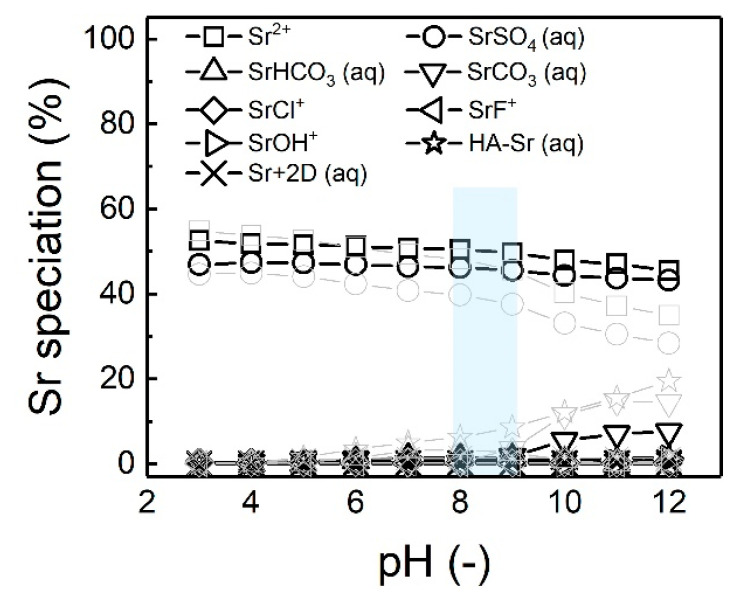
“The dissolved organic matter (DOC) of humic acid from a non-ideal competitive adsorption model combined with the Donnan-type model (NICA-Donnan model) [22] in the software was used as NOM.”
MethodNatural organic matter-cations complexation and its impact on water treatment: A critical review
Adusei-Gyamfi, J., Ouddane, B., Rietveld, L. C., Cornard, J. P., & Criquet, J. (2019) · Water Research · doi:10.1016/j.watres.2019.05.064 · Cited by 410 · cited 1×
“pH may affect these interactions by changing the charge and structure of NOM [21,24].”
BackgroundDielectric exclusion of ions from membranes
Yaroshchuk, A. E. (2000) · Advances in Colloid and Interface Science · doi:10.1016/s0001-8686(99)00021-4 · Cited by 396 · cited 1×
“The interactions of ions with the bound electric charges induced by ion interfaces between different media dielectric constants cause the dielectric exclusion [48].”
BackgroundPark, Y., Lee, Y.-C., Shin, W. S., & Choi, S.-J. (2010) · Chemical Engineering Journal · doi:10.1016/j.cej.2010.06.026 · Cited by 389
Factors affecting natural organic matter (NOM) and scaling fouling in NF membranes: A review
Al-Amoudi, A. S. (2010) · Desalination · doi:10.1016/j.desal.2010.04.003 · Cited by 351 · cited 1×
“Divalent cations can form complexes with chelating micelles, polymers, and NOM [53], enhancing the Sr removal by more open membranes.”
Background
Research works printed but not linked: 7
- U.S. Environmental Protection Agency (2012). 2012 Edition of the Drinking Water Standards and Health Advisories.
- Sillanpää, M. (2015). Natural Organic Matter in Water, Elsevier.
- Clearfield, A., and Yates, S. (1995, January 24−26). Inorganic Ion Exchange for Cesium and Strontium. Proceedings of the Efficient Separations and Processing Cross-Cutting Program Annual Technical Exchange Meeting, Gaithersburg, MD, USA.
- Zahakifar, F., Keshtkar, A.R., Shirani, A.S., and Zaheri, A. (2014, January 27). Removal of strontium from aqueous solutions using electrodialysis (ED). Proceedings of the The 8th International Chemical Engineering Congress & Exhibition (IChEC), Kish, Iran.
- Garrett, L. (1990, January 15−17). Reverse osmosis application to low-level radioactive waste. Proceedings of the 1990 Annual Membrane Technology/Planning Conference and High-Tech Separations Symposium, Newton, MA, USA.
- Bevington, P.R., and Robinson, D.K. (2003). Data Reduction and Error Analysis for the Physical Sciences, McGraw-Hill.
- Shen, J. (2014). Application of Membrane Filtration in Removing Radioactive Contaminant Strontium. [Master‘s Thesis, Beijing University of Chemical Technology].
Cited by
Sorted by citations
Technological trends in heavy metals removal from industrial wastewater: a review
Shrestha, R., Ban, S., Devkota, S., Sharma, S., Joshi, R., Tiwari, A. P., Kim, H. Y., & Joshi, M. K. (2021) · Journal of Environmental Chemical Engineering · doi:10.1016/j.jece.2021.105688 · Cited by 961
Abidli, A., Huang, Y., Ben Rejeb, Z., Zaoui, A., & Park, C. B. (2022) · Chemosphere · doi:10.1016/j.chemosphere.2021.133102 · Cited by 194
Progress in Research and Application of Nanofiltration (NF) Technology for Brackish Water Treatment
Tian, J., Zhao, X., Gao, S., Wang, X., & Zhang, R. (2021) · Membranes · doi:10.3390/membranes11090662 · Cited by 84
Advanced Polymeric Nanocomposites for Water Treatment Applications: A Holistic Perspective
Adeola, A. O., & Nomngongo, P. N. (2022) · Polymers · doi:10.3390/polym14122462 · Cited by 81
Hussein, E. B., Rasheed, F. A., Mohammed, A. S., & Kayani, K. F. (2025) · RSC Advances · doi:10.1039/d5ra06914a · Cited by 86
“172,173”
Metadata
- Authors
- Cai, Y.-H., Yang, X. J., & Schäfer, A. I.
- Affiliations
- Karlsruhe Institute of Technology (DE)
- Beijing University of Chemical Technology (CN)
- Corresponding author
- Schäfer, Andrea Iris
- Venue
- Membranes
- Publisher
- MDPI AG
- Published
- 2020-10-30
- Volume
- 10
- Issue
- 11
- Pages
- 321
- ISSN
- 2077-0375 (ISSN-L)
- PMC
- PMC7693364
- OpenAlex
- W3097766034
- Cited by
- 47
- References
- 67
- Citations by year
- 2026: 6 · 2025: 8 · 2024: 8 · 2023: 6 · 2022: 8 · 2021: 11
- FWCI
- 1.92
- Type
- journal article
- Language
- en
- Open access
- gold
- doi.org
- Licence
- Locations
- Membranes (publishedVersion, cc-by)
- PubMed Central (publishedVersion, cc-by)
- PubMed (publishedVersion)
- Repository KITopen (Karlsruhe Institute of Technology) (submittedVersion, cc-by)
- DOAJ (DOAJ: Directory of Open Access Journals) (submittedVersion, cc-by-sa)
- KITopen (cc-by)
- Funders
- Leverhulme Trust
- China Scholarship Council
- Université de Genève
- Beijing University of Chemical Technology
- Topics
- Physical Sciences › Environmental Science › Water Science and Technology › Membrane Separation Technologies
- Physical Sciences › Chemical Engineering › Filtration and Separation › Membrane-based Ion Separation Techniques
- Physical Sciences › Environmental Science › Waste Management and Disposal › Wastewater Treatment and Reuse
- Keywords
- strontium removal, nanofiltration, reverse osmosis, groundwater treatment, groundwater desalination, total organic carbon removal, membrane fouling, scaling, applied pressure, groundwater pH, permeate flux
About these checks
Registry, retraction, Cites and statistics results are computed, not judged, with one exception: a printed reference that no index lists is read once by a model before it counts as a citation error. Claims are extracted by a model and kept only when their quote appears verbatim in the text; each cited source is then checked, with a model’s help, for whether it says what the claim relies on. Those verdicts can be wrong — read the claim’s quote and the cited source before relying on one.
Statistics and arithmetic are recomputed, not judged.
Confidence bands are shown only for fields calibrated on our annotated test set. None is calibrated yet, so no band is shown.
What counts as a claim ›How we measure confidence ›How we check this ›
Are you an author, or do you see a problem with this page? Request a review
