

The DOI matches its Crossref record; 295 of the 299 references it cites were found in a registry or an index.
The Potential of Selected Agri-Food Loss and Waste to Contribute to a Circular Economy: Applications in the Food, Cosmetic and Pharmaceutical Industries
Open accessAbstract
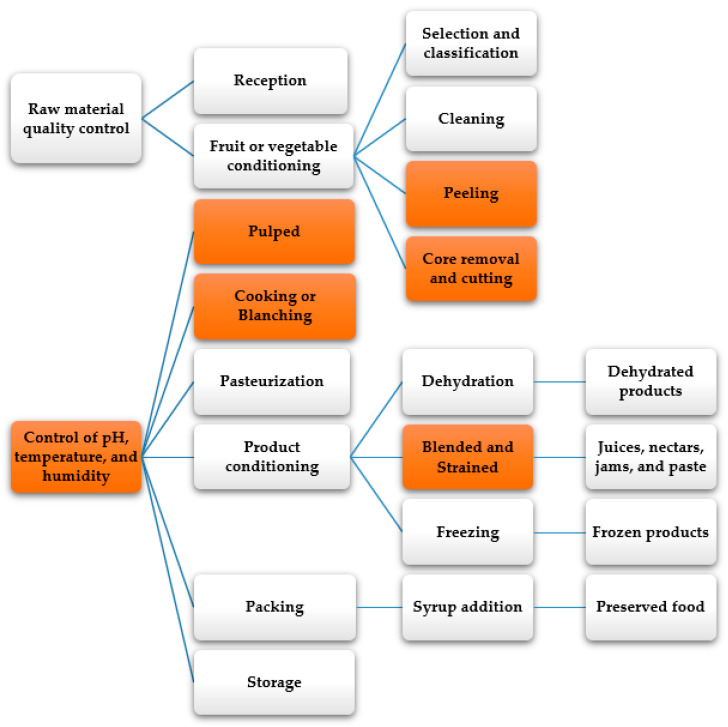
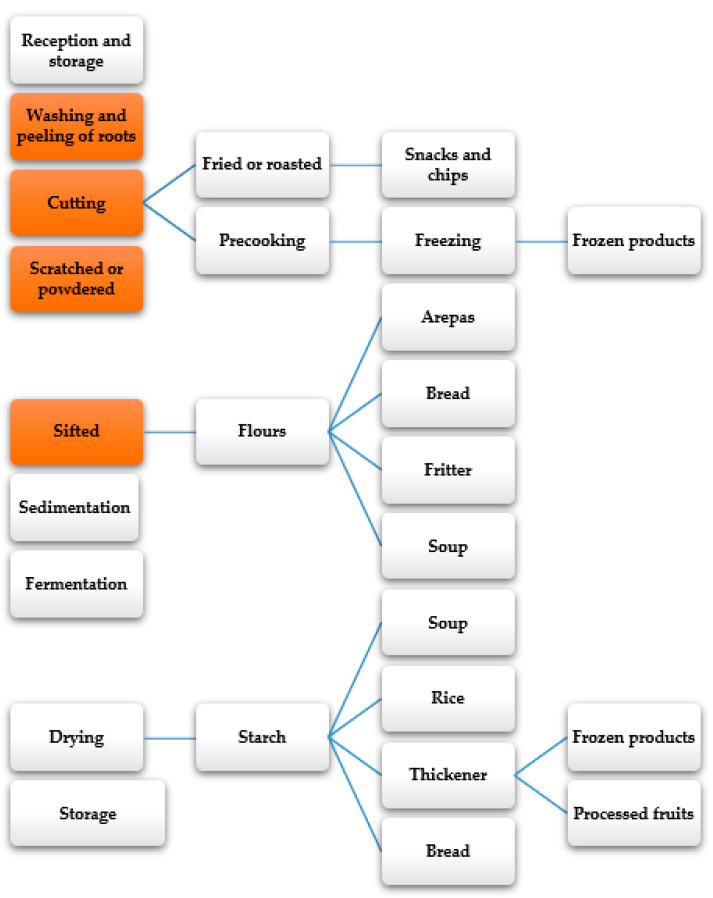
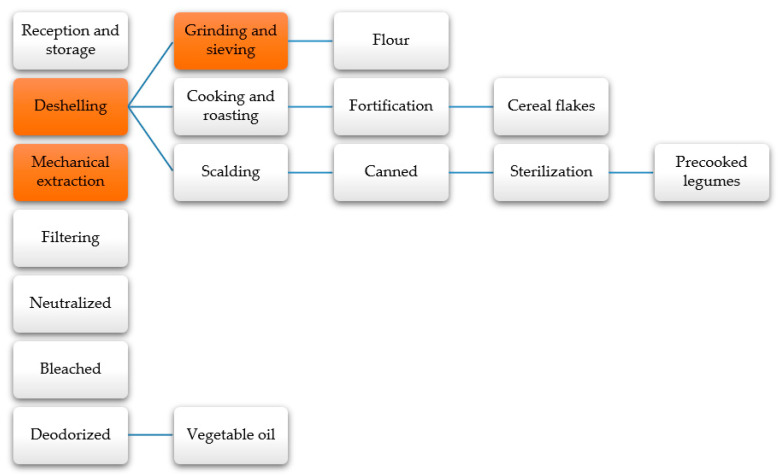
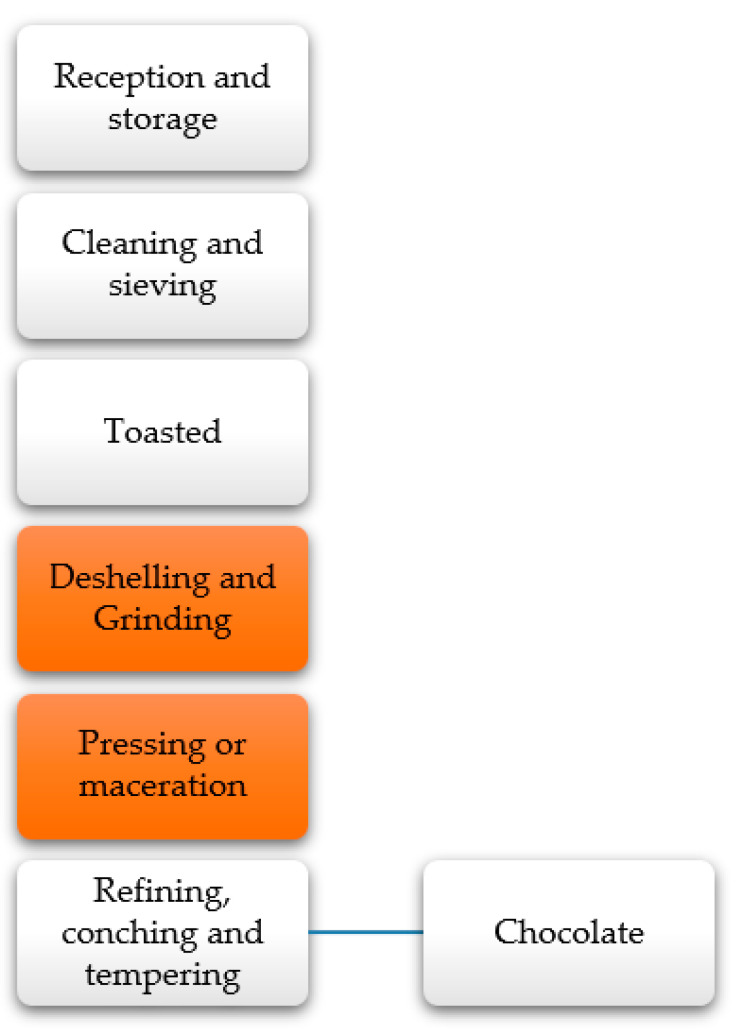
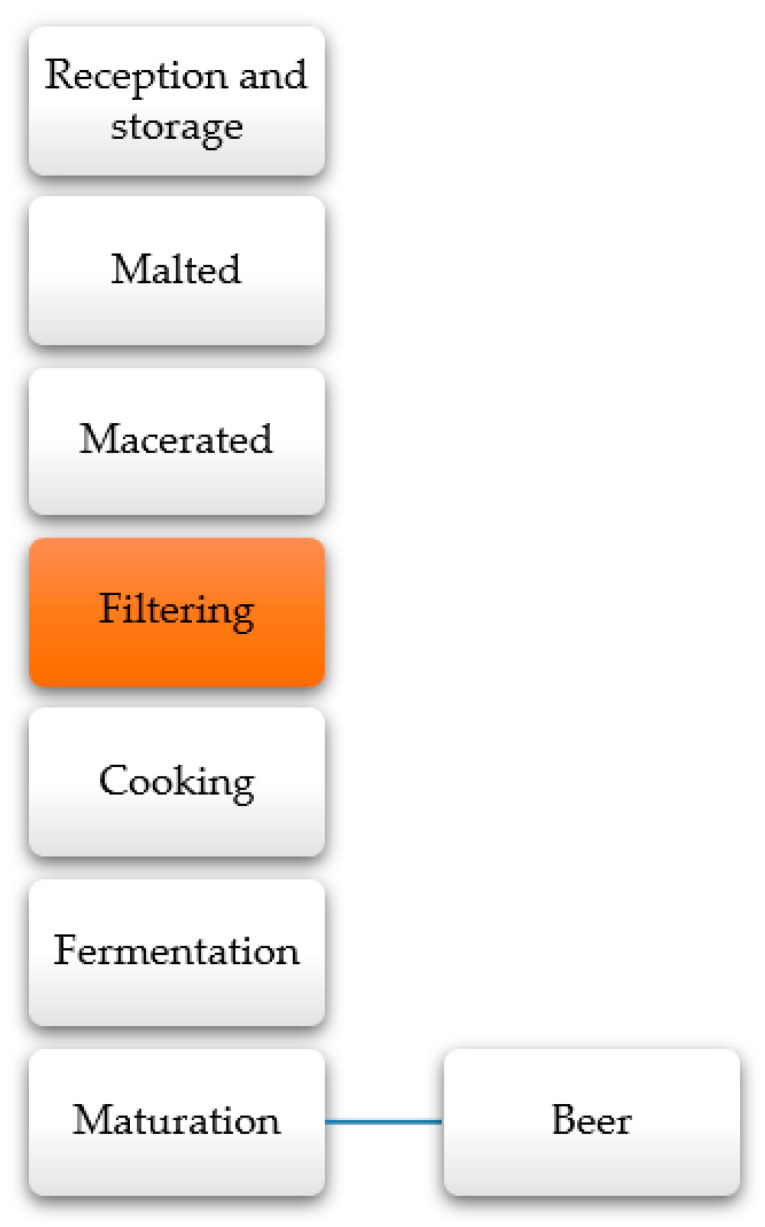
The food sector includes several large industries such as canned food, pasta, flour, frozen products, and beverages. Those industries transform agricultural raw materials into added-value products. The fruit and vegetable industry is the largest and fastest-growing segment of the world agricultural production market, which commercialize various products such as juices, jams, and dehydrated products, followed by the cereal industry products such as chocolate, beer, and vegetable oils are produced. Similarly, the root and tuber industry produces flours and starches essential for the daily diet due to their high carbohydrate content. However, the processing of these foods generates a large amount of waste several times improperly disposed of in landfills. Due to the increase in the world’s population, the indiscriminate use of natural resources generates waste and food supply limitations due to the scarcity of resources, increasing hunger worldwide. The circular economy offers various tools for raising awareness for the recovery of waste, one of the best alternatives to mitigate the excessive consumption of raw materials and reduce waste. The loss and waste of food as a raw material offers bioactive compounds, enzymes, and nutrients that add value to the food cosmetic and pharmaceutical industries. This paper systematically reviewed literature with different food loss and waste by-products as animal feed, cosmetic, and pharmaceutical products that strongly contribute to the paradigm shift to a circular economy. Additionally, this review compiles studies related to the integral recovery of by-products from the processing of fruits, vegetables, tubers, cereals, and legumes from the food industry, with the potential in SARS-CoV-2 disease and bacterial diseases treatment.
Overview
The claims and statistics of this paper haven’t been checked yet.
Run the check — free, no account needed. It reads the open-access text and checks the sources it cites.
Integrity signals
Registry
Cites
Statistics
Figures
Verification
Claims the paper makes
The claims and statistics of this paper haven’t been checked yet.
Run the check — free, no account needed. It reads the open-access text and checks the sources it cites.
Claims other papers make about this one
Each is checked against this paper’s own text: does it say what the citing paper says it does?
The source backs part of the claim, not all of it — or backs it for a different population, condition or comparison.
In the citing paper
“As a result of upcycling, orange, lemon, banana, and mango peels, as well as grapes and olive oil pomaces, sugarcane bagasse, coffee grounds, wheat straw, and seeds and kernels of fruits, stemming from specific processes such as pulping, peeling, straining, and branching, are reused and processed into cosmetic raw materials [12,64].”
From Use of Waste from the Food Industry and Applications of the Fermentation Process to Create Sustainable Cosmetic Products: A Review (2024) · cites this paper as [64]
Experimental — accuracy not yet measuredThe source backs part of the claim, not all of it — or backs it for a different population, condition or comparison.
In the citing paper
“As a result of biotechnological transformations of waste from the food industry, various products such as biofuels, biomass, biofertilizers, biosorbents, and value-added components can be produced via anaerobic digestion, fermentation, and composting technologies [64,65,72].”
From Use of Waste from the Food Industry and Applications of the Fermentation Process to Create Sustainable Cosmetic Products: A Review (2024) · cites this paper as [64]
Experimental — accuracy not yet measuredThe source backs part of the claim, not all of it — or backs it for a different population, condition or comparison.
In the citing paper
“Unfortunately, residues end up most often in landfills, significantly contributing to global pollution levels by producing significant amounts of methane, which consequently leads to greenhouse gas emissions [52,53,58,64,65].”
From Use of Waste from the Food Industry and Applications of the Fermentation Process to Create Sustainable Cosmetic Products: A Review (2024) · cites this paper as [64]
Experimental — accuracy not yet measuredThe source backs part of the claim, not all of it — or backs it for a different population, condition or comparison.
In the citing paper
“Due to the fact that the fatty acid profile of mango is similar to that of cocoa butter and shea butter, it can be considered as a source of oleic, stearic, and palmitic acid [64,116].”
From Use of Waste from the Food Industry and Applications of the Fermentation Process to Create Sustainable Cosmetic Products: A Review (2024) · cites this paper as [64]
Experimental — accuracy not yet measured
Self-check
Percentages, sums and reported differences re-computed from the paper’s own numbers.
The self-check needs the paper’s full text.
Citations
Cites
The Circular Economy–A new sustainability paradigm?
Geissdoerfer, M., Savaget, P., Bocken, N. M. P., & Hultink, E. J. (2017) · Journal of Cleaner Production · doi:10.1016/j.jclepro.2016.12.048 · Cited by 9,360
Origin and evolution of pathogenic coronaviruses
Cui, J., Li, F., & Shi, Z. (2018) · Nature Reviews Microbiology · doi:10.1038/s41579-018-0118-9 · Cited by 5,729
Murray, A., Skene, K., & Haynes, K. (2017) · Journal of Business Ethics · doi:10.1007/s10551-015-2693-2 · Cited by 3,328
Stahel, W. R. (2016) · Nature · doi:10.1038/531435a · Cited by 2,555
Antibiotics and Bacterial Resistance in the 21st Century
Fair, R. J., & Tor, Y. (2014) · Perspectives in Medicinal Chemistry · doi:10.4137/pmc.s14459 · Cited by 2,041
Designing the Business Models for Circular Economy—Towards the Conceptual Framework
Lewandowski, M. (2016) · Sustainability · doi:10.3390/su8010043 · Cited by 1,890
Genovese, A., Acquaye, A. A., Figueroa, A., & Koh, S. C. L. (2015) · Omega · doi:10.1016/j.omega.2015.05.015 · Cited by 1,684
Fruit and Vegetable Waste: Bioactive Compounds, Their Extraction, and Possible Utilization
Sagar, N. A., Pareek, S., Sharma, S., Yahia, E. M., & Lobo, M. (2018) · Comprehensive Reviews in Food Science and Food Safety · doi:10.1111/1541-4337.12330 · Cited by 1,320
Food supply chains during the COVID‐19 pandemic
Hobbs, J. E. (2020) · Canadian Journal of Agricultural Economics/Revue canadienne d'agroeconomie · doi:10.1111/cjag.12237 · Cited by 1,313
Lin, C. S. K., Pfaltzgraff, L. A., Herrero-Davila, L., Mubofu, E. B., Abderrahim, S., Clark, J. H., Koutinas, A. A., Kopsahelis, N., Stamatelatou, K., Dickson, F., et al. (2013) · Energy & Environmental Science · doi:10.1039/c2ee23440h · Cited by 1,137
Research works printed but not linked: 18
- Subramanian, 2018, The Crisis of Consumption of Natural Resources, Int. J. Recent Innov. Acad. Res., 2, 8
- Macarthur, 2013, Towards the circular economy, J. Ind. Ecol., 2, 23
- Candida, V., Fernando, C., Margarida, G., and Ana Luísa, F. (2019). Wastes: Solutions, Treatments and Opportunities III: Selected Papers from e 5th International Conference Wastes 2019, September 4–6, 2019, Lisbon, Portugal, CRC Press.
- Peters, K. (2019). Technology of Fruits and Vegetable Processing, ED-Tech Press. Scientific e-Resources: 2019.
- Lozano, J.E. (2006). Fruit Manufacturing, Springer.
- Panda, H. (2011). Recovery, Fruit Waste Utilization, Waste Utilization of Fruits and Vegetables, Fruit and Vegetable Waste Management, Waste Utilization in Food Industry Method for Quantitative Recovery of…, Asia Pacific Business Press.
- Ashwini, 2016, Chemical composition of some selected fruit peels, Eur. J. Food Sci. Technol., 4, 12
- Sepelev, 2015, Industrial potato peel waste application in food production: A review, Investig. para Desarro. Rural, 1, 130
- Rahman, 2013, Euphorbiaceae (Spurge) Family of Rajshahi, Bangladesh, Res. Plant Sci., 1, 74
- Daud, 2013, Chemical Composition and Morphological of Cocoa Pod Husks and Cassava Peels for Pulp and Paper Production, Aust. J. Basic Appl. Sci., 7, 406
- Awarikabey, 2014, The value of the cocoa bean shell (hull) and the effect of various processing methods on the phyto-constituents and antioxidant activity of the nib and shell, J. Nat. Prod. Plant Resour., 4, 58
- Mendes, 2015, Chemical, physical, mechanical, thermal and morphological characteriz.ation of corn husk residue, Cellul. Chem. Technol., 49, 727
- Aruwayo, A. (2020, January 1–4). Chemical composition of some selected non-conventional feed resources katsina. Proceedings of the Asian-Nias Joint Annual Meeting, Abuja, Nigeria.
- Rizk, 2019, Production of α-amylase by Aspergillus niger isolated from mango kernel, Middle East J. Appl. Sci., 9, 134
- Yarovaya, L., and Khunkitti, W. (2019, January 7–9). Anti-inflammatory activity of grape seed extract as a natural sun protection enhancer for broad-spectrum sunscreen. Proceedings of the Cosmetic & Beauty International Conference 2019 Sustainable Cosmetic & Beauty Innovations; Mae Fa Luang University, Chiang Rai, Thailand.
- Dos, 2016, Avaliação in vitro da Atividade Fotoprotetora de Resíduos de Frutas Amazônicas, Sci. Amaz., 5, 109
- Garcia, 2016, Antifungal Eff ect of Citrus paradisi “grapefruit” on strains of Candida albicans isolated from patients with denture stomatitis, Rev Estomatol Hered., 26, 78
- Roy, 2014, Solid wastes of fruit peels as source of low cost broad spectrum natural antimicrobial compounds- Furanone, Furfural and Benezenetriol, Int. J. Res. Eng. Technol., 3, 2321
Cited by
Sorted by citations
Gil‐Martín, E., Forbes-Hernández, T. Y., Romero, A., Cianciosi, D., Giampieri, F., & Battino, M. A. (2021) · Food Chemistry · doi:10.1016/j.foodchem.2021.131918 · Cited by 715
Sorrenti, V., Burò, I., Consoli, V., & Vanella, L. (2023) · International Journal of Molecular Sciences · doi:10.3390/ijms24032019 · Cited by 407
Terpenoids and Polyphenols as Natural Antioxidant Agents in Food Preservation
Gutiérrez‐del‐Río, I., López‐Ibáñez, S., Magadán‐Corpas, P., Fernández‐Calleja, L., Pérez‐Valero, Á., Tuñón-Granda, M., Miguélez, E. M., Villar, C. J., & Lombó, F. (2021) · Antioxidants · doi:10.3390/antiox10081264 · Cited by 382
Recovery of Banana Waste-Loss from Production and Processing: A Contribution to a Circular Economy
Alzate Acevedo, S., Díaz Carrillo, Á. J., Flórez-López, E., & Grande-Tovar, C. D. (2021) · Molecules · doi:10.3390/molecules26175282 · Cited by 277
Self-citationSonu, S., Rani, G. M., Pathania, D., Abhimanyu, A., Umapathi, R., Rustagi, S., Huh, Y. S., Gupta, V. K., Kaushik, A. K., & Chaudhary, V. (2023) · The Science of The Total Environment · doi:10.1016/j.scitotenv.2023.162667 · Cited by 253
Metadata
- Authors
- Osorio, L. L. D. R., Flórez-López, E., & Grande-Tovar, C. D.
- Affiliations
- Universidad del Atlántico (CO)
- Grupo de Investigación en Química y Biotecnología QUIBIO, Universidad Santiago de Cali, Calle 5 No 62-00, Cali 760035, Colombia
- Grupo de Investigación en Fotoquímica y Fotobiología, Programa de Química, Facultad de Ciencias Básicas, Universidad del Atlántico, Puerto Colombia 081008, Colombia
- Venue
- Molecules
- Publisher
- MDPI AG
- Published
- 2021-01-19
- Volume
- 26
- Issue
- 2
- Pages
- 515
- ISSN
- 1420-3049 (ISSN-L)
- PMC
- PMC7835992
- OpenAlex
- W3123895499
- Cited by
- 367
- References
- 299
- Citations by year
- 2026: 46 · 2025: 83 · 2024: 78 · 2023: 71 · 2022: 56 · 2021: 33
- FWCI
- 5.40
- Type
- journal article
- Language
- en
- Open access
- gold
- doi.org
- Licence
- Locations
- Molecules (publishedVersion, cc-by)
- PubMed Central (publishedVersion, cc-by)
- PubMed (publishedVersion)
- DOAJ (DOAJ: Directory of Open Access Journals) (submittedVersion, cc-by-sa)
- Funders
- Universidad Santiago de Cali
- Topics
- Life Sciences › Agricultural and Biological Sciences › Food Science › Food Waste Reduction and Sustainability
- Life Sciences › Agricultural and Biological Sciences › Food Science › Agricultural and Biological Research
- Life Sciences › Agricultural and Biological Sciences › Food Science › Protein Hydrolysis and Bioactive Peptides
- Keywords
- food loss and waste, circular economy, food by-products, fruit and vegetable processing, grain processing, legume processing, animal feed, cosmetics, pharmaceutical applications, bioactive compounds, enzymes, SARS-CoV-2 treatment, waste valorization
- MeSH terms
- Agriculture, Edible Grain, Cosmetics, Drug Industry, Food-Processing Industry, Fruit, Vegetables, Waste Products, Plant Roots, Food Industry, Plant Tubers
About these checks
Registry, retraction, Cites and statistics results are computed, not judged, with one exception: a printed reference that no index lists is read once by a model before it counts as a citation error. Claims are extracted by a model and kept only when their quote appears verbatim in the text; each cited source is then checked, with a model’s help, for whether it says what the claim relies on. Those verdicts can be wrong — read the claim’s quote and the cited source before relying on one.
Statistics and arithmetic are recomputed, not judged.
Confidence bands are shown only for fields calibrated on our annotated test set. None is calibrated yet, so no band is shown.
What counts as a claim ›How we measure confidence ›How we check this ›
Are you an author, or do you see a problem with this page? Request a review
