

The DOI matches its Crossref record.
Changes in Morphological, Physiological and Phytochemical Traits of Different Dill (Anethum graveolens L.) Cultivars as Affected by Light-Emitting Diodes
Abstract
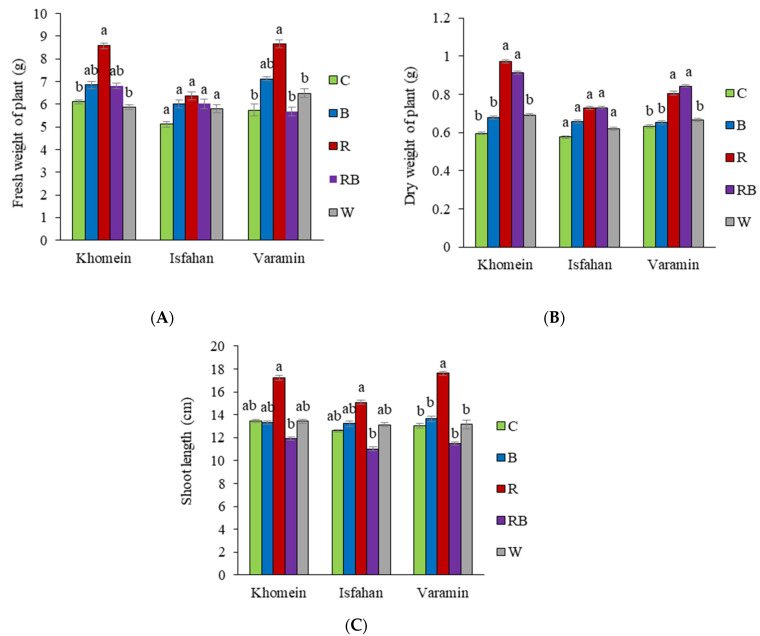
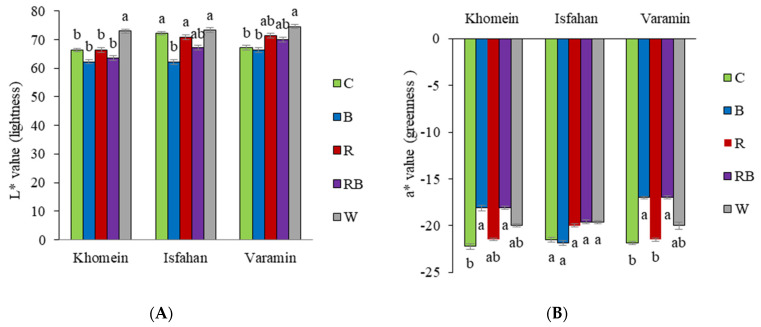
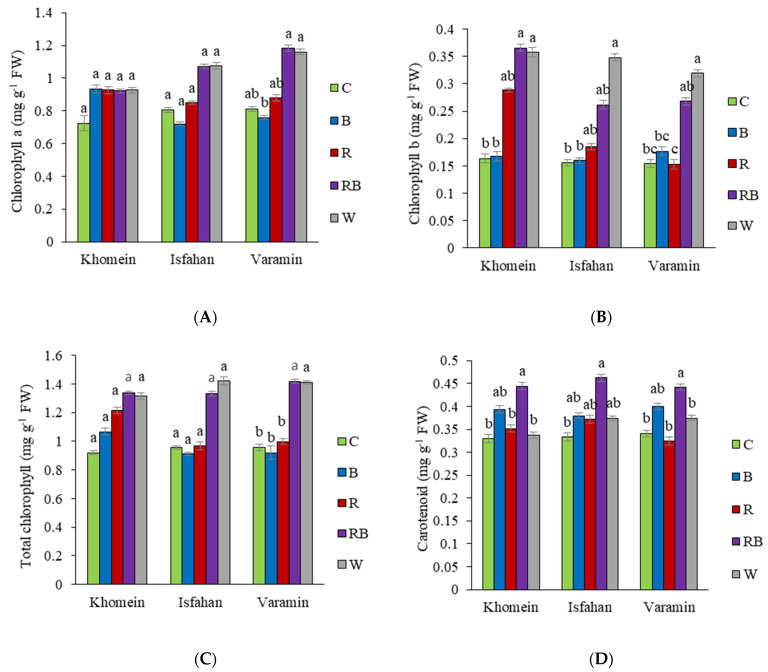
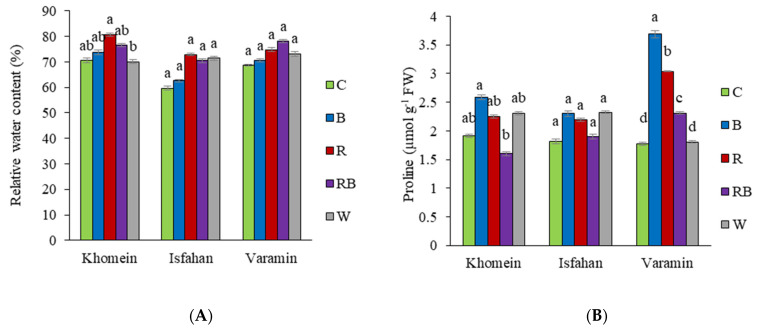
Dill is a fragrant vegetable containing various beneficial compounds for health. This research aims to evaluate the impact of various spectra of LED light on essential oil composition and morphological and physiological characteristics of three dill cultivars. LED light treatments included greenhouse light as control (C), blue (B), red (R), red + blue (RB), and white (W). RB light enhanced most physiological indicators investigated in this study, including photosynthetic pigments, phenols, flavonoids, and antioxidant capacity. Furthermore, electrolyte leakage in the three cultivars of Khomein, Isfahan, and Varamin decreased when exposed to RB light compared with C light. Under RB light, the essential oil contained more dill ether and α-phellandrene than in other light conditions. In general, light treatment with 75% R light and 25% B light had a noticeable impact on enhancing physiological features compared with other light spectrums. α-phellandrene levels increased in the Isfahan and Varamin cultivars under RB and B light conditions. Finally, the RB light and Khomein cultivars improved physiological features, whereas RB and R light in the Varamin and Isfahan cultivars are recommended for more essential oil compositions in functional food production.
Overview
The claims and statistics of this paper haven’t been checked yet.
Run the check — free, no account needed. It reads the open-access text and checks the sources it cites.
Integrity signals
Registry
Cites
Statistics
Figures
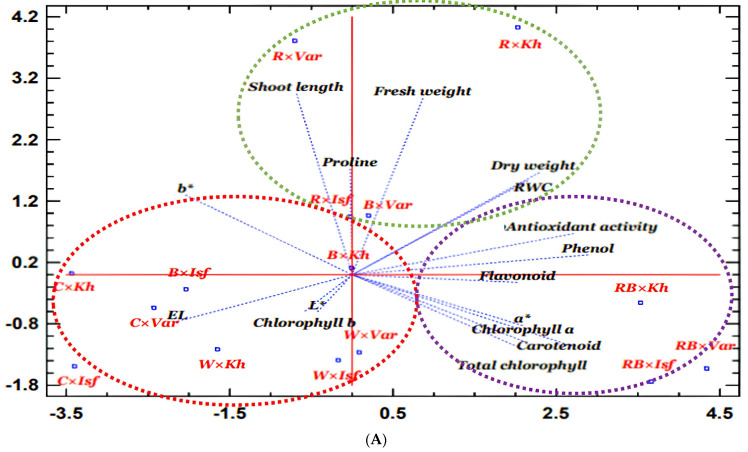
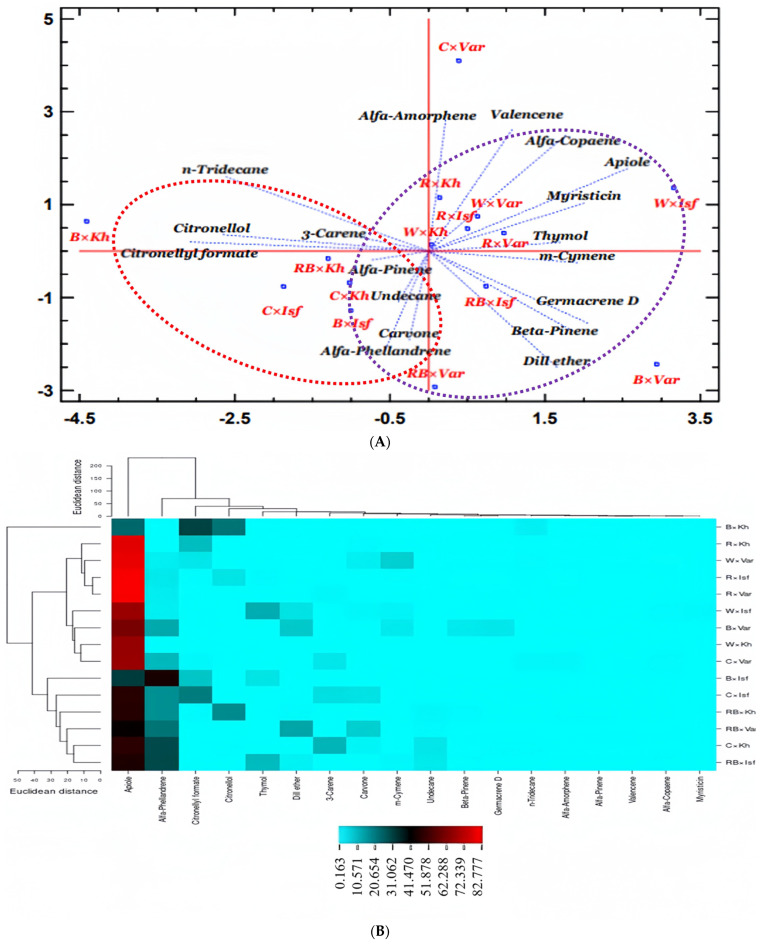
Verification
Claims the paper makes
The claims and statistics of this paper haven’t been checked yet.
Run the check — free, no account needed. It reads the open-access text and checks the sources it cites.
Claims other papers make about this one
Each is checked against this paper’s own text: does it say what the citing paper says it does?
In the citing paper
“For instance, researchers reported high genetic diversity in A. graveolens genotypes, with notable differences in essential oil composition based on the cultivation region [28,29].”
From Thermal processing and geographical origin as drivers of terpenoids variation in Anethum graveolens L. essential oils: A biplot analysis (2025) · cites this paper as [29]
Self-check
Percentages, sums and reported differences re-computed from the paper’s own numbers.
The self-check needs the paper’s full text.
Citations
Cites
No references could be resolved yet.
Research works printed but not linked: 67
- Sangwan, 2008, Withanolide a is inherently de novo biosynthesized in roots of the medicinal plant ashwagandha (Withania somnifera), Physiol. Plant., 133, 278, 10.1111/j.1399-3054.2008.01076.x · DOI
- El Haddaji, H., Akodad, M., Skalli, A., Moumen, A., Bellahcen, S., Elhani, S., Urrestarazu, M., Kolar, M., Imperl, J., and Petrova, P. (2023). Effects of light-emitting diodes (leds) on growth, nitrates and osmoprotectant content in microgreens of aromatic and medicinal plants. Horticulturae, 9. · DOI
- Goswami, A., and Mitra, A. (2023). Light spectra manipulation stimulates growth, specialized metabolites and nutritional quality in Anethum graveolens. J. Photochem. Photobiol. B Biol., 249. · DOI
- Alan, 2022, Growing season climate affects phenological development, seed yield and seed quality of dill (Anethum graveolens), Seed Sci. Technol., 50, 11, 10.15258/sst.2022.50.1.02 · DOI
- Raut, 2014, A status review on the medicinal properties of the essental oils, Ind. Crop. Prod., 62, 250, 10.1016/j.indcrop.2014.05.055 · DOI
- Tariq, 2019, A comprehensive review of the antibacterial, antifungal and antiviral potential of essential oils and their chemical constituents against drug resistant microbial pathogens, Microb. Pathog., 134, 103580, 10.1016/j.micpath.2019.103580 · DOI
- Dagli, 2015, Essential oils, their therapeutic properties, and implications in dentristry. A review, J. Int. Soc. Prev. Community Dent., 5, 335, 10.4103/2231-0762.165933 · DOI
- Milenković, L., Ilić, Z.S., Stanojević, L., Danilović, B., Šunić, L., Kevrešan, Ž., Stanojević, J., and Cvetković, D. (2024). Chemical composition and bioactivity of dill seed (Anethum graveolens L.) essential oil from plants grown under shading. Plants, 13. · DOI · Paper page
- Osakabe, 2014, Response of plants to water stress, Front Plant Sci., 5, 86, 10.3389/fpls.2014.00086 · DOI
- Rahimmalek, M., Szumny, A., Gharibi, S., Pachura, N., Miroliaei, M., and Łyczko, J. (2023). Chemical Investigations in Kelussia odoratissima Mozaff. leaves based on comprehensive analytical methods: LC-MS, SPME, and GC-MS Analyses. Molecules, 28. · DOI
- Raffo, 2020, Effect of light intensity and water availability on plant growth, essential oil production and composition in Rosmarinus officinalis L., Eur. Food Res. Technol., 246, 167, 10.1007/s00217-019-03396-9 · DOI
- Rafeie, 2022, Pretreatment with LEDs regulates antioxidant capacity and polyphenolic profile in two genotypes of basil under salinity stress, Protoplasma, 259, 1567, 10.1007/s00709-022-01746-1 · DOI
- Lin, 2013, The effects of red, blue, and white light-emitting diodes on the growth, development, and edible quality of hydroponically grown lettuce (Lactuca sativa L. var. capitata), Sci. Hortic., 150, 86, 10.1016/j.scienta.2012.10.002 · DOI · Paper page
- Aldarkazali, M., Rihan, H.Z., Carne, D., and Fuller, M.P. (2019). The growth and development of sweet basil (Ocimum basilicum) and bush basil (Ocimum minimum) grown under three light regimes in a controlled environment. Agronomy, 9. · DOI
- Ghafari, 2019, Variation in the primary and secondary metabolites derived from the isoprenoid pathway in the Perovskia species in response to diferent wavelengths generated by light emitting diodes (LEDs), Ind Crop. Prod., 140, 111592, 10.1016/j.indcrop.2019.111592 · DOI
- Tohidi, 2019, Thymol, carvacrol, and antioxidant accumulation in Thymus species in response to different light spectra emitted by light-emitting diodes, Food Chem., 307, 125521, 10.1016/j.foodchem.2019.125521 · DOI
- Chu, H.T.T., Vu, T.N., Dinh, T.T.T., Do, P.T., Chu, H.H., Tien, T.Q., Tong, Q.C., Nguyen, M.H., Ha, Q.T., and Setzer, W.N. (2022). Effects of supplemental light spectra on the composition, production and antimicrobial activity of Ocimum basilicum L. essential oil. Molecules, 27. · DOI
- Amaki, 2011, Efects of light quality on the growth and essential oil content in sweet basil, Acta Hortic., 907, 91, 10.17660/ActaHortic.2011.907.9 · DOI
- Sabzalian, 2014, High performance of vegetables, fowers and medicinal plants in a red-blue LED incubator for indoor plant production, Agron. Sustain. Dev., 65, 127
- Johkan, 2010, Blue light-emitting diode light irradiation of seedlings improves seedling quality and growth after transplanting in red leaf lettuce, HortScience, 12, 1809, 10.21273/HORTSCI.45.12.1809 · DOI
- Gahler, 2003, Alterations of vitamin C, total phenolics, and antioxidant capacity as afected by processing tomatoes to diferent products, J. Agric. Food Chem., 51, 7962, 10.1021/jf034743q · DOI
- Rajendra, 2016, Differential response of genotype × environment on phenology, essential oil yield and quality of natural aroma chemicals of fve Ocimum species, Ind. Crop. Prod., 87, 210, 10.1016/j.indcrop.2016.04.001 · DOI
- Ehsanzadeh, 2018, Exogenous proline improves osmoregulation, physiological functions, essential oil, and seed yield of fennel, Ind. Crop. Prod., 111, 133, 10.1016/j.indcrop.2017.10.020 · DOI
- Jatothu, 2013, Fundamentals and applications of light emitting diodes (LEDs) in in vitro plant growth and morphogenesis, Plant Biotechnol. Rep., 7, 211, 10.1007/s11816-013-0277-0 · DOI
- Simlat, 2016, The effect of light quality on seed germination, seedling growth and selected biochemical properties of Stevia rebaudiana Bertoni, Sci Hortic., 211, 295, 10.1016/j.scienta.2016.09.009 · DOI
- Yu, 2017, Effect of differential light quality on morphology, photosynthesis, and antioxidant enzyme activity in Camptotheca acuminata seedlings, J. Plant Growth Regul., 36, 148, 10.1007/s00344-016-9625-y · DOI
- Saleem, 2020, Leaf gas exchange, oxidative stress, and physiological attributes of rapeseed (Brassica napus L.) grown under different light-emitting diodes, Photosynthetica, 58, 836, 10.32615/ps.2020.010 · DOI
- Kurepin, 2007, Interaction of red to far red light ratio and ethylene in regulating stem elongation of Helianthus annuus, Plant Growth Regul., 51, 53, 10.1007/s10725-006-9147-x · DOI
- Schaer, 1983, Phytochrome-mediated cellular photomorphogenesis, Plant Physiol., 72, 706, 10.1104/pp.72.3.706 · DOI
- He, 2019, Impacts of LED spectral quality on leafy vegetables: Productivity closely linked to photosynthetic performance or associated with leaf traits?, Int. J. Agric. Biol. Eng., 12, 16
- Golcz, 2016, The effect of radiation of LED modules on the growth of dill (Anethum graveolens L.), Open Life Sci., 11, 61, 10.1515/biol-2016-0008 · DOI
- Islam, 2012, Artificial light from light emitting diodes (LEDs) with a high portion of blue light results in shorter poinsettias compared to high pressure sodium (HPS) lamps, Sci. Hortic., 147, 136, 10.1016/j.scienta.2012.08.034 · DOI
- Shoko, T., Manhivi, V.E., Mtlhako, M., and Sivakumar, D. (2022). Changes in functional compounds, volatiles, and antioxidant properties of culinary herb coriander leaves (Coriandrum sativum) stored under red and blue led light for different storage times. Front. Nutr., 9. · DOI
- Owen, 2015, End-of-production supplemental lighting with red and blue light-emitting diodes (LEDs) influences red pigmentation of four lettuce varieties, HortScience, 50, 676, 10.21273/HORTSCI.50.5.676 · DOI
- Lee, 2022, Effects of LED light quality on the growth and leaf color of Orostachys japonica and O. boehmeri, J. Bio-Environ. Control, 31, 104, 10.12791/KSBEC.2022.31.2.104 · DOI
- Kasajima, 2019, Measuring plant colors, Plant Biotechnol., 36, 63, 10.5511/plantbiotechnology.19.0322a · DOI
- Tian, 2019, Response of leaf color and the expression of photoreceptor genes of Camellia sinensis cv. Huangjinya to different light quality conditions, Sci. Hortic., 251, 225, 10.1016/j.scienta.2019.03.032 · DOI
- Hernandez, 2016, Tomato seedling physiological responses under different percentages of blue and red photon flux ratios using LEDs and cool white fluorescent lamps, Sci Hortic., 213, 270, 10.1016/j.scienta.2016.11.005 · DOI
- Ahmadi, 2021, LED light sources improved the essential oil components and antioxidant activity of two genotypes of lemon balm (Melissa officinalis L.), Bot. Stud., 62, 9, 10.1186/s40529-021-00316-7 · DOI
- Amoozgar, 2017, Impact of light-emitting diode irradiation on photosynthesis, phytochemical composition and mineral element content of lettuce cv. Grizzly, Photosynthetica, 55, 85, 10.1007/s11099-016-0216-8 · DOI
- Vitale, E., Vitale, L., Costanzo, G., Velikova, V., Tsonev, T., Simoniello, P., De Micco, V., and Arena, C. (2021). Light spectral composition influences structural and eco-physiological traits of Solanum lycopersicum L. cv. ‘Microtom’ in response to high-let ionizing radiation. Plants, 10. · DOI
- Buckley, 2015, How does leaf anatomy influence water transport outside the xylem?, Plant Physiol., 168, 1616, 10.1104/pp.15.00731 · DOI
- Amitrano, 2021, Leaf morpho-anatomical traits in Vigna radiata L. affect plant photosynthetic acclimation to changing vapor pressure deficit, Environ. Exp. Bot., 186, 104453, 10.1016/j.envexpbot.2021.104453 · DOI
- Amitrano, 2019, Vapour pressure deficit: The hidden driver behind plant morphofunctional traits in controlled environments, Ann. Appl. Biol., 175, 313, 10.1111/aab.12544 · DOI
- Verbruggen, 2008, Proline accumulation in plants: A review, Amino Acids, 35, 753, 10.1007/s00726-008-0061-6 · DOI
- Hayat, 2012, Role of proline under changing environments: A review, Plant Signal. Behav., 7, 1456, 10.4161/psb.21949 · DOI
- Lobiuc, A., Vasilache, V., Pintilie, O., Stoleru, T., Burducea, M., Oroian, M., and Zamfirache, M.M. (2017). Blue and red LED illumination improves growth and bioactive compounds contents in acyanic and cyanic Ocimum basilicum L. microgreens. Molecules, 22. · DOI
- Saldarriaga, J.F., Cruz, Y., and Lopez, J.E. (2020). Preliminary study of the production of metabolites from in vitro cultures of C. ensiformis. BMC Biotechnol., 20. · DOI
- Jung, W.S., Chung, I.M., Hwang, M.H., Kim, S.H., Yu, C.Y., and Ghimire, B.K. (2021). Application of light-emitting diodes for improving the nutritional quality and bioactive compound levels of some crops and medicinal plants. Molecules, 26. · DOI
- HucheThelier, 2016, Light signaling and plant responses to blue and UV radiations perspectives for applications in horticulture, EEB, 121, 22
- Sarfaraz, D., Rahimmalek, M., Sabzalian, M.R., Gharibi, S., Matkowski, A., and Szumny, A. (2023). Essential oil composition and antioxidant activity of oregano and marjoram as affected by different light-emitting diodes. Molecules, 28. · DOI
- Adil, M., Ren, X., and Jeong, B.R. (2019). Light elicited growth, antioxidant enzymes activities and production of medicinal compounds in callus culture of Cnidium officinale Makino. J. Photochem. Photobiol. B Biol., 196. · DOI
- Shekelle, 2004, Effect of supplemental vitamin E for the prevention and treatment of cardiovascular disease, J. Gen. Intern. Med., 19, 380, 10.1111/j.1525-1497.2004.30090.x · DOI
- Son, 2013, Leaf shape, growth, and antioxidant phenolic compounds of two lettuce cultivars grown under various combinations of blue and red light-emitting diodes, HortScience, 48, 988, 10.21273/HORTSCI.48.8.988 · DOI
- Shibaeva, 2022, The role of photosynthetic daily light integral in plant response to extended photoperiods, Russ. J. Plant Physiol., 69, 7, 10.1134/S1021443722010216 · DOI
- Ginzburg, 2020, LED pre-exposure shines a new light on drought tolerance complexity in lettuce (Lactuca sativa) and rocket (Eruca sativa), Environ. Exp. Bot., 180, 104240, 10.1016/j.envexpbot.2020.104240 · DOI
- Koeduka, 2023, Biosynthesis of dillapiole/apiole in dill (Anethum graveolens): Characterization of regioselective phenylpropene O-methyltransferase, Plant, 113, 562
- Kaur, 2021, A review on dill essential oil and its chief compounds as natural biocide, Flavour Fragr. J., 36, 412, 10.1002/ffj.3633 · DOI
- Nguyen, 2019, Effect of exposure to light emitted diode (LED) lights on essential oil composition of sweet mint plants, J. Environ. Sci. Health A Toxic Hazard. Subst. Environ. Eng., 54, 435, 10.1080/10934529.2018.1562810 · DOI
- Tian, Y.W., and Wang, X.J. (2009, January 19–21). Analysis of leaf parameters measurement of cucumber based on image processing. Proceedings of the 2009 WRI World Congress on Software Engineering, Xiamen, China. · DOI
- Senger, H. (1980). The importance of blue light for the development of sun-type chloroplasts. The Blue Light Syndrome, Springer. Proceedings in life sciences. · DOI
- López-Serrano, L., Canet-Sanchis, G., Vuletin Selak, G., Penella, C., San Bautista, A., López-Galarza, S., and Calatayud, Á. (2019). Pepper rootstock and scion physiological responses under drought stress. Front. Plant Sci., 10. · DOI
- Bates, 1973, Rapid determination of free proline for water studies, Plant Soil, 39, 205, 10.1007/BF00018060 · DOI · Paper page
- Singleton, 1965, Colorimetry of total phenolics with phosphomolybdic-phosphotungstic acid reagents, Am. J. Enol. Vitic., 16, 144, 10.5344/ajev.1965.16.3.144 · DOI · Paper page
- Jamei, 2013, Antioxidant activities of two sweet pepper Capsicum annuum L cultivars phenolic extracts and the efects of thermal treatment, Am. J. Physiol., 3, 25
- Koleva, 2002, Screening of plant extracts for antioxidant activity: A comparative study on three testing methods, Phytochem. Anal., 13, 8, 10.1002/pca.611 · DOI
- Bajji, 2002, The use of the electrolyte leakage method for assessing cell membrane stability as a water stress tolerance test in durum wheat, Plant Growth Regul., 36, 61, 10.1023/A:1014732714549 · DOI
Cited by
Farmanpour Kalalagh, K., Mohebodini, M., Sabaghnia, N., Beyraghdar Kashkooli, A., & Esmaeili, H. (2025) · PLOS One · doi:10.1371/journal.pone.0327018 · Cited by 4
Metadata
- Authors
- Dehghani, N., Haghighi, M., Rahimmalek, M., Sabzalian, M. R., & Szumny, A.
- Venue
- Molecules
- Publisher
- MDPI AG
- Published
- 2024-11-21
- Volume
- 29
- Issue
- 23
- Pages
- 5506
- ISSN
- 1420-3049
- PMC
- PMC11643749
- Cited by
- 6
- References
- 0
- Language
- en
- Funders
- Isfahan University of Technology (2020/39/B/NZ9/02741)
- Wroclaw University of Environmental and Life Sciences (2020/39/B/NZ9/02741)
- Wrocław University of Environmental and Life Sciences (2020/39/B/NZ9/02741)
About these checks
Registry, retraction, Cites and statistics results are computed, not judged, with one exception: a printed reference that no index lists is read once by a model before it counts as a citation error. Claims are extracted by a model and kept only when their quote appears verbatim in the text; each cited source is then checked, with a model’s help, for whether it says what the claim relies on. Those verdicts can be wrong — read the claim’s quote and the cited source before relying on one.
Statistics and arithmetic are recomputed, not judged.
Confidence bands are shown only for fields calibrated on our annotated test set. None is calibrated yet, so no band is shown.
What counts as a claim ›How we measure confidence ›How we check this ›
Are you an author, or do you see a problem with this page? Request a review
How to cite
Cite CoChat for the checks on this page, and the paper for its own findings.
- This page
- CoChat. (2026). Citation check: Changes in Morphological, Physiological and Phytochemical Traits of Different Dill (Anethum graveolens L.) Cultivars as Affected by Light-Emitting Diodes. https://app.cochat.ai/papers/10.3390/molecules29235506
- The paper
- Dehghani, N., Haghighi, M., Rahimmalek, M., Sabzalian, M. R., & Szumny, A. (2024). Changes in Morphological, Physiological and Phytochemical Traits of Different Dill (Anethum graveolens L.) Cultivars as Affected by Light-Emitting Diodes. Molecules. https://doi.org/10.3390/molecules29235506
