

Eco-Friendly Sustainable Fluorescent Carbon Dots for the Adsorption of Heavy Metal Ions in Aqueous Environment
Open accessThe DOI matches its Crossref record; 71 of the 71 references it cites were found in a registry or an index.
Abstract
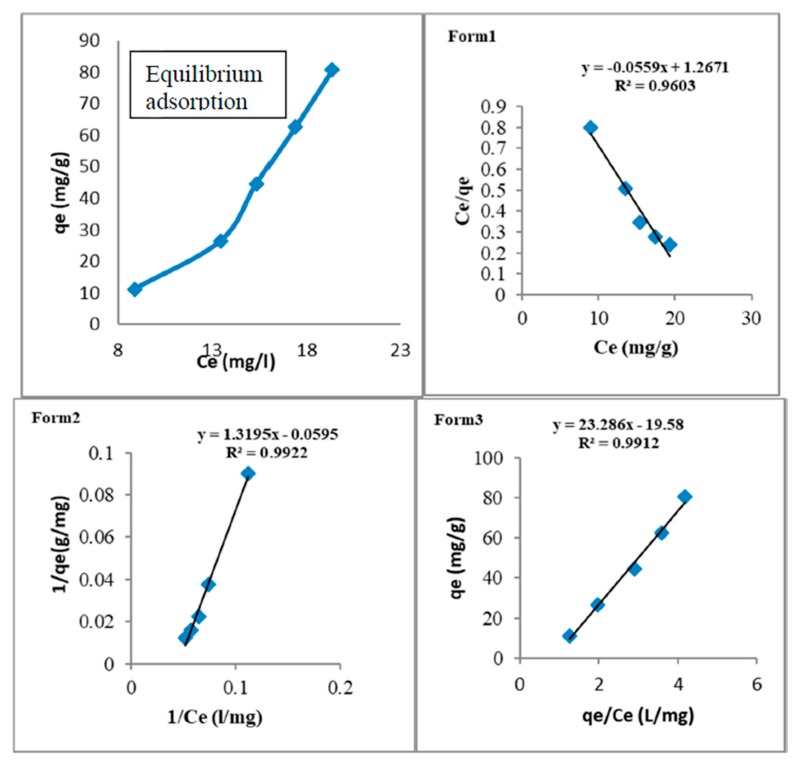
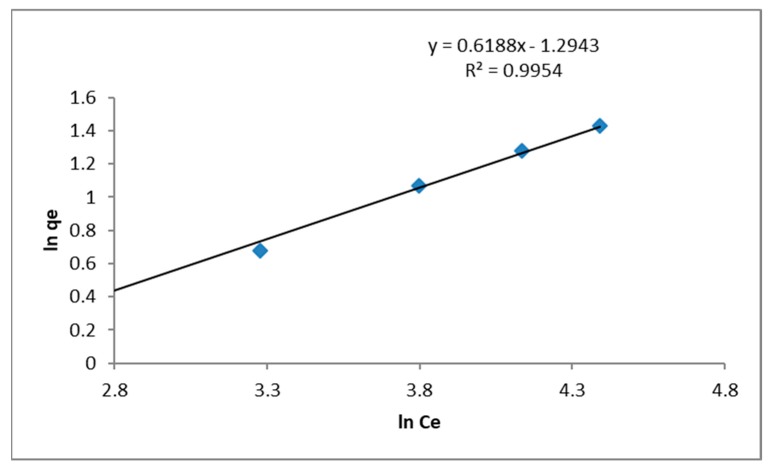
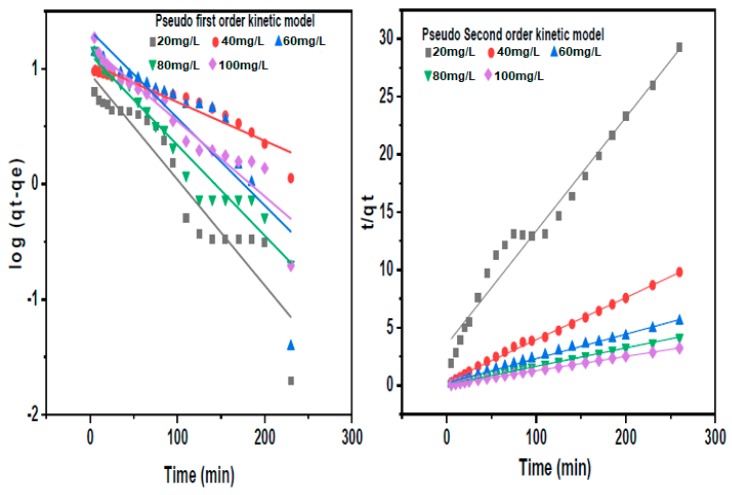
The materials and substances required for sustainable water treatment by adsorption technique, are still being researched widely by distinguished classes of researchers. Thus, the need to synthesize substances that can effectively clean up pollutants from the environment cannot be overemphasized. So far, materials in bulk forms that are rich in carbon, such as biochar and varieties of activated carbon have been used for various adsorptive purposes. The use of bulk materials for such purposes are not efficient due to minimal surface areas available for adsorption. This study explores the adsorption task at nano dimension using carbon dots (CDs) from tapioca. The properties of carbon structure and its influence on the adsorptive efficacy of carbon nanoparticles were investigated by energy-dispersive spectroscopy (EDS), X-ray photoelectron spectroscopy (XPS), Fourier transform infrared spectroscopy (FTIR), high resolution transmission electron microscopy (HrTEM), and atomic force microscopy (AFM). The results implied carbon present in CDs are good adsorbents for effective adsorption of heavy metal ions (lead) with removal efficiency of 80.6% in aqueous environment. The adsorption process as explored by both Langmuir and Freundlich isotherms have proven favorability of the adsorption process. Langmuir form two and three have correlation coefficients R2 at 0.9922 and 0.9912, respectively. The Freundlich isotherm confirms CDs as having defined surface heterogeneity and the exponential distribution of active sites. The adsorption of lead unto CDs obeyed the second order kinetic model with coefficient of determination, R2 of 0.9668 and 0.9996 at an initial lead concentration of 20 mg/L and 100 mg/L, respectively. The findings validated the efficiency of CDs derived from tapioca as an excellent material for further utilization in the environmental fields of wastewater pollution detection and clean up, bio-imaging, and chemical sensing applications.
Overview
The claims and statistics of this paper haven’t been checked yet.
Free: it reads the open-access text and checks the first 5 claims that cite a source we can check. Create a free account to check every claim.
Integrity signals
Registry
Cites
Statistics
Figures
Verification
Claims the paper makes
The claims and statistics of this paper haven’t been checked yet.
Free: it reads the open-access text and checks the first 5 claims that cite a source we can check. Create a free account to check every claim.
Claims other papers make about this one
Each is checked against this paper’s own text: does it say what the citing paper says it does?
The source backs part of the claim, not all of it — or backs it for a different population, condition or comparison.
In the citing paper
“However, all these methods are either inefficient or not economical when heavy metal exists in lower concentrations [8].”
From Equilibrium and Kinetic Studies for The Adsorptive Removal of Lead (II) Ions from Aqueous Solution Using Activated Plantain Peel Biochar (2020) · cites this paper as [8]
Experimental — accuracy not yet measured
Self-check
Percentages, sums and reported differences re-computed from the paper’s own numbers.
The self-check needs the paper’s full text.
Citations
Cites
The adsorption of gases on plane surfaces of glass, mica and platinum
Langmuir, I. (1918) · Journal of the American Chemical Society · doi:10.1021/ja02242a004 · Cited by 23,242 · cited 1×
“The adsorption is homogenous when it takes place within specific site while the energy is constant and does not depend on the degree of occupation of adsorbents at active center [51].”
BackgroundElectrophoretic Analysis and Purification of Fluorescent Single-Walled Carbon Nanotube Fragments
Xu, X., Ray, R., Gu, Y., Ploehn, H. J., Gearheart, L., Raker, K., & Scrivens, W. A. (2004) · Journal of the American Chemical Society · doi:10.1021/ja040082h · Cited by 5,323 · cited 1×
“There are numerous techniques for synthesizing CDs, such as; arc-discharge [9,21], laser ablation [8,27,28], chemical oxidation [16,29–31], and electrochemical [32–36].”
MethodQuantum-Sized Carbon Dots for Bright and Colorful Photoluminescence
Sun, Y.-P., Zhou, B., Lin, Y., Wang, W., Fernando, K. A. S., Pathak, P., Meziani, M. J., Harruff, B. A., Wang, X., Wang, H., et al. (2006) · Journal of the American Chemical Society · doi:10.1021/ja062677d · Cited by 5,114 · cited 1×
“There are numerous techniques for synthesizing CDs, such as; arc-discharge [9,21], laser ablation [8,27,28], chemical oxidation [16,29–31], and electrochemical [32–36].”
MethodCarbon quantum dots and their applications
Lim, S. Y., Shen, W., & Gao, Z. (2015) · Chemical Society Reviews · doi:10.1039/c4cs00269e · Cited by 4,976
Water‐Soluble Fluorescent Carbon Quantum Dots and Photocatalyst Design
Li, H., He, X., Kang, Z., Huang, H., Liu, Y., Liu, J., Lian, S., Tsang, C. H. A., Yang, X., & Lee, S. (2010) · Angewandte Chemie International Edition · doi:10.1002/anie.200906154 · Cited by 2,629
Carbon quantum dots: synthesis, properties and applications
Wang, Y., & Hu, A. (2014) · Journal of Materials Chemistry C · doi:10.1039/c4tc00988f · Cited by 2,597 · cited 1×
“Based on past study, the dependency of intensity and wavelength emission towards excitation wavelength [15].”
BackgroundSahu, S., Behera, B., Maiti, T. K., & Mohapatra, S. (2012) · Chemical Communications · doi:10.1039/c2cc33796g · Cited by 1,803 · cited 4×
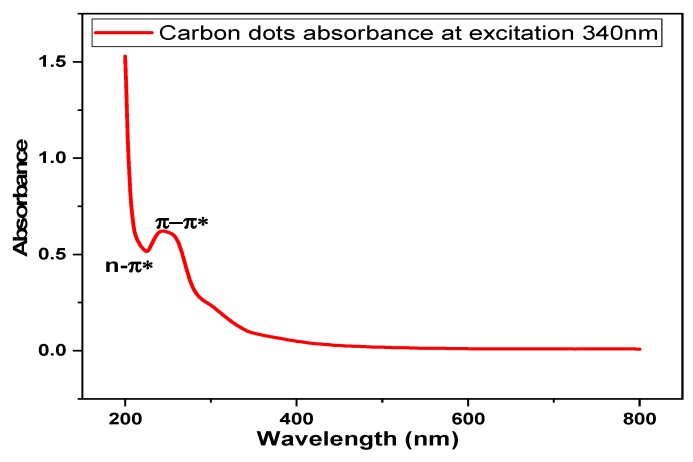
“Absorption shoulders in the spectrum may be due to the π-π*of C=C bonds or n-π* of C=O [37].”
BackgroundInfluentialStrongly green-photoluminescent graphene quantum dots for bioimaging applications
Zhu, S., Zhang, J., Qiao, C., Tang, S., Li, Y., Yuan, W., Li, B., Tian, L., Liu, F., Hu, R., et al. (2011) · Chemical Communications · doi:10.1039/c1cc11122a · Cited by 1,592
Visible-light activation of TiO2 photocatalysts: Advances in theory and experiments
Etacheri, V., Di Valentin, C., Schneider, J., Bahnemann, D., & Pillai, S. C. (2015) · Journal of Photochemistry and Photobiology C: Photochemistry Reviews · doi:10.1016/j.jphotochemrev.2015.08.003 · Cited by 1,475 · cited 1×
“QDs are conventional fluorescent dyes that have unique optical properties, however, CDs are the best option due to their high degree of biocompatibility, cost effectiveness, non-toxic, and have been successfully applied in bio imaging, bio sensing [13–16], agricultural diagnosis sectors [17], pharmaceuticals [18,19],…”
BackgroundZhou, J., Booker, C., Li, R., Zhou, X., Sham, T.-K., Sun, X., & Ding, Z. (2007) · Journal of the American Chemical Society · doi:10.1021/ja0669070 · Cited by 1,337
Cited by
Mansuriya, B. D., & Altintas, Z. (2021) · Nanomaterials · doi:10.3390/nano11102525 · Cited by 438
“Additionally, this method provides information about the properties of CDs, such as double layer characteristics with various hydrophilic functional groups (hydroxyl, carboxyl, and carbonyl) [185,198,199].”
BackgroundMethodGonzález-González, R. B., González, L. T., Madou, M. J., Leyva‐Porras, C., Martinez-Chapa, S. O., & Mendoza, A. (2022) · Nanomaterials · doi:10.3390/nano12030298 · Cited by 180
“The negative charge observ d in our study indicates a dense electron cl ud conc ntrating on the carbon dots [62], attributed to carboxyl, hydroxyl, or carbonyl groups in the nanoparticle surface [63].”
BackgroundAdel, M., Ahmed, M. A., Elabiad, M. A., & Mohamed, A. A. (2022) · Environmental Nanotechnology Monitoring & Management · doi:10.1016/j.enmm.2022.100719 · Cited by 141
Advanced in carbon dot-based hydrogels for antibacterial, detection and adsorption
Cui, F., Xi, L., Wang, D., Ren, L., Tan, X., Li, X., Li, J., & Li, T. (2023) · Coordination Chemistry Reviews · doi:10.1016/j.ccr.2023.215457 · Cited by 130
A comprehensive model of carbon nanodots with 0.21 nm lattice fringes patterns
Boukhvalov, D. W., Osipov, V. Y., Murzalinov, D., Serikkanov, A. S., & Bi, H. (2024) · Carbon · doi:10.1016/j.carbon.2024.119101 · Cited by 120
Carbon dots in environmental treatment and protection applications
Tran, N.-A., Hien, N. T. T., Hoang, N. M., Dang, H.-L. T., Huy, D. Q., Quy, T. V., Hanh, N. T., Vu, N. H., & Dao, V. (2022) · Desalination · doi:10.1016/j.desal.2022.116285 · Cited by 113
Ibrahim, Y., Kassab, A., Eid, K., Abdullah, A. M., Ozoemena, K. I., & Elzatahry, A. A. F. (2020) · Nanomaterials · doi:10.3390/nano10050885 · Cited by 112
Rapid adsorption of lead ions using porous carbon nanofibers
Mahar, F. K., He, L., Wei, K., Mehdi, M., Zhu, M., Gu, J. H., Zhang, K., Khatri, Z., & Kim, I. S. (2019) · Chemosphere · doi:10.1016/j.chemosphere.2019.02.131 · Cited by 106
2D-MXenes to tackle wastewater: From purification to SERS-based sensing
Tyagi, N., Sharma, G., Kumar, D., Neelratan, P. P., Sharma, D., Khanuja, M., Singh, M. K., Singh, V., Kaushik, A. K., & Sharma, S. K. (2023) · Coordination Chemistry Reviews · doi:10.1016/j.ccr.2023.215394 · Cited by 102
Adeola, A. O., Duarte, M. P., & Naccache, R. (2023) · Frontiers in Carbon · doi:10.3389/frcrb.2023.1220021 · Cited by 106
El‐Azazy, M., Osman, A. I., Nasr, M., Ibrahim, Y., Al‐Hashimi, N., Al‐Saad, K. A., Al-Ghouti, M. A., Shibl, M. F., Al-Muhtaseb, A. H., Rooney, D. W., et al. (2024) · Coordination Chemistry Reviews · doi:10.1016/j.ccr.2024.215976 · Cited by 99
Hui, K. C., Ang, W. L., & Sambudi, N. S. (2021) · Journal of Photochemistry and Photobiology A Chemistry · doi:10.1016/j.jphotochem.2021.113411 · Cited by 99
Yuan, N., Tan, K., Zhang, X., Zhao, A., & Guo, R. (2022) · Chemosphere · doi:10.1016/j.chemosphere.2022.134839 · Cited by 96
Recent Trends and Advancements in Green Synthesis of Biomass-Derived Carbon Dots
Usman, M., & Cheng, S. (2024) · Eng—Advances in Engineering · doi:10.3390/eng5030116 · Cited by 101
Majeed, H. J., Idrees, T. J., Mahdi, M. A., Abed, M. J., Batool, M., Yousefi, S. R., Thumma, A., & Jasim, L. S. (2024) · Desalination and Water Treatment · doi:10.1016/j.dwt.2024.100822 · Cited by 96
González-González, R. B., González, L. T., Iglesias-González, S., Gonzalez‐González, E., Martinez-Chapa, S. O., Madou, M. J., Álvarez, M. M., & Mendoza, A. (2020) · Nanomaterials · doi:10.3390/nano10112213 · Cited by 91
Applications of carbon quantum dots in lubricant additives: a review
Tang, W., Zhang, Z., & Li, Y. (2021) · Journal of Materials Science · doi:10.1007/s10853-021-06032-8 · Cited by 81
“Based on the reports in the literature, the CQDs mainly consist of C, O, N, and H, as with other carbon-based nanomaterials; hence, they cannot cause the pollution of the environment [130, 131].”
BackgroundTeymoorian, T., Hashemi, N., Mousazadeh, M. H., & Entezarian, Z. (2021) · SN Applied Sciences · doi:10.1007/s42452-021-04287-z · Cited by 76
Carbon derived nanomaterials for the sorption of heavy metals from aqueous solution: A review
Aigbe, U. O., & Osibote, O. A. (2021) · Environmental Nanotechnology Monitoring & Management · doi:10.1016/j.enmm.2021.100578 · Cited by 91
Ávila, J. M., Ayala, M. R., Kumar, Y., Perez-Tijerina, E. G., Ruiz-Robles, M. A., & Agarwal, V. (2022) · Chemical Engineering Journal · doi:10.1016/j.cej.2022.137171 · Cited by 74
Carbon dots: A review of innovations, applications, challenges, and future prospects
Sen, S., & Bose, A. (2025) · Inorganic Chemistry Communications · doi:10.1016/j.inoche.2024.113852 · Cited by 73
Bijoy, G., & Sangeetha, D. (2024) · Journal of environmental chemical engineering · doi:10.1016/j.jece.2024.113727 · Cited by 74
Eco-friendly Synthesis of Carbon Quantum Dots as an Effective Adsorbent
Tohamy, H. S., El‐Sakhawy, M., & Kamel, S. M. (2022) · Journal of Fluorescence · doi:10.1007/s10895-022-03085-z · Cited by 69
“Because of their biocompatibility, affordability, and environmental friendliness, CQDs have been successfully used in wastewater treatment [6].”
BackgroundSurendran, P., Lakshmanan, A., Priya, S. S., Balakrishnan, K., Rameshkumar, P., Kannan, K., Mahalakshmi, K., Gayathri, V., & Vinitha, G. (2024) · Chemical Physics Impact · doi:10.1016/j.chphi.2024.100515 · Cited by 66
Cui, F., Fan, R., Wang, D., Ren, L., Wang, Q., Meng, Y., Ma, R., Wang, S., Liu, Z., Li, X., et al. (2024) · Chemical Engineering Journal · doi:10.1016/j.cej.2024.152103 · Cited by 65
Supajaruwong, S., Porahong, S., Wibowo, A., Yu, Y., Khan, M. J., Pongchaikul, P., Posoknistakul, P., Laosiripojana, N., Wu, K. C. ‐., & Sakdaronnarong, C. K. (2023) · Science and Technology of Advanced Materials · doi:10.1080/14686996.2023.2260298 · Cited by 56
Carbon dots as sensors and sorbents in environmental monitoring protection and chemical analysis
Kuligowska, M., & Neffe, S. (2024) · TrAC Trends in Analytical Chemistry · doi:10.1016/j.trac.2024.117767 · Cited by 56
Bhattacharjee, T., Konwar, A., Boruah, J. S., Chowdhury, D., & Majumdar, G. (2023) · Journal of Hazardous Materials Advances · doi:10.1016/j.hazadv.2023.100295 · Cited by 53
Lims, S. C., Tran, N. A., Dao, V., & Pham, P. V. (2025) · Coordination Chemistry Reviews · doi:10.1016/j.ccr.2024.216423 · Cited by 55
Guo, Y., Feng, Y., Li, H., Wang, Y., Wen, Z., & Zhou, G. (2021) · Carbon · doi:10.1016/j.carbon.2021.12.038 · Cited by 52
Kamali, S. R., Chen, C., Agrawal, D. C., & Wei, T. (2021) · Journal of Analytical Science & Technology · doi:10.1186/s40543-021-00298-y · Cited by 51
Saengsrichan, A., Saikate, C., Silasana, P., Khemthong, P., Wanmolee, W., Phanthasri, J., Youngjan, S., Posoknistakul, P., Ratchahat, S., Laosiripojana, N., et al. (2022) · International Journal of Molecular Sciences · doi:10.3390/ijms23095001 · Cited by 53
“Highly eg tive zeta potentials beyond −30 mV further demonstra ed an effective binding with cations such as heavy meta io s [53], amino groups, and positive charged mol cules.”
BackgroundInfluentialLi, M., Zhang, S., Cui, S., Qin, K., Zhang, Y., Li, P., Cao, Q., Xiao, H., & Zeng, Q. (2021) · Separation and Purification Technology · doi:10.1016/j.seppur.2021.119493 · Cited by 50
Selvaraju, N., Ganesh, P. S., Palrasu, V., Venugopal, G., & Mariappan, V. (2022) · ACS Omega · doi:10.1021/acsomega.2c03465 · Cited by 55
Carbon Dots from Natural Sources for Biomedical Applications
Rajesh, G. A., John, V. L., Santhosh, A. P., Ambika, A. K. N., & Vinod, T. P. (2022) · Particle & Particle Systems Characterization · doi:10.1002/ppsc.202200017 · Cited by 52
Ngo, T. S., Tracey, C., Navrotskaya, A. G., Bukhtiyarov, A. V., Krivoshapkin, P. V., & Krivoshapkina, E. F. (2022) · Carbohydrate Polymers · doi:10.1016/j.carbpol.2022.120471 · Cited by 55
Carbon Dots—Types, Obtaining and Application in Biotechnology and Food Technology
Szczepankowska, J., Khachatryan, G., Khachatryan, K., & Krystyjan, M. (2023) · International Journal of Molecular Sciences · doi:10.3390/ijms241914984 · Cited by 50
“[102] Aptamer-functionalized nitrogen-doped graphene quantum dots (N-GQDs-aptamer) coupled with cobalt oxyhydroxide (CoOOH) nanoflakes for the detection of tetracycline (antibiotic) residues in foodstuffs.”
BackgroundRafiq, K., Sadia, I., Abid, M. Z., Waleed, M. Z., Rauf, A., & Hussain, E. (2024) · ACS Biomaterials Science & Engineering · doi:10.1021/acsbiomaterials.4c01256 · Cited by 48
Jamel, H. O., Jasim, M. H., Mahdi, M. A., Ganduh, S. H., Batool, M., Jasim, L. S., & Haider, M. N. (2025) · Desalination and Water Treatment · doi:10.1016/j.dwt.2025.101019 · Cited by 51
Jing, X., Liu, Y., Liu, X., Zhang, Y., Wang, G., Yang, F., Zhang, Y., Chang, D., Zhang, Z., You, C., et al. (2024) · Horticulture Research · doi:10.1093/hr/uhae016 · Cited by 47
Rajendran, S., UshaVipinachandran, V., Haroon, K. H. B., Ashokan, I., & Bhunia, S. K. (2022) · Analytical Methods · doi:10.1039/d2ay01288j · Cited by 47
Fluorescent carbon dots based on food wastes: Applications in food safety detection
Liu, C., Mei, Y., Lei, Q., Ma, X., Nan, X., Zhu, Y., Liao, J. P., Xu, Y., Luo, Y., Zhang, H., et al. (2024) · Chemical Engineering Journal · doi:10.1016/j.cej.2024.156434 · Cited by 46
Alamdari, N. G., Almasi, H., Moradi, M., & Akhgari, M. (2023) · Waste and Biomass Valorization · doi:10.1007/s12649-023-02087-7 · Cited by 44
“In the case of nanomaterials, the particles with a zeta potential less than ± 10 mV are considered neutral nanoparticles [31].”
BackgroundA comprehensive review on nitrogen-doped carbon dots for antibacterial applications
Mohammed, S. J., Sidiq, M. K., Najmuldeen, H. H. R., Kayani, K. F., Kader, D. A., & Aziz, S. B. (2024) · Journal of environmental chemical engineering · doi:10.1016/j.jece.2024.114444 · Cited by 45
Deme, G., Belay, A., Andoshe, D. M., Barsisa, G., Tsegaye, D., Tiruneh, S., & Seboka, C. (2023) · Journal of Nanomaterials · doi:10.1155/2023/1701496 · Cited by 42
Atchudan, R., Gangadaran, P., Perumal, S., Edison, T. N. J. I., Sundramoorthy, A. K., Rajendran, R. L., Ahn, B., & Lee, Y. R. (2022) · Journal of Cluster Science · doi:10.1007/s10876-022-02337-z · Cited by 39
Farsi, B. A., Sofin, R. G. S., Shidhani, H. A., El-Shafey, E.-S. I., Al-Hosni, A. S., Marzouqi, F. A., Issac, A., Al-Nabhani, A., & Abou‐Zied, O. K. (2022) · Journal of Luminescence · doi:10.1016/j.jlumin.2022.119326 · Cited by 37
Jardan, Y. A. B., Mostafa, A. M., Barker, J., Ali, A. B. H., & El‐Wekil, M. M. (2025) · Analytical Methods · doi:10.1039/d5ay00107b · Cited by 36
Selvaraju, N., Ravichandran, K., & Venugopal, G. (2022) · International Journal of Hydrogen Energy · doi:10.1016/j.ijhydene.2022.10.203 · Cited by 36
Tohamy, H. S., Fathy, N. A., El‐Sakhawy, M., & Kamel, S. M. (2022) · Diamond and Related Materials · doi:10.1016/j.diamond.2022.109640 · Cited by 36
Nitrogen-doped carbon dots as fluorescent probes for sensitive and selective determination of Fe3+
Ma, Y., Mao, L., Cui, C., Hu, Y., Chen, Z., Zhan, Y., & Zhang, Y. (2024) · Spectrochimica Acta Part A Molecular and Biomolecular Spectroscopy · doi:10.1016/j.saa.2024.124347 · Cited by 34
Hu, Z., Long, W., Liu, T., Guan, Y., Lei, G., Suo, Y., Jia, M., He, J., Chen, H., She, Y., et al. (2023) · Spectrochimica Acta Part A Molecular and Biomolecular Spectroscopy · doi:10.1016/j.saa.2023.122517 · Cited by 33
Kotia, A., Yadav, A., Raj, T. R., Keischgens, M. G., Rathore, H., & Sarris, I. E. (2020) · Fluids · doi:10.3390/fluids5040230 · Cited by 31
Saengsrichan, A., Khemthong, P., Wanmolee, W., Youngjan, S., Phanthasri, J., Arjfuk, P., Pongchaikul, P., Ratchahat, S., Posoknistakul, P., Laosiripojana, N., et al. (2022) · Analytica Chimica Acta · doi:10.1016/j.aca.2022.340368 · Cited by 31
Eddin, F. B. K., Fen, Y. W., Fauzi, N. I. M., Daniyal, . M. E. M. M., Omar, N. A. S., Anuar, M. F., Hashim, H. S., Sadrolhosseini, A. R., & Abdullah, H. (2022) · Nanomaterials · doi:10.3390/nano12111799 · Cited by 30
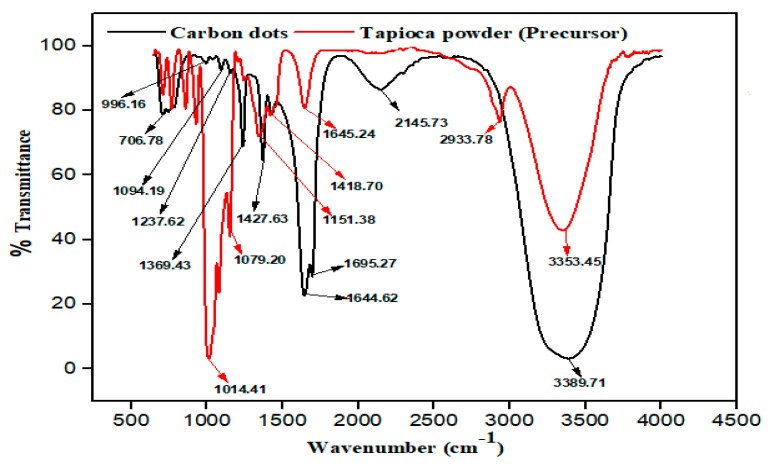
“The peak located around 2158 cm−1 corresponds to the stretching frequency of alkyne C≡C groups [61,62], and the peak at 2016 cm−1 originated due to C=O stretching of the carboxyl group [63].”
BackgroundZulfajri, M., Sudewi, S., Damayanti, R., & Huang, G. G. (2023) · RSC Advances · doi:10.1039/d2ra07620a · Cited by 30
Šafranko, S., Janđel, K., Kovačević, M., Stanković, A., Sikirić, M. D., Mandić, Š., Széchenyi, A., Glavaš‐Obrovac, L., Leventić, M., Strelec, I., et al. (2023) · Chemosensors · doi:10.3390/chemosensors11040205 · Cited by 30
Agro-waste materials: Sustainable substrates in nanotechnology
Elemike, E. E., Ekennia, A. C., Onwudiwe, D. C., & Ezeani, R. O. (2021) · Elsevier eBooks · doi:10.1016/b978-0-12-823575-1.00022-6 · Cited by 33
Nitrogen doped carbon dots as a photocatalyst based on biomass. A life cycle assessment
Rodríguez-Carballo, G., Moreno‐Tost, R., Fernandes, S., da Silva, J. C. G. E., da Silva, L. P., Castro, E., & Algarra, M. (2023) · Journal of Cleaner Production · doi:10.1016/j.jclepro.2023.138728 · Cited by 29
Effects of fungal carbon dots application on growth characteristics and cadmium uptake in maize
Sadeghi, J., Lakzian, A., Halajnia, A., & Alikhani, M. (2023) · Plant Physiology and Biochemistry · doi:10.1016/j.plaphy.2023.108102 · Cited by 29
Dual Fluorescence in Glutathione-Derived Carbon Dots Revisited
Ganjkhanlou, Y., Maris, J. J. E., Koek, J., Riemersma, R. L., Weckhuysen, B. M., & Meirer, F. (2022) · The Journal of Physical Chemistry C · doi:10.1021/acs.jpcc.1c10478 · Cited by 28
Selvaraju, N., Selvaraj, S., Singhal, N., Mohan, V., Sivalingam, Y., Rajaram, K., & Venugopal, G. (2022) · Materials Science and Engineering B · doi:10.1016/j.mseb.2022.115792 · Cited by 28
Faghihi, H., Mozafari, M. R., Bumrungpert, A., Parsaei, H., Taheri, S. V., Mardani, P., Dehkharghani, F. M., Pudza, M. Y., & Alavi, M. (2023) · Photodiagnosis and Photodynamic Therapy · doi:10.1016/j.pdpdt.2023.103614 · Cited by 28
Soni, H., Jain, V. D., Ballal, S., Ariffin, I. A., Chahar, M., Saini, S., Bhattu, M., Singh, H., Bechelany, M., & Singh, J. (2024) · Nanomaterials · doi:10.3390/nano14211766 · Cited by 26
Carbon quantum dots for efficient delivery of curcumin in live cell
Yadav, H., Rout, D., Upadhyaya, A. K., Agarwala, P., Sharma, A., & Sasmal, D. K. (2023) · Chemical Physics Impact · doi:10.1016/j.chphi.2023.100279 · Cited by 28
What makes carbon nanoparticle a potent material for biological application?
Chatterjee, N., Kumar, P., Kumar, K., & Misra, S. K. (2022) · Wiley Interdisciplinary Reviews Nanomedicine and Nanobiotechnology · doi:10.1002/wnan.1782 · Cited by 27
Ayala, M. R., Saluja, S., Barba, V., Pérez-Huerta, J. S., & Agarwal, V. (2023) · Journal of environmental chemical engineering · doi:10.1016/j.jece.2023.109438 · Cited by 25
Mowafi, S., & Tohamy, H. S. (2023) · Journal of the Textile Institute · doi:10.1080/00405000.2023.2235495 · Cited by 25
“Due to their biocompatibility, cheap and eco-friendly features; CMC and CQDs have been successfully applied in wastewater treatment (Tohamy 2022; Tohamy et al., 2023; Tohamy, 2023;Yahaya Pudza et al., 2020).”
Ghezzi, F., Donnini, R., Sansonetti, A., Giovanella, U., Ferla, B. L., & Vercelli, B. (2022) · Molecules · doi:10.3390/molecules28010072 · Cited by 24
An Insight into Synthesis, Optical Properties, and Applications of Green Fluorescent Carbon Dots
Kumar, S., Gaur, J., Kaushal, S., Dalal, J., Misra, M., Channi, H. K., Kaur, S., Kaur, N., Singh, G., & Singh, G. (2025) · Crystals · doi:10.3390/cryst15040320 · Cited by 24
Paul, S., Hazra, S., & Banerjee, A. (2021) · ACS Sustainable Chemistry & Engineering · doi:10.1021/acssuschemeng.1c03824 · Cited by 23
Impact of carbon concentration on optical and zeta potential properties of carbon quantum dots
Zaini, M. S., Jian, L. Y., Liew, J. Y. C., & Kamarudin, M. A. (2024) · Fullerenes Nanotubes and Carbon Nanostructures · doi:10.1080/1536383x.2024.2367577 · Cited by 23
“Zeta potential was investigated in this work to comprehend the electrokinetic potential of the particles within the dispersion of different solvent at different concentration [30].”
Singh, A. K., Verma, A., Singh, R., Sahoo, A. K., & Samanta, S. K. (2020) · Nanotechnology · doi:10.1088/1361-6528/abc2ed · Cited by 25
pH sensing and bioimaging using green synthesized carbon dots from black fungus
Qin, J., Gao, X., Chen, Q., Liu, H., Liu, S., Hou, J., & Sun, T. (2021) · RSC Advances · doi:10.1039/d1ra05199g · Cited by 22
Nazri, N. A. A., Azeman, N. H., Bakar, A. A. A., Mobarak, N. N., Aziz, T. H. T. A., Zain, A. R. M., Arsad, N., Luo, Y., & Bakar, A. A. A. (2022) · Nanomaterials · doi:10.3390/nano12172999 · Cited by 22
Design of Fluorescent Carbon Dots (CDs) for the Selective detection of Metal‐Containing Ions
López-Beltrán, A., Iriarte‐Mesa, C., Murru, C., Chao‐Mujica, F. J., Corcho‐Valdés, A. L., Morales‐Álvarez, L., García, L. F. D., Deschamps, J., & Antuch, M. (2023) · Chemistry - A European Journal · doi:10.1002/chem.202300188 · Cited by 22
Fabrication and Characterization of Renewable Alginate-Lignin Aerogel for Efficient Oil Absorption
Montazeri, M., & Norouzbeigi, R. (2023) · Journal of Polymers and the Environment · doi:10.1007/s10924-023-03121-4 · Cited by 23
“…new sorbents and applying them. to remove contaminants from water such as superhydrophobic/superoleophilic particles [5], carbon-based materials [6, 7], and porous materials like aerogels [8, 9], foams [10, 11], and sponges [12, 13] are used for separation of oil from water. aerogels, compared…”
Tyagi, N., Sharma, G., Ashraf, W., Singh, S., Singh, M. K., & Khanuja, M. (2024) · Chemical Physics Letters · doi:10.1016/j.cplett.2024.141320 · Cited by 22
Seesuea, C., Sangtawesin, T., Thangsunan, P., & Wechakorn, K. (2023) · Journal of Fluorescence · doi:10.1007/s10895-023-03408-8 · Cited by 21
Ajaj, C. S., & Sadiq, D. A. (2023) · Nanomaterials and Nanotechnology · doi:10.1155/2023/9980479 · Cited by 20
Bisphenol A contamination in processed food samples: an overview
Kumar, P., Priyanka, R. S. A., Priya, P. S., Gunasree, B., Srivanth, S., Jayasakthi, S., Kapoor, A., & Raghunathan, M. (2023) · International Journal of Environmental Science and Technology · doi:10.1007/s13762-023-04793-0 · Cited by 22
Carbon quantum dots as a promising tool for heavy metal sensing and removal in wastewater
Singh, P., & Singh, L. K. (2025) · Desalination and Water Treatment · doi:10.1016/j.dwt.2025.101435 · Cited by 20
Marin, F., Tanislav, O. M., Constantinescu, M., Roman, A., Bucura, F., Oancea, S., & Zaharioiu, A. M. (2025) · Agriculture · doi:10.3390/agriculture15222345 · Cited by 22
“…pores and surfaces, reducing accessibility to microbes [35,65,75,76,78,80] Improved soil aeration and nutrient cycling in sandy soils, favoring microbial SOC turnover [17,18,21,30,39,45] Limitation of labile C availability, sorption of dissolved organic matter onto biochar [19,48,66,70–72] Table 2.”
Hwang, E., & Lee, B.-H. (2022) · Korean Journal of Chemical Engineering · doi:10.1007/s11814-021-0989-8 · Cited by 19
Tafese, B. N., Ganesh, T., Solomon, A., Sundararaju, B., Garg, N., & Seid, B. A. (2023) · Langmuir · doi:10.1021/acs.langmuir.3c01813 · Cited by 19
Kumar, D., Pandey, J., & Kumar, A. (2023) · Materials Science for Energy Technologies · doi:10.1016/j.mset.2023.06.004 · Cited by 17
Xue, J.-J., Gan, M.-H., Lu, Y.-G., & Wu, Q. (2024) · New Carbon Materials · doi:10.1016/s1872-5805(24)60869-3 · Cited by 17
A comprehensive model of nitrogen-free ordered carbon quantum dots
Boukhvalov, D. W., Osipov, V. Y., Hogan, B. T., & Baldycheva, A. V. (2023) · Discover Nano · doi:10.1186/s11671-023-03773-0 · Cited by 17
Anh, T. N., Hien, N. T., Dang, H.-L. T., Ngọc, N. T. B., Dien, P. T., Hoang, N. M., Hạnh, N. T. T., Nguyễn, T. V. H., Khải, N. M., Pham, T. D., et al. (2025) · Desalination · doi:10.1016/j.desal.2025.119214 · Cited by 18
Remediation of environmental toxicants using carbonaceous materials: opportunity and challenges
Gill, S. S., Goyal, T., Goswami, M., Patel, P., Gupta, G. D., & Verma, S. K. (2023) · Environmental Science and Pollution Research · doi:10.1007/s11356-023-27364-9 · Cited by 16
A comprehensive review on carbon dot synthesis and food applications
Imran, A., Ahmed, F., Ali, Y. A., Naseer, M. S., Sharma, K., Bisht, Y. S., Alawadi, A., Shehzadi, U., Islam, F., & Shah, M. A. (2025) · Journal of Agriculture and Food Research · doi:10.1016/j.jafr.2025.101847 · Cited by 26
A Review on the Applications of Quantum Dots in Sample Preparation
Rezaei, M., & Mehdinia, A. (2025) · Journal of Separation Science · doi:10.1002/jssc.70061 · Cited by 15
Ovuoraye, P. E., Ugonabo, V. I., Enyoh, C. E., Igwegbe, C. A., Egbosiuba, T. C., & Ibrahim, I. (2025) · Environmental Monitoring and Assessment · doi:10.1007/s10661-025-13732-0 · Cited by 15
“The model assumption established the removal of the metals, and organics (BOD, COD, TDS, and TSS inclusive) occurs via heterogeneous surfaces, indicating varying energy sites on the sorbent, and different site energies for adsorption (van Riemsdijk & Hiemstra, 2020; Yahaya Pudza et al., 2020).”
Mahmudin, L., Sari, E. K., Jiananda, A., Wulandani, R., Tumbelaka, R. M., Ardiyanti, H., Istiqomah, N. I., Siregar, A. R., Ali, H., Ali, D., et al. (2024) · Microchemical Journal · doi:10.1016/j.microc.2024.110899 · Cited by 13
Sánchez-Pineda, P. A., López-Pacheco, I. Y., Villalba‐Rodríguez, A. M., Godínez-Alemán, J. A., González-González, R. B., Parra‐Saldívar, R., & Iqbal, H. M. N. (2024) · Biotechnology for Biofuels and Bioproducts · doi:10.1186/s13068-024-02522-4 · Cited by 14
“The results presented in Table 4 show poor stability of the CDs samples in the media, mainly in NCDs and PCDs samples; absolute values in the range of 30 or higher are typically reported with highly stable CDs in the media [63].”
BackgroundAdvances in graphene‐based nanomaterials for heavy metal removal from water: Mini review
Jalilian, M., Parvizi, P., & Zangeneh, M. R. (2025) · Water Environment Research · doi:10.1002/wer.70062 · Cited by 14
“…& Orie, 2023; Hussain et al., 2021; Mojica et al., 2013), carbon quantum dots (Abd Rani et al., 2020; Jlassi et al., 2020; Manikandan & Lee, 2022; Yahaya Pudza et al., 2020), carbon onions (Sakulthaew et al., 2017), carbon nanotubes (CNTs) (Fiyadh et al., 2019; Tofighy & Mohammadi, 2011), and…”
Carbon Nanodots Synthesized from Dunaliella salina as Sun Protection Filters
Chatzimitakos, T. G., Kasouni, A. I., Troganis, A. N., LEONARDOS, I. D., Tzovenis, I. P., Ntzouvaras, A., & Stalikas, C. D. (2020) · C – Journal of Carbon Research · doi:10.3390/c6040069 · Cited by 13
“The peaks at 1137 and the shoulder at 996 cm−1 can be ascribed to C–O, and C=O stretching vibrations [28,29].”
BackgroundMXene-based materials for remediation of environmental pollutants
Panda, D., Venkatesh, N., & Sakthivel, P. (2022) · Elsevier eBooks · doi:10.1016/b978-0-12-823361-0.00014-9 · Cited by 16
Ye, J., Dai, Y., Shuying, X., Wang, P.-X., Sun, Z., Qian, J., Liang, Q., He, M., & Chen, Q. (2023) · Inorganic Chemistry · doi:10.1021/acs.inorgchem.3c03502 · Cited by 13
Mathew, J., John, B. K., Mathew, S., Korah, B. K., & Mathew, B. (2024) · Microchemical Journal · doi:10.1016/j.microc.2024.111777 · Cited by 12
Metadata
- Authors
- Yahaya Pudza, M., Zainal Abidin, Z., Abdul Rashid, S., Md Yasin, F., Noor, A. S. M., & Issa, M. A.
- Affiliations
- Department of Chemical and Environmental Engineering, Faculty of Engineering, Universiti Putra Malaysia, Serdang 43400, Selangor, Malaysia
- Universiti Putra Malaysia (MY)
- Venue
- Nanomaterials
- Publisher
- MDPI AG
- Published
- 2020-02-12
- Volume
- 10
- Issue
- 2
- Pages
- 315
- ISSN
- 2079-4991 (ISSN-L)
- PMC
- PMC7075143
- OpenAlex
- W3006673067
- Cited by
- 218
- References
- 71
- Citations by year
- 2026: 24 · 2025: 45 · 2024: 46 · 2023: 40 · 2022: 34 · 2021: 19 · 2020: 9
- FWCI
- 7.82
- Type
- journal article
- Language
- en
- Open access
- gold
- dx.doi.org
- Licence
- Locations
- Nanomaterials (publishedVersion, cc-by)
- Europe PMC (PubMed Central) (publishedVersion, cc-by)
- PubMed Central (publishedVersion, cc-by)
- PubMed (publishedVersion)
- Universiti Putra Malaysia Institutional Repository (Universiti Putra Malaysia) (acceptedVersion)
- DOAJ (DOAJ: Directory of Open Access Journals) (submittedVersion, cc-by-sa)
- Funders
- Universiti Putra Malaysia (UPM) (GP-IPS/2017/9556800)
- Topics
- Physical Sciences › Environmental Science › Water Science and Technology › Adsorption and biosorption for pollutant removal
- Physical Sciences › Materials Science › Materials Chemistry › Carbon and Quantum Dots Applications
- Physical Sciences › Environmental Science › Environmental Engineering › Environmental remediation with nanomaterials
- Keywords
- carbon dots, heavy metal adsorption, lead removal, wastewater treatment, Langmuir isotherm, Freundlich isotherm, second-order kinetics, eco-friendly adsorbents, fluorescent carbon nanoparticles, biochar
About these checks
Registry, retraction, Cites and statistics results are computed, not judged, with one exception: a printed reference that no index lists is read once by a model before it counts as a citation error. Claims are extracted by a model and kept only when their quote appears verbatim in the text; each cited source is then checked, with a model’s help, for whether it says what the claim relies on. Those verdicts can be wrong — read the claim’s quote and the cited source before relying on one.
Statistics and arithmetic are recomputed, not judged.
Confidence bands are shown only for fields calibrated on our annotated test set. None is calibrated yet, so no band is shown.
What counts as a claim ›How we measure confidence ›How we check this ›
Are you an author, or do you see a problem with this page? Request a review
Data sources
Bibliographic data: Semantic Scholar, OpenAlex, Crossref.
Contains information from the Semantic Scholar Academic Graph Datasets, made available under the ODC Attribution License (ODC-BY 1.0).
Semantic Scholar’s data is described in: Kinney, R., et al. (2023). The Semantic Scholar Open Data Platform. arXiv:2301.10140.
