

Eco-Friendly Sustainable Fluorescent Carbon Dots for the Adsorption of Heavy Metal Ions in Aqueous Environment
Open accessThe DOI matches its Crossref record; 71 of the 71 references it cites were found in a registry or an index.
Abstract
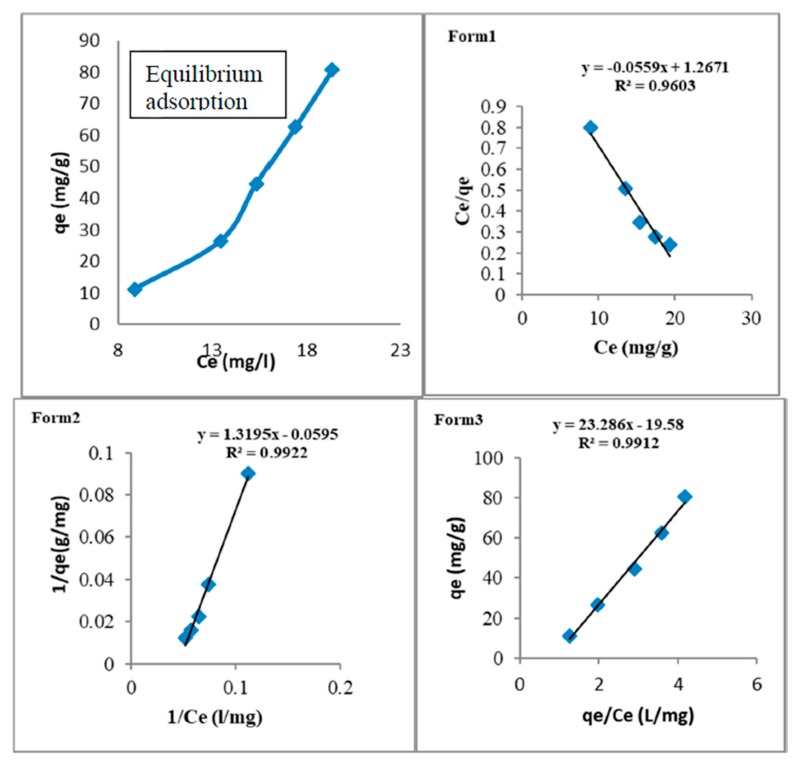
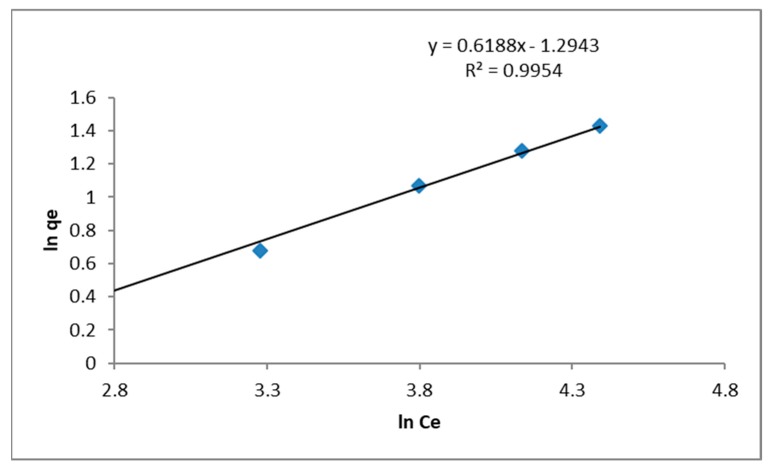
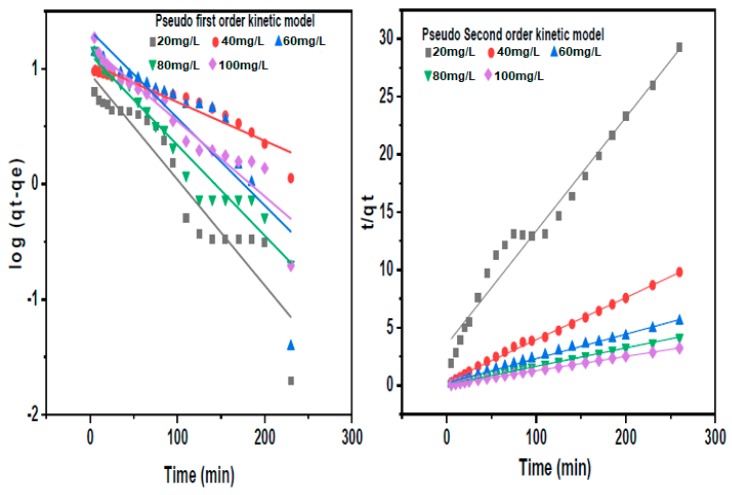
The materials and substances required for sustainable water treatment by adsorption technique, are still being researched widely by distinguished classes of researchers. Thus, the need to synthesize substances that can effectively clean up pollutants from the environment cannot be overemphasized. So far, materials in bulk forms that are rich in carbon, such as biochar and varieties of activated carbon have been used for various adsorptive purposes. The use of bulk materials for such purposes are not efficient due to minimal surface areas available for adsorption. This study explores the adsorption task at nano dimension using carbon dots (CDs) from tapioca. The properties of carbon structure and its influence on the adsorptive efficacy of carbon nanoparticles were investigated by energy-dispersive spectroscopy (EDS), X-ray photoelectron spectroscopy (XPS), Fourier transform infrared spectroscopy (FTIR), high resolution transmission electron microscopy (HrTEM), and atomic force microscopy (AFM). The results implied carbon present in CDs are good adsorbents for effective adsorption of heavy metal ions (lead) with removal efficiency of 80.6% in aqueous environment. The adsorption process as explored by both Langmuir and Freundlich isotherms have proven favorability of the adsorption process. Langmuir form two and three have correlation coefficients R2 at 0.9922 and 0.9912, respectively. The Freundlich isotherm confirms CDs as having defined surface heterogeneity and the exponential distribution of active sites. The adsorption of lead unto CDs obeyed the second order kinetic model with coefficient of determination, R2 of 0.9668 and 0.9996 at an initial lead concentration of 20 mg/L and 100 mg/L, respectively. The findings validated the efficiency of CDs derived from tapioca as an excellent material for further utilization in the environmental fields of wastewater pollution detection and clean up, bio-imaging, and chemical sensing applications.
Overview
The claims and statistics of this paper haven’t been checked yet.
Free: it reads the open-access text and checks the first 5 claims that cite a source we can check. Create a free account to check every claim.
Integrity signals
Registry
Cites
Statistics
Figures
Verification
Claims the paper makes
The claims and statistics of this paper haven’t been checked yet.
Free: it reads the open-access text and checks the first 5 claims that cite a source we can check. Create a free account to check every claim.
Claims other papers make about this one
Each is checked against this paper’s own text: does it say what the citing paper says it does?
The source backs part of the claim, not all of it — or backs it for a different population, condition or comparison.
In the citing paper
“However, all these methods are either inefficient or not economical when heavy metal exists in lower concentrations [8].”
From Equilibrium and Kinetic Studies for The Adsorptive Removal of Lead (II) Ions from Aqueous Solution Using Activated Plantain Peel Biochar (2020) · cites this paper as [8]
Experimental — accuracy not yet measured
Self-check
Percentages, sums and reported differences re-computed from the paper’s own numbers.
The self-check needs the paper’s full text.
Citations
Cites
The adsorption of gases on plane surfaces of glass, mica and platinum
Langmuir, I. (1918) · Journal of the American Chemical Society · doi:10.1021/ja02242a004 · Cited by 23,242 · cited 1×
“The adsorption is homogenous when it takes place within specific site while the energy is constant and does not depend on the degree of occupation of adsorbents at active center [51].”
BackgroundElectrophoretic Analysis and Purification of Fluorescent Single-Walled Carbon Nanotube Fragments
Xu, X., Ray, R., Gu, Y., Ploehn, H. J., Gearheart, L., Raker, K., & Scrivens, W. A. (2004) · Journal of the American Chemical Society · doi:10.1021/ja040082h · Cited by 5,323 · cited 1×
“There are numerous techniques for synthesizing CDs, such as; arc-discharge [9,21], laser ablation [8,27,28], chemical oxidation [16,29–31], and electrochemical [32–36].”
MethodQuantum-Sized Carbon Dots for Bright and Colorful Photoluminescence
Sun, Y.-P., Zhou, B., Lin, Y., Wang, W., Fernando, K. A. S., Pathak, P., Meziani, M. J., Harruff, B. A., Wang, X., Wang, H., et al. (2006) · Journal of the American Chemical Society · doi:10.1021/ja062677d · Cited by 5,114 · cited 1×
“There are numerous techniques for synthesizing CDs, such as; arc-discharge [9,21], laser ablation [8,27,28], chemical oxidation [16,29–31], and electrochemical [32–36].”
MethodCarbon quantum dots and their applications
Lim, S. Y., Shen, W., & Gao, Z. (2015) · Chemical Society Reviews · doi:10.1039/c4cs00269e · Cited by 4,976
Water‐Soluble Fluorescent Carbon Quantum Dots and Photocatalyst Design
Li, H., He, X., Kang, Z., Huang, H., Liu, Y., Liu, J., Lian, S., Tsang, C. H. A., Yang, X., & Lee, S. (2010) · Angewandte Chemie International Edition · doi:10.1002/anie.200906154 · Cited by 2,629
Carbon quantum dots: synthesis, properties and applications
Wang, Y., & Hu, A. (2014) · Journal of Materials Chemistry C · doi:10.1039/c4tc00988f · Cited by 2,597 · cited 1×
“Based on past study, the dependency of intensity and wavelength emission towards excitation wavelength [15].”
BackgroundSahu, S., Behera, B., Maiti, T. K., & Mohapatra, S. (2012) · Chemical Communications · doi:10.1039/c2cc33796g · Cited by 1,803 · cited 4×
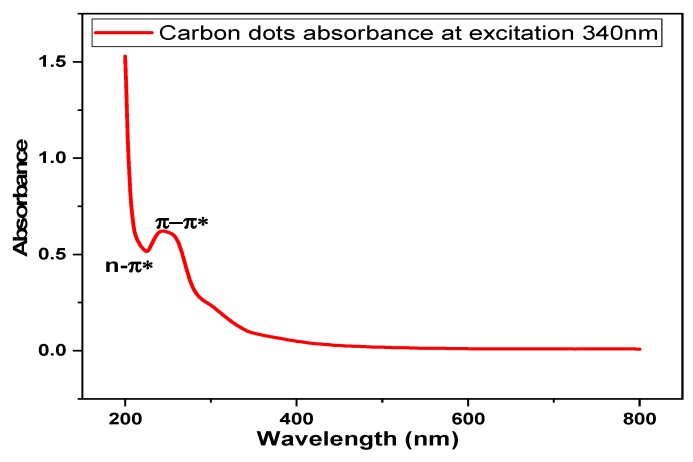
“Absorption shoulders in the spectrum may be due to the π-π*of C=C bonds or n-π* of C=O [37].”
BackgroundInfluentialStrongly green-photoluminescent graphene quantum dots for bioimaging applications
Zhu, S., Zhang, J., Qiao, C., Tang, S., Li, Y., Yuan, W., Li, B., Tian, L., Liu, F., Hu, R., et al. (2011) · Chemical Communications · doi:10.1039/c1cc11122a · Cited by 1,592
Visible-light activation of TiO2 photocatalysts: Advances in theory and experiments
Etacheri, V., Di Valentin, C., Schneider, J., Bahnemann, D., & Pillai, S. C. (2015) · Journal of Photochemistry and Photobiology C: Photochemistry Reviews · doi:10.1016/j.jphotochemrev.2015.08.003 · Cited by 1,475 · cited 1×
“QDs are conventional fluorescent dyes that have unique optical properties, however, CDs are the best option due to their high degree of biocompatibility, cost effectiveness, non-toxic, and have been successfully applied in bio imaging, bio sensing [13–16], agricultural diagnosis sectors [17], pharmaceuticals [18,19],…”
BackgroundZhou, J., Booker, C., Li, R., Zhou, X., Sham, T.-K., Sun, X., & Ding, Z. (2007) · Journal of the American Chemical Society · doi:10.1021/ja0669070 · Cited by 1,337
Cited by
Items 101–200 of 222
An Insight Into Unveiling Nano Luminescence for Industrial Dye Detection
Safamariyam, E., Synumol, K. P., Panicker, A. J., Sha, M. S., Roshan, S., Dakua, S. P., Chandrasekar, V., Singh, A. V., & Sadasivuni, K. K. (2025) · Journal of Fluorescence · doi:10.1007/s10895-025-04151-y · Cited by 12
Wang, W., He, S., Sun, H., Guo, X.-F., & Wang, H. (2025) · ACS Sensors · doi:10.1021/acssensors.4c03644 · Cited by 12
The Promise and Pitfalls of Artificial Intelligence in the Evaluation of Synthetic “Greenness”
Nowak, P. M., Woźniakiewicz, M., Nalepa, G. J., & Grzybowski, B. A. (2025) · ChemSusChem · doi:10.1002/cssc.202500809 · Cited by 12
Yousif, S. A., & Al-Mosawi, S. (2022) · South African Journal of Chemical Engineering · doi:10.1016/j.sajce.2022.07.002 · Cited by 12
Zulfajri, M., Sudewi, S., Rasool, A., Hsu, S. C. N., & Huang, G. G. (2023) · Waste and Biomass Valorization · doi:10.1007/s12649-023-02109-4 · Cited by 12
“The zeta potential value is highly sensitive to the alterations occurring upon dilution, such as the variations of pH and ionic strength [32].”
BackgroundEfficient phosphate removal utilizing N, Zn-doped carbon dots as an innovative nanoadsorbent
Alikhani, M., Khoshkalam, E., Sadeghi, J., Bulgariu, L., & Eshghi, H. (2024) · RSC Advances · doi:10.1039/d4ra02428a · Cited by 13
Juntree, N., Sawatdee, S., Pongchaikul, P., Arjfuk, P., Wanmolee, W., Khemthong, P., Chanlek, N., Srifa, A., Posoknistakul, P., Laosiripojana, N., et al. (2025) · ACS Measurement Science Au · doi:10.1021/acsmeasuresciau.5c00011 · Cited by 12
Carbon dots in agricultural system
Tripathi, S., & Sarkar, S. (2022) · Elsevier eBooks · doi:10.1016/b978-0-323-90260-1.00004-8 · Cited by 11
Kahraman, O., Turunç, E., Döğen, A., & Binzet, R. (2023) · Current Microbiology · doi:10.1007/s00284-023-03286-0 · Cited by 11
Upadhyaya, A. K., Agarwala, P., Sharma, C., & Sasmal, D. K. (2024) · ChemPhysChem · doi:10.1002/cphc.202400855 · Cited by 10
Abidin, Z. Z., Pudza, M. Y., Issa, M. A., Zentou, H., Harun, N. H., & Halim, N. A. A. (2023) · Elsevier eBooks · doi:10.1016/b978-0-323-91894-7.00021-9 · Cited by 10
Self-citationMulugeta, E., Tegafaw, T., Liu, Y., Zhao, D., Baek, A., Kim, J., Chang, Y., & Lee, G. H. (2025) · Nanomaterials · doi:10.3390/nano15070542 · Cited by 10
“The unpaired electrons cause magnetic ordering in CDs [72].”
Enriquez, B. U. M., Ayala, M. R., Kumar, Y., Escorcia-García, J., Gómez-Aguilar, J. F., Khandual, S., & Agarwal, V. (2025) · Journal of environmental chemical engineering · doi:10.1016/j.jece.2025.117827 · Cited by 9
Thomas, J. M., Balasubramanian, B., Suresh, G., Meyyazhagan, A., Bhotla, H. K., Pappuswamy, M., Kamyab, H., Khademi, T., & Nair, Y. (2025) · Materials Research Bulletin · doi:10.1016/j.materresbull.2025.113927 · Cited by 9
Controlling the emissive pathways of carbon nanoparticles by selective surface functionalization
Farsi, B. A., Sofin, R. G. S., El-Shafey, E.-S. I., Issac, A., Marzouqi, F. A., Al-Mashaikhi, S. M. A.-M. S. M., Myint, M. T. Z., & Abou‐Zied, O. K. (2021) · Applied Surface Science · doi:10.1016/j.apsusc.2021.150618 · Cited by 10
Dhanya, V., & Rajesh, N. (2024) · Groundwater for Sustainable Development · doi:10.1016/j.gsd.2024.101209 · Cited by 9
Water Purification by Carbon Quantum Dots
Sridharan, K., Ilango, V., & Samuel, R. S. (2021) · Environmental footprints and eco-design of products and processes · doi:10.1007/978-981-16-5928-7_4 · Cited by 9
Moustafa, R. M., Talaat, W., Youssef, R. M., & Kamal, M. F. (2023) · Beni-Suef University Journal of Basic and Applied Sciences · doi:10.1186/s43088-023-00346-z · Cited by 9
Chacko, A. R., Narayanan, R., Korah, B. K., Mathew, S., Abraham, T., & Mathew, B. (2023) · Microchemical Journal · doi:10.1016/j.microc.2023.108853 · Cited by 9
Nworie, F., Oroke, E., Ikelle, II, & Nworu, J. (2020) · Acta Chemica Malaysia · doi:10.2478/acmy-2020-0002 · Cited by 8
“However, all these methods are either inefficient or not economical when heavy metal exists in lower concentrations [8].”
BackgroundMethodCarbon Dots: Emerging Green Nanoprobes and Their Diverse Applications
Agarwal, S., & Bhatia, S. (2021) · Wiley eBooks · doi:10.1002/9781119809036.ch14 · Cited by 10
Carbon quantum dots surface chemistry: Evaluation of Photo and Cytotoxic activity
Prekodravac, J. R., Vasiljević, B., Žakula, J. J., Popović, M. Č., Pavlović, V. B., Ciasca, G., Romanò, S., & Marković, B. M. T. (2023) · Optical Materials · doi:10.1016/j.optmat.2023.114629 · Cited by 8
Improved production of titanate nanotubes by hydrothermal method for adsorption of organic dyes
Zaki, A. H., Adel, S., El-hafiez, M. A., & Abdel‐Khalek, A. A. (2021) · Beni-Suef University Journal of Basic and Applied Sciences · doi:10.1186/s43088-021-00175-y · Cited by 8
Zhang, F., Zhang, C., Teng, J., Han, D., Wu, L., & Hou, W. (2023) · Journal of Water and Health · doi:10.2166/wh.2023.252 · Cited by 7
Biochar-Supported Titanium Oxide for the Photocatalytic Treatment of Orange II Sodium Salt
Kanku, L., Badmus, K. O., & Wewers, F. (2024) · Applied Nano · doi:10.3390/applnano5030013 · Cited by 7
Biomass-derived carbon dots as broad-spectrum adsorbents for industrial wastewater remediation
Aggarwal, V., Aggarwal, R. K., Vaidya, P., Venkatesan, K., Selvaraj, M., Kachore, A., Bala, E., Singh, H., Saima, & Verma, P. K. (2026) · Inorganic Chemistry Communications · doi:10.1016/j.inoche.2026.116280 · Cited by 6
Greener approaches/materials for forensic sciences
Ünal, B. K., Uysal, S., & Uzun, L. (2024) · Essential Chem · doi:10.1080/28378083.2024.2434238 · Cited by 6
Abdelmonem, M., Nair, R. D., Ibrahim, M. A., Soomro, R., Meli, A. D., Pratiwi, A. R., Elsisi, W. I., & Abdullah, C. A. C. (2025) · Nanostructure science and technology · doi:10.1007/978-3-031-75247-6_10 · Cited by 6
Optical properties of carbon dots derived from table sugar via gamma irradiation
Wechakorn, K., Utapong, T., Chutimasakul, T., Sirisit, N., & Kwamman, T. (2023) · Journal of Physics Conference Series · doi:10.1088/1742-6596/2431/1/012014 · Cited by 6
Yan, Y., Wang, W., Liu, F., Zhang, M., Gao, J., & Lu, C. (2024) · Chemosphere · doi:10.1016/j.chemosphere.2024.141160 · Cited by 6
Kumar, D., Rani, S., Mathew, B. T., Chikara, R. K., Nandan, B., & Srivastava, R. K. (2024) · ACS Sustainable Resource Management · doi:10.1021/acssusresmgt.4c00202 · Cited by 6
Adaikalapandi, S., Thangadurai, T. D., Sivakumar, S., Nataraj, D., Schechter, A., Kalarikkal, N., & Thomas, S. (2024) · Spectrochimica Acta Part A Molecular and Biomolecular Spectroscopy · doi:10.1016/j.saa.2024.125278 · Cited by 6
Hydrothermal synthesis carbon dots derived from blumea lacera for heavy metal detection
Phan, T. Q., Bích, V. T. N., Ngo, H. D., Lam, Q. V., & Thuy, V. (2025) · Materials Research Innovations · doi:10.1080/14328917.2024.2448654 · Cited by 6
Ma, Y., Hu, Y., Chen, H., Zhou, M., Chen, Y., Chen, Z., Zhang, Y., & Zhang, Y. (2025) · ChemistrySelect · doi:10.1002/slct.202405693 · Cited by 6
Sambudi, N. S., Sithambaran, Y., Hui, K. C., Nugraha, M. W., Kamal, N. A., Harun, N. Y., & Sufian, S. B. (2022) · Indonesian Journal of Science and Technology · doi:10.17509/ijost.v7i2.50810 · Cited by 6
“Yahaya Pudza, M., Zainal Abidin, Z., Abdul Rashid, S., Md Yasin, F., Noor, A. S. M., and Issa, M. A. (2020).”
BackgroundInfluentialZhang, Y., Zhang, J., Sun, L., Tian, R., & Ma, H. (2022) · Chemical Papers · doi:10.1007/s11696-022-02489-2 · Cited by 6
Abkenar, S. D., & Hosseini, M. (2024) · ACS symposium series · doi:10.1021/bk-2024-1465.ch011 · Cited by 5
Elshenawy, E. A., Yassin, M. G., & Marie, A. A. (2024) · Luminescence · doi:10.1002/bio.4889 · Cited by 5
Carbon Nanodots for Crop Protection and Fertilizer Use in Agriculture
Rai, M., SHENDE, S. S., Gade, A., Prokisch, J., & Ávila-Quezada, G. D. (2025) · BioNanoScience · doi:10.1007/s12668-025-02043-w · Cited by 5
Kong, M., Liu, X., Chen, D., Xu, Y., Zhang, J., Chen, X., Liang, J., & Xu, H.-L. (2025) · IntechOpen eBooks · doi:10.5772/intechopen.1011847 · Cited by 6
Singh, A. K. J. P., Adnan, M., Patel, M., & Sasidharan, S. (2025) · Chemical Physics Impact · doi:10.1016/j.chphi.2025.100955 · Cited by 6
Ünsür, A. M., Nejatpour, M., Dükkancı, M., Ozden, B., & Barışçı, S. (2025) · Separation and Purification Technology · doi:10.1016/j.seppur.2025.136366 · Cited by 5
Sakthivel, S., & Suseem, S. R. (2026) · Carbon Trends · doi:10.1016/j.cartre.2026.100669 · Cited by 5
Zang, S., Li, Y., Lv, M., Zhang, Y., & Li, X. (2024) · Water Air & Soil Pollution · doi:10.1007/s11270-024-07392-y · Cited by 5
“Additionally, the hydroxyl groups on the surface of the carbon dots and the imidazole groups in ZIF-8 could combine to form hydrogen bonds, creating new pore channels and increasing the adsorption capacity of the composite (Yahaya Pudza et al., 2020).”
A MPB-intensified tube microreactor system for continuous synthesis of Ag + doped CdS quantum dots
Zhu, C., Li, Y., Hou, T., Gu, X., Li, X., Sang, L., & Zhang, J. (2025) · Nanoscale · doi:10.1039/d5nr01114k · Cited by 5
Carbon dots as adsorbents for removal of toxic chemicals
Pal, C. A., Lingamdinne, L. P., Chang, Y., & Koduru, J. R. (2022) · Elsevier eBooks · doi:10.1016/b978-0-323-98350-1.00007-4 · Cited by 5
Synthesis and Applications of Organic-Based Fluorescent Carbon Dots: Technical Review
Pudza, M. Y., & Abidin, Z. Z. (2021) · IntechOpen eBooks · doi:10.5772/intechopen.94511 · Cited by 5
Norman, A., Albert, E. L., & Abdullah, C. A. C. (2022) · Elsevier eBooks · doi:10.1016/b978-0-12-823296-5.00019-8 · Cited by 5
Krishnamoorthy, K. (2020) · IntechOpen eBooks · doi:10.5772/intechopen.91600 · Cited by 5
Liu, X., Liu, G., Zhang, W., Lu, D., Chen, T., Yang, Z., & Xie, Z. (2025) · Journal of Environmental Management · doi:10.1016/j.jenvman.2025.127299 · Cited by 4
Gautam, D., Chaudhary, R., Sharma, D., Chaudhary, V., Shashikant, Chaturvedi, S., & Dutta, R. K. (2025) · Analytical Methods · doi:10.1039/d5ay01412c · Cited by 4
Hasanin, M. S., & Fray, M. E. (2025) · Starch - Stärke · doi:10.1002/star.70143 · Cited by 5
Tang, X., & Zhao, Z. (2024) · Journal of Central South University · doi:10.1007/s11771-024-5655-y · Cited by 4
“The charge number of metal ions affects the adsorption force, and the formation of hydrated ions affects the adsorption distance [18].”
Tsai, T., Lo, W., Wang, H.-Y., & Tsai, T. (2024) · Journal of Functional Biomaterials · doi:10.3390/jfb15110347 · Cited by 4
Nanoparticles and Nanofillers: Types, Methods of Preparation and Characterization, and Safety
Khater, D., Odeh, F., Alahmad, W. R., Alkhabbas, M., Afaneh, R., Bawab, A. F. A., & Mubarak, M. S. (2024) · Springer eBooks · doi:10.1007/978-981-99-3516-1_4-1 · Cited by 4
Boukhvalov, D. W., Zatsepin, D. A., Kuznetsova, Y. A., Pryakhina, V. I., & Zatsepin, A. F. (2023) · Physical Chemistry Chemical Physics · doi:10.1039/d3cp01158e · Cited by 4
Verma, S., Yadav, D., Yadav, A., Ahmad, Z., Rautela, I., Ballal, S., & Srivastava, A. (2025) · Topics in Catalysis · doi:10.1007/s11244-025-02130-y · Cited by 3
“Different endeavours have been committed to eliminating harmful metals from wastewater utilizing diverse physical, compound, and organic strategies, which fluctuate in per - formance, environmental effect, and related restrictions [ 9, 10].”
Bhavi, S. M., Padti, A. C., Thokchom, B., Singh, S. R., Gouda, S. G., Moses, S., Bhat, S. S., Thimmappa, S. C., Harini, B. P., Bepari, A., et al. (2025) · ChemistrySelect · doi:10.1002/slct.202502471 · Cited by 3
Bayat, F. E., Tavallali, H., Baezzat, M. R., & Yousefinejad, S. (2025) · Sustainable Food Technology · doi:10.1039/d5fb00466g · Cited by 3
The Application of Carbon Dots in Crops for Sustainable Agriculture
Li, X., Jin, L., Selopal, G. S., Rosei, F., & Li, J. (2025) · ChemistryEurope · doi:10.1002/ceur.202500224 · Cited by 3
Boudia, R. A., Adjdir, M., Bendeddouche, C. K., Mazari, M., Amin, N. A. S., Farooq, R., Cullen, P. L., Ech‐Chergui, A. N., & Ramdani, A. (2026) · ACS Applied Engineering Materials · doi:10.1021/acsaenm.5c00863 · Cited by 3
Sen, S., Chatterjee, A., & Maji, P. K. (2026) · Journal of Materials Science Composites · doi:10.1186/s42252-026-00088-y · Cited by 3
“Such morphology reflects the uniform deposition of the coating onto the substrate and the uninterrupted chain packing and segmental organization of the pristine PU matrix and establishes the baseline for evaluating NCD-induced modifications [32].”
Spectroscopic and microscopic investigations of fluorescent carbon nanoparticles
Kumar, S. S., Kurup, H. P., Nanda, S. D., Jayan, J. S., Vismaya, V., Aravindan, L., Deshmukh, K., & Saritha, A. (2024) · Elsevier eBooks · doi:10.1016/b978-0-443-13591-0.00005-x · Cited by 3
Aerogel Assembled by Two Types of Carbon Nanoparticles for Efficient Removal of Heavy Metal Ions
Yang, X., Gao, S. W., Fu, S., Yao, X., Jiao, Z., Zhao, J., Zhang, Z., & Cheng, L. (2022) · Gels · doi:10.3390/gels8080459 · Cited by 3
Reetu, Vasistha, S., Mukherjee, M., & Rai, M. P. (2023) · Biomass Conversion and Biorefinery · doi:10.1007/s13399-023-05023-w · Cited by 4
Paul, A., Arshad, M., Ajayan, A., & Joseph, A. (2025) · Surfaces and Interfaces · doi:10.1016/j.surfin.2025.105784 · Cited by 3
Nworie, F. S., & Ebunoha, J. (2020) · Journal of the Turkish Chemical Society Section A Chemistry · doi:10.18596/jotcsa.775739 · Cited by 3
Ryabchenko, E. O., Suslov, A. P., Tracey, C., & Krivoshapkina, E. F. (2024) · Journal of Industrial and Engineering Chemistry · doi:10.1016/j.jiec.2024.10.038 · Cited by 2
Vellaisamy, K., Shanmugasundaram, E., Pandikannan, S., Velmurugan, A., Muthuchamy, S., Vaseeharan, B., Sibiya, A., & Thambusamy, S. (2025) · Materials Chemistry and Physics · doi:10.1016/j.matchemphys.2025.131392 · Cited by 2
Synthesis of Carbon Quantum Dots from Corn Husk Waste for Enhanced Nonenzymatic Glucose Sensing
Jianpinitnun, T., Weraphattana, T., Terayawan, S., Suksaenkraisorn, T., Janjaochay, S., Viphavakit, C., & Pungetmongkol, P. (2025) · ACS Sustainable Resource Management · doi:10.1021/acssusresmgt.5c00282 · Cited by 2
Mejía-A, J., Kumar, Y., Ayala, M. R., Ávalos-Ruíz, L. F., Aguilar, J. F. G., Bernal‐Uruchurtu, M. I., Landa, D. A., Escorcia-García, J., & Agarwal, V. (2026) · Carbon · doi:10.1016/j.carbon.2026.121674 · Cited by 2
Jini, A. R., Thirumalaisamy, V., Simiyon, G. G., & Vergheese, T. M. (2026) · Nano-Structures & Nano-Objects · doi:10.1016/j.nanoso.2026.101722 · Cited by 2
Barus, D. A., Ginting, A. R. J., Ginting, J., Ginting, R. T., & Pepayosa, B. E. (2024) · Journal of Physics Conference Series · doi:10.1088/1742-6596/2733/1/012005 · Cited by 2
Properties and characterization of eco-friendly carbon dots
Rajora, A. D., Bal, T., & Gupta, A. (2024) · Comprehensive analytical chemistry · doi:10.1016/bs.coac.2024.09.003 · Cited by 2
Universiti Teknologi MARA, S. A., Ishak, W. N. W., Tan, H. L., Universiti Teknologi MARA, S. A., Bakar, N. F. A., Universiti Teknologi MARA, S. A., Lim, Y. P., & Universiti Teknologi MARA, S. A. (2024) · Journal of Sustainable Materials Processing and Management · doi:10.30880/jsmpm.2024.04.02.004 · Cited by 2
Khandagale, P., Chougale, P., Mujawar, N., Momin, M. M., Dhabbe, R. S., Kakade, R., Nipane, S. V., Sabale, S. R., & Kim, D. (2025) · Spectrochimica Acta Part A Molecular and Biomolecular Spectroscopy · doi:10.1016/j.saa.2025.126241 · Cited by 2
Sherif, Z. N., & Anitha, K. (2025) · Materials Research Bulletin · doi:10.1016/j.materresbull.2025.113509 · Cited by 2
Nanoparticles and Nanofillers: Types, Methods of Preparation and Characterization, and Safety
Khater, D., Odeh, F., Alahmad, W. R., Alkhabbas, M., Afaneh, R., Bawab, A. F. A., & Mubarak, M. S. (2025) · Springer eBooks · doi:10.1007/978-981-96-2407-2_4 · Cited by 6
Molecularly Imprinted Polymer—Carbon Dot Composites for Biomedical Application
Sobiech, M., & Luliński, P. (2021) · Advances in material research and technology · doi:10.1007/978-3-030-70266-3_5 · Cited by 1
Large-scale Synthesis of Carbon Dots for Pollutant Adsorption and Photodegradation
Zhang, L., Xiao, S. J., & Huang, C. Z. (2023) · Royal Society of Chemistry eBooks · doi:10.1039/9781837671205-00088 · Cited by 1
Cai, H.-X., Wang, C., Zheng, W.-X., Guo, Y., & Pan, Q. (2024) · Surfaces and Interfaces · doi:10.1016/j.surfin.2024.104466 · Cited by 1
Sa’diah, S., JAPRI, N. N., YONG, L. K., Lukman, D. W., Mayasari, N. L. P. I., Widi, L. N., AMEL, D. A. R., & Alfarisi, H. (2024) · International Journal of Applied Pharmaceutics · doi:10.22159/ijap.2024.v16s3.03 · Cited by 1
Olateju, I. I., Adeyi, A. A., & Gıwa, A. (2024) · ABUAD Journal of Engineering Research and Development (AJERD) · doi:10.53982/ajerd.2024.0702.34-j · Cited by 1
Alfahdawi, I. H. (2025) · Discover Applied Sciences · doi:10.1007/s42452-025-07274-w · Cited by 1
Aldahasi, R. M., Alghamdi, S. S., Albulushi, N., Alhuraibi, H., Suliman, R. S., Alsubait, A., Alahmari, A. S., & Mohammed, A. E. (2025) · Chemical and Biological Technologies in Agriculture · doi:10.1186/s40538-025-00850-7 · Cited by 2
“This negative surface charge is attributed to the dense electron cloud surrounding the N -CDs. Previous research has demonstrated that higher zeta potentials typically reflect more stable colloidal systems, as the repulsive forces between particles outweigh attractive forces [44].”
Mercury Ion Sensing Using Mercaptosuccinic Acid-Derived Carbon Quantum Dots
Blair, H. I., Nemcek, R. E., McKinnie, H. G., Saleh, S., Walker, M. L., Miller, J. M., & Miles, D. T. (2026) · ACS Omega · doi:10.1021/acsomega.5c12026 · Cited by 1
Ma, X., Zheng, Y., Arkin, K., Xu, Y., Jiang, X., Li, K., Yang, Y., & Shang, Q. (2026) · Microchemical Journal · doi:10.1016/j.microc.2026.117786 · Cited by 1
Chen, W., Yin, H. F., Anpalagan, K. K., King, H. L., Ball, A. S., & Cole, I. S. (2026) · Water · doi:10.3390/w18080954 · Cited by 1
A simple rapid spectrophotometric procedure for Pb(II) detection using immobilized arsenazo III
Smanova, Z. A., Normatov, B., Ahmadjonov, U., Borikhonov, B., Madatov, U., Demir, M., Berdimurodov, E. T., Hosseini–Bandegharaei, A., & Berdimuradov, K. (2026) · Talanta Open · doi:10.1016/j.talo.2026.100650 · Cited by 1
Zhang, G., Zheng, Y.-C., Liu, X., Fan, M., Li, Z., & Zhao, H. (2026) · Journal of Materials Chemistry A · doi:10.1039/d6ta02610a · Cited by 1
Kim, G., Khan, A., Priyadarshi, R., Han, S., Lee, S., Kim, J. Y., & Rhim, J. (2026) · Beverages · doi:10.3390/beverages12060065 · Cited by 1
Bala, M., Gaddam, M., Parkash, J., Pandey, J., & Sharma, A. (2026) · International Journal of Environmental & Analytical Chemistry · doi:10.1080/03067319.2026.2691272 · Cited by 1
Atchudan, R., Karuppasamy, B. D., Perumal, S., Sundramoorthy, A. K., Ramalingam, S., Manoj, D., & Lee, S. W. (2026) · Diamond and Related Materials · doi:10.1016/j.diamond.2026.114039 · Cited by 1
A Review of Carbon dots (CDs) Application in Sensing and Removing Medical Waste
Alkian, I., Sutanto, H., Utami, B. A., Duri, I. R., A’yuni, D. Q., & Hadiyanto, H. (2020) · E3S Web of Conferences · doi:10.1051/e3sconf/202020206004 · Cited by 1
Biomedical Applications of Nanomaterials: Synthesis, Toxicity, and Applications
Norman, A., Albert, E. L., Perumal, D., & Abdullah, C. A. C. (2022) · Springer eBooks · doi:10.1007/978-3-030-69023-6_35-1 · Cited by 1
SÍNTESIS DE NANOPARTÍCULAS DE SULFURO DE CADMIO MEDIANTE UN SISTEMA ACUOSO DE BIOMASA FÚNGICA
Rojas‐Avelizapa, N. G., Hernández-Jiménez, M. O., Avelizapa, L. I. R., & Pool, H. (2022) · Editora Artemis eBooks · doi:10.37572/edart_2908226688 · Cited by 1
Biomedical Applications of Nanomaterials: Synthesis, Toxicity, and Applications
Norman, A., Albert, E. L., Perumal, D., & Abdullah, C. A. C. (2023) · Springer eBooks · doi:10.1007/978-3-031-16101-8_35 · Cited by 1
Ayala, M. R., Saluja, S., Barba, V., & Agarwal, V. (2021) · SSRN Electronic Journal · doi:10.2139/ssrn.3976477 · Cited by 1
Conjugation evaluation of African oil palm biochar derived Carbon Dots with anti -BSA
Arango, J. P., Barrientos, K., Marín, P. A., & Jaramillo, M. (2021) · IEEE International Congress of Biomedical Engineering and Bioengineering (CI-IB&BI) · doi:10.1109/ci-ibbi54220.2021.9626114
Synthesis of Green Carbon Dots from Nephelium Lappaceum L. Seeds
Kamali, S. R., Hamdiani, S., Hermanto, D., Saputri, D. S., & Chen, C. (2024) · JURNAL PIJAR MIPA · doi:10.29303/jpm.v19i3.6708
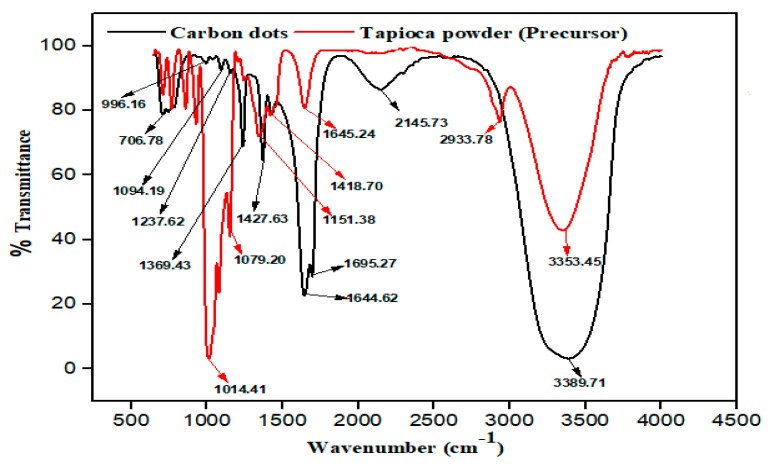
“There is evidence of C-O functional groups in the bands between 1040 and 1300 cm -1 [9,10].”
Background
Metadata
- Authors
- Yahaya Pudza, M., Zainal Abidin, Z., Abdul Rashid, S., Md Yasin, F., Noor, A. S. M., & Issa, M. A.
- Affiliations
- Department of Chemical and Environmental Engineering, Faculty of Engineering, Universiti Putra Malaysia, Serdang 43400, Selangor, Malaysia
- Universiti Putra Malaysia (MY)
- Venue
- Nanomaterials
- Publisher
- MDPI AG
- Published
- 2020-02-12
- Volume
- 10
- Issue
- 2
- Pages
- 315
- ISSN
- 2079-4991 (ISSN-L)
- PMC
- PMC7075143
- OpenAlex
- W3006673067
- Cited by
- 218
- References
- 71
- Citations by year
- 2026: 24 · 2025: 45 · 2024: 46 · 2023: 40 · 2022: 34 · 2021: 19 · 2020: 9
- FWCI
- 7.82
- Type
- journal article
- Language
- en
- Open access
- gold
- dx.doi.org
- Licence
- Locations
- Nanomaterials (publishedVersion, cc-by)
- Europe PMC (PubMed Central) (publishedVersion, cc-by)
- PubMed Central (publishedVersion, cc-by)
- PubMed (publishedVersion)
- Universiti Putra Malaysia Institutional Repository (Universiti Putra Malaysia) (acceptedVersion)
- DOAJ (DOAJ: Directory of Open Access Journals) (submittedVersion, cc-by-sa)
- Funders
- Universiti Putra Malaysia (UPM) (GP-IPS/2017/9556800)
- Topics
- Physical Sciences › Environmental Science › Water Science and Technology › Adsorption and biosorption for pollutant removal
- Physical Sciences › Materials Science › Materials Chemistry › Carbon and Quantum Dots Applications
- Physical Sciences › Environmental Science › Environmental Engineering › Environmental remediation with nanomaterials
- Keywords
- carbon dots, heavy metal adsorption, lead removal, wastewater treatment, Langmuir isotherm, Freundlich isotherm, second-order kinetics, eco-friendly adsorbents, fluorescent carbon nanoparticles, biochar
About these checks
Registry, retraction, Cites and statistics results are computed, not judged, with one exception: a printed reference that no index lists is read once by a model before it counts as a citation error. Claims are extracted by a model and kept only when their quote appears verbatim in the text; each cited source is then checked, with a model’s help, for whether it says what the claim relies on. Those verdicts can be wrong — read the claim’s quote and the cited source before relying on one.
Statistics and arithmetic are recomputed, not judged.
Confidence bands are shown only for fields calibrated on our annotated test set. None is calibrated yet, so no band is shown.
What counts as a claim ›How we measure confidence ›How we check this ›
Are you an author, or do you see a problem with this page? Request a review
Data sources
Bibliographic data: Semantic Scholar, OpenAlex, Crossref.
Contains information from the Semantic Scholar Academic Graph Datasets, made available under the ODC Attribution License (ODC-BY 1.0).
Semantic Scholar’s data is described in: Kinney, R., et al. (2023). The Semantic Scholar Open Data Platform. arXiv:2301.10140.
