

Magnesium Oxide Nanoparticles: Dielectric Properties, Surface Functionalization and Improvement of Epoxy-Based Composites Insulating Properties
Open accessThe DOI matches its Crossref record; 66 of the 66 references it cites were found in a registry or an index.
Abstract
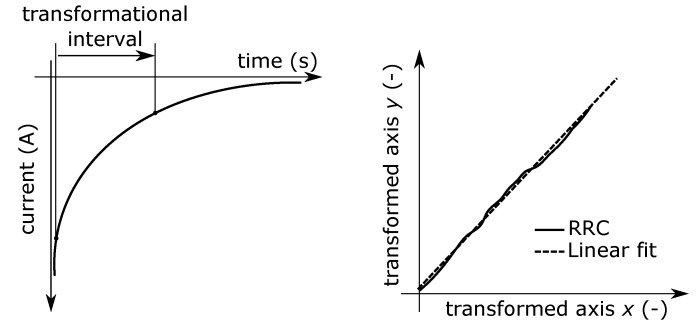
Composite insulation materials are an inseparable part of numerous electrical devices because of synergy effect between their individual parts. One of the main aims of the presented study is an introduction of the dielectric properties of nanoscale magnesium oxide powder via Broadband Dielectric Spectroscopy (BDS). These unique results present the behavior of relative permittivity and loss factor in frequency and temperature range. Following the current trends in the application of inorganic nanofillers, this article is complemented by the study of dielectric properties (dielectric strength, volume resistivity, dissipation factor and relative permittivity) of epoxy-based composites depending on the filler amount (0, 0.5, 0.75, 1 and 1.25 weight percent). These parameters are the most important for the design and development of the insulation systems. The X-ray diffraction patterns are presented for pure resin and resin with optimal filler amount (1 wt %), which was estimated according to measurement results. Magnesium oxide nanoparticles were also treated by addition of silane coupling agent ( γ -Glycidoxypropyltrimethoxysilane), in the case of optimal filler loading (1 wt %) as well. Besides previously mentioned parameters, the effects of surface functionalization have been observed by two unique measurement and evaluation techniques which have never been used for this evaluation, i.e., reduced resorption curves (RRCs) and voltage response method (VR). These methods (developed in our departments), extend the possibilities of measurement of composite dielectric responses related to DC voltage application, allow the facile comparability of different materials and could be used for dispersion level evaluation. This fact has been confirmed by X-ray diffraction analyses.
Overview
The claims and statistics of this paper haven’t been checked yet.
Free: it reads the open-access text and checks the first 5 claims that cite a source we can check. Create a free account to check every claim.
Integrity signals
Registry
Cites
Statistics
Figures




Verification
Claims the paper makes
The claims and statistics of this paper haven’t been checked yet.
Free: it reads the open-access text and checks the first 5 claims that cite a source we can check. Create a free account to check every claim.
Claims other papers make about this one
Each is checked against this paper’s own text: does it say what the citing paper says it does?
The cited source says what the claim attributes to it.
In the citing paper
“which could be due to the elevated dielectric permittivity value of CuONPs (≈104) over MgONPs (≈3.2–9.8) at room temperature [49,50].”
From Highly Functionalized Modified Metal Oxides Polymeric Sensors for Potentiometric Determination of Letrozole in Commercial Oral Tablets and Biosamples (2021) · cites this paper as [49]
Self-check
Percentages, sums and reported differences re-computed from the paper’s own numbers.
The self-check needs the paper’s full text.
Citations
Cites
Protective coatings on magnesium and its alloys — a critical review
Gray, J. E., & Luan, B. (2002) · Journal of Alloys and Compounds · doi:10.1016/s0925-8388(01)01899-0 · Cited by 2,525
Silane coupling agents used for natural fiber/polymer composites: A review
Xie, Y., Hill, C. A. S., Xiao, Z., Militz, H., & Mai, C. (2010) · Composites Part A: Applied Science and Manufacturing · doi:10.1016/j.compositesa.2010.03.005 · Cited by 2,244
Physical Properties of Composites Near Percolation
Nan, C.-W., Shen, Y., & Ma, J. (2010) · Annual Review of Materials Research · doi:10.1146/annurev-matsci-070909-104529 · Cited by 1,009
Ding, Y., Zhang, G., Wu, H., Hai, B., Wang, L., & Qian, Y. (2001) · Chemistry of Materials · doi:10.1021/cm000607e · Cited by 515
Interfaces: nanometric dielectrics
Lewis, T. J. (2005) · Journal of Physics D: Applied Physics · doi:10.1088/0022-3727/38/2/004 · Cited by 460
Role of magnesium fertilisers in agriculture: plant–soil continuum
Senbayram, M., Gransee, A., Wahle, V., & Thiel, H. (2015) · Crop & Pasture Science · doi:10.1071/cp15104 · Cited by 354
Fissan, H., Ristig, S., Kaminski, H., Asbach, C., & Epple, M. (2014) · Analytical Methods · doi:10.1039/c4ay01203h · Cited by 327
Adhesion Through Silane Coupling Agents
Plueddemann, E. P. (1970) · The Journal of Adhesion · doi:10.1080/0021846708544592 · Cited by 317
Roles of silanes and silicones in forming superhydrophobic and superoleophobic materials
Li, L., Li, B., Dong, J., & Zhang, J. (2016) · Journal of Materials Chemistry A · doi:10.1039/c6ta05441b · Cited by 306
The Chemistry and Technology of Magnesia
Shand, M. A. (2006) · Wiley eBooks · doi:10.1002/0471980579 · Cited by 290
Research works printed but not linked: 6
- Marfunin, A.S. (1994). Advanced Mineralogy: Volume 1 Composition, Structure, and Properties of Mineral Matter: Concepts, Results, and Problems, Springer.
- Haynes, W.M., and Lide, D.R. (2011). CRC Handbook of Chemistry and Physics: A Ready-Reference Book of Chemical and Physical Data, CRC Press.
- (2018, May 17). Evacuable Pellet Press for 13 Mm Pellets. Available online: www.piketech.com/pm-evacuable-pellet-press.html.
- 2012, The Effect of Expanded Structure on Electric Properties of Polymer Composites with Electroconductive Fillers, Chem. Listy, 106, 1104
- 2013, Functionalization of Mesoporous Silicate Materials, Chem. Listy, 107, 114
- Kao, K. (2004). Dielectric Phenomena in Solids: With Emphasis on Physical Concepts of Electronic Processes, Elsevier.
Cited by
Influence of nanofillers on biodegradable composites: A comprehensive review
Jagadeesh, P., Puttegowda, M., Mavinkere Rangappa, S., & Siengchin, S. (2021) · Polymer Composites · doi:10.1002/pc.26291 · Cited by 251
Green synthesis of magnesium oxide nanoparticles and its applications: A review
Abinaya, S., Kavitha, H. P., Prakash, M., & Muthukrishnaraj, A. (2021) · Sustainable Chemistry and Pharmacy · doi:10.1016/j.scp.2020.100368 · Cited by 245
Classification and properties of nanoparticles
Khan, S., & Hossain, M. K. (2022) · Nanoparticle-Based Polymer Composites · doi:10.1016/b978-0-12-824272-8.00009-9 · Cited by 171
Hornak, J. (2021) · International Journal of Molecular Sciences · doi:10.3390/ijms222312752 · Cited by 189
Self-citationRamezani Farani, M., Farsadrooh, M., Zare, I., Gholami, A., & Akhavan, O. (2023) · Catalysts · doi:10.3390/catal13040642 · Cited by 163
Metadata
- Authors
- Hornak, J., Trnka, P., Kadlec, P., Michal, O., Mentlík, V., Šutta, P., Csányi, G. M., & Tamus, Z. Á.
- Affiliations
- University of West Bohemia in Pilsen (CZ)
- Budapest University of Technology and Economics (HU)
- Corresponding author
- Hornak, Jaroslav
- ORCID
- Venue
- Nanomaterials
- Publisher
- MDPI AG
- Published
- 2018-05-30
- Volume
- 8
- Issue
- 6
- Pages
- 381
- ISSN
- 2079-4991 (ISSN-L)
- PMC
- PMC6027305
- OpenAlex
- W2806720506
- Semantic Scholar
- 2e8c2b1f876557a09d143067836372d37838d7fe
- Cited by
- 124
- References
- 66
- Citations by year
- 2026: 15 · 2025: 21 · 2024: 18 · 2023: 18 · 2022: 16 · 2021: 20 · 2020: 11 · 2019: 5
- FWCI
- 3.36
- Type
- journal article
- Language
- en
- Open access
- gold
- dx.doi.org
- Licence
- Locations
- Nanomaterials (publishedVersion, cc-by)
- Europe PMC (PubMed Central) (publishedVersion, cc-by)
- PubMed Central (publishedVersion, cc-by)
- PubMed (publishedVersion)
- DOAJ (DOAJ: Directory of Open Access Journals) (submittedVersion, cc-by-sa)
- Funders
- Ministerstvo Školství, Mládeže a Tělovýchovy (LO1607)
- Západočeská Univerzita v Plzni (SGS-2018-016)
- Topics
- Physical Sciences › Engineering › Electrical and Electronic Engineering › High voltage insulation and dielectric phenomena
- Physical Sciences › Materials Science › Polymers and Plastics › Polymer Science and Applications
- Physical Sciences › Materials Science › Polymers and Plastics › Epoxy Resin Curing Processes
- Keywords
- magnesium oxide nanoparticles, epoxy composites, dielectric properties, surface functionalization, silane coupling agent, 3-glycidoxypropyltrimethoxysilane, dielectric constant, loss tangent, dielectric strength, volume resistivity, electrical insulation, nanofillers, filler content
About these checks
Registry, retraction, Cites and statistics results are computed, not judged, with one exception: a printed reference that no index lists is read once by a model before it counts as a citation error. Claims are extracted by a model and kept only when their quote appears verbatim in the text; each cited source is then checked, with a model’s help, for whether it says what the claim relies on. Those verdicts can be wrong — read the claim’s quote and the cited source before relying on one.
Statistics and arithmetic are recomputed, not judged.
Confidence bands are shown only for fields calibrated on our annotated test set. None is calibrated yet, so no band is shown.
What counts as a claim ›How we measure confidence ›How we check this ›
Are you an author, or do you see a problem with this page? Request a review
How to cite
Cite CoChat for the checks on this page, and the paper for its own findings.
- This page
- CoChat. (2026). Citation check: Magnesium Oxide Nanoparticles: Dielectric Properties, Surface Functionalization and Improvement of Epoxy-Based Composites Insulating Properties. https://app.cochat.ai/papers/10.3390/nano8060381
- The paper
- Hornak, J., Trnka, P., Kadlec, P., Michal, O., Mentlík, V., Šutta, P., Csányi, G. M., & Tamus, Z. Á. (2018). Magnesium Oxide Nanoparticles: Dielectric Properties, Surface Functionalization and Improvement of Epoxy-Based Composites Insulating Properties. Nanomaterials. https://doi.org/10.3390/nano8060381
Data sources
Bibliographic data: Semantic Scholar, OpenAlex, Crossref.
Contains information from the Semantic Scholar Academic Graph Datasets, made available under the ODC Attribution License (ODC-BY 1.0).
Semantic Scholar’s data is described in: Kinney, R., et al. (2023). The Semantic Scholar Open Data Platform. arXiv:2301.10140.
