

The DOI matches its Crossref record; 53 of the 54 references it cites were found in a registry or an index; none of the 33 sources its claims cite is checked for support yet.
The Association between Iron and Vitamin D Status in Female Elite Athletes
Open accessAbstract
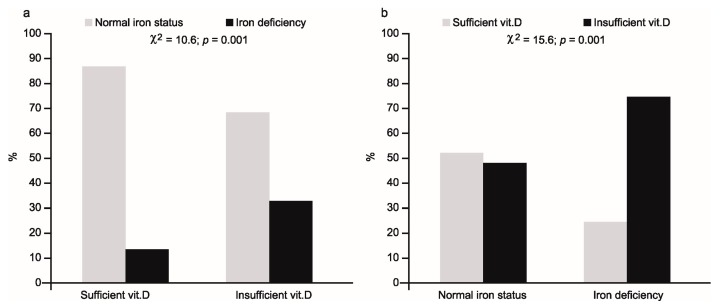
Vitamin D may influence iron metabolism and erythropoiesis, whereas iron is essential for vitamin D synthesis. We examined whether vitamin D deficiencies (VDD) are associated with reduced iron status and whether progressive iron deficiency (ID) is accompanied by inferior vitamin D status. The study included 219 healthy female (14–34 years old) athletes. VDD was defined as a 25(OH)D concentration < 75 nmol/L. ID was classified based on ferritin, soluble transferrin receptor (sTfR), total iron binding capacity (TIBC) and blood morphology indices. The percentage of ID subjects was higher (32%) in the VDD group than in the 25(OH)D sufficient group (11%) (χ2 = 10.6; p = 0.001). The percentage of VDD subjects was higher (75%) in the ID than in the normal iron status group (48%) (χ2 = 15.6; p = 0.001). The odds ratios (ORs) for VDD increased from 1.75 (95% CI 1.02–2.99; p = 0.040) to 4.6 (95% CI 1.81–11.65; p = 0.001) with progressing iron deficiency. ID was dependent on VDD in both VDD groups (25(OH)D < 75 and < 50 nmol/L). The ID group had a lower 25(OH)D concentration (p = 0.000). The VDD group had lower ferritin (p = 0.043) and iron (p = 0.004) concentrations and higher values of TIBC (p = 0.016) and sTfR (p = 0.001). The current results confirm the association between vitamin D and iron status in female athletes, although it is difficult to assess exactly which of these nutrients exerts a stronger influence over the other.
Overview
CoChat Summary
TL;DR
In 219 healthy female elite athletes, vitamin D deficiency and iron deficiency were mutually associated, with iron deficiency more common in vitamin D-deficient athletes and vitamin D deficiency more common in iron-deficient athletes. The authors conclude that iron deficiency may exert a stronger influence on vitamin D status than vice versa, though the cross-sectional design precludes causal inference.
Key findings
- Among 219 female athletes, 54.3% had 25(OH)D <75 nmol/L (1.8% <25 nmol/L); total iron deficiency was 23.3% (low iron stores 7.3%, latent ID 15.1%, iron deficiency anemia 0.9%).
- Iron deficiency was present in 32% of vitamin D-deficient (<75 nmol/L) athletes vs 11% of vitamin D-sufficient athletes (χ² = 10.6; p = 0.001); vitamin D deficiency was present in 75% of iron-deficient vs 48% of normal-iron-status athletes (χ² = 15.6; p = 0.001).
- Odds ratios for vitamin D deficiency increased with progressive iron deficiency, from 1.75 (95% CI 1.02–2.99; p = 0.040) at ferritin <30 µg/L to 4.6 (95% CI 1.81–11.65; p = 0.001) in latent ID/IDA; ORs for iron deficiency were 3.14 (95% CI 1.56–6.31; p = 0.001) for 25(OH)D <75 nmol/L and 3.18 (95% CI 1.09–9.26; p = 0.030) for <50 nmol/L.
- Iron-deficient athletes had lower mean 25(OH)D (p = 0.000); vitamin D-deficient athletes had lower ferritin (p = 0.043) and iron (p = 0.004) and higher TIBC (p = 0.016) and sTfR (p = 0.001).
Methods
- Cross-sectional study: initially 231 female professional athletes from seven sports (volleyball, handball, rowing, canoe sprint, cycling, speed skating, taekwondo); 12 excluded for acute phase reaction markers, leaving 219 healthy females aged 14–34. Blood was drawn once at various training phases/seasons; 51% were examined April–September.
- Blood assays: 25(OH)D by ELISA; ferritin by immunoturbidimetric method; iron and UIBC spectrophotometrically; TIBC calculated; sTfR by immunoenzymatic kits; morphology on ADVIA 120. Iron deficiency stages used ferritin <16 µg/L, sTfR >8.3 mg/L, TIBC >390 µg/dL, and anemia thresholds Hb <120 g/L, HCT <37%, RBC <4.2 × 10¹²/L.
- Statistics: chi-square tests; multivariate logistic regression with stepwise procedure adjusted for iron/vitamin D deficiency, length of day, in-/outdoor discipline, and age; unadjusted logistic regression for ferritin thresholds and 25(OH)D cutoffs; Mann–Whitney U tests; p < 0.05 considered significant.
Limitations
- Stated: cross-sectional design did not allow definite causal conclusions; lack of international unequivocal thresholds for diagnosing both vitamin D and iron deficiency; no hepcidin or interleukin data; no data on time spent outdoors, nutrient intake, or vitamin D/iron supplementation.
- Evident: single blood sample collected at varied training phases and seasons, with no longitudinal follow-up; all participants were Caucasian female athletes, most from national teams, so findings may not generalize to other populations.
Model-written summary. Check it against the paper before relying on it.
Integrity signals
Registry
Cites
Statistics
Figures
Verification
Claims the paper makes
0 Valid · 1 Not valid · 19 Not checked · 47 Own results and interpretations
A result the paper reports from its own data — it cites no other source for it, so there is none to check. The quote shows it is in the paper.
In the paper
“The percentage of ID subjects was higher (32%) in the VDD group than in the 25(OH)D sufficient group (11%) (χ2 = 10.6; p = 0.001).”
- Also stated in: § 3. Results · plain
“In the first case, iron deficiency was present in 32% of 25(OH)D deficient subjects, compared with 11% in the vitamin sufficient group (χ2 = 10.6; p = 0.001).”
§ The Association between Iron and Vitamin D Status in Female Elite Athletes > Abstract
plainstates an association- Asserted: passes — The authors put it forward as true.
- Checkable: passes — It can be checked against evidence.
- Load-bearing: passes — The paper’s conclusions depend on it.
- Based: passes — The paper gives a reason why it holds.
- Also stated in: § 3. Results · plain
A result the paper reports from its own data — it cites no other source for it, so there is none to check. The quote shows it is in the paper.
In the paper
“Logistic regression analysis (Table 3), expressed as the odds ratio (OR), with a 95% confidence interval (95%CI), indicated that in female athletes, vitamin D deficiency was significantly (p = 0.01) affected by two factors: the length of day (OR = 2.29; 95% CI 1.28–4.07; p = 0.005) and iron deficiency (OR = 2.96; 95% CI 1.45–6.02; p = 0.003).”
§ The Association between Iron and Vitamin D Status in Female Elite Athletes > 3. Results
hedgedstates an association- Asserted: passes — The authors put it forward as true.
- Checkable: passes — It can be checked against evidence.
- Load-bearing: passes — The paper’s conclusions depend on it.
- Based: passes — The paper gives a reason why it holds.
A result the paper reports from its own data — it cites no other source for it, so there is none to check. The quote shows it is in the paper.
In the paper
“Additionally, in the group with reduced vitamin D concentration, lower mean values of some hematological indices in reticulocytes (CHr, p = 0.049 and MCVr, p = 0.020) were observed, although the mean value of RBC in this group was higher (p = 0.029).”
§ The Association between Iron and Vitamin D Status in Female Elite Athletes > 3. Results
plainstates an association- Asserted: passes — The authors put it forward as true.
- Checkable: passes — It can be checked against evidence.
- Load-bearing: unclear — It is unclear whether the paper’s conclusions depend on it.
- Based: passes — The paper gives a reason why it holds.
A result the paper reports from its own data — it cites no other source for it, so there is none to check. The quote shows it is in the paper.
In the paper
“The gradual increase in OR, from 1.75 (95% CI 1.02–2.99) at 30 µg/L ferritin to 4.60 (95% CI 1.81–11.65), in athletes with stage II ID and IDA suggests that disorders in vitamin D synthesis can arise along with worsening iron status.”
§ The Association between Iron and Vitamin D Status in Female Elite Athletes > 4. Discussion
hedgedstates a cause- Asserted: passes — The authors put it forward as true.
- Checkable: passes — It can be checked against evidence.
- Load-bearing: passes — The paper’s conclusions depend on it.
- Based: passes — The paper gives a reason why it holds.
35 more claims
Create a free account to see all 67 claims and to verify the 33 references still open.
- It may state two separate claims as one. 17
- Probably not a substantial claim. 12
Self-check
Percentages, sums and reported differences re-computed from the paper’s own numbers.
Each contradiction between two passages listed here was confirmed by an independent check.
Rated minor: it would not touch a result — a value no result rests on, a p-value that stays on the same side of the significance level, or a conflict that is clerical, resolved elsewhere in the paper, or outside its own findings.
In the paper
§ The Association between Iron and Vitamin D Status in Female Elite Athletes > 2. Material and Methods > 2.4. Statistical Analysis
“the risk of iron deficiency in subjects with 25(OH)D concentrations below 25 and 75 nmol/L.”
§ The Association between Iron and Vitamin D Status in Female Elite Athletes > 3. Results
“The ORs for those groups were 3.14 (95% CI 1.56–6.31; p = 0.001) and 3.18 (95% CI 1.09–9.26; p = 0.030), respectively”
Rated minor: it would not touch a result — a value no result rests on, a p-value that stays on the same side of the significance level, or a conflict that is clerical, resolved elsewhere in the paper, or outside its own findings.
In the paper
§ The Association between Iron and Vitamin D Status in Female Elite Athletes > 3. Results
“3.56”
§ The Association between Iron and Vitamin D Status in Female Elite Athletes > 3. Results
“(95% CI 1.6–3.12; p = 0.002)”
Rated minor: it would not touch a result — a value no result rests on, a p-value that stays on the same side of the significance level, or a conflict that is clerical, resolved elsewhere in the paper, or outside its own findings.
In the paper
§ The Association between Iron and Vitamin D Status in Female Elite Athletes > 2. Material and Methods > 2.2. Blood Analysis
“mean cellular hemoglobin content (CHr)”
§ The Association between Iron and Vitamin D Status in Female Elite Athletes > 4. Discussion
“mean corpuscular hemoglobin concentration (CHr)”
Citations
Cites
Durnin, J. V. G. A., & Womersley, J. (1974) · British Journal of Nutrition · doi:10.1079/bjn19740060 · Cited by 6,343
Vitamin D status and ill health: a systematic review
Autier, P., Boniol, M., Pizot, C., & Mullie, P. (2014) · The Lancet Diabetes & Endocrinology · doi:10.1016/s2213-8587(13)70165-7 · Cited by 1,107
Pludowski, P., Holick, M. F., Pilz, S., Wagner, C. L., Hollis, B. W., Grant, W. B., Shoenfeld, Y., Lerchbaum, E., Llewellyn, D. J., Kienreich, K., et al. (2013) · Autoimmunity Reviews · doi:10.1016/j.autrev.2013.02.004 · Cited by 836
Wolf, M., Koch, T. A., & Bregman, D. B. (2013) · Journal of Bone and Mineral Research · doi:10.1002/jbmr.1923 · Cited by 430
Clark, S. F. (2008) · Nutrition in Clinical Practice · doi:10.1177/0884533608314536 · Cited by 374
Suppression of iron-regulatory hepcidin by vitamin D
Bacchetta, J., Zaritsky, J. J., Sea, J. L., Chun, R. F., Lisse, T. S., Zavala, K., Nayak, A., Wesseling-Perry, K., Westerman, M., Hollis, B. W., et al. (2014) · Journal of the American Society of Nephrology · doi:10.1681/asn.2013040355 · Cited by 350
Association of age, sex, and race with body iron stores in adults: Analysis of NHANES III data
Zacharski, L. R., Ornstein, D. L., Woloshin, S., & Schwartz, L. M. (2000) · American Heart Journal · doi:10.1067/mhj.2000.106646 · Cited by 349
Anemia—still a major health problem in many parts of the world!
Milman, N. (2011) · Annals of Hematology · doi:10.1007/s00277-010-1144-5 · Cited by 305
Sun, C. C., Vaja, V., Babitt, J. L., & Lin, H. Y.-F. (2011) · American Journal of Hematology · doi:10.1002/ajh.23110 · Cited by 185
The role of vitamin D in regulating the iron-hepcidin-ferroportin axis in monocytes
Zughaier, S. M., Alvarez, J. A., Sloan, J. H., Konrad, R. J., & Tangpricha, V. (2014) · Journal of Clinical & Translational Endocrinology · doi:10.1016/j.jcte.2014.01.003 · Cited by 174
Cited by
Ghazzawi, H. A., Hussain, M. A., Raziq, K. M., Alsendi, K. K., Alaamer, R. O., Jaradat, M., Alobaidi, S., Al Aqili, R., Trabelsi, K., & Jahrami, H. (2023) · Sports · doi:10.3390/sports11060109 · Cited by 83
Giromini, C., & Givens, D. I. (2022) · Foods · doi:10.3390/foods11142063 · Cited by 105
Iron-Deficiency in Atopic Diseases: Innate Immune Priming by Allergens and Siderophores
Roth‐Walter, F. (2022) · Frontiers in Allergy · doi:10.3389/falgy.2022.859922 · Cited by 63
Vitamin D Deficiency and Its Association with Iron Deficiency in African Children
Mogire, R. M., Muriuki, J. M., Morovat, A., Mentzer, A. J., Webb, E. L., Kimita, W., Ndungu, F. M., Macharia, A., Cutland, C., Sirima, S. B., et al. (2022) · Nutrients · doi:10.3390/nu14071372 · Cited by 53
Ahmed, F., Khosravi‐Boroujeni, H., Khan, M. R., Roy, A. K., & Raqib, R. (2021) · Nutrients · doi:10.3390/nu13020449 · Cited by 52
Harju, T., Gray, B., Mavroedi, A., Farooq, A., & Reilly, J. J. (2022) · European Journal of Nutrition · doi:10.1007/s00394-022-02967-z · Cited by 40
Braithwaite, V., Crozier, S., D’Angelo, S., Prentice, A., Cooper, C. C., Harvey, N. C., Jones, K. S., & the MAVIDOS Trial Group (2019) · Nutrients · doi:10.3390/nu11010190 · Cited by 50
Zhang, F., & Li, W. (2024) · Therapeutics and Clinical Risk Management · doi:10.2147/tcrm.s471191 · Cited by 43
Judistiani, R. T. D., Madjid, T. H., Irianti, S., Natalia, Y. A., Indrati, A. R., Ghozali, M., Sribudiani, Y., Yuniati, T., Abdulah, R., & Setiabudiawan, B. (2019) · BMC Pregnancy and Childbirth · doi:10.1186/s12884-019-2263-1 · Cited by 30
Bartosik, T. J., Jensen, S. A., Afify, S. M., Bianchini, R., Hufnagl, K., Hofstetter, G., Berger, M., Bastl, M., Berger, U. E., Rivelles, E., et al. (2022) · The Journal of Allergy and Clinical Immunology In Practice · doi:10.1016/j.jaip.2022.02.028 · Cited by 29
Influences of Vitamin D and Iron Status on Skeletal Muscle Health: A Narrative Review
Shoemaker, M. E., Salmon, O. F., Smith, C. M., Duarte‐Gardea, M., & Cramer, J. T. (2022) · Nutrients · doi:10.3390/nu14132717 · Cited by 27
The Role of Vitamin D in Anemia
Netting, M., Best, K. P., & Green, T. (2022) · Nutrition and health · doi:10.1007/978-3-031-14521-6_15 · Cited by 26
Kasprowicz, K., Ratkowski, W., Wołyniec, W., Kaczmarczyk, M., Witek, K., Żmijewski, P., Renke, M., Jastrzębski, Z., Rosemann, T. J., Nikolaidis, P. Τ., et al. (2020) · International Journal of Environmental Research and Public Health · doi:10.3390/ijerph17082962 · Cited by 24
Self-citationMuscle Traits, Sarcopenia, and Sarcopenic Obesity: A Vitamin D Mendelian Randomization Study
Sutherland, J. P., Zhou, A., & Hyppönen, E. (2023) · Nutrients · doi:10.3390/nu15122703 · Cited by 23
Azad, S. A., Ahmed, S., Biswas, P., Mia, M. A. R., Farjana, M., Arshe, F. A., Mily, S. J., Ankhi, A. B., Shaikat, M. M., Sultana, S., et al. (2022) · Journal of Advanced Biotechnology and Experimental Therapeutics · doi:10.5455/jabet.2022.d118 · Cited by 21
Carrasco-Querol, N., Cabricano-Canga, L., Hernández, N. B., Gonçalves, A. Q., Angelats, R. C., Pozo, M., Martín-Borràs, C., Montesó‐Curto, P., Blanco, E. C., Llorca, M. R. D., et al. (2024) · Nutrients · doi:10.3390/nu16020182 · Cited by 16
Malczewska‐Lenczowska, J., Surała, O., Granda, D., Szczepańska, B., Czaplicki, A., & Kubacki, R. (2024) · Nutrients · doi:10.3390/nu16020215 · Cited by 15
Self-citationEvanchuk, J. L., Kozyrskyj, A. L., Vaghef‐Mehrabany, E., Lamers, Y., Giesbrecht, G. F., Letourneau, N. L., Aghajafari, F., Dewey, D., Leung, B. M. Y., Bell, R. C., et al. (2023) · Journal of Nutrition · doi:10.1016/j.tjnut.2023.10.029 · Cited by 14
Do Patients Benefit from Micronutrient Supplementation following Pancreatico-Duodenectomy?
Phillips, M., Hart, K. H., Frampton, A. E., & Robertson, M. D. (2023) · Nutrients · doi:10.3390/nu15122804 · Cited by 14
The association between iron and vitamin D status in Arab adolescents
Masoud, M. S., Yakout, S. M., Al-Attas, O. S., Alokail, M. S., & Al‐Daghri, N. M. (2019) · Public Health Nutrition · doi:10.1017/s1368980019001113 · Cited by 14
Wang, M., Liu, Y., Gui, H., Ma, G., Li, B., Zhang, Z., Yu, G., Yu, G., Wu, A., & Zhang, D. (2024) · European Journal of Pharmacology · doi:10.1016/j.ejphar.2023.176303 · Cited by 13
Analysis of Serum Ferritin Levels in a Group of Elite Ballet Dancers
Jack, M. L., Sumrall, K., Nasrallah, C. M., Stuckey, D., & Jotwani, V. (2023) · Journal of Dance Medicine & Science · doi:10.1177/1089313x231178089 · Cited by 12
Ernst, J. B., Zittermann, A., Pilz, S., Kleber, M. E., Scharnagl, H., Brandenburg, V. M., König, W., Grammer, T. B., & März, W. (2016) · European Journal of Nutrition · doi:10.1007/s00394-015-1149-x · Cited by 11
Munasinghe, L. L., Ekwaru, J. P., Mastroeni, M. F., Mastroeni, S. S. D. B. S., & Veugelers, P. J. (2019) · PLoS ONE · doi:10.1371/journal.pone.0213260 · Cited by 11
Estrada, E., López, M. V., Pérez-Gallardo, L. L., Guadarrama, R. G., & Valle, L. S. G. (2020) · Archivos Latinoamericanos de Nutrición · doi:10.37527/2020.70.3.002 · Cited by 10
Zouine, N., Lhilali, I., Godderis, L., Midaoui, A. E., Jaâfari, S. E., & Filali-Zegzouti, Y. (2024) · Epidemiologia · doi:10.3390/epidemiologia5040055 · Cited by 9
Alfhili, M. A., Basudan, A., Alfaifi, M. A., Awan, Z. A., Algethami, M. R., & Alsughayyir, J. (2022) · Life · doi:10.3390/life12122119 · Cited by 9
Tomlinson, D., Eschker, E., Callan, J., & Hew‐Butler, T. (2021) · International journal of exercise science · doi:10.70252/pemi1187 · Cited by 8
Greenwood, A., von Hurst, P. R., Beck, K. L., Mazahery, H., Lim, K., & Badenhorst, C. E. (2023) · European Journal of Nutrition · doi:10.1007/s00394-023-03240-7 · Cited by 8
Kumari, S., Swetha, P. S., Shyam Krishnan, R., Nayak, S., & Singh, S. (2021) · Cureus · doi:10.7759/cureus.13392 · Cited by 7
Hypovitaminosis D Is Associated with Some Metabolic Indices in Gestational Diabetes Mellitus
Sonuga, A. A., & Sonuga, O. O. (2020) · Biomedicine Hub · doi:10.1159/000508207 · Cited by 6
Micronutrient intake and premenstrual syndrome in female collegiate athletes
Pallante, P., VEGA, A. C., ESCOBAR, A., Hackney, A. C., & Rubin, D. A. (2023) · The Journal of Sports Medicine and Physical Fitness · doi:10.23736/s0022-4707.22.13829-6 · Cited by 5
Iron status is associated with tibial structure and vitamin D metabolites in healthy young men
O’Leary, T. J., Jackson, S., Izard, R. M., Walsh, N. P., Carswell, A. T., Oliver, S. J., TANG, J. C. Y., Fraser, W. D., & Greeves, J. P. (2024) · Bone · doi:10.1016/j.bone.2024.117145 · Cited by 5
Brown, R. A. (2024) · Integrated science · doi:10.1007/978-3-031-73061-0_8 · Cited by 5
Knechtle, B., Jastrzębski, Z., & Nikolaidis, P. Τ. (2021) · Praxis · doi:10.1024/1661-8157/a003550 · Cited by 5
Vitamins and Iron-Deficiency Gestational Anemia – A Review
Yadav, D. V., Mitra, T., Punniyamoorthy, D., Murugesan, A., Raveendran, S. K., & Janardhanan, R. (2025) · Journal of Dietary Supplements · doi:10.1080/19390211.2025.2555013 · Cited by 4
Vitamin D and Exercise Performance in Female Adolescent Athletes
Carro, S. R., Kolb, R. D., & Volpe, S. L. (2025) · Current Sports Medicine Reports · doi:10.1249/jsr.0000000000001269 · Cited by 4
Gül, H. F., Bozkurt, H. B., Özbolat, G., & ÇELİK, S. (2020) · Turkish Journal of Biochemistry · doi:10.1515/tjb-2020-0355 · Cited by 4
Munasinghe, L. L., Ekwaru, J. P., Mastroeni, S. S. D. B. S., Mastroeni, M. F., & Veugelers, P. J. (2019) · Nutrients · doi:10.3390/nu11030692 · Cited by 4
Al‐Daghri, N. M., Alfadul, H., Kattak, M. N. K., & Yakout, S. M. (2022) · Journal of King Saud University - Science · doi:10.1016/j.jksus.2022.102012 · Cited by 4
Ilangovan, P., Subramaniam, A., Vembu, R., & Selvi, S. (2025) · Journal of Education and Health Promotion · doi:10.4103/jehp.jehp_679_24 · Cited by 3
Rostami, F., Moghaddam‐Banaem, L., Ghasemi, N., & Hantoushzadeh, S. (2020) · کومش · doi:10.29252/koomesh.22.4.664 · Cited by 3
Seong, J.-M., Park, C.-E., Gi, M. Y., Cha, J. A., Moon, A. E., Lee, J. H., Sung, H. H., Lim, J. H., Oh, S. H., Chung, C. H., et al. (2021) · Journal of Clinical Biochemistry and Nutrition · doi:10.3164/jcbn.21-26 · Cited by 3
Link Between Ferritin, Vitamin D, Performance, and Eating Attitudes in Female Athletes
Tsukahara, Y., Torii, S., Taniguchi, Y., Kusakabe, T., Murakami, H., Yamasawa, F., & Akama, T. (2024) · International Journal of Sports Medicine · doi:10.1055/a-2421-6891 · Cited by 2
Lowest Deficiency of Vitamin D & Vitamin B12 in Indian Old Population and Postmenopausal Women
Kumar, A. (2020) · Indian Journal of Public Health Research & Development · doi:10.37506/ijphrd.v11i7.10225 · Cited by 2
O’Callaghan, K. M., Qamar, H., Gernand, A. D., Onoyovwi, A., Zlotkin, S. H., Mahmud, A. A., Ahmed, T., Keya, F. K., & Roth, D. E. (2023) · BMJ Nutrition Prevention & Health · doi:10.1136/bmjnph-2023-000758 · Cited by 2
Ali, N. F., Alfatlawi, W. R., Al-Gebori, A. M., & Tahir, N. T. (2023) · Baghdad Science Journal · doi:10.21123/bsj.2023.8047 · Cited by 2
Pengelly, M., Pumpa, K. L., Pyne, D. B., & Etxebarria, N. (2025) · International Journal of Sports Physiology and Performance · doi:10.1123/ijspp.2024-0266 · Cited by 2
Saadat, F., Sabir, U., Waseem, S., Hakim, H., Ahmad, N., Arifeen, Z. U., & ., N. (2022) · Pakistan Journal of Medical and Health Sciences · doi:10.53350/pjmhs221651228 · Cited by 2
Female athletes: a state-of-the-art review of multiorgan influence of exercise training
Gioia, G. D., Segreti, A., Celeski, M., Crispino, S. P., Buzzelli, L., Mango, F., Ferrera, A., Squeo, M. R., Vespasiano, F., Ussia, G. P., et al. (2025) · The Journal of Sports Medicine and Physical Fitness · doi:10.23736/s0022-4707.24.16265-2 · Cited by 1
Miguel‐Ortega, Á., Calleja‐González, J., & Mielgo‐Ayuso, J. (2025) · Physiological Reports · doi:10.14814/phy2.70224 · Cited by 1
A multifaceted index for assessing micronutrient malnutrition in population health research
Saif, S., & Badar, R. (2025) · Academia Nutrition and Dietetics · doi:10.20935/acadnutr7941 · Cited by 1
Evaluation of Nutrition and Performance Parameters in Division 1 Collegiate Athletes
Shoemaker, M. E., Dicks, N. D., Northrup, M. J., Daughters, S. W., Krings, T. N., & Barry, A. M. (2024) · Nutrients · doi:10.3390/nu16121896 · Cited by 1
Haghbin, M., Tahmasebi, W., Azizi, M., & Hoseini, R. (2024) · Science & Sports · doi:10.1016/j.scispo.2024.03.003 · Cited by 1
Bone health and high-performace athletes
Stewart, K. L. (2020) · Queensland University of Technology · doi:10.5204/thesis.eprints.203100
Hematological and Immunological Parameters Associated with Vitamin D Deficiency in Pregnant Women
Hilal, D. A., Al-Ani, M. Q., & Hamid, N. M. (2019) · Journal of university of Anbar for pure science · doi:10.37652/juaps.2022.171878
Saju, A., Swaminathan, N., Janani, G., Patel, V. H., Alwar, T., & Sivaraman, A. (2023) · Sri Ramachandra Journal of Health Sciences · doi:10.25259/srjhs_37_2022
Ashour, W., El-Malkey, N. F., Agban, E., Ashour, W. R., & Elserafy, T. S. (2023) · Zagazig University Medical Journal · doi:10.21608/zumj.2022.117551.2457
Reveal the Myths about Role of Vitamin D Level on Some Hematological Parameters
Ismail, K. A. (2021) · Annals of Immunology & Immunotherapy · doi:10.23880/aii-16000143
Vitamin D – das Leistungshormon im Spitzensport
Gröber, U., & Holick, M. F. (2024) · Zeitschrift für Orthomolekulare Medizin · doi:10.1055/a-2420-7509
Chawla, S., Anupama, C. H., Pitale, D. L., & Jadhav, S. N. (2025) · International Journal of Reproduction Contraception Obstetrics and Gynecology · doi:10.18203/2320-1770.ijrcog20250860
Miguel‐Ortega, Á., Fernández-Landa, J., Calleja-González, J., & Mielgo‐Ayuso, J. (2025) · Gazzetta Medica Italiana Archivio per le Scienze Mediche · doi:10.23736/s0393-3660.24.05590-6
Association of Inflammatory Markers with Vitamin D Deficiency in Adult Population
Sadaqat, M., Wattoo, F. H., Nafisa, A., & Kiyani, R. A. (2025) · Pakistan Journal of Biochemistry and Biotechnology · doi:10.52700/pjbb.v6i1.326
Das, A., Hsu, C., Bai, C., Chang, J., Huang, Y.-L., Wang, F., Nguyen, N. T. H., Chen, Y.-C., & Chao, J. C.-J. (2025) · International Journal of Medical Sciences · doi:10.7150/ijms.124006
Veith, L. (2021) · Elektronische Hochschulschriften der LMU München (Ludwig-Maximilians-Universität München) · doi:10.5282/edoc.28423
Impact of Vitamin D Deficiency on Iron Deficiency Anemia: A Comparative Analysis in Iraqi Population
Omar, S. Y., Awla, A. H., Salih, M. I., & Hamadamin, B. J. (2025) · ARO-The Scientific Journal of Koya University · doi:10.14500/aro.11980
KOBAYASHI, Y., Hiraishi, T., Tatara, A., Aoi, W., & Kuwahata, M. (2026) · Nutraceuticals · doi:10.3390/nutraceuticals6010004
Jürimäe, J., Remmel, L., Purge, P., & Tillmann, V. (2026) · Applied Sciences · doi:10.3390/app16083643
Literature Review: Pengaruh Konsumsi Fast Food terhadap Risiko Hipertensi pada Remaja
Cahyani, S. I. (2026) · SEHATMAS Jurnal Ilmiah Kesehatan Masyarakat · doi:10.55123/sehatmas.v5i2.8016
Suhaimi, N. A. (2024) · Universiti Putra Malaysia Institutional Repository (Universiti Putra Malaysia)
DAI, C., Zhang, B. W., Deng, Q., & Feng, J. X. (2026) · Frontiers in Oncology · doi:10.3389/fonc.2026.1884903
Ojeda, Á. H., López, R. P., & Aguilera, C. J. (2021) · Revista Cubana de Alimentación y Nutrición
Iron deficiency in athletes: Prevalence and impact on VO2 peak
Keller, K., Friedrich, O., Treiber, J., Quermann, A., & Friedmann-Bette, B. (2024) · Nutrition · doi:10.1016/j.nut.2024.112516 · Cited by 24
Kobayashi, Y., Taniguchi, R., Shirasaki, E., Yoshimoto, Y. S., Aoi, W., & Kuwahata, M. (2024) · PeerJ · doi:10.7717/peerj.17566 · Cited by 6
Metadata
- Authors
- Malczewska-Lenczowska, J., Sitkowski, D., Surała, O., Orysiak, J., Szczepańska, B., & Witek, K.
- Affiliations
- Department of Nutrition Physiology and Dietetics, Institute of Sport, National Research Institute, Trylogii 2/16, 01-982 Warsaw, Poland
- Instytut Sportu (PL)
- ORCID
- Venue
- Nutrients
- Publisher
- MDPI AG
- Published
- 2018-01-31
- Volume
- 10
- Issue
- 2
- Pages
- 167
- ISSN
- 2072-6643 (ISSN-L)
- PMC
- PMC5852743
- OpenAlex
- W2791208338
- Semantic Scholar
- 711c2433c381305b58f1bcf72bfd3c777e9b8af4
- Cited by
- 76
- References
- 54
- Citations by year
- 2026: 4 · 2025: 13 · 2024: 14 · 2023: 12 · 2022: 11 · 2021: 8 · 2020: 7 · 2019: 6
- FWCI
- 3.81
- Type
- journal article
- Language
- en
- Open access
- gold
- doi.org
- Licence
- Locations
- Nutrients (publishedVersion, cc-by)
- PubMed (publishedVersion)
- PubMed Central (publishedVersion, cc-by)
- Funders
- the Ministry of Sport and Tourism of the Republic of Poland ((2016))
- the Ministry of Science and Higher Education of the Republic of Poland ((2015-2017))
- Topics
- Health Sciences › Medicine › Hematology › Iron Metabolism and Disorders
- Health Sciences › Medicine › Endocrinology, Diabetes and Metabolism › Vitamin D Research Studies
- Health Sciences › Medicine › Biochemistry (medical) › Antioxidant Activity and Oxidative Stress
- Keywords
- vitamin D deficiency, iron deficiency, iron status, female athletes, 25-hydroxyvitamin D, ferritin, soluble transferrin receptor, total iron binding capacity, erythropoiesis, iron metabolism, vitamin D synthesis
- MeSH terms
- Iron Deficiencies, Adolescent, Adult, Female, Ferritins, Health Status, Humans, Iron, Physical Fitness, Poland, Receptors, Transferrin, Vitamin D, Vitamin D Deficiency, Biomarkers, Multivariate Analysis, Chi-Square Distribution, Logistic Models, Odds Ratio, Anemia, Iron-Deficiency, Young Adult, Athletes
About these checks
Registry, retraction, Cites and statistics results are computed, not judged, with one exception: a printed reference that no index lists is read once by a model before it counts as a citation error. Claims are extracted by a model and kept only when their quote appears verbatim in the text; each cited source is then checked, with a model’s help, for whether it says what the claim relies on. Those verdicts can be wrong — read the claim’s quote and the cited source before relying on one.
A language model drew the claims from the paper on 2026-11-14, under version 3 of the claim definition (model deepseek-v4.1-flash, prompt extract-v3).
A second model labelled each claim on 2026-11-14 (model jev-1.13-20260917, definition revision gold-guideline-v0.2).
Statistics and arithmetic are recomputed, not judged.
Confidence bands are shown only for fields calibrated on our annotated test set. None is calibrated yet, so no band is shown.
What counts as a claim ›How we measure confidence ›How we check this ›
Are you an author, or do you see a problem with this page? Request a review
Data sources
Bibliographic data: Semantic Scholar, OpenAlex, Crossref.
Contains information from the Semantic Scholar Academic Graph Datasets, made available under the ODC Attribution License (ODC-BY 1.0).
Semantic Scholar’s data is described in: Kinney, R., et al. (2023). The Semantic Scholar Open Data Platform. arXiv:2301.10140.
