

The DOI matches its Crossref record; 66 of the 66 references it cites were found in a registry or an index.
Low Energy Availability in Athletes 2020: An Updated Narrative Review of Prevalence, Risk, Within-Day Energy Balance, Knowledge, and Impact on Sports Performance
Open accessAbstract
Low energy availability (EA) underpins the female and male athlete triad and relative energy deficiency in sport (RED-S). The condition arises when insufficient calories are consumed to support exercise energy expenditure, resulting in compromised physiological processes, such as menstrual irregularities in active females. The health concerns associated with longstanding low EA include menstrual/libido, gastrointestinal and cardiovascular dysfunction and compromised bone health, all of which can contribute to impaired sporting performance. This narrative review provides an update of our previous review on the prevalence and risk of low EA, within-day energy deficiency, and the potential impact of low EA on performance. The methods to assess EA remain a challenge and contribute to the methodological difficulties in identifying “true” low EA. Screening female athletic groups using a validated screening tool such as the Low Energy Availability in Females Questionnaire (LEAF-Q) has shown promise in identifying endurance athletes at risk of low EA. Knowledge of RED-S and its potential implications for performance is low among coaches and athletes alike. Development of sport and gender-specific screening tools to identify adolescent and senior athletes in different sports at risk of RED-S is warranted. Education initiatives are required to raise awareness among coaches and athletes of the importance of appropriate dietary strategies to ensure that sufficient calories are consumed to support training.
Overview
The claims and statistics of this paper haven’t been checked yet.
Run the check — free, no account needed. It reads the open-access text and checks the sources it cites.
Integrity signals
Registry
Cites
Statistics
Figures
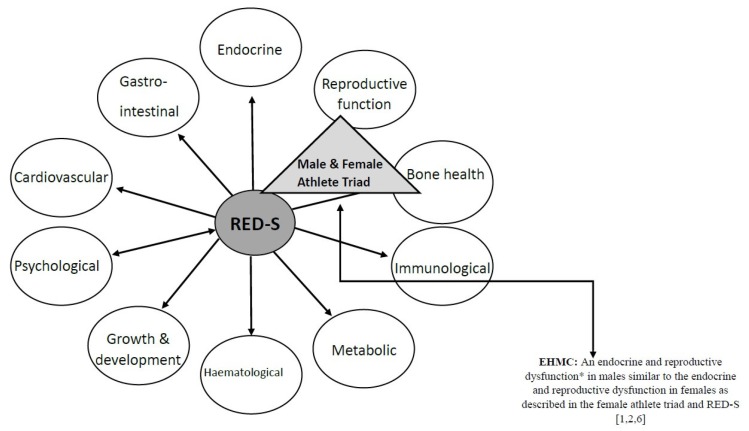
![Figure 2 Male and female hypothalamic-pituitary-gonadal axes. Reprinted with permission: Artoria2e5 [CC BY 4.0 (https://creativecommons.org/licenses/by/4.0/) *the reproductive components of the neuroendocrine system in the body are extremely sensitive to Low Energy Availability (LEA) in females [1,2] and the stress of exercise in males [6].](/paper-figures/f8617de7aaf644d8a48160310e01df7e/low-energy-availability-in-athletes-2020-an-updated-narrative-review-of-figure-2.jpg)
Verification
Claims the paper makes
The claims and statistics of this paper haven’t been checked yet.
Run the check — free, no account needed. It reads the open-access text and checks the sources it cites.
Claims other papers make about this one
Each is checked against this paper’s own text: does it say what the citing paper says it does?
The cited source says what the claim attributes to it.
In the citing paper
“It is important to understand and identify LEA because it sets the stage for the Female Athlete Triad (FAT) and Relative Energy Deficiency in Sport (REDs) [5].”
From Low Energy Availability and Relative Energy Deficiency in Sport: A Systematic Review and Meta-analysis (2025) · cites this paper as [5]
The check wasn’t confident either way, so it gives no verdict — never disputed.
In the citing paper
“The majority of body composition changes occur in the four to five years leading up to menopause (commonly defined as a period of time of 12 months of no menses), after which body composition changes are more age-related, rather than hormone-related [112].”
From International society of sports nutrition position stand: nutritional concerns of the female athlete (2023) · cites this paper as [112]
Experimental — accuracy not yet measured
Self-check
Percentages, sums and reported differences re-computed from the paper’s own numbers.
The self-check needs the paper’s full text.
Citations
Cites
A new system for grading recommendations in evidence based guidelines
Harbour, R., & Miller, J. (2001) · BMJ · doi:10.1136/bmj.323.7308.334 · Cited by 1,637
(2007) · Medicine & Science in Sports & Exercise · doi:10.1249/mss.0b013e318149f111 · Cited by 1,554
Mountjoy, M., Sundgot-Borgen, J., Burke, L., Carter, S., Constantini, N., Lebrun, C., Meyer, N., Sherman, R., Steffen, K., Budgett, R., et al. (2014) · British Journal of Sports Medicine · doi:10.1136/bjsports-2014-093502 · Cited by 1,469 · cited 7×
“Considerable research has been undertaken to understand the health and performance consequences of relative energy deficiency in sports (RED-S), a condition frequently observed among high performing male and female athletes [1,2].”
BackgroundMethodInfluentialPrevalence of Eating Disorders in Elite Athletes Is Higher Than in the General Population
Sundgot-Borgen, J. K., & Torstveit, M. K. (2004) · Clinical Journal of Sport Medicine · doi:10.1097/00042752-200401000-00005 · Cited by 1,077
IOC consensus statement on relative energy deficiency in sport (RED-S): 2018 update
Mountjoy, M., Sundgot-Borgen, J. K., Burke, L. M., Ackerman, K. E., Blauwet, C., Constantini, N., Lebrun, C., Lundy, B., Melin, A. K., Meyer, N. L., et al. (2018) · British Journal of Sports Medicine · doi:10.1136/bjsports-2018-099193 · Cited by 883
Self-citationFunctional Hypothalamic Amenorrhea: An Endocrine Society Clinical Practice Guideline
Gordon, C. M., Ackerman, K. E., Berga, S. L., Kaplan, J. R., Mastorakos, G. P., Misra, M., Murad, M. H., Santoro, N. F., & Warren, M. P. (2017) · The Journal of Clinical Endocrinology & Metabolism · doi:10.1210/jc.2017-00131 · Cited by 674
American College of Sports Medicine position stand, rhe female athlete triad
Nattiv, A. (2007) · Medicine & Science in Sports & Exercise · Cited by 551
Low energy availability, not stress of exercise, alters LH pulsatility in exercising women
Loucks, A. B., Verdun, M., Heath, E. M., & (With the Technical Assistance of T. Law, S. A. J. R. T. (1998) · Journal of Applied Physiology · doi:10.1152/jappl.1998.84.1.37 · Cited by 539 · cited 1×
“Rigorously executed studies have identified low EA, not the stress of exercise, as the underlying mechanism causing disruption to the female hypothalamic-pituitary-gonadal axis [51,53].”
BackgroundEnergy availability in athletes
Loucks, A. B., Kiens, B., & Wright, H. H. (2011) · Journal of Sports Sciences · doi:10.1080/02640414.2011.588958 · Cited by 513
Melin, A., Tornberg, Å. B., Skouby, S., Faber, J., Ritz, C., Sjödin, A., & Sundgot-Borgen, J. (2014) · British Journal of Sports Medicine · doi:10.1136/bjsports-2013-093240 · Cited by 435
Self-citation
Cited by
Sorted by citations
Items 201–300 of 319
The Effect of Sleep on the Health and Dietary Behaviours of GAA Athletes
Moran, M., Ryan, L., Doherty, R., Biggins, M., & Keane, K. M. (2024) · Nutrients · doi:10.3390/nu16111660 · Cited by 2
Assessment of Nutritional Status and Energy Availability of Indian Boxers
Rathod, N., & Chandorkar, S. (2024) · Cureus · doi:10.7759/cureus.63730 · Cited by 2
Гаврилова, Е. А., Анатольевич, Ч. О., Pavlova, O. Y., Владимировна, Б. Е., Rasskazova, A. V., Gorkin, M. V., Sarkisov, A. K., Didora, A. B., & Shitova, V. I. (2024) · Human Physiology · doi:10.31857/s0131164624060095 · Cited by 1
LEHMANN, L., Giacomoni, M., Maso, F., COLARD, J., Margaritis, I., & Duché, P. (2025) · The Journal of Sports Medicine and Physical Fitness · doi:10.23736/s0022-4707.24.16183-x · Cited by 1
Quaresma, M. V. L. D. S., dos Santos, C. P., Becaro, B., Alvares, L. A. M., Ferreira, R. E. S., dos Santos, R. V. T., & Nakamoto, F. P. (2025) · Human Nutrition & Metabolism · doi:10.1016/j.hnm.2025.200311 · Cited by 1
Lee, J., Kwon, S., Kim, M., Lee, S., Jang, S.-Y., Jo, W., Jin, J., Zheng, Y., Kang, M. S., Cho, S.-Y., et al. (2025) · Journal of Exercise Rehabilitation · doi:10.12965/jer.2550088.044 · Cited by 1
Eating disorders among athletes: causes, symptoms, and health consequences
Mikulska, J., Lewandowski, M., Kurkiewicz, W., Woźniak, O., Wąsik, J., Gryboś, K., Sepioło, W., Kiełbratowska, J., & Kwiatkowska, Z. (2025) · Quality in Sport · doi:10.12775/qs.2025.41.60061 · Cited by 1
Rowan, M. R., Koob, G., Varzeas, K. A., Stewart, T. M., & Becker, C. B. (2025) · Springer eBooks · doi:10.1007/978-3-032-03228-7_198 · Cited by 1
Favre, L., & Druart, L. (2025) · Journal of Dance Medicine & Science · doi:10.1177/1089313x251361646 · Cited by 1
Fields, J. B., Jones, M. T., Kitts, S., King, E. L., & Jagim, A. R. (2025) · The Journal of Strength and Conditioning Research · doi:10.1519/jsc.0000000000005281 · Cited by 1
Nutrition for Youth Athletes with ADHD: What We Know and Practical Applications
Becker, T. B., & Gibbs, R. L. (2026) · Nutrients · doi:10.3390/nu18020282 · Cited by 1
Buechel, C., Pumpa, K. L., Etxebarria, N., & Minehan, M. (2025) · The Journal of Strength and Conditioning Research · doi:10.1519/jsc.0000000000005295 · Cited by 1
Metabolic Bone Disease in Athletes
Gómez, M. P. A., Guglielmi, G., & Bazzocchi, A. (2026) · Seminars in Musculoskeletal Radiology · doi:10.1055/a-2754-0153 · Cited by 1
Lundberg, H. E., Larsen, S. E., Sundgot‐Borgen, J., & Mathisen, T. F. (2026) · Journal of the International Society of Sports Nutrition · doi:10.1080/15502783.2026.2634184 · Cited by 2
Spinello, G., Grigoletto, D., Cerea, S., Casali, N., Ghisi, M., Marcolin, G., Paoli, A., & Moro, T. (2026) · BMC Sports Science Medicine and Rehabilitation · doi:10.1186/s13102-026-01639-3 · Cited by 1
Risk of Red-S Syndrome among Individuals Who Regularly Engage in Physical Activity
Martyniuk, A. W., Galczak-Kondraciuk, A., Ciołek, K., & Górniak, K. (2026) · Polish Journal of Sport and Tourism · doi:10.2478/pjst-2026-0004 · Cited by 1
Muslichah, R., Styles, S. E., Matkin-Hussey, P. A., Love, T. D., & Black, K. E. (2026) · Nutrition Reviews · doi:10.1093/nutrit/nuag032 · Cited by 1
Wynne-Ellis, M. M., Kuljukka, A., Mikkonen, R. S., Hackney, A. C., Heikura, I. A., Hulmi, J. J., Valtonen, M., & Ihalainen, J. K. (2026) · Journal of science and medicine in sport · doi:10.1016/j.jsams.2026.05.003 · Cited by 1
Irwin, N., Catháin, C. Ó., Ward, C., & Kelly, D. T. (2026) · Journal of the International Society of Sports Nutrition · doi:10.1080/15502783.2026.2671431 · Cited by 1
Visconti, L. M., Givens, A. C., Palombo, L. J., Niederberger, B. A., Kloss, E. B., Bennett, D. W., Turcotte, L. P., & Kelly, K. R. (2026) · Physiological Reports · doi:10.14814/phy2.71007 · Cited by 1
Assessment of physical capacity level in recreational athletes
Rzeszutko-Bełzowska, A., Przydział, M., Pezdan-Śliż, I., Cięszczyk, P., Humińska‐Lisowska, K., Šťastný, P., Skrzęta, M., Lulińska, A., Prończuk, M., & Mendyka, W. (2023) · Journal of Kinesiology and Exercise Sciences · doi:10.5604/01.3001.0053.9342 · Cited by 1
Klavas, D. M., Holderread, B. M., Liu, J., & Cosculluela, P. E. (2021) · Cureus · doi:10.7759/cureus.18186 · Cited by 1
Brel, Y. I., & Medvedeva, G. A. (2022) · Health and Ecology Issues · doi:10.51523/2708-6011.2022-19-3-10 · Cited by 1
Weijer, V., Hilkens, L., Brinkmans, N. Y. J., van Dijk, J., Srivastav, S., Gadhvi, M. A., Fernandes, R. J., Filho, D. P., & Santos, M. P. (2022) · Journal of Applied Physiology · doi:10.1152/japplphysiol.00203.2022 · Cited by 1
Shaw, K. A., Zello, G. A., Lindsay, D. L., Warkentin, T. D., Ko, J., & Chilibeck, P. D. (2022) · Research Square · doi:10.21203/rs.3.rs-2145800/v1 · Cited by 1
Douglas, S. (2025) · British Journal of Sports Medicine · doi:10.1136/bjsports-2024-109563 · Cited by 1
Figueroa, Y. L., & PERRY, A. C. (2023) · International Journal of Strength and Conditioning · doi:10.47206/ijsc.v3i1.144
Além da tríade da mulher atleta: o novo conceito de deficiência relativa de energia no esporte
Corrêa, R. P. F., Corrêa, B. R., Sartori, M. G. F., & de Araújo, M. P. (2021) · Femina · doi:10.61622/0100-7254491202107
Suplementação em Atletas Adolescentes: o que se Sabe sobre a sua Segurança e Eficácia
(FMUP), A. D. F. D. M. P., Nogueira, G., Carvalho, P., & Rêgo, C. (2021) · Revista de Medicina Desportiva informa · doi:10.23911/suplementa_adolescente_2021_set
Relative Energy Deficiency in an Elite Nonendurance Male Athlete: A Case Report
Zhou, Y., Gu, N., Wang, W., Gao, Y., & Zhang, J. (2021) · Current Sports Medicine Reports · doi:10.1249/jsr.0000000000000906
Zhou, Y., Gu, N., Wang, W., Gao, Y., & Zhang, J. (2020) · Research Square · doi:10.21203/rs.3.rs-104721/v1
Mano, Y., Kato, A., Fukuda, N., Yamada, K., & Yanagimoto, K. (2022) · Women s Health Reports · doi:10.1089/whr.2022.0003 · Cited by 1
Relative energy deficiency in sport: Health implications in female athletes
Hopkins, C., Hopkins, C., & Mackin, J. (2022) · Women’s Healthcare A Clinical Journal for NPs · doi:10.51256/whc082238
Essstörungen und Leistungssport
Platen, P. (2022) · Springer eBooks · doi:10.1007/978-3-662-63544-5_16
Abdulai, K., Hayford, F. E. A., Axame, W. K., Alhassan, A. R., & Brown, C. A. (2022) · Research Square · doi:10.21203/rs.3.rs-2073796/v1
Iwamoto, S., Ohta, M., & Ito, A. (2023) · European Journal of Sport Sciences · doi:10.24018/ejsport.2023.2.2.68
RELATIVE ENERGY DEFICIENCY SYNDROME IN CHILDREN AND ADOLESCENTS
Salobir, N., Jazbinšek, S., Dovč, K., & Kotnik, P. (2023) · Slovenska pediatrija revija pediatrov Slovenije in specialistov šolske ter visokošolske medicine Slovenije · doi:10.38031/slovpediatr-2023-1-01en · Cited by 5
Technology in Sports - Recent Advances, New Perspectives and Application
Wojda, T. (2023) · IntechOpen eBooks · doi:10.5772/intechopen.111268
Nutrition and eating disorders in youth sport
Mathisen, T. F., Sundgot‐Borgen, J., & Sundgot-Borgen, J. K. (2023) · Oxford University Press eBooks · doi:10.1093/med/9780192843968.003.0051
Norton, K., Davies, R. S., LeCheminant, J. D., & Fullmer, S. (2023) · Sports · doi:10.3390/sports11090176 · Cited by 1
Давлетова, Н. Х., & Ea, T. (2023) · Pacific Medical Journal · doi:10.34215/1609-1175-2023-3-73-77
Geschlechtsbezogene Aspekte im Sport
Platen, P., Ferrari, N., & Joisten, C. (2023) · Springer eBooks · doi:10.1007/978-3-662-62496-8_24
Nutrition Needs During Recovery Following Athletic Injury
Melin, A., Spanoudaki, M., Andersen, J. R., & Papadopoulo, S. Κ. (2023) · Springer eBooks · doi:10.1007/978-3-642-36801-1_304-1 · Cited by 1
Self-citationLee, J. K., Pande, K. C., & Pande, S. (2024) · Springer eBooks · doi:10.1007/978-3-642-36801-1_330-1
Resting metabolic rate for energy availability assessment in high-performance sports
Loshkarova, I. O., & Pastukhova, V. A. (2024) · Reports of Vinnytsia National Medical University · doi:10.31393/reports-vnmedical-2024-28(1)-24
Eating Disorders and Competitive Sports
Platen, P. (2024) · Springer eBooks · doi:10.1007/978-3-662-67662-2_16
Jachimowicz-Rogowska, K., Winiarska‐Mieczan, A., Glibowski, P., Aleksandrowicz-Niedziela, I., Smagała, I., & Bielak, A. (2023) · Engineering Sciences And Technologies · doi:10.15611/nit.2023.39.04
Predictors of performance on world-level arm wrestlers
Páscoa, M. A., Stancanelli, M., Lourenço, T. F., Tessarotto, V., Guerra‐Júnior, G., & Lazarim, F. L. (2024) · Journal of Human Sport and Exercise · doi:10.55860/v64tya36
Relative energy deficiency in sports
Romano, M. E., & Braun-Courville, D. K. (2024) · Elsevier eBooks · doi:10.1016/b978-0-443-10512-8.00022-9
Costa, R. D. F., Fortes, M. D. S. R., & Pereira, A. T. (2024) · Revista Agulhas Negras · doi:10.70545/ran.v8iespecial.12831
Matkin-Hussey, P. A., Baker, D., OGILVIE, M., Beable, S., & Black, K. E. (2024) · The Journal of Sports Medicine and Physical Fitness · doi:10.23736/s0022-4707.24.15942-7 · Cited by 2
THE MAIN STAGES OF THE GENESIS OF WORLDVIEW IN CHILDHOOD
Gribina, L. V., Petrova, N. V., & Yurina, A. A. (2024) · Practice Oriented Science: UAE – Russia – India · doi:10.34660/inf.2022.45.23.093
METHODS OF HYDRATE FORMATION CONTROL IN THE GAS TRANSMISSION NETWORK
Krasnov, A. N., & Maleshin, K. V. (2024) · Practice Oriented Science: UAE – Russia – India · doi:10.34660/inf.2022.40.12.102
Muhitdinova, H. N., & Hamrayeva, G. S. (2024) · Practice Oriented Science: UAE – Russia – India · doi:10.34660/inf.2022.17.69.096
The Modern Concepts of Energy Balance and Energy Availability in Sports
Андреевна, Б. Е., & Lyudinina, A. Y. (2024) · Human Physiology · doi:10.31857/s0131164624060101
Valiño-Marques, A., Jurado‐Castro, J. M., Domínguez-Balmaseda, D., Ranchal‐Sánchez, A., Carrera‐Bastos, P., Veiga-Herreros, P., Radesca, K., Andradas, G. M., López‐Moreno, M., Sánchez-Oliver, A. J., et al. (2025) · Research Square · doi:10.21203/rs.3.rs-5571836/v1
The Modern Concepts of Energy Balance and Energy Availability in Sports
Андреевна, Б. Е., & Lyudinina, A. Y. (2024) · Human Physiology · doi:10.1134/s0362119724701111
Relative energy deficiency in sport (REDs) and identity work in endurance athletes
Langbein, R. K., Allen‐Collinson, J., Martin, D., & Jackman, P. C. (2025) · European Journal for Sport and Society · doi:10.1080/16138171.2025.2498200
Lee, J. K., Pande, K. C., & Pande, S. (2025) · Springer eBooks · doi:10.1007/978-3-031-58351-3_330
Nutrition Needs During Recovery Following Athletic Injury
Melin, A., Spanoudaki, M., Andersen, J. R., & Papadopoulou, S. Κ. (2025) · Springer eBooks · doi:10.1007/978-3-031-58351-3_304
Self-citationPossibilities of Using Combined Hormonal Contraceptives in Female Athletes
Niauri, D. A., Gzgzyan, A. M., Dzhemlikhanova, L. K., & Abdulkadyrova, Z. K. (2025) · Journal of obstetrics and women s diseases · doi:10.17816/jowd660033
Anisa Lailatul Fitria, S. G., Salsabila, Q., Pribadi, H. P., Kusumawardhani, M. P., Ramadhan, S. A., Azzahra, A., Diana, R., Rifqi, M. A., Pratiwi, A. A., Atmaka, D. R., et al. (2025) · Media Gizi Indonesia · doi:10.20473/mgi.v20i2.116-126
A contemporary view of athletic amenorrhea and its correction methods. (Literature review)
Анатольевна, Т. Е., Turova, E. A., Бадтиева, В. А., Babeyan, I. G., & Kostina, N. A. (2025) · Problems of Balneology Physiotherapy and Exercise Therapy · doi:10.17116/kurort202510203162
Energy Balance, Weight, and Behaviour Change in Esports
McNulty, C. R. (2025) · Springer eBooks · doi:10.1007/978-3-031-99625-2_9
Boyraz, S., & Göbel, P. (2025) · OSMANGAZİ JOURNAL OF MEDICINE · doi:10.20515/otd.1736525
Chesters, R. L., Soundy, A., & Wallis, G. A. (2025) · Performance Nutrition · doi:10.1186/s44410-025-00010-w · Cited by 1
Alimentation de l’enfant sportif
Duché, P., & Saidi, O. (2025) · EMC - Pédiatrie - Maladies infectieuses · doi:10.1016/s1637-5017(25)85072-5
Lempke, A. F. D., Smulligan, K. L., Desai, G. A., Hagan, K. E., Oldham, J. R., Islam, L. Z., & Whitney, K. E. (2025) · British Journal of Sports Medicine · doi:10.1136/bjsports-2025-110096 · Cited by 1
Wood, A., & Soundy, A. (2025) · medRxiv · doi:10.1101/2025.07.18.25331767
Haslam, R. L., Clarke, E. D., Gray, S., Gearon, R., & Pursey, K. (2021) · Figshare · doi:10.6084/m9.figshare.17163422
Relative Energy Deficiency in Sports (RED-S) and Performance among Athletes
Kozhukkunnon, A., & Subbiah, U. M. (2025) · Polish Journal of Sport and Tourism · doi:10.2478/pjst-2025-0016
Platen, P. (2025) · Springer eBooks · doi:10.1007/978-3-662-69524-1_11
Heradstveit, S., Garnweider-Holme, L., Winje, B. A., Sundgot‐Borgen, J., & Mathisen, T. F. (2026) · SAGE Open Nursing · doi:10.1177/23779608251407784
Validity and reliability of the athlete diet index in Turkish athletes
Uçak, M. N., Bilgiç, P., & Öztürk, E. (2026) · Frontiers in Nutrition · doi:10.3389/fnut.2025.1743113
Lodge, M. T., Logan, N. E., & Ward‐Ritacco, C. L. (2026) · Translational Journal of the American College of Sports Medicine · doi:10.1249/tjx.0000000000000337
Klass, V., Ibrahim, Z., Williams, K. J., Agnew, D., & Ramos, J. S. (2026) · Women in Sport and Physical Activity Journal · doi:10.1123/wspaj.2025-0072
MARZUOLI, C., Kévin, S. I. X., & DAUVERGNE, M. (2026) · Revue scientifiques des travaux de fin d'étude en rééducation et réadaptation. · doi:10.25965/rse2r.997
Nutrición en niños deportistas
Duché, P., & Saidi, O. (2026) · EMC - Pediatría · doi:10.1016/s1245-1789(25)51330-6
Kabeer, D. A., Wilson, V. W., Safad, A. K., Kottarath, S. K., Aravind, M. K., Pramitha, M., Shanmugasundaram, S. K., & Sudha, S. B. (2026) · Advanced Exercise and Health Science · doi:10.1016/j.aehs.2026.02.004
Białowąs, W., Białowąs, M., Maćkowski, M., Balon, S., Urban, K. P., Śmietana, A., Szwed, P., Sojka, N. J., Dubiel, K. M., & Magnowski, J. J. (2026) · International Journal of Innovative Technologies in Social Science · doi:10.31435/ijitss.1(49).2026.4609
Elsahoryi, N. A., Abu-Alhija, T. S., & Alhaj, O. A. (2026) · Discover Mental Health · doi:10.1007/s44192-026-00469-6
Hill, C., Vigne, C., Basset, P., Scheer, V., & Baud, D. (2026) · PLoS ONE · doi:10.1371/journal.pone.0348896
Value-Based Care for Pediatric Female Athletes
Elliott, K., & McCambridge, T. M. (2026) · Springer eBooks · doi:10.1007/978-3-032-19570-8_22
Montoye, A. H. K., Przepiora, M., Stauffer, T., Pfeiffer, K. A., Curtis, K., Tolzman, J., Harkey, M. S., & Burghardt, W. P. (2026) · The Journal of Strength and Conditioning Research · doi:10.1519/jsc.0000000000005512
Fortis, H. O., Whitehead, A. E., Cronin, C., Johnson, K. O., Shepherd, S. O., Hackney, A. C., Close, G. L., & Strauss, J. A. (2026) · European Journal of Sport Science · doi:10.1002/ejsc.70193
Zihan, S. (2026) · SSRN Electronic Journal · doi:10.2139/ssrn.6961134
Čermáková, E. (2026) · Medicína pro praxi · doi:10.36290/med.2026.025
Chaléat, S., Baud, D., Souza, H. D. S., O’Brien, I., Glover, R., Morris, G. B., Kaulback, K., & Scheer, V. (2026) · Sports · doi:10.3390/sports14060256
Risk factors for lipid metabolism disorders in underage athletes: A review
Krutova, A. V., Мухортых, В. А., Kiseleva, T. A., & Zyabkin, I. V. (2026) · Extreme Medicine · doi:10.47183/mes.2026-500
Muñoz-López, M., Quesada-Fernández, G., Sancho-Haro, E. S., Viúdez, X. R. D. L. P., Baz-Valle, E., López‐Gil, J. F., & Tornero-Aguilera, J. F. (2026) · Metabolites · doi:10.3390/metabo16070483
Nußer, V., Teubner, J., Buerger, S. A., Frodl, A., Rainsberger, K., Braunsperger, A., Wasserfurth, P., Hackney, A. C., & Koehler, K. (2026) · Journal of Applied Physiology · doi:10.1152/japplphysiol.00207.2026
Relative Energy Deficiency in Sport (REDs) and Body Composition
Godley, M., Fink, D., Saupe, T., Edelmers, E., Pļaviņa, L., & Pilmane, M. (2026) · Sports · doi:10.3390/sports14080314
Shimizu, K., Yoshikawa, A., Yabuno, N., Hashimoto, Y., Nishioka, T., Yamaguchi, S., & Inami, T. (2026) · Sports · doi:10.3390/sports14080315
Bianchi, E., Tucci, M., Perna, S., Martini, D., Bo’, C. D., Leone, A., Menichetti, F., Bertoli, S., Battezzati, A., & Riso, P. (2026) · Frontiers in Nutrition · doi:10.3389/fnut.2026.1858754
Teschuk, E., & Erickson, K. (2026) · International Journal of Sports Science & Coaching · doi:10.1177/17479541261471820
Cizlerová, N., & Hlinský, T. (2026) · Frontiers in Public Health · doi:10.3389/fpubh.2026.1868398 · Cited by 1
Vegetarian diets in female athletes: performance, health outcomes, and the implementation gap
López‐Moreno, M., Pérez-Díaz-del-Campo, N., Villa, N., Leszczyńska, P. M., Sánchez-Infante, J., & Marrero‐Fernández, P. (2026) · Frontiers in Nutrition · doi:10.3389/fnut.2026.1901139
Assessment of depression and suicidal thoughts among female trail runners
Hill, C., Vigne, C., Basset, P., Baud, D., & Scheer, V. (2026) · Frontiers in Psychology · doi:10.3389/fpsyg.2026.1753949
Do elite soccer players meet nutritional requirements? A scoping review and meta-analysis
Mendes, P., Martinho, D. V., Massart, A. G. M., Leão, C., Abreu, R., Petri, C., Teixeira, V. H., Field, A., Ordoñez-Saavedra, N., & Sarmento, H. (2026) · BMC Nutrition · doi:10.1186/s40795-026-01439-5
Grønhaug, G., Slagel, N., & Sæterbakken, A. H. (2026) · Frontiers in Sports and Active Living · doi:10.3389/fspor.2026.1886526 · Cited by 1
Metadata
- Authors
- Logue, D. M., Madigan, S. M., Melin, A., Delahunt, E., Heinen, M., Donnell, S.-J. M., & Corish, C. A.
- Affiliations
- University College Dublin (IE)
- Sport Ireland Institute (IE)
- Linnaeus University (SE)
- Sport Ireland Institute, Sports Campus Ireland, Abbotstown, D15 PNON Dublin, Ireland
- Corresponding author
- Logue, Danielle M.
- Venue
- Nutrients
- Publisher
- MDPI AG
- Published
- 2020-03-20
- Volume
- 12
- Issue
- 3
- Pages
- 835
- ISSN
- 2072-6643 (ISSN-L)
- PMC
- PMC7146210
- OpenAlex
- W3012153241
- Cited by
- 321
- References
- 66
- Citations by year
- 2026: 58 · 2025: 40 · 2024: 69 · 2023: 53 · 2022: 47 · 2021: 43 · 2020: 10
- FWCI
- 2.99
- Type
- journal article
- Language
- en
- Open access
- gold
- dx.doi.org
- Licence
- Locations
- Nutrients (publishedVersion, cc-by)
- PubMed Central (publishedVersion, cc-by)
- PubMed (publishedVersion)
- DOAJ (DOAJ: Directory of Open Access Journals) (submittedVersion, cc-by-sa)
- Lenus, The Irish Health Repository (Dr Steevens Hospital Library) (submittedVersion)
- Funders
- Irish Research Council (EPS-PG-2015-99)
- Topics
- Social Sciences › Psychology › Clinical Psychology › Eating Disorders and Behaviors
- Health Sciences › Medicine › Orthopedics and Sports Medicine › Sports Performance and Training
- Health Sciences › Nursing › Nutrition and Dietetics › Nutrition, Health and Food Behavior
- Keywords
- low energy availability, relative energy deficiency in sport, female athlete triad, menstrual disorders, athletic performance, energy balance, screening tool, LEAF-Q, nutritional strategies, bone health, prevalence, risk factors
- MeSH terms
- Adolescent, Adult, Aged, Aged, 80 and over, Feeding and Eating Disorders, Energy Intake, Energy Metabolism, Female, Humans, Male, Middle Aged, Nutritional Status, Prevalence, Malnutrition, Athletic Performance, Young Adult, Athletes, Sports Nutritional Physiological Phenomena
About these checks
Registry, retraction, Cites and statistics results are computed, not judged, with one exception: a printed reference that no index lists is read once by a model before it counts as a citation error. Claims are extracted by a model and kept only when their quote appears verbatim in the text; each cited source is then checked, with a model’s help, for whether it says what the claim relies on. Those verdicts can be wrong — read the claim’s quote and the cited source before relying on one.
Statistics and arithmetic are recomputed, not judged.
Confidence bands are shown only for fields calibrated on our annotated test set. None is calibrated yet, so no band is shown.
What counts as a claim ›How we measure confidence ›How we check this ›
Are you an author, or do you see a problem with this page? Request a review
