

The DOI matches its Crossref record; 25 of the 26 references it cites were found in a registry or an index, and 1 are not checked yet.
Effects of COVID-19 Home Confinement on Eating Behaviour and Physical Activity: Results of the ECLB-COVID19 International Online Survey
Open accessPublished version of a preprint
Abstract
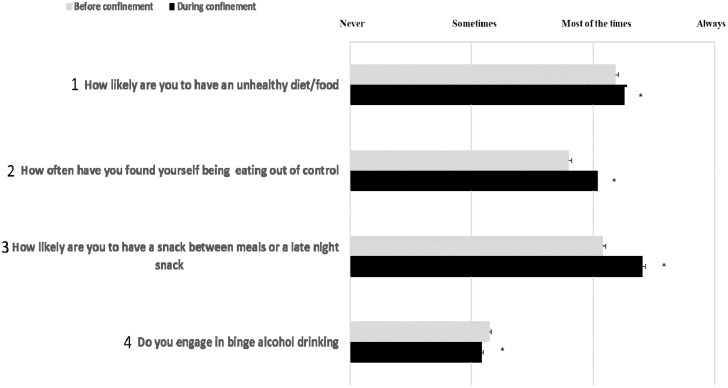
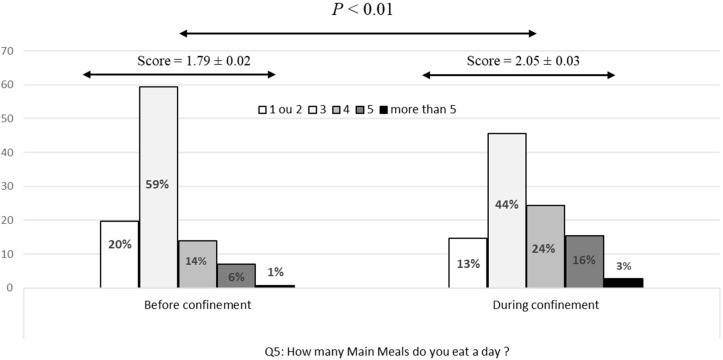
BACKGROUND: Public health recommendations and governmental measures during the COVID-19 pandemic have resulted in numerous restrictions on daily living including social distancing, isolation and home confinement. While these measures are imperative to abate the spreading of COVID-19, the impact of these restrictions on health behaviours and lifestyles at home is undefined. Therefore, an international online survey was launched in April 2020, in seven languages, to elucidate the behavioural and lifestyle consequences of COVID-19 restrictions. This report presents the results from the first thousand responders on physical activity (PA) and nutrition behaviours. METHODS: Following a structured review of the literature, the "Effects of home Confinement on multiple Lifestyle Behaviours during the COVID-19 outbreak (ECLB-COVID19)" Electronic survey was designed by a steering group of multidisciplinary scientists and academics. The survey was uploaded and shared on the Google online survey platform. Thirty-five research organisations from Europe, North-Africa, Western Asia and the Americas promoted the survey in English, German, French, Arabic, Spanish, Portuguese and Slovenian languages. Questions were presented in a differential format, with questions related to responses "before" and "during" confinement conditions. RESULTS: 1047 replies (54% women) from Asia (36%), Africa (40%), Europe (21%) and other (3%) were included in the analysis. The COVID-19 home confinement had a negative effect on all PA intensity levels (vigorous, moderate, walking and overall). Additionally, daily sitting time increased from 5 to 8 h per day. Food consumption and meal patterns (the type of food, eating out of control, snacks between meals, number of main meals) were more unhealthy during confinement, with only alcohol binge drinking decreasing significantly. CONCLUSION: While isolation is a necessary measure to protect public health, results indicate that it alters physical activity and eating behaviours in a health compromising direction. A more detailed analysis of survey data will allow for a segregation of these responses in different age groups, countries and other subgroups, which will help develop interventions to mitigate the negative lifestyle behaviours that have manifested during the COVID-19 confinement.
Overview
The claims and statistics of this paper haven’t been checked yet.
Run the check — free, no account needed. It reads the open-access text and checks the sources it cites.
Integrity signals
Registry
Cites
Statistics
Figures
Verification
Claims the paper makes
The claims and statistics of this paper haven’t been checked yet.
Run the check — free, no account needed. It reads the open-access text and checks the sources it cites.
Claims other papers make about this one
Each is checked against this paper’s own text: does it say what the citing paper says it does?
The cited source says what the claim attributes to it.
In the citing paper
“Disruption in physical activities and routines was relevant also in general population samples or in clinical samples from endocrinology units (Ammar et al., 2020; Barrea et al., 2020; Haddad et al., 2020; Scharmer et al., 2020).”
From Eating Disorders Spectrum During the COVID Pandemic: A Systematic Review (2021) · cites this paper as Ammar et al., 2020
In the citing paper
“The time spent for physical activity decreased under the confinement condition (days/week, 24%; min/day, 33.5%), whereas sedentary behavior (such as the daily sitting time) significantly increased (from 5 to 8 h/day).”
From Eating Disorders Spectrum During the COVID Pandemic: A Systematic Review (2021) · cites this paper as Ammar et al. (2020)
In the citing paper
“A series of factors may have a detrimental impact on psychological well-being, eating habits, and the onset or recovery of EDs, including: disruption to living situations, social distancing restrictions, difficult access to healthcare, and societal changes to food behaviors and technology usage (Ammar et al., 2020).”
From Eating Disorders Spectrum During the COVID Pandemic: A Systematic Review (2021) · cites this paper as Ammar et al., 2020
In the citing paper
“Participants increased the consumption of unhealthy food, and the frequency of main meals, together with snacking between meals, with a subjective sense of “eating out of control.””
From Eating Disorders Spectrum During the COVID Pandemic: A Systematic Review (2021) · cites this paper as Ammar et al. (2020)
In the citing paper
“Moreover, as already noticed, home confinement had negative effects on physical activity (Ammar et al., 2020).”
From Eating Disorders Spectrum During the COVID Pandemic: A Systematic Review (2021) · cites this paper as Ammar et al., 2020
In the citing paper
“There were online surveys or retrospective studies (see, for example, Ammar et al., 2020; Fernández-Aranda et al., 2020) in which the variables were compared between pre- vs. post-pandemic.”
From Eating Disorders Spectrum During the COVID Pandemic: A Systematic Review (2021) · cites this paper as Ammar et al., 2020
Self-check
Percentages, sums and reported differences re-computed from the paper’s own numbers.
The self-check needs the paper’s full text.
Citations
Cites
Statistical power analysis for the behavioral sciences
Cohen, J. (1990) · Computers Environment and Urban Systems · doi:10.1016/0198-9715(90)90050-4 · Cited by 65,417
The Pittsburgh Sleep Quality Index: a new instrument for psychiatric practice and research
Buysse, D. J., Reynolds, C. F., Monk, T. H., Berman, S. R., & Kupfer, D. J. (1989) · Psychiatry Research · doi:10.1016/0165-1781(89)90047-4 · Cited by 35,234
International physical activity questionnaire: 12-country reliability and validity
CRAIG, C. L., MARSHALL, A. L., SJ??STR??M, M., BAUMAN, A. E., BOOTH, M. L., AINSWORTH, B. E., PRATT, M., EKELUND, U., YNGVE, A., SALLIS, J. F., et al. (2003) · Medicine & Science in Sports & Exercise · doi:10.1249/01.mss.0000078924.61453.fb · Cited by 21,619
Global physical activity levels: surveillance progress, pitfalls, and prospects
Hallal, P. C., Andersen, L. B., Bull, F. C., Guthold, R., Haskell, W., & Ekelund, U. (2012) · The Lancet · doi:10.1016/s0140-6736(12)60646-1 · Cited by 5,711
Lee, P. H., Macfarlane, D. J., Lam, T., & Stewart, S. M. (2011) · International Journal of Behavioral Nutrition and Physical Activity · doi:10.1186/1479-5868-8-115 · Cited by 3,370
Patterson, R., McNamara, E., Tainio, M., de Sá, T. H., Smith, A. D., Sharp, S. J., Edwards, P., Woodcock, J., Brage, S., & Wijndaele, K. (2018) · European Journal of Epidemiology · doi:10.1007/s10654-018-0380-1 · Cited by 1,423
Hill, J. O., Wyatt, H. R., & Peters, J. C. (2012) · Circulation · doi:10.1161/circulationaha.111.087213 · Cited by 1,317
CHAMPS Physical Activity Questionnaire for Older Adults: outcomes for interventions
Stewart, A. L., Mills, K. M., King, A. C., Haskell, W. L., Gillis, D., & Ritter, P. L. (2001) · Medicine & Science in Sports & Exercise · doi:10.1097/00005768-200107000-00010 · Cited by 1,274
Hossain, M. M., Sultana, A., & Purohit, N. (2020) · doi:10.31234/osf.io/dz5v2 · Cited by 741
Research works printed but not linked: 2
- Ammar, A., Brach, M., Trabelsi, K., Chtourou, H., Boukhris, O., Masmoudi, L., Bouaziz, B., Bentlage, E., How, D., and Ahmed, M. (2020). Effects of COVID-19 home confinement on social participation and life satisfaction: Preliminary results of the ECLB-COVID19 international online-survey. medRxiv.
- (2020, April 16). Nutricalc Questionnaire, Swiss Society of Nutrition. Available online: https://journals.plos.org/plosone/article/file?type=supplementary&id=info:doi/10.1371/journal.pone.0143293.s003. · DOI
Cited by
Sorted by citations
Stockwell, S., Trott, M., Tully, M. A., Shin, J. I., Barnett, Y., Butler, L. T., McDermott, D. T., Schuch, F. B., & Smith, L. (2021) · BMJ Open Sport & Exercise Medicine · doi:10.1136/bmjsem-2020-000960 · Cited by 1,587
Browning, M. H. E. M., Larson, L. R., Sharaievska, I., Rigolon, A., McAnirlin, O., Mullenbach, L., Cloutier, S., Vu, T. M., Thomsen, J., Reigner, N., et al. (2021) · PLOS ONE · doi:10.1371/journal.pone.0245327 · Cited by 888
Sallis, R., Young, D. R., Tartof, S. Y., Sallis, J. F., Sall, J., Li, Q., Smith, G. N., & Cohen, D. A. (2021) · British Journal of Sports Medicine · doi:10.1136/bjsports-2021-104080 · Cited by 789
Romero, C., Rodríguez‐Almagro, J., Zafra, M. D. O., Parra-Fernández, M. L., Prado-Laguna, M. D. C., & Hernández‐Martínez, A. (2020) · International Journal of Environmental Research and Public Health · doi:10.3390/ijerph17186567 · Cited by 587
Deschasaux, M., Druesne‐Pecollo, N., Esseddik, Y., de Edelenyi, F. S., Allès, B., Andreeva, V. A., Baudry, J., Charreire, H., Deschamps, V., Egnell, M., et al. (2020) · American Journal of Clinical Nutrition · doi:10.1093/ajcn/nqaa336 · Cited by 473
Metadata
- Authors
- Ammar, A., Brach, M., Trabelsi, K., Chtourou, H., Boukhris, O., Masmoudi, L., Bouaziz, B., Bentlage, E., How, D., Ahmed, M., Müller, P., Müller, N., Aloui, A., Hammouda, O., Paineiras-Domingos, L., Braakman-Jansen, A., Wrede, C., Bastoni, S., Pernambuco, C., Mataruna, L., Taheri, M., Irandoust, K., Khacharem, A., Bragazzi, N., Chamari, K., Glenn, J., Bott, N., Gargouri, F., Chaari, L., Batatia, H., Ali, G., Abdelkarim, O., Jarraya, M., El Abed, K., Souissi, N., Van Gemert-Pijnen, L., Riemann, B., Riemann, L., Moalla, W., Gómez-Raja, J., Epstein, M., Sanderman, R., Schulz, S., Jerg, A., Al-Horani, R., Mansi, T., Jmail, M., Barbosa, F., Ferreira-Santos, F., Šimunič, B., Pišot, R., Gaggioli, A., Bailey, S., Steinacker, J., Driss, T., Hoekelmann, A., & On Behalf of the ECLB-COVID19 Consortium
- Affiliations
- University of Sfax (TN)
- University of Münster (DE)
- German Center for Neurodegenerative Diseases (DE)
- University of Gafsa (TN)
- Universidade do Estado do Rio de Janeiro (BR)
- Department of Psychology, Health & Technology, University of Twente, 7522 Enschede, The Netherland
- University of Twente (NL)
- Università Cattolica del Sacro Cuore (IT)
- Estácio (Brazil) (BR)
- College of Business Administration, American University in the Emirates, 503000 Dubai Academic City, Dubai, UAE
- Imam Khomeini International University (IR)
- Université Paris-Est Créteil (FR)
- York University (CA)
- Qatar Orthopaedic and Sports Medicine Hospital (QA)
- University of Arkansas at Fayetteville (US)
- Stanford Medicine (US)
- Higher Institute of Computer Science and Multimedia of Sfax, University of Sfax, Sfax 3000, Tunisia
- Computer science department, University of Toulouse, IRIT-INP-ENSEEIHT (UMR 5505), BP 7122, 31500 Toulouse, France
- Institut de Recherche en Informatique de Toulouse (FR)
- Assiut University (EG)
- Karlsruhe Institute of Technology (DE)
- High Institute of Sport and Physical Education of Sfax, University of Sfax, Sfax 3000, Tunisia
- Research Unit: Physical Activity, Sport, and Health, UR18JS01, National Observatory of Sport, Tunis 1003, Tunisia
- Georgia Southern University (US)
- Savannah College of Art and Design (US)
- FundeSalud, Dept. of Health and Social Services, Government of Extremadura, 06800 Merida, Spain
- E-Seniors (FR)
- University Medical Center Groningen (NL)
- Universität Ulm (DE)
- Yarmouk University (JO)
- University of Jordan (JO)
- Digital Research Centre of Sfax (TN)
- Universidade do Porto (PT)
- Laboratory of Neuropsychophysiology, Faculty of Psychology and Education Sciences, University of Porto, 4200-135 Porto, Portugal
- Znanstveno-raziskovalno središče Koper (SI)
- Loughborough University (GB)
- Université Paris Nanterre (FR)
- Institute of Sport Science, Otto-von-Guericke University, 39106 Magdeburg, Germany
- Corresponding author
- Ammar, Achraf
- ORCID
- Ammar, Achraf
- Brach, Michael
- Trabelsi, Khaled
- Chtourou, Hamdi
- Boukhris, Omar
- Masmoudi, Liwa
- Bouaziz, Bassem
- Bentlage, Ellen
- How, Daniella
- Ahmed, Mona
- Müller, Patrick
- Müller, Notger
- Aloui, Asma
- Hammouda, Omar
- Paineiras-Domingos, Laisa
- Wrede, Christian
- Bastoni, Sofia
- Pernambuco, Carlos
- Mataruna, Leonardo
- Taheri, Morteza
- Irandoust, Khadijeh
- Khacharem, Aïmen
- Bragazzi, Nicola
- Chamari, Karim
- Glenn, Jordan
- Bott, Nicholas
- Batatia, Hadj
- Jarraya, Mohamed
- Souissi, Nizar
- Riemann, Bryan
- Moalla, Wassim
- Gómez-Raja, Jonathan
- Sanderman, Robbert
- Schulz, Sebastian
- Jerg, Achim
- Al-Horani, Ramzi
- Mansi, Taiysir
- Barbosa, Fernando
- Ferreira-Santos, Fernando
- Šimunič, Boštjan
- Pišot, Rado
- Gaggioli, Andrea
- Bailey, Stephen
- Steinacker, Jürgen
- Driss, Tarak
- Venue
- Nutrients
- Publisher
- MDPI AG
- Published
- 2020-05-28
- Volume
- 12
- Issue
- 6
- Pages
- 1583
- ISSN
- 2072-6643 (ISSN-L)
- PMC
- PMC7352706
- OpenAlex
- W3029840069
- Cited by
- 2,073
- References
- 25
- Citations by year
- 2026: 49 · 2025: 91 · 2024: 193 · 2023: 359 · 2022: 583 · 2021: 660 · 2020: 132
- FWCI
- 260.68
- Type
- journal article
- Language
- en
- Open access
- gold
- dx.doi.org
- Licence
- Locations
- Nutrients (publishedVersion, cc-by)
- medRxiv (acceptedVersion, cc-by-nc-nd)
- PubMed Central (publishedVersion, cc-by)
- PubMed (publishedVersion)
- DiRROS repository (University of Maribor) (publishedVersion, cc-by)
- University of Twente Research Information (acceptedVersion, cc-by)
- PubliCatt (Università Cattolica del Sacro Cuore) (submittedVersion, cc-by)
- University of Groningen research database (University of Groningen / Centre for Information Technology) (submittedVersion, cc-by)
- Portuguese National Funding Agency for Science, Research and Technology (RCAAP Project by FCT) (submittedVersion, other-oa)
- URN:NBN Resolver for Germany & Switzerland (German National Library) (submittedVersion, cc-by)
- HAL (submittedVersion, other-oa)
- HAL (submittedVersion)
- DOAJ (DOAJ: Directory of Open Access Journals) (submittedVersion, cc-by-sa)
- Figshare (submittedVersion, cc-by)
- DZNE Pub (submittedVersion, cc-by)
- University of Twente Research Information (submittedVersion, cc-by)
- Universitäts- und Landesbibliothek Münster (cc-by)
- Funders
- University of Waterloo
- Topics
- Health Sciences › Medicine › Public Health, Environmental and Occupational Health › Physical Activity and Health
- Health Sciences › Nursing › Nutrition and Dietetics › Nutrition, Health and Food Behavior
- Social Sciences › Psychology › Clinical Psychology › COVID-19 and Mental Health
- Keywords
- COVID-19 pandemic, home confinement, physical activity, eating behaviour, nutrition behaviour, sedentary behavior, sitting time, meal patterns, dietary intake, binge drinking, social distancing, lifestyle habits
- MeSH terms
- Betacoronavirus, COVID-19, SARS-CoV-2, Adolescent, Adult, Feeding Behavior, Female, Humans, Male, Middle Aged, Pneumonia, Viral, Surveys and Questionnaires, Health Behavior, Exercise, Coronavirus Infections, Young Adult, Pandemics, Meals, Snacks
About these checks
Registry, retraction, Cites and statistics results are computed, not judged, with one exception: a printed reference that no index lists is read once by a model before it counts as a citation error. Claims are extracted by a model and kept only when their quote appears verbatim in the text; each cited source is then checked, with a model’s help, for whether it says what the claim relies on. Those verdicts can be wrong — read the claim’s quote and the cited source before relying on one.
Statistics and arithmetic are recomputed, not judged.
Confidence bands are shown only for fields calibrated on our annotated test set. None is calibrated yet, so no band is shown.
What counts as a claim ›How we measure confidence ›How we check this ›
Are you an author, or do you see a problem with this page? Request a review
