

Beetroot Juice Supplementation Improves High-Intensity Intermittent Type Exercise Performance in Trained Soccer Players
Open accessThe DOI matches its Crossref record; 34 of the 34 references it cites were found in a registry or an index.
Abstract
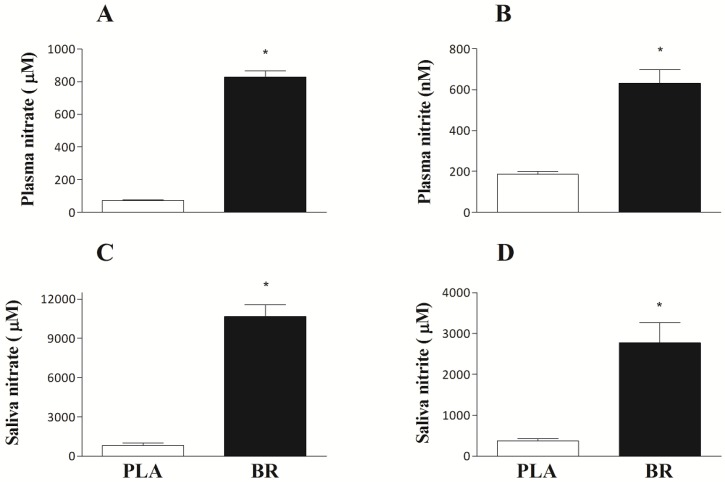
It has been shown that nitrate supplementation can enhance endurance exercise performance. Recent work suggests that nitrate ingestion can also increase intermittent type exercise performance in recreational athletes. We hypothesized that six days of nitrate supplementation can improve high-intensity intermittent type exercise performance in trained soccer players. Thirty-two male soccer players (age: 23 ± 1 years, height: 181 ± 1 m, weight: 77 ± 1 kg, playing experience: 15.2 ± 0.5 years, playing in the first team of a 2nd or 3rd Dutch amateur league club) participated in this randomized, double-blind cross-over study. All subjects participated in two test days in which high-intensity intermittent running performance was assessed using the Yo-Yo IR1 test. Subjects ingested nitrate-rich (140 mL; ~800 mg nitrate/day; BR) or a nitrate-depleted beetroot juice (PLA) for six subsequent days, with at least eight days of wash-out between trials. The distance covered during the Yo-Yo IR1 was the primary outcome measure, while heart rate (HR) was measured continuously throughout the test, and a single blood and saliva sample were collected just prior to the test. Six days of BR ingestion increased plasma and salivary nitrate and nitrite concentrations in comparison to PLA (p < 0.001), and enhanced Yo-Yo IR1 test performance by 3.4 ± 1.3% (from 1574 ± 47 to 1623 ± 48 m; p = 0.027). Mean HR was lower in the BR (172 ± 2) vs. PLA trial (175 ± 2; p = 0.014). Six days of BR ingestion effectively improves high-intensity intermittent type exercise performance in trained soccer players.
Overview
The claims and statistics of this paper haven’t been checked yet.
Free: it reads the open-access text and checks the first 5 claims that cite a source we can check. Create a free account to check every claim.
Integrity signals
Registry
Cites
Statistics
Figures

Verification
Claims the paper makes
The claims and statistics of this paper haven’t been checked yet.
Free: it reads the open-access text and checks the first 5 claims that cite a source we can check. Create a free account to check every claim.
Claims other papers make about this one
Each is checked against this paper’s own text: does it say what the citing paper says it does?
The cited source says what the claim attributes to it.
In the citing paper
“However, six days of NO 3 supplementation has been reported to improve high-intensity intermittent exercise performance in trained soccer players who consumed ∼13 mmol NO 3 -per day (110)”
From Dietary Nitrate and Physical Performance (2018) · cites this paper as [110]
Self-check
Percentages, sums and reported differences re-computed from the paper’s own numbers.
The self-check needs the paper’s full text.
Citations
Cites
Psychophysical bases of perceived exertion
BORG, G. A. V. (1982) · Medicine & Science in Sports & Exercise · doi:10.1249/00005768-198205000-00012 · Cited by 16,580 · cited 1×
“Immediately after completing the Yo-Yo IR1, subjects rated their perceived exertion on a Borg 6–20 scale [22].”
MethodBangsbo, J., Iaia, F. M., & Krustrup, P. (2008) · Sports Medicine · doi:10.2165/00007256-200838010-00004 · Cited by 1,463 · cited 1×
“It is unclear what the exact explanation is for this lack of effect, although it seems likely that the large day-to-day variability inherent to the Yo-Yo test played a role [33] (Figure 2B).”
BackgroundThe Yo-Yo Intermittent Recovery Test: Physiological Response, Reliability, and Validity
KRUSTRUP, P., MOHR, M., AMSTRUP, T., RYSGAARD, T., JOHANSEN, J., STEENSBERG, A., PEDERSEN, P. K., & BANGSBO, J. (2003) · Medicine & Science in Sports & Exercise · doi:10.1249/01.mss.0000058441.94520.32 · Cited by 1,293 · cited 4×
“Indeed, the Yo-Yo IR1 test has been shown to cover aspects of both aerobic as well as anaerobic performance in soccer players, with a strong link towards the ability to perform high-intensity intermittent type exercise throughout a match [12,15].”
BackgroundMethodInfluentialPhysical and metabolic demands of training and match-play in the elite football player
Bangsbo, J., Mohr, M., & Krustrup, P. (2006) · Journal of Sports Sciences · doi:10.1080/02640410500482529 · Cited by 1,229
High-intensity running in English FA Premier League soccer matches
Bradley, P. S., Sheldon, W., Wooster, B., Olsen, P., Boanas, P., & Krustrup, P. (2009) · Journal of Sports Sciences · doi:10.1080/02640410802512775 · Cited by 924 · cited 1×
“As such, our findings suggest that nitrate supplementation could represent an effective nutritional strategy to improve exercise performance in soccer players, especially towards the end of the match when sprint intensity/frequency has been shown to decrease significantly due to fatigue [34].”
BackgroundBailey, S. J., Winyard, P., Vanhatalo, A., Blackwell, J. R., DiMenna, F. J., Wilkerson, D. P., Tarr, J., Benjamin, N., & Jones, A. M. (2009) · Journal of Applied Physiology · doi:10.1152/japplphysiol.00722.2009 · Cited by 759 · cited 3×
“Multiple studies from different laboratories have shown that dietary nitrate ingestion can decrease the oxygen cost of submaximal exercise and increase high-intensity exercise tolerance in recreational athletes [4,7,8].”
BackgroundMuscle and Blood Metabolites during a Soccer Game: Implications for Sprint Performance
KRUSTRUP, P., MOHR, M., STEENSBERG, A., BENCKE, J., KJÆR, M., & BANGSBO, J. (2006) · Medicine & Science in Sports & Exercise · doi:10.1249/01.mss.0000222845.89262.cd · Cited by 742 · cited 2×
“Indeed, the Yo-Yo IR1 test has been shown to cover aspects of both aerobic as well as anaerobic performance in soccer players, with a strong link towards the ability to perform high-intensity intermittent type exercise throughout a match [12,15].”
BackgroundDietary Inorganic Nitrate Improves Mitochondrial Efficiency in Humans
Larsen, F. J., Schiffer, T. A., Borniquel, S., Sahlin, K., Ekblom, B., Lundberg, J. O., & Weitzberg, E. (2011) · Cell Metabolism · doi:10.1016/j.cmet.2011.01.004 · Cited by 689 · cited 1×
“Interestingly, while such cellular changes have been proposed to only occur following a multiday supplementation regimen [10,11,26], two studies from the same laboratory observed improvements in high-intensity intermittent type exercise performance following both an acute high dose BR supplementation protocol (~29 mmo…”
BackgroundIntragastric nitric oxide production in humans: measurements in expelled air.
Lundberg, J. O., Weitzberg, E., Lundberg, J. M., & Alving, K. (1994) · Gut · doi:10.1136/gut.35.11.1543 · Cited by 661 · cited 1×
“While nitrate and nitrite were previously considered inert byproducts of the nitric oxide (NO) metabolism, recent insights suggest that (dietary) nitrate can also serve as a precursor for NO through the nitrate -> nitrite -> NO-pathway [1].”
BackgroundEffects of dietary nitrate on oxygen cost during exercise
Larsen, F. J., Weitzberg, E., Lundberg, J. O., & Ekblom, B. (2007) · Acta Physiologica · doi:10.1111/j.1748-1716.2007.01713.x · Cited by 637 · cited 2×
“Multiple studies from different laboratories have shown that dietary nitrate ingestion can decrease the oxygen cost of submaximal exercise and increase high-intensity exercise tolerance in recreational athletes [4,7,8].”
BackgroundGovoni, M., Jansson, E. Å., Weitzberg, E., & Lundberg, J. O. (2008) · Nitric Oxide · doi:10.1016/j.niox.2008.08.003 · Cited by 602 · cited 1×
“To prevent any attenuation in the reduction of nitrate to nitrite by commensal bacteria in the oral cavity, subjects refrained from using antibacterial mouthwash/toothpaste and chewing gum during the six-day supplementation periods [20].”
MethodBeetroot juice and exercise: pharmacodynamic and dose-response relationships
Wylie, L. J., Kelly, J., Bailey, S. J., Blackwell, J. R., Skiba, P. F., Winyard, P. G., Jeukendrup, A. E., Vanhatalo, A., & Jones, A. M. (2013) · Journal of Applied Physiology · doi:10.1152/japplphysiol.00372.2013 · Cited by 500 · cited 2×
“Only a limited number of studies have been able to show correlations between plasma concentrations and subsequent performance benefits [2,17,24,27].”
BackgroundInfluentialHigh-Intensity Activity Profiles of Elite Soccer Players at Different Performance Levels
Bradley, P. S., Di Mascio, M., Peart, D., Olsen, P., & Sheldon, B. (2010) · Journal of Strength and Conditioning Research · doi:10.1519/jsc.0b013e3181aeb1b3 · Cited by 454
Acute Dietary Nitrate Supplementation Improves Cycling Time Trial Performance
LANSLEY, K. E., WINYARD, P. G., BAILEY, S. J., VANHATALO, A., WILKERSON, D. P., BLACKWELL, J. R., GILCHRIST, M., BENJAMIN, N., & JONES, A. M. (2011) · Medicine & Science in Sports & Exercise · doi:10.1249/mss.0b013e31821597b4 · Cited by 388 · cited 2×
“While improvements in exercise capacity [4,8,23] and exercise performance [5,6] have indeed been observed in endurance athletes, recent literature suggests possible performance benefits of nitrate ingestion in more high-intensity and intermittent type sports and activities [16,24].”
BackgroundResultFerguson, S. K., Hirai, D. M., Copp, S. W., Holdsworth, C. T., Allen, J. D., Jones, A. M., Musch, T. I., & Poole, D. C. (2013) · The Journal of Physiology · doi:10.1113/jphysiol.2012.243121 · Cited by 333 · cited 6×
“Interestingly, while such cellular changes have been proposed to only occur following a multiday supplementation regimen [10,11,26], two studies from the same laboratory observed improvements in high-intensity intermittent type exercise performance following both an acute high dose BR supplementation protocol (~29 mmo…”
BackgroundMethodInfluentialNitrate Supplementation’s Improvement of 10-km Time-Trial Performance in Trained Cyclists
Cermak, N. M., Gibala, M. J., & van Loon, L. J. C. (2012) · International Journal of Sport Nutrition and Exercise Metabolism · doi:10.1123/ijsnem.22.1.64 · Cited by 326
Dietary nitrate increases tetanic [Ca2+]i and contractile force in mouse fast‐twitch muscle
Hernández, A., Schiffer, T. A., Ivarsson, N., Cheng, A. J., Bruton, J. D., Lundberg, J. O., Weitzberg, E., & Westerblad, H. (2012) · The Journal of Physiology · doi:10.1113/jphysiol.2012.232777 · Cited by 319 · cited 7×
“Interestingly, while such cellular changes have been proposed to only occur following a multiday supplementation regimen [10,11,26], two studies from the same laboratory observed improvements in high-intensity intermittent type exercise performance following both an acute high dose BR supplementation protocol (~29 mmo…”
BackgroundResultInfluentialEffect of Inorganic Nitrate on Exercise Capacity in Heart Failure With Preserved Ejection Fraction
Zamani, P., Rawat, D., Shiva-Kumar, P., Geraci, S., Bhuva, R., Konda, P., Doulias, P.-T., Ischiropoulos, H., Townsend, R. R., Margulies, K. B., et al. (2015) · Circulation · doi:10.1161/circulationaha.114.012957 · Cited by 307 · cited 1×
“Whether the decrease in mean heart rate is related to the improved exercise performance is unclear, as the only available literature describing effects of inorganic nitrate-nitrite on heart rate are from heart failure patients [30,31].”
BackgroundWilkerson, D. P., Hayward, G. M., Bailey, S. J., Vanhatalo, A., Blackwell, J. R., & Jones, A. M. (2012) · European Journal of Applied Physiology · doi:10.1007/s00421-012-2397-6 · Cited by 229 · cited 2×
“Only a limited number of studies have been able to show correlations between plasma concentrations and subsequent performance benefits [2,17,24,27].”
BackgroundBorlaug, B. A., Koepp, K. E., & Melenovsky, V. (2015) · Journal of the American College of Cardiology · doi:10.1016/j.jacc.2015.07.067 · Cited by 223 · cited 2×
“Borlaug and colleagues showed that a nitrite infusion protocol in heart failure patients increased cardiac output during exercise [30].”
BackgroundWylie, L. J., Mohr, M., Krustrup, P., Jackman, S. R., Ermιdis, G., Kelly, J., Black, M. I., Bailey, S. J., Vanhatalo, A., & Jones, A. M. (2013) · European Journal of Applied Physiology · doi:10.1007/s00421-013-2589-8 · Cited by 220 · cited 4×
“While improvements in exercise capacity [4,8,23] and exercise performance [5,6] have indeed been observed in endurance athletes, recent literature suggests possible performance benefits of nitrate ingestion in more high-intensity and intermittent type sports and activities [16,24].”
BackgroundMethodInfluentialAerobic Fitness Affects the Exercise Performance Responses to Nitrate Supplementation
PORCELLI, S., RAMAGLIA, M., BELLISTRI, G., PAVEI, G., PUGLIESE, L., MONTORSI, M., RASICA, L., & MARZORATI, M. (2015) · Medicine & Science in Sports & Exercise · doi:10.1249/mss.0000000000000577 · Cited by 187 · cited 2×
“, higher dose and/or for a longer period) to elicit beneficial performance effects in comparison to recreational athletes [9,27,28].”
BackgroundResultJonvik, K. L., Nyakayiru, J., Pinckaers, P. J., Senden, J. M., van Loon, L. J., & Verdijk, L. B. (2016) · The Journal of Nutrition · doi:10.3945/jn.116.229807 · Cited by 172 · cited 5×
“Saliva samples were collected in 2 mL Eppendorf cups and stored at −80 ◦C until nitrate and nitrite concentrations were determined in both saliva and plasma using chemiluminescence, as described previously [18].”
BackgroundMethodResultSelf-citationThompson, C., Wylie, L. J., Fulford, J., Kelly, J., Black, M. I., McDonagh, S. T. J., Jeukendrup, A. E., Vanhatalo, A., & Jones, A. M. (2015) · European Journal of Applied Physiology · doi:10.1007/s00421-015-3166-0 · Cited by 156 · cited 3×
“Only a limited number of studies have been able to show correlations between plasma concentrations and subsequent performance benefits [2,17,24,27].”
BackgroundResultBreese, B. C., McNarry, M. A., Marwood, S., Blackwell, J. R., Bailey, S. J., & Jones, A. M. (2013) · American Journal of Physiology-Regulatory, Integrative and Comparative Physiology · doi:10.1152/ajpregu.00295.2013 · Cited by 155 · cited 1×
“While improvements in exercise capacity [4,8,23] and exercise performance [5,6] have indeed been observed in endurance athletes, recent literature suggests possible performance benefits of nitrate ingestion in more high-intensity and intermittent type sports and activities [16,24].”
BackgroundFiber Type-Specific Effects of Dietary Nitrate
Jones, A. M., Ferguson, S. K., Bailey, S. J., Vanhatalo, A., & Poole, D. C. (2016) · Exercise and Sport Sciences Reviews · doi:10.1249/jes.0000000000000074 · Cited by 149 · cited 1×
“type exercise in which type II fibers are heavily recruited [25].”
BackgroundNo Improvement in Endurance Performance after a Single Dose of Beetroot Juice
Cermak, N. M., Res, P., Stinkens, R., Lundberg, J. O., Gibala, M. J., & van Loon, L. J. C. (2012) · International Journal of Sport Nutrition and Exercise Metabolism · doi:10.1123/ijsnem.22.6.470 · Cited by 144 · cited 1×
“, higher dose and/or for a longer period) to elicit beneficial performance effects in comparison to recreational athletes [9,27,28].”
BackgroundInorganic nitrite and nitrate: evidence to support consideration as dietary nutrients
Bryan, N. S., & Ivy, J. L. (2015) · Nutrition Research · doi:10.1016/j.nutres.2015.06.001 · Cited by 131 · cited 2×
“Furthermore, as recently reviewed by Bryan and Ivy [29], there is currently no clear indication of adverse health risks accompanying high nitrate intakes for a prolonged period of time.”
BackgroundDietary nitrate supplementation improves sprint and high-intensity intermittent running performance
Thompson, C., Vanhatalo, A., Jell, H., Fulford, J., Carter, J., Nyman, L., Bailey, S. J., & Jones, A. M. (2016) · Nitric Oxide · doi:10.1016/j.niox.2016.10.006 · Cited by 130 · cited 5×
“Only a limited number of studies have been able to show correlations between plasma concentrations and subsequent performance benefits [2,17,24,27].”
BackgroundMethodResultInfluentialBailey, S. J., Varnham, R. L., DiMenna, F. J., Breese, B. C., Wylie, L. J., & Jones, A. M. (2015) · Journal of Applied Physiology · doi:10.1152/japplphysiol.01141.2014 · Cited by 127 · cited 2×
“Multiple studies from different laboratories have shown that dietary nitrate ingestion can decrease the oxygen cost of submaximal exercise and increase high-intensity exercise tolerance in recreational athletes [4,7,8].”
BackgroundHoon, M. W., Jones, A. M., Johnson, N. A., Blackwell, J. R., Broad, E. M., Lundy, B., Rice, A. J., & Burke, L. M. (2014) · International Journal of Sports Physiology and Performance · doi:10.1123/ijspp.2013-0207 · Cited by 119 · cited 1×
“Different studies have shown that both plasma nitrate and nitrite concentrations increase following dietary nitrate supplementation in a dose-dependent manner [2,3].”
BackgroundInfluentialFlueck, J. L., Bogdanova, A., Mettler, S., & Perret, C. (2016) · Applied Physiology, Nutrition, and Metabolism · doi:10.1139/apnm-2015-0458 · Cited by 67 · cited 2×
“The choice for beetroot juice was largely based on previous observations by us [18], and by others [19], that suggest more pronounced benefits from nitrate ingestion through plant based sources than following sodium nitrate ingestion.”
BackgroundNyakayiru, J. M., Jonvik, K. L., Pinckaers, P. J. M., Senden, J., van Loon, L. J. C., & Verdijk, L. B. (2017) · International Journal of Sport Nutrition and Exercise Metabolism · doi:10.1123/ijsnem.2016-0034 · Cited by 40 · cited 1×
“As has also been done previously [21], on test days, all subjects were provided with a standardized dinner that was consumed ~3.”
MethodSelf-citationDietary nitrate improves cardiac contractility via enhanced cellular Ca2+ signaling
Pironti, G., Ivarsson, N., Yang, J., Farinotti, A. B., Jonsson, W. O., Zhang, S., Bas, D. B., Svensson, C. I., Westerblad, H., Weitzberg, E., et al. (2016) · Basic Research in Cardiology · doi:10.1007/s00395-016-0551-8 · Cited by 34 · cited 1×
“Interestingly, a recent study in rodents also showed increased cardiac contractility following nitrate ingestion, most likely as a result of enhanced expression of calcium handling proteins [32].”
Background
Research works printed but not linked: 1
- Hernandez, 2012, Dietary nitrate increases tetanic [Ca2+]i and contractile force in mouse fast-twitch muscle, J. Appl. Physiol., 590, 3575
Cited by
Collins, J., Maughan, R. J., Gleeson, M., Bilsborough, J., Jeukendrup, A., Morton, J. P., Phillips, S. M., Armstrong, L., Burke, L. M., Close, G. L., et al. (2021) · British Journal of Sports Medicine · doi:10.1136/bjsports-2019-101961 · Cited by 303
Evidence-based supplements for the enhancement of athletic performance
Peeling, P., Binnie, M. J., Goods, P. S. R., Sim, M., & Burke, L. M. (2018) · International Journal of Sport Nutrition and Exercise Metabolism · doi:10.1123/ijsnem.2017-0343 · Cited by 225
Dietary Nitrate and Physical Performance
Jones, A. M., Thompson, C., Wylie, L. J., & Vanhatalo, A. (2018) · Annual Review of Nutrition · doi:10.1146/annurev-nutr-082117-051622 · Cited by 206
Randell, R. K., Clifford, T., Drust, B., Moss, S. L., Unnithan, V. B., De Ste Croix, M. B. A., Datson, N., Martin, D., Mayho, H., Carter, J. M., et al. (2021) · Sports Medicine · doi:10.1007/s40279-021-01458-1 · Cited by 161
“Ergogenic aids including caffeine, dietary nitrate and creatine have been shown to enhance several aspects of soccer performance [164–166].”
Jones, A. M., Vanhatalo, A., Seals, D. R., Rossman, M. J., Piknova, B., & Jonvik, K. L. (2021) · Medicine & Science in Sports & Exercise · doi:10.1249/mss.0000000000002470 · Cited by 156
Self-citation
Metadata
- Authors
- Nyakayiru, J., Jonvik, K., Trommelen, J., Pinckaers, P., Senden, J., Van Loon, L., & Verdijk, L.
- Affiliations
- Maastricht University Medical Centre (NL)
- HAN University of Applied Sciences (NL)
- Department of Human Movement Sciences, NUTRIM School of Nutrition and Translational Research in Metabolism, Maastricht University Medical Centre+, P.O. Box 616, 6200 MD Maastricht, The Netherlands
- Corresponding author
- Verdijk, Lex
- Venue
- Nutrients
- Publisher
- MDPI AG
- Published
- 2017-03-22
- Volume
- 9
- Issue
- 3
- Pages
- 314
- ISSN
- 2072-6643 (ISSN-L)
- PMC
- PMC5372977
- OpenAlex
- W2598462935
- Cited by
- 115
- References
- 34
- Citations by year
- 2026: 14 · 2025: 12 · 2024: 15 · 2023: 12 · 2022: 13 · 2021: 12 · 2020: 18 · 2019: 3 · 2018: 7 · 2017: 9
- FWCI
- 11.12
- Type
- journal article
- Language
- en
- Open access
- gold
- doi.org
- Licence
- Locations
- Nutrients (publishedVersion, cc-by)
- PubMed Central (publishedVersion, cc-by)
- PubMed (publishedVersion)
- Research Publications (Maastricht University) (publishedVersion, cc-by)
- Research Bank (Australian Catholic University) (submittedVersion)
- DOAJ (DOAJ: Directory of Open Access Journals) (submittedVersion, cc-by-sa)
- Informationszentrum Lebenswissenschaften (ZB MED) (submittedVersion, cc-by)
- Research Publications (Maastricht University) (submittedVersion, cc-by)
- Funders
- Stichting voor de Technische Wetenschappen (12877)
- Topics
- Health Sciences › Medicine › Orthopedics and Sports Medicine › Sports Performance and Training
- Health Sciences › Medicine › Physiology (medical) › Cardiovascular and exercise physiology
- Health Sciences › Medicine › Physiology (medical) › Exercise and Physiological Responses
- Keywords
- beetroot juice, nitrate supplementation, high-intensity intermittent exercise, soccer players, exercise performance, plasma nitrate, salivary nitrate, heart rate, endurance running
- MeSH terms
- Fruit and Vegetable Juices, High-Intensity Interval Training, Body Height, Body Weight, Double-Blind Method, Heart Rate, Humans, Male, Netherlands, Nitrates, Nitrites, Saliva, Soccer, Treatment Outcome, Plant Roots, Cross-Over Studies, Beta vulgaris, Athletic Performance, Young Adult, Sports Nutritional Physiological Phenomena
About these checks
Registry, retraction, Cites and statistics results are computed, not judged, with one exception: a printed reference that no index lists is read once by a model before it counts as a citation error. Claims are extracted by a model and kept only when their quote appears verbatim in the text; each cited source is then checked, with a model’s help, for whether it says what the claim relies on. Those verdicts can be wrong — read the claim’s quote and the cited source before relying on one.
Statistics and arithmetic are recomputed, not judged.
Confidence bands are shown only for fields calibrated on our annotated test set. None is calibrated yet, so no band is shown.
What counts as a claim ›How we measure confidence ›How we check this ›
Are you an author, or do you see a problem with this page? Request a review
Data sources
Bibliographic data: Semantic Scholar, OpenAlex, Crossref.
Contains information from the Semantic Scholar Academic Graph Datasets, made available under the ODC Attribution License (ODC-BY 1.0).
Semantic Scholar’s data is described in: Kinney, R., et al. (2023). The Semantic Scholar Open Data Platform. arXiv:2301.10140.
