

Effect of Mediterranean Diet and Antioxidant Formulation in Non-Alcoholic Fatty Liver Disease: A Randomized Study
Open accessThe DOI matches its Crossref record; 61 of the 61 references it cites were found in a registry or an index.
Abstract
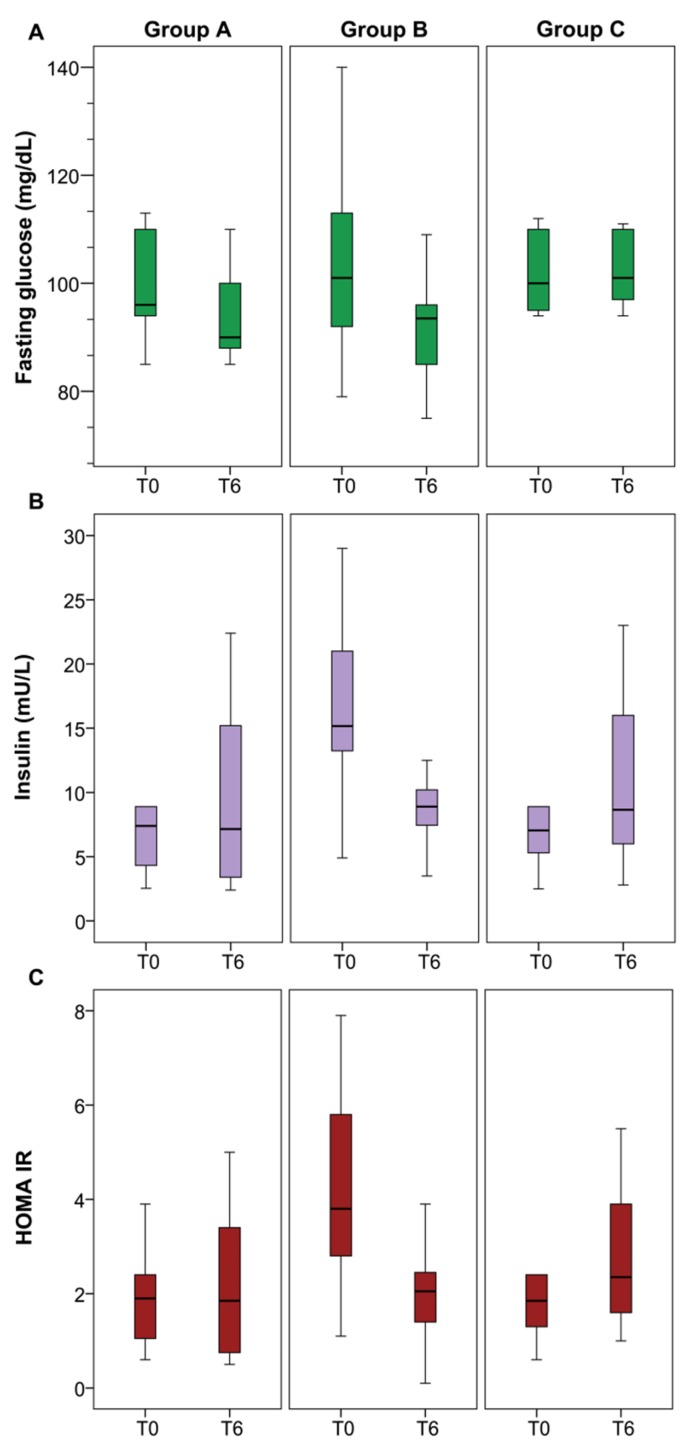
Non-alcoholic fatty liver disease (NAFLD) is the most common liver disease worldwide, characterized by liver fatty acid accumulation and fibrosis, not due to excessive alcohol consumption. Notably, nutritional habits have been reported to be implicated in the onset and severity of the hepatic damage, while the Mediterranean diet has shown beneficial effects on NAFLD. Free radicals and oxidative stress were suggested to be involved in the pathogenesis and progression of NAFLD, and several data highlighted the efficacy of antioxidant supplementation in its treatment. The aim of this study was to compare the effects of the Mediterranean diet, with or without an antioxidant complex supplement, in overweight patients suffering from NAFLD. In this prospective study, fifty Caucasian overweight patients were randomized into three groups (Groups A–C). A personalized moderately hypocaloric Mediterranean diet was prescribed to all patients included in the A and B groups. In addition to the diet, Group B was administered antioxidant supplementation daily and for the period of six months. Group C did not have any type of treatment. The study proved that the Mediterranean diet alone or in association with the antioxidant complex improved anthropometric parameters, lipid profile and reduced hepatic fat accumulation and liver stiffness. However, Group B patients, in which the diet was associated with antioxidant intake, showed not only a significant improvement in insulin sensitivity, but also a more consistent reduction of anthropometric parameters when compared with Group A patients. Taken together, these results support the benefit of antioxidant supplementation in overweight patients with NAFLD.
Overview
The claims and statistics of this paper haven’t been checked yet.
Free: it reads the open-access text and checks the first 5 claims that cite a source we can check. Create a free account to check every claim.
Integrity signals
Registry
Cites
Statistics
Figures
Verification
Claims the paper makes
The claims and statistics of this paper haven’t been checked yet.
Free: it reads the open-access text and checks the first 5 claims that cite a source we can check. Create a free account to check every claim.
Claims other papers make about this one
Each is checked against this paper’s own text: does it say what the citing paper says it does?
The source backs part of the claim, not all of it — or backs it for a different population, condition or comparison.
In the citing paper
“The overall results showed that the MD significantly reduced weight [weighted mean difference (WMD = − 2.38 kg, 95% CI − 4.11 to − 0.66, P = 0.01) in comparison to standard care or control diet.”
From Effects of Mediterranean diet, exercise, and their combination on body composition and liver outcomes in metabolic dysfunction-associated steatotic liver disease: a systematic review and meta-analysis of randomized controlled trials (2025) · cites this paper as [59]
Experimental — accuracy not yet measuredThe source backs part of the claim, not all of it — or backs it for a different population, condition or comparison.
In the citing paper
“Abenavoli et al. [59] also showed a significant lower fatty liver index in the MD intervention group than the control group.”
From Effects of Mediterranean diet, exercise, and their combination on body composition and liver outcomes in metabolic dysfunction-associated steatotic liver disease: a systematic review and meta-analysis of randomized controlled trials (2025) · cites this paper as [59]
Experimental — accuracy not yet measuredThe cited source says what the claim attributes to it.
In the citing paper
“In total, seven studies reported data revealed that the MD significantly reduced BMI [56–60, 62, 64](WMD = − 0.70 kg/m2, 95% CI = − 1.03 to − 0.36, P < 0.001)”
The cited source says what the claim attributes to it.
In the citing paper
“and WC [56–60, 62, 64] (WMD = − 1.56 cm, 95% CI = − 3.02 to − 0.09, P = 0.04) in comparison to standard care or control diet”
The cited source says what the claim attributes to it.
In the citing paper
“the overall results of six RCTs [56, 57, 59, 60, 62, 63] showed a significant effect of the MD on ALT levels (WMD = − 3.96 IU/L, 95% CI = − 6.54 to − 1.38, P < 0.001).”
2 more claims about this paper
Create a free account to see every claim other papers make about this one.
Self-check
Percentages, sums and reported differences re-computed from the paper’s own numbers.
The self-check needs the paper’s full text.
Citations
Cites
Hao (2015) · doi:10.1002/14651858 · Cited by 11,321
EASL–EASD–EASO Clinical Practice Guidelines for the management of non-alcoholic fatty liver disease
(2016) · Journal of Hepatology · doi:10.1016/j.jhep.2015.11.004 · Cited by 4,836
Steatohepatitis: A tale of two “hits”?
Day, C. P., & James, O. F. W. (1998) · Gastroenterology · doi:10.1016/s0016-5085(98)70599-2 · Cited by 4,285
Genetic variation in PNPLA3 confers susceptibility to nonalcoholic fatty liver disease
Romeo, S., Kozlitina, J., Xing, C., Pertsemlidis, A., Cox, D., Pennacchio, L. A., Boerwinkle, E., Cohen, J. C., & Hobbs, H. H. (2008) · Nature Genetics · doi:10.1038/ng.257 · Cited by 3,416 · cited 1×
“NAFLD is now considered the hepatic border of metabolic syndrome, supported by a high-calorie dietetic regimen, in the presence of a genetic profile characterized by predisposing polymorphisms [4,8,9].”
BackgroundBedogni, G., Bellentani, S., Miglioli, L., Masutti, F., Passalacqua, M., Castiglione, A., & Tiribelli, C. (2006) · BMC Gastroenterology · doi:10.1186/1471-230x-6-33 · Cited by 3,042 · cited 1×
“The FL index is an accurate and easy to employ predictor score to define steatosis presence that utilizes routine measurements in clinical practice such as a BMI, waist circumference, triglycerides and γGT [36].”
Evolution of inflammation in nonalcoholic fatty liver disease: The multiple parallel hits hypothesis
Tilg, H., & Moschen, A. R. (2010) · Hepatology · doi:10.1002/hep.24001 · Cited by 2,548
Simental-Mendía, L. E., Rodríguez-Morán, M., & Guerrero-Romero, F. (2008) · Metabolic Syndrome and Related Disorders · doi:10.1089/met.2008.0034 · Cited by 2,445 · cited 1×
“To evaluate insulin resistance, we calculated two surrogate indexes: the homeostasis model assessment of insulin resistance (HOMA-IR) and the product of the plasma triglyceride and glucose concentrations (TyG) index [33,34].”
MethodHamaguchi, M., Kojima, T., Itoh, Y., Harano, Y., Fujii, K., Nakajima, T., Kato, T., Takeda, N., Okuda, J., Ida, K., et al. (2007) · The American Journal of Gastroenterology · doi:10.1111/j.1572-0241.2007.01526.x · Cited by 906 · cited 1×
“7% sensitivity when compared with liver biopsy [35].”
BackgroundMusso, G., Gambino, R., De Michieli, F., Cassader, M., Rizzetto, M., Durazzo, M., Fagà, E., Silli, B., & Pagano, G. (2003) · Hepatology · doi:10.1053/jhep.2003.50132 · Cited by 759
Vitamin E and vitamin C treatment improves fibrosis in patients with nonalcoholic steatohepatitis
Harrison, S. A., Torgerson, S., Hayashi, P. H., Ward, J. A., & Schenker, S. (2003) · The American Journal of Gastroenterology · doi:10.1016/j.amjgastroenterol.2003.08.005 · Cited by 731
Cited by
Items 101–152 of 152
What should we advise MAFLD patients to eat and drink?
Machado, M. V. (2021) · Metabolism and Target Organ Damage · doi:10.20517/mtod.2021.11 · Cited by 8
Zhang, X., Liu, M., Huang, J., Zheng, Y., Wang, Y., & Zhou, Y. (2025) · BMC Gastroenterology · doi:10.1186/s12876-025-04057-w · Cited by 9
Abenavoli, L., Myazin, R. G., Fagoonee, S., Cinaglia, P., Luzza, F., Pellicano, R., & Emelyanov, D. (2022) · Minerva Gastroenterology · doi:10.23736/s2724-5985.21.03066-7 · Cited by 6
Self-citationKurhaluk, N., Mazur, Z., Kołodziejska, R., & TKACZENKO, H. (2026) · International Journal of Molecular Sciences · doi:10.3390/ijms27083511 · Cited by 6
Major Dietary Interventions for the Management of Liver Disease
Ahmed, I. A. (2019) · Elsevier eBooks · doi:10.1016/b978-0-12-814466-4.00017-3 · Cited by 6
Tavakoli, T., Zarban, A., Hooshyar, R., Salmani, F., & Tajik, H. (2020) · Archives of Physiology and Biochemistry · doi:10.1080/13813455.2020.1784953 · Cited by 5
“Recent studies suggested that, in NAFLD, lipid peroxidation products alter the mitochondrial DNA and leads to a reduction in glutathione and ATP levels, an unbalance of ROS production, and subsequently, the progression of hepatic injury in NAFLD (Abenavoli et al. 2017).”
BackgroundSilymarin for adults with metabolic dysfunction-associated steatotic liver disease
Wang, C., Shang, Y., Kanaan, G., Chai, L., Li, H., & Qi, X. (2025) · Cochrane Database of Systematic Reviews · doi:10.1002/14651858.cd015524.pub2 · Cited by 11
Zou, J., Tian, F., Cui, S., Hou, J. Y., Li, Z., Wei, Y., Cui, H., Li, Y., Zhou, S., He, Z., et al. (2025) · BMC Gastroenterology · doi:10.1186/s12876-025-04535-1 · Cited by 4
“Fifteen studies reported results for GGT [29, 30, 35, 37, 39–42, 44, 46–50, 52].”
InfluentialThe Mediterranean Diet in Gastrointestinal and Liver Diseases
Kataria, R. D., & Pickett‐Blakely, O. (2020) · Current Treatment Options in Gastroenterology · doi:10.1007/s11938-020-00318-7 · Cited by 4
Fasting, Nutrition and Weight Loss: An Approach to Refine Non-Alcoholic Fatty Liver Disease
Al-Samhari, G. A., Al-Mushiki, G. M., Tamrakar, R., ABDULLAHI, G., Lin, Y.-D., & Tang, X. (2021) · Journal of Nutritional Science and Vitaminology · doi:10.3177/jnsv.67.366 · Cited by 4
Influence of Famine in Women with Non-Alcoholic Fatty Liver Disease
Abenavoli, L. (2017) · Annals of Hepatology · doi:10.5604/01.3001.0010.5269 · Cited by 4
Self-citationHamzah, K. A., Shweliya, M. A., Kurmasha, Y. H., Ahmed, M. J., Habib, A., Kamel, A. I. I., Rashid, Z., Shimal, A. A., Moghazy, M., Fahem, F., et al. (2026) · Diabetology & Metabolic Syndrome · doi:10.1186/s13098-025-02084-x · Cited by 3
“…MRI-proton density fat fraction/CAP, controlled attenuation parameter), enzyme levels (ALT, AST, GGT), and fibrosis scores (LSM, Liver Stiffness Measurement, FIB-4, Fibro-sis-4 Index); [2] metabolic parameters (weight, HbA1c, and HOMA-IR); and [3] inflammatory markers (CRP and cytokines).”
InfluentialValenzuela‐Fuenzalida, J. J., Salazar-Arancibia, T., Laborie-Reyes, B., Rodriguez-Ortiz, F., Loaiza-Giraldo, J. P., Salgado, C., Nova-Baeza, P., Orellana-Donoso, M., Moya, M. P., Bruna-Mejías, A., et al. (2026) · Clinical Nutrition ESPEN · doi:10.1016/j.clnesp.2026.105017 · Cited by 3
Ding, J., Li, L., & Xue, H. (2021) · Food Science and Technology · doi:10.1590/fst.52820 · Cited by 3
Vitamin E for people with non-alcoholic fatty liver disease
Wen, H.-Z., Deng, H., Yang, L., Li, L., Lin, J., Zheng, P., & Ji, G. (2022) · Cochrane Database of Systematic Reviews · doi:10.1002/14651858.cd015033 · Cited by 4
YOSHIMURA, S. M., Duarte, S. M. B., Stefano, J. T., Daniel Ferraz de Campos, M. A. Z. O., Pinho, J. R. R., & de Oliveira, C. P. M. S. (2023) · Arquivos de Gastroenterologia · doi:10.1590/s0004-2803.202301000-13 · Cited by 3
“…fat for 6 months, reduced weight (83 to 78 kg), BMI (31 to 29 kg/m²), waist circumference (108 to 102 cm), and significant improvements in lipid profile, such as reduction of triglycerides and LDL cholesterol and FLI index [Fatty Liver Index (a noninvasive method that assesses liver fat)] (25) .”
BackgroundNUTRIÇÃO NA DOENÇA HEPÁTICA GORDUROSA NÃO ALCOÓLICA E SÍNDROME METABÓLICA: UMA REVISÃO INTEGRATIVA
Scheidt, L., Schmidt, L., Pinheiro, T. D. L. F., & Benetti, F. (2018) · Arquivos de Ciências da Saúde da UNIPAR · doi:10.25110/arqsaude.v22i2.2018.6365 · Cited by 3
Ghasemi, M., Lotfi, M. R., Andani, F. M., & Zadhoush, F. (2025) · International Journal of Preventive Medicine · doi:10.4103/ijpvm.ijpvm_177_24 · Cited by 2
“[32] Hepatic lipid overload leads to excessive production of oxidants, resulting in oxidative damage to cellular macromolecules such as DNA, proteins, and lipids, ultimately causing liver injury.”
George, E. S., Sualeheen, A., Freer, C. L., Georgeousopoulou, E. N., Roberts, S. K., Daly, R. M., & Tan, S. (2026) · British Journal Of Nutrition · doi:10.1017/s0007114526107351 · Cited by 2
“The anti-inflammatory and antioxidative properties of the MedDiet may counteract key pathogenic pathways of MASLD, such as insulin resistance, inflammation and oxidative stress, thereby reducing hepatic steatosis and also addressing associated metabolic comorbidities (17,18) .”
Dietary bioactive compounds targeting insulin resistance: mechanisms and preventive potential
Aiello, V., Lombardo, M., Aiello, G., Tripodi, G., Castelli, C., Matarese, G., Tamburro, M., Ripabelli, G., Baldelli, S., & Castelli, S. (2026) · Frontiers in Nutrition · doi:10.3389/fnut.2026.1918360 · Cited by 2
“Further evidence in NAFLD suggests that a calorie-restricted MD improves hepatic fat accumulation and metabolic parameters, with potential additional benefits when combined with antioxidant supplementation, possibly through modulation of oxidative stress pathways (130).”
Ghadimi, M., Mohammadi, R., Daneshzad, E., Moazzami, B., & Mohammadpour, Z. (2021) · Annals of Gastroenterology · doi:10.20524/aog.2021.0601 · Cited by 2
“Finally, 5 articles were used for data extraction and meta-analysis [16,31-34].”
BackgroundMethodInfluentialSalivary and Urinary Metabolome in Pediatric Obesity and Metabolic Syndrome
Troisi, J., Marciano, F., Scala, G., Plunk, E. C., Pierri, L., & Colucci, A. (2020) · Springer eBooks · doi:10.1007/978-3-030-53370-0_19 · Cited by 2
Jerome, N. E., Edwards, N. E., & Ding, Q. (2023) · Gastroenterology Nursing · doi:10.1097/sga.0000000000000753 · Cited by 2
“A prospective study showed that the Mediterranean diet can contribute to a reduction of fat accumulation and liver stiffness, which would be evident through the improvement in anthropometric parameters and lipid profile (Abenavoli et al., 2017).”
BackgroundMontero, Z. B., Meneses, M. E. P. D., Martínez-Carrera, D., Sánchez‐Tapia, M., Hernández-Acosta, J., Torres, N., Bonilla, M., Castillo, I., Petlacalco, B., Fernández, N., et al. (2025) · Journal of Medicinal Food · doi:10.1177/1096620x251370638 · Cited by 1
Nutrition and COVID-19 pandemic: the case of Mediterranean diet
Abenavoli, L., Procopio, A. C., & Boccuto, L. (2021) · Gazzetta Medica Italiana Archivio per le Scienze Mediche · doi:10.23736/s0393-3660.20.04541-6 · Cited by 1
Self-citationMohammadshahi, M., Hormoznejad, R., Rahim, F., Helli, B., Alavinejad, P., & Sharhani, A. (2021) · Research Square · doi:10.21203/rs.3.rs-861185/v1 · Cited by 1
Abenavoli, L., Torre, G. L., & Milić, N. (2023) · Nutrients · doi:10.3390/nu15132907 · Cited by 1
Self-citationĆetković, N. B., Scarlata, G. G. M., & Abenavoli, L. (2024) · Nutrients · doi:10.3390/nu16030417 · Cited by 1
“In recent years, our group have confirmed the role of MD in body fat mass reduction and the improvement of lipid profile and insulin resistance parameters [9].”
BackgroundSelf-citationSchott, S. L., & Minich, D. M. (2018) · Alternative and Complementary Therapies · doi:10.1089/act.2018.29172.ssc
Mediterranean diet: the role of antioxidants in liver disease
Abenavoli, L., Romano, L., Gualtieri, P., Santis, G. L. D., & LORENZO, A. D. (2020) · Elsevier eBooks · doi:10.1016/b978-0-12-815972-9.00025-1
Self-citationSureda, A., Capó, X., & Tejada, S. (2020) · Elsevier eBooks · doi:10.1016/b978-0-12-816488-4.00007-3
Alkole Bağlı Olmayan Yağlı Karaciğer Hastalığı Tedavisinde Bazı Antioksidanların Rolü
Göncü, G., & Kargar, A. (2022) · Journal of Nutrition and Dietetics · doi:10.33076/2022.bdd.1555
Yoshimura, S. M. (2023) · Digital Library of Theses and Dissertations (Universidade de São Paulo) · doi:10.11606/d.5.2023.tde-01062023-155002 · Cited by 1
Gómez, B. B. (2023) · UVaDOC UVaDOC University of Valladolid Documentary Repository (University of Valladolid) · doi:10.35376/10324/65186
Liang, R., Niu, Q., & He, T. (2024) · Journal of Clinical and Nursing Research · doi:10.26689/jcnr.v8i2.6180
“An Italian prospective study [29] showed that the Mediterranean diet benefits in combating non-alcoholic fatty liver disease.”
BackgroundTwenty four food intakes and nonalcoholic fatty liver disease: A Mendelian randomization studyPreprint
Chen, Z., Li, C., Gao, T., & Ke, D. (2024) · Research Square · doi:10.21203/rs.3.rs-4066050/v1
Zalukhu, P. G., & Lukito, W. (2024) · The Indonesian Journal of General Medicine · doi:10.70070/jkw23v04
Alhouei, B., & Doaei, S. (2025) · Food Science and Nutrition Cases · doi:10.1079/fsncases.2025.0014
Pinheiro, M. M., Afonso, M. B., & Rodrigues, C. M. P. (2025) · Elsevier eBooks · doi:10.1016/b978-0-12-823524-9.00003-4
Zheng, X., Zhang, X., Zhang, J., Pan, K., Yan, B., & Yin, Z. (2025) · Fitoterapia · doi:10.1016/j.fitote.2025.106993
Zver, Ž. (2023) · Repository of the University of Primorsk (University of Primorska)
Hunziker, C. I., Diaz, M. P., & León, A. E. (2026) · Journal of Human Nutrition and Dietetics · doi:10.1111/jhn.70221
Martins, R. R. G., Interaminense, L. F. L., & Lins, P. R. M. (2026) · Nutrição Brasil · doi:10.62827/nb.v24i4.3080
Tavakoli, S., Ghaemi, S., Amini, M. R., Djafari, F., Fathzadeh, K., dogolsar, M. H., Sheikhhossein, F., & Hekmatdoost, A. (2026) · Food Science & Nutrition · doi:10.1002/fsn3.71885
“Some research has suggested that lifestyle modifications, including dietary changes and weight management, are fundamental steps for improving liver health and managing metabolic conditions (Abenavoli et al. 2017; Eslamparast et al. 2014; Faghihzadeh et al. 2014).”
FARSHAD, R. K., Akbaş, E., & Öztürk, Y. E. (2026) · British Journal Of Nutrition · doi:10.1017/s0007114526107545
“A randomised controlled trial reported that a 6-month Mediterranean diet intervention could improve anthropometric parameters and lipid profile and contribute to the reduction of hepatic fat accumulation and liver stiffness (13) .”
Dietvorst, C. A. W., Konings, L. A. M., Saidi, A. N., Noordermeer, T., van Wenum, M., Peeters, R. P., Berk, K. A., & Cabezas, M. C. (2026) · BMJ Open · doi:10.1136/bmjopen-2025-113058
“32 33 To calculate the effect size, we took a mean difference of the two dietary studies (1.3 kPa), the mean of the N/B group (0.5 kPa) and an SD of 1.0 kPa, which is based on expert opinion due to lack of evidence in the literature.”
InfluentialLópez-Bermudo, L. (2025) · RIO (Universidad Pablo de Olavide)
Han, Z., Song, H., Wang, C., Li, Q., Ye, Y., Liu, W., Pang, G., Sun, W., Zhu, X., Wang, S., et al. (2026) · Annals of Surgical Oncology · doi:10.1245/s10434-026-20370-4
“23 –26 Indeed, a case-control study of 518 cases of HCC and 772 controls has reported that the level of adherence to the MD is significantly and inversely correlated with the risk of HCC in a nearly mono-tonic manner.”
Ramadan, A. M., Wakeel, L. M. E., Adel, A., Abdel‐Wahab, M., & Fahmy, S. (2026) · BMC Gastroenterology · doi:10.1186/s12876-026-05157-x · Cited by 1
“Regarding the significant reduction in TG shown in the control group, Abenavoli et al. [58, 59]found a significant reduction in TG level within the low-calorie diet (MD) group.”
Lyu, H., Chen, H., Zhan, Z., Qin, Y., Mao, L., Guo, M., Mo, Y., & Shen, T. (2026) · Food Science & Nutrition · doi:10.1002/fsn3.72429 · Cited by 1
Lee, H. Y., Oh, H., Yoon, E. L., & Jun, D. W. (2026) · Nutrients · doi:10.3390/nu18213685
Metadata
- Authors
- Abenavoli, L., Greco, M., Milic, N., Accattato, F., Foti, D., Gulletta, E., & Luzza, F.
- Affiliations
- Magna Graecia University (IT)
- Department of Pharmacy, University of Novi Sad, 21000 Novi Sad, Serbia
- Corresponding author
- Abenavoli, Ludovico
- Venue
- Nutrients
- Publisher
- MDPI AG
- Published
- 2017-08-12
- Volume
- 9
- Issue
- 8
- Pages
- 870
- ISSN
- 2072-6643 (ISSN-L)
- PMC
- PMC5579663
- OpenAlex
- W2749310292
- Semantic Scholar
- 6370bf354285f36ff8e9ba0c86046ddd6e4a099a
- Cited by
- 144
- References
- 59
- Citations by year
- 2026: 11 · 2025: 17 · 2024: 12 · 2023: 19 · 2022: 21 · 2021: 25 · 2020: 14 · 2019: 13 · 2018: 11 · 2017: 1
- FWCI
- 8.36
- Type
- journal article
- Language
- en
- Open access
- gold
- doi.org
- Licence
- Locations
- Nutrients (publishedVersion, cc-by)
- PubMed Central (publishedVersion, cc-by)
- PubMed (publishedVersion)
- Topics
- Health Sciences › Medicine › Hepatology › Liver Disease Diagnosis and Treatment
- Health Sciences › Medicine › Public Health, Environmental and Occupational Health › Nutritional Studies and Diet
- Health Sciences › Medicine › Pathology and Forensic Medicine › Alcohol Consumption and Health Effects
- Keywords
- non-alcoholic fatty liver disease, Mediterranean diet, antioxidant supplementation, oxidative stress, overweight, hypocaloric diet, insulin sensitivity, hepatic lipid accumulation, liver stiffness, lipid profile, anthropometric parameters
- MeSH terms
- Adult, Antioxidants, Female, Humans, Male, Middle Aged, Prospective Studies, Dietary Supplements, Diet, Mediterranean, Overweight, Non-alcoholic Fatty Liver Disease
About these checks
Registry, retraction, Cites and statistics results are computed, not judged, with one exception: a printed reference that no index lists is read once by a model before it counts as a citation error. Claims are extracted by a model and kept only when their quote appears verbatim in the text; each cited source is then checked, with a model’s help, for whether it says what the claim relies on. Those verdicts can be wrong — read the claim’s quote and the cited source before relying on one.
Statistics and arithmetic are recomputed, not judged.
Confidence bands are shown only for fields calibrated on our annotated test set. None is calibrated yet, so no band is shown.
What counts as a claim ›How we measure confidence ›How we check this ›
Are you an author, or do you see a problem with this page? Request a review
Data sources
Bibliographic data: Semantic Scholar, OpenAlex, Crossref.
Contains information from the Semantic Scholar Academic Graph Datasets, made available under the ODC Attribution License (ODC-BY 1.0).
Semantic Scholar’s data is described in: Kinney, R., et al. (2023). The Semantic Scholar Open Data Platform. arXiv:2301.10140.
