

The DOI matches its Crossref record; 189 of the 190 references it cites were found in a registry or an index, and 1 are not checked yet.
Current Strategies to Enhance Delivery of Drugs across the Blood–Brain Barrier
Open accessAbstract
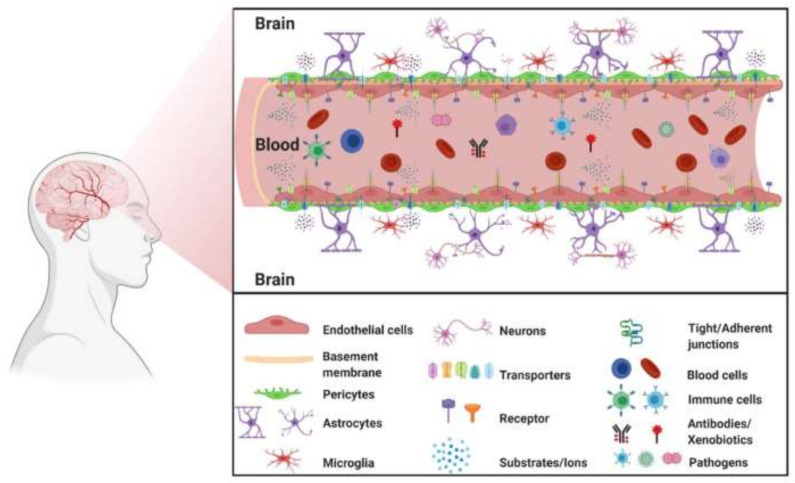
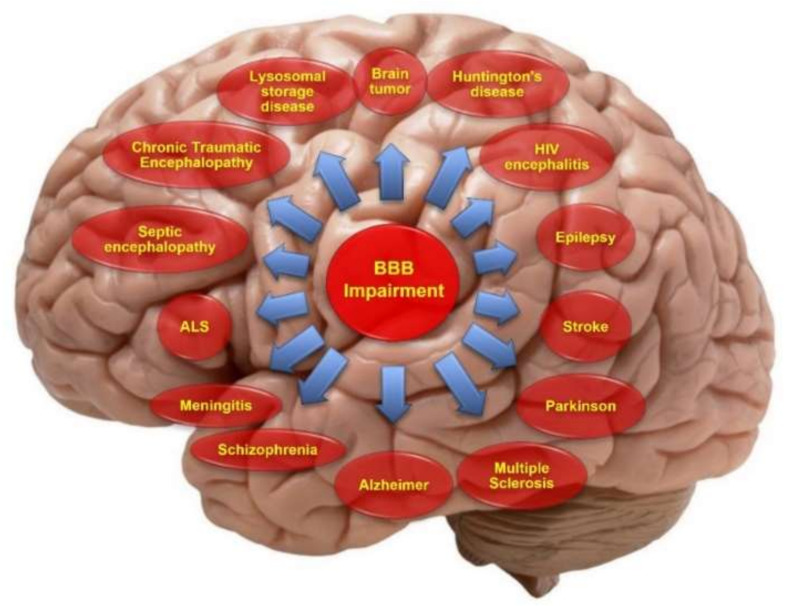
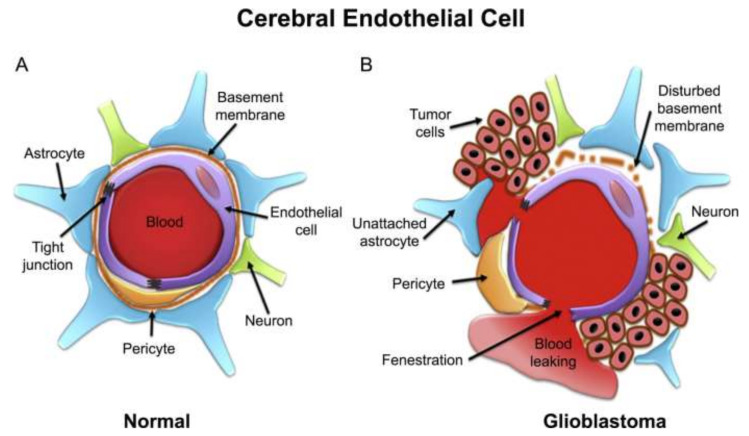
The blood–brain barrier (BBB) has shown to be a significant obstacle to brain medication delivery. The BBB in a healthy brain is a diffusion barrier that prevents most substances from passing from the blood to the brain; only tiny molecules can pass across the BBB. The BBB is disturbed in specific pathological illnesses such as stroke, diabetes, seizures, multiple sclerosis, Parkinson’s disease, and Alzheimer’s disease. The goal of this study is to offer a general overview of current brain medication delivery techniques and associated topics from the last five years. It is anticipated that this review will stimulate readers to look into new ways to deliver medications to the brain. Following an introduction of the construction and function of the BBB in both healthy and pathological conditions, this review revisits certain contested questions, such as whether nanoparticles may cross the BBB on their own and if medications are selectively delivered to the brain by deliberately targeted nanoparticles. Current non-nanoparticle options are also discussed, including drug delivery via the permeable BBB under pathological circumstances and the use of non-invasive approaches to improve brain medication absorption.
Overview
The claims and statistics of this paper haven’t been checked yet.
Run the check — free, no account needed. It reads the open-access text and checks the sources it cites.
Integrity signals
Registry
Cites
Statistics
Figures
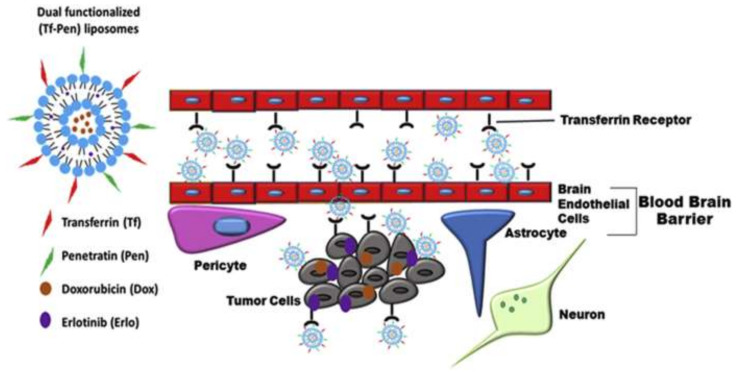
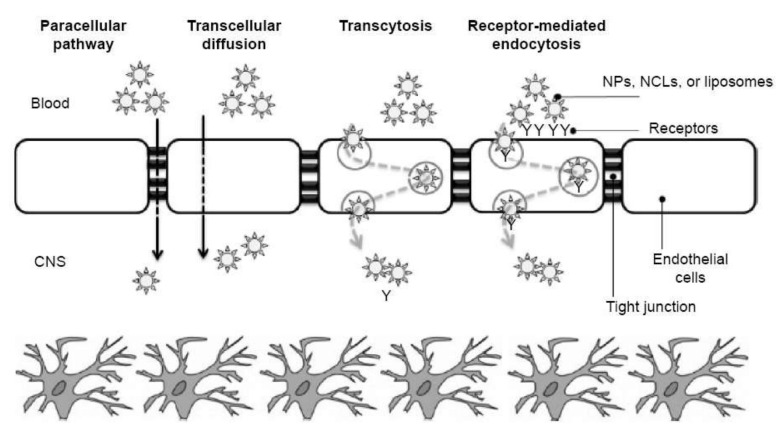
Verification
Claims the paper makes
The claims and statistics of this paper haven’t been checked yet.
Run the check — free, no account needed. It reads the open-access text and checks the sources it cites.
Claims other papers make about this one
Each is checked against this paper’s own text: does it say what the citing paper says it does?
The cited source says what the claim attributes to it.
In the citing paper
“Another challenge in AD treatments is the efficient delivery and targeting of molecules of interest to the brain due to the protective barriers of the central nervous system [27,28].”
From Alzheimer's Disease: Treatment Strategies and Their Limitations. (2022) · cites this paper as [28]
Self-check
Percentages, sums and reported differences re-computed from the paper’s own numbers.
The self-check needs the paper’s full text.
Citations
Cites
1 retracted
Karthika, C., Appu, A. P., Akter, R., Rahman, M. H., Tagde, P., Ashraf, G. M., Abdel‐Daim, M. M., Hassan, S. S. U., Abid, A., & BUNGAU, S. G. (2022) · Environmental Science and Pollution Research · doi:10.1007/s11356-021-17830-7 · Cited by 46
RetractedAstrocyte-endothelial interactions at the blood-brain barrier
Abbott, N. J., Rönnbäck, L., & Hansson, E. (2006) · Nature Reviews Neuroscience · doi:10.1038/nrn1824 · Cited by 5,595
The Blood-Brain Barrier in Health and Chronic Neurodegenerative Disorders
Zlokovic, B. V. (2008) · Neuron · doi:10.1016/j.neuron.2008.01.003 · Cited by 3,280
The blood–brain barrier: an overview
Ballabh, P., Braun, A., & Nedergaard, M. (2004) · Neurobiology of Disease · doi:10.1016/j.nbd.2003.12.016 · Cited by 2,276
Liposomal Formulations in Clinical Use: An Updated Review
Bulbake, U., Doppalapudi, S., Kommineni, N., & Khan, W. (2017) · Pharmaceutics · doi:10.3390/pharmaceutics9020012 · Cited by 2,174
Revisiting the role of ABC transporters in multidrug-resistant cancer
Robey, R. W., Pluchino, K. M., Hall, M. D., Fojo, A. T., Bates, S. E., & Gottesman, M. M. (2018) · Nature Reviews Cancer · doi:10.1038/s41568-018-0005-8 · Cited by 1,866
A blood–brain barrier overview on structure, function, impairment, and biomarkers of integrity
Kadry, H., Noorani, B., & Cucullo, L. (2020) · Fluids and Barriers of the CNS · doi:10.1186/s12987-020-00230-3 · Cited by 1,853
Wiklander, O. P. B., Nordin, J. Z., O'Loughlin, A., Gustafsson, Y., Corso, G., Mäger, I., Vader, P., Lee, Y., Sork, H., Seow, Y., et al. (2015) · Journal of Extracellular Vesicles · doi:10.3402/jev.v4.26316 · Cited by 1,730
New developments in liposomal drug delivery
Pattni, B. S., Chupin, V. V., & Torchilin, V. P. (2015) · Chemical Reviews · doi:10.1021/acs.chemrev.5b00046 · Cited by 1,600
Key principles and methods for studying the endocytosis of biological and nanoparticle therapeutics
Rennick, J. J., Johnston, A. P. R., & Parton, R. G. (2021) · Nature Nanotechnology · doi:10.1038/s41565-021-00858-8 · Cited by 1,566
Research works printed but not linked: 5
- (2021, December 03). Circulation and the Central Nervous System Anatomy and Physiology I. Available online: https://courses.lumenlearning.com/ap1/chapter/circulation-and-the-central-nervous-system/.
- Dhanda, 2005, Approaches for drug deposition in the human olfactory epithelium, Drug Deliv. Technol., 5, 64
- National Center for Biotechnology Information (2022, April 16). PubChem Patent Summary for WO-9107947-A1, Available online: https://pubchem.ncbi.nlm.nih.gov/patent/WO-9107947-A1.
- Article, 2016, Solid Lipid Nanoparticles—A Review, J. Crit. Rev., 3, 5
- Gao, H., and Gao, X. (2018). Brain Targeted Drug Delivery Systems: A Focus on Nanotechnology and Nanoparticulates, Elsevier Science.
Cited by
Sorted by citations
Alzheimer's Disease: Treatment Strategies and Their Limitations.
Passeri, E., Elkhoury, K., Morsink, M., Broersen, K., Linder, M., Tamayol, A., Malaplate, C., Yen, F. T., & Arab-Tehrany, E. (2022) · International Journal of Molecular Sciences · doi:10.3390/ijms232213954 · Cited by 689
“Another challenge in AD treatments is the efficient delivery and targeting of molecules of interest to the brain due to the protective barriers of the central nervous system [27,28].”
BackgroundNanotechnology-based drug delivery for the treatment of CNS disorders
Mittal, K. R., Pharasi, N., Sarna, B., Singh, M., Rachana, R., Haider, S., Singh, S. K., Dua, K., Jha, S. K., Dey, A., et al. (2022) · Translational Neuroscience · doi:10.1515/tnsci-2022-0258 · Cited by 118
Unraveling the complexity of human brain: Structure, function in healthy and disease states
Sultana, O. F., Bandaru, M., Islam, M. A., & Reddy, P. H. (2024) · Ageing Research Reviews · doi:10.1016/j.arr.2024.102414 · Cited by 92
Blood-brain barrier permeability in the ischemic stroke: An update
Mathias, K., Machado, R. S., Stork, S. D. S., dos Santos, D., Joaquim, L. D. S., Generoso, J. S., Danielski, L. G., Barichello, T., Prophiro, J. S., & Petronilho, F. C. (2023) · Microvascular Research · doi:10.1016/j.mvr.2023.104621 · Cited by 73
An Updated Overview of Cyclodextrin-Based Drug Delivery Systems for Cancer Therapy
Păduraru, D. N., Niculescu, A.-G., Bolocan, A., Andronic, O., Grumezescu, A. M., & Bîrlă, R. (2022) · Pharmaceutics · doi:10.3390/pharmaceutics14081748 · Cited by 71
Self-citation
Metadata
- Authors
- Teleanu, R. I., Preda, M. D., Niculescu, A.-G., Vladâcenco, O., Radu, C. I., Grumezescu, A. M., & Teleanu, D. M.
- Affiliations
- Carol Davila University of Medicine and Pharmacy (RO)
- Universitatea Națională de Știință și Tehnologie Politehnica București (RO)
- Bucharest Emergency University Hospital (RO)
- University of Bucharest (RO)
- Corresponding author
- Grumezescu, Alexandru Mihai
- ORCID
- Venue
- Pharmaceutics
- Publisher
- MDPI AG
- Published
- 2022-05-04
- Volume
- 14
- Issue
- 5
- Pages
- 987
- ISSN
- 1999-4923 (ISSN-L)
- PMC
- PMC9145636
- OpenAlex
- W4229057365
- Cited by
- 200
- References
- 189
- Citations by year
- 2026: 33 · 2025: 72 · 2024: 57 · 2023: 26 · 2022: 12
- FWCI
- 4.30
- Type
- journal article
- Language
- en
- Open access
- gold
- doi.org
- Licence
- Locations
- Pharmaceutics (publishedVersion, cc-by)
- PubMed Central (publishedVersion, cc-by)
- PubMed (publishedVersion)
- DOAJ (DOAJ: Directory of Open Access Journals) (submittedVersion, cc-by-sa)
- Topics
- Life Sciences › Neuroscience › Neurology › Barrier Structure and Function Studies
- Health Sciences › Medicine › Oncology › Drug Transport and Resistance Mechanisms
- Physical Sciences › Materials Science › Biomaterials › Nanoparticle-Based Drug Delivery
- Keywords
- blood-brain barrier, brain drug delivery, nanoparticles, blood-brain barrier disruption, targeted drug delivery, non-invasive drug delivery, blood-brain barrier permeability, neurological disorders, Alzheimer's disease, Parkinson's disease, multiple sclerosis, stroke
About these checks
Registry, retraction, Cites and statistics results are computed, not judged, with one exception: a printed reference that no index lists is read once by a model before it counts as a citation error. Claims are extracted by a model and kept only when their quote appears verbatim in the text; each cited source is then checked, with a model’s help, for whether it says what the claim relies on. Those verdicts can be wrong — read the claim’s quote and the cited source before relying on one.
Statistics and arithmetic are recomputed, not judged.
Confidence bands are shown only for fields calibrated on our annotated test set. None is calibrated yet, so no band is shown.
What counts as a claim ›How we measure confidence ›How we check this ›
Are you an author, or do you see a problem with this page? Request a review
