

β-Ionone: Its Occurrence and Biological Function and Metabolic Engineering
Open accessThe DOI matches its Crossref record; 106 of the 106 references it cites were found in a registry or an index.
Abstract
β-Ionone is a natural plant volatile compound, and it is the 9,10 and 9′,10′ cleavage product of β-carotene by the carotenoid cleavage dioxygenase. β-Ionone is widely distributed in flowers, fruits, and vegetables. β-Ionone and other apocarotenoids comprise flavors, aromas, pigments, growth regulators, and defense compounds; serve as ecological cues; have roles as insect attractants or repellants, and have antibacterial and fungicidal properties. In recent years, β-ionone has also received increased attention from the biomedical community for its potential as an anticancer treatment and for other human health benefits. However, β-ionone is typically produced at relatively low levels in plants. Thus, expressing plant biosynthetic pathway genes in microbial hosts and engineering the metabolic pathway/host to increase metabolite production is an appealing alternative. In the present review, we discuss β-ionone occurrence, the biological activities of β-ionone, emphasizing insect attractant/repellant activities, and the current strategies and achievements used to reconstruct enzyme pathways in microorganisms in an effort to to attain higher amounts of the desired β-ionone.
Overview
The claims and statistics of this paper haven’t been checked yet.
Free: it reads the open-access text and checks the first 5 claims that cite a source we can check. Create a free account to check every claim.
Integrity signals
Registry
Cites
Statistics
Figures

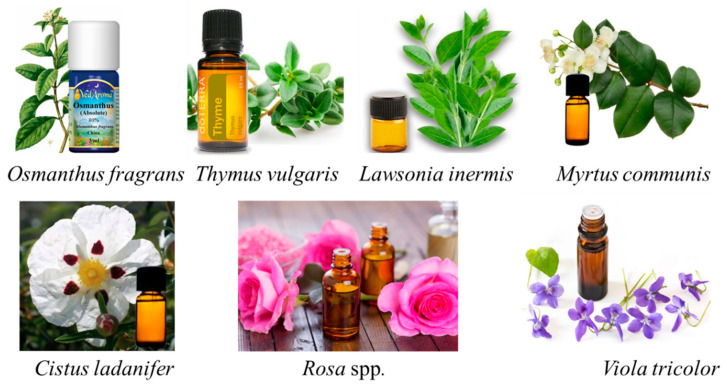
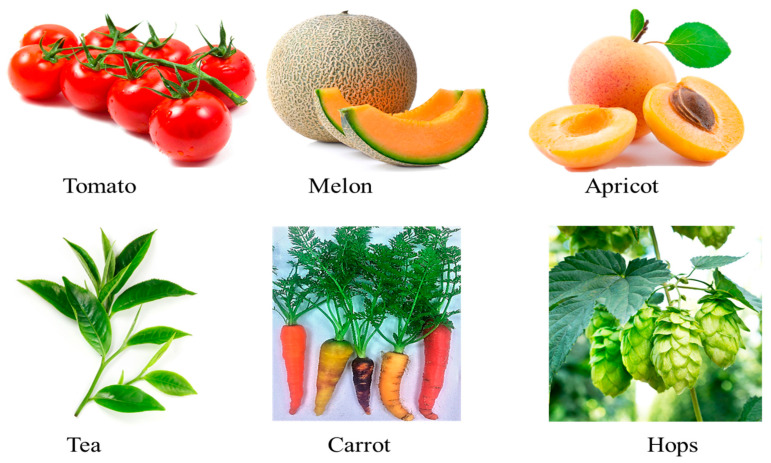


Verification
Claims the paper makes
The claims and statistics of this paper haven’t been checked yet.
Free: it reads the open-access text and checks the first 5 claims that cite a source we can check. Create a free account to check every claim.
Claims other papers make about this one
Each is checked against this paper’s own text: does it say what the citing paper says it does?
The cited source says what the claim attributes to it.
In the citing paper
“However, due to the prolonged time for the plant growth cycle and high dilution, the direct plant extraction of beta-ionone is limited [50].”
From Innovative Approaches to an Eco-Friendly Cosmetic Industry: A Review of Sustainable Ingredients (2024) · cites this paper as [50]
Self-check
Percentages, sums and reported differences re-computed from the paper’s own numbers.
The self-check needs the paper’s full text.
Citations
Cites
Plant Volatiles: Recent Advances and Future Perspectives
Dudareva, N., Negre, F., Nagegowda, D. A., & Orlova, I. (2006) · Critical Reviews in Plant Sciences · doi:10.1080/07352680600899973 · Cited by 1,395
The formation and function of plant volatiles: perfumes for pollinator attraction and defense
Pichersky, E., & Gershenzon, J. (2002) · Current Opinion in Plant Biology · doi:10.1016/s1369-5266(02)00251-0 · Cited by 1,190
Biochemistry of Plant Volatiles
Dudareva, N., Pichersky, E., & Gershenzon, J. (2004) · Plant Physiology · doi:10.1104/pp.104.049981 · Cited by 1,128
Plant Volatile Compounds: Sensory Cues for Health and Nutritional Value?
Goff, S. A., & Klee, H. J. (2006) · Science · doi:10.1126/science.1112614 · Cited by 710
Carotenoids and their cleavage products: Biosynthesis and functions
Walter, M. H., & Strack, D. (2011) · Natural Product Reports · doi:10.1039/c0np00036a · Cited by 580 · cited 2×
“The name “ionone” is derived from “iona” (Greek for violet), which refers to the violet odor, and “ketone,” which refers to the structure of the ionone [11,12].”
BackgroundCarotenoid oxidation products as stress signals in plants
Havaux, M. (2014) · The Plant Journal · doi:10.1111/tpj.12386 · Cited by 569
Plant carotenoid cleavage oxygenases and their apocarotenoid products
Auldridge, M. E., McCarty, D. R., & Klee, H. J. (2006) · Current Opinion in Plant Biology · doi:10.1016/j.pbi.2006.03.005 · Cited by 540
Ko, Y.-S., Kim, J. W., Lee, J. A., Han, T., Kim, G. B., Park, J. E., & Lee, S. Y. (2020) · Chemical Society Reviews · doi:10.1039/d0cs00155d · Cited by 476
Simkin, A. J., Schwartz, S. H., Auldridge, M., Taylor, M. G., & Klee, H. J. (2004) · The Plant Journal · doi:10.1111/j.1365-313x.2004.02263.x · Cited by 474
Plant Secondary Metabolite Diversity and Species Interactions
Kessler, A., & Kalske, A. (2018) · Annual Review of Ecology, Evolution, and Systematics · doi:10.1146/annurev-ecolsys-110617-062406 · Cited by 465
Selection of chromosomal DNA libraries using a multiplex CRISPR system
Ryan, O. W., Skerker, J. M., Maurer, M. J., Li, X., Tsai, J. C., Poddar, S., Lee, M. E., DeLoache, W., Dueber, J. E., Arkin, A. P., et al. (2014) · eLife · doi:10.7554/elife.03703 · Cited by 373
Simkin, A. J., Underwood, B. A., Auldridge, M., Loucas, H. M., Shibuya, K., Schmelz, E., Clark, D. G., & Klee, H. J. (2004) · Plant Physiology · doi:10.1104/pp.104.049718 · Cited by 297
Jessop‐Fabre, M. M., Jakočiūnas, T., Stovicek, V., Dai, Z., Jensen, M. K., Keasling, J. D., & Borodina, I. (2016) · Biotechnology Journal · doi:10.1002/biot.201600147 · Cited by 278
Rubio, A., Rambla, J. L., Santaella, M., Gómez, M. D., Orzaez, D., Granell, A., & Gómez-Gómez, L. (2008) · Journal of Biological Chemistry · doi:10.1074/jbc.m804000200 · Cited by 277
EasyClone: method for iterative chromosomal integration of multiple genes Saccharomyces cerevisiae
Jensen, N. B., Strucko, T., Kildegaard, K. R., David, F., Maury, J., Mortensen, U. H., Forster, J., Nielsen, J., & Borodina, I. (2014) · FEMS Yeast Research · doi:10.1111/1567-1364.12118 · Cited by 276
Cloning and functional characterization of carotenoid cleavage dioxygenase 4 genes
Huang, F.-C., Molnár, P., & Schwab, W. (2009) · Journal of Experimental Botany · doi:10.1093/jxb/erp137 · Cited by 244
Carotenoid-Derived Aroma Compounds
(2001) · ACS Symposium Series · doi:10.1021/bk-2002-0802 · Cited by 237
Lewinsohn, E., Sitrit, Y., Bar, E., Azulay, Y., Meir, A., Zamir, D., & Tadmor, Y. (2005) · Journal of Agricultural and Food Chemistry · doi:10.1021/jf047927t · Cited by 234
Carotenoid oxygenases: cleave it or leave it
Giuliano, G., Al-Babili, S., & von Lintig, J. (2003) · Trends in Plant Science · doi:10.1016/s1360-1385(03)00053-0 · Cited by 233
Impact of synthetic biology and metabolic engineering on industrial production of fine chemicals
Jullesson, D., David, F., Pfleger, B., & Nielsen, J. (2015) · Biotechnology Advances · doi:10.1016/j.biotechadv.2015.02.011 · Cited by 231
Scent-triggered navigation in honeybees
Reinhard, J., Srinivasan, M. V., & Zhang, S. (2004) · Nature · doi:10.1038/427411a · Cited by 227
Oxidative tailoring of carotenoids: a prospect towards novel functions in plants
BOUVIER, F., ISNER, J., DOGBO, O., & CAMARA, B. (2005) · Trends in Plant Science · doi:10.1016/j.tplants.2005.02.007 · Cited by 221
Metabolic engineering in the host Yarrowia lipolytica
Abdel-Mawgoud, A. M., Markham, K. A., Palmer, C. M., Liu, N., Stephanopoulos, G., & Alper, H. S. (2018) · Metabolic Engineering · doi:10.1016/j.ymben.2018.07.016 · Cited by 219
Functional characterization of CmCCD1, a carotenoid cleavage dioxygenase from melon
Ibdah, M., Azulay, Y., Portnoy, V., Wasserman, B., Bar, E., Meir, A., Burger, Y., Hirschberg, J., Schaffer, A. A., & Katzir, N. (2006) · Phytochemistry · doi:10.1016/j.phytochem.2006.02.009 · Cited by 204
Self-citationPénicaud, C., Achir, N., Dhuique-Mayer, C., Dornier, M., & Bohuon, P. (2011) · Fruits · doi:10.1051/fruits/2011058 · Cited by 192
Tandon, K. S., Baldwin, E. A., & Shewfelt, R. L. (2000) · Postharvest Biology and Technology · doi:10.1016/s0925-5214(00)00143-5 · Cited by 180
Substrate promiscuity of RdCCD1, a carotenoid cleavage oxygenase from Rosa damascena
Huang, F.-C., Horváth, G., Molnár, P., Turcsi, E., Deli, J., Schrader, J., Sandmann, G., Schmidt, H., & Schwab, W. G. (2009) · Phytochemistry · doi:10.1016/j.phytochem.2009.01.020 · Cited by 167
Flavors of the future: Health benefits of flavor precursors and volatile compounds in plant foods
Ayseli, M. T., & Ayseli, Y. I. (2015) · Trends in Food Science & Technology · doi:10.1016/j.tifs.2015.11.005 · Cited by 149
Carotenoid cleavage dioxygenases and their apocarotenoid products in plants
Ohmiya, A. (2009) · Plant Biotechnology · doi:10.5511/plantbiotechnology.26.351 · Cited by 144
GUILLOT, S., PEYTAVI, L., Bureau, S., Boulanger, R., Lepoutre, J. P., Crouzet, J., & Schorr‐Galindo, S. (2005) · Food Chemistry · doi:10.1016/j.foodchem.2005.04.016 · Cited by 137
Thermal isomerisation susceptibility of carotenoids in different tomato varieties
Nguyen, M. L., Francis, D. M., & Schwartz, S. J. (2001) · Journal of the Science of Food and Agriculture · doi:10.1002/jsfa.911 · Cited by 133
Beekwilder, J., van Rossum, H. M., Koopman, F., Sonntag, F., Buchhaupt, M., Schrader, J., Hall, R. D., Bosch, D., Pronk, J. T., van Maris, A. J. A., et al. (2014) · Journal of Biotechnology · doi:10.1016/j.jbiotec.2013.12.016 · Cited by 131
Eyres, G. T., Marriott, P. J., & Dufour, J. (2007) · Journal of Agricultural and Food Chemistry · doi:10.1021/jf070739t · Cited by 123
Pino, J. A., & Quijano, C. E. (2012) · Food Science and Technology · doi:10.1590/s0101-20612012005000006 · Cited by 122
Wang, L.-M., Li, M., Jin, W., Li, S., Zhang, S., & Yu, L. (2008) · Food Chemistry · doi:10.1016/j.foodchem.2008.09.044 · Cited by 121
Han, Y., Wang, H., Wang, X., Li, K., Dong, M., Li, Y., Zhu, Q., & Shang, F. (2019) · Horticulture Research · doi:10.1038/s41438-019-0189-4 · Cited by 120
García-Limones, C., Schnäbele, K., Blanco-Portales, R., Luz Bellido, M., Caballero, J. L., Schwab, W., & Muñoz-Blanco, J. (2008) · Journal of Agricultural and Food Chemistry · doi:10.1021/jf801096t · Cited by 119
β-Ionone and its analogs as promising anticancer agents
Ansari, M., & Emami, S. (2016) · European Journal of Medicinal Chemistry · doi:10.1016/j.ejmech.2016.07.037 · Cited by 116
Recent trends in metabolic engineering of microbial chemical factories
Liu, Y., & Nielsen, J. (2019) · Current Opinion in Biotechnology · doi:10.1016/j.copbio.2019.05.010 · Cited by 111
Lwande, W., Ndakala, A., Hassanali, A., Moreka, L., Nyandat, E., Ndung’u, M., Amiani, H., Gitu, P. M., Malonza, M. M., & Punyua, D. K. (1999) · Phytochemistry · doi:10.1016/s0031-9422(98)00507-x · Cited by 110
Engineering the Oleaginous Yeast Yarrowia Lipolytica to Produce the Aroma Compound β-Ionone
Czajka, J. J., Nathenson, J. A., Benites, V. T., Baidoo, E. E. K., Cheng, Q., Wang, Y., & Tang, Y. J. (2018) · Microbial Cell Factories · doi:10.1186/s12934-018-0984-x · Cited by 109
Lu, Y., Yang, Q., Lin, Z., & Yang, X. (2020) · Microbial Cell Factories · doi:10.1186/s12934-020-01309-0 · Cited by 109
Ionone Is More than a Violet’s Fragrance: A Review
Aloum, L., Alefishat, E. A., Adem, A., & Petroianu, G. A. (2020) · Molecules · doi:10.3390/molecules25245822 · Cited by 108
Plant Secondary Metabolites and Their General Function in Plants
Böttger, A., Vothknecht, U. C., Bolle, C., & Wolf, A. (2018) · Learning materials in biosciences · doi:10.1007/978-3-319-99546-5_1 · Cited by 107
A “plug‐n‐play” modular metabolic system for the production of apocarotenoids
Zhang, C., Chen, X., Lindley, N. D., & Too, H. (2017) · Biotechnology and Bioengineering · doi:10.1002/bit.26462 · Cited by 105
Wang, J., Zhang, N., Zhao, M., Jing, T., Jin, J., Wu, B., Wan, X., Schwab, W. G., & Song, C. (2020) · Journal of Agricultural and Food Chemistry · doi:10.1021/acs.jafc.9b07578 · Cited by 102
López, J., Essus, K., Kim, I.-K., Pereira, R., Herzog, J., Siewers, V., Nielsen, J., & Agosin, E. (2015) · Microbial Cell Factories · doi:10.1186/s12934-015-0273-x · Cited by 90
SPME–GC–MS detection of volatile compounds in apricot varieties
Gökbulut, İ., & Karabulut, İ. (2011) · Food Chemistry · doi:10.1016/j.foodchem.2011.11.080 · Cited by 89
Höckelmann, C., Moens, T., & Jüttner, F. (2004) · Limnology and Oceanography · doi:10.4319/lo.2004.49.5.1809 · Cited by 89
Floral Scent of Osmanthus fragrans Discourages Foraging Behavior of Cabbage Butterfly, Pieris rapae
Ômura, H., Honda, K., & Hayashi, N. (2000) · Journal of Chemical Ecology · doi:10.1023/a:1005424121044 · Cited by 86
Liu, J., Sun, X., Dong, H., Sun, C., Sun, W., Chen, B., Song, Y., & Yang, B. (2008) · International Journal of Cancer · doi:10.1002/ijc.23453 · Cited by 84
Aromatic profiles of Thymus hyemalis and Spanish T. vulgaris essential oils by GC–MS/GC–O
Goodner, K., Mahattanatawee, K., Plotto, A., Sotomayor, J. A., & Jordán, M. J. (2006) · Industrial Crops and Products · doi:10.1016/j.indcrop.2006.06.006 · Cited by 81
Characterization of aroma potential of apricot varieties using different extraction techniques
Solis-Solis, H. M., Calderón‐Santoyo, M., Schorr‐Galindo, S., Luna‐Solano, G., & Ragazzo‐Sánchez, J. A. (2007) · Food Chemistry · doi:10.1016/j.foodchem.2007.01.061 · Cited by 80
Composition of the essential oil of Lepidium meyenii (Walp.)
Téllez, M. (2002) · Phytochemistry · doi:10.1016/s0031-9422(02)00208-x · Cited by 75
Cáceres, L. A., Lakshminarayan, S., Yeung, K. K. ‐., McGarvey, B. D., Hannoufa, A., Sumarah, M. W., Benitez, X., & Scott, I. M. (2016) · Journal of Chemical Ecology · doi:10.1007/s10886-016-0669-z · Cited by 75
Specific Anosmia Observed for β ‐Ionone, but not for α‐Ionone: Significance for Flavor Research
Plotto, A., Barnes, K., & Goodner, K. (2006) · Journal of Food Science · doi:10.1111/j.1750-3841.2006.00047.x · Cited by 72
Wei, S., Hannoufa, A., Soroka, J. J., Xu, N., Li, X., Zebarjadi, A., & Gruber, M. Y. (2011) · Environmental Entomology · doi:10.1603/en11088 · Cited by 71
Floral scent chemistry of mangrove plants
Azuma, H., Toyota, M., Asakawa, Y., Takaso, T., & Tobe, H. (2002) · Journal of Plant Research · doi:10.1007/s102650200007 · Cited by 71
Rewiring yeast metabolism to synthesize products beyond ethanol
Gambacorta, F. V., Dietrich, J. J., Yan, Q., & Pfleger, B. F. (2020) · Current Opinion in Chemical Biology · doi:10.1016/j.cbpa.2020.08.005 · Cited by 69
Study of the volatile components of a candied plum and estimation of their contribution to the aroma
Nunes, C., Coimbra, M. A., Saraiva, J. A., & Rocha, S. M. (2008) · Food Chemistry · doi:10.1016/j.foodchem.2008.05.003 · Cited by 67
A toxicologic and dermatologic assessment of ionones when used as fragrance ingredients
Belsito, D. V., Bickers, D. R., Bruze, M., Calow, P., Greim, H. A., Hanifin, J. M., Rogers, A. E., Saurat, J. ‐., Sipes, I. G., & Tagami, H. (2007) · Food and Chemical Toxicology · doi:10.1016/j.fct.2007.09.067 · Cited by 67
Asokkumar, S., Chandrashekar, N., Raghunandhakumar, S., Kamaraj, S., Anandakumar, P., Sundaram, J., & Devaki, T. (2011) · Molecular and Cellular Biochemistry · doi:10.1007/s11010-011-1186-6 · Cited by 62
Sewenig, S., Bullinger, D., Hener, U., & Mosandl, A. (2005) · Journal of Agricultural and Food Chemistry · doi:10.1021/jf040356k · Cited by 61
Yahyaa, M., Bar, E., Dubey, N. K., Meir, A., Davidovich‐Rikanati, R., Hirschberg, J., Aly, R., Tholl, D., Simon, P. W., Tadmor, Y., et al. (2013) · Journal of Agricultural and Food Chemistry · doi:10.1021/jf404085k · Cited by 61
Self-citationGong, H., Yang, Z., Liu, M., Shi, Z., Li, J., Chen, W., & Qiao, X. (2017) · Food Science and Human Wellness · doi:10.1016/j.fshw.2017.07.001 · Cited by 61
Beta-ionone-inhibited proliferation of breast cancer cells by inhibited COX-2 activity
Dong, H., Wang, K., Chang, X.-X., Jin, F.-F., Wang, Q., Jiang, X., Liu, J., Wu, Y., & Yang, C. (2019) · Archives of Toxicology · doi:10.1007/s00204-019-02550-2 · Cited by 61
Engineering Saccharomyces cerevisiae for the Overproduction of β-Ionone and Its Precursor β-Carotene
López, J., Bustos, D., Camilo, C., Arenas, N., Saa, P. A., & Agosin, E. E. (2020) · Frontiers in Bioengineering and Biotechnology · doi:10.3389/fbioe.2020.578793 · Cited by 59
Werner, N., Ramírez‐Sarmiento, C. A., & Agosin, E. E. (2019) · Food Chemistry · doi:10.1016/j.foodchem.2019.125089 · Cited by 55
Cell Factories for Industrial Production Processes: Current Issues and Emerging Solutions
Navarrete, C., Jacobsen, I. H., Martínez, J. L., & Procentese, A. (2020) · Processes · doi:10.3390/pr8070768 · Cited by 54
Synthesis of β-ionone derived chalcones as potent antimicrobial agents
Sharma, V., Singh, G., Kaur, H., Saxena, A. K., & Ishar, M. P. S. (2012) · Bioorganic & Medicinal Chemistry Letters · doi:10.1016/j.bmcl.2012.08.084 · Cited by 51
Responses of the Crucifer Flea Beetle toBrassicaVolatiles in an Olfactometer
Gruber, M. Y., Xu, N., Grenkow, L. F., Li, X., Onyilagha, J. C., Soroka, J. J., Westcott, N. D., & Hegedus, D. D. (2009) · Environmental Entomology · doi:10.1603/022.038.0515 · Cited by 51
BALBI, A., Anzaldi, M., Mazzei, M., Miele, M., Bertolotto, M. B., Ottonello, L. C., & Dallegri, F. (2006) · Bioorganic & Medicinal Chemistry · doi:10.1016/j.bmc.2006.04.007 · Cited by 50
Malowicki, S. M. M., Martin, R., & Qian, M. C. (2008) · Journal of Agricultural and Food Chemistry · doi:10.1021/jf800253e · Cited by 50
Electroantennogram and behavioral responses of Cotesia plutellae to plant volatiles
Yang, G., Zhang, Y., Gurr, G. M., Vasseur, L., & You, M. (2015) · Insect Science · doi:10.1111/1744-7917.12308 · Cited by 47
Biosynthesis of α- and β-ionone, prominent scent compounds, in flowers of Osmanthus fragrans.
Baldermann, S., Kato, M., Fleischmann, P., & Watanabe, N. (2012) · Acta Biochimica Polonica · doi:10.18388/abp.2012_2176 · Cited by 45
Xie, H., Liu, T., Chen, J., Yang, Z., Xu, S., Fan, Y., Zeng, J., Chen, Y., Ma, Z., Gao, Y., et al. (2019) · Cancer Letters · doi:10.1016/j.canlet.2019.03.044 · Cited by 45
Viuda‐Martos, M., Sendra, E., Pérez‐Álvarez, J. Á., Fernández‐López, J., Amensour, M., & Abrini, J. (2011) · Journal of Essential Oil Research · doi:10.1080/10412905.2011.9700439 · Cited by 42
López, J., Cataldo, V. F., Peña, M., Saa, P. A., Saitua, F., Ibaceta, M., & Agosin, E. E. (2019) · Frontiers in Bioengineering and Biotechnology · doi:10.3389/fbioe.2019.00171 · Cited by 42
Yahyaa, M., Berim, A., Isaacson, T., Marzouk, S., Bar, E., Davidovich‐Rikanati, R., Lewinsohn, E., & Ibdah, M. (2015) · Journal of Agricultural and Food Chemistry · doi:10.1021/acs.jafc.5b02941 · Cited by 39
Self-citationShi, J., Cao, C., Xu, J., & Zhou, C. (2020) · Journal of Chemistry · doi:10.1155/2020/2526956 · Cited by 39
Characterization of Additional Volatile Flavor Components of Apricot
Chairote, G., Rodríguez, F. G., & Crouzet, J. (1981) · Journal of Food Science · doi:10.1111/j.1365-2621.1981.tb04514.x · Cited by 38
Phoonan, W., Deowanish, S., & Chavasiri, W. (2014) · Journal of Stored Products Research · doi:10.1016/j.jspr.2014.09.004 · Cited by 37
Limbo, S., Torri, L., & Piergiovanni, L. (2007) · Journal of Agricultural and Food Chemistry · doi:10.1021/jf0634348 · Cited by 37
Volatiles from Trifolium as feeding deterrents of redlegged earth mites
Wang, S., Ghisalberti, E. L., & Ridsdill‐Smith, T. J. (1999) · Phytochemistry · doi:10.1016/s0031-9422(99)00254-x · Cited by 36
Nawade, B. D., Shaltiel‐Harpaz, L., Yahyaa, M., Bosamia, T. C., Kabaha, A., Kedoshim, R., Zohar, M., Isaacson, T., & Ibdah, M. (2019) · Plant Science · doi:10.1016/j.plantsci.2019.110292 · Cited by 35
Self-citationLessons on Caffeine, Cannabis & Co
Böttger, A., Vothknecht, U. C., Bolle, C., & Wolf, A. (2018) · Learning materials in biosciences · doi:10.1007/978-3-319-99546-5 · Cited by 35
Composition of essential oils of Viola tricolor and V. arvensis from Romania
Toiu, A., Vérité, P., Oniga, I., & Tămaş, M. (2009) · Chemistry of Natural Compounds · doi:10.1007/s10600-009-9244-y · Cited by 33
C-27 Apocarotenoids in the Flowers of Boronia megastigma (Nees)
Cooper, C. M., Davies, N. W., & Menary, R. C. (2003) · Journal of Agricultural and Food Chemistry · doi:10.1021/jf026007c · Cited by 31
Suryawanshi, S. N., Bhat, B. A., Pandey, S., Talniya, N. C., & Gupta, S. K. D. (2007) · European Journal of Medicinal Chemistry · doi:10.1016/j.ejmech.2006.10.002 · Cited by 28
Verma, R. S., Padalia, R. C., & Chauhan, A. (2016) · Journal of Essential Oil Research · doi:10.1080/10412905.2016.1144543 · Cited by 24
Essential oil composition of fresh and dried flowers of Rosa moschata from Iran
Honarvar, M., Javidnia, K., & Khosh-Khui, M. (2011) · Chemistry of Natural Compounds · doi:10.1007/s10600-011-0075-2 · Cited by 22
Rosenkranz, M., & Schnitzler, J. (2016) · Encyclopedia of Life Sciences · doi:10.1002/9780470015902.a0000910.pub3 · Cited by 22
Authenticity of raspberry flavor in food products using SPME ‐chiral‐ GC ‐ MS
Hansen, A.-M. S., Frandsen, H. L., & Fromberg, A. (2015) · Food Science & Nutrition · doi:10.1002/fsn3.296 · Cited by 20
Essential Oil Composition ofLawsonia inermisL. Leaves from Nigeria
Oyedeji, A. O., Ekundayo, O., & Koenig, W. A. (2005) · Journal of Essential Oil Research · doi:10.1080/10412905.2005.9698943 · Cited by 20
Integrative modules for efficient genome engineering in yeast
Amen, T., & Kaganovich, D. (2017) · Microbial Cell · doi:10.15698/mic2017.06.576 · Cited by 20
Composition of the essential oil of Medicago marina L. from the coastal dunes of Tuscany, Italy
Flamini, G., Cioni, P. L., Morelli, I., Ceccarini, L., Andolfi, L., & Macchia, M. (2003) · Flavour and Fragrance Journal · doi:10.1002/ffj.1253 · Cited by 19
Beta-ionone attracts Euglossa mandibularis (Hymenoptera, Apidae) males in western Paraná forests
Faria, L. R. R., & Zanella, F. C. V. (2015) · Revista Brasileira de Entomologia · doi:10.1016/j.rbe.2015.05.003 · Cited by 18
Chemical Variability Of Essential Oil ofDaucus carotasubsp.sativusfrom Algeria
Zatla, A. T., Dib, M. E. A., Djabou, N., Tabti, B., Meliani, N., Costa, J., & Muselli, A. (2017) · Journal of Herbs Spices & Medicinal Plants · doi:10.1080/10496475.2017.1296053 · Cited by 16
Volatile Components ofLawsonia inermisL. Flowers
Wong, K. C., & Teng, Y. E. (1995) · Journal of Essential Oil Research · doi:10.1080/10412905.1995.9698554 · Cited by 15
Chemical Defenses ofTrifolium glanduliferumagainst Redlegged Earth MiteHalotydeus destructor
Wang, S. F., Ridsdill‐Smith, T. J., & Ghisalberti, E. L. (2005) · Journal of Agricultural and Food Chemistry · doi:10.1021/jf0502202 · Cited by 14
Cappellari, S. C., Harter‐Marques, B., Aumeier, P., & Engels, W. (2009) · Biotropica · doi:10.1111/j.1744-7429.2009.00529.x · Cited by 12
Maia, J. G. S., Zoghbi, M. D. G. B., Andrade, E. H. A., & Carreira, L. M. M. (2000) · Journal of Essential Oil Research · doi:10.1080/10412905.2000.9699526 · Cited by 11
The Chemical Diversity of Floral Scent
Pichersky, E., & Dudareva, N. (2006) · CRC Press eBooks · doi:10.1201/9781420004007.ch2 · Cited by 11
Study of Volatile Components of Acacia farnesiana Willd. Flowers
(2017) · Records of Natural Products · doi:10.25135/rnp.60.17.03.015 · Cited by 8
Wyatt, S. E. (1992) · Phytopathology · doi:10.1094/phyto-82-580 · Cited by 7
C13-Apocarotenoids: More than Flavor Compounds?
Baldermann, S., Yamamoto, M., Yang, Z., Kawahashi, T., Kuwano, K., & Watanabe, N. (2013) · ACS symposium series · doi:10.1021/bk-2013-1134.ch007 · Cited by 5
Research works printed but not linked: 1
- Basu S. Zandi P. Cetzal-Ix W. Sengupta R. The genus Rosa: An aristocrat from the plant family with class, color and fragrance IRSEN 2015 1 9 Available online: https://www.academia.edu/download/38410616/Basu_et_al_Roses_2015.pdf (accessed on 15 March 2021)
Cited by
Floral Scents and Fruit Aromas: Functions, Compositions, Biosynthesis, and Regulation
Mostafa, S., Wang, Y., Zeng, W., & Jin, B. (2022) · Frontiers in Plant Science · doi:10.3389/fpls.2022.860157 · Cited by 220
Innovative Approaches to an Eco-Friendly Cosmetic Industry: A Review of Sustainable Ingredients
Sasounian, R., Martinez, R. M., Lopes, A. M., Giarolla, J., Rosado, C., Magalhães, W. V., Velasco, M. V. R., & Baby, A. R. (2024) · Clean Technologies · doi:10.3390/cleantechnol6010011 · Cited by 96
Baky, M. H., Shamma, S. N., Xiao, J., & Farag, M. A. (2022) · Food Chemistry · doi:10.1016/j.foodchem.2022.132374 · Cited by 69
Analyzing Volatile Compounds of Young and Mature Docynia delavayi Fruit by HS-SPME-GC-MS and rOAV
Wang, Y., He, Y., Liu, Y., & Wang, D. (2022) · Foods · doi:10.3390/foods12010059 · Cited by 59
Metadata
- Authors
- Paparella, A., Shaltiel-Harpaza, L., & Ibdah, M.
- Affiliations
- University of Teramo (IT)
- Migal Galilee Research Institute, P.O. Box 831, Kiryat Shmona 11016, Israel
- Agricultural Research Organization (IL)
- Corresponding author
- Ibdah, Mwafaq
- Venue
- Plants
- Publisher
- MDPI AG
- Published
- 2021-04-12
- Volume
- 10
- Issue
- 4
- Pages
- 754
- ISSN
- 2223-7747 (ISSN-L)
- PMC
- PMC8069406
- OpenAlex
- W3153408627
- Cited by
- 155
- References
- 106
- Citations by year
- 2026: 36 · 2025: 40 · 2024: 30 · 2023: 19 · 2022: 23 · 2021: 7
- FWCI
- 2.07
- Type
- journal article
- Language
- en
- Open access
- gold
- doi.org
- Licence
- Locations
- Plants (publishedVersion, cc-by)
- PubMed Central (publishedVersion, cc-by)
- PubMed (publishedVersion)
- DOAJ (DOAJ: Directory of Open Access Journals) (submittedVersion, cc-by-sa)
- UniTERAMO Research Catalog (University of Teramo) (submittedVersion)
- Topics
- Life Sciences › Biochemistry, Genetics and Molecular Biology › Molecular Biology › Plant biochemistry and biosynthesis
- Life Sciences › Biochemistry, Genetics and Molecular Biology › Molecular Biology › Microbial Metabolic Engineering and Bioproduction
- Life Sciences › Biochemistry, Genetics and Molecular Biology › Biotechnology › Biochemical and biochemical processes
- Keywords
- β-ionone, apocarotenoids, carotenoid cleavage dioxygenase, beta-carotene cleavage, plant volatiles, insect attractants, insect repellents, anticancer potential, metabolic engineering, biosynthetic pathway reconstruction, plant secondary metabolites
About these checks
Registry, retraction, Cites and statistics results are computed, not judged, with one exception: a printed reference that no index lists is read once by a model before it counts as a citation error. Claims are extracted by a model and kept only when their quote appears verbatim in the text; each cited source is then checked, with a model’s help, for whether it says what the claim relies on. Those verdicts can be wrong — read the claim’s quote and the cited source before relying on one.
Statistics and arithmetic are recomputed, not judged.
Confidence bands are shown only for fields calibrated on our annotated test set. None is calibrated yet, so no band is shown.
What counts as a claim ›How we measure confidence ›How we check this ›
Are you an author, or do you see a problem with this page? Request a review
Data sources
Bibliographic data: Semantic Scholar, OpenAlex, Crossref.
Contains information from the Semantic Scholar Academic Graph Datasets, made available under the ODC Attribution License (ODC-BY 1.0).
Semantic Scholar’s data is described in: Kinney, R., et al. (2023). The Semantic Scholar Open Data Platform. arXiv:2301.10140.
