

The DOI matches its Crossref record; 2 of the 2 references it cites were found in a registry or an index.
Potential of Essential Oils from Anise, Dill and Fennel Seeds for the Gypsy Moth Control
Abstract
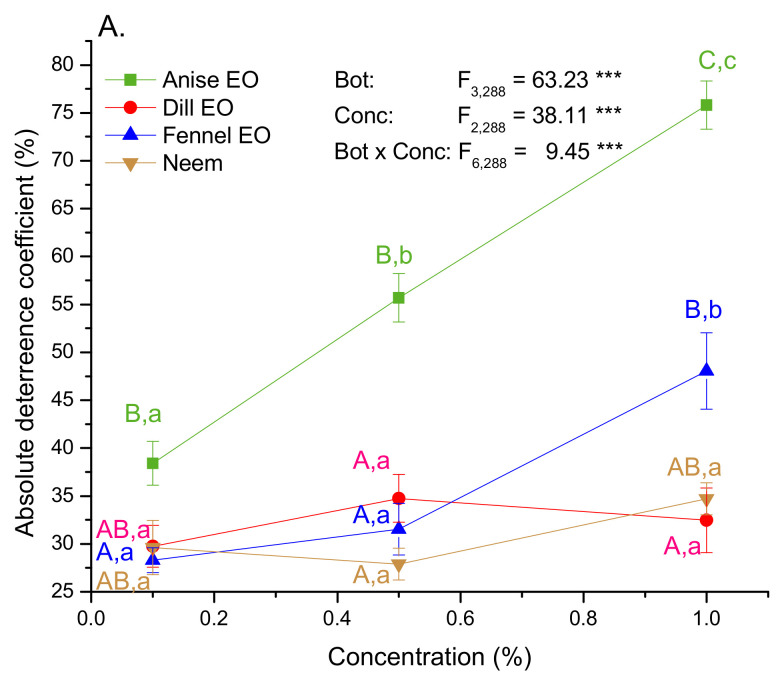
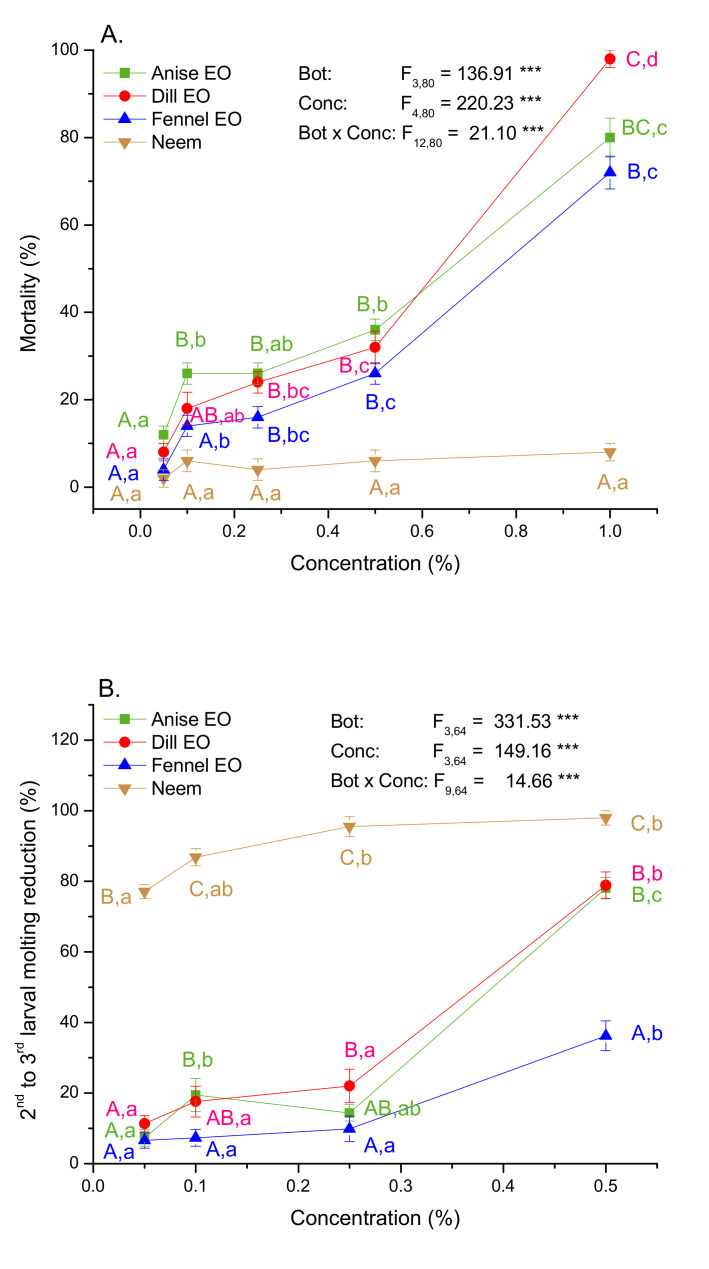
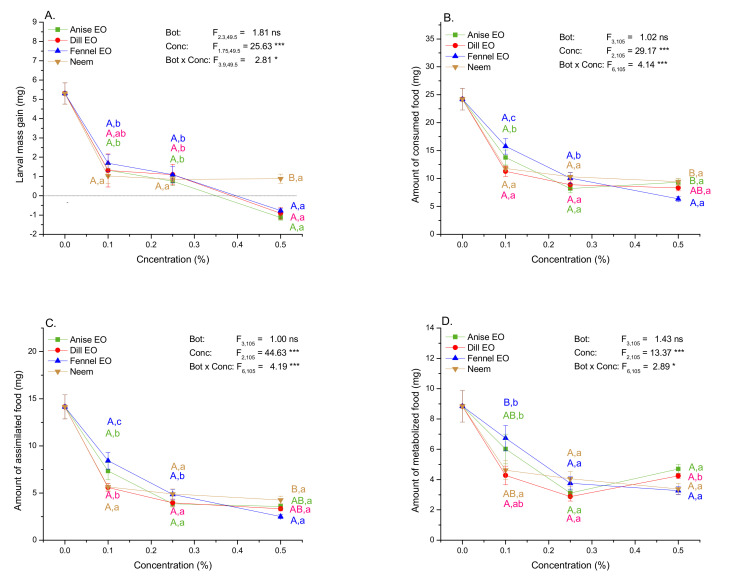
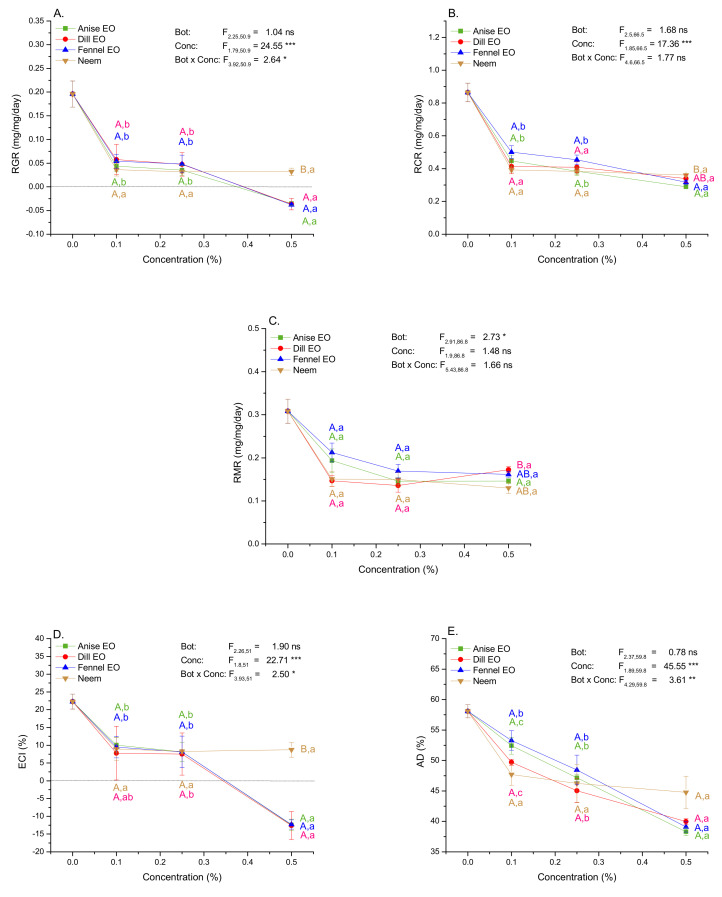
The gypsy moth (Lymantria dispar L. (Lepidoptera: Erebidae)) is a serious pest of hardwood forests. In the search for an environmentally safe means of its control, we assessed the impact of different concentrations of essential oils (EOs) from the seeds of three Apiaceae plants (anise Pimpinella anisum, dill Anethum graveolens, and fennel Foeniculum vulgare) on behavior, mortality, molting and nutritional physiology of gypsy moth larvae (GML). EOs efficacy was compared with commercial insecticide NeemAzal®-T/S (neem). The main compounds in the Eos were trans-anethole in anise; carvone, limonene, and α-phellandrene in dill; and trans-anethole and fenchone in fennel seed. At 1% EOs concentration, anise and fennel were better antifeedants and all three EOs were more toxic than neem. Neem was superior in delaying 2nd to 3rd larval molting. In the 4th instar, 0.5%, anise and fennel EOs decreased relative consumption rate more than neem, whereas all three EOs were more effective in reducing growth rate, approximate digestibility and efficiency of conversion of food into body mass leading to higher metabolic costs to GML. Decrease in consumption and metabolic parameters compared to control GML confirmed that adverse effects of the EOs stem from both pre- and post-ingestive mechanisms. The results indicate the potential of three EOs to be used for gypsy moth control.
Overview
The claims and statistics of this paper haven’t been checked yet.
Run the check — free, no account needed. It reads the open-access text and checks the sources it cites.
Integrity signals
Registry
Cites
Statistics
Figures
Verification
Claims the paper makes
The claims and statistics of this paper haven’t been checked yet.
Run the check — free, no account needed. It reads the open-access text and checks the sources it cites.
Claims other papers make about this one
Each is checked against this paper’s own text: does it say what the citing paper says it does?
In the citing paper
“The main components of Dill essential oil are monoterpenes, primarily α-phellandrene, d-limonene, carvone, and Dill ether.”
From Preservative Potential of Anethum graveolens Essential Oil on Fish Fillet Quality and Shelf Life During Refrigerated Storage (2025) · cites this paper as [45]
Self-check
Percentages, sums and reported differences re-computed from the paper’s own numbers.
The self-check needs the paper’s full text.
Citations
Cites
Green Pesticides: Essential Oils as Biopesticides in Insect-pest Management
Mossa, A.-T. H. (2016) · Journal of Environmental Science and Technology · doi:10.3923/jest.2016.354.378 · Cited by 454
Use of botanical insecticides for sustainable agriculture: Future perspectives
Campos, E. V. R., Proença, P. L. F., Oliveira, J. L., Bakshi, M., Abhilash, P. C., & Fraceto, L. F. (2019) · Ecological Indicators · doi:10.1016/j.ecolind.2018.04.038 · Cited by 412
Research works printed but not linked: 141
- Liebhold, A.M., Gottschalk, K.W., Muzika, R.M., Montgomery, M.E., Young, R., O’Day, K., and Kelley, B. (1995). Suitability of North American Tree Species to the Gypsy Moth: A Summary of Field and Laboratory Tests, U.S. Department of Agriculture Forest Service NE Forest Experimental Station General Technical Bulletin NE-211. · DOI
- Vuleta, 2014, Preference and performance of the larvae of Lymantria dispar (Lepidoptera: Lymantriidae) on three species of European oaks, Eur. J. Entomol., 111, 371, 10.14411/eje.2014.039 · DOI
- Naidoo, 2001, Effects of gypsy moth on radial growth of deciduous trees, For. Sci., 47, 338
- Fajvan, 2008, The effects of thinning and gypsy moth defoliation on wood volume growth in oaks, Trees, 22, 257, 10.1007/s00468-007-0183-6 · DOI
- Davidson, 1999, Tree mortality following defoliation by the European gypsy moth (Lymantria dispar L.) in the United States: A review, For. Sci., 45, 74
- Jankovsky, 2014, Effects of pedunculate oak tree vitality on gypsy moth preference and performance, Arch. Biol. Sci., 66, 1659, 10.2298/ABS1404659M · DOI
- Morin, 2016, Invasive forest defoliator contributes to the impending downward trend of oak dominance in eastern North America, Forestry, 89, 284, 10.1093/forestry/cpv053 · DOI
- Arai, 2010, Damage of Lymantria dispar and Lymantria mathura aurora in apple orchards, Annu. Rep. Soc. Plant Prot. North Jpn., 61, 220
- Bigsby, 2014, The cost of gypsy moth sex in the city, Urban For. Urban Green., 13, 459, 10.1016/j.ufug.2014.05.003 · DOI
- Stenersen, J. (2004). Chemical Pesticides Mode of Action and Toxicology, CRC Press. [1st ed.]. · DOI
- Devine, 2007, Insecticide use: Contexts and ecological consequences, Agric. Hum. Values, 24, 281, 10.1007/s10460-007-9067-z · DOI
- Guedes, 2017, Sublethal exposure, insecticide resistance, and community stress, Curr. Opin. Insect Sci., 21, 47, 10.1016/j.cois.2017.04.010 · DOI
- Brevik, 2018, Pesticide durability and the evolution of resistance: A novel application of survival analysis, Pest Manag. Sci., 74, 1953, 10.1002/ps.4899 · DOI
- Umina, 2019, Escalating insecticide resistance in Australian grain pests: Contributing factors, industry trends and management opportunities, Pest Manag. Sci., 75, 1494, 10.1002/ps.5285 · DOI
- Singh, P., Kumar, A., and Borthakur, A. (2020). Pollution status and biodegradation of organophosphate pesticides in the environment. Abatement of Environmental Pollutants, Elsevier.
- Thangavel, P., and Sridevi, G. (2015). A review of bio pesticides and their mode of action against insect pests. Environmental Sustainability—Role of Green Technologies, Springer. · DOI
- Kumar, 2015, A review on efficacy of biopesticides to control the agricultural insect’s pest, Int. J. Agric. Sci. Res., 4, 168
- Anwer, M.A. (2017). Biopesticides and Bioagents: Novel Tools for Pest Management, CRC Press. [1st ed.]. · DOI
- Isman, 2020, Commercial development of plant essential oils and their constituents as active ingredients in bioinsecticides, Phytochem. Rev., 19, 235, 10.1007/s11101-019-09653-9 · DOI
- Kontogiannatos, D. (2020). Practical approaches to pest control: The use of natural compounds. Pests, Weeds and Diseases in Agricultural Crop and Animal Husbandry Production, IntechOpen. · DOI
- Shahzad, 2021, Nanoformulations and their mode of action in insects: A review of biological interactions, Drug Chem. Toxicol., 44, 1, 10.1080/01480545.2018.1525393 · DOI
- Liebhold, 1999, The evolving use of insecticides in gypsy moth management, J. For., 97, 20
- Sharov, 2002, “Slow the spread”: A national program to contain the gypsy moth, Forestry, 100, 30
- Helson, 1992, Naturally derived insecticides: Prospects for forestry use, For. Chron., 68, 349, 10.5558/tfc68349-3 · DOI
- Builders, P.H. (2019). Plants secondary metabolites: The key drivers of the pharmacological actions of medicinal plants. Herbal Medicine, IntechOpen. · DOI
- Khare, 2020, Plant secondary metabolites synthesis and their regulations under biotic and abiotic constraints, J. Plant Biol., 63, 203, 10.1007/s12374-020-09245-7 · DOI
- Pavela, 2016, History, presence and perspective of using plant extracts as commercial botanical insecticides and farm products for protection against insects—A review, Plant Protect. Sci., 52, 229, 10.17221/31/2016-PPS · DOI
- Rai, 2006, Pesticides based on plant essential oils: From traditional practice to commercialization, Advances in Phytomedicine, Volume 3, 29, 10.1016/S1572-557X(06)03002-9 · DOI · Paper page
- Tripathi, 2009, A review on prospects of essential oils as biopesticide in insect-pest management, J. Pharmacogn. Phytother., 1, 052
- Nerio, 2010, Repellent activity of essential oils: A review, Bioresour. Technol., 101, 372, 10.1016/j.biortech.2009.07.048 · DOI
- Stoytcheva, M. (2011). Botanical insecticides and their effects on insect biochemistry and immunity. Pesticides in the Modern World—Pests Control and Pesticides Exposure and Toxicity Assessment, IntechOpen. · DOI
- Nollet, L.M.L., and Rathore, H.S. (2017). Commercialization of insecticides based on plant essential oils: Past, present, and future. Green Pesticides Handbook, CRC Press. · DOI
- Coutinho, 2019, Adulticide and repellent activity of essential oils against Aedes aegypti (Diptera: Culicidae)–A review, S. Afr. J. Bot., 124, 160, 10.1016/j.sajb.2019.05.007 · DOI
- Isman, 2020, Botanical insecticides in the twenty-first century—Fulfilling their promise?, Annu. Rev. Entomol., 65, 233, 10.1146/annurev-ento-011019-025010 · DOI
- Benelli, G. (2020). On a magical mystery tour of green insecticide research: Current issues and challenges. Molecules, 25. · DOI
- Spinozzi, 2021, Apiaceae essential oils and their constituents as insecticides against mosquitoes—A review, Ind. Crops Prod., 171, 113892, 10.1016/j.indcrop.2021.113892 · DOI
- Bruce, 2011, Perception of plant volatile blends by herbivorous insects–finding the right mix, Phytochemistry, 72, 1605, 10.1016/j.phytochem.2011.04.011 · DOI
- Deletre, 2016, Prospects for repellent in pest control: Current developments and future challenges, Chemoecology, 26, 127, 10.1007/s00049-016-0214-0 · DOI
- Wallau, 2015, Eugenia uniflora leaves essential oil induces toxicity in Drosophila melanogaster: Involvement of oxidative stress mechanisms, Toxicol. Res., 4, 634, 10.1039/C4TX00162A · DOI
- Shahriari, 2017, Effect of Teucrium polium (Lamiaceae) essential oil on digestive enzyme activities and energy reserves of Ephestia kuehniella (Lepidoptera: Pyralidae), Invertebr. Surviv. J., 14, 182
- Benelli, 2018, Not just popular spices! Essential oils from Cuminum cyminum and Pimpinella anisum are toxic to insect pests and vectors without affecting non-target invertebrates, Ind. Crops Prod., 124, 236, 10.1016/j.indcrop.2018.07.048 · DOI
- Hashem, 2018, Pimpinella anisum essential oil nanoemulsions against Tribolium castaneum—Insecticidal activity and mode of action, Environ. Sci. Pollut. Res., 25, 18802, 10.1007/s11356-018-2068-1 · DOI
- Hashem, A.S., Ramadan, M.M., Abdel-Hady, A.A., Sut, S., Maggi, F., and Dall’Acqua, S. (2020). Pimpinella anisum essential oil nanoemulsion toxicity against Tribolium castaneum? Shedding light on its interactions with aspartate aminotransferase and alanine aminotransferase by molecular docking. Molecules, 25. · DOI
- Otero, 2019, Mitochondrial affectation, DNA damage and AChE inhibition induced by Salvia officinalis essential oil on Aedes aegypti larvae, Comp. Biochem. Physiol. C Toxicol. Pharmacol., 221, 29, 10.1016/j.cbpc.2019.03.006 · DOI
- Fergani, 2020, Genotoxicity of some plant essential oils in cotton leafworm, Spodopteralittoralis (Lepidoptera: Noctuidae): The potential role of detoxification enzymes, Egypt. J. Zool., 73, 53, 10.21608/ejz.2020.28358.1029 · DOI
- 2020, Desperate times call for desperate measures: Short-term use of the common ash tree by gypsy moth larvae (Lepidoptera: Erebidae) under density and starvation stress, Arch. Biol. Sci., 72, 63, 10.2298/ABS191106067M · DOI
- Chen, 2021, Detoxification, antioxidant, and digestive enzyme activities and gene expression analysis of Lymantria dispar larvae under carvacrol, J. Asia-Pac. Entomol., 24, 208, 10.1016/j.aspen.2020.12.014 · DOI
- Nasr, 2021, Nutritional responses of the black cutworm, Agrotis ipsilon (Hufn.), larvae under toxicity effects of five wild botanical extracts from Sinai, Egypt, Annu. Res. Rev. Biol., 36, 30, 10.9734/arrb/2021/v36i330351 · DOI
- Haddi, 2020, Rethinking biorational insecticides for pest management: Unintended effects and consequences, Pest Manag. Sci., 76, 2286, 10.1002/ps.5837 · DOI
- Larramendy, M.L., and Soloneski, S. (2012). Essential oils of Umbelliferae (Apiaceae) family taxa as emerging potent agents for mosquito control. Integrated Pest Management and Pest Control—Currentand Future Tactics, IntechOpen. Chapter 26.
- Yeom, 2012, Insecticidal and acetylcholine esterase inhibition activity of Apiaceae plant essential oils and their constituents against adults of German cockroach (Blattella germanica), J. Agric. Food Chem., 60, 7194, 10.1021/jf302009w · DOI
- Ebadollahi, 2013, Plant essential oils from Apiaceae family as alternatives to conventional insecticides, Ecol. Balk., 5, 149
- Sousa, 2015, Activities of Apiaceae essential oils and volatile compounds on hatchability, development, reproduction and nutrition of Pseudaletia unipuncta (Lepidoptera: Noctuidae), Ind. Crops Prod., 63, 226, 10.1016/j.indcrop.2014.09.052 · DOI
- Camilo, 2017, Acaricidal activity of essential oils: A review, Trends Phytochem. Res., 1, 183
- Benelli, 2018, Repellence of essential oils and selected compounds against ticks—A systematic review, Acta Trop., 179, 47, 10.1016/j.actatropica.2017.12.025 · DOI
- Chaubey, 2019, Essential oils as green pesticides of stored grain insects, Eur. J. Biol. Res., 9, 202
- Ikbal, 2019, Essential oils as active ingredients of botanical insecticides against aphids, J. Pest Sci., 92, 971, 10.1007/s10340-019-01089-6 · DOI
- Pavela, 2020, Phenolic monoterpene-rich essential oils from Apiaceae and Lamiaceae species: Insecticidal activity and safety evaluation on non-target earthworms, Entomol. Gen., 40, 421, 10.1127/entomologia/2020/1131 · DOI
- Sousa, 2021, The potential of Apiaceae species as sources of singular phytochemicals and plant-based pesticides, Phytochemistry, 187, 112714, 10.1016/j.phytochem.2021.112714 · DOI
- Muturi, 2019, Bioactivity of wild carrot (Daucus carota, Apiaceae) essential oil against mosquito larvae, J. Med. Entomol., 56, 784, 10.1093/jme/tjy226 · DOI
- 2013, Biological activity of essential oils of Athamanta haynaldii and Myristica fragrans to gypsy moth larvae, Ind. Crops Prod., 41, 17, 10.1016/j.indcrop.2012.03.039 · DOI
- Pavela, 2016, Essential oils as ecofriendly biopesticides? Challenges and constraints, Trends Plant Sci., 21, 1000, 10.1016/j.tplants.2016.10.005 · DOI · Paper page
- Rocha, 2015, Larvicidal activity against Aedes aegypti of Foeniculum vulgare essential oils from Portugal and Cape Verde, Nat. Prod. Commun., 10, 677
- Pavela, 2016, New knowledge for yield, composition and insecticidal activity of essential oils obtained from the aerial parts or seeds of fennel (Foeniculum vulgare Mill.), Ind. Crops Prod., 83, 275, 10.1016/j.indcrop.2015.11.090 · DOI
- Skuhrovec, 2020, Insecticidal and behavioral effect of microparticles of Pimpinella anisum essential oil on larvae of Leptinotarsa decemlineata (Coleoptera: Chrysomelidae), J. Econom. Entomol., 113, 255
- Lazarević, J., Jevremović, S., Kostić, I., Kostić, M., Vuleta, A., Manitašević Jovanović, S., and Šešlija Jovanović, D. (2020). Toxic, oviposition deterrent and oxidative stress effects of Thymus vulgaris essential oil against Acanthoscelides obtectus. Insects, 11. · DOI
- Moretti, 2002, Essential oil formulations useful as a new tool for insect pest control, AAPS PharmSciTech, 3, 64, 10.1208/pt030213 · DOI
- Cetin, 2007, A comparative evaluation of Origanum onites essential oil and its four major components as larvicides against the pine processionary moth, Thaumetopoea wilkinsoni Tams, Pest Manag. Sci., 63, 830, 10.1002/ps.1401 · DOI
- Gupta, 2011, Biopesticidal value of selected essential oils against pathogenic fungus, termites, and nematodes, Int. Biodeter. Biodegr., 65, 703, 10.1016/j.ibiod.2010.11.018 · DOI
- Ezzine, 2018, Larvicidal activity of essential oil of Mentha pulegium on larvae of Orgyia trigotephras Boisduval, 1829 (Lepidoptera, Erebidae), J. New Sci., 20, 3423
- Devrnja, 2020, Evaluation of tansy essential oil as a potential “green” alternative for gypsy moth control, Environ. Sci. Pollut. Res., 27, 11958, 10.1007/s11356-020-07825-1 · DOI
- 2008, Larvicidal and antifeedant activity of some plant-derived compounds to Lymantria dispar L. (Lepidoptera: Limantriidae), Bioresour. Technol., 99, 7897, 10.1016/j.biortech.2008.02.010 · DOI
- 2013, Ecologically acceptable usage of derivatives of essential oil of sweet basil, Ocimum basilicum, as antifeedants against larvae of the gypsy moth, Lymantria dispar, J. Insect Sci., 13, 161
- Gvozdenac, 2012, Antifeeding activity of several plant extracts against Lymantria dispar L. (Lepidoptera: Lymantriidae) larvae, Pestic. Phytomed., 27, 305, 10.2298/PIF1204305G · DOI
- 2009, Susceptibility of eggs of Tribolium confusum, Ephestia kuehniella and Plodia interpunctella to four essential oil vapors, Phytoparasitica, 37, 231, 10.1007/s12600-009-0035-6 · DOI
- Karahroodi, 2009, Investigated repellency effect of some essential oils of 17 native medicinal plants on adults Plodia interpunctella, Am.-Eurasian J. Sustain. Agric., 3, 181
- Elumalai, 2010, Larvicidal and ovicidal activity of seven essential oil against lepidopteran pest S. litura (Lepidoptera: Noctuidae), Int. J. Recent Sci. Res., 1, 8
- Sousa, 2013, Activities of Apiaceae essential oils against armyworm, Pseudaletia unipuncta (Lepidoptera: Noctuidae), J. Agric. Food Chem., 61, 7661, 10.1021/jf403096d · DOI
- Chantawee, 2018, Larvicidal, pupicidal and oviposition deterrent activities of essential oils from Umbelliferae plants against house fly Musca domestica, Asian Pac. J. Trop. Med., 11, 621, 10.4103/1995-7645.246338 · DOI
- Pavela, 2011, Screening of Eurasian plants for insecticidal and growth inhibition activity against Spodoptera littoralis larvae, Afr. J. Agric. Res., 6, 2895
- Oviedo-Sarmiento, J.S., Cortes, J.J.B., Ávila, W.A.D., Suárez, L.E.C., Daza, E.H., Patiño-Ladino, O.J., and Prieto-Rodríguez, J.A. (2021). Fumigant toxicity and biochemical effects of selected essential oils toward the red flour beetle, Tribolium castaneum (Coleoptera: Tenebrionidae). Pestic. Biochem. Physiol., 104941. · DOI
- Szczepanik, 2005, Feeding deterrent activity of terpenoid lactones with the p-menthane system against the Colorado potato beetle (Coleoptera: Chrysomelidae), Environ. Entomol., 34, 1433, 10.1603/0046-225X-34.6.1433 · DOI
- Nawrot, 2009, Feeding deterrent activity of terpenoid lactones with a p-menthane system against stored-product pests, J. Stored Prod. Res., 45, 221, 10.1016/j.jspr.2009.03.003 · DOI
- Kanda, 2017, A comparative study of monoterpenoids and phenylpropanoids from essential oils against stored grain insects: Acute toxins or feeding deterrents, J. Pest Sci., 90, 531, 10.1007/s10340-016-0800-5 · DOI
- Morgan, 2009, Azadirachtin, a scientific gold mine, Bioorg. Med. Chem., 17, 4096, 10.1016/j.bmc.2008.11.081 · DOI · Paper page
- Mello, 2007, Effects of the essential oil obtained from Pilocarpus spicatus Saint-Hilaire (Rutaceae) on the development of Rhodnius prolixus nymphae, Rev. Bras. Farmacogn., 17, 514, 10.1590/S0102-695X2007000400007 · DOI
- Oliveira, 2010, Chemical and biological investigations of Pilocarpus spicatus essential oils, Boletín Latinoam. Caribe Plantas Med. Aromáticas, 9, 206
- Qin, 2010, Biological activity of the essential oil from the leaves of Piper sarmentosum Roxb. (Piperaceae) and its chemical constituents on Brontispa longissima (Gestro) (Coleoptera: Hispidae), Pestic. Biochem. Physiol., 96, 132, 10.1016/j.pestbp.2009.10.006 · DOI
- Ghoneim, 2014, Disturbed acid and alkaline phosphatase activities in desert locust Schistocerca gregaria (Forskal) (Orthoptera: Acrididae) by extracts from the khella plant Ammi visnaga L. (Apiaceae), Int. J. Adv. Res., 2, 584
- Hummelbrunner, 2001, Acute, sublethal, antifeedant, and synergistic effects of monoterpenoid essential oil compounds on the tobacco cutworm, Spodoptera litura (Lep., Noctuidae), J. Agric. Food Chem., 49, 715, 10.1021/jf000749t · DOI
- Pavela, 2015, Acute toxicity and synergistic and antagonistic effects of the aromatic compounds of some essential oils against Culexquinquefasciatus Say larvae, Parasitol. Res., 114, 3835, 10.1007/s00436-015-4614-9 · DOI
- Cruz, 2017, Chemical composition and insecticidal activity of the essential oils of Foeniculum vulgare Mill., Ocimum basilicum L., Eucalyptus staigeriana F. Muell. ex Bailey, Eucalyptus citriodora Hook and Ocimum gratissimum L. and their major components on Spodoptera frugiperda (Lepidoptera: Noctuidae), J. Essent. Oil-Bear. Plants, 20, 1360, 10.1080/0972060X.2017.1383192 · DOI
- Zahran, 2011, Insecticidal and developmental inhibitory properties of monoterpenes on Culex pipiens L. (Diptera: Culicidae), J. Asia-Pac. Entomol., 14, 46, 10.1016/j.aspen.2010.11.013 · DOI
- Shawir, 2020, Comparative toxicity, growth inhibitory and biochemical effects of terpenes and phenylpropenes on Spodoptera littoralis (Boisd.), J. Asia-Pac. Entomol., 23, 67, 10.1016/j.aspen.2019.09.005 · DOI
- Sohail, 2021, The larvicidal and adulticidal effects of selected plant essential oil constituents on greater wax moths, J. Econom. Entomol., 114, 397, 10.1093/jee/toaa249 · DOI
- Hamraoui, 1995, Fumigant toxic activity and reproductive inhibition induced by monoterpenes on Acanthoscelides obtectus (Say) (Coleoptera), a bruchid of kidney bean (Phaseolus vulgaris L.), J. Stored Prod. Res., 31, 291, 10.1016/0022-474X(95)00025-3 · DOI
- Ortega, 2014, Antifeedant, feeding deterrent and insect growth regulatory effects of Calceolaria integrifolia sensu lato complex: C. integrifolia x talcana (Scrophulariaceae), Rev. Latinoamer. Quím., 42, 113
- Alarcon, 2015, In the search for new secondary metabolites with biopesticidal properties, Isr. J. Plant Sci., 62, 216, 10.1080/07929978.2015.1006424 · DOI
- Mann, 2012, Natural product pesticides: Their development, delivery and use against insect vectors, Mini-Rev. Org. Chem., 9, 185, 10.2174/157019312800604733 · DOI
- Pavela, 2014, Acute, synergistic and antagonistic effects of some aromatic compounds on the Spodoptera littoralis Boisd. (Lep., Noctuidae) larvae, Ind. Crops Prod., 60, 247, 10.1016/j.indcrop.2014.06.030 · DOI
- Gaire, S., Scharf, M.E., and Gondhalekar, A.D. (2020). Synergistic toxicity interactions between plant essential oil components against the common bed bug (Cimex lectularius L.). Insects, 11. · DOI
- Aungtikun, 2021, Insecticidal synergy of essential oils from Cymbopogon citratus (Stapf.), Myristica fragrans (Houtt.), and Illicium verum Hook. f. and their major active constituents, Ind. Crops Prod., 164, 113386, 10.1016/j.indcrop.2021.113386 · DOI
- Kostyukovsky, 2002, Activation of octopaminergic receptors by essential oil constituents isolated from aromatic plants: Possible mode of action against insect pests, Pest Manag. Sci., 58, 1101, 10.1002/ps.548 · DOI
- 2010, Mode of inhibition of acetylcholinesterase by monoterpenoids and implications for pest control, Ind. Crops Prod., 31, 284, 10.1016/j.indcrop.2009.11.005 · DOI
- Jankowska, M., Rogalska, J., Wyszkowska, J., and Stankiewicz, M. (2018). Molecular targets for components of essential oils in the insect nervous system—A review. Molecules, 23. · DOI
- Shahriari, 2018, Effects of α-pinene, trans-anethole, and thymol as the essential oil constituents on antioxidant system and acetylcholine esterase of Ephestia kuehniella Zeller (Lepidoptera: Pyralidae), Pestic. Biochem. Physiol., 150, 40, 10.1016/j.pestbp.2018.06.015 · DOI
- Bloomquist, 2008, Mode of action of the plant-derived silphinenes on insect and mammalian GABAA receptor/chloride channel complex, Pestic. Biochem. Physiol., 91, 17, 10.1016/j.pestbp.2007.12.002 · DOI
- Liu, H.-W., and Mander, L. (2010). Terrestrial natural products as antifeedants. Comprehensive Natural Products II, Elsevier.
- Santana, 2014, Valorization of essential oils from Moroccan aromatic plants, Nat. Prod. Commun., 9, 1109
- 2019, Assessment of toxicity and biochemical response of Tenebrio molitor and Tribolium confusum exposed to Carum carvi essential oil, Entomol. Gen., 38, 333, 10.1127/entomologia/2019/0697 · DOI
- Shahriari, 2019, Bio-efficacy and physiological effects of Eucalyptus globulus and Allium sativum essential oils against Ephestia kuehniella Zeller (Lepidoptera: Pyralidae), Toxin Rev., 39, 422, 10.1080/15569543.2018.1554588 · DOI
- Doskotch, 1980, Antifeedant diterpenes for the gypsy moth larvae from Kalmia latifolia: Isolation and characterization of ten grayanoids, J. Nat. Prod., 43, 617, 10.1021/np50011a016 · DOI
- Powell, 1999, Effects of selected Larix laricina terpenoids on Lymantria dispar (Lepidoptera: Lymantriidae) development and behavior, Environ. Entomol., 28, 148, 10.1093/ee/28.2.148 · DOI
- Rharrabe, 2008, Effects of azadirachtin on post-embryonic development, energy reserves and α-amylase activity of Plodia interpunctella Hübner (Lepidoptera: Pyralidae), J. Stored Prod. Res., 44, 290, 10.1016/j.jspr.2008.03.003 · DOI
- Khosravi, 2013, Effect of neem pesticide (Achook) on midgut enzymatic activities and selected biochemical compounds in the hemolymph of lesser mulberry pyralid, Glyphodes pyloalis Walker (Lepidoptera: Pyralidae), J. Plant Prot. Res., 53, 238, 10.2478/jppr-2013-0036 · DOI
- Maroua, 2017, Azadirachtin induced larval avoidance and antifeeding by disruption of food intake and digestive enzymes in Drosophila melanogaster (Diptera: Drosophilidae), Pestic. Biochem. Physiol., 143, 135, 10.1016/j.pestbp.2017.08.006 · DOI
- Shu, 2018, Azadirachtin affects the growth of Spodoptera litura Fabricius by inducing apoptosis in larval midgut, Front. Physiol., 9, 137, 10.3389/fphys.2018.00137 · DOI
- Kaur, 2019, Bioefficacy of hexane extract of Inula racemosa (Asteraceae) against Spodoptera litura (Lepidoptera: Noctuidae), Gesunde Pflanz., 71, 165, 10.1007/s10343-019-00462-w · DOI
- Sendi, 2015, Effect of Artemisia annua L. essential oil on toxicity, enzyme activities, and energy reserves of cotton bollworm Helicoverpa armigera (Hübner) (Lepidoptera: Noctuidae), J. Plant Prot. Res., 55, 371, 10.1515/jppr-2015-0049 · DOI
- Kiran, 2017, Assessment of toxicity and biochemical mechanisms underlying the insecticidal activity of chemically characterized Boswellia carterii essential oil against insect pest of legume seeds, Pestic. Biochem. Physiol., 139, 17, 10.1016/j.pestbp.2017.04.004 · DOI
- Campos, 2019, Efficacy of lemongrass essential oil and citral in controlling Callosobruchus maculatus (Coleoptera: Chrysomelidae), a post-harvest cowpea insect pest, Crop. Protect., 119, 191, 10.1016/j.cropro.2019.02.007 · DOI
- Chintalchere, 2021, Impact of essential oils on Musca domestica larvae: Oxidative stress and antioxidant responses, Int. J. Trop. Insect Sci., 41, 821, 10.1007/s42690-020-00272-y · DOI
- Mikani, 2021, Antifeedant activity of nanoemulsion formulation of arugula Eruca sativa oil on elm leaf beetle Xanthogaleruca luteola (Coleoptera: Chrysomelidae), J. Agric. Sci. Technol., 23, 125
- Valizadeh, 2013, Effect of Neem based insecticide Achook® on mortality, biological and biochemical parameters of elm leaf beetle Xanthogaleruca luteola (Col.: Chrysomelidae), J. Crop. Protect., 2, 319
- Zhang, 2018, Azadirachtin acting as a hazardous compound to induce multiple detrimental effects in Drosophila melanogaster, J. Hazard. Mater., 359, 338, 10.1016/j.jhazmat.2018.07.057 · DOI
- Shahriari, 2017, Metabolic response of Ephestia kuehniella Zeller (Lepidoptera: Pyralidae) to essential oil of Ajwain and thymol, Toxin. Rev., 36, 204
- Jayakumar, 2021, Toxicity and biochemical effects of essential oils of Anethumgraveolens L. and Melaleuca cajuputi Powell against Rhyzopertha dominica (F.) (Coleoptera: Bostrichidae), Int. J. Trop. Insect. Sci, 41, 945, 10.1007/s42690-020-00359-6 · DOI
- Piri, 2020, Toxicity and physiological effects of ajwain (Carum copticum, Apiaceae) essential oil and its major constituents against Tuta absoluta (Meyrick) (Lepidoptera: Gelechiidae), Chemosphere, 256, 127103, 10.1016/j.chemosphere.2020.127103 · DOI
- Yu, 1987, Microsomal oxidation of allelochemicals in generalist (Spodoptera frugiperda) and semispecialist (Anticarsiagemmatalis) insect, J. Chem. Ecol., 13, 423, 10.1007/BF01880090 · DOI
- Moldenke, 1992, Carbaryl susceptibility and detoxication enzymes in gypsy moth (Lepidoptera: Lymantriidae): Influence of host plant, J. Econ. Entomol., 85, 1628, 10.1093/jee/85.5.1628 · DOI
- Markovic, 1997, Gypsy moth (Lymantria dispar) larval development and survival to pupation on diet plus extractables from green ash foliage, Entomol. Exp. Appl., 84, 247, 10.1046/j.1570-7458.1997.00222.x · DOI
- Mostafiz, 2020, Acaricidal effects of methyl benzoate against Tetranychus urticae Koch (Acari: Tetranychidae) on common crop plants, Pest Manag. Sci., 76, 2347, 10.1002/ps.5770 · DOI
- Szczepanik, 2009, The effect of α-methylene lactone group on the feeding deterrent activity of natural and synthetic alkenes against Colorado Potato Beetle, Leptinotarsa decemlineata Say, Pol. J. Environ. Stud., 18, 1107
- Waldbauer, 1968, The consumption and utilization of food by insects, Adv. Insect Phys., 5, 229, 10.1016/S0065-2806(08)60230-1 · DOI
- Scriber, 1981, The nutritional ecology of immature insects, Annu. Rev. Entomol., 26, 183, 10.1146/annurev.en.26.010181.001151 · DOI
- Farrar, 1989, Quantifying food consumption and growth in insects, Ann. Entomol. Soc. Am., 82, 593, 10.1093/aesa/82.5.593 · DOI
- Brunner, 2001, Nonparametric methods in factorial designs, Stat. Pap., 42, 1, 10.1007/s003620000039 · DOI
- Lichtenstein, 1974, Insecticidal and synergistic components isolated from dill plants, J. Agric. Food Chem., 22, 658, 10.1021/jf60194a037 · DOI
- He, 2011, A review of chemistry and bioactivities of a medicinal spice: Foeniculum vulgare, J. Med. Plants Res., 5, 3595
- Pavela, 2018, Essential oils from Foeniculum vulgare Miller as a safe environmental insecticide against the aphid Myzus persicae Sulzer, Environ. Sci. Pollut. Res., 25, 10904, 10.1007/s11356-018-1398-3 · DOI
- Kaur, 2021, A review on dill essential oil and its chief compounds as natural biocide, Flavour Fragr. J., 36, 412, 10.1002/ffj.3633 · DOI
Cited by
Hadi, N., Drioiche, A., Bouchra, E. M., Baammi, S., Abdelaziz Shahat, A., Tagnaout, I., Radi, M., Remok, F., Bouzoubaa, A., & Zair, T. (2024) · Pharmaceuticals · doi:10.3390/ph17070862 · Cited by 30
Tayel, A., Hassanin, F. S., Edris, S. N., Hamad, A., & Sabeq, I. I. (2025) · Foods · doi:10.3390/foods14091591 · Cited by 7
Metadata
- Authors
- Kostić, I., Lazarević, J., Šešlija Jovanović, D., Kostić, M., Marković, T., & Milanović, S.
- Venue
- Plants
- Publisher
- MDPI AG
- Published
- 2021-10-15
- Volume
- 10
- Issue
- 10
- Pages
- 2194
- ISSN
- 2223-7747
- PMC
- PMC8538750
- Cited by
- 30
- References
- 2
- Language
- en
- Funders
- Ministry of Education, Science and Technological Development of the Republic of Serbia (451-03-9/2021-14/200007)
About these checks
Registry, retraction, Cites and statistics results are computed, not judged, with one exception: a printed reference that no index lists is read once by a model before it counts as a citation error. Claims are extracted by a model and kept only when their quote appears verbatim in the text; each cited source is then checked, with a model’s help, for whether it says what the claim relies on. Those verdicts can be wrong — read the claim’s quote and the cited source before relying on one.
Statistics and arithmetic are recomputed, not judged.
Confidence bands are shown only for fields calibrated on our annotated test set. None is calibrated yet, so no band is shown.
What counts as a claim ›How we measure confidence ›How we check this ›
Are you an author, or do you see a problem with this page? Request a review
How to cite
Cite CoChat for the checks on this page, and the paper for its own findings.
- This page
- CoChat. (2026). Citation check: Potential of Essential Oils from Anise, Dill and Fennel Seeds for the Gypsy Moth Control. https://app.cochat.ai/papers/10.3390/plants10102194
- The paper
- Kostić, I., Lazarević, J., Šešlija Jovanović, D., Kostić, M., Marković, T., & Milanović, S. (2021). Potential of Essential Oils from Anise, Dill and Fennel Seeds for the Gypsy Moth Control. Plants. https://doi.org/10.3390/plants10102194
Data sources
Bibliographic data: Semantic Scholar, OpenAlex, Crossref.
Contains information from the Semantic Scholar Academic Graph Datasets, made available under the ODC Attribution License (ODC-BY 1.0).
Semantic Scholar’s data is described in: Kinney, R., et al. (2023). The Semantic Scholar Open Data Platform. arXiv:2301.10140.
