

The DOI matches its Crossref record; 3 of the 3 references it cites were found in a registry or an index.
Emerging Roles of β-Glucanases in Plant Development and Adaptative Responses
Abstract
Plant β-glucanases are enzymes involved in the synthesis, remodelling and turnover of cell wall components during multiple physiological processes. Based on the type of the glycoside bond they cleave, plant β-glucanases have been grouped into three categories: (i) β-1,4-glucanases degrade cellulose and other polysaccharides containing 1,4-glycosidic bonds to remodel and disassemble the wall during cell growth. (ii) β-1,3-glucanases are responsible for the mobilization of callose, governing the symplastic trafficking through plasmodesmata. (iii) β-1,3-1,4-glucanases degrade mixed linkage glucan, a transient wall polysaccharide found in cereals, which is broken down to obtain energy during rapid seedling growth. In addition to their roles in the turnover of self-glucan structures, plant β-glucanases are crucial in regulating the outcome in symbiotic and hostile plant–microbe interactions by degrading non-self glucan structures. Plants use these enzymes to hydrolyse β-glucans found in the walls of microbes, not only by contributing to a local antimicrobial defence barrier, but also by generating signalling glucans triggering the activation of global responses. As a counterpart, microbes developed strategies to hijack plant β-glucanases to their advantage to successfully colonize plant tissues. This review outlines our current understanding on plant β-glucanases, with a particular focus on the latest advances on their roles in adaptative responses.
Overview
The claims and statistics of this paper haven’t been checked yet.
Run the check — free, no account needed. It reads the open-access text and checks the sources it cites.
Integrity signals
Registry
Cites
Statistics
Figures
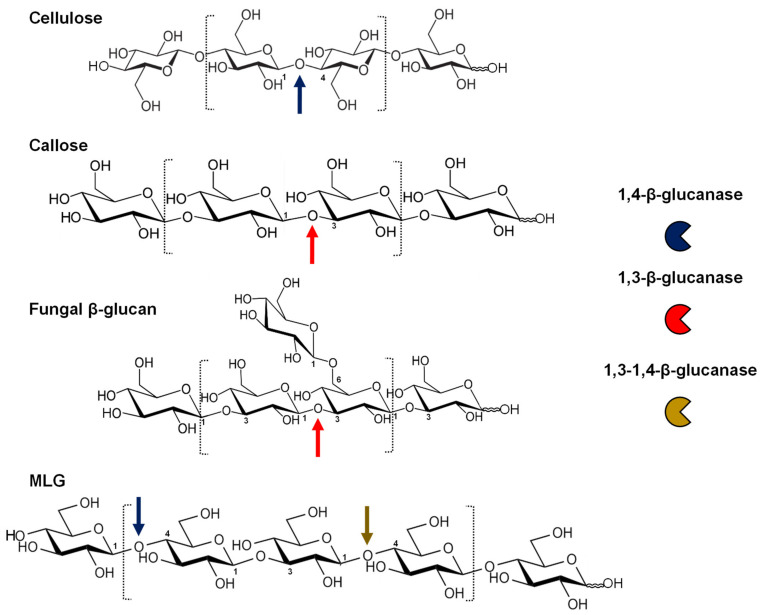
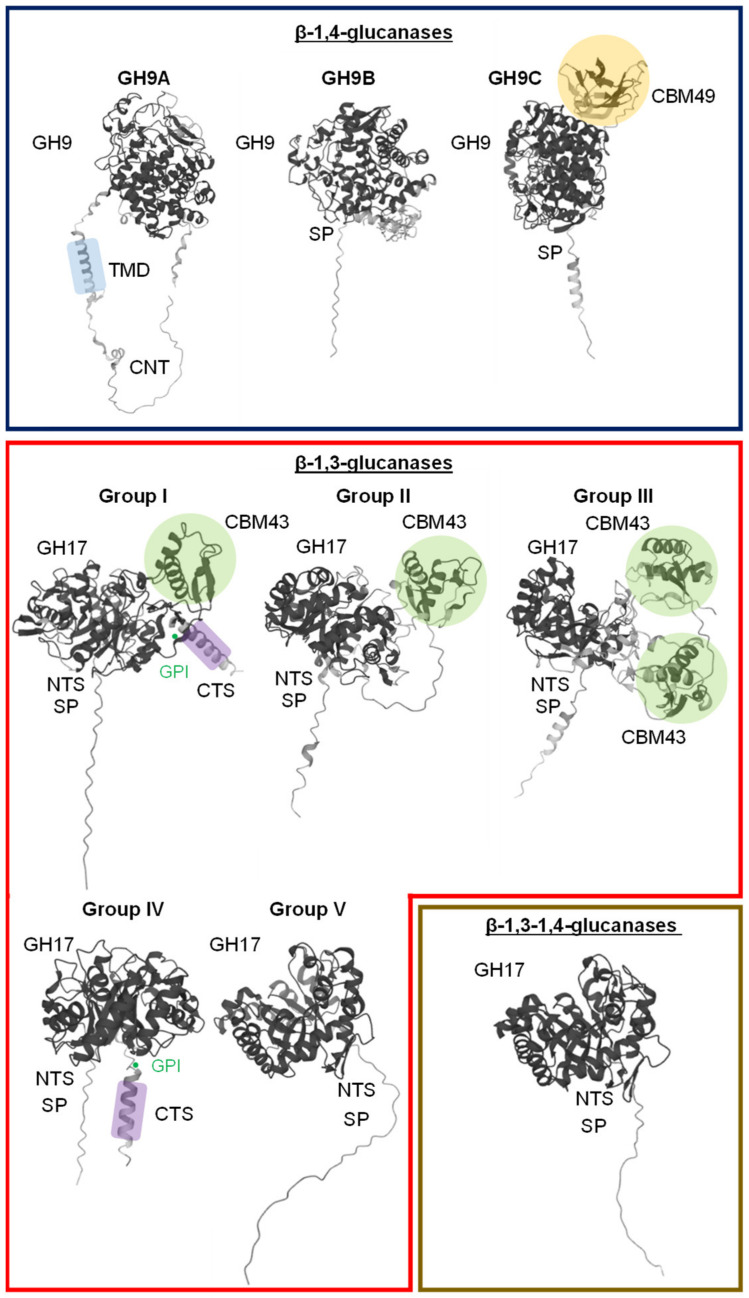
Verification
Claims the paper makes
The claims and statistics of this paper haven’t been checked yet.
Run the check — free, no account needed. It reads the open-access text and checks the sources it cites.
Claims other papers make about this one
Each is checked against this paper’s own text: does it say what the citing paper says it does?
In the citing paper
“β-1,3-glucanases are hydrolytic enzymes that catalyze the breakdown of β-1,3-glucan, a polysaccharide component of fungal cell walls and other structural carbohydrates [175].”
From Pollen–Food Allergy Syndrome: Allergens, Clinical Insights, Diagnostic and Therapeutic Challenges (2024) · cites this paper as [175]
Self-check
Percentages, sums and reported differences re-computed from the paper’s own numbers.
The self-check needs the paper’s full text.
Citations
Cites
Highly accurate protein structure prediction with AlphaFold
Jumper, J., Evans, R., Pritzel, A., Green, T., Figurnov, M., Ronneberger, O., Tunyasuvunakool, K., Bates, R., Žídek, A., Potapenko, A., et al. (2021) · Nature · doi:10.1038/s41586-021-03819-2 · Cited by 43,764
Varadi, M., Anyango, S., Deshpande, M., Nair, S., Natassia, C., Yordanova, G., Yuan, D., Stroe, O., Wood, G., Laydon, A., et al. (2022) · Nucleic Acids Research · doi:10.1093/nar/gkab1061 · Cited by 7,850
New families in the classification of glycosyl hydrolases based on amino acid sequence similarities
Henrissat, B., & Bairoch, A. (1993) · Biochemical Journal · doi:10.1042/bj2930781 · Cited by 1,974
Research works printed but not linked: 190
- Houston, 2016, The Plant Cell Wall: A Complex and Dynamic Structure As Revealed by the Responses of Genes under Stress Conditions, Front. Plant Sci., 7, 984, 10.3389/fpls.2016.00984 · DOI
- Zhang, 2021, The Plant Cell Wall: Biosynthesis, Construction, and Functions, J. Integr. Plant Biol., 63, 251, 10.1111/jipb.13055 · DOI
- Labavitch, 1981, Cell Wall Turnover in Plant Development, Annu. Rev. Plant Physiol., 32, 385, 10.1146/annurev.pp.32.060181.002125 · DOI
- Tucker, M.R., Lou, H., Aubert, M.K., Wilkinson, L.G., Little, A., Houston, K., Pinto, S.C., and Shirley, N.J. (2018). Exploring the Role of Cell Wall-Related Genes and Polysaccharides during Plant Development. Plants, 7. · DOI
- Cantarel, 2009, The Carbohydrate-Active EnZymes Database (CAZy): An Expert Resource for Glycogenomics, Nucleic Acids Res., 37, D233, 10.1093/nar/gkn663 · DOI
- Schomburg, 2002, BRENDA, Enzyme Data and Metabolic Information, Nucleic Acids Res., 30, 47, 10.1093/nar/30.1.47 · DOI
- Simmons, 1994, The Physiology and Molecular Biology of Plant 1,3-β-D-Glucanases and 1,3;1,4-β-D-Glucanases, Crit. Rev. Plant Sci., 13, 325
- Fincher, 1995, Molecular Evolution of Plant Beta-Glucan Endohydrolases, Plant J., 7, 367, 10.1046/j.1365-313X.1995.7030367.x · DOI
- 1999, Multiple Endo-1,4-Beta-D-Glucanase (Cellulase) Genes in Arabidopsis, Curr. Top. Dev. Biol., 46, 39, 10.1016/S0070-2153(08)60325-7 · DOI
- Henrissat, 1991, A Classification of Glycosyl Hydrolases Based on Amino Acid Sequence Similarities, Biochem. J., 280, 309, 10.1042/bj2800309 · DOI
- Nicol, 1998, A Plasma Membrane-Bound Putative Endo-1,4-Beta-D-Glucanase Is Required for Normal Wall Assembly and Cell Elongation in Arabidopsis, EMBO J., 17, 5563, 10.1093/emboj/17.19.5563 · DOI
- Szyjanowicz, 2004, The Irregular Xylem 2 Mutant Is an Allele of Korrigan That Affects the Secondary Cell Wall of Arabidopsis thaliana, Plant J., 37, 730, 10.1111/j.1365-313X.2003.02000.x · DOI
- Vain, 2014, The Cellulase KORRIGAN Is Part of the Cellulose Synthase Complex, Plant Physiol., 165, 1521, 10.1104/pp.114.241216 · DOI
- Brumer, 2010, The XTH Gene Family: An Update on Enzyme Structure, Function, and Phylogeny in Xyloglucan Remodeling, Plant Physiol., 153, 456, 10.1104/pp.110.156844 · DOI
- Smith, 1991, Endotransglycosylation of Xyloglucans in Plant Cell Suspension Cultures, Biochem. J., 279, 529, 10.1042/bj2790529 · DOI
- Nishitani, 1992, Endo-Xyloglucan Transferase, a Novel Class of Glycosyltransferase That Catalyzes Transfer of a Segment of Xyloglucan Molecule to Another Xyloglucan Molecule, J. Biol. Chem., 267, 21058, 10.1016/S0021-9258(19)36797-3 · DOI
- Rose, 2002, The XTH Family of Enzymes Involved in Xyloglucan Endotransglucosylation and Endohydrolysis: Current Perspectives and a New Unifying Nomenclature, Plant Cell Physiol., 43, 1421, 10.1093/pcp/pcf171 · DOI
- Herburger, 2020, Hetero-Trans-β-Glucanase Produces Cellulose-Xyloglucan Covalent Bonds in the Cell Walls of Structural Plant Tissues and Is Stimulated by Expansin, Mol. Plant, 13, 1047, 10.1016/j.molp.2020.04.011 · DOI
- Ishida, 2022, Reconsidering the Function of the Xyloglucan Endotransglucosylase/Hydrolase Family, J. Plant Res., 135, 145, 10.1007/s10265-021-01361-w · DOI
- Hrmova, M., Stratilová, B., and Stratilová, E. (2022). Broad Specific Xyloglucan:Xyloglucosyl Transferases Are Formidable Players in the Re-Modelling of Plant Cell Wall Structures. Int. J. Mol. Sci., 23. · DOI
- Moore, 1972, A β-1,3-Glucan Hydrolase from Nicotiana Glutinosa II. Specificity, Action Pattern and Inhibitor Studies, Biochim. Biophys. Acta BBA-Enzymol., 258, 248, 10.1016/0005-2744(72)90983-7 · DOI
- Bowman, 2006, The Structure and Synthesis of the Fungal Cell Wall, BioEssays, 28, 799, 10.1002/bies.20441 · DOI
- Balasubramanian, 2012, Plant β-1,3-Glucanases: Their Biological Functions and Transgenic Expression against Phytopathogenic Fungi, Biotechnol. Lett., 34, 1983, 10.1007/s10529-012-1012-6 · DOI
- Abeles, 1971, Preparation and Purification of Glucanase and Chitinase from Bean Leaves 1, Plant Physiol., 47, 129, 10.1104/pp.47.1.129 · DOI
- Lombard, 2014, The Carbohydrate-Active Enzymes Database (CAZy) in 2013, Nucleic Acids Res., 42, D490, 10.1093/nar/gkt1178 · DOI
- Parrish, 1960, Selective Enzymolysis of Poly-β-D-glucans, and The Structure of The Polymers, Can. J. Chem., 38, 2094, 10.1139/v60-284 · DOI
- McCleary, 1988, Purification of (1 → 3),(1 → 4)-β-d-Glucan from Barley Flour, Methods in Enzymology, Volume 160, 511, 10.1016/0076-6879(88)60160-1 · DOI
- Perlin, 1962, The Structure of Lichenin: Selective Enzymolysis Studies, Can. J. Chem., 40, 50, 10.1139/v62-009 · DOI
- Olafsdottir, 2001, Polysaccharides from Lichens: Structural Characteristics and Biological Activity, Planta Med., 67, 199, 10.1055/s-2001-12012 · DOI
- Bacic, A., Fincher, G.B., and Stone, B.A. (2009). Chemistry of β-Glucans. Chemistry, Biochemistry, and Biology of 1–3 Beta Glucans and Related Polysaccharides, Academic Press. Chapter 2.1.
- Varghese, 1994, Three-Dimensional Structures of Two Plant Beta-Glucan Endohydrolases with Distinct Substrate Specificities, Proc. Natl. Acad. Sci. USA, 91, 2785, 10.1073/pnas.91.7.2785 · DOI
- Bulone, 2019, Co-Evolution of Enzymes Involved in Plant Cell Wall Metabolism in the Grasses, Front. Plant Sci., 10, 1009, 10.3389/fpls.2019.01009 · DOI
- Libertini, 2004, Phylogenetic Analysis of the Plant Endo-Beta-1,4-Glucanase Gene Family, J. Mol. Evol., 58, 506, 10.1007/s00239-003-2571-x · DOI
- Urbanowicz, 2007, Structural Organization and a Standardized Nomenclature for Plant Endo-1,4-β-Glucanases (Cellulases) of Glycosyl Hydrolase Family 9, Plant Physiol., 144, 1693, 10.1104/pp.107.102574 · DOI
- Buchanan, M., Burton, R.A., Dhugga, K.S., Rafalski, A.J., Tingey, S.V., Shirley, N.J., and Fincher, G.B. (2012). Endo-(1,4)-β-Glucanase Gene Families in the Grasses: Temporal and Spatial Co-Transcription of Orthologous Genes1. BMC Plant Biol., 12. · DOI
- Du, 2015, Populus Endo-β-1,4-Glucanases Gene Family: Genomic Organization, Phylogenetic Analysis, Expression Profiles and Association Mapping, Planta, 241, 1417, 10.1007/s00425-015-2271-y · DOI
- Henrissat, 1989, Cellulase Families Revealed by Hydrophobic Cluster Analysi, Gene, 81, 83, 10.1016/0378-1119(89)90339-9 · DOI
- Davies, 1995, Structures and Mechanisms of Glycosyl Hydrolases, Structure, 3, 853, 10.1016/S0969-2126(01)00220-9 · DOI
- Kundu, S., and Sharma, R. (2018). Origin, Evolution, and Divergence of Plant Class C GH9 Endoglucanases. BMC Evol. Biol., 18. · DOI
- Kundu, 2019, Insights into the Mechanism(s) of Digestion of Crystalline Cellulose by Plant Class C GH9 Endoglucanases, J. Mol. Model., 25, 240, 10.1007/s00894-019-4133-1 · DOI
- Johansen, 2001, Expression of a Membrane-Anchored Endo-1,4-β-Glucanase from Brassica napus, Orthologous to KOR from Arabidopsis thaliana, Is Inversely Correlated to Elongation in Light-Grown Plants, Plant Mol. Biol., 45, 93, 10.1023/A:1006475908000 · DOI
- Pagant, 2002, Towards Understanding the Role of Membrane-Bound Endo-β-1,4-Glucanases in Cellulose Biosynthesis, Plant Cell Physiol., 43, 1399, 10.1093/pcp/pcf163 · DOI
- Gu, 2022, Cell Biology of Primary Cell Wall Synthesis in Plants, Plant Cell, 34, 103, 10.1093/plcell/koab249 · DOI
- Mansoori, N., Timmers, J., Desprez, T., Kamei, C.L.A., Dees, D.C.T., Vincken, J.-P., Visser, R.G.F., Höfte, H., Vernhettes, S., and Trindade, L.M. (2014). KORRIGAN1 Interacts Specifically with Integral Components of the Cellulose Synthase Machinery. PLoS ONE, 9. · DOI
- Worden, 2015, CESA TRAFFICKING INHIBITOR Inhibits Cellulose Deposition and Interferes with the Trafficking of Cellulose Synthase Complexes and Their Associated Proteins KORRIGAN1 and POM2/CELLULOSE SYNTHASE INTERACTIVE PROTEIN1, Plant Physiol., 167, 381, 10.1104/pp.114.249003 · DOI
- Zhang, 2016, Golgi-Localized STELLO Proteins Regulate the Assembly and Trafficking of Cellulose Synthase Complexes in Arabidopsis, Nat. Commun., 7, 11656, 10.1038/ncomms11656 · DOI
- Takahashi, 2009, KORRIGAN1 and Its Aspen Homolog PttCel9A1 Decrease Cellulose Crystallinity in Arabidopsis Stems, Plant Cell Physiol., 50, 1099, 10.1093/pcp/pcp062 · DOI
- Peng, 2002, Sitosterol-β-Glucoside as Primer for Cellulose Synthesis in Plants, Science, 295, 147, 10.1126/science.1064281 · DOI
- Somerville, 2006, Cellulose Synthesis in Higher Plants, Annu. Rev. Cell Dev. Biol., 22, 53, 10.1146/annurev.cellbio.22.022206.160206 · DOI
- Bhandari, 2006, Xylem-Specific and Tension Stress-Responsive Coexpression of KORRIGAN Endoglucanase and Three Secondary Wall-Associated Cellulose Synthase Genes in Aspen Trees, Planta, 224, 828, 10.1007/s00425-006-0269-1 · DOI
- Zhou, 2006, OsGLU1, a Putative Membrane-Bound Endo-1,4-Beta-D-Glucanase from Rice, Affects Plant Internode Elongation, Plant Mol. Biol., 60, 137, 10.1007/s11103-005-2972-x · DOI
- Kalluri, 2016, Down-Regulation of KORRIGAN-Like Endo-β-1,4-Glucanase Genes Impacts Carbon Partitioning, Mycorrhizal Colonization and Biomass Production in Populus, Front. Plant Sci., 7, 1455, 10.3389/fpls.2016.01455 · DOI
- Brummell, 1997, A Membrane-Anchored E-Type Endo-1,4-β-Glucanase Is Localized on Golgi and Plasma Membranes of Higher Plants, Proc. Natl. Acad. Sci. USA, 94, 4794, 10.1073/pnas.94.9.4794 · DOI
- Yu, 2013, PtrCel9A6, an Endo-1,4-β-Glucanase, Is Required for Cell Wall Formation during Xylem Differentiation in Populus, Mol. Plant, 6, 1904, 10.1093/mp/sst104 · DOI
- Yu, 2014, PtrKOR1 Is Required for Secondary Cell Wall Cellulose Biosynthesis in Populus, Tree Physiol., 34, 1289, 10.1093/treephys/tpu020 · DOI
- Finiti, 2014, Absence of Endo-1,4-β-Glucanase KOR1 Alters the Jasmonate-Dependent Defence Response to Pseudomonas Syringae in Arabidopsis, J. Plant Physiol., 171, 1524, 10.1016/j.jplph.2014.07.006 · DOI
- Rose, 1999, Cooperative Disassembly of the Cellulose-Xyloglucan Network of Plant Cell Walls: Parallels between Cell Expansion and Fruit Ripening, Trends Plant Sci., 4, 176, 10.1016/S1360-1385(99)01405-3 · DOI
- Brummell, 1999, Antisense Suppression of Tomato Endo-1,4-Beta-Glucanase Cel2 MRNA Accumulation Increases the Force Required to Break Fruit Abscission Zones but Does Not Affect Fruit Softening, Plant Mol. Biol., 40, 615, 10.1023/A:1006269031452 · DOI
- Cosgrove, 2005, Growth of the Plant Cell Wall, Nat. Rev. Mol. Cell Biol., 6, 850, 10.1038/nrm1746 · DOI · Paper page
- Crawford, 2004, Root Cap Specific Expression of an Endo-β-1,4-Glucanase (Cellulase): A New Marker to Study Root Development in Arabidopsis, Plant Mol. Biol., 56, 309, 10.1007/s11103-004-3380-3 · DOI
- Lewis, 2013, A Kinetic Analysis of the Auxin Transcriptome Reveals Cell Wall Remodeling Proteins That Modulate Lateral Root Development in Arabidopsis, Plant Cell, 25, 3329, 10.1105/tpc.113.114868 · DOI
- Karve, 2016, The Transcription Factor NIN-LIKE PROTEIN7 Controls Border-Like Cell Release, Plant Physiol., 171, 2101, 10.1104/pp.16.00453 · DOI
- Fischer, 1991, Role of Cell Wall Hydrolases in Fruit Ripening, Annu. Rev. Plant Physiol. Plant Mol. Biol., 42, 675, 10.1146/annurev.pp.42.060191.003331 · DOI
- Harpster, 1997, Isolation and Characterization of a Gene Encoding Endo-β-1,4-Glucanase from Pepper (Capsicum annuum L.), Plant Mol. Biol., 33, 47, 10.1023/A:1005795028489 · DOI
- Manning, 1998, Isolation of a Set of Ripening-Related Genes from Strawberry: Their Identification and Possible Relationship to Fruit Quality Traits, Planta, 205, 622, 10.1007/s004250050365 · DOI
- Jara, K., Castro, R.I., Ramos, P., Parra-Palma, C., Valenzuela-Riffo, F., and Morales-Quintana, L. (2019). Molecular Insights into FaEG1, a Strawberry Endoglucanase Enzyme Expressed during Strawberry Fruit Ripening. Plants, 8. · DOI
- Ohmiya, 1995, Purification and Properties of a Wall-Bound Endo-1,4-β-Glucanase from Suspension-Cultured Poplar Cells1, Plant Cell Physiol., 36, 607
- Ohmiya, 2003, The Role of PopCel1 and PopCel2 in Poplar Leaf Growth and Cellulose Biosynthesis, Plant J., 33, 1087, 10.1046/j.1365-313X.2003.01695.x · DOI
- Park, 2003, Enhancement of Growth by Expression of Poplar Cellulase in Arabidopsis thaliana, Plant J., 33, 1099, 10.1046/j.1365-313X.2003.01696.x · DOI
- Huang, 2019, Overproduction of Native Endo-β-1,4-Glucanases Leads to Largely Enhanced Biomass Saccharification and Bioethanol Production by Specific Modification of Cellulose Features in Transgenic Rice, Biotechnol. Biofuels, 12, 11, 10.1186/s13068-018-1351-1 · DOI
- Glass, 2015, Endo-β-1,4-Glucanases Impact Plant Cell Wall Development by Influencing Cellulose Crystallization, J. Integr. Plant Biol., 57, 396, 10.1111/jipb.12353 · DOI
- Schwacke, 2003, ARAMEMNON, a Novel Database for Arabidopsis Integral Membrane Proteins, Plant Physiol., 131, 16, 10.1104/pp.011577 · DOI
- Song, 2011, Characterization of the Plasma Membrane Proteins and Receptor-like Kinases Associated with Secondary Vascular Differentiation in Poplar, Plant Mol. Biol., 76, 97, 10.1007/s11103-011-9771-3 · DOI
- Nilsson, 2010, Proteomics of Plasma Membranes from Poplar Trees Reveals Tissue Distribution of Transporters, Receptors, and Proteins in Cell Wall Formation *, Mol. Cell. Proteom., 9, 368, 10.1074/mcp.M900289-MCP200 · DOI
- Wang, 2017, Plant Grafting: How Genetic Exchange Promotes Vascular Reconnection, New Phytol., 214, 56, 10.1111/nph.14383 · DOI
- Notaguchi, 2020, Cell-Cell Adhesion in Plant Grafting Is Facilitated by β-1,4-Glucanases, Science, 369, 698, 10.1126/science.abc3710 · DOI
- Kurotani, 2020, Host-Parasite Tissue Adhesion by a Secreted Type of β-1,4-Glucanase in the Parasitic Plant Phtheirospermum Japonicum, Commun. Biol., 3, 407, 10.1038/s42003-020-01143-5 · DOI
- Finiti, 2013, Functional Analysis of Endo-1,4-β-Glucanases in Response to Botrytis Cinerea and Pseudomonas Syringae Reveals Their Involvement in Plant–Pathogen Interactions, Plant Biol., 15, 819, 10.1111/j.1438-8677.2012.00701.x · DOI
- Flors, 2007, Absence of the Endo-β-1,4-Glucanases Cel1 and Cel2 Reduces Susceptibility to Botrytis Cinerea in Tomato, Plant J., 52, 1027, 10.1111/j.1365-313X.2007.03299.x · DOI
- Woo, 2014, Manipulation of Two α-Endo-β-1,4-Glucanase Genes, AtCel6 and GmCel7, Reduces Susceptibility to Heterodera Glycines in Soybean Roots, Mol. Plant Pathol., 15, 927, 10.1111/mpp.12157 · DOI
- Goellner, 2001, Endo-β-1,4-Glucanase Expression in Compatible Plant-Nematode Interactions, Plant Cell, 13, 2241
- Lamberti, F., and Taylor, C.E. (1986). Histology and Ultrastructural Modification Induced By Cyst Nematodes. Cyst Nematodes, Springer. · DOI
- Hussey, R., and Grundler, F. (1998). Nematode Parasitism of Plants. Physiology and Biochemistry of Free-Living and Plant Parasitic Nematodes, CAB International Press.
- Tucker, 2007, Gene Expression Profiles for Cell Wall-Modifying Proteins Associated with Soybean Cyst Nematode Infection, Petiole Abscission, Root Tips, Flowers, Apical Buds, and Leaves, J. Exp. Bot., 58, 3395, 10.1093/jxb/erm188 · DOI
- Wieczorek, 2008, Arabidopsis Endo-1,4-β-Glucanases Are Involved in the Formation of Root Syncytia Induced by Heterodera Schachtii, Plant J., 53, 336, 10.1111/j.1365-313X.2007.03340.x · DOI
- Trainotti, 1999, A Novel E-Type Endo-β-1,4-Glucanase with a Putative Cellulose-Binding Domain Is Highly Expressed in Ripening Strawberry Fruits, Plant Mol. Biol., 40, 323, 10.1023/A:1006299821980 · DOI
- Del Campillo, E., Gaddam, S., Mettle-Amuah, D., and Heneks, J. (2012). A Tale of Two Tissues: AtGH9C1 Is an Endo-β-1,4-Glucanase Involved in Root Hair and Endosperm Development in Arabidopsis. PLoS ONE, 7. · DOI
- Urbanowicz, 2007, A Tomato Endo-β-1,4-Glucanase, SlCel9C1, Represents a Distinct Subclass with a New Family of Carbohydrate Binding Modules (CBM49) *, J. Biol. Chem., 282, 12066, 10.1074/jbc.M607925200 · DOI
- McLean, 2000, Analysis of Binding of the Family 2a Carbohydrate-Binding Module from Cellulomonas Fimi Xylanase 10A to Cellulose: Specificity and Identification of Functionally Important Amino Acid Residues, Protein Eng., 13, 801, 10.1093/protein/13.11.801 · DOI
- Duan, 2016, Identification of a Novel Family of Carbohydrate-Binding Modules with Broad Ligand Specificity, Sci. Rep., 6, 19392, 10.1038/srep19392 · DOI
- Boraston, 2002, Differential Oligosaccharide Recognition by Evolutionarily-Related β-1,4 and β-1,3 Glucan-Binding Modules, J. Mol. Biol., 319, 1143, 10.1016/S0022-2836(02)00374-1 · DOI
- Charnock, 2002, Promiscuity in Ligand-Binding: The Three-Dimensional Structure of a Piromyces Carbohydrate-Binding Module, CBM29-2, in Complex with Cello- and Mannohexaose, Proc. Natl. Acad. Sci. USA, 99, 14077, 10.1073/pnas.212516199 · DOI
- Kim, 2016, Genetic and Functional Characterization of an Extracellular Modular GH6 Endo-β-1,4-Glucanase from an Earthworm Symbiont, Cellulosimicrobium Funkei HY-13, Antonie Van Leeuwenhoek, 109, 1, 10.1007/s10482-015-0604-2 · DOI
- Yoshida, 2006, A Rice Family 9 Glycoside Hydrolase Isozyme with Broad Substrate Specificity for Hemicelluloses in Type II Cell Walls, Plant Cell Physiol., 47, 1541, 10.1093/pcp/pcl020 · DOI
- Linthorst, 1990, Analysis of Gene Families Encoding Acidic and Basic Beta-1,3-Glucanases of Tobacco, Proc. Natl. Acad. Sci. USA, 87, 8756, 10.1073/pnas.87.22.8756 · DOI
- Hudspeth, 1996, Characterization and Expression of Chitinase and 1,3-β-Glucanase Genes in Cotton, Plant Mol. Biol., 31, 911, 10.1007/BF00019478 · DOI
- Jin, 1999, Analysis and Mapping of Gene Families Encoding Beta-1,3-Glucanases of Soybean, Genetics, 153, 445, 10.1093/genetics/153.1.445 · DOI
- Romero, 1998, Characterization of Rice Endo-Beta-Glucanase Genes (Gns2–Gns14) Defines a New Subgroup within the Gene Family, Gene, 223, 311, 10.1016/S0378-1119(98)00368-0 · DOI
- Hwang, 2007, Comprehensive Analysis of the Expression of Twenty-Seven Beta-1,3-Glucanase Genes in Rice (Oryza sativa L.), Mol. Cells, 23, 207, 10.1016/S1016-8478(23)07375-2 · DOI
- Doxey, 2007, Functional Divergence in the Arabidopsis β-1,3-Glucanase Gene Family Inferred by Phylogenetic Reconstruction of Expression States, Mol. Biol. Evol., 24, 1045, 10.1093/molbev/msm024 · DOI
- Xu, 2016, Genome-Wide Characterization of the β-1,3-Glucanase Gene Family in Gossypium by Comparative Analysis, Sci. Rep., 6, 29044, 10.1038/srep29044 · DOI
- Barral, 2005, An Olive Pollen Protein with Allergenic Activity, Ole e 10, Defines a Novel Family of Carbohydrate-Binding Modules and Is Potentially Implicated in Pollen Germination, Biochem. J., 390, 77, 10.1042/BJ20050456 · DOI
- Sticher, 1992, Intracellular Transport and Processing of a Tobacco Vacuolar β-1,3-Glucanase, Planta, 188, 559, 10.1007/BF00197049 · DOI
- Henrissat, 2000, Glycoside Hydrolases and Glycosyltransferases. Families, Modules, and Implications for Genomics1, Plant Physiol., 124, 1515, 10.1104/pp.124.4.1515 · DOI
- Datta, S.K., and Muthukrishnan, S. (1999). Functions and Regulation of Plant SS-1,3-Glucanases (PR-2): Pathogenesis-Related Proteins in Plants. Pathogenesis-Related Proteins in Plants, CRC Press, LLC. · DOI
- Bachman, 1996, Molecular Cloning of the First Metazoan Beta-1,3 Glucanase from Eggs of the Sea Urchin Strongylocentrotus Purpuratus, Proc. Natl. Acad. Sci. USA, 93, 6808, 10.1073/pnas.93.13.6808 · DOI
- Sun, 2000, Characterization of a β-1,3-Glucanase Encoded by Chlorella Virus PBCV-1, Virology, 276, 27, 10.1006/viro.2000.0500 · DOI
- 2019, Cell Wall Glucans of Fungi. A Review, Cell Surf., 5, 100022, 10.1016/j.tcsw.2019.100022 · DOI
- Ponstein, 1993, Only Specific Tobacco (Nicotiana tabacum) Chitinases and [Beta]-1,3-Glucanases Exhibit Antifungal Activity, Plant Physiol., 101, 857, 10.1104/pp.101.3.857 · DOI
- Amian, 2011, Enhancing Transgenic Pea (Pisum sativum L.) Resistance against Fungal Diseases through Stacking of Two Antifungal Genes (Chitinase and Glucanase), GM Crops, 2, 104, 10.4161/gmcr.2.2.16125 · DOI
- Zhang, 2019, Expression of a Wheat β-1,3-Glucanase in Pichia pastoris and Its Inhibitory Effect on Fungi Commonly Associated with Wheat Kernel, Protein Expr. Purif., 154, 134, 10.1016/j.pep.2018.10.011 · DOI
- Liu, 2009, Identification and Antifungal Assay of a Wheat β-1,3-Glucanase, Biotechnol. Lett., 31, 1005, 10.1007/s10529-009-9958-8 · DOI
- Wang, 2021, A Novel β-1,3-Glucanase Gns6 from Rice Possesses Antifungal Activity against Magnaporthe oryzae, J. Plant Physiol., 265, 153493, 10.1016/j.jplph.2021.153493 · DOI
- Gupta, 2013, Induction of β-1,3-Glucanase and Chitinase Activity in the Defense Response of Eruca sativa Plants against the Fungal Pathogen Alternaria brassicicola, J. Plant Interact., 8, 155, 10.1080/17429145.2012.679705 · DOI
- Salim, 2011, Defense Responses in Tomato Landrace and Wild Genotypes to Early Blight Pathogen Alternaria solani Infection and Accumulation of Pathogenesis-Related Proteins, Arch. Phytopathol. Plant Prot., 44, 1147, 10.1080/03235408.2010.482763 · DOI
- Aggarwal, 2011, Induction of a Wheat β-1,3-Glucanase Gene during the Defense Response to Bipolaris sorokiniana, Acta Phytopathol. Entomol. Hung., 46, 39, 10.1556/APhyt.46.2011.1.5 · DOI
- Sundaresha, 2010, Enhanced Protection against Two Major Fungal Pathogens of Groundnut, Cercospora arachidicola and Aspergillus flavus in Transgenic Groundnut over-Expressing a Tobacco β 1–3 Glucanase, Eur. J. Plant Pathol., 126, 497, 10.1007/s10658-009-9556-6 · DOI
- Starzycki, 2004, Expression of β-1,3-Glucanase in Flax Causes Increased Resistance to Fungi, Physiol. Mol. Plant Pathol., 65, 245, 10.1016/j.pmpp.2005.02.008 · DOI
- Mackintosh, 2007, Overexpression of Defense Response Genes in Transgenic Wheat Enhances Resistance to Fusarium Head Blight, Plant Cell Rep., 26, 479, 10.1007/s00299-006-0265-8 · DOI
- Maziah, 2007, Production of Transgenic Banana Cultivar, Rastali (AAB) via Agrobacterium-Mediated Transformation with a Rice Chitinase Gene, J. Plant Sci., 2, 504, 10.3923/jps.2007.504.517 · DOI
- Fesel, 2016, β-Glucan: Crucial Component of the Fungal Cell Wall and Elusive MAMP in Plants, Fungal Genet. Biol., 90, 53, 10.1016/j.fgb.2015.12.004 · DOI
- Yoshikawa, 1983, A Receptor on Soybean Membranes for a Fungal Elicitor of Phytoalexin Accumulation, Plant Physiol., 73, 497, 10.1104/pp.73.2.497 · DOI
- Sharp, 1984, Purification and Partial Characterization of a Beta-Glucan Fragment That Elicits Phytoalexin Accumulation in Soybean, J. Biol. Chem., 259, 11312, 10.1016/S0021-9258(18)90864-1 · DOI · Paper page
- Yamaguchi, 2000, Differences in the Recognition of Glucan Elicitor Signals between Rice and Soybean: β-Glucan Fragments from the Rice Blast Disease Fungus Pyricularia Oryzae That Elicit Phytoalexin Biosynthesis in Suspension-Cultured Rice Cells, Plant Cell, 12, 817
- Cosio, 1996, High-Affinity Binding of Fungal β-Glucan Elicitors to Cell Membranes of Species of the Plant Family Fabaceae, Planta, 200, 92, 10.1007/BF00196654 · DOI
- Roberts, 2000, Identification of High-Affinity Binding Sites for the Hepta-Beta-Glucoside Elicitor in Membranes of the Model Legumes Medicago truncatula and Lotus japonicus, Planta, 211, 596, 10.1007/s004250000325 · DOI
- Wanke, 2021, Unraveling the Sugar Code: The Role of Microbial Extracellular Glycans in Plant-Microbe Interactions, J. Exp. Bot., 72, 15, 10.1093/jxb/eraa414 · DOI
- Bacete, 2018, Non-Branched β-1,3-Glucan Oligosaccharides Trigger Immune Responses in Arabidopsis, Plant J., 93, 34, 10.1111/tpj.13755 · DOI
- Wanke, 2020, Plant Species-Specific Recognition of Long and Short β-1,3-Linked Glucans Is Mediated by Different Receptor Systems, Plant J., 102, 1142, 10.1111/tpj.14688 · DOI
- Chandrasekar, B., Wanke, A., Wawra, S., Saake, P., Mahdi, L., Charura, N., Neidert, M., Malisic, M., Thiele, M., and Dama, M. (Plant Cell, 2022). Fungi Hijack a Ubiquitous Plant Apoplastic Endoglucanase to Release a ROS Scavenging β-Glucan Decasaccharide to Subvert Immune Responses, Plant Cell, accepted. · DOI
- Hird, 1993, The Anther-Specific Protein Encoded by the Brassica Napus and Arabidopsis thaliana A6 Gene Displays Similarity to β-1,3-Glucanases, Plant J., 4, 1023, 10.1046/j.1365-313X.1993.04061023.x · DOI
- Parveen, 2018, Identification of Anther-Specific Genes from Sesame and Functional Assessment of the Upstream Region of a Tapetum-Specific β-1,3-Glucanase Gene, Plant Mol. Biol. Rep., 36, 149, 10.1007/s11105-017-1054-y · DOI
- Dubas, 2021, β-1,3-Glucanases and Chitinases Participate in the Stress-Related Defence Mechanisms That Are Possibly Connected with Modulation of Arabinogalactan Proteins (AGP) Required for the Androgenesis Initiation in Rye (Secale cereale L.), Plant Sci. Int. J. Exp. Plant Biol., 302, 110700
- Wan, 2011, A Rice β-1,3-Glucanase Gene Osg1 Is Required for Callose Degradation in Pollen Development, Planta, 233, 309, 10.1007/s00425-010-1301-z · DOI
- Delp, 1999, A Novel Flower-Specific Arabidopsis Gene Related to Both Pathogen-Induced and Developmentally Regulated Plant Beta-1,3-Glucanase Genes, Plant Mol. Biol., 39, 565, 10.1023/A:1006194822666 · DOI
- Geelen, 2014, The Impact of Environmental Stress on Male Reproductive Development in Plants: Biological Processes and Molecular Mechanisms, Plant Cell Environ., 37, 1, 10.1111/pce.12142 · DOI
- Han, X., Huang, L.-J., Feng, D., Jiang, W., Miu, W., and Li, N. (2019). Plasmodesmata-Related Structural and Functional Proteins: The Long Sought-After Secrets of a Cytoplasmic Channel in Plant Cell Walls. Int. J. Mol. Sci., 20. · DOI
- Levy, 2007, A Plasmodesmata-Associated β-1,3-Glucanase in Arabidopsis, Plant J., 49, 669, 10.1111/j.1365-313X.2006.02986.x · DOI
- Wu, 2018, Callose Balancing at Plasmodesmata, J. Exp. Bot., 69, 5325
- Kim, 2005, Cell-to-Cell Communication via Plasmodesmata during Arabidopsis Embryogenesis, Curr. Opin. Plant Biol., 8, 593, 10.1016/j.pbi.2005.09.013 · DOI
- Faulkner, 2013, Symplastic Intercellular Connectivity Regulates Lateral Root Patterning, Dev. Cell, 26, 136, 10.1016/j.devcel.2013.06.010 · DOI
- Guseman, 2010, Dysregulation of Cell-to-Cell Connectivity and Stomatal Patterning by Loss-of-Function Mutation in Arabidopsis Chorus (Glucan Synthase-like 8), Development, 137, 1731, 10.1242/dev.049197 · DOI
- Gisel, 2002, Leaf-to-Shoot Apex Movement of Symplastic Tracer Is Restricted Coincident with Flowering in Arabidopsis, Proc. Natl. Acad. Sci. USA, 99, 1713, 10.1073/pnas.251675698 · DOI
- Paterlini, 2021, Callose Accumulation in Specific Phloem Cell Types Reduces Axillary Bud Growth in Arabidopsis thaliana, New Phytol., 231, 516, 10.1111/nph.17398 · DOI
- Rinne, 2001, The Shoot Apical Meristem Restores Its Symplasmic Organization during Chilling-Induced Release from Dormancy, Plant J., 26, 249, 10.1046/j.1365-313X.2001.01022.x · DOI
- Gao, 2021, Chilling and Gibberellin Acids Hyperinduce β-1,3-Glucanases to Reopen Transport Corridor and Break Endodormancy in Tree Peony (Paeonia suffruticosa), Plant Physiol. Biochem., 167, 771, 10.1016/j.plaphy.2021.09.002 · DOI
- 2002, Seed After-Ripening and over-Expression of Class I β-1,3-Glucanase Confer Maternal Effects on Tobacco Testa Rupture and Dormancy Release, Planta, 215, 959, 10.1007/s00425-002-0837-y · DOI
- Choudhury, 2009, Characterization of Cultivar Differences in Beta-1,3 Glucanase Gene Expression, Glucanase Activity and Fruit Pulp Softening Rates during Fruit Ripening in Three Naturally Occurring Banana Cultivars, Plant Cell Rep., 28, 1641, 10.1007/s00299-009-0764-5 · DOI
- Paniagua, C., Perry, L., and Benitez-Alfonso, Y. (bioRxiv, 2021). A Phylogenetic and Transcriptomic Study of the β-1,3-Glucanase Family in Tomato Identifies Candidate Targets for Fruit Improvement, bioRxiv, preprint. · DOI
- Beffa, 1996, Decreased Susceptibility to Viral Disease of [Beta]-1,3-Glucanase-Deficient Plants Generated by Antisense Transformation, Plant Cell, 8, 1001, 10.2307/3870211 · DOI
- Iglesias, 2000, Movement of Plant Viruses Is Delayed in a Beta-1,3-Glucanase-Deficient Mutant Showing a Reduced Plasmodesmatal Size Exclusion Limit and Enhanced Callose Deposition, Plant J., 21, 157, 10.1046/j.1365-313x.2000.00658.x · DOI
- Zavaliev, 2013, Subcellular Dynamics and Role of Arabidopsis β-1,3-Glucanases in Cell-to-Cell Movement of Tobamoviruses, Mol. Plant-Microbe Interact. MPMI, 26, 1016, 10.1094/MPMI-03-13-0062-R · DOI
- Li, 2021, Plasmodesmata-Dependent Intercellular Movement of Bacterial Effectors, Front. Plant Sci., 12, 464
- Shi, 2020, Soybean Endo-1,3-Beta-Glucanase (GmGLU) Interaction with Soybean mosaic Virus-Encoded P3 Protein May Contribute to the Intercelluar Movement, Front. Genet., 11, 536771, 10.3389/fgene.2020.536771 · DOI
- Chowdhury, 2020, HCPro Suppression of Callose Deposition Contributes to Strain-Specific Resistance Against Potato Virus Y, Phytopathology, 110, 164, 10.1094/PHYTO-07-19-0229-FI · DOI
- Alazem, M., Tseng, K.-C., Chang, W.-C., Seo, J.-K., and Kim, K.-H. (2018). Elements Involved in the Rsv3-Mediated Extreme Resistance against an Avirulent Strain of Soybean Mosaic Virus. Viruses, 10. · DOI
- Otulak-Kozieł, K., Kozieł, E., and Lockhart, B.E.L. (2018). Plant Cell Wall Dynamics in Compatible and Incompatible Potato Response to Infection Caused by Potato Virus Y (PVYNTN). Int. J. Mol. Sci., 19. · DOI
- Wang, Y., Li, X., Fan, B., Zhu, C., and Chen, Z. (2021). Regulation and Function of Defense-Related Callose Deposition in Plants. Int. J. Mol. Sci., 22. · DOI
- Griffith, 2004, Antifreeze Proteins in Overwintering Plants: A Tale of Two Activities, Trends Plant Sci., 9, 399, 10.1016/j.tplants.2004.06.007 · DOI
- Yaish, 2006, Cold-Active Winter Rye Glucanases with Ice-Binding Capacity, Plant Physiol., 141, 1459, 10.1104/pp.106.081935 · DOI
- Romero, 2008, Functionality of a Class I Beta-1,3-Glucanase from Skin of Table Grapes Berries, Plant Sci., 174, 641, 10.1016/j.plantsci.2008.03.019 · DOI
- Ding, 2002, Jasmonate and Salicylate Induce the Expression of Pathogenesis-Related-Protein Genes and Increase Resistance to Chilling Injury in Tomato Fruit, Planta, 214, 895, 10.1007/s00425-001-0698-9 · DOI
- Gosalbes, 2006, Characterization of a β-1,3-Glucanase from Citrus Fruit as Related to Chilling-Induced Injury and Ethylene Production, Postharvest Biol. Technol., 40, 133, 10.1016/j.postharvbio.2006.01.002 · DOI
- Fincher, 2009, Exploring the Evolution of (1,3;1,4)-β-d-Glucans in Plant Cell Walls: Comparative Genomics Can Help!, Curr. Opin. Plant Biol., 12, 140, 10.1016/j.pbi.2009.01.002 · DOI
- Fincher, 1986, Primary Structure of the (1→3,1→4)-Beta-D-Glucan 4-Glucohydrolase from Barley Aleurone, Proc. Natl. Acad. Sci. USA, 83, 2081, 10.1073/pnas.83.7.2081 · DOI
- Simmons, 1992, Structure of a Rice β-Glucanase Gene Regulated by Ethylene, Cytokinin, Wounding, Salicylic Acid and Fungal Elicitors, Plant Mol. Biol., 18, 33, 10.1007/BF00018454 · DOI
- Lai, 1993, Purification and Characterization of (1→3,1→4)-Beta-Glucan Endohydrolases from Germinated Wheat (Triticum aestivum), Plant Mol. Biol., 22, 847, 10.1007/BF00027370 · DOI
- Yun, 1993, Sequence of a (1-3,1-4)-Beta-Glucanase CDNA from Oat, Plant Physiol., 103, 295, 10.1104/pp.103.1.295 · DOI
- Akiyama, 2009, Expression of an Endo-(1,3;1,4)-β-Glucanase in Response to Wounding, Methyl Jasmonate, Abscisic Acid and Ethephon in Rice Seedlings, J. Plant Physiol., 166, 1814, 10.1016/j.jplph.2009.06.002 · DOI
- Kraemer, 2021, A Mixed-Linkage (1,3;1,4)-β-D-Glucan Specific Hydrolase Mediates Dark-Triggered Degradation of This Plant Cell Wall Polysaccharide, Plant Physiol., 185, 1559, 10.1093/plphys/kiab009 · DOI
- Fan, 2022, Disruption of Brachypodium Lichenase Alters Metabolism of Mixed-Linkage Glucan and Starch, Plant J., 109, 927, 10.1111/tpj.15603 · DOI
- Litts, 1990, The Isolation and Characterization of a Barley 1,3-1,4-β-Glucanase Gene, Eur. J. Biochem., 194, 831, 10.1111/j.1432-1033.1990.tb19476.x · DOI
- Slakeski, 1992, Developmental Regulation of (1→3, 1→4)-β-Glucanase Gene Expression in Barley, Plant Physiol., 99, 1226, 10.1104/pp.99.3.1226 · DOI
- Slakeski, 1990, Structure and Tissue-Specific Regulation of Genes Encoding Barley (1→3,1→4)-β-Glucan Endohydrolases, Mol. Gen. Genet. MGG, 224, 437, 10.1007/BF00262439 · DOI
- Collins, 2021, Genes That Mediate Starch Metabolism in Developing and Germinated Barley Grain, Front. Plant Sci., 12, 208, 10.3389/fpls.2021.641325 · DOI
- Fincher, 1989, Molecular and Cellular Biology Associated with Endosperm Mobilization in Germinating Cereal Grains, Annu. Rev. Plant Biol., 40, 305, 10.1146/annurev.pp.40.060189.001513 · DOI
- Carpita, 2001, Cell Wall Architecture of the Elongating Maize Coleoptile, Plant Physiol., 127, 551, 10.1104/pp.010146 · DOI
- Kiemle, 2014, Role of (1,3)(1,4)-β-Glucan in Cell Walls: Interaction with Cellulose, Biomacromolecules, 15, 1727, 10.1021/bm5001247 · DOI
- Hao, 2015, Structural Characterization of a Mixed-Linkage Glucan Deficient Mutant Reveals Alteration in Cellulose Microfibril Orientation in Rice Coleoptile Mesophyll Cell Walls, Front. Plant Sci., 6, 628
- Carpita, 1993, Structural Models of Primary Cell Walls in Flowering Plants: Consistency of Molecular Structure with the Physical Properties of the Walls during Growth, Plant J., 3, 1, 10.1111/j.1365-313X.1993.tb00007.x · DOI
- Cosgrove, 1999, Enzymes and Other Agents That Enhance Cell Wall Extensibility, Annu. Rev. Plant Physiol. Plant Mol. Biol., 50, 391, 10.1146/annurev.arplant.50.1.391 · DOI
- Roulin, 2002, Induction of (1→3,1→4)-β-D-Glucan Hydrolases in Leaves of Dark-Incubated Barley Seedlings, Planta, 215, 51, 10.1007/s00425-001-0721-1 · DOI
- Nishizawa, 2003, Characterization of Transgenic Rice Plants Over-Expressing the Stress-Inducible β-Glucanase Gene Gns1, Plant Mol. Biol., 51, 143, 10.1023/A:1020714426540 · DOI
- Barghahn, 2021, Mixed Linkage β-1,3/1,4-Glucan Oligosaccharides Induce Defense Responses in Hordeum vulgare and Arabidopsis thaliana, Front. Plant Sci., 12, 1201, 10.3389/fpls.2021.682439 · DOI
- Rebaque, 2021, Cell Wall-Derived Mixed-Linked β-1,3/1,4-Glucans Trigger Immune Responses and Disease Resistance in Plants, Plant J., 106, 601, 10.1111/tpj.15185 · DOI
- Pettolino, 2009, Hyphal Cell Walls from the Plant Pathogen Rhynchosporium secalis Contain (1,3/1,6)-β-D-Glucans, Galacto- and Rhamnomannans, (1,3;1,4)-β-D-Glucans and Chitin, FEBS J., 276, 3698, 10.1111/j.1742-4658.2009.07086.x · DOI
- Lloret, 2015, Novel Mixed-Linkage β-Glucan Activated by c-Di-GMP in Sinorhizobium meliloti, Proc. Natl. Acad. Sci. USA, 112, E757
- Samar, D., Kieler, J.B., and Klutts, J.S. (2015). Identification and Deletion of Tft1, a Predicted Glycosyltransferase Necessary for Cell Wall β-1,3;1,4-Glucan Synthesis in Aspergillus fumigatus. PLoS ONE, 10. · DOI
- Ao, 2017, Genetic and Biochemical Characterization of the GH72 Family of Cell Wall Transglycosylases in Neurospora crassa, Fungal Genet. Biol., 101, 46, 10.1016/j.fgb.2017.03.002 · DOI
- Woodward, 1982, Substrate Specificities and Kinetic Properties of Two (1→3),(1→4)-β-d-Glucan Endo-Hydrolases from Germinating Barley (Hordeum vulgare), Carbohydr. Res., 106, 111, 10.1016/S0008-6215(00)80737-5 · DOI
Cited by
Sorted by citations
Pollen–Food Allergy Syndrome: Allergens, Clinical Insights, Diagnostic and Therapeutic Challenges
Haidar, L., Bănărescu, C. F., Uța, C., Moldovan, S. I., Zimbru, E.-L., Zimbru, R.-I., Ciurariu, E., Georgescu, M., & Panaitescu, C. (2024) · Applied Sciences · doi:10.3390/app15010066 · Cited by 21
Kthiri, Z., Ben Jabeur, M., Karmous, C., & Hamada, W. (2025) · Plant Signaling & Behavior · doi:10.1080/15592324.2025.2596486
“…β -1,3-glucanase activity, facilitating and cell wall remodeling, cell expansion, tissue development, and early mobilization of defense mechanisms 52 ; and (iv) a marginal increase of H₂O₂ and catalase, indicating a subtle but balanced oxidative response that did not result in stress symptoms.”
Metadata
- Authors
- Perrot, T., Pauly, M., & Ramírez, V.
- Venue
- Plants
- Publisher
- MDPI AG
- Published
- 2022-04-20
- Volume
- 11
- Issue
- 9
- Pages
- 1119
- ISSN
- 2223-7747
- PMC
- PMC9099982
- Cited by
- 172
- References
- 3
- Language
- en
- Funders
- Federal Ministry of Education and Research (031B0193A)
- Deutsche Forschungsgemeinschaft (390686111, 410274474)
- Marie Skłodowska-Curie Actions (PIOF-GA-2013-623553)
About these checks
Registry, retraction, Cites and statistics results are computed, not judged, with one exception: a printed reference that no index lists is read once by a model before it counts as a citation error. Claims are extracted by a model and kept only when their quote appears verbatim in the text; each cited source is then checked, with a model’s help, for whether it says what the claim relies on. Those verdicts can be wrong — read the claim’s quote and the cited source before relying on one.
Statistics and arithmetic are recomputed, not judged.
Confidence bands are shown only for fields calibrated on our annotated test set. None is calibrated yet, so no band is shown.
What counts as a claim ›How we measure confidence ›How we check this ›
Are you an author, or do you see a problem with this page? Request a review
