

The DOI matches its Crossref record; 261 of the 262 references it cites were found in a registry or an index.
Gene Editing for Plant Resistance to Abiotic Factors: A Systematic Review
Open accessAbstract
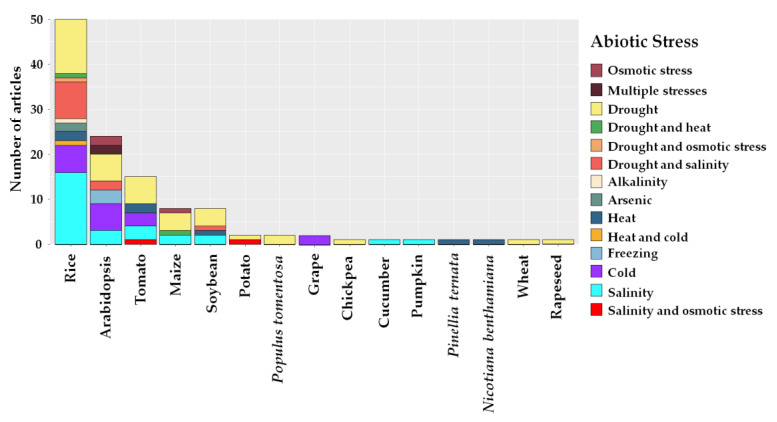
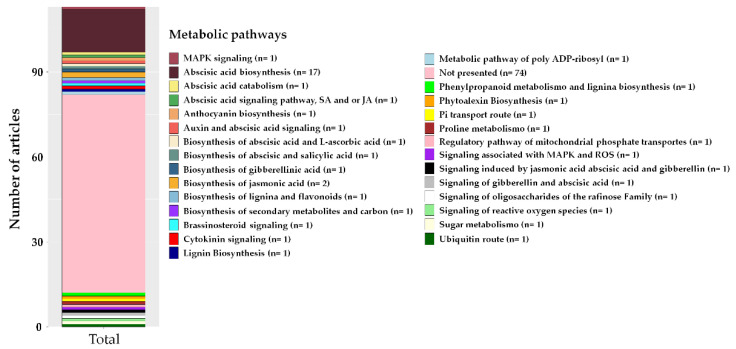
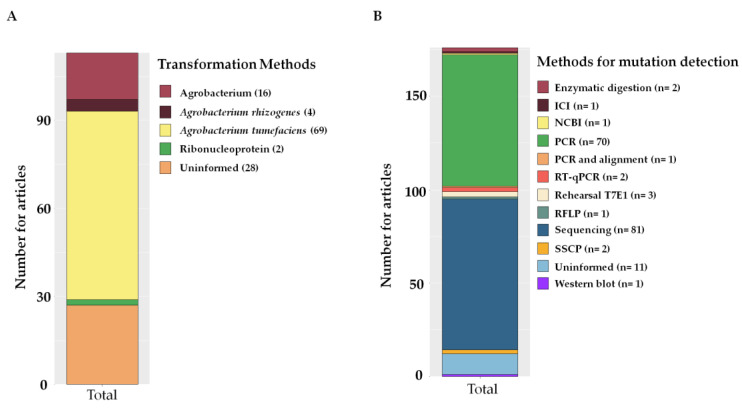
Agricultural crops are exposed to various abiotic stresses, such as salinity, water deficits, temperature extremes, floods, radiation, and metal toxicity. To overcome these challenges, breeding programs seek to improve methods and techniques. Gene editing by Clustered Regularly Interspaced Short Palindromic Repeats—CRISPR/Cas—is a versatile tool for editing in all layers of the central dogma with focus on the development of cultivars of plants resistant or tolerant to multiple biotic or abiotic stresses. This systematic review (SR) brings new contributions to the study of the use of CRISPR/Cas in gene editing for tolerance to abiotic stress in plants. Articles deposited in different electronic databases, using a search string and predefined inclusion and exclusion criteria, were evaluated. This SR demonstrates that the CRISPR/Cas system has been applied to several plant species to promote tolerance to the main abiotic stresses. Among the most studied crops are rice and Arabidopsis thaliana, an important staple food for the population, and a model plant in genetics/biotechnology, respectively, and more recently tomato, whose number of studies has increased since 2021. Most studies were conducted in Asia, specifically in China. The Cas9 enzyme is used in most articles, and only Cas12a is used as an additional gene editing tool in plants. Ribonucleoproteins (RNPs) have emerged as a DNA-free strategy for genome editing without exogenous DNA. This SR also identifies several genes edited by CRISPR/Cas, and it also shows that plant responses to stress factors are mediated by many complex-signaling pathways. In addition, the quality of the articles included in this SR was validated by a risk of bias analysis. The information gathered in this SR helps to understand the current state of CRISPR/Cas in the editing of genes and noncoding sequences, which plays a key role in the regulation of various biological processes and the tolerance to multiple abiotic stresses, with potential for use in plant genetic improvement programs.
Overview
The claims and statistics of this paper haven’t been checked yet.
Run the check — free, no account needed. It reads the open-access text and checks the sources it cites.
Integrity signals
Registry
Cites
Statistics
Figures

Verification
Claims the paper makes
The claims and statistics of this paper haven’t been checked yet.
Run the check — free, no account needed. It reads the open-access text and checks the sources it cites.
Claims other papers make about this one
Each is checked against this paper’s own text: does it say what the citing paper says it does?
The source backs part of the claim, not all of it — or backs it for a different population, condition or comparison.
In the citing paper
“Their findings highlighted how knocking out certain genes negatively impacts root development under drought conditions, ultimately enhancing overall crop resilience to water scarcity.”
From Emerging applications of gene editing technologies for the development of climate-resilient crops (2025) · cites this paper as Nascimento et al., 2023
Experimental — accuracy not yet measuredThe source backs part of the claim, not all of it — or backs it for a different population, condition or comparison.
In the citing paper
“For instance, Nascimento et al. (2023) explored genes that promote root development, enhanced root growth, and improved water uptake, demonstrating their potential as targets for CRISPR/Cas9 gene editing.”
From Emerging applications of gene editing technologies for the development of climate-resilient crops (2025) · cites this paper as Nascimento et al., 2023
Experimental — accuracy not yet measured
Self-check
Percentages, sums and reported differences re-computed from the paper’s own numbers.
The self-check needs the paper’s full text.
Citations
Cites
1 retracted
Gonzales, L. R., Shi, L., Bergonzi, S., Oortwijn, M. E. P., Franco‐Zorrilla, J. M., Solano, R., Visser, R. G. F., Abelenda, J. A., & Bachem, C. (2020) · The Plant Journal · doi:10.1111/tpj.15093 · Cited by 114
RetractedThe Cochrane Collaboration's tool for assessing risk of bias in randomised trials
Higgins, J. P. T., Altman, D. G., Gotzsche, P. C., Juni, P., Moher, D., Oxman, A. D., Savovic, J., Schulz, K. F., Weeks, L., Sterne, J. A. C., et al. (2011) · BMJ · doi:10.1136/bmj.d5928 · Cited by 33,817
Dermyshi, E., Wang, Y., Yan, C., Hong, W., Qiu, G., Gong, X., & Zhang, T. (2017) · Neonatology · doi:10.1159/000454668 · Cited by 24,586
Software survey: VOSviewer, a computer program for bibliometric mapping
van Eck, N. J., & Waltman, L. (2010) · Scientometrics · doi:10.1007/s11192-009-0146-3 · Cited by 21,484
A Programmable Dual-RNA–Guided DNA Endonuclease in Adaptive Bacterial Immunity
Jinek, M., Chylinski, K., Fonfara, I., Hauer, M., Doudna, J. A., & Charpentier, E. (2012) · Science · doi:10.1126/science.1225829 · Cited by 17,116
RNA-Guided Human Genome Engineering via Cas9
Mali, P., Yang, L., Esvelt, K. M., Aach, J., Guell, M., DiCarlo, J. E., Norville, J. E., & Church, G. M. (2013) · Science · doi:10.1126/science.1232033 · Cited by 9,210
Abiotic Stress Signaling and Responses in Plants
Zhu, J. (2016) · Cell · doi:10.1016/j.cell.2016.08.029 · Cited by 5,837
Food and Agriculture Organization of the United Nations
Dalling, T. (2022) · Permanent missions to the United Nations · doi:10.18356/9789210018289c230 · Cited by 5,379
Ma, X., Zhang, Q., Zhu, Q., Liu, W., Chen, Y., Qiu, R., Wang, B., Yang, Z., Li, H., Lin, Y., et al. (2015) · Molecular Plant · doi:10.1016/j.molp.2015.04.007 · Cited by 2,369
The PICO strategy for the research question construction and evidence search
Santos, C. M. D. C., Pimenta, C. A. D. M., & Nobre, M. R. C. (2007) · Revista Latino-Americana de Enfermagem · doi:10.1590/s0104-11692007000300023 · Cited by 2,342
Research works printed but not linked: 1
- Cohen, J. (2022, March 21). To Feed Its 1.4 Billion, China Bets Big on Genome Editing of Crops. Available online: https://www.science.org/content/article/feed-its-14-billion-china-bets-big-genome-editing-crops.
Cited by
Sorted by citations
Application of CRISPR/Cas9-mediated gene editing for abiotic stress management in crop plants
Kumar, M., Prusty, M. R., Pandey, M. K., Singh, P. K., Bohra, A., Guo, B. Z., & Varshney, R. K. (2023) · Frontiers in Plant Science · doi:10.3389/fpls.2023.1157678 · Cited by 251
“The review offers a broad and unbiased collection of relevant studies through a systematic search of databases on the application of CRISPR/Cas approach for abiotic stress tolerance (Nascimento et al., 2023).”
BackgroundCRISPR–Cas applications in agriculture and plant research
Tuncel, A., Pan, C., Clem, J. S., Liu, D., & Qi, Y. (2025) · Nature Reviews Molecular Cell Biology · doi:10.1038/s41580-025-00834-3 · Cited by 145
“This variability necessitates the optimization of delivery methods and development of more robust”
Multi-Omics Approaches Against Abiotic and Biotic Stress—A Review
Varadharajan, V., Rajendran, R., Muthuramalingam, P., Runthala, A., Madhesh, V., Swaminathan, G., Murugan, P., Srinivasan, H., Park, Y., Shin, H., et al. (2025) · Plants · doi:10.3390/plants14060865 · Cited by 130
“[195] Genetic Modification Climate-smart banana development Alters genes to improve resistance to abiotic and biotic stress.”
Redesigning crop varieties to win the race between climate change and food security
Pixley, K. V., Cairns, J. E., López‐Ridaura, S., Ojiewo, C. O., Dawud, M. A., Drabo, I., Mindaye, T. T., Nebié, B., Asea, G., Das, B., et al. (2023) · Molecular Plant · doi:10.1016/j.molp.2023.09.003 · Cited by 101
Ahmar, S., Hensel, G., & Gruszka, D. (2023) · Biotechnology Advances · doi:10.1016/j.biotechadv.2023.108248 · Cited by 79
Genome editing in food and agriculture: from regulations to consumer perspectives
Atimango, A. O., Wesana, J., Kalule, S. W., Verbeke, W., & Steur, H. D. (2024) · Current Opinion in Biotechnology · doi:10.1016/j.copbio.2024.103127 · Cited by 48
Vasantha‐Srinivasan, P., Noh, M. Y., Park, K. B., Kim, T. Y., Jung, W.-J., Senthil‐Nathan, S., & Han, Y. S. (2025) · Frontiers in Plant Science · doi:10.3389/fpls.2025.1599450 · Cited by 52
Emerging applications of gene editing technologies for the development of climate-resilient crops
Chavhan, R. L., Jaybhaye, S. G., Hinge, V. R., Deshmukh, A. S., Shaikh, U. S., Jadhav, P. K., Kadam, U. S., & Hong, J. C. (2025) · Frontiers in Genome Editing · doi:10.3389/fgeed.2025.1524767 · Cited by 55
Lopes, N. D. S., Santos, A. S., de Novais, D. P. S., Pirovani, C. P., & Micheli, F. (2023) · Frontiers in Plant Science · doi:10.3389/fpls.2023.1193873 · Cited by 46
“, 2023), as well as on reducing the abiotic factor effects (Santos et al., 2018; dos Santos et al., 2022; Oliveira et al., 2022; Nascimento et al., 2023).”
BackgroundUnlocking Plant Resilience: Metabolomic Insights into Abiotic Stress Tolerance in Crops
Głuchowska, A., Zieniuk, B., & Pawełkowicz, M. E. (2025) · Metabolites · doi:10.3390/metabo15060384 · Cited by 45
“By identifying genes that control key pathways related to stress tolerance, it becomes possible to precisely modify metabolite profiles to achieve desired phenotypic traits [140].”
Zhou, J., Luan, X., Liu, Y., Wang, L., Wang, J., Yang, S., Liu, S., Zhang, J., Liu, H., & Yao, D. (2023) · Plants · doi:10.3390/plants12071478 · Cited by 43
Mohamed, H. I., Khan, A. R., & Basıt, A. (2024) · Journal of soil science and plant nutrition · doi:10.1007/s42729-024-01778-x · Cited by 43
“In mid-1980, editing of genes was initiated, and several crops (wheat, rice, cotton, maize, potato, tomato, and vice versa) were developed (Nascimento et al. 2023).”
CRISPR/Cas-Mediated Genome Engineering in Plants: Application and Prospectives
Mishra, S., Nayak, S., Tuteja, N., Poosapati, S., Swain, D. M., & Sahoo, R. K. (2024) · Plants · doi:10.3390/plants13141884 · Cited by 35
“…of the Target Gene References Drought Rice ( Oryza sativa ) ENHANCED RESPONSE TO ABA1 (OsERA1) [102] Rice ( Oryza sativa ) OsDST [98] Rice ( Oryza sativa ) PYRABACTIN RESISTANCE-LIKE 9 (OsPYL9) [99] Rice ( Oryza sativa ) SEMI-ROLLED LEAF 1 (SRL1) and SEMI-ROLLED LEAF 2 (SRL2) [9] Maize ( Zea mays )”
BackgroundRecent Advances in Tomato Gene Editing
Larriba, E., Yaroshko, О. M., & Pérez‐Pérez, J. M. (2024) · International Journal of Molecular Sciences · doi:10.3390/ijms25052606 · Cited by 33
Aslam, N., Li, Q., Bashir, S., Yuan, L., Qiao, L., & Li, W. (2024) · Biology · doi:10.3390/biology13090659 · Cited by 26
“In crop breeding programs, the CRISPR/Cas system has been considered a versatile tool for editing in all layers of the central dogma with a focus on the development of plants resistant to multiple biotic and abiotic stresses [125,126].”
BackgroundSharma, N., Sharma, L., Onkarappa, D., Yogendra, K. N., Bose, J., & Sharma, R. A. (2024) · Agronomy · doi:10.3390/agronomy14010159 · Cited by 25
Norfaezah, J., Masani, M. Y. A., Fizree, M. D. P. M. A. A., Bahariah, B., Shaharuddin, N. A., Ho, C. L., Rasid, O. A., & Parveez, G. K. A. (2023) · Industrial Crops and Products · doi:10.1016/j.indcrop.2023.117795 · Cited by 25
Adane, M., & Alamnie, G. (2024) · Functional & Integrative Genomics · doi:10.1007/s10142-024-01480-2 · Cited by 23
“The main goal of CRISPR/Cas genome editing is to create cultivars of plants that are resistant to or tolerant of certain abiotic stressors, making it a versatile technique capable of editing across all crops (Nascimento et al. 2023 ).”
Nutritional quality of photosynthetically diverse crops under future climates
Walsh, C. A., & Lundgren, M. R. (2024) · Plants People Planet · doi:10.1002/ppp3.10544 · Cited by 12
CRISPR/Cas9 opens new horizon of crop improvement under stress condition
Patra, S., Chatterjee, D., Basak, S., Sen, S., & Mandal, A. (2024) · Biochimica et Biophysica Acta (BBA) - General Subjects · doi:10.1016/j.bbagen.2024.130685 · Cited by 11
Patil, A. M., Wagh, S. G., Janvale, G. B., Pawar, B. D., & Daspute, A. A. (2024) · International Journal of Advanced Biochemistry Research · doi:10.33545/26174693.2024.v8.i3sj.885 · Cited by 9
Mascarenhas, M. S., Nascimento, F. D. S., Rocha, A. D. J., Ferreira, M. D. S., Oliveira, W. D. D. S., Lino, L. S. M., Mendes, T. A. D. O., Ferreira, C. F., dos Santos-Serejo, J. A., & Amorim, É. P. (2024) · Current Issues in Molecular Biology · doi:10.3390/cimb46100659 · Cited by 9
“These results corroborate the findings of [22] in a systematic review of gene editing using CRISPR technology to edit genes tolerant to abiotic stresses.”
BackgroundMethodResultAlleviating Effect of Silicon on Aluminum Toxicity in Plants
Deus, A. C. F., da Silva, A. P. R., Bertani, R. M. D. A., Soares, A. D. A. V. L., Fernandes, D. M., & Büll, L. T. (2026) · Agronomy · doi:10.3390/agronomy16040471 · Cited by 7
“Furthermore, this practice can enhance crop performance under abiotic stress, although its efficiency depends on continuous applications, the source used, the applied dose, and specific soil–plant interactions [116,117].”
Li, N., Li, S., Zhao, B., Yuan, X., & Zhu, J. L. (2026) · Water · doi:10.3390/w18060732 · Cited by 6
Şahin, E. Ç., Aydin, Y., & Uncuoğlu, A. A. (2024) · OBM Genetics · doi:10.21926/obm.genet.2403260 · Cited by 6
Podobedova, A., Baranova, E. N., Gulevich, A. A., Chaban, I. A., & Breygina, M. (2025) · Plants · doi:10.3390/plants14142103 · Cited by 5
“The use of a genetic engineering approach to increase the resistance of agricultural plants to unfavorable environmental factors is a relevant method [1], which, however, has potential side effects [2].”
Mmbando, G. S., & Hidema, J. (2025) · Discover Agriculture · doi:10.1007/s44279-025-00267-8 · Cited by 4
Abdallah, N. A., Hamwieh, A., Radwan, K. H., Fouad, N., & Baum, M. (2025) · CABI biotechnology series. · doi:10.1079/9781800627307.0022 · Cited by 5
Chikasha, T. E., Chiulele, R. M., Nkhata, W., & Muatinte, B. L. (2026) · Genes · doi:10.3390/genes17010075 · Cited by 4
“For literature search, this study used Google Scholar, ScienceDirect, Taylor & Francis Online, SpringerLink, and PubMed, all have articles on genetics, plant breeding, and agri-culture [29,30].”
CRISPR /Cas System for Achieving Abiotic Stress Tolerance
Younas, A., Riaz, N., Rashid, M., Tufail, A., Hyder, S., & Noreen, Z. (2024) · Wiley eBooks · doi:10.1002/9781394209156.ch11 · Cited by 4
Yang, B., Li, W., Huang, X. X., Zhang, Y., Gao, X., Ding, S., Wang, Y., Qi, J., & Wang, X. (2025) · Tree Genetics & Genomes · doi:10.1007/s11295-024-01688-0 · Cited by 3
“Factors like drought, salinity, extreme temperatures, and other environmental adversities can profoundly impact plant growth and development, leading to significant reductions in crop yields (Nascimento et al. 2023).”
Research hotspots and global trends in plant responses under UV-B radiation
Singh, P., & Choudhary, K. K. (2025) · Discover Plants. · doi:10.1007/s44372-025-00204-5 · Cited by 3
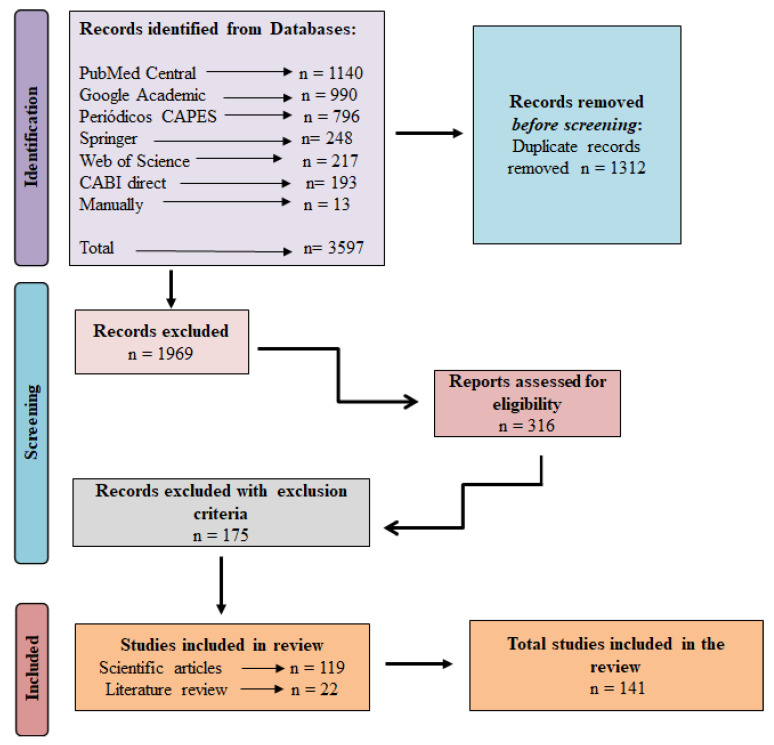
“Various studies have recently used this software for bibliometric analysis [18–20].”
Applications of CRISPR/Cas gene editing in vegetable crop disease and stress resistance
Singh, P., Markam, N. K., Shinde, S. B., Yadav, T. S., Mohanty, S. K., Prasad, M. S., Pagoch, S. S., Swain, S. K., MUSMADE, N. A., & Saikia, B. (2025) · International Journal of Advanced Biochemistry Research · doi:10.33545/26174693.2025.v9.i8sn.5290 · Cited by 3
Topic: boron toxicity in semi-arid crops: the overlooked metalloid in abiotic stress
Mishra, A. K., & Tiwari, S. (2026) · Physiology and Molecular Biology of Plants · doi:10.1007/s12298-026-01721-7 · Cited by 3
“…systems can be strategically employed to edit boron transporters (e.g., BOR1, NIP5;1) and regulatory genes to optimize B uptake, translocation, and compartmentalization, thereby reducing toxic accumulation under B-rich soils (Nascimento et al. 2023; Kumar et al. 2023; Chavhan et al. 2025).”
Jamali, Z. H., Younas, M. U., Qasim, M., Ali, S., Iqbal, R., Aghayeva, S., & Konvalina, P. (2026) · Cereal Research Communications · doi:10.1007/s42976-026-00824-x · Cited by 3
Melhoramento genético de plantas para adaptabilidade às mudanças climáticas
da Silva, C. M., de Azevedo, G. A., Frade, L. F. D. S., Barreto, A. V. R., Soares, J. V., da Silva, M. P., Oliveira, M. D. S., Marques, D. F., Gomes, J. D. S., Canuto, R. E. D. F., et al. (2024) · Revista de Gestão e Secretariado (Management and Administrative Professional Review) · doi:10.7769/gesec.v15i9.4161 · Cited by 12
Taylor, G., Bailey‐Bale, J., Klein, M. C., Milner, S., Chen, J., Muchero, W., Freer‐Smith, P., Tschaplinski, T. J., & Tuskan, J. (2024) · bioRxiv (Cold Spring Harbor Laboratory) · doi:10.1101/2024.01.11.575272 · Cited by 3
Unlocking crop resilience through CRISPR Cas9 mediated gene editing against environmental stressors
Albalawi, T., Faizan, M., Karabulut, F., Alam, P., Ahmed, S., & Ahmad, S. P. (2025) · Discover Plants. · doi:10.1007/s44372-025-00408-9 · Cited by 4
“Recently, Nascimento et al. [32] emphasized the role of CRISPR/Cas as a complementary tool in modern crop breeding programs aimed at enhancing resilience to environmental stress.”
da Silva, V. L. C., Martinez, A. M., Alam, M., Noman, M., & Chalfun-Júnior, A. (2025) · Plant Gene · doi:10.1016/j.plgene.2025.100547 · Cited by 2
Gene Editing and Transformation Strategies for Engineering Drought‐Tolerant Legumes
Fernandez-Gutierrez, A., Curtin, S. J., & Gutierrez-Gonzalez, J. J. (2026) · Legume Science · doi:10.1002/leg3.70080 · Cited by 4
Crops exposed to extreme conditions: perspectives of gene editing to improve stress tolerance
Szabados, L., Kant, K., Rabilu, S. A., Rashid, A., & Zsigmond, L. (2026) · Plant Cell Reports · doi:10.1007/s00299-026-03891-w · Cited by 3
“Multiplex editing is a particularly valuable tool to engineer polygenic traits which usually determine tolerance to abiotic stresses in crops with large, polyploid genomes (Wang et al. 2018; Abdelrah-man et al. 2021; Nascimento et al. 2023; Ni et al. 2023, see Table 1).”
Advances in Plant Phenotyping for Enhanced Salt Tolerance
Adeboye, K. A., Oyetunde, O. A., Bamisaye, V. J., & Idehen, E. O. (2024) · CABI eBooks · doi:10.1079/9781800623033.0009 · Cited by 2
Research Progress of CRISPR Technology in Plant Abiotic Stress
Xiang, M. (2025) · Theoretical and Natural Science · doi:10.54254/2753-8818/2024.ka19746 · Cited by 1
Genome Editing in Banana: Tools, Techniques, and Challenges
Tripathi, J. N., Muiruri, S., Waweru, D. N., & Tripathi, L. (2025) · Springer eBooks · doi:10.1007/978-981-95-0309-4_3 · Cited by 1
Polyamines for boosting plant stress tolerance
Eman, I., Akram, A., Malik, M., Amjad, K., Hameed, M., Khan, Z., & Shah, T. (2026) · Elsevier eBooks · doi:10.1016/b978-0-443-45576-6.00011-x · Cited by 1
Hina, A., Abbasi, A., Chaudhry, A., Sanaullah, T., Arshad, M., Sarwar, H. M., Sarfaraz, S., Karikari, B., & Kavhiza, N. J. (2026) · Frontiers in Plant Science · doi:10.3389/fpls.2026.1865665 · Cited by 1
Genome engineering in maize using CRISPR/CAS9 system
Rafique, K., Gul, A., Ahmad, N., & Mushtaq, N. (2024) · Elsevier eBooks · doi:10.1016/b978-0-443-26614-0.00002-3 · Cited by 1
Genome editing for value addition in medicinal plants
Pandey, A. K. (2024) · Elsevier eBooks · doi:10.1016/b978-0-443-22264-1.00019-0 · Cited by 1
Genome Editing: A Novel Breeding Strategy for Enhanced Stress Tolerance and Quality in Oilseed Crops
Achary, V. M. M., Hearne, S., & Bandyopadhyay, A. (2025) · Springer eBooks · doi:10.1007/978-981-97-7744-0_9 · Cited by 1
Fatima, S., Zafar, Z., Ahad, A., Gul, A., & Bux, H. (2024) · Elsevier eBooks · doi:10.1016/b978-0-443-26614-0.00005-9
Silva, V., Matinez, A. M., Vincente, M. A., Alam, M., Noman, M., & Chalfun-Júnior, A. (2024) · bioRxiv (Cold Spring Harbor Laboratory) · doi:10.1101/2024.12.26.630382
Bolívar-González, A., Tapia-Fernández, A., Chaverri-Echandi, P., & Gatica-Arias, A. (2025) · Plant Cell Tissue and Organ Culture (PCTOC) · doi:10.1007/s11240-025-03013-6
“At the same time, CRISPR/Cas9 and other gene-editing technologies allow for precise regulation of gene expression, ensuring stable and durable resistance (Marraccini 2020; Nascimento et al. 2023 ).”
CRISPR plants against oxidative stress: Methods and applications
Ghosal, K. (2025) · Elsevier eBooks · doi:10.1016/b978-0-443-24135-2.00013-x
CRISPR plants against heavy metal and metalloid stresses: Methods and applications
Sanjay, S., Banadka, A., Barwad, A., Mamtha, R. S., Ramakrishnan, R., Meghana, U., Kavyashree, A., Al-Khayri, J. M., & Nagella, P. (2025) · Elsevier eBooks · doi:10.1016/b978-0-443-24135-2.00014-1
Genomic Resources and Their Role in Camellia Breeding Strategies
Huang, J., Zhao, M., & Huang, X. (2024) · Plant Gene and Trait · doi:10.5376/pgt.2024.15.0021
Liang, K. (2024) · Tree Genetics and Molecular Breeding · doi:10.5376/tgmb.2024.14.0007
Integrating Advanced Metabolomics with Plant Functional Genomics
Shaikh, A., Toppo, V., Al-Khayri, J. M., & Nagella, P. (2025) · CABI biotechnology series. · doi:10.1079/9781800626911.0017
Kaur, S., Chopra, S., Kumar, V., & Guleria, P. (2025) · Elsevier eBooks · doi:10.1016/b978-0-443-23818-5.00009-0
Ansarì, M. S., Khan, A. A., & Ulhassan, Z. (2025) · Elsevier eBooks · doi:10.1016/b978-0-443-14139-3.00007-5
Dissecting Stress-tolerant Traits of CRISPR-edited Crops by High-throughput Omics Technologies
Kumari, R., Pandey, E., Faizan, S., Bushra, S., Hussain, A., Verma, P., & Akhtar, M. S. (2025) · CABI biotechnology series. · doi:10.1079/9781800627307.0016
Joe, A. D., Liu, R., Luo, X., Liu, M., Syed, R., Aslam, F., Barclay, C. A. G., & Zheng, Z. (2025) · Journal of Plant Growth Regulation · doi:10.1007/s00344-025-11942-x
Stress Resilience in Tuber Crops: A Closer View on Genome Editing and Molecular Approaches
Rajendran, P., Saravanan, K., Jagadhesan, B., Ramesh, R., Bharathi, D., Suriyakumar, P., Sharma, N., Yele, Y., Marate, A., Prasad, N., et al. (2025) · Journal of Plant Growth Regulation · doi:10.1007/s00344-025-11936-9 · Cited by 1
Does Modern Plant Breeding Techniques Increase Crop Stability Performance?
Ćeran, M., Đorđević, V., Miladinović, J., Miladinović, D., Trkulja, D., Radanović, A., & Kondić‐Špika, A. (2026) · Springer eBooks · doi:10.1007/978-981-95-5664-9_5
Physiological, Biochemical and Molecular Responses of Plants Under Abiotic and Biotic Stresses
Ibrahimov, A., Eren, B., Alptekın, H., Rahimova, S., Tan, U., Gören, H. K., Başar, Y., Tülek, A., Gürbüz, R., Alaserhat, İ., et al. (2026) · Springer eBooks · doi:10.1007/978-3-032-24219-8_2
Atimango, A. O., Kalule, S., Senyange, B., Verbeke, W., & de Steur, H. (2026) · GM crops & food · doi:10.1080/21645698.2026.2698267
“…the technology for its potential in improving crop yield, enhancing resilience to climate change (e.g. high temperatures and water scarcity), 22,23 boosting resistance to biotic stresses such as pests, diseases and weeds, 24 leading to reduced chemical use in the agrifood system, and…”
Tocopherol: Enhancing Plant Tolerance to Stress
Dikilitaş, M., Baran, B., Arslan, B., & Latef, A. A. H. A. (2026) · Sustainability Sciences in Asia and Africa · doi:10.1007/978-981-95-8593-9_7
CRISPR-Cas systems for enhancing chilling tolerance in rice: recent advances and future prospects
Zaman, M. S., Azeem, A., Nouman, A., Khalid, A., Ghafoor, S., Haq, M. Z. U., Aslam, M. T., & EL-BELTAGI, H. S. (2026) · Biologia Futura · doi:10.1007/s42977-026-00326-1
The Role of Gene Editing in Sustainable Agriculture
Das, N., Kumar, A., Rohit, K. C., & Sachan, S. (2026) · IGI Global eBooks · doi:10.4018/979-8-2600-3575-7.ch006
The role of constructed wetland plants in the treatment of emerging contaminants: A review
Wang, M., Xu, H., Li, G., Huang, L., Li, Y., & Fang, Y. (2026) · Journal of Water Process Engineering · doi:10.1016/j.jwpe.2026.110901
Figueroa‐Varela, P. A., Góngora, C. E., Martínez, C. P., Ortíz, A., Navarro-Escalante, L., Acuña, R., & Villanueva-Mejía, D. F. (2026) · Horticulturae · doi:10.3390/horticulturae12091150
Ahmed, M. S., Sinthi, F., Alam, S., & Hasanuzzaman, M. (2026) · Elsevier eBooks · doi:10.1016/b978-0-443-33465-8.00028-1
Metadata
- Authors
- Nascimento, F. D. S., Rocha, A. D. J., Soares, J. M. D. S., Mascarenhas, M. S., Ferreira, M. D. S., Morais Lino, L. S., Ramos, A. P. D. S., Diniz, L. E. C., Mendes, T. A. D. O., Ferreira, C. F., Santos-Serejo, J. A. D., & Amorim, E. P.
- Affiliations
- Universidade Estadual de Feira de Santana (BR)
- Embrapa Mandioca e Fruticultura, Cruz das Almas 44380-000, BA, Brazil
- Embrapa (BR)
- Embrapa Soja, Londrina 86000-000, PR, Brazil
- Universidade Federal de Viçosa (BR)
- ORCID
- Nascimento, Fernanda dos Santos
- Rocha, Anelita de Jesus
- Soares, Julianna Matos da Silva
- Mascarenhas, Marcelly Santana
- Ferreira, Mileide dos Santos
- Morais Lino, Lucymeire Souza
- Ramos, Andresa Priscila de Souza
- Diniz, Leandro Eugenio Cardamone
- Mendes, Tiago Antônio de Oliveira
- Ferreira, Claudia Fortes
- Santos-Serejo, Janay Almeida dos
- Amorim, Edson Perito
- Venue
- Plants
- Publisher
- MDPI AG
- Published
- 2023-01-09
- Volume
- 12
- Issue
- 2
- Pages
- 305
- ISSN
- 2223-7747 (ISSN-L)
- PMC
- PMC9860801
- OpenAlex
- W4313889986
- Cited by
- 71
- References
- 262
- Citations by year
- 2026: 18 · 2025: 25 · 2024: 22 · 2023: 6
- FWCI
- 1.88
- Type
- journal article
- Language
- en
- Open access
- gold
- doi.org
- Licence
- Locations
- Plants (publishedVersion, cc-by)
- PubMed Central (publishedVersion, cc-by)
- PubMed (publishedVersion)
- DOAJ (DOAJ: Directory of Open Access Journals) (submittedVersion, cc-by-sa)
- Funders
- IITA/The Bill and Melinda Gates Foundation (OPP1093845)
- Topics
- Life Sciences › Biochemistry, Genetics and Molecular Biology › Molecular Biology › CRISPR and Genetic Engineering
- Life Sciences › Agricultural and Biological Sciences › Plant Science › Plant Stress Responses and Tolerance
- Life Sciences › Agricultural and Biological Sciences › Plant Science › Genetically Modified Organisms Research
- Keywords
- CRISPR gene editing, abiotic stress tolerance, plant stress tolerance, salt stress, drought stress, temperature extremes, flooding stress, metal toxicity, rice, Arabidopsis thaliana, tomato, Cas9, CRISPR/Cas12a, stress signaling pathways, plant genetic improvement
About these checks
Registry, retraction, Cites and statistics results are computed, not judged, with one exception: a printed reference that no index lists is read once by a model before it counts as a citation error. Claims are extracted by a model and kept only when their quote appears verbatim in the text; each cited source is then checked, with a model’s help, for whether it says what the claim relies on. Those verdicts can be wrong — read the claim’s quote and the cited source before relying on one.
Statistics and arithmetic are recomputed, not judged.
Confidence bands are shown only for fields calibrated on our annotated test set. None is calibrated yet, so no band is shown.
What counts as a claim ›How we measure confidence ›How we check this ›
Are you an author, or do you see a problem with this page? Request a review
