

The DOI matches its Crossref record; 261 of the 262 references it cites were found in a registry or an index.
Gene Editing for Plant Resistance to Abiotic Factors: A Systematic Review
Open accessAbstract
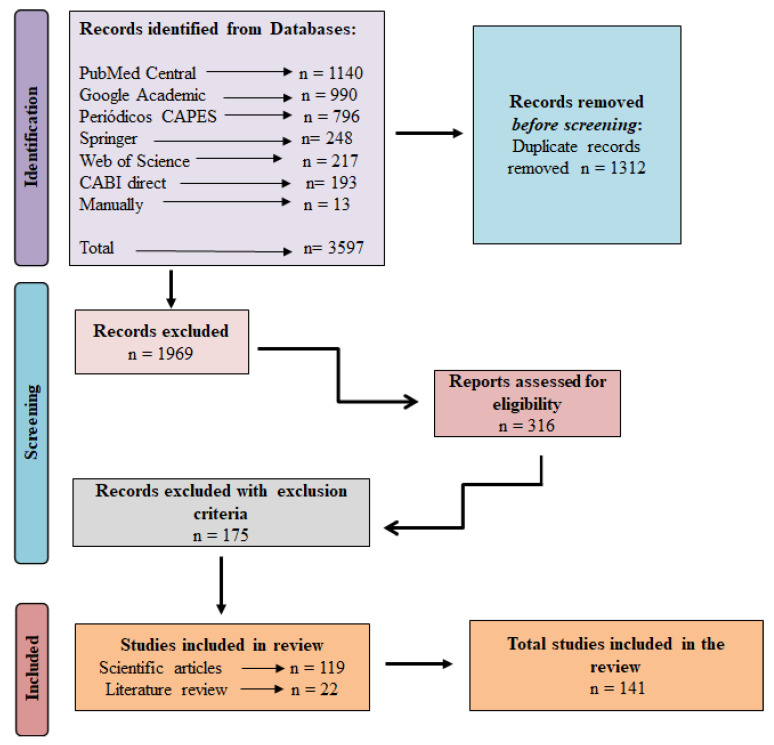
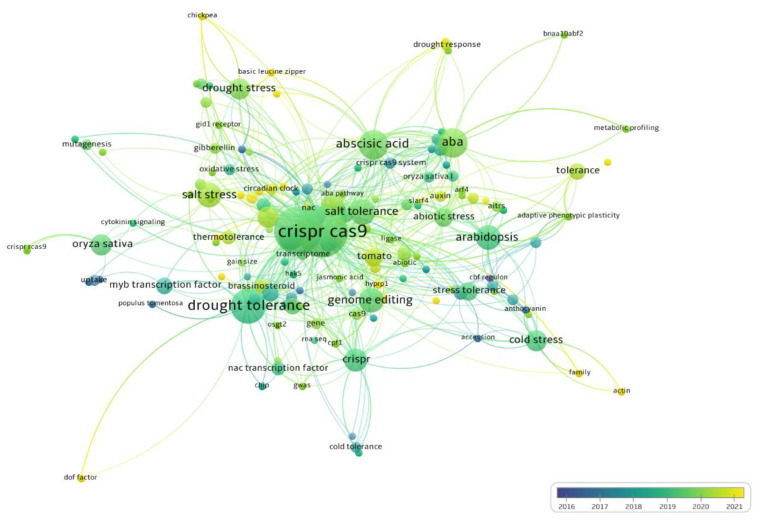
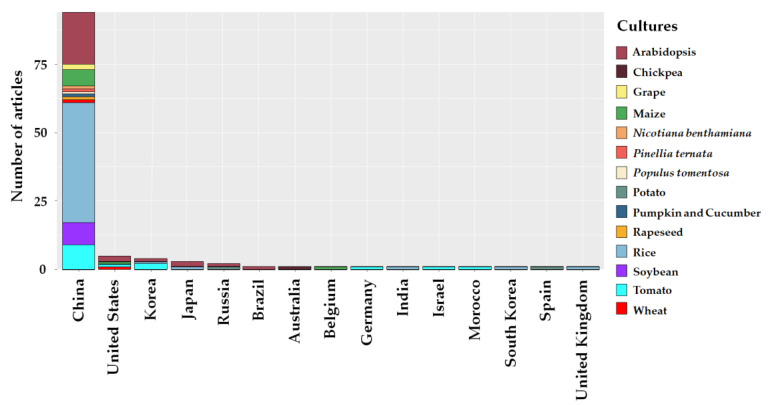
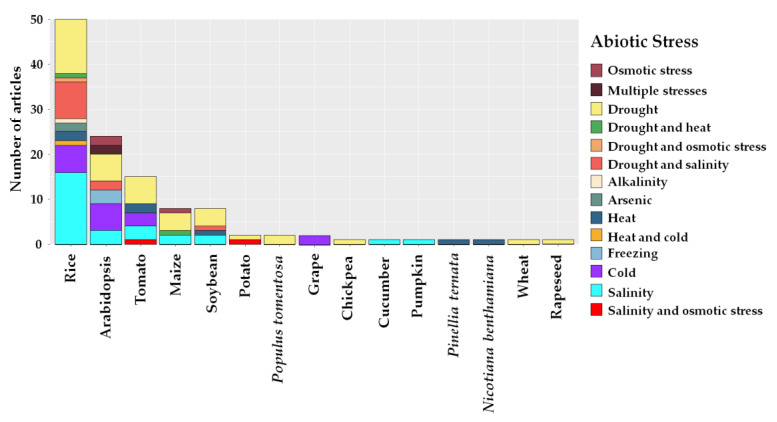
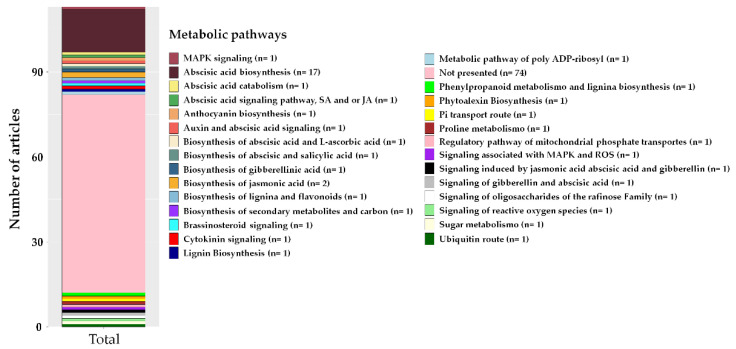
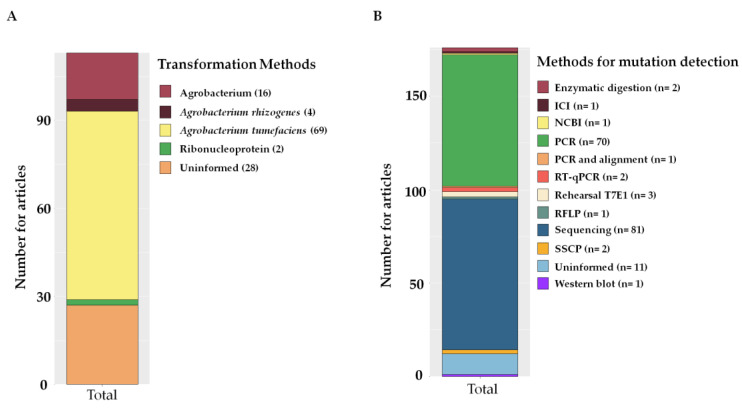
Agricultural crops are exposed to various abiotic stresses, such as salinity, water deficits, temperature extremes, floods, radiation, and metal toxicity. To overcome these challenges, breeding programs seek to improve methods and techniques. Gene editing by Clustered Regularly Interspaced Short Palindromic Repeats—CRISPR/Cas—is a versatile tool for editing in all layers of the central dogma with focus on the development of cultivars of plants resistant or tolerant to multiple biotic or abiotic stresses. This systematic review (SR) brings new contributions to the study of the use of CRISPR/Cas in gene editing for tolerance to abiotic stress in plants. Articles deposited in different electronic databases, using a search string and predefined inclusion and exclusion criteria, were evaluated. This SR demonstrates that the CRISPR/Cas system has been applied to several plant species to promote tolerance to the main abiotic stresses. Among the most studied crops are rice and Arabidopsis thaliana, an important staple food for the population, and a model plant in genetics/biotechnology, respectively, and more recently tomato, whose number of studies has increased since 2021. Most studies were conducted in Asia, specifically in China. The Cas9 enzyme is used in most articles, and only Cas12a is used as an additional gene editing tool in plants. Ribonucleoproteins (RNPs) have emerged as a DNA-free strategy for genome editing without exogenous DNA. This SR also identifies several genes edited by CRISPR/Cas, and it also shows that plant responses to stress factors are mediated by many complex-signaling pathways. In addition, the quality of the articles included in this SR was validated by a risk of bias analysis. The information gathered in this SR helps to understand the current state of CRISPR/Cas in the editing of genes and noncoding sequences, which plays a key role in the regulation of various biological processes and the tolerance to multiple abiotic stresses, with potential for use in plant genetic improvement programs.
Overview
The claims and statistics of this paper haven’t been checked yet.
Run the check — free, no account needed. It reads the open-access text and checks the sources it cites.
Integrity signals
Registry
Cites
Statistics
Figures

Verification
Claims the paper makes
The claims and statistics of this paper haven’t been checked yet.
Run the check — free, no account needed. It reads the open-access text and checks the sources it cites.
Claims other papers make about this one
Each is checked against this paper’s own text: does it say what the citing paper says it does?
The source backs part of the claim, not all of it — or backs it for a different population, condition or comparison.
In the citing paper
“Their findings highlighted how knocking out certain genes negatively impacts root development under drought conditions, ultimately enhancing overall crop resilience to water scarcity.”
From Emerging applications of gene editing technologies for the development of climate-resilient crops (2025) · cites this paper as Nascimento et al., 2023
Experimental — accuracy not yet measuredThe source backs part of the claim, not all of it — or backs it for a different population, condition or comparison.
In the citing paper
“For instance, Nascimento et al. (2023) explored genes that promote root development, enhanced root growth, and improved water uptake, demonstrating their potential as targets for CRISPR/Cas9 gene editing.”
From Emerging applications of gene editing technologies for the development of climate-resilient crops (2025) · cites this paper as Nascimento et al., 2023
Experimental — accuracy not yet measured
Self-check
Percentages, sums and reported differences re-computed from the paper’s own numbers.
The self-check needs the paper’s full text.
Citations
Cites
1 retracted
Gonzales, L. R., Shi, L., Bergonzi, S., Oortwijn, M. E. P., Franco‐Zorrilla, J. M., Solano, R., Visser, R. G. F., Abelenda, J. A., & Bachem, C. (2020) · The Plant Journal · doi:10.1111/tpj.15093 · Cited by 114
RetractedThe Cochrane Collaboration's tool for assessing risk of bias in randomised trials
Higgins, J. P. T., Altman, D. G., Gotzsche, P. C., Juni, P., Moher, D., Oxman, A. D., Savovic, J., Schulz, K. F., Weeks, L., Sterne, J. A. C., et al. (2011) · BMJ · doi:10.1136/bmj.d5928 · Cited by 33,817
Dermyshi, E., Wang, Y., Yan, C., Hong, W., Qiu, G., Gong, X., & Zhang, T. (2017) · Neonatology · doi:10.1159/000454668 · Cited by 24,586
Software survey: VOSviewer, a computer program for bibliometric mapping
van Eck, N. J., & Waltman, L. (2010) · Scientometrics · doi:10.1007/s11192-009-0146-3 · Cited by 21,484
A Programmable Dual-RNA–Guided DNA Endonuclease in Adaptive Bacterial Immunity
Jinek, M., Chylinski, K., Fonfara, I., Hauer, M., Doudna, J. A., & Charpentier, E. (2012) · Science · doi:10.1126/science.1225829 · Cited by 17,116
RNA-Guided Human Genome Engineering via Cas9
Mali, P., Yang, L., Esvelt, K. M., Aach, J., Guell, M., DiCarlo, J. E., Norville, J. E., & Church, G. M. (2013) · Science · doi:10.1126/science.1232033 · Cited by 9,210
Abiotic Stress Signaling and Responses in Plants
Zhu, J. (2016) · Cell · doi:10.1016/j.cell.2016.08.029 · Cited by 5,837
Food and Agriculture Organization of the United Nations
Dalling, T. (2022) · Permanent missions to the United Nations · doi:10.18356/9789210018289c230 · Cited by 5,379
Ma, X., Zhang, Q., Zhu, Q., Liu, W., Chen, Y., Qiu, R., Wang, B., Yang, Z., Li, H., Lin, Y., et al. (2015) · Molecular Plant · doi:10.1016/j.molp.2015.04.007 · Cited by 2,369
The PICO strategy for the research question construction and evidence search
Santos, C. M. D. C., Pimenta, C. A. D. M., & Nobre, M. R. C. (2007) · Revista Latino-Americana de Enfermagem · doi:10.1590/s0104-11692007000300023 · Cited by 2,342
Research works printed but not linked: 1
- Cohen, J. (2022, March 21). To Feed Its 1.4 Billion, China Bets Big on Genome Editing of Crops. Available online: https://www.science.org/content/article/feed-its-14-billion-china-bets-big-genome-editing-crops.
Cited by
Sorted by citations
Application of CRISPR/Cas9-mediated gene editing for abiotic stress management in crop plants
Kumar, M., Prusty, M. R., Pandey, M. K., Singh, P. K., Bohra, A., Guo, B. Z., & Varshney, R. K. (2023) · Frontiers in Plant Science · doi:10.3389/fpls.2023.1157678 · Cited by 251
“The review offers a broad and unbiased collection of relevant studies through a systematic search of databases on the application of CRISPR/Cas approach for abiotic stress tolerance (Nascimento et al., 2023).”
BackgroundCRISPR–Cas applications in agriculture and plant research
Tuncel, A., Pan, C., Clem, J. S., Liu, D., & Qi, Y. (2025) · Nature Reviews Molecular Cell Biology · doi:10.1038/s41580-025-00834-3 · Cited by 145
“This variability necessitates the optimization of delivery methods and development of more robust”
Multi-Omics Approaches Against Abiotic and Biotic Stress—A Review
Varadharajan, V., Rajendran, R., Muthuramalingam, P., Runthala, A., Madhesh, V., Swaminathan, G., Murugan, P., Srinivasan, H., Park, Y., Shin, H., et al. (2025) · Plants · doi:10.3390/plants14060865 · Cited by 130
“[195] Genetic Modification Climate-smart banana development Alters genes to improve resistance to abiotic and biotic stress.”
Redesigning crop varieties to win the race between climate change and food security
Pixley, K. V., Cairns, J. E., López‐Ridaura, S., Ojiewo, C. O., Dawud, M. A., Drabo, I., Mindaye, T. T., Nebié, B., Asea, G., Das, B., et al. (2023) · Molecular Plant · doi:10.1016/j.molp.2023.09.003 · Cited by 101
Ahmar, S., Hensel, G., & Gruszka, D. (2023) · Biotechnology Advances · doi:10.1016/j.biotechadv.2023.108248 · Cited by 79
Metadata
- Authors
- Nascimento, F. D. S., Rocha, A. D. J., Soares, J. M. D. S., Mascarenhas, M. S., Ferreira, M. D. S., Morais Lino, L. S., Ramos, A. P. D. S., Diniz, L. E. C., Mendes, T. A. D. O., Ferreira, C. F., Santos-Serejo, J. A. D., & Amorim, E. P.
- Affiliations
- Universidade Estadual de Feira de Santana (BR)
- Embrapa Mandioca e Fruticultura, Cruz das Almas 44380-000, BA, Brazil
- Embrapa (BR)
- Embrapa Soja, Londrina 86000-000, PR, Brazil
- Universidade Federal de Viçosa (BR)
- ORCID
- Nascimento, Fernanda dos Santos
- Rocha, Anelita de Jesus
- Soares, Julianna Matos da Silva
- Mascarenhas, Marcelly Santana
- Ferreira, Mileide dos Santos
- Morais Lino, Lucymeire Souza
- Ramos, Andresa Priscila de Souza
- Diniz, Leandro Eugenio Cardamone
- Mendes, Tiago Antônio de Oliveira
- Ferreira, Claudia Fortes
- Santos-Serejo, Janay Almeida dos
- Amorim, Edson Perito
- Venue
- Plants
- Publisher
- MDPI AG
- Published
- 2023-01-09
- Volume
- 12
- Issue
- 2
- Pages
- 305
- ISSN
- 2223-7747 (ISSN-L)
- PMC
- PMC9860801
- OpenAlex
- W4313889986
- Cited by
- 71
- References
- 262
- Citations by year
- 2026: 18 · 2025: 25 · 2024: 22 · 2023: 6
- FWCI
- 1.88
- Type
- journal article
- Language
- en
- Open access
- gold
- doi.org
- Licence
- Locations
- Plants (publishedVersion, cc-by)
- PubMed Central (publishedVersion, cc-by)
- PubMed (publishedVersion)
- DOAJ (DOAJ: Directory of Open Access Journals) (submittedVersion, cc-by-sa)
- Funders
- IITA/The Bill and Melinda Gates Foundation (OPP1093845)
- Topics
- Life Sciences › Biochemistry, Genetics and Molecular Biology › Molecular Biology › CRISPR and Genetic Engineering
- Life Sciences › Agricultural and Biological Sciences › Plant Science › Plant Stress Responses and Tolerance
- Life Sciences › Agricultural and Biological Sciences › Plant Science › Genetically Modified Organisms Research
- Keywords
- CRISPR gene editing, abiotic stress tolerance, plant stress tolerance, salt stress, drought stress, temperature extremes, flooding stress, metal toxicity, rice, Arabidopsis thaliana, tomato, Cas9, CRISPR/Cas12a, stress signaling pathways, plant genetic improvement
About these checks
Registry, retraction, Cites and statistics results are computed, not judged, with one exception: a printed reference that no index lists is read once by a model before it counts as a citation error. Claims are extracted by a model and kept only when their quote appears verbatim in the text; each cited source is then checked, with a model’s help, for whether it says what the claim relies on. Those verdicts can be wrong — read the claim’s quote and the cited source before relying on one.
Statistics and arithmetic are recomputed, not judged.
Confidence bands are shown only for fields calibrated on our annotated test set. None is calibrated yet, so no band is shown.
What counts as a claim ›How we measure confidence ›How we check this ›
Are you an author, or do you see a problem with this page? Request a review
