

The DOI matches its Crossref record.
The Roles of Gibberellins in Regulating Leaf Development
Abstract
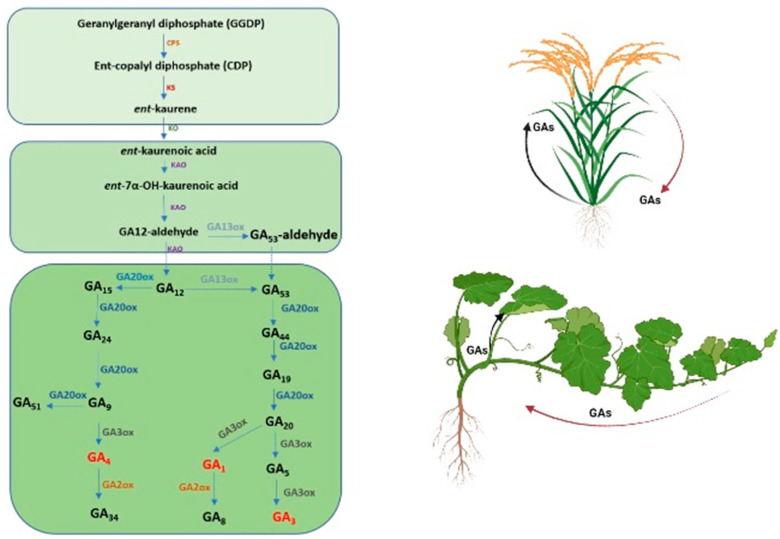
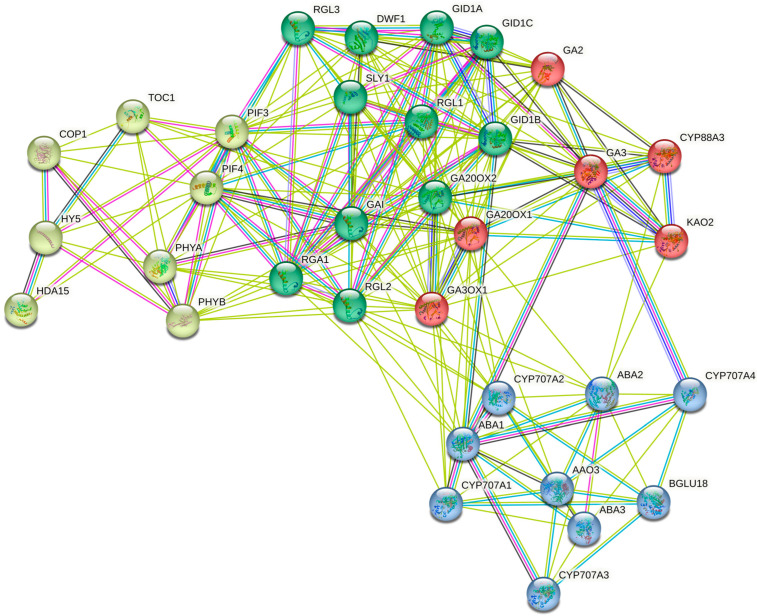
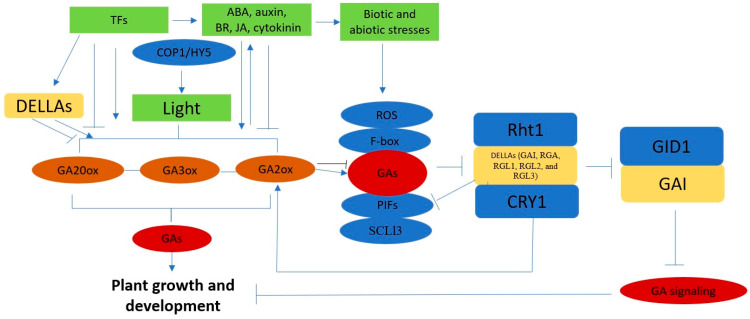
Plant growth and development are correlated with many aspects, including phytohormones, which have specific functions. However, the mechanism underlying the process has not been well elucidated. Gibberellins (GAs) play fundamental roles in almost every aspect of plant growth and development, including cell elongation, leaf expansion, leaf senescence, seed germination, and leafy head formation. The central genes involved in GA biosynthesis include GA20 oxidase genes (GA20oxs), GA3oxs, and GA2oxs, which correlate with bioactive GAs. The GA content and GA biosynthesis genes are affected by light, carbon availability, stresses, phytohormone crosstalk, and transcription factors (TFs) as well. However, GA is the main hormone associated with BR, ABA, SA, JA, cytokinin, and auxin, regulating a wide range of growth and developmental processes. DELLA proteins act as plant growth suppressors by inhibiting the elongation and proliferation of cells. GAs induce DELLA repressor protein degradation during the GA biosynthesis process to control several critical developmental processes by interacting with F-box, PIFS, ROS, SCLl3, and other proteins. Bioactive GA levels are inversely related to DELLA proteins, and a lack of DELLA function consequently activates GA responses. In this review, we summarized the diverse roles of GAs in plant development stages, with a focus on GA biosynthesis and signal transduction, to develop new insight and an understanding of the mechanisms underlying plant development.
Overview
The claims and statistics of this paper haven’t been checked yet.
Run the check — free, no account needed. It reads the open-access text and checks the sources it cites.
Integrity signals
Registry
Cites
Statistics
Figures
Verification
Claims the paper makes
The claims and statistics of this paper haven’t been checked yet.
Run the check — free, no account needed. It reads the open-access text and checks the sources it cites.
Claims other papers make about this one
Each is checked against this paper’s own text: does it say what the citing paper says it does?
In the citing paper
“These proteins are regulated by gibberellins, a class of plant hormones involved in growth and development [155].”
From Pollen–Food Allergy Syndrome: Allergens, Clinical Insights, Diagnostic and Therapeutic Challenges (2024) · cites this paper as [155]
Self-check
Percentages, sums and reported differences re-computed from the paper’s own numbers.
The self-check needs the paper’s full text.
Citations
Cites
No references could be resolved yet.
Research works printed but not linked: 128
- Mitchell, 1951, Plant growth-stimulating hormones in immature bean seeds, Science, 114, 159, 10.1126/science.114.2954.159 · DOI
- Anterola, 2008, Genomic Insights in Moss Gibberellin Biosynthesis, Bryologist, 111, 218, 10.1639/0007-2745(2008)111[218:GIIMGB]2.0.CO;2 · DOI
- Stirk, 2019, Effect of gibberellins on growth and biochemical constituents in Chlorella minutissima (Trebouxiophyceae), S. Afr. J. Bot., 126, 92, 10.1016/j.sajb.2019.05.001 · DOI
- 2018, Gibberellin biosynthesis and metabolism: A convergent route for plants, fungi and bacteria, Microbiol. Res., 208, 85, 10.1016/j.micres.2018.01.010 · DOI
- Sun, 2008, Gibberellin metabolism, perception and signaling pathways in Arabidopsis, Arab. Book/Am. Soc. Plant Biol., 6, e0103
- He, 2020, Gibberellin Metabolism in Flowering Plants: An Update and Perspectives, Front. Plant Sci., 11, 532, 10.3389/fpls.2020.00532 · DOI
- Li, 2013, Overexpression of the Galega orientalis gibberellin receptor improves biomass production in transgenic tobacco, Plant Physiol. Biochem., 73, 1, 10.1016/j.plaphy.2013.07.015 · DOI
- Gao, 2017, Genome-wide analysis of auxin transport genes identifies the hormone responsive patterns associated with leafy head formation in Chinese cabbage, Sci. Rep., 7, 42229, 10.1038/srep42229 · DOI
- Li, X., Wu, P., Lu, Y., Guo, S., Zhong, Z., Shen, R., and Xie, Q. (2020). Synergistic Interaction of Phytohormones in Determining Leaf Angle in Crops. Int. J. Mol. Sci., 21. · DOI
- Mu, 2018, Gibberellins synthesis is involved in the reduction of cell flux and elemental growth rate in maize leaf under low nitrogen supply, Environ. Exp. Bot., 150, 198, 10.1016/j.envexpbot.2018.03.012 · DOI
- Chen, 2014, Removal of DELLA repression promotes leaf senescence in Arabidopsis, Plant Sci., 219–220, 26, 10.1016/j.plantsci.2013.11.016 · DOI
- Miransari, 2014, Plant hormones and seed germination, Environ. Exp. Bot., 99, 110, 10.1016/j.envexpbot.2013.11.005 · DOI
- Gaion, 2019, Amplification of gibberellins response in tomato modulates calcium metabolism and blossom end rot occurrence, Sci. Hortic., 246, 498, 10.1016/j.scienta.2018.11.032 · DOI
- Song, 2019, Crosstalk of cold and gibberellin effects on bolting and flowering in flowering Chinese cabbage, J. Integr. Agric., 18, 992, 10.1016/S2095-3119(18)62063-5 · DOI
- Xiao, X.-m., Xu, Y.-m., Zeng, Z.-x., Tan, X.-l., Liu, Z.-l., Chen, J.-w., Su, X.-g., and Chen, J.-y. (2019). Activation of the Transcription of BrGA20ox3 by a BrTCP21 Transcription Factor Is Associated with Gibberellin-Delayed Leaf Senescence in Chinese Flowering Cabbage during Storage. Int. J. Mol. Sci., 20. · DOI
- Li, 2012, Tomato SlDREB gene restricts leaf expansion and internode elongation by downregulating key genes for gibberellin biosynthesis, J. Exp. Bot., 63, 6407, 10.1093/jxb/ers295 · DOI
- Huang, 2022, BrKAO2 mutations disrupt leafy head formation in Chinese cabbage (Brassica rapa L. ssp. pekinensis), Theor. Appl. Genet., 135, 2453, 10.1007/s00122-022-04126-8 · DOI
- Rieu, 2008, The gibberellin biosynthetic genes AtGA20ox1 and AtGA20ox2 act, partially redundantly, to promote growth and development throughout the Arabidopsis life cycle, Plant J., 53, 488, 10.1111/j.1365-313X.2007.03356.x · DOI
- Mesejo, 2016, Gibberellin reactivates and maintains ovary-wall cell division causing fruit set in parthenocarpic Citrus species, Plant Sci., 247, 13, 10.1016/j.plantsci.2016.02.018 · DOI
- Teshome, 2021, Analysis of regulatory elements in GA2ox, GA3ox and GA20ox gene families in Arabidopsis thaliana: An important trait, Biotechnol. Biotechnol. Equip., 35, 1603, 10.1080/13102818.2021.1995494 · DOI
- Dong, 2021, The regulatory role of gibberellin related genes DKGA2ox1 and MIR171f_3 in persimmon dwarfism, Plant Sci., 310, 110958, 10.1016/j.plantsci.2021.110958 · DOI
- Zhou, 2016, Breadfruit (Artocarpus altilis) gibberellin 2-oxidase genes in stem elongation and abiotic stress response, Plant Physiol. Biochem., 98, 81, 10.1016/j.plaphy.2015.11.012 · DOI
- Wang, 2020, Identification and expression analysis of Sorghum bicolor gibberellin oxidase genes with varied gibberellin levels involved in regulation of stem biomass, Ind. Crops Prod., 145, 111951, 10.1016/j.indcrop.2019.111951 · DOI
- Zheng, 2019, Effects of Brassinosteroid Associated with Auxin and Gibberellin on Apple Tree Growth and Gene Expression Patterns, Hortic. Plant J., 5, 93, 10.1016/j.hpj.2019.04.006 · DOI
- Chen, 2019, Small Grain and Dwarf 2, encoding an HD-Zip II family transcription factor, regulates plant development by modulating gibberellin biosynthesis in rice, Plant Sci., 288, 110208, 10.1016/j.plantsci.2019.110208 · DOI
- Wu, 2021, The diverse roles of cytokinins in regulating leaf development, Hortic. Res., 8, 118, 10.1038/s41438-021-00558-3 · DOI
- Prerostova, 2021, Hormonal responses associated with acclimation to freezing stress in Lolium perenne, Environ. Exp. Bot., 182, 104295, 10.1016/j.envexpbot.2020.104295 · DOI
- Nelissen, 2012, A Local Maximum in Gibberellin Levels Regulates Maize Leaf Growth by Spatial Control of Cell Division, Curr. Biol., 22, 1183, 10.1016/j.cub.2012.04.065 · DOI
- Tavallali, 2019, Methyl jasmonate enhances salt tolerance of almond rootstocks by regulating endogenous phytohormones, antioxidant activity and gas-exchange, J. Plant Physiol., 234-235, 98, 10.1016/j.jplph.2019.02.001 · DOI
- Yan, 2022, Comparative transcriptome study of the elongating internode in elephant grass (Cenchrus purpureus) seedlings in response to exogenous gibberellin applications, Ind. Crops Prod., 178, 114653, 10.1016/j.indcrop.2022.114653 · DOI
- Huang, 2010, Activation of gibberellin 2-oxidase 6 decreases active gibberellin levels and creates a dominant semi-dwarf phenotype in rice (Oryza sativa L.), J. Genet. Genom., 37, 23, 10.1016/S1673-8527(09)60022-9 · DOI
- Ayano, 2014, Gibberellin biosynthesis and signal transduction is essential for internode elongation in deepwater rice, Plant Cell Environ., 37, 2313, 10.1111/pce.12377 · DOI
- Yang, 2020, Jasmonoyl-l-isoleucine and allene oxide cyclase-derived jasmonates differently regulate gibberellin metabolism in herbivory-induced inhibition of plant growth, Plant Sci., 300, 110627, 10.1016/j.plantsci.2020.110627 · DOI
- Gao, 2020, The mutation of ent-kaurene synthase, a key enzyme involved in gibberellin biosynthesis, confers a non-heading phenotype to Chinese cabbage (Brassica rapa L. ssp. pekinensis), Hortic. Res., 7, 178, 10.1038/s41438-020-00399-6 · DOI
- Cui, 2005, Gibberellin-regulated XET is differentially induced by auxin in rice leaf sheath bases during gravitropic bending, J. Exp. Bot., 56, 1327, 10.1093/jxb/eri133 · DOI
- Moritz, 2007, Flowering in tobacco needs gibberellins but is not promoted by the levels of active GA1 and GA4 in the apical shoot, Plant Cell Physiol., 48, 615, 10.1093/pcp/pcm034 · DOI
- Choubane, 2012, Photocontrol of bud burst involves gibberellin biosynthesis in Rosa sp., J. Plant Physiol., 169, 1271, 10.1016/j.jplph.2012.04.014 · DOI
- Mariotti, 2022, The gibberellin-deficient dwarf2 mutant of sunflower shows a high constitutive level of jasmonic and salicylic acids and an elevated energy dissipation capacity in well-watered and drought conditions, Environ. Exp. Bot., 194, 104697, 10.1016/j.envexpbot.2021.104697 · DOI
- Dong, 2022, The HB40-JUB1 transcriptional regulatory network controls gibberellin homeostasis in Arabidopsis, Mol. Plant., 15, 322, 10.1016/j.molp.2021.10.007 · DOI
- Falcioni, 2017, Distinct growth light and gibberellin regimes alter leaf anatomy and reveal their influence on leaf optical properties, Environ. Exp. Bot., 140, 86, 10.1016/j.envexpbot.2017.06.001 · DOI
- DeMason, 2005, Auxin-cytokinin and auxin-gibberellin interactions during morphogenesis of the compound leaves of pea (Pisum sativum), Planta, 222, 151, 10.1007/s00425-005-1508-6 · DOI
- Abbas, 2017, The effect of vernalization and sprayed gibberellins and humic acid on the growth and production of cabbage (Brassica oleracea var. capitat), J. Environ. Sci. Pollut. Res., 3, 181
- Li, W., Xiang, F., Su, Y., Luo, Z., Luo, W., Zhou, L., Liu, H., and Xiao, L. (2021). Gibberellin Increases the Bud Yield and Theanine Accumulation in Camellia sinensis (L.) Kuntze. Molecules, 26. · DOI
- Duclos, 2015, Gibberellin control of reproductive transitions in Brassica oleracea curd development, J. Am. Soc. Hort. Sci., 140, 57, 10.21273/JASHS.140.1.57 · DOI
- Ding, 2021, Fine mapping identified the gibberellin 2-oxidase gene CpDw leading to a dwarf phenotype in squash (Cucurbita pepo L.), Plant Sci., 306, 110857, 10.1016/j.plantsci.2021.110857 · DOI
- Guan, H., Huang, X., Zhu, Y., Xie, B., Liu, H., Song, S., Hao, Y., and Chen, R. (2021). Identification of DELLA Genes and Key Stage for GA Sensitivity in Bolting and Flowering of Flowering Chinese Cabbage. Int. J. Mol. Sci., 22. · DOI
- Zhang, 2021, Gibberellin disturbs the balance of endogenesis hormones and inhibits adventitious root development of Pseudostellaria heterophylla through regulating gene expression related to hormone synthesis, Saudi J. Biol. Sci., 28, 135, 10.1016/j.sjbs.2020.09.022 · DOI
- Claeys, 2014, Gibberellins and DELLAs: Central nodes in growth regulatory networks, Trends Plant Sci., 19, 231, 10.1016/j.tplants.2013.10.001 · DOI
- Karimi, 2015, Opposing Effects of External Gibberellin and Daminozide on Stevia Growth and Metabolites, Appl. Biochem. Biotechnol., 175, 780, 10.1007/s12010-014-1310-7 · DOI
- Martins, 2019, Differential root and shoot responses in the metabolism of tomato plants exhibiting reduced levels of gibberellin, Environ. Exp. Bot., 157, 331, 10.1016/j.envexpbot.2018.10.036 · DOI
- Gu, 2010, Identification of gibberellin acid-responsive proteins in rice leaf sheath using proteomics, FBL, 15, 826
- Shwartz, 2016, Hormones in tomato leaf development, Dev. Biol., 419, 132, 10.1016/j.ydbio.2016.06.023 · DOI
- Chen, 2018, Galactolipid remodeling is involved in drought-induced leaf senescence in maize, Environ. Exp. Bot., 150, 57, 10.1016/j.envexpbot.2018.02.017 · DOI
- Dai, 2017, Differential responses of peach (Prunus persica) seedlings to elevated ozone are related with leaf mass per area, antioxidant enzymes activity rather than stomatal conductance, Environ. Pollut., 227, 380, 10.1016/j.envpol.2017.04.068 · DOI
- Ritonga, F.N., Yan, S., Chen, S., Slamet, S.A., Irmayanti, L., Song, R., Lin, X., Jing, Y., Farooq, U., and Khoso, M.A. (2021). Cold Acclimation Affects Physiological and Biochemical Characteristics of Betula platyphylla S. under Freezing Stress. Forests, 12. · DOI
- Li, J., Wang, H., Zhou, D., Li, C., Ding, Q., Yang, X., Wang, F., Zheng, H., and Gao, J. (2022). Genetic and Transcriptome Analysis of Leaf Trichome Development in Chinese Cabbage (Brassica rapa L. subsp. pekinensis) and Molecular Marker Development. Int. J. Mol. Sci., 23. · DOI
- Arrom, 2012, Hormonal regulation of leaf senescence in Lilium, J. Plant Physiol., 169, 1542, 10.1016/j.jplph.2012.06.012 · DOI
- Gonzalez, 2012, Leaf size control: Complex coordination of cell division and expansion, Trends Plant Sci., 17, 332, 10.1016/j.tplants.2012.02.003 · DOI
- Tsukaya, 2003, Organ shape and size: A lesson from studies of leaf morphogenesis, Curr. Opin. Plant Biol., 6, 57, 10.1016/S1369526602000055 · DOI
- Kozuka, 2005, The different growth responses of the Arabidopsis thaliana leaf blade and the petiole during shade avoidance are regulated by photoreceptors and sugar, Plant Cell Physiol., 46, 213, 10.1093/pcp/pci016 · DOI
- Nelissen, 2016, Leaf growth in dicots and monocots: So different yet so alike, Curr. Opin. Plant Biol., 33, 72, 10.1016/j.pbi.2016.06.009 · DOI
- Li, 2021, Gibberellins are required for dimorphic flower development in Viola philippica, Plant Sci., 303, 110749, 10.1016/j.plantsci.2020.110749 · DOI
- Prasetyaningrum, P., Mariotti, L., Valeri, M.C., Novi, G., Dhondt, S., Inzé, D., Perata, P., and van Veen, H. (2020). Nighttime gibberellin biosynthesis is influenced by fluctuating environmental conditions and contributes to growth adjustments of Arabidopsis leaves. bioRxiv. · DOI
- Prasetyaningrum, 2021, Nocturnal gibberellin biosynthesis is carbon dependent and adjusts leaf expansion rates to variable conditions, Plant Physiol., 185, 228
- Hirose, 2013, Differences and similarities in the photoregulation of gibberellin metabolism between rice and dicots, Plant Signal Behav, 8, e23424, 10.4161/psb.23424 · DOI
- Li, C., Wang, X., Zhang, L., Zhang, C., Yu, C., Zhao, T., Liu, B., Li, H., and Liu, J. (2022). OsBIC1 Directly Interacts with OsCRYs to Regulate Leaf Sheath Length through Mediating GA-Responsive Pathway. Int. J. Mol. Sci., 23. · DOI
- Lyu, 2021, GmCRY1s modulate gibberellin metabolism to regulate soybean shade avoidance in response to reduced blue light, Mol. Plant., 14, 298, 10.1016/j.molp.2020.11.016 · DOI
- Yan, 2021, The blue light receptor CRY1 interacts with GID1 and DELLA proteins to repress gibberellin signaling and plant growth, Plant Commun., 2, 100245, 10.1016/j.xplc.2021.100245 · DOI
- Zhang, 2020, Ethephon-regulated maize internode elongation associated with modulating auxin and gibberellin signal to alter cell wall biosynthesis and modification, Plant Sci., 290, 110196, 10.1016/j.plantsci.2019.110196 · DOI
- Matusmoto, 2016, Comparison of Effect of Brassinosteroid and Gibberellin Biosynthesis Inhibitors on Growth of Rice Seedlings, Rice Sci., 23, 51, 10.1016/j.rsci.2016.01.006 · DOI
- Chen, 2021, Overexpression of ovate family protein 22 confers multiple morphological changes and represses gibberellin and brassinosteroid signalings in transgenic rice, Plant Sci., 304, 110734, 10.1016/j.plantsci.2020.110734 · DOI
- Yimer, 2018, Gibberellin antagonizes jasmonate-induced defense against Meloidogyne graminicola in rice, New Phytol., 218, 646, 10.1111/nph.15046 · DOI
- Zhang, 2021, Jasmonate signaling restricts root soluble sugar accumulation and drives root-fungus symbiosis loss at flowering by antagonizing gibberellin biosynthesis, Plant Sci., 309, 110940, 10.1016/j.plantsci.2021.110940 · DOI
- Kong, 2005, Theobroxide inhibits stem elongation in Pharbitis nil by regulating jasmonic acid and gibberellin biosynthesis, Plant Sci., 169, 721, 10.1016/j.plantsci.2005.05.023 · DOI
- Chiang, 2015, Genetic analyses of the interaction between abscisic acid and gibberellins in the control of leaf development in Arabidopsis thaliana, Plant Sci., 236, 260, 10.1016/j.plantsci.2015.04.009 · DOI
- Li, 2020, Genomic analyses of the crosstalk between gibberellins and brassinosteroids metabolisms in tea plant (Camellia sinensis (L.) O. Kuntze), Sci. Hortic., 268, 109368, 10.1016/j.scienta.2020.109368 · DOI
- Sheng, 2022, Gibberellins, brassinolide, and ethylene signaling were involved in flower differentiation and development in Nelumbo nucifera, Hortic. Plant J., 8, 243, 10.1016/j.hpj.2021.06.002 · DOI
- Tan, 2021, A HAT1-DELLA signaling module regulates trichome initiation and leaf growth by achieving gibberellin homeostasis, New Phytol., 231, 1220, 10.1111/nph.17422 · DOI
- Gonzalez, 2010, Increased Leaf Size: Different Means to an End, Plant Physiol., 153, 1261, 10.1104/pp.110.156018 · DOI
- Yanai, 2011, Gibberellin partly mediates LANCEOLATE activity in tomato, Plant J., 68, 571, 10.1111/j.1365-313X.2011.04716.x · DOI
- Komatsu, 2009, Gibberellin-regulated gene in the basal region of rice leaf sheath encodes basic helix–loop–helix transcription factor, Amino Acids, 37, 231, 10.1007/s00726-008-0138-2 · DOI
- Xu, 2016, Gibberellin-Regulation and Genetic Variations in Leaf Elongation for Tall Fescue in Association with Differential Gene Expression Controlling Cell Expansion, Sci. Rep., 6, 30258, 10.1038/srep30258 · DOI
- Luo, 2016, Phytohormones signaling and crosstalk regulating leaf angle in rice, Plant Cell Rep., 35, 2423, 10.1007/s00299-016-2052-5 · DOI
- Kamal, 2021, Modulation of cell cycle progression and chromatin dynamic as tolerance mechanisms to salinity and drought stress in maize, Physiol. Plant., 172, 684, 10.1111/ppl.13260 · DOI
- Pons, 2010, On the Relevance and Control of Leaf Angle, Crit. Rev. Plant Sci., 29, 300, 10.1080/07352689.2010.502086 · DOI
- Voesenek, 2009, Hormone- and Light-Mediated Regulation of Heat-Induced Differential Petiole Growth in Arabidopsis, Plant Physiol., 151, 1446, 10.1104/pp.109.144386 · DOI
- Millenaar, 2009, Differential petiole growth in Arabidopsis thaliana: Photocontrol and hormonal regulation, New Phytol., 184, 141, 10.1111/j.1469-8137.2009.02921.x · DOI
- Benschop, 2005, Contrasting interactions between ethylene and abscisic acid in Rumex species differing in submergence tolerance, Plant J., 44, 756, 10.1111/j.1365-313X.2005.02563.x · DOI
- Cox, 2004, The roles of ethylene, auxin, abscisic acid, and gibberellin in the hyponastic growth of submerged Rumex palustris petioles, Plant Physiol., 136, 2948, 10.1104/pp.104.049197 · DOI
- Shimada, 2006, The rice SPINDLY gene functions as a negative regulator of gibberellin signaling by controlling the suppressive function of the DELLA protein, SLR1, and modulating brassinosteroid synthesis, Plant J., 48, 390, 10.1111/j.1365-313X.2006.02875.x · DOI
- Fujisawa, 2000, Rice dwarf mutant d1, which is defective in the alpha subunit of the heterotrimeric G protein, affects gibberellin signal transduction, Proc. Natl. Acad. Sci. USA, 97, 11638, 10.1073/pnas.97.21.11638 · DOI
- Tang, 2018, OsmiR396d Affects Gibberellin and Brassinosteroid Signaling to Regulate Plant Architecture in Rice, Plant Physiol., 176, 946, 10.1104/pp.17.00964 · DOI
- Gao, 2022, BrCPS1 function in leafy head formation was verified by two allelic mutations in Chinese cabbage (Brassica rapa L. ssp. pekinensis), Front. Plant Sci., 2426, 889798, 10.3389/fpls.2022.889798 · DOI
- Zhang, 2021, Divergence of three BRX homoeologs in Brassica rapa and its effect on leaf morphology, Hortic. Res., 8, 68, 10.1038/s41438-021-00504-3 · DOI
- Zhang, 2022, A cluster of transcripts identifies a transition stage initiating leafy head growth in heading morphotypes of Brassica, Plant J., 110, 688, 10.1111/tpj.15695 · DOI
- He, 2000, Leafy head formation of the progenies of transgenic plants of Chinese cabbage with exogenous auxin genes, Cell Res., 10, 151, 10.1038/sj.cr.7290044 · DOI
- Jayawardena, 2019, Elevated carbon dioxide plus chronic warming causes dramatic increases in leaf angle in tomato, which correlates with reduced plant growth, Plant Cell Environ., 42, 1247, 10.1111/pce.13489 · DOI
- Yue, 2022, The Adaxial/Abaxial Patterning of Auxin and Auxin Gene in Leaf Veins Functions in Leafy Head Formation of Chinese Cabbage, Front. Plant Sci., 13, 918112, 10.3389/fpls.2022.918112 · DOI
- Guo, 2022, Series-Spatial Transcriptome Profiling of Leafy Head Reveals the Key Transition Leaves for Head Formation in Chinese Cabbage, Front. Plant Sci., 12, 787826, 10.3389/fpls.2021.787826 · DOI
- Li, R., Hou, Z., Gao, L., Xiao, D., Hou, X., Zhang, C., Yan, J., and Song, L. (2019). Conjunctive Analyses of BSA-Seq and BSR-Seq to Reveal the Molecular Pathway of Leafy Head Formation in Chinese Cabbage. Plants, 8. · DOI
- Wang, 2022, The upregulated LsKN1 gene transforms pinnately to palmately lobed leaves through auxin, gibberellin, and leaf dorsiventrality pathways in lettuce, Plant Biotechnol. J., 20, 1756, 10.1111/pbi.13861 · DOI
- Yu, 2020, Upregulation of a KN1 homolog by transposon insertion promotes leafy head development in lettuce, Proc. Natl. Acad. Sci. USA, 117, 33668, 10.1073/pnas.2019698117 · DOI
- Qin, 2022, Genetic dissection of morphological variation in rosette leaves and leafy heads in cabbage (Brassica oleracea var. capitata)., Theor. Appl. Genet., 135, 3611, 10.1007/s00122-022-04205-w · DOI
- Nam, 2017, Natural Variation of Molecular and Morphological Gibberellin Responses, Plant Physiol., 173, 703, 10.1104/pp.16.01626 · DOI
- Duan, 2019, Elevated gibberellin altered morphology, anatomical structure, and transcriptional regulatory networks of hormones in celery leaves, Protoplasma, 256, 1507, 10.1007/s00709-019-01396-w · DOI
- Zegeye, 2022, OsFBK4, a novel GA insensitive gene positively regulates plant height in rice (Oryza Sativa L.), Ecol. Genet. Genom., 23, 100115
- Xin, 2022, BrAN contributes to leafy head formation by regulating leaf width in Chinese cabbage (Brassica rapa L. ssp. pekinensis), Hortic. Res., 9, uhac167, 10.1093/hr/uhac167 · DOI
- Yu, 2019, Transcription coactivator ANGUSTIFOLIA3 (AN3) regulates leafy head formation in Chinese cabbage, Front. Plant Sci., 10, 520, 10.3389/fpls.2019.00520 · DOI
- Yu, X., Wang, H., Zhong, W., Bai, J., Liu, P., and He, Y. (2013). QTL mapping of leafy heads by genome resequencing in the RIL population of Brassica rapa. PLoS ONE, 8. · DOI
- Kang, 2010, Influence of prohexadione-calcium on growth and gibberellins content of Chinese cabbage grown in alpine region of South Korea, Sci. Hortic., 125, 88, 10.1016/j.scienta.2010.02.018 · DOI
- Kim, 2010, Effects of Prohexadione Calcium on growth and gibberellins contents of Chrysanthemum morifolium R. cv Monalisa White, Sci. Hortic., 123, 423, 10.1016/j.scienta.2009.09.022 · DOI
- Duan, 2019, Elevated gibberellin enhances lignin accumulation in celery (Apium graveolens L.) leaves, Protoplasma, 256, 777, 10.1007/s00709-018-01341-3 · DOI
- Guo, 2021, Leaf senescence: Progression, regulation, and application, Molecular Horticulture, 1, 5, 10.1186/s43897-021-00006-9 · DOI
- Woo, 2019, Leaf Senescence: Systems and Dynamics Aspects, Annu. Rev. Plant Biol., 70, 347, 10.1146/annurev-arplant-050718-095859 · DOI
- Guo, 2005, Leaf senescence: Signals, execution, and regulation, Curr. Top. Dev. Biol., 71, 83, 10.1016/S0070-2153(05)71003-6 · DOI
- Fang, 2021, Interactions between ScNAC23 and ScGAI regulate GA-mediated flowering and senescence in sugarcane, Plant Sci., 304, 110806, 10.1016/j.plantsci.2020.110806 · DOI
- Song, 2021, Molecular and metabolic insights into anthocyanin biosynthesis during leaf coloration in autumn, Environ. Exp. Bot., 190, 104584, 10.1016/j.envexpbot.2021.104584 · DOI
- Fan, 2020, Involvement of BrNAC041 in ABA-GA antagonism in the leaf senescence of Chinese flowering cabbage, Postharvest Biol. Technol., 168, 111254, 10.1016/j.postharvbio.2020.111254 · DOI
- Lei, 2020, NAP is involved in GA-mediated chlorophyll degradation and leaf senescence by interacting with DELLAs in Arabidopsis, Plant Cell Rep., 39, 75, 10.1007/s00299-019-02474-2 · DOI
- Sarwat, 2013, Phytohormones and microRNAs as sensors and regulators of leaf senescence: Assigning macro roles to small molecules, Biotechnol. Adv., 31, 1153, 10.1016/j.biotechadv.2013.02.003 · DOI
- Yu, 2009, Senescence of aerial parts is impeded by exogenous gibberellic acid in herbaceous perennial Paris polyphylla, J. Plant Physiol., 166, 819, 10.1016/j.jplph.2008.11.002 · DOI
- Fan, 2021, A NAC transcription factor BrNAC087 is involved in gibberellin-delayed leaf senescence in Chinese flowering cabbage, Postharvest Biol. Technol., 181, 111673, 10.1016/j.postharvbio.2021.111673 · DOI
- Ritonga, F.N., and Chen, S. (2020). Physiological and Molecular Mechanism Involved in Cold Stress Tolerance in Plants. Plants, 9. · DOI
- Ritonga, 2021, Abiotic stresses induced physiological, biochemical, and molecular changes in Betula platyphylla: A review, Silva Fenn., 55, 24, 10.14214/sf.10516 · DOI
- Ranwala, 2000, Preventive mechanisms of gibberellin4+7 and light on low-temperature-induced leaf senescence in Lilium cv. Stargazer, Postharvest Biol. Technol., 19, 85, 10.1016/S0925-5214(00)00072-7 · DOI
- Fan, 2018, Characterization of a Transcriptional Regulator, BrWRKY6, Associated with Gibberellin-Suppressed Leaf Senescence of Chinese Flowering Cabbage, J. Agric. Food Chem., 66, 1791, 10.1021/acs.jafc.7b06085 · DOI
- Zhang, 2021, AtWRKY75 positively regulates age-triggered leaf senescence through gibberellin pathway, Plant Div., 43, 331, 10.1016/j.pld.2020.10.002 · DOI
- Chen, 2017, Arabidopsis WRKY45 Interacts with the DELLA Protein RGL1 to Positively Regulate Age-Triggered Leaf Senescence, Mol. Plant., 10, 1174, 10.1016/j.molp.2017.07.008 · DOI
Cited by
Sorted by citations
Pollen–Food Allergy Syndrome: Allergens, Clinical Insights, Diagnostic and Therapeutic Challenges
Haidar, L., Bănărescu, C. F., Uța, C., Moldovan, S. I., Zimbru, E.-L., Zimbru, R.-I., Ciurariu, E., Georgescu, M., & Panaitescu, C. (2024) · Applied Sciences · doi:10.3390/app15010066 · Cited by 21
Metadata
- Authors
- Ritonga, F. N., Zhou, D., Zhang, Y., Song, R., Li, C., Li, J., & Gao, J.
- Venue
- Plants
- Publisher
- MDPI AG
- Published
- 2023-03-09
- Volume
- 12
- Issue
- 6
- Pages
- 1243
- ISSN
- 2223-7747
- PMC
- PMC10051486
- Cited by
- 122
- References
- 0
- Language
- en
- Funders
- National Natural Science Foundation, China (32172591, SDAIT-05, 202228058, CARS-23-G13, CXGC2022D01, CXGC2021B17, CXGC2022F20, CSBAA202207)
- Modern Agricultural Industrial Technology System Funding of Shandong Province, China (32172591, SDAIT-05, 202228058, CARS-23-G13, CXGC2022D01, CXGC2021B17, CXGC2022F20, CSBAA202207)
- Project of 20 New Items for Universities in Jinan, Shandong (32172591, SDAIT-05, 202228058, CARS-23-G13, CXGC2022D01, CXGC2021B17, CXGC2022F20, CSBAA202207)
- China Agriculture Research System (32172591, SDAIT-05, 202228058, CARS-23-G13, CXGC2022D01, CXGC2021B17, CXGC2022F20, CSBAA202207)
- Agricultural Science and Technology Innovation Project of SAAS (32172591, SDAIT-05, 202228058, CARS-23-G13, CXGC2022D01, CXGC2021B17, CXGC2022F20, CSBAA202207)
- Open Project Program of State Key Laboratory of Crop Stress Biology for Arid Areas, NWAFU, Yangling, Shaanxi, China (32172591, SDAIT-05, 202228058, CARS-23-G13, CXGC2022D01, CXGC2021B17, CXGC2022F20, CSBAA202207)
About these checks
Registry, retraction, Cites and statistics results are computed, not judged, with one exception: a printed reference that no index lists is read once by a model before it counts as a citation error. Claims are extracted by a model and kept only when their quote appears verbatim in the text; each cited source is then checked, with a model’s help, for whether it says what the claim relies on. Those verdicts can be wrong — read the claim’s quote and the cited source before relying on one.
Statistics and arithmetic are recomputed, not judged.
Confidence bands are shown only for fields calibrated on our annotated test set. None is calibrated yet, so no band is shown.
What counts as a claim ›How we measure confidence ›How we check this ›
Are you an author, or do you see a problem with this page? Request a review
How to cite
Cite CoChat for the checks on this page, and the paper for its own findings.
- This page
- CoChat. (2026). Citation check: The Roles of Gibberellins in Regulating Leaf Development. https://app.cochat.ai/papers/10.3390/plants12061243
- The paper
- Ritonga, F. N., Zhou, D., Zhang, Y., Song, R., Li, C., Li, J., & Gao, J. (2023). The Roles of Gibberellins in Regulating Leaf Development. Plants. https://doi.org/10.3390/plants12061243
