

The DOI matches its Crossref record; 42 of the 42 references it cites were found in a registry or an index.
Collection and Processing of Data from Wrist Wearable Devices in Heterogeneous and Multiple-User Scenarios
Open accessAbstract
Over recent years, we have witnessed the development of mobile and wearable technologies to collect data from human vital signs and activities. Nowadays, wrist wearables including sensors (e.g., heart rate, accelerometer, pedometer) that provide valuable data are common in market. We are working on the analytic exploitation of this kind of data towards the support of learners and teachers in educational contexts. More precisely, sleep and stress indicators are defined to assist teachers and learners on the regulation of their activities. During this development, we have identified interoperability challenges related to the collection and processing of data from wearable devices. Different vendors adopt specific approaches about the way data can be collected from wearables into third-party systems. This hinders such developments as the one that we are carrying out. This paper contributes to identifying key interoperability issues in this kind of scenario and proposes guidelines to solve them. Taking into account these topics, this work is situated in the context of the standardization activities being carried out in the Internet of Things and Machine to Machine domains.
Overview
The claims and statistics of this paper haven’t been checked yet.
Run the check — free, no account needed. It reads the open-access text and checks the sources it cites.
Integrity signals
Registry
Cites
Statistics
Figures
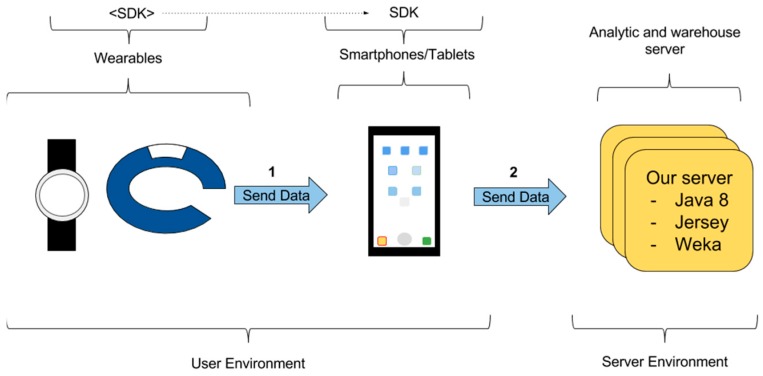
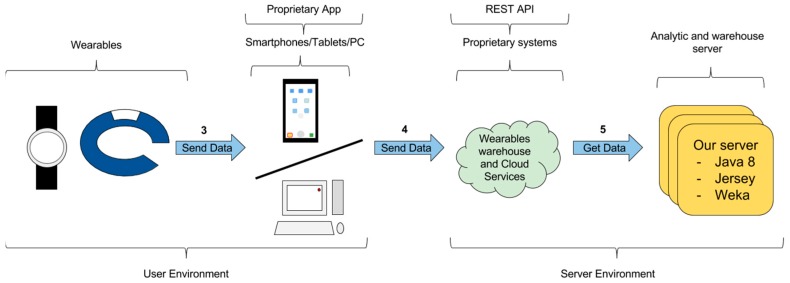
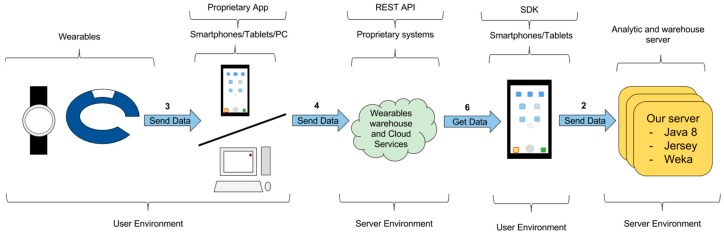
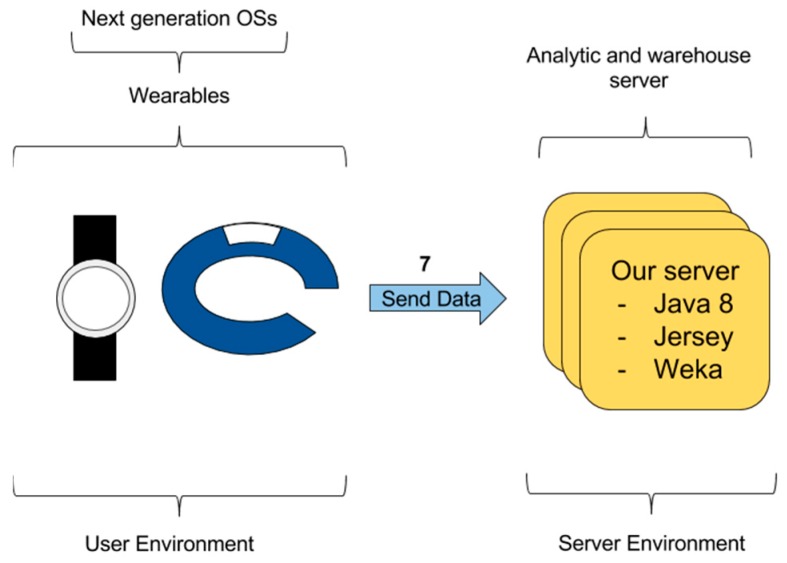
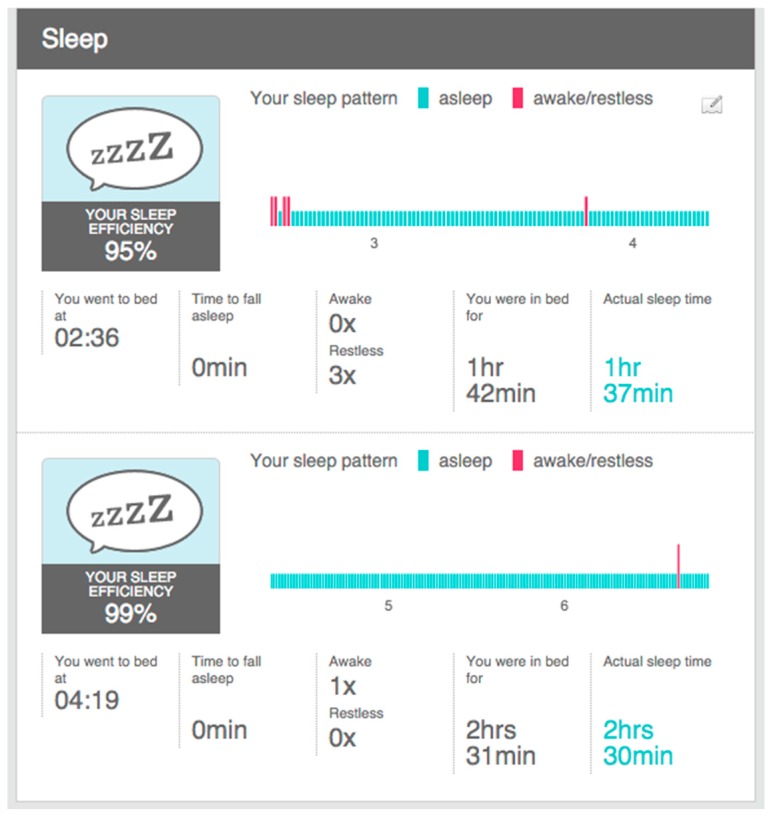
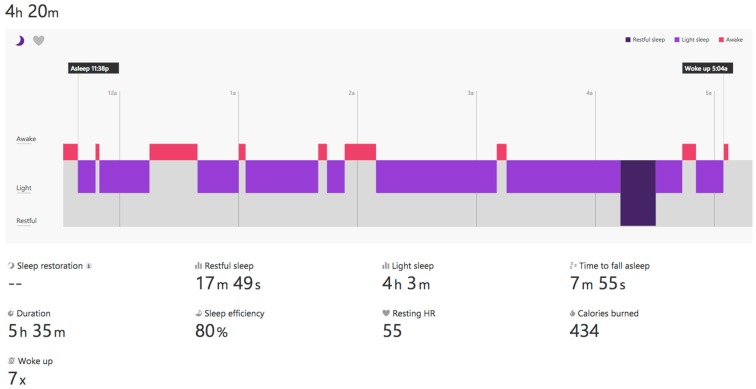
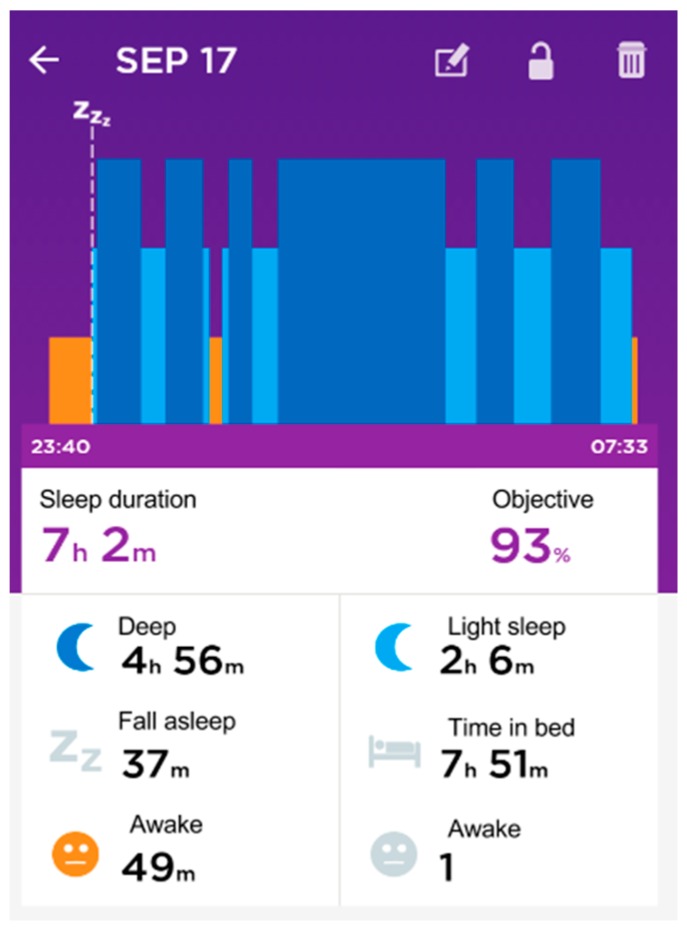
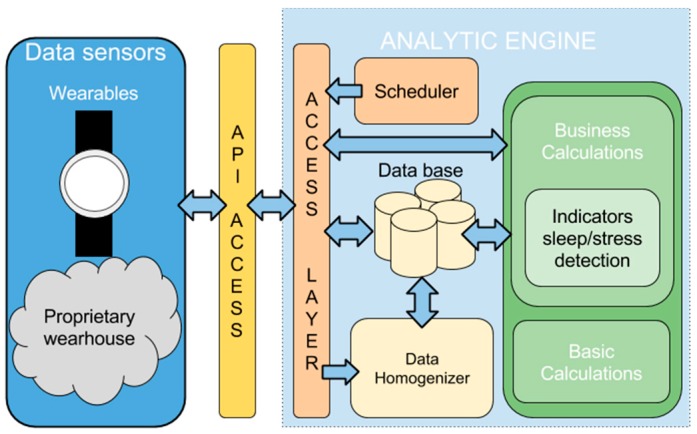
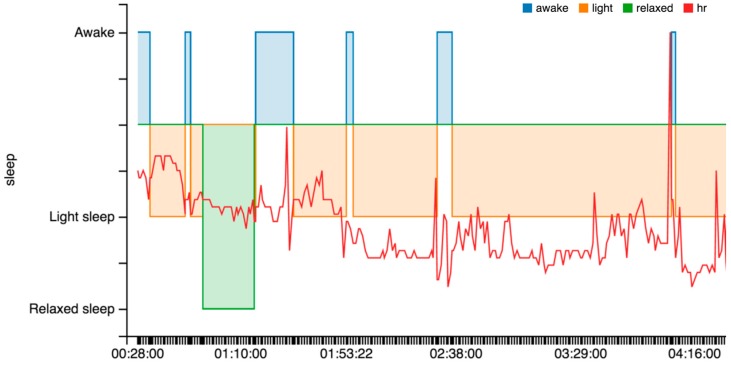
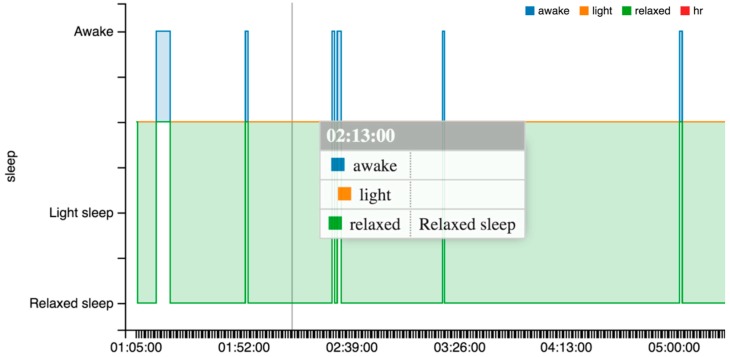
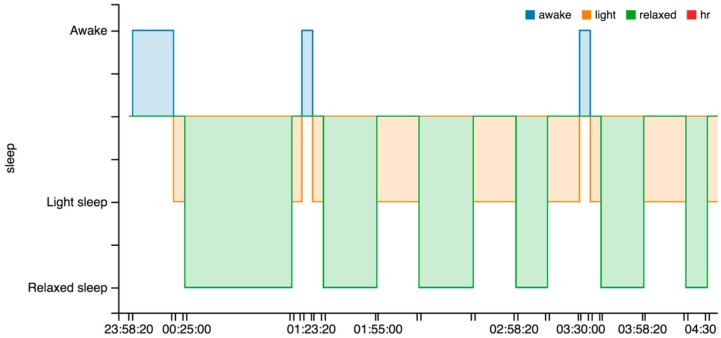
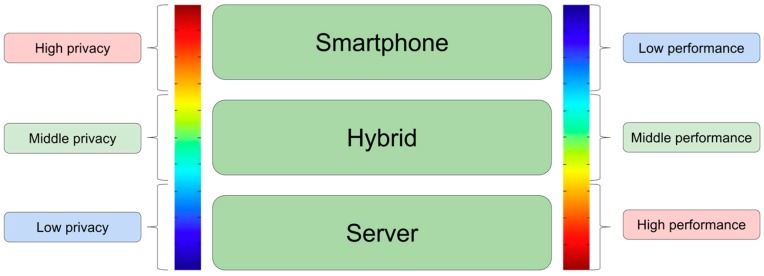
Verification
Claims the paper makes
The claims and statistics of this paper haven’t been checked yet.
Run the check — free, no account needed. It reads the open-access text and checks the sources it cites.
Claims other papers make about this one
Each is checked against this paper’s own text: does it say what the citing paper says it does?
The check wasn’t confident either way, so it gives no verdict — never disputed.
In the citing paper
“Previous research has highlighted risks stemming from inadequate data protection, opaque third-party sharing practices, and regulatory gaps that leave users vulnerable to breaches 33,42,54 .”
From Privacy in consumer wearable technologies: a living systematic analysis of data policies across leading manufacturers (2025) · cites this paper as [54]
Experimental — accuracy not yet measuredIn the citing paper
“Therefore, rather than comprising only standardised functional test data, as would be the case in a clinical setting, the patient ambulatory movement dataset contains data corresponding to all patient movements whilst wearing each IMU sensor, including rest, casual walking, strenuous exercise and sleeping [36].”
From Review of Wearable Devices and Data Collection Considerations for Connected Health (2021) · cites this paper as [36]
Self-check
Percentages, sums and reported differences re-computed from the paper’s own numbers.
The self-check needs the paper’s full text.
Citations
Cites
The Pittsburgh Sleep Quality Index: a new instrument for psychiatric practice and research
Buysse, D. J., Reynolds, C. F., Monk, T. H., Berman, S. R., & Kupfer, D. J. (1989) · Psychiatry Research · doi:10.1016/0165-1781(89)90047-4 · Cited by 35,234
A self-assessment questionnaire to determine morningness- eveningness in human circadian rhythms
Home, J. K. (1976) · Medical Entomology and Zoology · Cited by 4,783
(1976) · PubMed · Cited by 3,979
Self-Regulated Learning and Academic Achievement
(2013) · doi:10.4324/9781410601032 · Cited by 1,325
The Rise of Consumer Health Wearables: Promises and Barriers
Piwek, L., Ellis, D. A., Andrews, S., & Joinson, A. (2016) · PLoS Medicine · doi:10.1371/journal.pmed.1001953 · Cited by 1,301
Swan, M. (2012) · Journal of Sensor and Actuator Networks · doi:10.3390/jsan1030217 · Cited by 934 · cited 1×
“In a similar way, this problem is being replicated in wearable devices. a similar way, this problem is being replicated in wearable devices”
From the Internet of Computers to the Internet of Things
Mattern, F., & Flörkemeier, C. (2010) · Lecture notes in computer science · doi:10.1007/978-3-642-17226-7_15 · Cited by 677
Buechley, L., Eisenberg, M., Catchen, J., & Crockett, A. (2008) · CHI Conference on Human Factors in Computing Systems · doi:10.1145/1357054.1357123 · Cited by 605
Communication network requirements for major smart grid applications in HAN, NAN and WAN
Kuzlu, M., Pipattanasomporn, M., & Rahman, S. (2014) · Computer Networks · doi:10.1016/j.comnet.2014.03.029 · Cited by 586
Stress Recognition Using Wearable Sensors and Mobile Phones
Sano, A., & Picard, R. W. (2013) · 2013 Humaine Association Conference on Affective Computing and Intelligent Interaction · doi:10.1109/acii.2013.117 · Cited by 523
Research works printed but not linked: 3
- Mattern, F., and Floerkemeier, C. (2010). From Active Data Management to Event-Based Systems and More, Springer.
- IEEE-SA P2413. Standard for an Architectural Framework for the Internet of Things (IoT). Available online: https://standards.ieee.org/develop/project/2413.html.
- Mark, H., Ian, W., and Eibe, F. (2011). Data Mining: Practical Machine Learning Tools and Techniques, Morgan Kaufmann Publishers.
Cited by
Sorted by citations
Henriksen, A., Haugen Mikalsen, M., Woldaregay, A. Z., Muzny, M., Hartvigsen, G., Hopstock, L. A., & Grimsgaard, S. (2018) · Journal of Medical Internet Research · doi:10.2196/jmir.9157 · Cited by 542
Review of Wearable Devices and Data Collection Considerations for Connected Health
Vijayan, V., Connolly, J. P., Condell, J., McKelvey, N., & Gardiner, P. (2021) · Sensors · doi:10.3390/s21165589 · Cited by 435
Review on Wearable Technology Sensors Used in Consumer Sport Applications
Aroganam, G., Manivannan, N., & Harrison, D. (2019) · Sensors · doi:10.3390/s19091983 · Cited by 416
Sensors and Functionalities of Non-Invasive Wrist-Wearable Devices: A Review
Kamišalić, A., Fister, I., Turkanović, M., & Karakatič, S. (2018) · Sensors · doi:10.3390/s18061714 · Cited by 272
Azimi, I., Anzanpour, A., Rahmani, A. M., Pahikkala, T., Levorato, M., Liljeberg, P., & Dutt, N. D. (2017) · ACM Transactions on Embedded Computing Systems · doi:10.1145/3126501 · Cited by 177
Metadata
- Authors
- De Arriba-Pérez, F., Caeiro-Rodríguez, M., & Santos-Gago, J.
- Affiliations
- Universidade de Vigo (ES)
- Department of Telematics Engineering, University of Vigo, Campus Lagoas-Marcosende, Vigo 36310, Spain
- Corresponding author
- De Arriba-Pérez, Francisco
- Venue
- Sensors
- Publisher
- MDPI AG
- Published
- 2016-09-21
- Volume
- 16
- Issue
- 9
- Pages
- 1538
- ISSN
- 1424-8220 (ISSN-L)
- PMC
- PMC5038811
- OpenAlex
- W2523343665
- Semantic Scholar
- 25fb7987917007358083b5e826ad57c75f5f4694
- Cited by
- 153
- References
- 42
- Citations by year
- 2026: 10 · 2025: 12 · 2024: 16 · 2023: 13 · 2022: 12 · 2021: 26 · 2020: 23 · 2019: 25 · 2018: 12 · 2017: 4
- FWCI
- 9.29
- Type
- journal article
- Language
- en
- Open access
- gold
- doi.org
- Licence
- Locations
- Sensors (publishedVersion, cc-by)
- PubMed Central (publishedVersion, cc-by)
- PubMed (publishedVersion)
- Investigo Institutional repository of UVigo (Universidade de Vigo) (submittedVersion, cc-by)
- DOAJ (DOAJ: Directory of Open Access Journals) (submittedVersion, cc-by-sa)
- Funders
- Xunta de Galicia (GRC2013-006)
- Topics
- Physical Sciences › Computer Science › Computer Vision and Pattern Recognition › Context-Aware Activity Recognition Systems
- Physical Sciences › Computer Science › Computer Networks and Communications › IoT and Edge/Fog Computing
- Physical Sciences › Engineering › Biomedical Engineering › Wireless Body Area Networks
- Keywords
- wearable sensor data, interoperability, heterogeneous devices, sleep monitoring, stress symptoms, heart rate, accelerometer, pedometers, machine-to-machine communication, data collection and processing
About these checks
Registry, retraction, Cites and statistics results are computed, not judged, with one exception: a printed reference that no index lists is read once by a model before it counts as a citation error. Claims are extracted by a model and kept only when their quote appears verbatim in the text; each cited source is then checked, with a model’s help, for whether it says what the claim relies on. Those verdicts can be wrong — read the claim’s quote and the cited source before relying on one.
Statistics and arithmetic are recomputed, not judged.
Confidence bands are shown only for fields calibrated on our annotated test set. None is calibrated yet, so no band is shown.
What counts as a claim ›How we measure confidence ›How we check this ›
Are you an author, or do you see a problem with this page? Request a review
