

The DOI matches its Crossref record; 46 of the 46 references it cites were found in a registry or an index.
An Adaptive Multi-Sensor Data Fusion Method Based on Deep Convolutional Neural Networks for Fault Diagnosis of Planetary Gearbox
Open accessAbstract
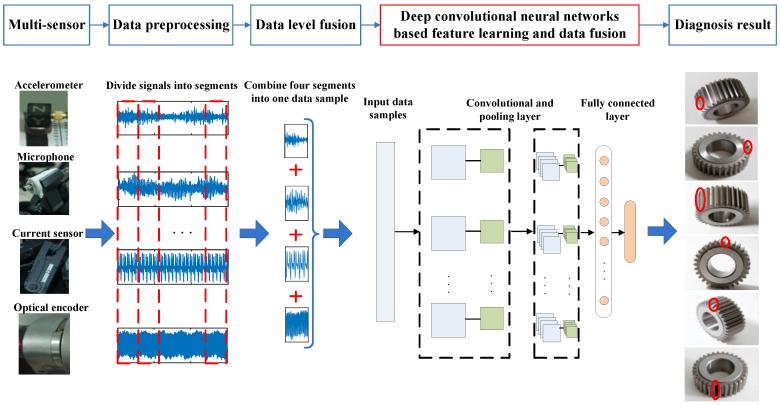
A fault diagnosis approach based on multi-sensor data fusion is a promising tool to deal with complicated damage detection problems of mechanical systems. Nevertheless, this approach suffers from two challenges, which are (1) the feature extraction from various types of sensory data and (2) the selection of a suitable fusion level. It is usually difficult to choose an optimal feature or fusion level for a specific fault diagnosis task, and extensive domain expertise and human labor are also highly required during these selections. To address these two challenges, we propose an adaptive multi-sensor data fusion method based on deep convolutional neural networks (DCNN) for fault diagnosis. The proposed method can learn features from raw data and optimize a combination of different fusion levels adaptively to satisfy the requirements of any fault diagnosis task. The proposed method is tested through a planetary gearbox test rig. Handcraft features, manual-selected fusion levels, single sensory data, and two traditional intelligent models, back-propagation neural networks (BPNN) and a support vector machine (SVM), are used as comparisons in the experiment. The results demonstrate that the proposed method is able to detect the conditions of the planetary gearbox effectively with the best diagnosis accuracy among all comparative methods in the experiment.
Overview
The claims and statistics of this paper haven’t been checked yet.
Free: it reads the open-access text and checks the first 5 claims that cite a source we can check. Create a free account to check every claim.
Integrity signals
Registry
Cites
Statistics
Figures
Verification
Claims the paper makes
The claims and statistics of this paper haven’t been checked yet.
Free: it reads the open-access text and checks the first 5 claims that cite a source we can check. Create a free account to check every claim.
Self-check
Percentages, sums and reported differences re-computed from the paper’s own numbers.
The self-check needs the paper’s full text.
Citations
Cites
Very Deep Convolutional Networks for Large-Scale Image Recognition
Simonyan, K., & Zisserman, A. (2014) · arXiv · doi:10.48550/arxiv.1409.1556 · Cited by 114,148 · cited 1×
“Sensors 2017 , 17 , 414 where C cn is the cn -th output of the convolutional layer, and the output number is CN , which is also equal to the filter number; ∗ is an operator of convolution; X cc represents the input data of cc-th channel of previous layer l − 1, and the channel number is CC ; W lcn…”
BackgroundImageNet classification with deep convolutional neural networks
Krizhevsky, A., Sutskever, I., & Hinton, G. E. (2017) · Communications of the ACM · doi:10.1145/3065386 · Cited by 112,155 · cited 1×
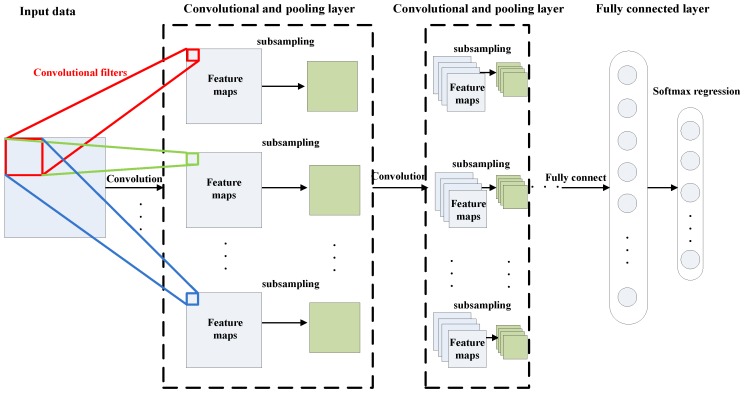
“DCNN contains three kinds of layers [25], which are the convolutional layer, pooling layer, and fully-connected layer.”
BackgroundLeCun, Y., Bengio, Y., & Hinton, G. (2015) · Nature · doi:10.1038/nature14539 · Cited by 84,126
Rich Feature Hierarchies for Accurate Object Detection and Semantic Segmentation
Girshick, R., Donahue, J., Darrell, T., & Malik, J. (2014) · 2014 IEEE Conference on Computer Vision and Pattern Recognition · doi:10.1109/cvpr.2014.81 · Cited by 32,684
Rethinking the Inception Architecture for Computer Vision
Szegedy, C., Vanhoucke, V., Ioffe, S., Shlens, J., & Wojna, Z. (2016) · 2016 IEEE Conference on Computer Vision and Pattern Recognition (CVPR) · doi:10.1109/cvpr.2016.308 · Cited by 32,138
Human-level control through deep reinforcement learning
Mnih, V., Kavukcuoglu, K., Silver, D., Rusu, A. A., Veness, J., Bellemare, M. G., Graves, A., Riedmiller, M., Fidjeland, A. K., Ostrovski, G., et al. (2015) · Nature · doi:10.1038/nature14236 · Cited by 30,357
Deep learning in neural networks: an overview
Schmidhuber, J. (2015) · Neural Networks · doi:10.1016/j.neunet.2014.09.003 · Cited by 18,570
Representation Learning: A Review and New Perspectives
Bengio, Y., Courville, A., & Vincent, P. (2013) · IEEE Transactions on Pattern Analysis and Machine Intelligence · doi:10.1109/tpami.2013.50 · Cited by 13,001
Learning Deep Architectures for AI
Bengio, Y. (2009) · Foundations and Trends® in Machine Learning · doi:10.1561/2200000006 · Cited by 9,239
3D Convolutional Neural Networks for Human Action Recognition
Ji, S., Xu, W., Yang, M., & Yu, K. (2013) · IEEE Transactions on Pattern Analysis and Machine Intelligence · doi:10.1109/tpami.2012.59 · Cited by 6,235
(2011) · Cited by 3,939
OverFeat: Integrated Recognition, Localization and Detection using Convolutional Networks
Sermanet, P., Eigen, D., Zhang, X., Mathieu, M., Fergus, R., & LeCun, Y. (2013) · arXiv · doi:10.48550/arxiv.1312.6229 · Cited by 2,680
An introduction to multisensor data fusion
Hall, D. L., & Llinas, J. (1997) · Proceedings of the IEEE · doi:10.1109/5.554205 · Cited by 2,629
Multisensor data fusion: A review of the state-of-the-art
Khaleghi, B., Khamis, A., Karray, F. O., & Razavi, S. N. (2013) · Information Fusion · doi:10.1016/j.inffus.2011.08.001 · Cited by 2,074 · cited 1×
“Adding recurrent architecture may make the model suitable to predict future fault conditions, and combining with auto-encoder architecture may improve the feature learning ability to capture more complex features.”
BackgroundJia, F., Lei, Y., Lin, J., Zhou, X., & Lu, N. (2016) · Mechanical Systems and Signal Processing · doi:10.1016/j.ymssp.2015.10.025 · Cited by 1,710
Real-Time Motor Fault Detection by 1-D Convolutional Neural Networks
Ince, T., Kiranyaz, S., Eren, L., Askar, M., & Gabbouj, M. (2016) · IEEE Transactions on Industrial Electronics · doi:10.1109/tie.2016.2582729 · Cited by 1,407
Abdeljaber, O., Avci, O., Kiranyaz, S., Gabbouj, M., & Inman, D. J. (2017) · Journal of Sound and Vibration · doi:10.1016/j.jsv.2016.10.043 · Cited by 1,278
Convolutional Neural Network Based Fault Detection for Rotating Machinery
Janssens, O., Slavkovikj, V., Vervisch, B., Stockman, K., Loccufier, M., Verstockt, S., Van de Walle, R., & Van Hoecke, S. (2016) · Journal of Sound and Vibration · doi:10.1016/j.jsv.2016.05.027 · Cited by 1,255
Lei, Y., Jia, F., Lin, J., Xing, S., & Ding, S. X. (2016) · IEEE Transactions on Industrial Electronics · doi:10.1109/tie.2016.2519325 · Cited by 1,191
Hierarchical adaptive deep convolution neural network and its application to bearing fault diagnosis
Guo, X., Chen, L., & Shen, C. (2016) · Measurement · doi:10.1016/j.measurement.2016.07.054 · Cited by 782 · cited 2×
“However, most of the measurement data for mechanical fault diagnosis only correlate with time, which is a 1D parameter fault diagnosis image be more expensive in terms of computation, a larger filter can be the means complicated hyper-parameters as well as various choices of architectures, which…”
BackgroundLu, C., Wang, Z.-Y., Qin, W.-L., & Ma, J. (2017) · Signal Processing · doi:10.1016/j.sigpro.2016.07.028 · Cited by 775
Learning to Monitor Machine Health with Convolutional Bi-Directional LSTM Networks
Zhao, R., Yan, R., Wang, J., & Mao, K. (2017) · Sensors · doi:10.3390/s17020273 · Cited by 741
Condition monitoring and fault diagnosis of planetary gearboxes: A review
Lei, Y., Lin, J., Zuo, M. J., & He, Z. (2014) · Measurement · doi:10.1016/j.measurement.2013.11.012 · Cited by 731 · cited 1×
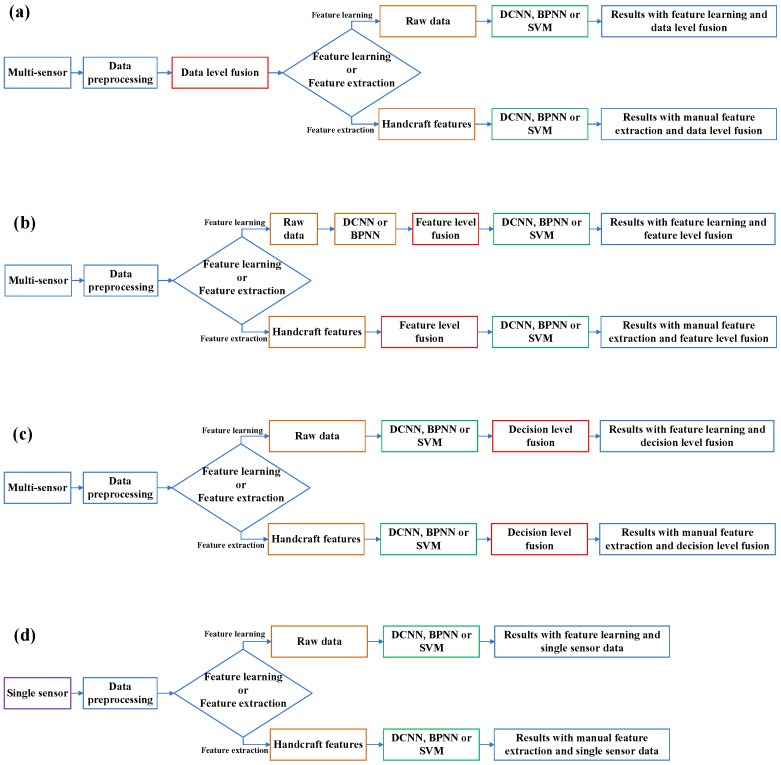
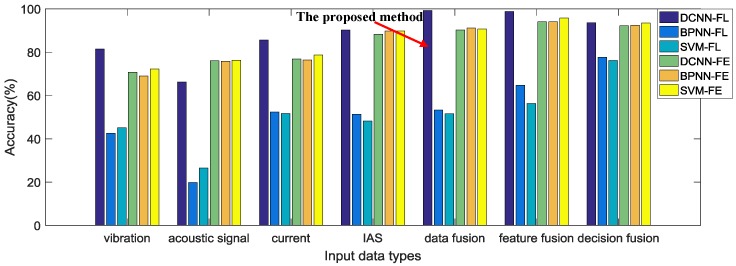
“…as the kernel function and the grid search method to optimize the parameters of the kernel. with feature learning from raw data, only DCNN and BPNN to learn features from the raw data of each sensor, The three comparative models, DCNN, BPNN, and SVM, are marked in green in Figure 3. respectively.”
MethodA sparse auto-encoder-based deep neural network approach for induction motor faults classification
Sun, W., Shao, S., Zhao, R., Yan, R., Zhang, X., & Chen, X. (2016) · Measurement · doi:10.1016/j.measurement.2016.04.007 · Cited by 698
Evaluation of convolutional neural networks for visual recognition
Nebauer, C. (1998) · IEEE Transactions on Neural Networks · doi:10.1109/72.701181 · Cited by 597 · cited 3×
“Since a global constant learning rate easily causes either a slow convergence with a lower learning rate or a serious fluctuation of the convergence with a higher learning rate, an adaptive learning rate is employed.”
BackgroundInfluentialGearbox fault diagnosis based on deep random forest fusion of acoustic and vibratory signals
Li, C., Sanchez, R.-V., Zurita, G., Cerrada, M., Cabrera, D., & Vásquez, R. E. (2016) · Mechanical Systems and Signal Processing · doi:10.1016/j.ymssp.2016.02.007 · Cited by 470 · cited 2×
“Although most applications of DCNN in image recognition chose a 2D convolutional [11,22,36], and some researchers [20,37] also used the same way to diagnose mechanical , we select a In our opinion, the main reason behind the applications of the 2D convolutional structure of DCNN in image analysis…”
BackgroundMethodGearbox Fault Identification and Classification with Convolutional Neural Networks
Chen, Z., Li, C., & Sanchez, R.-V. (2015) · Shock and Vibration · doi:10.1155/2015/390134 · Cited by 391 · cited 4×
“Root mean square (RMS), kurtosis, crest factor, sk wness, mean, minimum, ma imum, and vari ce are chosen as the handcraft features in the time domain [34,37,42].”
BackgroundMethodInfluentialExploring convolutional neural network structures and optimization techniques for speech recognition
Abdel-Hamid, O., Deng, L., & Yu, D. (2013) · Interspeech 2013 · doi:10.21437/interspeech.2013-744 · Cited by 384 · cited 2×
“Eight time-domain features and several frequency-domain features are extracted.”
BackgroundConvolutional Networks Can Learn to Generate Affinity Graphs for Image Segmentation
Turaga, S. C., Murray, J. F., Jain, V., Roth, F., Helmstaedter, M., Briggman, K., Denk, W., & Seung, H. S. (2010) · Neural Computation · doi:10.1162/neco.2009.10-08-881 · Cited by 376 · cited 2×
“Although most applications of DCNN in image recognition chose a 2D convolutional structure [11,22,36], and some researchers [20,37] also used the same way to diagnose mechanical faults, we select a one-dimensional (1D) convolutional structure with a 1D filter bank as the kernel of the DCNN model.”
MethodA survey of randomized algorithms for training neural networks
Zhang, L., & Suganthan, P. N. (2016) · Information Sciences · doi:10.1016/j.ins.2016.01.039 · Cited by 352 · cited 1×
“Although there are several researches [39,40] about the automatic optimization of parameters of DCNN, the optimized process is usually time-consuming and easily converges into a local optimum due to the large number of parameters of DCNN.”
BackgroundPlanetary gearbox fault diagnosis using an adaptive stochastic resonance method
Lei, Y., Han, D., Lin, J., & He, Z. (2013) · Mechanical Systems and Signal Processing · doi:10.1016/j.ymssp.2012.06.021 · Cited by 299
Monitoring gear vibrations through motor current signature analysis and wavelet transform
Kar, C., & Mohanty, A. R. (2006) · Mechanical Systems and Signal Processing · doi:10.1016/j.ymssp.2004.07.006 · Cited by 254
Fault Diagnosis for Rotating Machinery Using Vibration Measurement Deep Statistical Feature Learning
Li, C., Sánchez, R.-V., Zurita, G., Cerrada, M., & Cabrera, D. (2016) · Sensors · doi:10.3390/s16060895 · Cited by 246 · cited 1×
“The outputs of second-last layers of DCNN are extracted as the learned”
MethodImmovilli, F., Cocconcelli, M., Bellini, A., & Rubini, R. (2009) · IEEE Transactions on Industrial Electronics · doi:10.1109/tie.2009.2025288 · Cited by 201 · cited 1×
“Although most applications of DCNN in image recognition chose a 2D convolutional [11,22,36], and some researchers [20,37] also used the same way to diagnose mechanical , we select a In our opinion, the main reason behind the applications of the 2D convolutional structure of DCNN in image analysis…”
MethodThe measurement of instantaneous angular speed
Li, Y., Gu, F., Harris, G., Ball, A., Bennett, N., & Travis, K. (2005) · Mechanical Systems and Signal Processing · doi:10.1016/j.ymssp.2004.04.003 · Cited by 176
Amarnath, M., & Krishna, I. R. P. (2014) · Measurement · doi:10.1016/j.measurement.2014.08.015 · Cited by 101 · cited 1×
“Although most applications of DCNN in image recognition chose a 2D convolutional [11,22,36], and some researchers [20,37] also used the same way to diagnose mechanical , we select a In our opinion, the main reason behind the applications of the 2D convolutional structure of DCNN in image analysis…”
MethodSerdio, F., Lughofer, E. D., Pichler, K., Buchegger, T., Pichler, M., & Efendic, H. (2014) · Information Fusion · doi:10.1016/j.inffus.2014.03.006 · Cited by 99
A Method Based on Multi-Sensor Data Fusion for Fault Detection of Planetary Gearboxes
Lei, Y., Lin, J., He, Z., & Kong, D. (2012) · Sensors · doi:10.3390/s120202005 · Cited by 97 · cited 1×
“Although most applications of DCNN in image recognition chose a 2D convolutional [11,22,36], and some researchers [20,37] also used the same way to diagnose mechanical , we select a In our opinion, the main reason behind the applications of the 2D convolutional structure of DCNN in image analysis…”
MethodAbu-Mahfouz, I. (2005) · International Journal of General Systems · doi:10.1080/03081070500065726 · Cited by 83 · cited 2×
“In addition, the fast Fourier-transform (FFT) energy of each sample, which is obtained by splitting the frequency spectrum of each sample into 32 average bands and calculating the RMS of each band [46], is also added into the handcraft features in the frequency domain.”
MethodLow speed bearings fault detection and size estimation using instantaneous angular speed
Moustafa, W., Cousinard, O., Bolaers, F., Sghir, K. A., & Dron, J.-P. (2014) · Journal of Vibration and Control · doi:10.1177/1077546314560600 · Cited by 71 · cited 2×
“Although most applications of DCNN in image recognition chose a 2D convolutional [11,22,36], and some researchers [20,37] also used the same way to diagnose mechanical , we select a In our opinion, the main reason behind the applications of the 2D convolutional structure of DCNN in image analysis…”
MethodApplication of psychoacoustics for gear fault diagnosis using artificial neural network
Kane, P. V., & Andhare, A. B. (2016) · Journal of low frequency noise, vibration and active control · doi:10.1177/0263092316660915 · Cited by 67 · cited 2×
“Root mean square (RMS), kurtosis, crest factor, sk wness, mean, minimum, ma imum, and vari ce are chosen as the handcraft features in the time domain [34,37,42].”
BackgroundKhazaee, M., Ahmadi, H., Omid, M., Banakar, A., & Moosavian, A. (2013) · Insight - Non-Destructive Testing and Condition Monitoring · doi:10.1784/insi.2012.55.6.323 · Cited by 52 · cited 1×
“The wide range of gear ratios, small room in power transmission line, and high transmission efficiency are the most significant advantages of planetary gearboxes [2].”
BackgroundContribution of angular measurements to intelligent gear faults diagnosis
Fedala, S., Rémond, D., Zegadi, R., & Felkaoui, A. (2015) · Journal of Intelligent Manufacturing · doi:10.1007/s10845-015-1162-1 · Cited by 43 · cited 5×
“Although most applications of DCNN in image recognition chose a 2D convolutional [11,22,36], and some researchers [20,37] also used the same way to diagnose mechanical , we select a In our opinion, the main reason behind the applications of the 2D convolutional structure of DCNN in image analysis…”
MethodInfluentialCurrent-based diagnosis for gear tooth breaks in wind turbine gearboxes
Lu, D., Gong, X., & Qiao, W. (2012) · IEEE Energy Conversion Congress and Exposition (ECCE) · doi:10.1109/ecce.2012.6342293 · Cited by 41 · cited 1×
“Although most applications of DCNN in image recognition chose a 2D convolutional [11,22,36], and some researchers [20,37] also used the same way to diagnose mechanical , we select a In our opinion, the main reason behind the applications of the 2D convolutional structure of DCNN in image analysis…”
MethodCustomized Multiwavelets for Planetary Gearbox Fault Detection Based on Vibration Sensor Signals
Sun, H., Zi, Y., He, Z., Yuan, J. P., Wang, X., & Chen, L. (2013) · Sensors · doi:10.3390/s130101183 · Cited by 31 · cited 1×
“Although most applications of DCNN in image recognition chose a 2D convolutional [11,22,36], and some researchers [20,37] also used the same way to diagnose mechanical , we select a In our opinion, the main reason behind the applications of the 2D convolutional structure of DCNN in image analysis…”
MethodLu, D., & Qiao, W. (2013) · IEEE Energy Conversion Congress and Exposition (ECCE) · doi:10.1109/ecce.2013.6647222 · Cited by 18 · cited 2×
“For the current signal, the lin frequency and its sidebands [45] g nerat d by the m dulation of the ch racteristic fr ies of the planetary gearbox ar chosen as its frequency-dom in f atures.”
Method
Research works printed but not linked: 1
- Fedala, S., Rémond, D., Zegadi, R., and Felkaoui, A. (2016). Condition Monitoring of Machinery in Non-Stationary Operations, Springer.
Cited by
Applications of machine learning to machine fault diagnosis: A review and roadmap
Lei, Y., Yang, B., Jiang, X., Jia, F., Li, N., & Nandi, A. K. (2020) · Mechanical Systems and Signal Processing · doi:10.1016/j.ymssp.2019.106587 · Cited by 2,997
Nweke, H. F., Teh, Y. W., Al-garadi, M. A., & Alo, U. R. (2018) · Expert Systems with Applications · doi:10.1016/j.eswa.2018.03.056 · Cited by 930
Estimation of Bearing Remaining Useful Life Based on Multiscale Convolutional Neural Network
Zhu, J., Chen, N., & Peng, W. (2019) · IEEE Transactions on Industrial Electronics · doi:10.1109/tie.2018.2844856 · Cited by 704
“[25] proposed an adaptive multisensor data fusion approach through a deep con-”
Li, T., Zhou, Z., Li, S., Sun, C., Yan, R., & Chen, X. (2022) · Mechanical Systems and Signal Processing · doi:10.1016/j.ymssp.2021.108653 · Cited by 673
A comprehensive review on convolutional neural network in machine fault diagnosis
Jiao, J., Zhao, M., Lin, J., & Liang, K. (2020) · Neurocomputing · doi:10.1016/j.neucom.2020.07.088 · Cited by 575
Self-citation
Metadata
- Authors
- Jing, L., Wang, T., Zhao, M., & Wang, P.
- Affiliations
- School of Mechanical Engineering, Tianjin University, Tianjin 300354, China
- Tianjin University (CN)
- Xi'an Jiaotong University (CN)
- Corresponding author
- Wang, Taiyong
- ORCID
- Venue
- Sensors
- Publisher
- MDPI AG
- Published
- 2017-02-21
- Volume
- 17
- Issue
- 2
- Pages
- 414
- ISSN
- 1424-8220 (ISSN-L)
- PMC
- PMC5335931
- OpenAlex
- W2589171657
- Cited by
- 379
- References
- 44
- Citations by year
- 2026: 14 · 2025: 27 · 2024: 35 · 2023: 41 · 2022: 52 · 2021: 48 · 2020: 60 · 2019: 69 · 2018: 27 · 2017: 4
- FWCI
- 27.48
- Type
- journal article
- Language
- en
- Open access
- gold
- doi.org
- Licence
- Locations
- Sensors (publishedVersion, cc-by)
- PubMed Central (publishedVersion, cc-by)
- PubMed (publishedVersion)
- DOAJ (DOAJ: Directory of Open Access Journals) (submittedVersion, cc-by-sa)
- Funders
- National Natural Science Foundation of China (51475324)
- National Natural Science Foundation of China and Civil Aviation Administration of China jointly funded project (U1533103)
- Topics
- Physical Sciences › Engineering › Control and Systems Engineering › Machine Fault Diagnosis Techniques
- Physical Sciences › Engineering › Mechanical Engineering › Gear and Bearing Dynamics Analysis
- Physical Sciences › Engineering › Control and Systems Engineering › Fault Detection and Control Systems
- Keywords
- planetary gearbox, fault diagnosis, sensor fusion, deep convolutional neural networks, condition monitoring, mechanical fault detection
About these checks
Registry, retraction, Cites and statistics results are computed, not judged, with one exception: a printed reference that no index lists is read once by a model before it counts as a citation error. Claims are extracted by a model and kept only when their quote appears verbatim in the text; each cited source is then checked, with a model’s help, for whether it says what the claim relies on. Those verdicts can be wrong — read the claim’s quote and the cited source before relying on one.
Statistics and arithmetic are recomputed, not judged.
Confidence bands are shown only for fields calibrated on our annotated test set. None is calibrated yet, so no band is shown.
What counts as a claim ›How we measure confidence ›How we check this ›
Are you an author, or do you see a problem with this page? Request a review
Data sources
Bibliographic data: Semantic Scholar, OpenAlex, Crossref.
Contains information from the Semantic Scholar Academic Graph Datasets, made available under the ODC Attribution License (ODC-BY 1.0).
Semantic Scholar’s data is described in: Kinney, R., et al. (2023). The Semantic Scholar Open Data Platform. arXiv:2301.10140.
