

Convolutional Neural Network-Based Human Detection in Nighttime Images Using Visible Light Camera Sensors
Open accessThe DOI matches its Crossref record; 54 of the 56 references it cites were found in a registry or an index.
Abstract
Because intelligent surveillance systems have recently undergone rapid growth, research on accurately detecting humans in videos captured at a long distance is growing in importance. The existing research using visible light cameras has mainly focused on methods of human detection for daytime hours when there is outside light, but human detection during nighttime hours when there is no outside light is difficult. Thus, methods that employ additional near-infrared (NIR) illuminators and NIR cameras or thermal cameras have been used. However, in the case of NIR illuminators, there are limitations in terms of the illumination angle and distance. There are also difficulties because the illuminator power must be adaptively adjusted depending on whether the object is close or far away. In the case of thermal cameras, their cost is still high, which makes it difficult to install and use them in a variety of places. Because of this, research has been conducted on nighttime human detection using visible light cameras, but this has focused on objects at a short distance in an indoor environment or the use of video-based methods to capture multiple images and process them, which causes problems related to the increase in the processing time. To resolve these problems, this paper presents a method that uses a single image captured at night on a visible light camera to detect humans in a variety of environments based on a convolutional neural network. Experimental results using a self-constructed Dongguk night-time human detection database (DNHD-DB1) and two open databases (Korea advanced institute of science and technology (KAIST) and computer vision center (CVC) databases), as well as high-accuracy human detection in a variety of environments, show that the method has excellent performance compared to existing methods.
Overview
The claims and statistics of this paper haven’t been checked yet.
Free: it reads the open-access text and checks the first 5 claims that cite a source we can check. Create a free account to check every claim.
Integrity signals
Registry
Cites
Statistics
Figures
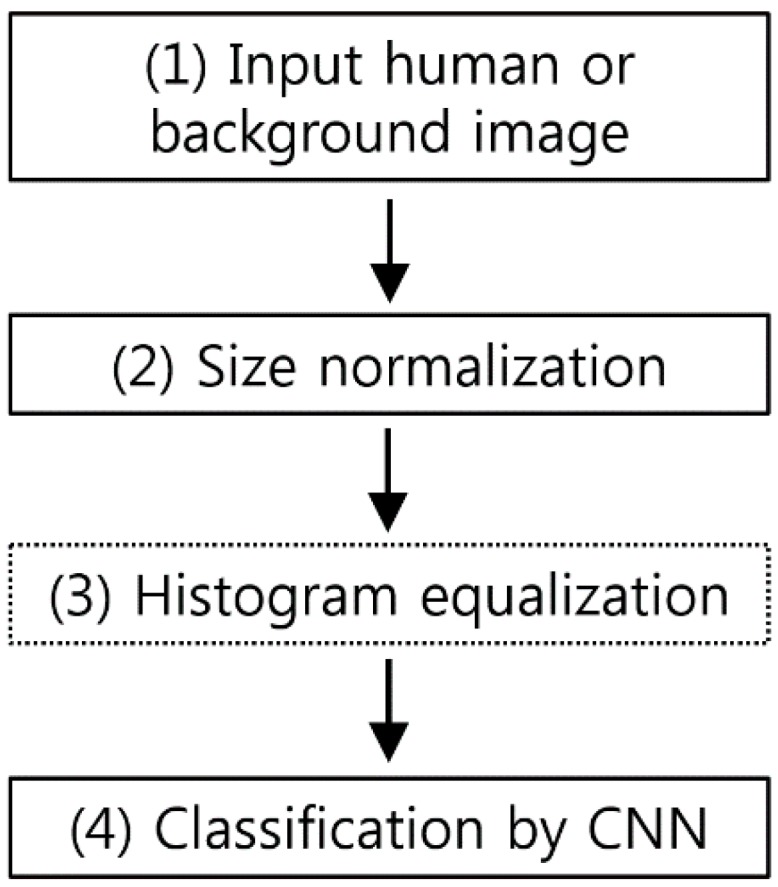
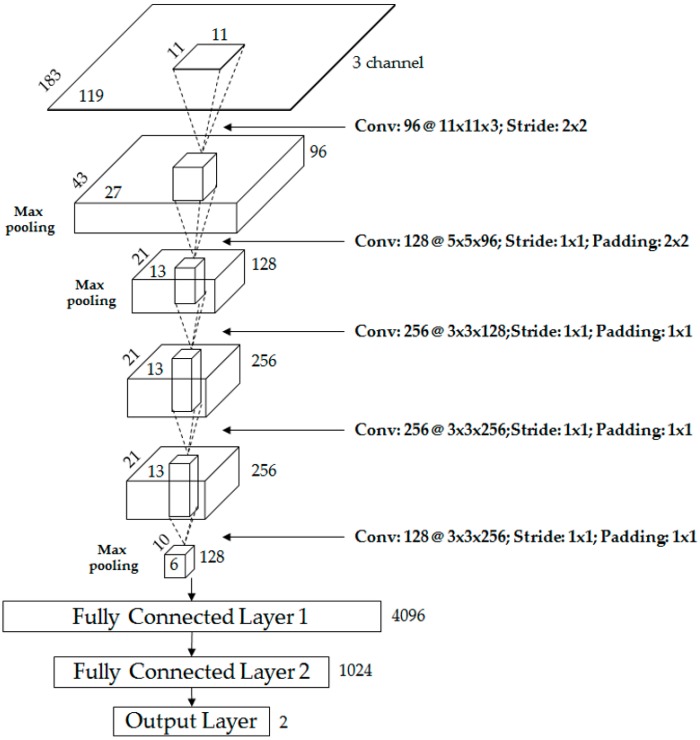
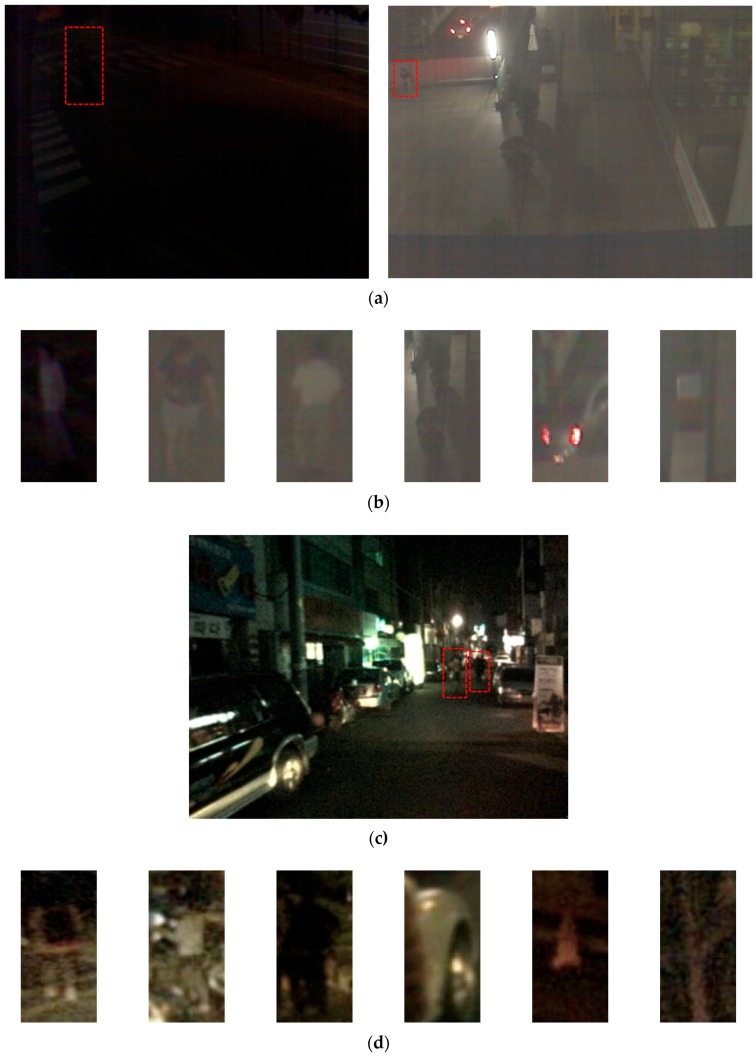
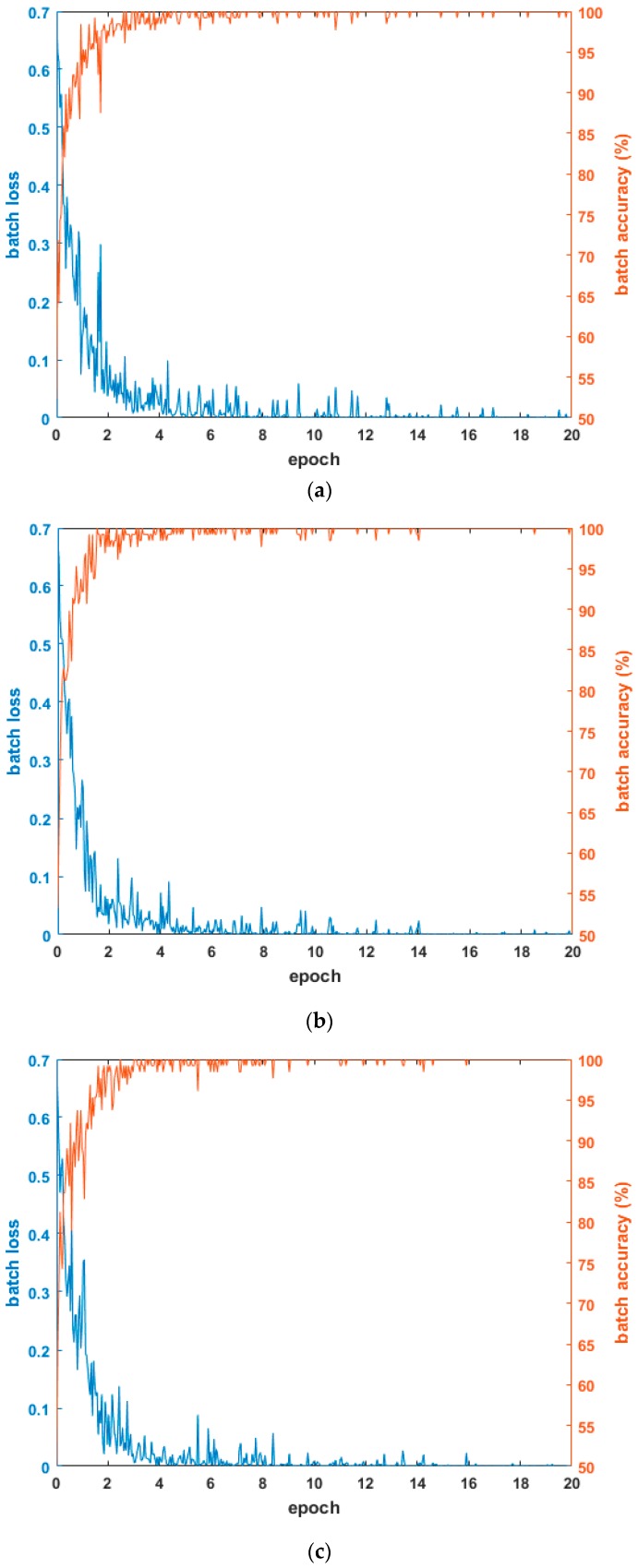

Verification
Claims the paper makes
The claims and statistics of this paper haven’t been checked yet.
Free: it reads the open-access text and checks the first 5 claims that cite a source we can check. Create a free account to check every claim.
Claims other papers make about this one
Each is checked against this paper’s own text: does it say what the citing paper says it does?
The source backs part of the claim, not all of it — or backs it for a different population, condition or comparison.
In the citing paper
“Studies such as Kim et al. [145] have demonstrated the effectiveness of CNNs in low-light conditions, a significant advancement for nighttime AV navigation.”
From Object Detection in Autonomous Vehicles under Adverse Weather: A Review of Traditional and Deep Learning Approaches (2024) · cites this paper as [145]
Experimental — accuracy not yet measuredThe cited source says what the claim attributes to it.
In the citing paper
“The research presented in [145] demonstrates a significant advancement in nighttime human detection using visible light cameras, particularly through the application of convolutional neural networks (CNNs).The method's effectiveness is evident in its superior performance across various contexts, including open and self-constructed databases such as DNHD-DB1, KAIST, and CVC.”
From Object Detection in Autonomous Vehicles under Adverse Weather: A Review of Traditional and Deep Learning Approaches (2024) · cites this paper as [145]
Self-check
Percentages, sums and reported differences re-computed from the paper’s own numbers.
The self-check needs the paper’s full text.
Citations
Cites
Very Deep Convolutional Networks for Large-Scale Image Recognition
Simonyan, K., & Zisserman, A. (2014) · arXiv · doi:10.48550/arxiv.1409.1556 · Cited by 114,148 · cited 2×
“The 1st convolutional layer’s filter size is relatively large, unlike those in previ us studies [52,53], because the input images are dark, with a fairly large amount of noise in their features.”
BackgroundImageNet classification with deep convolutional neural networks
Krizhevsky, A., Sutskever, I., & Hinton, G. E. (2017) · Communications of the ACM · doi:10.1145/3065386 · Cited by 112,155 · cited 10×
“In Equation (2), cx,y is a value obtained by normalization [47].”
BackgroundMethodInfluentialGradient-based learning applied to document recognition
Lecun, Y., Bottou, L., Bengio, Y., & Haffner, P. (1998) · Proceedings of the IEEE · doi:10.1109/5.726791 · Cited by 58,805 · cited 1×
“AlexNet [47] and other existing methods from the literature [48,49] used square input images with the same height and width.”
MethodGoing deeper with convolutions
Szegedy, C., Liu, W., Jia, Y., Sermanet, P., Reed, S., Anguelov, D., Erhan, D., Vanhoucke, V., & Rabinovich, A. (2015) · 2015 IEEE Conference on Computer Vision and Pattern Recognition (CVPR) · doi:10.1109/cvpr.2015.7298594 · Cited by 48,562
Histograms of Oriented Gradients for Human Detection
Dalal, N., & Triggs, B. (2005) · 2005 IEEE Computer Society Conference on Computer Vision and Pattern Recognition (CVPR'05) · doi:10.1109/cvpr.2005.177 · Cited by 33,584 · cited 7×
“As shown in Figure 9, the accuracies with the proposed m thod re higher t an those using previous methods [16,42].”
MethodInfluential(2014) · Cited by 33,419
(2010) · International Conference on Machine Learning · Cited by 13,995
(2011) · Cited by 6,993
DeepFace: Closing the Gap to Human-Level Performance in Face Verification
Taigman, Y., Yang, M., Ranzato, M., & Wolf, L. (2014) · 2014 IEEE Conference on Computer Vision and Pattern Recognition · doi:10.1109/cvpr.2014.220 · Cited by 6,542
A Dynamic Histogram Equalization for Image Contrast Enhancement
Abdullah-Al-Wadud, M., Kabir, M., Akber Dewan, M., & Chae, O. (2007) · IEEE Transactions on Consumer Electronics · doi:10.1109/tce.2007.381734 · Cited by 1,346 · cited 1×
“To resolve these problems, research has been performed on a variety of histogram processing and intensity mapping-based image enhancement methods [33–37].”
Method
Research works printed but not linked: 2
- Oren, M., Papageorgiou, C., Sinha, P., Osuna, E., and Poggio, T. (1997, January 17–19). Pedestrian detection using wavelet templates. Proceedings of the IEEE Computer Society Conference on Computer Vision and Pattern Recognition, San Juan, Puerto Rico.
- Gonzalez, R.C., and Woods, R.E. (2010). Digital Image Processing, Prentice Hall. [3rd ed.].
Cited by
Gupta, A., Anpalagan, A., Guan, L., & Khwaja, A. S. (2021) · Array · doi:10.1016/j.array.2021.100057 · Cited by 565
Zhang, Y.-D., Dong, Z., Chen, X., Jia, W., Du, S., Muhammad, K., & Wang, S.-H. (2019) · Multimedia Tools and Applications · doi:10.1007/s11042-017-5243-3 · Cited by 395
“Here the hyperparameters are obtained by experiences, following the settings in open published literature [4, 7, 16].”
Sakaridis, C., Dai, D., & Van Gool, L. (2019) · 2019 IEEE/CVF International Conference on Computer Vision (ICCV) · doi:10.1109/iccv.2019.00747 · Cited by 281
“Several works pertain to human detection at nighttime, using FIR cameras [10, 37], visible light cameras [15], or a combination of both [4].”
BackgroundDark Model Adaptation: Semantic Image Segmentation from Daytime to Nighttime
Dai, D., & Gool, L. V. (2018) · 2018 21st International Conference on Intelligent Transportation Systems (ITSC) · doi:10.1109/itsc.2018.8569387 · Cited by 207
Sakaridis, C., Dai, D., & Van Gool, L. (2022) · IEEE Transactions on Pattern Analysis and Machine Intelligence · doi:10.1109/tpami.2020.3045882 · Cited by 186
Tahir, N. U. A., Zhang, Z., Asim, M., Chen, J., & ELAffendi, M. (2024) · Algorithms · doi:10.3390/a17030103 · Cited by 145
“Studies such as Kim et al. [145] have demonstrated the effectiveness of CNNs in low-light conditions, a significant advancement for nighttime AV navigation.”
Arsalan, M., Naqvi, R. A., Kim, D. S., Nguyen-Ha, P., Owais, M., & Park, K. R. (2018) · Sensors · doi:10.3390/s18051501 · Cited by 127
“CNN delivers good performances in computer vision applications such as human detection [48], open and close eye detection [49], gender recognition [50], pedestrian detection [51], banknote classification [52], appearance-based gaze estimation [53], and object detection using faster R-CNN [54]; more…”
BackgroundSelf-citationDeep Learning-Based Iris Segmentation for Iris Recognition in Visible Light Environment
Arsalan, M., Hong, H. G., Naqvi, R. A., Lee, M., Kim, M., Kim, D. S., Kim, C., & Park, K. R. (2017) · Symmetry · doi:10.3390/sym9110263 · Cited by 124
“The proposed method accurately identified the true boundary even in intense scenarios, such as glasses, off-angle eyes, rotated eyes, side view, and partially opened eyes.”
MethodSelf-citationSchutera, M., Hussein, M., Abhau, J., Mikut, R., & Reischl, M. (2020) · IEEE Transactions on Intelligent Vehicles · doi:10.1109/tiv.2020.3039456 · Cited by 100
VisNet: Deep Convolutional Neural Networks for Forecasting Atmospheric Visibility
Palvanov, A., & Cho, Y. I. (2019) · Sensors · doi:10.3390/s19061343 · Cited by 99
CNN-Based Person Detection Using Infrared Images for Night-Time Intrusion Warning Systems
Park, J., Chen, J., Cho, Y. K., Kang, D. Y., & Son, B.-J. (2019) · Sensors · doi:10.3390/s20010034 · Cited by 99
CDAda: A Curriculum Domain Adaptation for Nighttime Semantic Segmentation
Xu, Q., Ma, Y., Wu, J. B., Long, C., & Huang, X. (2021) · IEEE International Conference on Computer Vision Workshops · doi:10.1109/iccvw54120.2021.00331 · Cited by 79
“Some works realize people detection in nighttime through FIR cameras [39, 12], or visible light cameras [16], or the combination of both [5, 7].”
BackgroundKhellal, A., Ma, H., & Fei, Q. (2018) · Sensors · doi:10.3390/s18051490 · Cited by 78
Kim, J. H., Batchuluun, G., & Park, K. R. (2018) · Expert Systems with Applications · doi:10.1016/j.eswa.2018.07.020 · Cited by 77
Self-citationEfficient Pedestrian Detection at Nighttime Using a Thermal Camera
Baek, J., Hong, S., Kim, J., & Kim, E. (2017) · Sensors · doi:10.3390/s17081850 · Cited by 76
“utilize convolutional neural network (CNN) for nighttime PD using visible images [25].”
MethodSelf-citationRahim, A., Maqbool, A., & Rana, T. A. (2021) · PLoS ONE · doi:10.1371/journal.pone.0247440 · Cited by 67
Kim, B., Yuvaraj, N. R., Preethaa, K. R. S., Santhosh, R., & Sabari, A. (2020) · Soft Computing · doi:10.1007/s00500-020-04999-1 · Cited by 59
“In addition (Kim et al. 2017), GA has the good ability to make a global search and explore the entire search space with different kinds of crossover values (Lai and Teoh 2014).”
RetractedLeung, H. K., Chen, X.-Z., Yu, C.-W., Hong-yi, L., Wu, J.-Y., & Chen, Y. (2019) · Applied Sciences · doi:10.3390/app9224769 · Cited by 52
“A study [16] on nighttime human detection with CNNs indicated that the images captured by visible-light cameras can cope well with CNNs because the neural network model can adapt to the marginal difference in the nighttime images to filter and capture the features of the object.”
BackgroundReal-Time Human Recognition at Night via Integrated Face and Gait Recognition Technologies
Manssor, S. A. F., Sun, S., & Elhassan, M. A. M. (2021) · Sensors · doi:10.3390/s21134323 · Cited by 44
Dark Model Adaptation: Semantic Image Segmentation from Daytime to NighttimePreprint
Dai, D., & Gool, L. V. (2018) · arXiv (Cornell University) · doi:10.48550/arxiv.1810.02575 · Cited by 42
Human detection in aerial thermal imaging using a fully convolutional regression network
Haider, A., Shaukat, F., & Mir, J. (2021) · Infrared Physics & Technology · doi:10.1016/j.infrared.2021.103796 · Cited by 40
Li, C., Yang, S. X., Yang, Y., Gao, H., Zhao, J. X., Qu, X., Wang, Y., Yao, D., & Gao, J. (2018) · Sensors · doi:10.3390/s18103587 · Cited by 32
A complex junction recognition method based on GoogLeNet model
Li, C., Zhang, H., Wu, P., Yin, Y., & Liu, S. (2020) · Transactions in GIS · doi:10.1111/tgis.12681 · Cited by 31
Seidel, R., Jahn, N., Seo, S., Goerttler, T., & Obermayer, K. (2022) · IEEE Open Journal of Intelligent Transportation Systems · doi:10.1109/ojits.2021.3139393 · Cited by 28
Kang, J. K., Hong, H. G., & Park, K. R. (2017) · Sensors · doi:10.3390/s17071598 · Cited by 25
“This study used stochastic gradient descent (SGD) method for the CNN training method is a tool to find the optimal weight, which minimizes the difference between the calculated outputs based on the derivatives [35].”
BackgroundMethodInfluentialSelf-citationReal-time moving human detection using HOG and Fourier descriptor based on CUDA implementation
Bahri, H., Chouchene, M., Sayadi, F. E., & Atri, M. (2019) · Journal of Real-Time Image Processing · doi:10.1007/s11554-019-00935-1 · Cited by 21
“Hyun Kim [36] introduced a convolutional neural network-based human detection in nighttime images using visible light camera sensors.”
BackgroundFrom Vision to Precision: The Dynamic Transformation of Object Detection in Autonomous Systems
Alabyad, N., Hany, Z., Mostafa, A., Eldaby, R., Tagen, I. A., & Mehanna, A. (2024) · International Conference on Computing and Informatics (ICCI) · doi:10.1109/icci61671.2024.10485026 · Cited by 18
“In the realm of self-driving cars, CNNs play a vital role in discerning driver behavior and extracting information such as gaze direction, emotional state, cognitive load, body pose estimation, and drowsiness [33].”
BackgroundHUMAN DETECTION BASED ON A SEQUENCE OF THERMAL IMAGES USING DEEP LEARNING
Wang, X., & Hosseinyalamdary, S. (2019) · The international archives of the photogrammetry, remote sensing and spatial information sciences/International archives of the photogrammetry, remote sensing and spatial information sciences · doi:10.5194/isprs-archives-xlii-2-w13-127-2019 · Cited by 18
“The disadvantage of thermal images is that the thermal detector is susceptible to non-human factors when the outside temperature is high (Kim et al., 2017; Baek, Hong, Kim, & Kim, 2017).”
BackgroundMukilan, P., & Semunigus, W. (2021) · Neural Computing and Applications · doi:10.1007/s00521-021-06203-3 · Cited by 18
Pedestrian Detection at Night Based on Faster R-CNN and Far Infrared Images
Bravo, M. A. G., & Flores-Calero, M. J. (2018) · Lecture notes in computer science · doi:10.1007/978-3-319-97589-4_28 · Cited by 18
Lin, H., Parsi, A., Mullins, D., Horgan, J., Ward, E., Eising, C., Denny, P., Deegan, B. M., Glavin, M., & Jones, E. (2024) · Journal of Imaging · doi:10.3390/jimaging10070153 · Cited by 17
“Kim et al. [32] trained and tested neural networks on different databases of night-time images and tested different pre-processing steps to evaluate the effect on night-time images from visible light cameras.”
BackgroundReal-Time Vehicle Detection from Captured Images
Santra, S., Roy, S. K., Sardar, P., & Deyasi, A. (2019) · International Conference on Opto-Electronics and Applied Optics (Optronix) · doi:10.1109/optronix.2019.8862323 · Cited by 17
“Research and exploration in this field becomes possible due to the momentum gain in the study of neural network, and a few specific areas are responsible for this [4-6].”
BackgroundUsing deep learning model integration to build a smart railway traffic safety monitoring system
Chang, C., Huang, K.-H., Lau, T.-K., Huang, C.-F., & Wang, C.-H. (2025) · Scientific Reports · doi:10.1038/s41598-025-88830-7 · Cited by 16
“However, the humans within the datasets used in this study have different contrast from the background, and the lower contrast may cause the fuzzier features of humans, resulting in a worse performance of detection 51,52 .”
Fast and Reliable Group Attendance Marking System Using Face Recognition In Classrooms
Pradeesh, N., Abhishek Lal, B., Padmanabhan, G., Gopikrishnan, R., Anjali, T., Krishnamoorthy, S., & Bijlani, K. (2019) · International Conference on Intelligent Computing, Instrumentation and Control Technologies (ICICICT) · doi:10.1109/icicict46008.2019.8993323 · Cited by 15
“The recent neural network methods are automatically taking care of these scenarios[21], Fig.”
MethodPoint-by-point feature extraction of artificial intelligence images based on the Internet of Things
Mo, C., & Sun, W. (2020) · Computer Communications · doi:10.1016/j.comcom.2020.05.015 · Cited by 15
Tan, L., Yang, Y., Zhang, K., Liao, K., He, G., Tian, J., & Lu, X. (2025) · Computers & Chemical Engineering · doi:10.1016/j.compchemeng.2025.109084 · Cited by 14
CNN Hyperparameter Optimization using Random Grid Coarse-to-fine Search for Face Classification
Nurhopipah, A., & Larasati, N. A. (2021) · Kinetik Game Technology Information System Computer Network Computing Electronics and Control · doi:10.22219/kinetik.v6i1.1185 · Cited by 14
CONSOLE: intruder detection using a UAV swarm and security rings
Stolfi, D. H., Brust, M. R., Danoy, G., & Bouvry, P. (2021) · Swarm Intelligence · doi:10.1007/s11721-021-00193-7 · Cited by 13
A New Region Proposal Network for Far-Infrared Pedestrian Detection
Cao, Z., Yang, H., Zhao, J., Pan, X., Zhang, L., & Liu, Z. (2019) · IEEE Access · doi:10.1109/access.2019.2932749 · Cited by 13
Deep-learning based single object tracker for night surveillance
Kadim, Z., Zulkifley, M. A., & Hamzah, N. (2020) · International Journal of Power Electronics and Drive Systems/International Journal of Electrical and Computer Engineering · doi:10.11591/ijece.v10i4.pp3576-3587 · Cited by 13
“In [28], CNN is used to detect human presence in night surveillance videos as an input to object tracker.”
MethodSakaridis, C., Dai, D., & Gool, L. V. (2019) · Lirias · Cited by 12
Segmentation of Patient Images in the Neonatal Intensive Care Unit
Dosso, Y. S., Bekele, A., Nizami, S., Aubertin, C., Greenwood, K., Harrold, J., & Green, J. R. (2018) · IEEE Life Sciences Conference (LSC) · doi:10.1109/lsc.2018.8572169 · Cited by 12
Real-Time Implementation of Human Detection in Thermal Imagery Based on CNN
Shahid, N., Yu, G.-H., Trinh, T. D., Sin, D.-S., & Kim, J. Y. (2019) · The Journal of Korean Institute of Information Technology · doi:10.14801/jkiit.2019.17.1.107 · Cited by 10
Self-citationTuning of Classifiers to Speed-Up Detection of Pedestrians in Infrared Images
Piniarski, K., Pawłowski, P., & Dąbrowski, A. (2020) · Sensors · doi:10.3390/s20164363 · Cited by 9
“For classification purposes (not only in the context of pedestrian detection), the baseline approach is the use of a single classifier with a fixed input resolution [3,9,10,12].”
BackgroundMethodInfluentialInvestigation on Different Color Spaces on Faster RCNN for Night-Time Human Occupancy Modelling
Yeu, Y. H., Shapiai, M. I., Ismail, Z. H., & Fauzi, H. (2019) · IEEE Conference on Systems, Process and Control · doi:10.1109/icspc47137.2019.9068000 · Cited by 8
“Pedestrian detection can be done by using only RGB images [9,10] or only using thermal images [11,12].”
BackgroundComparing Mask R-CNN backbone architectures for human detection using thermal imaging
Trinh, T. D., Vu, P. C. L. T., & Bao, P. T. (2024) · International Journal of Power Electronics and Drive Systems/International Journal of Electrical and Computer Engineering · doi:10.11591/ijece.v14i4.pp3962-3970 · Cited by 7
“With the recent advances of convolutional neural network (CNNs) in the computer vision community, they are attracting the attention of researchers exploring how to effectively extract information from both visual and thermal images [18], [19].”
BackgroundAn improved YOLOv5 for real-time human detection in infrared images
Khalfaoui, A., Badri, A., & Mourabit, I. E. (2023) · Indonesian Journal of Electrical Engineering and Computer Science · doi:10.11591/ijeecs.v32.i2.pp1078-1085 · Cited by 7
Delving Deep into Multiscale Pedestrian Detection via Single Scale Feature Maps
Fu, X., Yu, R., Zhang, W., Wu, J., & Shao, S. (2018) · Sensors · doi:10.3390/s18041063 · Cited by 6
Overview of pedestrian detection based on infrared image
Huo, L., Wang, Y., Liu, T., & Fan, Y. (2022) · Chinese Control Conference (CCC) · doi:10.23919/ccc55666.2022.9902509 · Cited by 6
Design and Construction of a Hybrid Edge-Cloud Smart Surveillance System with Object Detection
McBride, G. D., & Sumbwanyambe, M. (2021) · International Conference on Computing, Communication, and Intelligent Systems (ICCCIS) · doi:10.1109/icccis51004.2021.9397212 · Cited by 6
The impact of collarette region-based convolutional neural network for iris recognition
Tounsi, S., Boukari, K., & Souahi, A. (2022) · International journal of electrical and computer engineering systems · doi:10.32985/ijeces.13.1.5 · Cited by 6
“Deep CNN has been implemented to detect damaged road marks [30], recognize human gender from human body images [31], detect people in night environments using a visible light camera [32] and it used for spatial feature extraction to classify lung ultrasound (LUS) videos for diagnosing COVID-19 [33].”
Multifeature fusion for robust human detection in thermal infrared imagery
Ragb, H. K., & Asari, V. K. (2019) · Optical Engineering · doi:10.1117/1.oe.58.4.043101 · Cited by 5
“Because the human body usually has a higher temperature than the background, human candidate pixels were created with the assumption that they should have a high intensity in the IR image.(8) In general, the IR spectrum can be classified into four sub-bands, such as near-IR, whose wavelength ranges from 0.”
BackgroundMethodWang, S., Wang, S., Wang, B., & Wang, S. (2020) · Sensors · doi:10.3390/s20185128 · Cited by 5
“Human candidate pixels are supposed to be with higher intensity in the IR images because the temperature of the human body is usually higher than that of the background [6].”
BackgroundMethodInfluentialDetección de peatones en el día y en la noche usando YOLO-v5
Montenegro, B., & Flores-Calero, M. J. (2021) · Ingenius · doi:10.17163/ings.n27.2022.08 · Cited by 5
Deep Learning-Based NIR Face Detection under Adverse Illumination with Explainable AI
Chitari, A. N. (2025) · Journal of Information Systems Engineering & Management · doi:10.52783/jisem.v10i36s.6541 · Cited by 4
“In search and rescue operations, night vision face detection will help track and pinpoint where individuals are hiding in thick forests, across disaster zones, or under avalanches[10].”
State-of-the art iris segmentation methods A Survey
Rapaka, S., & Kumar, P. R. (2018) · International Journal of Computer Sciences and Engineering · doi:10.26438/ijcse/v6i11.739748 · Cited by 4
CNN-based Transfer Learning for Covid-19 Diagnosis
Ahmed, Z. S., Surameery, N. M. S., Rashid, R. D., Salih, S. Q., & Abdulla, H. K. (2021) · doi:10.1109/icit52682.2021.9491126 · Cited by 4
Qetheth, M. K., Al-Zuky, A. A. D., & Hamza, B. H. (2024) · AIP conference proceedings · doi:10.1063/5.0195999 · Cited by 3
Intelligent passive infrared sensor based on learning vector quantization for human detection
Doan, T. M., Nguyen, T. N. L., Hoang, N. C., Le, M. T., & Nguyen, Q. C. (2024) · Engineering Research Express · doi:10.1088/2631-8695/ad351e · Cited by 3
Non-max Suppression for Real-Time Human Localization in Long Wavelength Infrared Region
Mrutyunjay, A., Kondrakunta, P., & Rallapalli, H. (2019) · Learning and analytics in intelligent systems · doi:10.1007/978-3-030-24318-0_20 · Cited by 3
A self-validation Noise2Noise training framework for image denoising
Limsuebchuea, A., Duangsoithong, R., & Jaruenpunyasak, J. (2023) · The Imaging Science Journal · doi:10.1080/13682199.2023.2229040 · Cited by 3
“A clear image can provide a more accurate analysis of the object in the photo-graph, leading to improved categorization [6,7], object recognition [8,9], and medical diagnosis [10,11].”
Kadim, Z., Zulkifley, M. A., & Kamari, N. A. M. (2020) · IAES International Journal of Artificial Intelligence · doi:10.11591/ijai.v9.i2.pp282-289 · Cited by 3
“In [19], Jong et al. propose a CNN based human detection, which serves as an input to an object tracker for the night time conditions.”
BackgroundMultimodal person detection system
Barello, P., & Hossain, M. S. (2021) · Multimedia Tools and Applications · doi:10.1007/s11042-020-10307-8 · Cited by 2
(2021) · International Journal of Advanced Trends in Computer Science and Engineering · doi:10.30534/ijatcse/2021/1211022021 · Cited by 2
Smart Surveillance System Using Deep Learning Approaches
Uma, K. V., Aakash, V., & Deisy, C. (2022) · Advances in computational intelligence and robotics book series · doi:10.4018/978-1-7998-8892-5.ch006 · Cited by 1
Sayar, A., & Dikilitaş, Y. (2026) · IEEE Access · doi:10.1109/access.2026.3665918 · Cited by 1
“Kim et al. [4] used the CNN architecture for human detection.”
Yao, F., Yang, G., Chang, Z., Liu, X., & Wang, X. (2026) · Expert Systems with Applications · doi:10.1016/j.eswa.2026.133882 · Cited by 1
Worrakantapon, A., Pongsena, W., Kerdprasop, K., & Kerdprasop, N. (2021) · International Journal of Electrical and Electronic Engineering & Telecommunications · doi:10.18178/ijeetc.10.1.29-35 · Cited by 1
Theft detection system using cGAN approach
Mahajan, S., Nighrunkar, M., Kulkarni, A., Joshi, A. D., & Sawant, S. T. (2023) · AIP conference proceedings · doi:10.1063/5.0132582 · Cited by 1
Αναγνώριση πεζών σε συνθήκες σκότους με συνελεκτικά νευρωνικά δίκτυα
Μαντσακώβ, Α. Γ. (2018) · University of Thessaly Institutional Repository (University of Thessaly) · Cited by 1
Detección de peatones en la noche usando Faster R-CNN e imágenes infrarrojas
Bravo, M. A. G., & Flores-Calero, M. J. (2018) · Ingenius · doi:10.17163/ings.n20.2018.05
“[23] han usado cámaras en el espectro visible para detectar peatones en la noche usando CNN.”
BackgroundFusion of thermal and visible colour images for robust detection of people in forests
Fourie, J., Pahalawatta, K., Hsiao, J., Bateman, C., & Carey, P. L. (2019) · International Conference on Image and Vision Computing New Zealand (IVCNZ) · doi:10.1109/ivcnz48456.2019.8960964
“Detection of people in visible colour images is a common problem in computer vision and there are many proven meth-ods that involve training a convolutional neural network (CNN) to identify people in colour images [1].”
BackgroundOcampo, A. L. P. D., Bandala, A. A., & Dadios, E. P. (2020) · International Journal of Advances in Intelligent Informatics · doi:10.26555/ijain.v6i3.514
“Introduction Human detection has been used in many applications such as crime mitigation [1], surveillance [2] [3], crowd-estimate or people counting [4], abnormal event recognition [5], person reidentification [6], gender classification [7], elderly fall detection [8][9], illegal trespassing detection [10], and rescu…”
MethodChaudhary, A. (2020) · eSource (Dublin Business School)
Sowndarya, G. S., & Shanthi, C. (2021) · Advances in intelligent systems and computing · doi:10.1007/978-981-16-2674-6_15
Alcoholic brain injury via 8-layer customized deep convolution neural network
Zhu, Z., & Brown, M. (2021) · STEMedicine · doi:10.37175/stemedicine.v2i8.97
Deep Learning Based Object Recognition in Real Time Images Using Thermal Imaging System
Goel, R., Sharma, A., & Kapoor, R. (2021) · Advances in parallel computing · doi:10.3233/apc210215
Human Detection Using Passive Forward Scattering Radar and Classification with PCA and ANN
Aziz, N. H. A., Ramli, M. N., Alias, A. J., & Al-Hiealy, M. R. J. (2022) · Lecture notes in electrical engineering · doi:10.1007/978-981-16-8515-6_61
Wavelet-Based Saliency and Ensemble Classifier for Pedestrian Detection in Infrared Images
Shebiah, R. N., & Arivazhagan, S. (2022) · Advances in Science, Technology & Innovation/Advances in science, technology & innovation · doi:10.1007/978-3-031-08859-9_8
غثيث, م. ك., الزكي, ع. ع. د., & Hamza, B. H. (2023) · journal of the college of basic education · doi:10.35950/cbej.v29i121.11019
Truck Dumper Control System with Safety Unit Using Real-Time Deep Learning
Kerdprasop, N., Worrakantapon, A., Chuaybamroong, P., & Kerdprasop, K. (2024) · International Journal of Engineering and Technology · doi:10.7763/ijet.2024.v16.1270
Leveraging Smart Sensing for Proximity Analysis
Subramanian, R. R., Ashok, G. S., Kumar, M. C., Purushottam, G., Rahul, I., & Sudharsan, R. R. (2024) · Studies in autonomic, data-driven and industrial computing · doi:10.1007/978-981-97-6806-6_26
Model for Hidden Weapon Detection Using Deep Convolutional Neural Network
Adewumi, M. G., Adewale, O. S., & Ojokoh, B. A. (2024) · International Journal of Latest Technology in Engineering Management & Applied Science · doi:10.51583/ijltemas.2024.1311013
Semantic understanding of driving scenes in adverse conditions
Sakaridis, C. (2021) · doi:10.12681/eadd/59289
An Extensive Analysis of Object Detection Techniques in Autonomous Driving Based on Deep Learning
Pandey, T., & Seth, D. (2025) · Lecture notes in electrical engineering · doi:10.1007/978-981-96-3936-6_13
Human Detection In Thermal Images Using A Vision Transformer
Hożyń, S., & Praczyk, T. (2025) · European Conference on Modelling and Simulation (ECMS) · doi:10.7148/2025-0397
Buried Landmine Detection Using Deep Convolutional Neural Networks
Ponmagal, R. S., Srividhya, V. R., Kesavan, S., Gowri, G. V., Bhavani, N. P. G., & Janaki, U. (2025) · Algorithms for intelligent systems · doi:10.1007/978-981-96-6843-4_17
Indrayana, I. N. E., Subiksa, G. B., Ciptayani, P. I., Suasnawa, I. W., & Sutawinaya, I. P. (2025) · Advances in engineering research/Advances in Engineering Research · doi:10.2991/978-94-6463-878-3_16
Object detection for autonomous vehicles operating under varying weather conditions
Sharma, T. (2024) · Constellation (Université du Québec à Chicoutimi)
Improving Intruder Detection for Home Security System Using YOLO-v8
Lee, J., Kristanto, H., Oei, W., Tambunan, F. R., & Suhartono, D. (2025) · International Seminar on Research of Information Technology and Intelligent Systems (ISRITI) · doi:10.1109/isriti68345.2025.11393153
“The final dataset includes both colored and grayscale images, following the fusion method proposed by Kim et al. [18].”
Siyoufi, H., Ismail, K., & Badran, A. (2026) · International Conference on Artificial Intelligence, Computer, Data Sciences and Applications (ACDSA) · doi:10.1109/acdsa67686.2026.11468126
Dehkordi, I. F., & Manochehri, K. (2026) · Cluster Computing · doi:10.1007/s10586-026-06323-2
“…classical and DL classifiers have been extensively adopted in IDS research, including DT [28]; KNN [ 29 ]; LR [30]; NB [31]; RF [32]; SVM [33]; CNN [34]; Light Gradient Boosting Machine (LightGBM) [35]; MLP [36]; RNN with LSTM units (RNN/LSTM) [37]; and Extreme Gradient Boosting MHs run with…”
Convolutional Neural Networks (CNNs)
Hemmati, A., Rahmani, A. M., Bazikar, F., Moosaei, H., & Pardalos, P. M. (2026) · Springer optimization and its applications · doi:10.1007/978-3-032-20703-6_3
HotRGB: Temperature Aware RGB-to-Thermal Training Data for Drive-by Urban People Detection
Fernández, T. V., Chang, Y. C., Codling, J., Zhang, J., Gersey, J., Sochocki, N., Ganti, S. V., Aggarwal, J., Ko, J., Noh, H. Y., et al. (2026) · International Workshop on Human-Centered Sensing, Modeling, and Intelligent Systems · doi:10.1145/3842436.3843793
Metadata
- Authors
- Kim, J., Hong, H., & Park, K.
- Affiliations
- Dongguk University (KR)
- Corresponding author
- Park, Kang
- ORCID
- Venue
- Sensors
- Publisher
- MDPI AG
- Published
- 2017-05-08
- Volume
- 17
- Issue
- 5
- Pages
- 1065
- ISSN
- 1424-8220 (ISSN-L)
- PMC
- PMC5469670
- OpenAlex
- W2613296094
- Semantic Scholar
- 03b2ac1d53b91f986b03e11eb50187aea6e73108
- Cited by
- 78
- References
- 56
- Citations by year
- 2026: 5 · 2025: 5 · 2024: 6 · 2023: 3 · 2022: 5 · 2021: 16 · 2020: 9 · 2019: 15 · 2018: 10 · 2017: 4
- FWCI
- 4.31
- Type
- journal article
- Language
- en
- Open access
- gold
- doi.org
- Licence
- Locations
- Sensors (publishedVersion, cc-by)
- Europe PMC (PubMed Central) (publishedVersion, cc-by)
- PubMed Central (publishedVersion, cc-by)
- PubMed (publishedVersion)
- DOAJ (DOAJ: Directory of Open Access Journals) (submittedVersion, cc-by-sa)
- Topics
- Physical Sciences › Computer Science › Computer Vision and Pattern Recognition › Advanced Neural Network Applications
- Physical Sciences › Computer Science › Computer Vision and Pattern Recognition › Video Surveillance and Tracking Methods
- Physical Sciences › Computer Science › Computer Vision and Pattern Recognition › Human Pose and Action Recognition
- Keywords
- visible camera, convolutional neural networks, intelligent surveillance
About these checks
Registry, retraction, Cites and statistics results are computed, not judged, with one exception: a printed reference that no index lists is read once by a model before it counts as a citation error. Claims are extracted by a model and kept only when their quote appears verbatim in the text; each cited source is then checked, with a model’s help, for whether it says what the claim relies on. Those verdicts can be wrong — read the claim’s quote and the cited source before relying on one.
Statistics and arithmetic are recomputed, not judged.
Confidence bands are shown only for fields calibrated on our annotated test set. None is calibrated yet, so no band is shown.
What counts as a claim ›How we measure confidence ›How we check this ›
Are you an author, or do you see a problem with this page? Request a review
Data sources
Bibliographic data: Semantic Scholar, OpenAlex, Crossref.
Contains information from the Semantic Scholar Academic Graph Datasets, made available under the ODC Attribution License (ODC-BY 1.0).
Semantic Scholar’s data is described in: Kinney, R., et al. (2023). The Semantic Scholar Open Data Platform. arXiv:2301.10140.
