

An Ensemble Deep Convolutional Neural Network Model with Improved D-S Evidence Fusion for Bearing Fault Diagnosis
Open accessThe DOI matches its Crossref record; 46 of the 46 references it cites were found in a registry or an index.
Abstract
Intelligent machine health monitoring and fault diagnosis are becoming increasingly important for modern manufacturing industries. Current fault diagnosis approaches mostly depend on expert-designed features for building prediction models. In this paper, we proposed IDSCNN, a novel bearing fault diagnosis algorithm based on ensemble deep convolutional neural networks and an improved Dempster–Shafer theory based evidence fusion. The convolutional neural networks take the root mean square (RMS) maps from the FFT (Fast Fourier Transformation) features of the vibration signals from two sensors as inputs. The improved D-S evidence theory is implemented via distance matrix from evidences and modified Gini Index. Extensive evaluations of the IDSCNN on the Case Western Reserve Dataset showed that our IDSCNN algorithm can achieve better fault diagnosis performance than existing machine learning methods by fusing complementary or conflicting evidences from different models and sensors and adapting to different load conditions.
Overview
The claims and statistics of this paper haven’t been checked yet.
Free: it reads the open-access text and checks the first 5 claims that cite a source we can check. Create a free account to check every claim.
Integrity signals
Registry
Cites
Statistics
Figures






Verification
Claims the paper makes
The claims and statistics of this paper haven’t been checked yet.
Free: it reads the open-access text and checks the first 5 claims that cite a source we can check. Create a free account to check every claim.
Self-check
Percentages, sums and reported differences re-computed from the paper’s own numbers.
The self-check needs the paper’s full text.
Citations
Cites
Smith, W. A., & Randall, R. B. (2015) · Mechanical Systems and Signal Processing · doi:10.1016/j.ymssp.2015.04.021 · Cited by 2,719
Zhang, W., Peng, G., Li, C., Chen, Y., & Zhang, Z. (2017) · Sensors · doi:10.3390/s17020425 · Cited by 1,925
Jia, F., Lei, Y., Lin, J., Zhou, X., & Lu, N. (2016) · Mechanical Systems and Signal Processing · doi:10.1016/j.ymssp.2015.10.025 · Cited by 1,710 · cited 1×
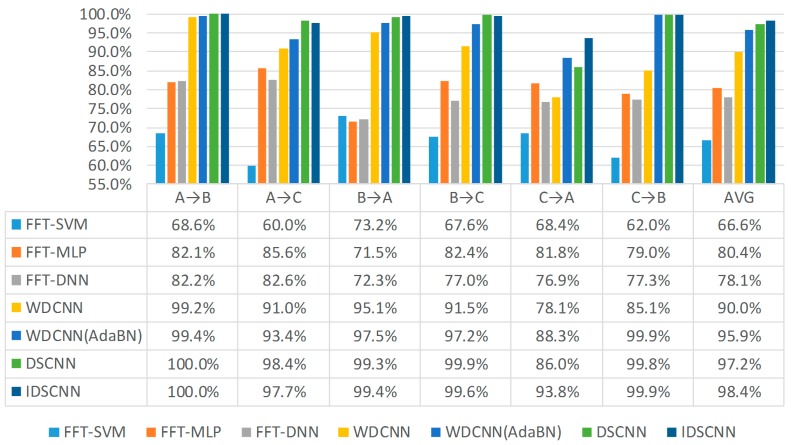
“We can see that the DSCNN method, which combines the CNN models with traditional D-S evidence theory has higher accuracy than FFT-SVM, FFT-MLP, FFT-DNN [48], WDCNN [49] and WDCNN (AdaBN) [49] on all nine conditions but has lower accuracy than the WDCNN (AdaBN) model on C→A.”
On the dempster-shafer framework and new combination rules
Yager, R. R. (1987) · Information Sciences · doi:10.1016/0020-0255(87)90007-7 · Cited by 1,572 · cited 1×
“In this paper, we propose a novel algorithm that integrates deep neural networks with multiple sensor information with an improved Dempster–Shafer (D-S) evidence theory [30] based data fusion model for bearing fault diagnosis.”
Real-Time Motor Fault Detection by 1-D Convolutional Neural Networks
Ince, T., Kiranyaz, S., Eren, L., Askar, M., & Gabbouj, M. (2016) · IEEE Transactions on Industrial Electronics · doi:10.1109/tie.2016.2582729 · Cited by 1,407
Combining belief functions when evidence conflicts
Murphy, C. K. (2000) · Decision Support Systems · doi:10.1016/s0167-9236(99)00084-6 · Cited by 1,042 · cited 1×
“Here we take four modified D-S evidence fusion algorithms from Yager [44], Sun [45], Murphy [46] and Deng [47] for comprehensive analysis.”
Deep convolutional neural networks for multi-modality isointense infant brain image segmentation
Zhang, W., Li, R., Deng, H., Wang, L., Lin, W., Ji, S., & Shen, D. (2015) · NeuroImage · doi:10.1016/j.neuroimage.2014.12.061 · Cited by 817 · cited 1×
“Many classification problems have been successfully solved by various deep learning models such as deep belief network [22], deep Boltzmann machine [23], deep auto encoder [24], convolutional neural network (CNN) [25] and so on.”
Hierarchical adaptive deep convolution neural network and its application to bearing fault diagnosis
Guo, X., Chen, L., & Shen, C. (2016) · Measurement · doi:10.1016/j.measurement.2016.07.054 · Cited by 782 · cited 1×
“Guo [26] proposed a hierarchical adaptive deep convolution neural network (ADCNN) on bearing fault analysis, which first output the fault type and then analyze the fault size.”
Gearbox Fault Identification and Classification with Convolutional Neural Networks
Chen, Z., Li, C., & Sanchez, R.-V. (2015) · Shock and Vibration · doi:10.1155/2015/390134 · Cited by 391 · cited 2×
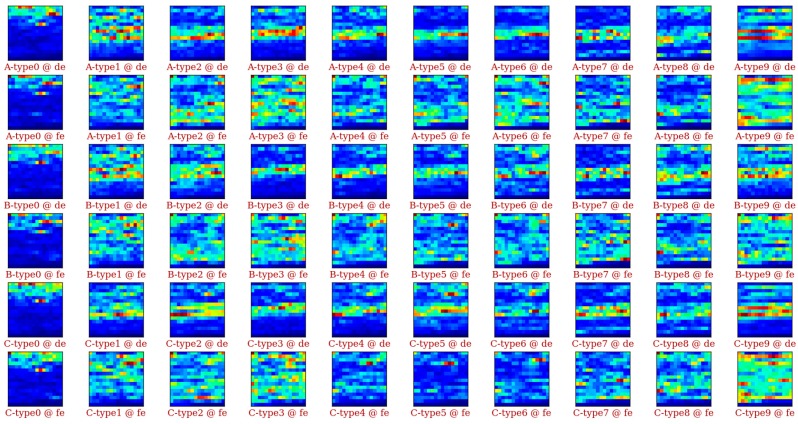
“As shown in Figure 1, we use root mean square (RMS) over a sub band of the frequency spectrum as feature for our CNN model, which has the advantage of maintaining the energy shape at the spectrum peaks [27,41].”
Tran, V. T., AlThobiani, F., & Ball, A. (2014) · Expert Systems with Applications · doi:10.1016/j.eswa.2013.12.026 · Cited by 386
Pandya, D. H., Upadhyay, S. H., & Harsha, S. P. (2013) · Expert Systems with Applications · doi:10.1016/j.eswa.2013.01.033 · Cited by 350 · cited 2×
“Classifiers such as Bayes Classifier [13], k-nearest neighbor (KNN) [14], Multi-layer Perceptron neural networks (MLP) [15], support vector machines (SVM) [16], Decision Trees (DT) [17], and Random Forests (RF) [18] have all been applied to bearing fault diagnosis.”
Multivariate process monitoring and fault diagnosis by multi-scale PCA
Misra, M., Yue, H. H., Qin, S. J., & Ling, C. (2002) · Computers & Chemical Engineering · doi:10.1016/s0098-1354(02)00093-5 · Cited by 325 · cited 1×
“Feature selection methods such as principal component analysis (PCA) [11] and independent component analysis (ICA) [12] are employed to select most useful features.”
Le Hegarat-Mascle, S., Bloch, I., & Vidal-Madjar, D. (1997) · IEEE Transactions on Geoscience and Remote Sensing · doi:10.1109/36.602544 · Cited by 325
Widodo, A., & Yang, B.-S. (2007) · Expert Systems with Applications · doi:10.1016/j.eswa.2006.04.020 · Cited by 292
Zhāng, W., Peng, G., Li, C., et al. (2017) · Preprints.org · doi:10.20944/preprints201701.0132.v1 · Cited by 224
Automatic bearing fault diagnosis based on one-class ν-SVM
Fernández-Francos, D., Martínez-Rego, D., Fontenla-Romero, O., & Alonso-Betanzos, A. (2013) · Computers & Industrial Engineering · doi:10.1016/j.cie.2012.10.013 · Cited by 185
Hajnayeb, A., Ghasemloonia, A., Khadem, S. E., & Moradi, M. H. (2011) · Expert Systems with Applications · doi:10.1016/j.eswa.2011.02.065 · Cited by 153 · cited 3×
“Among them, MLP is known for its capability to learn features with complex and nonlinear patterns.”
Thermal image based fault diagnosis for rotating machinery
Janssens, O., Schulz, R., Slavkovikj, V., Stockman, K., Loccufier, M., Rik Van De Walle, B., & Hoecke, S. V. (2015) · Infrared Physics & Technology · doi:10.1016/j.infrared.2015.09.004 · Cited by 149 · cited 2×
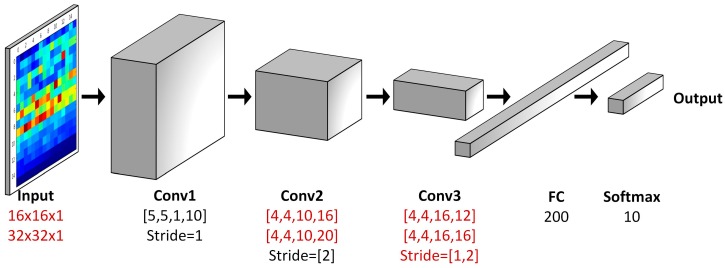
“There are two choices for the input size (16 × 16 × 1 or 32 × 32 × 1), convolutional layer 2 ([4,4,10,16] or [4,4,10,20]), convolutional layer 3 ([4,4,16,12] or [4,4,16,16]) and strides ((1,2,1) or (1,2,2)) for the three convolutional layers, respectively.”
Cui, L., Wu, N., Ma, C., & Wang, H. (2015) · Mechanical Systems and Signal Processing · doi:10.1016/j.ymssp.2015.05.032 · Cited by 126
Jedliński, Ł., & Jonak, J. (2015) · Applied Soft Computing · doi:10.1016/j.asoc.2015.02.015 · Cited by 123
A New Combination Rules of Evidence Theory
Ye, X. (2000) · Dianzi xuebao · Cited by 111
Dempster-Shafer evidence theory for multi-bearing faults diagnosis
Hui, K. H., Lim, M. H., Leong, M. S., & Al-Obaidi, S. M. A. (2016) · Engineering Applications of Artificial Intelligence · doi:10.1016/j.engappai.2016.10.017 · Cited by 111 · cited 2×
“This method has been widely used in many fields in recent years such as machine health monitoring and fault diagnosis [33,34], engineering design [35], security defense [36], target recognition and tracking [36,37], decision-making [38], and information fusion [37,39].”
MethodZhang, X., Qiu, D., & Chen, F. (2014) · Neurocomputing · doi:10.1016/j.neucom.2014.08.010 · Cited by 89 · cited 1×
“It has also been reported that SVM is superior to the other AI algorithms in fault diagnosis due its memory efficiency and good performance when the number of features is greater than that of samples [19–21].”
The Improvement of DS Evidence Theory and Its Application in IR/MMW Target Recognition
Li, Y., Chen, J., Ye, F., & Liu, D. (2015) · Journal of Sensors · doi:10.1155/2016/1903792 · Cited by 88 · cited 1×
“Table 1 shows four common paradoxes [40], namely complete conflict paradox, 0 trust paradox, 1 trust paradox and high conflict paradox, which cause fusion difficulty for traditional D-S theory.”
Fault diagnosis of rolling element bearing using cyclic autocorrelation and wavelet transform
Kankar, P. K., Sharma, S. C., & Harsha, S. P. (2013) · Neurocomputing · doi:10.1016/j.neucom.2012.11.012 · Cited by 85 · cited 3×
“There are two choices for the input size (16 × 16 × 1 or 32 × 32 × 1), convolutional layer 2 ([4,4,10,16] or [4,4,10,20]), convolutional layer 3 ([4,4,16,12] or [4,4,16,16]) and strides ((1,2,1) or (1,2,2)) for the three convolutional layers, respectively.”
Abu-Mahfouz, I. A. (2005) · International Journal of General Systems · doi:10.1080/03081070500065726 · Cited by 81
Luo, J., Yu, D., & Liang, M. (2013) · Measurement Science and Technology · doi:10.1088/0957-0233/24/5/055009 · Cited by 80
A sparse-response deep belief network based on rate distortion theory
Ji, N., Zhang, J., & Zhang, C. (2014) · Pattern Recognition · doi:10.1016/j.patcog.2014.03.025 · Cited by 75 · cited 1×
“Many classification problems have been successfully solved by various deep learning models such as deep belief network [22], deep Boltzmann machine [23], deep auto encoder [24], convolutional neural network (CNN) [25] and so on.”
Automatic gear and bearing fault localization using vibration and acoustic signals
Jena, D. P., & Panigrahi, S. N. (2015) · Applied Acoustics · doi:10.1016/j.apacoust.2015.04.016 · Cited by 65 · cited 1×
“In the past decades, a variety of methods have been developed in bearing fault diagnosis, such as vibration analysis [1], acoustic analysis [2], noise analysis [3], thermal imaging analysis [4] and so on, among which the vibration analysis has proven to be the most efficient [5].”
Target Recognition via Information Aggregation Through Dempster–Shafer's Evidence Theory
Dong, G., & Kuang, G. (2015) · IEEE Geoscience and Remote Sensing Letters · doi:10.1109/lgrs.2015.2390914 · Cited by 64 · cited 1×
“This method has been widely used in many fields in recent years such as machine health monitoring and fault diagnosis [33,34], engineering design [35], security defense [36], target recognition and tracking [36,37], decision-making [38], and information fusion [37,39].”
A 3D model recognition mechanism based on deep Boltzmann machines
Leng, B., Zhang, X., Ming, Y., & Xiong, Z. (2014) · Neurocomputing · doi:10.1016/j.neucom.2014.06.084 · Cited by 60
EFFICIENT COMBINATION APPROACH OF CONFLICT EVIDENCE
Deng, Y. (2004) · JOURNAL OF INFRARED AND MILLIMETER WAVES · Cited by 59
On the aggregation of prioritized belief structures
Yager, R. R. (1996) · IEEE Transactions on Systems Man and Cybernetics - Part A Systems and Humans · doi:10.1109/3468.541331 · Cited by 36 · cited 5×
“In Table 4, we can see that both Yager and Sun solve the conflicts through allotting the conflict factor to the unknown proposition in Θ , which however increases the uncertainty.”
InfluentialChen, J., Zi, Y., He, Z., & Wang, X. (2013) · Mechanical Systems and Signal Processing · doi:10.1016/j.ymssp.2013.03.005 · Cited by 35 · cited 1×
“In the past decades, a variety of methods have been developed in bearing fault diagnosis, such as vibration analysis [1], acoustic analysis [2], noise analysis [3], thermal imaging analysis [4] and so on, among which the vibration analysis has proven to be the most efficient [5].”
A new method for expert target recognition system: Genetic wavelet extreme learning machine (GAWELM)
Avcı, E. (2013) · Expert Systems with Applications · doi:10.1016/j.eswa.2013.01.011 · Cited by 33 · cited 1×
“This method has been widely used in many fields in recent years such as machine health monitoring and fault diagnosis [33,34], engineering design [35], security defense [36], target recognition and tracking [36,37], decision-making [38], and information fusion [37,39].”
Application of D‐S Evidence Fusion Method in the Fault Detection of Temperature Sensor
Dou, Z., Xu, X., Lin, Y., & Zhou, R. (2014) · Mathematical Problems in Engineering · doi:10.1155/2014/395057 · Cited by 22 · cited 1×
“This method has been widely used in many fields in recent years such as machine health monitoring and fault diagnosis [33,34], engineering design [35], security defense [36], target recognition and tracking [36,37], decision-making [38], and information fusion [37,39].”
Control of mechatronics systems: Ball bearing fault diagnosis using machine learning techniques
Peng, H.-W., & Chiang, P. (2011) · Asian Control Conference (ASCC) · Cited by 22
Gelman, L. M., Murray, B., Patel, T. H., & Thomson, A. (2014) · Engineering Structures · doi:10.1016/j.engstruct.2014.08.030 · Cited by 21 · cited 2×
“Parameter Setting No Input C1 C2 C3 Stride 1 16 × 16 × 1 [5,5,1,10] [4,4,10,16] [4,4,16,12] (1,2,1) 2 16 × 16 × 1 [5,5,1,10] [4,4,10,16] [4,4,16,16] (1,2,1) 3 16 × 16 × 1 [5,5,1,10] [4,4,10,20] [4,4,16,12] (1,2,1) 4 16 × 16 × 1 [5,5,1,10] [4,4,10,20] [4,4,16,16] (1,2,1) 5 16 × 16 × 1 [5,5,1,10] [4,4,10,16] [4,4,16,12]…”
Vibro acoustic signal analysis in fault finding of bearing using Empirical Mode Decomposition
Mohanty, S., Gupta, K. K., Raju, K. S., Singh, A., & Snigdha, S. (2013) · International Conference on Advanced Electronic Systems (ICAES) · doi:10.1109/icaes.2013.6659355 · Cited by 20 · cited 1×
“Many vibration signal processing tools have been used in signal preprocessing such as Fourier spectral analysis [6], wavelet analysis [7], empirical mode decomposition [8], and multi-wavelet transformation [9].”
Based on D-S evidence theory of information fusion improved method
Li, Y., WangNing, & ZhouChang (2010) · International Conference on Computer Application and System Modeling · doi:10.1109/iccasm.2010.5620424 · Cited by 19 · cited 1×
“D-S evidence theory has been shown [31,32] to achieve better performance in data fusion based classification compared to the traditional probability theory due to its capability to grasp the unknown and uncertainty.”
Integrating textual analysis and evidential reasoning for decision making in Engineering design
Browne, F., Rooney, N., Liu, W., Bell, D., Wang, H., Taylor, P. S., & Jin, Y. (2013) · Knowledge-Based Systems · doi:10.1016/j.knosys.2013.07.014 · Cited by 19 · cited 1×
“This method has been widely used in many fields in recent years such as machine health monitoring and fault diagnosis [33,34], engineering design [35], security defense [36], target recognition and tracking [36,37], decision-making [38], and information fusion [37,39].”
Model of MT and MST areas using an autoencoder
Katayama, K., Ando, M., & Horiguchi, T. (2003) · Physica A Statistical Mechanics and its Applications · doi:10.1016/s0378-4371(02)01803-4 · Cited by 7 · cited 1×
“Many classification problems have been successfully solved by various deep learning models such as deep belief network [22], deep Boltzmann machine [23], deep auto encoder [24], convolutional neural network (CNN) [25] and so on.”
Application of Vibration and Noise Analysis in Water-Lubricated Rubber Bearings Fault Diagnosis
Peng, E. G., Liu, Z. L., Zhou, X. C., Zhao, M. Y., & Lan, F. (2011) · Advanced materials research · doi:10.4028/www.scientific.net/amr.328-330.1995 · Cited by 7 · cited 1×
“In the past decades, a variety of methods have been developed in bearing fault diagnosis, such as vibration analysis [1], acoustic analysis [2], noise analysis [3], thermal imaging analysis [4] and so on, among which the vibration analysis has proven to be the most efficient [5].”
Fault diagnosis of roller bearing using feedback EMD and decision tree
Guifeng, J., Sheng-fa, Y., Chengwen, T., & Jie, X. (2011) · International Conference on Electric Information and Control Engineering · doi:10.1109/iceice.2011.5777068 · Cited by 4 · cited 1×
“Classifiers such as Bayes Classifier [13], k-nearest neighbor (KNN) [14], Multi-layer Perceptron neural networks (MLP) [15], support vector machines (SVM) [16], Decision Trees (DT) [17], and Random Forests (RF) [18] have all been applied to bearing fault diagnosis.”
Yang, J., Jiao, Z., -, Z. G., & -, L. Y. (2013) · International Journal of Digital Content Technology and its Applications · doi:10.4156/jdcta.vol7.issue1.67 · Cited by 3
Diagnosis of Bearing Faults of Induction Motors by Spectral Analysis of Stator Currents
Сафин, Н. Р., Prakht, V., Dmitrievskii, V., & Dmitrievskii, A. A. (2014) · Advanced materials research · doi:10.4028/www.scientific.net/amr.1070-1072.1187 · Cited by 2
Research works printed but not linked: 3
- Muralidharan, 2016, Bearing Fault Diagnosis Using Vibration Signals by Variational Mode Decomposition and Naïve Bayes Classifier, Int. J. Robot. Autom., 1, 1
- Xing, 2016, Quantitative MMM evaluation of weld levels based on information entropy and DS evidence theory, Chin. J. Sci. Instrum., 37, 610
- Kang, 2012, Multi-sensor information fusion algorithm based on DS evidence theory, J. Chin. Inert. Technol., 20, 670
Cited by
1D convolutional neural networks and applications: A survey
Kiranyaz, S., Avci, O., Abdeljaber, O., Ince, T., Gabbouj, M., & Inman, D. J. (2021) · Mechanical Systems and Signal Processing · doi:10.1016/j.ymssp.2020.107398 · Cited by 2,835
Applications of machine learning to machine fault diagnosis: A review and roadmap
Lei, Y., Yang, B., Jiang, X., Jia, F., Li, N., & Nandi, A. K. (2020) · Mechanical Systems and Signal Processing · doi:10.1016/j.ymssp.2019.106587 · Cited by 2,997
Deep learning and its applications to machine health monitoring
Zhao, R., Yan, R., Chen, Z., Mao, K., Wang, P., & Gao, R. X. (2019) · Mechanical Systems and Signal Processing · doi:10.1016/j.ymssp.2018.05.050 · Cited by 2,894
Deep Learning Algorithms for Bearing Fault Diagnostics—A Comprehensive Review
Zhang, S., Zhang, S., Wang, B., & Habetler, T. G. (2020) · IEEE Access · doi:10.1109/access.2020.2972859 · Cited by 913
“Similarly, to overcome the impact of load variations, a novel bearing fault diagnosis algorithm based on improved Dempster-Shafer theory CNN (IDS-CNN) is e ployed in [113].”
MethodA comprehensive review on convolutional neural network in machine fault diagnosis
Jiao, J., Zhao, M., Lin, J., & Liang, K. (2020) · Neurocomputing · doi:10.1016/j.neucom.2020.07.088 · Cited by 575
Metadata
- Authors
- Li, S., Liu, G., Tang, X., Lu, J., & Hu, J.
- Affiliations
- Guizhou University (CN)
- University of South Carolina (US)
- Corresponding author
- Hu, Jianjun
- Venue
- Sensors
- Publisher
- MDPI AG
- Published
- 2017-07-28
- Volume
- 17
- Issue
- 8
- Pages
- 1729
- ISSN
- 1424-8220 (ISSN-L)
- PMC
- PMC5579931
- OpenAlex
- W2741289421
- Semantic Scholar
- 3155ce032d96f273cbaa2d17f83af5905a3fa8ca
- Cited by
- 211
- References
- 45
- Citations by year
- 2026: 9 · 2025: 15 · 2024: 23 · 2023: 26 · 2022: 24 · 2021: 30 · 2020: 34 · 2019: 34 · 2018: 15 · 2017: 1
- FWCI
- 14.39
- Type
- journal article
- Language
- en
- Open access
- gold
- doi.org
- Licence
- Locations
- Sensors (publishedVersion, cc-by)
- PubMed Central (publishedVersion, cc-by)
- PubMed (publishedVersion)
- Scholar Commons (University of South Carolina) (submittedVersion, cc-by)
- DOAJ (DOAJ: Directory of Open Access Journals) (submittedVersion, cc-by-sa)
- Funders
- National Natural Science Foundation Project of China (51475097)
- Topics
- Physical Sciences › Engineering › Control and Systems Engineering › Machine Fault Diagnosis Techniques
- Physical Sciences › Engineering › Control and Systems Engineering › Fault Detection and Control Systems
- Health Sciences › Health Professions › Health Information Management › Artificial Intelligence in Healthcare
- Keywords
- bearing fault diagnosis, Dempster-Shafer theory, evidence combination, vibration signals, multi-sensor fusion, distance matrix, machine condition monitoring
About these checks
Registry, retraction, Cites and statistics results are computed, not judged, with one exception: a printed reference that no index lists is read once by a model before it counts as a citation error. Claims are extracted by a model and kept only when their quote appears verbatim in the text; each cited source is then checked, with a model’s help, for whether it says what the claim relies on. Those verdicts can be wrong — read the claim’s quote and the cited source before relying on one.
Statistics and arithmetic are recomputed, not judged.
Confidence bands are shown only for fields calibrated on our annotated test set. None is calibrated yet, so no band is shown.
What counts as a claim ›How we measure confidence ›How we check this ›
Are you an author, or do you see a problem with this page? Request a review
Data sources
Bibliographic data: Semantic Scholar, OpenAlex, Crossref.
Contains information from the Semantic Scholar Academic Graph Datasets, made available under the ODC Attribution License (ODC-BY 1.0).
Semantic Scholar’s data is described in: Kinney, R., et al. (2023). The Semantic Scholar Open Data Platform. arXiv:2301.10140.
