

The DOI matches its Crossref record; 128 of the 128 references it cites were found in a registry or an index.
Face Recognition Systems: A Survey
Open accessAbstract
Over the past few decades, interest in theories and algorithms for face recognition has been growing rapidly. Video surveillance, criminal identification, building access control, and unmanned and autonomous vehicles are just a few examples of concrete applications that are gaining attraction among industries. Various techniques are being developed including local, holistic, and hybrid approaches, which provide a face image description using only a few face image features or the whole facial features. The main contribution of this survey is to review some well-known techniques for each approach and to give the taxonomy of their categories. In the paper, a detailed comparison between these techniques is exposed by listing the advantages and the disadvantages of their schemes in terms of robustness, accuracy, complexity, and discrimination. One interesting feature mentioned in the paper is about the database used for face recognition. An overview of the most commonly used databases, including those of supervised and unsupervised learning, is given. Numerical results of the most interesting techniques are given along with the context of experiments and challenges handled by these techniques. Finally, a solid discussion is given in the paper about future directions in terms of techniques to be used for face recognition.
Overview
The claims and statistics of this paper haven’t been checked yet.
Run the check — free, no account needed. It reads the open-access text and checks the sources it cites.
Integrity signals
Registry
Cites
Statistics
Figures
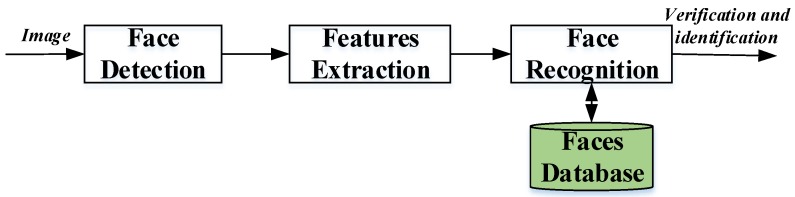
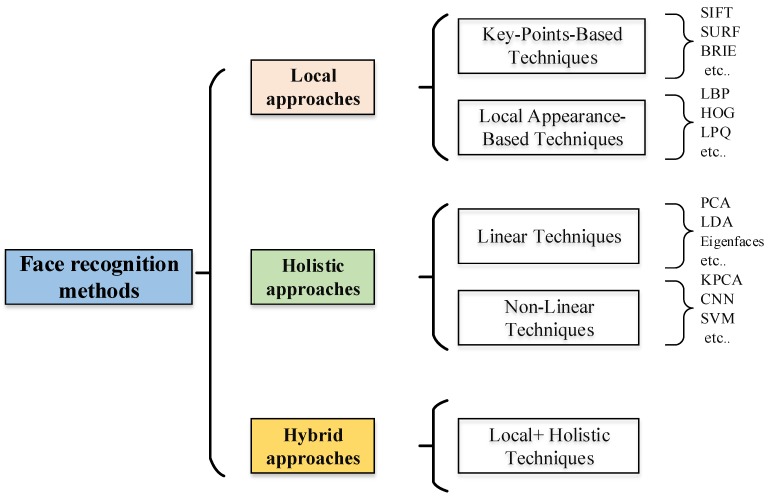
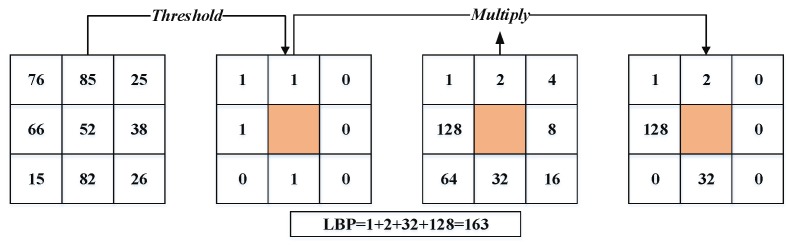
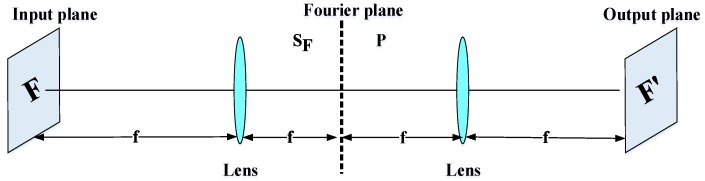
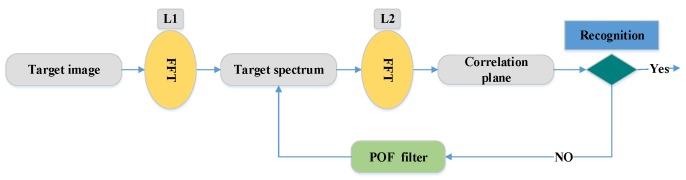
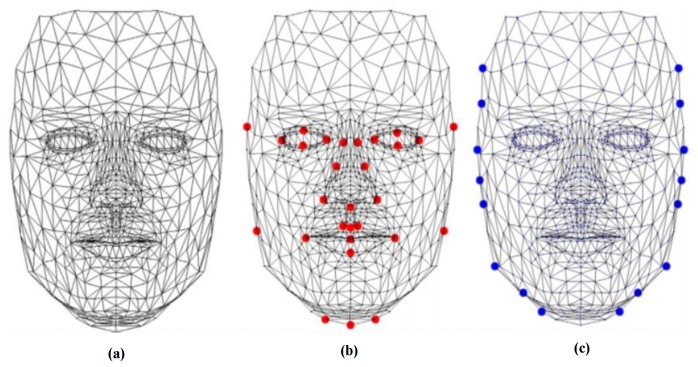
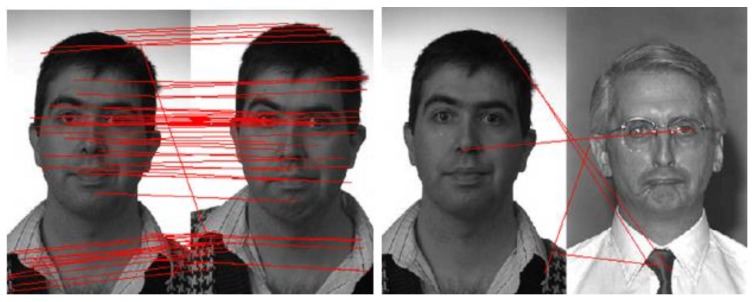
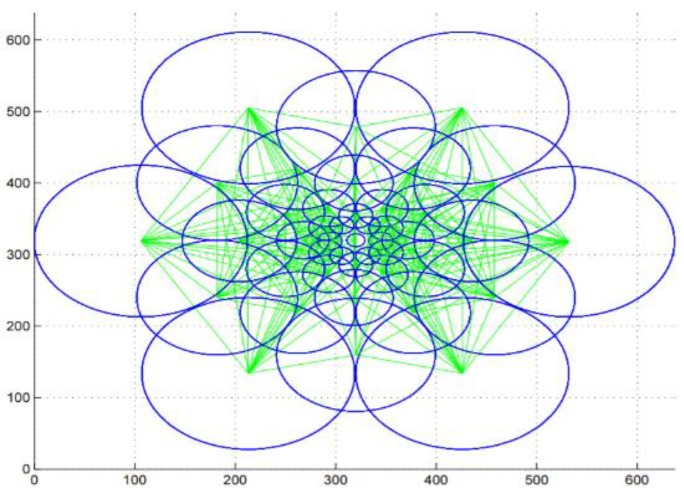
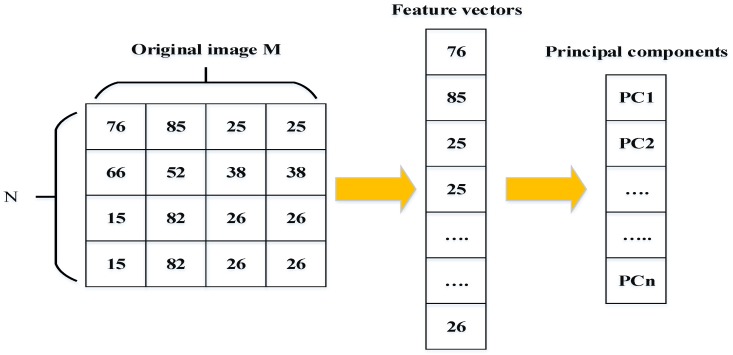
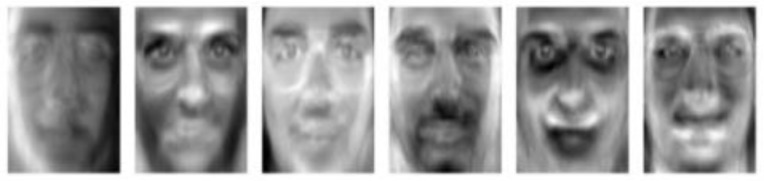

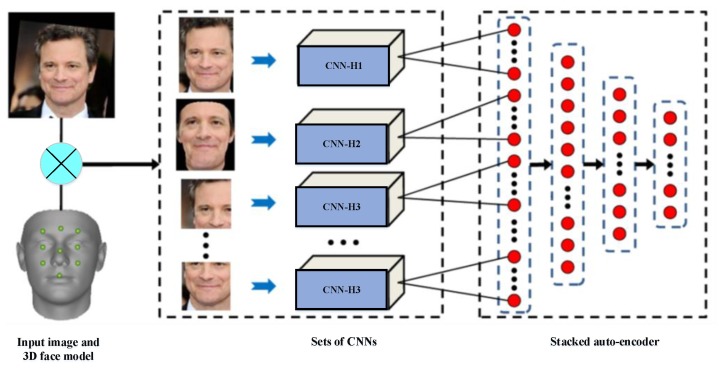
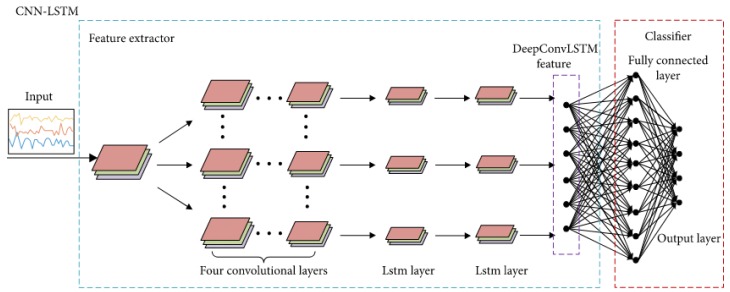
Verification
Claims the paper makes
The claims and statistics of this paper haven’t been checked yet.
Run the check — free, no account needed. It reads the open-access text and checks the sources it cites.
Claims other papers make about this one
Each is checked against this paper’s own text: does it say what the citing paper says it does?
The cited source says what the claim attributes to it.
In the citing paper
“The presence of noise in images can act as a deterrent in the course of various tasks in image processing, like facial recognition [1], form processing [2], environmental remote sensing [3], etc.”
From Median Filter Aided CNN Based Image Denoising: An Ensemble Approach (2021) · cites this paper as [1]
Self-check
Percentages, sums and reported differences re-computed from the paper’s own numbers.
The self-check needs the paper’s full text.
Citations
Cites
Rapid object detection using a boosted cascade of simple features
Viola, P., & Jones, M. (2005) · Proceedings of the 2001 IEEE Computer Society Conference on Computer Vision and Pattern Recognition. CVPR 2001 · doi:10.1109/cvpr.2001.990517 · Cited by 18,300
FaceNet: A unified embedding for face recognition and clustering
Schroff, F., Kalenichenko, D., & Philbin, J. (2015) · 2015 IEEE Conference on Computer Vision and Pattern Recognition (CVPR) · doi:10.1109/cvpr.2015.7298682 · Cited by 15,267
Turk, M., & Pentland, A. (1991) · Journal of Cognitive Neuroscience · doi:10.1162/jocn.1991.3.1.71 · Cited by 13,733
A comparative study of texture measures with classification based on featured distributions
Ojala, T., Pietikäinen, M., & Harwood, D. (1996) · Pattern Recognition · doi:10.1016/0031-3203(95)00067-4 · Cited by 6,882
DeepFace: Closing the Gap to Human-Level Performance in Face Verification
Taigman, Y., Yang, M., Ranzato, M., & Wolf, L. (2014) · 2014 IEEE Conference on Computer Vision and Pattern Recognition · doi:10.1109/cvpr.2014.220 · Cited by 6,542
Parkhi, O. M., Vedaldi, A., & Zisserman, A. (2015) · Procedings of the British Machine Vision Conference 2015 · doi:10.5244/c.29.41 · Cited by 5,479
A Discriminative Feature Learning Approach for Deep Face Recognition
Wen, Y., Zhang, K., Li, Z., & Qiao, Y. (2016) · Lecture Notes in Computer Science · doi:10.1007/978-3-319-46478-7_31 · Cited by 4,077
A survey of deep neural network architectures and their applications
Liu, W., Wang, Z., Liu, X., Zeng, N., Liu, Y., & Alsaadi, F. E. (2017) · Neurocomputing · doi:10.1016/j.neucom.2016.12.038 · Cited by 3,239
SphereFace: Deep Hypersphere Embedding for Face Recognition
Liu, W., Wen, Y., Yu, Z., Li, M., Raj, B., & Song, L. (2017) · 2017 IEEE Conference on Computer Vision and Pattern Recognition (CVPR) · doi:10.1109/cvpr.2017.713 · Cited by 2,280
Zhang, J., Marszałek, M., Lazebnik, S., & Schmid, C. (2006) · International Journal of Computer Vision · doi:10.1007/s11263-006-9794-4 · Cited by 1,962
Research works printed but not linked: 3
- Perlibakas, V. (2006). Face recognition using principal component analysis and log-gabor filters. arXiv.
- Sufyanu, 2016, Enhanced Face Recognition Using Discrete Cosine Transform, Eng. Lett., 24, 52
- Ouerhani, 2013, Graphics processor unit implementation of correlation technique using a segmented phase only composite filter, Opt. Commun., 289, 33, 10.1016/j.optcom.2012.09.074 · DOI
Cited by
Sorted by citations
A review on genetic algorithm: past, present, and future
Katoch, S., Chauhan, S. S., & Kumar, V. (2021) · Multimedia Tools and Applications · doi:10.1007/s11042-020-10139-6 · Cited by 4,655
Past, Present, and Future of Face Recognition: A Review
Adjabi, I., Ouahabi, A., Benzaoui, A., & Ahmed, A. T. (2020) · Electronics · doi:10.3390/electronics9081188 · Cited by 640
A study on computer vision for facial emotion recognition
Huang, Z.-Y., Chiang, C., Chen, J., Chen, Y.-C., Chung, H.-L., Cai, Y. A., & Hsu, H.-C. (2023) · Scientific Reports · doi:10.1038/s41598-023-35446-4 · Cited by 152
Akbar, J. U. M., Kamarulzaman, S. F., Muzahid, A. J. M., Rahman, M. A., & Uddin, M. (2024) · IEEE Access · doi:10.1109/access.2024.3349418 · Cited by 133
A Comprehensive Review of Image Segmentation Techniques
Abdulateef, S. K., & Salman, M. D. (2021) · Iraqi Journal for Electrical And Electronic Engineering · doi:10.37917/ijeee.17.2.18 · Cited by 78
Metadata
- Authors
- Kortli, Y., Jridi, M., Al Falou, A., & Atri, M.
- Affiliations
- University of Monastir (TN)
- AI-ED Department, Yncrea Ouest, 20 rue du Cuirassé de Bretagne, 29200 Brest, France
- King Khalid University (SA)
- Corresponding author
- Kortli, Yassin
- Venue
- Sensors
- Publisher
- MDPI AG
- Published
- 2020-01-07
- Volume
- 20
- Issue
- 2
- Pages
- 342
- ISSN
- 1424-8220 (ISSN-L)
- PMC
- PMC7013584
- OpenAlex
- W2999711171
- Cited by
- 623
- References
- 128
- Citations by year
- 2026: 44 · 2025: 113 · 2024: 118 · 2023: 145 · 2022: 107 · 2021: 81 · 2020: 15
- FWCI
- 33.82
- Type
- journal article
- Language
- en
- Open access
- gold
- dx.doi.org
- Licence
- Locations
- Sensors (publishedVersion, cc-by)
- Europe PMC (PubMed Central) (publishedVersion, cc-by)
- PubMed Central (publishedVersion, cc-by)
- PubMed (publishedVersion)
- HAL (submittedVersion)
- DOAJ (DOAJ: Directory of Open Access Journals) (submittedVersion, cc-by-sa)
- Topics
- Physical Sciences › Computer Science › Computer Vision and Pattern Recognition › Face and Expression Recognition
- Physical Sciences › Computer Science › Computer Vision and Pattern Recognition › Face recognition and analysis
- Physical Sciences › Computer Science › Signal Processing › Biometric Identification and Security
- Keywords
- face recognition, holistic face recognition, face recognition databases, video surveillance, access control, unmanned vehicles, recognition robustness
- MeSH terms
- Facial Recognition, Algorithms, Humans, Pattern Recognition, Automated, Surveys and Questionnaires, Neural Networks, Computer, Databases as Topic, Imaging, Three-Dimensional, Principal Component Analysis
About these checks
Registry, retraction, Cites and statistics results are computed, not judged, with one exception: a printed reference that no index lists is read once by a model before it counts as a citation error. Claims are extracted by a model and kept only when their quote appears verbatim in the text; each cited source is then checked, with a model’s help, for whether it says what the claim relies on. Those verdicts can be wrong — read the claim’s quote and the cited source before relying on one.
Statistics and arithmetic are recomputed, not judged.
Confidence bands are shown only for fields calibrated on our annotated test set. None is calibrated yet, so no band is shown.
What counts as a claim ›How we measure confidence ›How we check this ›
Are you an author, or do you see a problem with this page? Request a review
