

The DOI matches its Crossref record; 1 of the 1 references it cites were found in a registry or an index.
Design of a Measuring System for Electricity Quality Monitoring within the SMART Street Lighting Test Polygon: Pilot Study on Adaptive Current Control Strategy for Three-Phase Shunt Active Power Filters
Open accessAbstract
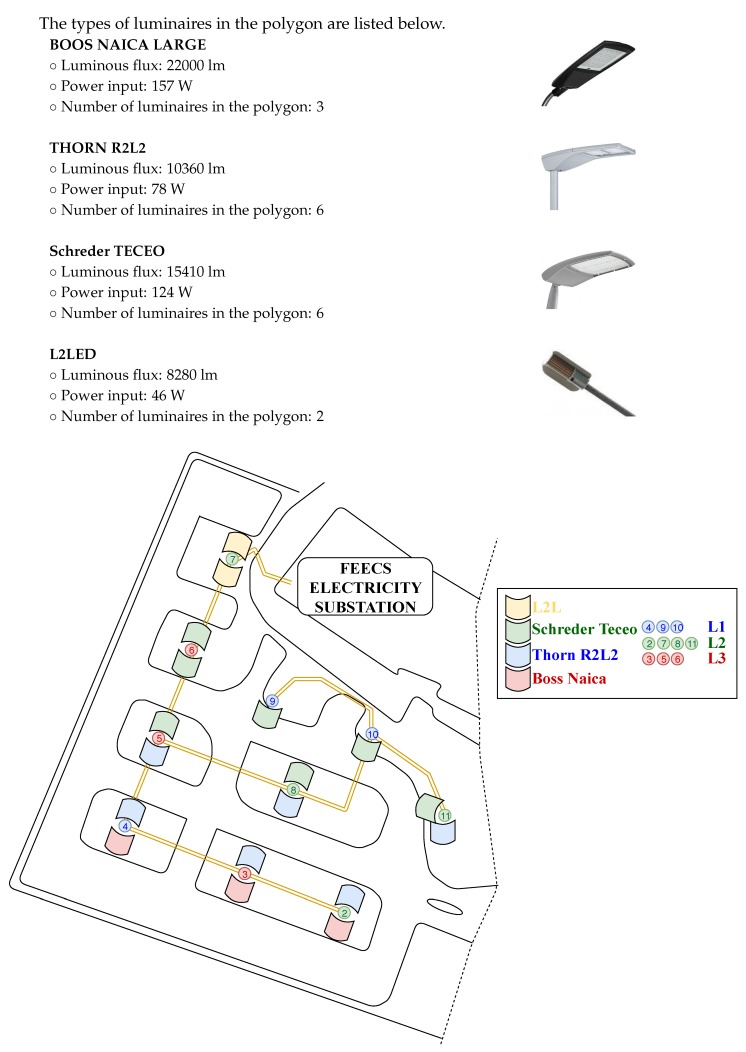
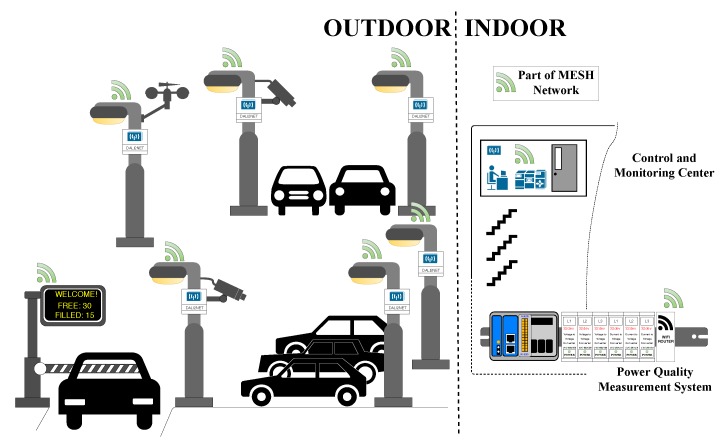
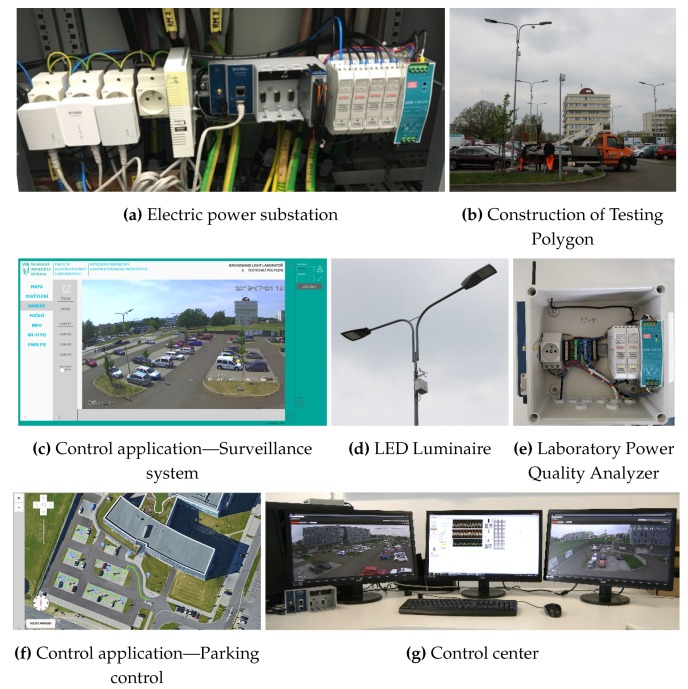
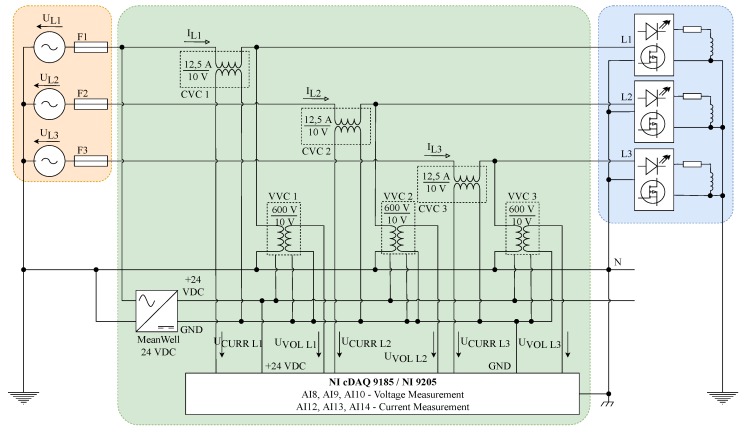
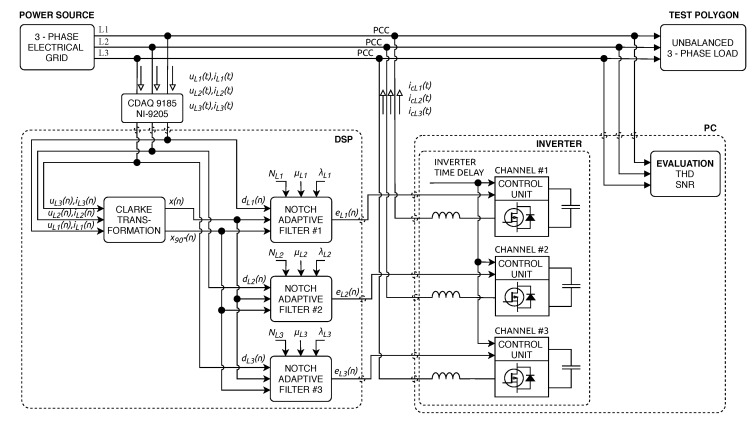
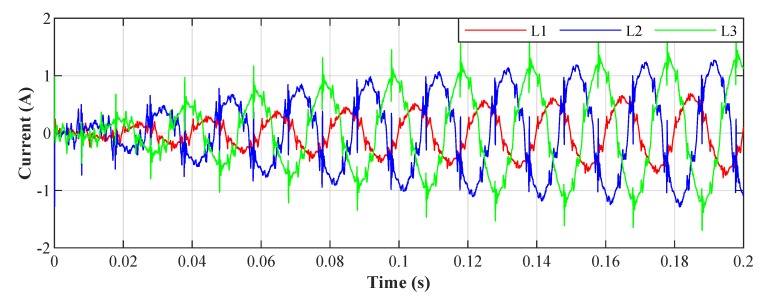
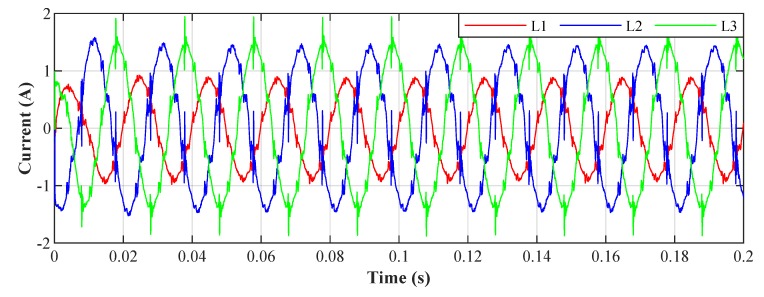
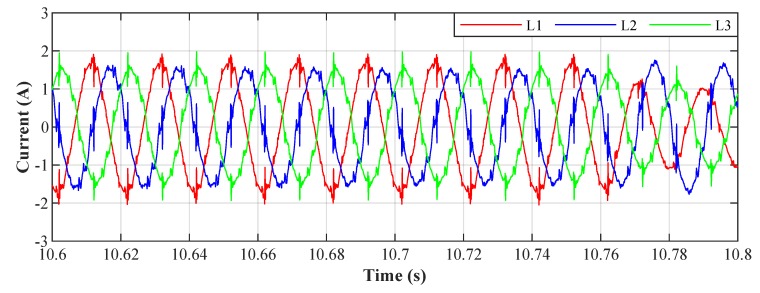
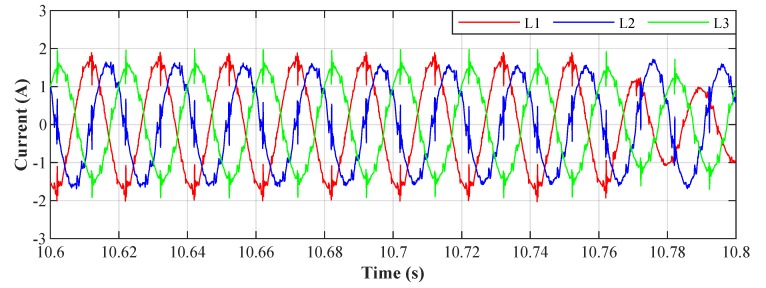
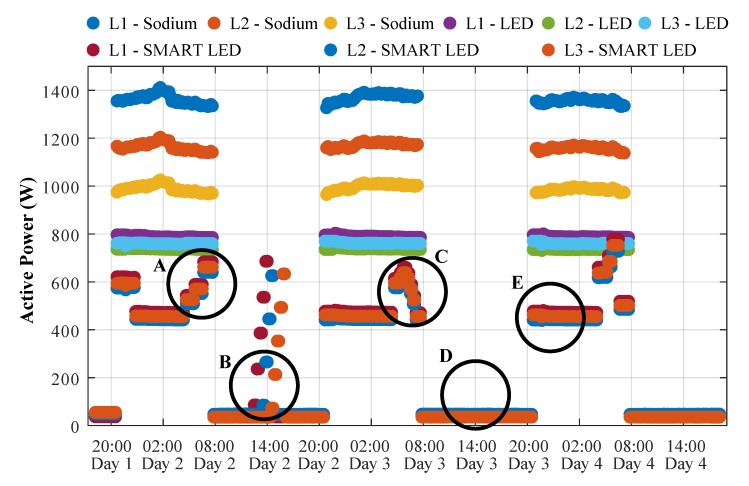
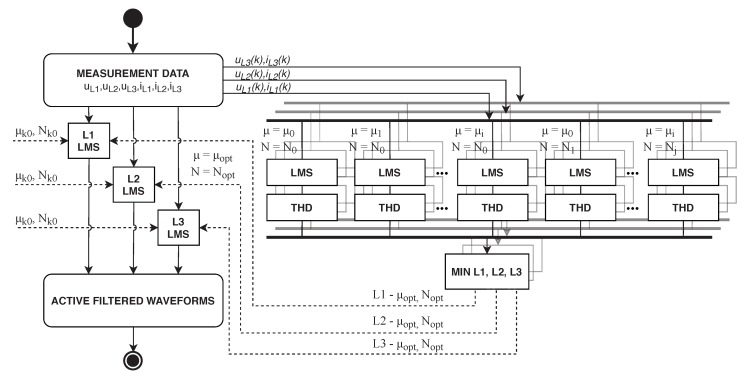
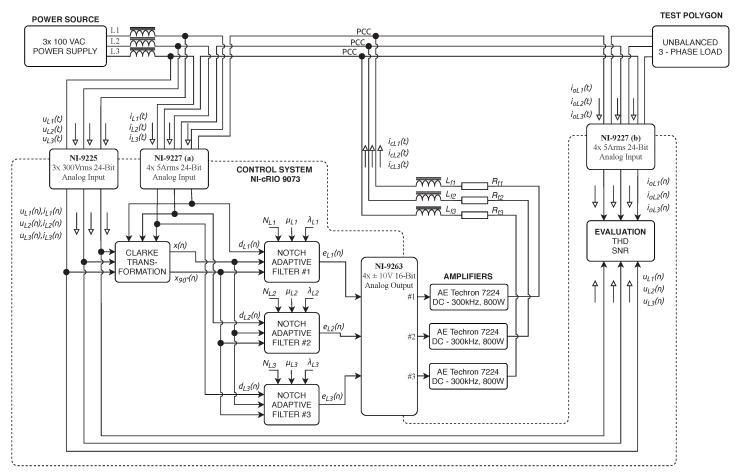
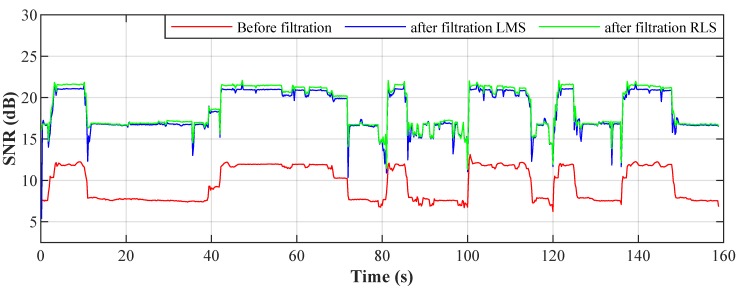
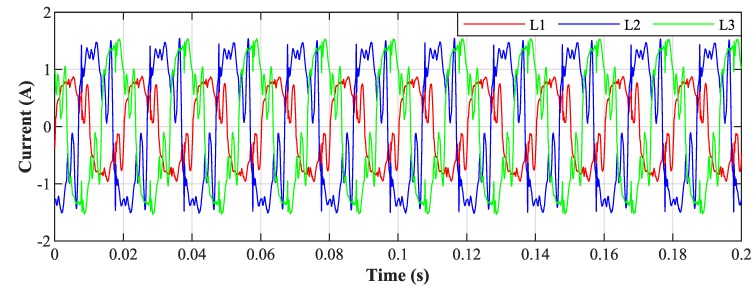
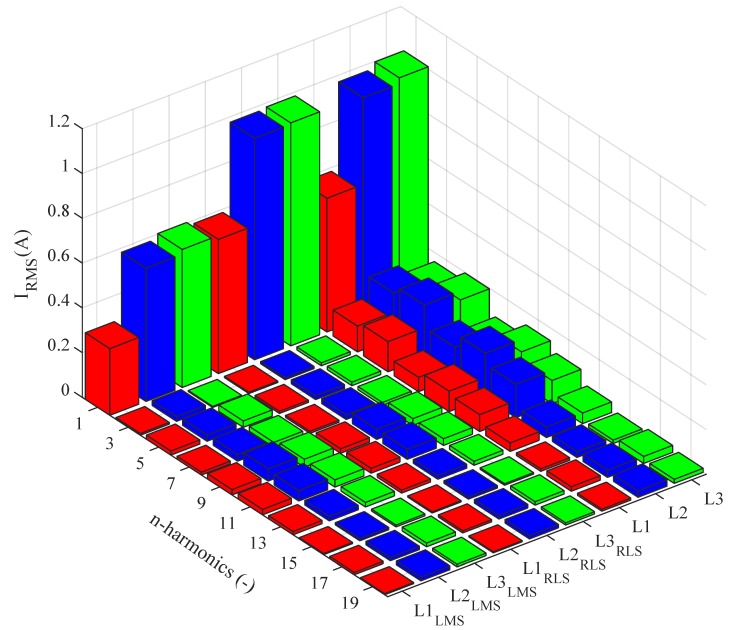
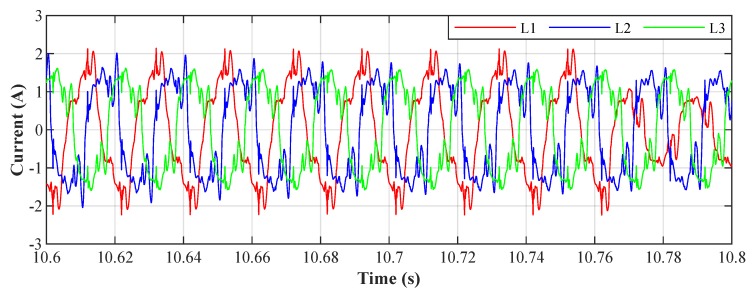
This study focuses on the design of a measuring system for monitoring the power quality within the SMART street lighting test polygon at university campuses with relation to testing an adaptive current control strategy for three-phase shunt active power filters. Unlike conventional street lighting, SMART elements are powered 24/7. Due to the electronic character of the power part of such mass appliances, there are increased problems with the power quality of the electric energy. Compared to the current concept of street lighting, there is a significant increase in the content of higher current harmonic components, which cause several problems in the distribution system. The test polygon contains 16 luminaires made by various manufacturers and mounted with various SMART components. Using the polygon control and monitoring system, dynamic load scenarios were selected. These scenarios tested the possibilities of different adaptive current control strategies for three-phase shunt active power filters to improve the power quality of electricity. This study focuses on three adaptive algorithms that respond to dynamic changes of current harmonics level in real-time. The possibility of active filter control was tested using FPGA, mainly due to the low latency of the filter control part.
Overview
The claims and statistics of this paper haven’t been checked yet.
Run the check — free, no account needed. It reads the open-access text and checks the sources it cites.
Integrity signals
Registry
Cites
Statistics
Figures
Verification
Claims the paper makes
The claims and statistics of this paper haven’t been checked yet.
Run the check — free, no account needed. It reads the open-access text and checks the sources it cites.
Claims other papers make about this one
Each is checked against this paper’s own text: does it say what the citing paper says it does?
The source backs part of the claim, not all of it — or backs it for a different population, condition or comparison.
In the citing paper
“According to Martinek et al. [62], street lighting contributes 15% of national energy consumption.”
From Machine Learning Methods in Smart Lighting Toward Achieving User Comfort: A Survey (2022) · cites this paper as Martinek et al. [62]
Experimental — accuracy not yet measured
Self-check
Percentages, sums and reported differences re-computed from the paper’s own numbers.
The self-check needs the paper’s full text.
Citations
Cites
The Essence of Three-Phase PFC Rectifier Systems—Part I
Kolar, J. W., & Friedli, T. (2013) · IEEE Transactions on Power Electronics · doi:10.1109/tpel.2012.2197867 · Cited by 788
Research works printed but not linked: 69
- Dolara, A., Faranda, R., Guzzetti, S., and Leva, S. (2010, January 26–29). Power quality in public lighting systems. Proceedings of the 14th International Conference on Harmonics and Quality of Power—ICHQP 2010, Bergamo, Italy. · DOI
- Martirano, L. (2011, January 15–17). A smart lighting control to save energy. Proceedings of the 6th IEEE International Conference on Intelligent Data Acquisition and Advanced Computing Systems, Prague, Czech Republic. · DOI · Paper page
- Novak, 2017, Implementation of smart technologies into cities and villages using elements of public lighting, Light, 20, 46
- Cacciatore, G., Fiandrino, C., Kliazovich, D., Granelli, F., and Bouvry, P. (2017, January 21–25). Cost analysis of smart lighting solutions for smart cities. Proceedings of the 2017 IEEE International Conference on Communications (ICC), Paris, France. · DOI
- Noshahr, J.B., Meykhosh, M.H., and Kermani, M. (2017, January 6–9). Current harmonic losses resulting from first and second generation LED lights replacement with sodium vapor lights in a LV feeder. Proceedings of the 2017 IEEE International Conference on Environment and Electrical Engineering and 2017 IEEE Industrial and Commercial Power Systems Europe (EEEIC/I&CPS Europe), Milan, Italy. · DOI
- Zak, P., and Vodrackova, S. (2016, January 13–16). Conception of public lighting. Proceedings of the 2016 IEEE Lighting Conference of the Visegrad Countries (Lumen V4), Karpacz, Poland. · DOI
- Karawia, 2017, Harmonic analysis for street lighting lamps, CIRED-Open Access Proc. J., 2017, 655, 10.1049/oap-cired.2017.0493 · DOI
- Dolara, 2012, Power Quality and Harmonic Analysis of End User Devices, Energies, 5, 5453, 10.3390/en5125453 · DOI
- Phannil, N., Jettanasen, C., and Ngaopitakkul, A. (2018). Harmonics and Reduction of Energy Consumption in Lighting Systems by Using LED Lamps. Energies, 11. · DOI
- Qi, 2019, High-Power-Density Single-Phase Three-Level Flying-Capacitor Buck PFC Rectifier, IEEE Trans. Power Electron., 34, 10833, 10.1109/TPEL.2019.2896585 · DOI
- Friedli, 2014, The Essence of Three-Phase PFC Rectifier Systems—Part II, IEEE Trans. Power Electron., 29, 543, 10.1109/TPEL.2013.2258472 · DOI
- 2016, Experimental Study of Higher Harmonics Content in Street Lighting System Current, Acta Energetica, 2, 45, 10.12736/issn.2300-3022.2016204 · DOI
- Zelinka, 2020, IoT Approach to Street Lighting Control Using MQTT Protocol, AETA 2018-Recent Advances in Electrical Engineering and Related Sciences: Theory and Application, Volume 554, 429
- Sanjay, J.S., and Misra, B. (2019, January 10–11). Power Quality Improvement for Non Linear Load Applications using Passive Filters. Proceedings of the 2019 3rd International Conference on Recent Developments in Control, Automation & Power Engineering (RDCAPE), Noida, India. · DOI
- Martinek, R., Rzidky, J., Jaros, R., Danys, L., Baros, J., and Bilik, P. (2019). Shunt Active Power Filter Control Using Adaptive Algorithms NLMS and QR-RLS. Int J. Simul. Syst. Sci. Technol. · DOI
- Martinek, R., Danys, L., and Jaros, R. (2019). Visible Light Communication System Based on Software Defined Radio: Performance Study of Intelligent Transportation and Indoor Applications. Electronics, 8. · DOI
- Danys, 2019, Visible Light Communication System Based on Virtual Instrumentation, IFAC-PapersOnLine, 52, 311, 10.1016/j.ifacol.2019.12.679 · DOI
- Soustek, 2019, Possibilities of intelligent camera system based on virtual instrumentation: Technology of Broadband LIGHT for ’Smart City’ concept, IFAC-PapersOnLine, 52, 170, 10.1016/j.ifacol.2019.12.751 · DOI
- Baros, 2019, Wireless Power Quality Analyser based on Virtual Instrumentation, IFAC-PapersOnLine, 52, 465, 10.1016/j.ifacol.2019.12.707 · DOI
- Baros, 2019, Development of application for control of SMART parking lot, IFAC-PapersOnLine, 52, 19, 10.1016/j.ifacol.2019.12.726 · DOI
- Tsengenes, G., and Adamidis, G. (2010, January 14–16). An improved current control technique for the investigation of a power system with a shunt active filter. Proceedings of the 2010 International Symposium on Power Electronics, Electrical Drives, Automation and Motion (SPEEDAM 2010), Pisa, Italy. · DOI
- Wamane, 2013, A Comparative Study on Compensating Current Generation Algorithms for Shunt Active Filter under Non-linear Load Conditions, Int. J. Sci. Res. Publ., 3, 1
- Montero, 2007, Comparison of Control Strategies for Shunt Active Power Filters in Three-Phase Four-Wire Systems, IEEE Trans. Power Electron., 22, 229, 10.1109/TPEL.2006.886616 · DOI
- Patel, 2017, Implementation of FFT Algorithm using DSP TMS320F28335 for Shunt Active Power Filter, J. Inst. Eng. India Ser. B., 98, 321, 10.1007/s40031-016-0258-0 · DOI
- Hrbac, 2017, Improving Power Quality with the Use of a New Method of Serial Active Power Filter (SAPF) Control, Elektronika Elektrotechnika, 23, 15
- Pigazo, 2009, A Recursive Park Transformation to Improve the Performance of Synchronous Reference Frame Controllers in Shunt Active Power Filters, IEEE Trans. Power Electron., 24, 2065, 10.1109/TPEL.2009.2025335 · DOI
- Sabo, A., Abdul Wahab, N.I., Mohd Radzi, M.A., and Mailah, N.F. (2013, January 18–20). A modified artificial neural network (ANN) algorithm to control shunt active power filter (SAPF) for current harmonics reduction. Proceedings of the 2013 IEEE Conference on Clean Energy and Technology (CEAT), Lankgkawi, Malaysia. · DOI
- Martinek, R., Vanus, J., Kelnar, M., and Bilik, P. (2015, January 16–18). Control Methods of Active Power Filters Using Soft Computing Techniques. Proceedings of the 8th International Scientific Symposium on Electrical Power Engineering (Elektroenergetika), Stara Lesna, Slovakia.
- Akagi, 1984, Instantaneous Reactive Power Compensators Comprising Switching Devices without Energy Storage Components, IEEE Trans. Ind. Appl., IA-20, 625, 10.1109/TIA.1984.4504460 · DOI
- Akagi, H., Watanabe, E.H., and Aredes, M. (2007). Instantaneous Power Theory and Applications to Power Conditioning, Wiley-Interscience. · DOI
- Kumar, 2009, Soft Computing Techniques for the Control of an Active Power Filter, IEEE Trans. Power Deliv., 24, 452, 10.1109/TPWRD.2008.2005881 · DOI
- Zhao, 2006, Study on UPF Harmonic Current Detection Method Based on DSP, J. Phys. Conf. Ser., 48, 1327, 10.1088/1742-6596/48/1/247 · DOI
- Mercy, 2010, A comparative performance analysis of four control algorithms for a three phase shunt active power filter, Int. J. Comput. Sci. Netw. Secur., 10, 1
- Bajaj, M., Rautela, S., and Sharma, A. (2016, January 18–19). A comparative analysis of control techniques of SAPF under source side disturbance. Proceedings of the 2016 International Conference on Circuit, Power and Computing Technologies (ICCPCT), Nagercoil, India. · DOI
- Kabir, M.A., and Mahbub, U. (2011, January 25–26). Synchronous detection and digital control of Shunt Active Power Filter in power quality improvement. Proceedings of the 2011 IEEE Power and Energy Conference, Urbana, IL, USA. · DOI
- Bhattacharya, S., and Divan, D. (1995, January 8–12). Synchronous frame based controller implementation for a hybrid series active filter system. Proceedings of the IAS ’95. Conference Record of the 1995 IEEE Industry Applications Conference Thirtieth IAS Annual Meeting, Orlando, FL, USA.
- Karslı, V.M., Tümay, M., and Süslüoğlu, B. (2019, January 28–30). An evaluation of time domain techniques for compensating currents of shunt active power filters. Proceedings of the 11th International Conference on Electrical and Electronics Engineering, Bursa, Turkey.
- Martinek, R., Rzidky, J., Jaros, R., Bilik, P., and Ladrova, M. (2019). Least Mean Squares and Recursive Least Squares Algorithms for Total Harmonic Distortion Reduction Using Shunt Active Power Filter Control. Energies, 12. · DOI
- Zhang, 2017, Power System Dynamic Frequency Measurement Based on Novel Interpolated STFT Algorithm, Adv. Electr. Electron. Eng., 15, 365
- Zhang, J., Tang, L., Mingotti, A., Peretto, L., and Wen, H. (2019). Analysis of White Noise on Power Frequency Estimation by DFT-based Frequency Shifting and Filtering Algorithm. IEEE Trans. Instrum. Meas., 1. · DOI
- Zhang, 2019, Improved Smoothing Frequency Shifting and Filtering Algorithm for Harmonic Analysis With Systematic Error Compensation, IEEE Trans. Ind. Electron., 66, 9500, 10.1109/TIE.2019.2892664 · DOI
- Wen, 2018, Power System Frequency Estimation of Sine-Wave Corrupted With Noise by Windowed Three-Point Interpolated DFT, IEEE Trans. Smart Grid, 9, 5163, 10.1109/TSG.2017.2682098 · DOI
- Wen, 2015, Harmonic Estimation Using Symmetrical Interpolation FFT Based on Triangular Self-Convolution Window, IEEE Trans. Ind. Inf., 11, 16, 10.1109/TII.2014.2362491 · DOI
- Vo, 2018, An Implementation of Rotor Speed Observer for Sensorless Induction Motor Drive in Case of Machine Parameter Uncertainty, Adv. Electr. Electron. Eng., 16, 426
- Pereira, 2011, New Strategies for Application of Adaptive Filters in Active Power Filters, IEEE Trans. Ind. Appl., 47, 1136, 10.1109/TIA.2011.2125931 · DOI
- Pereira, R.R., da Silva, C.H., Veloso, G.F.C., da Silva, L.E.B., and Torres, G.L. (2009, January 4–8). A New Strategy to Step-Size Control of Adaptive Filters in the Harmonic Detection for Shunt Active Power Filter. Proceedings of the 2009 IEEE Industry Applications Society Annual Meeting, Houston, TX, USA. · DOI
- Chen, Y., Kong, Q., Qian, H., and Xing, S. (2006, January 16–18). Shunt Active Power Filter Using Average Power and RLS Self-adapting Algorithms. Proceedings of the Sixth International Conference on Intelligent Systems Design and Applications, Jian, China. · DOI
- Garanayak, 2015, Harmonic estimation using RLS algorithm and elimination with improved current control technique based SAPF in a distribution network, Int. J. Electr. Power Energy Syst., 73, 209, 10.1016/j.ijepes.2015.04.023 · DOI
- Tsengenes, G., and Adamidis, G. (2011, January 27–30). Shunt active power filter control using fuzzy logic controllers. Proceedings of the 2011 IEEE International Symposium on Industrial Electronics, Gdansk, Poland. · DOI
- Pedapenki, K.K., Gupta, S.P., and Pathak, M.K. (2013, January 17–20). Comparison of PI & fuzzy logic controller for shunt active power filter. Proceedings of the 2013 IEEE 8th International Conference on Industrial and Information Systems, Peradeniya, Sri Lanka. · DOI
- Sahu, 2012, Comparison between two types of current control techniques applied to shunt active power filters and development of a novel fuzzy logic controller to improve SAPF performance, Int. J. Eng. Res. Dev., 2, 1
- Bhattacharya, 2011, A Shunt Active Power Filter With Enhanced Performance Using ANN-Based Predictive and Adaptive Controllers, IEEE Trans. Ind. Electron., 58, 421, 10.1109/TIE.2010.2070770 · DOI
- Tey, 2005, Improvement of Power Quality Using Adaptive Shunt Active Filter, IEEE Trans. Power Deliv., 20, 1558, 10.1109/TPWRD.2004.838641 · DOI
- Marks, 2002, Predictive transient-following control of shunt and series active power filters, IEEE Trans. Power Electron., 17, 574, 10.1109/TPEL.2002.800970 · DOI
- Mharous, 2006, Three-phase active power filter based on current controlled voltage source inverter, Int. J. Electr. Power Energy Syst., 28, 537, 10.1016/j.ijepes.2006.01.007 · DOI
- Lenwari, 2009, The Use of Genetic Algorithms for the Design of Resonant Compensators for Active Filters, IEEE Trans. Ind. Electron., 56, 2852, 10.1109/TIE.2009.2018535 · DOI
- Mishra, 2007, Bacterial Foraging Technique-Based Optimized Active Power Filter for Load Compensation, IEEE Trans. Power Deliv., 22, 457, 10.1109/TPWRD.2006.876651 · DOI
- Zanchetta, 2009, Experimental modeling and control design of shunt active power filters, Control Eng. Pract., 17, 1126, 10.1016/j.conengprac.2009.03.007 · DOI
- Benyamina, A., Moulahoum, S., Colak, I., and Bayindir, R. (2016, January 20–23). Hybrid fuzzy logic-artificial neural network controller for shunt active power filter. Proceedings of the 2016 IEEE International Conference on Renewable Energy Research and Applications (ICRERA), Birmingham, UK. · DOI
- Gołębiowski, L., and Mazur, D. (2015). Model of Hybrid Active Power Filter in the Frequency Domain. Analysis and Simulation of Electrical and Computer Systems, Springer International Publishing. · DOI
- McCool, J., and Widrow, B. (1977). Principles and Applications of Adaptive Filters: A Tutorial Review.
- Pereira, R.R., da Silva, C.H., da Silva, L.E.B., Lambert-Torres, G., and Pinto, J.O.P. (2010, January 7–10). Improving the convergence time of adaptive notch filters to harmonic detection. Proceedings of the IECON 2010-36th Annual Conference on IEEE Industrial Electronics Society, Glendale, AZ, USA. · DOI
- Wang, 2018, A State Evaluation Adaptive Differential Evolution Algorithm for FIR Filter Design, Adv. Electr. Electron. Eng., 15, 770
- Haykin, S.S., and Widrow, B. (2003). Least-Mean-Square Adaptive Filters, Wiley-Interscience. · DOI
- Haykin, S.S. (2002). Adaptive Filter Theory, Prentice Hall.
- Hoon, Y., Mohd Radzi, M., Hassan, M., and Mailah, N. (2017). Control Algorithms of Shunt Active Power Filter for Harmonics Mitigation: A Review. Energies, 10. · DOI
- Hoon, Y., and Mohd Radzi, M. (2018). PLL-Less Three-Phase Four-Wire SAPF with STF-dq0 Technique for Harmonics Mitigation under Distorted Supply Voltage and Unbalanced Load Conditions. Energies, 11. · DOI
- Hamoudi, 2015, Analysis and Sliding Mode Control of Four-Wire Three-Leg Shunt Active Power Filter, Adv. Electr. Electron. Eng., 13, 430
- Martinek, 2017, Adaptive Optimization of Control Parameters for Feed-Forward Software Defined Equalization, Wirel. Pers. Commun., 95, 4001, 10.1007/s11277-017-4036-3 · DOI
Cited by
Sorted by citations
Machine Learning Methods in Smart Lighting Toward Achieving User Comfort: A Survey
Putrada, A. G., Abdurohman, M., Perdana, D., & Nuha, H. H. (2022) · IEEE Access · doi:10.1109/access.2022.3169765 · Cited by 101
“According to Martinek et al. [62], street lighting contributes 15% of national energy consumption.”
Background
Metadata
- Authors
- Martinek, R., Bilik, P., Baros, J., Brablik, J., Kahankova, R., Jaros, R., Danys, L., Rzidky, J., & Wen, H.
- Affiliations
- Department of Cybernetics and Biomedical Engineering, Faculty of Electrical Engineering and Computer Science, VSB–Technical University of Ostrava, 17. listopadu 15, 708 33 Ostrava, Czech Republic
- VSB - Technical University of Ostrava (CZ)
- Hunan University (CN)
- ORCID
- Venue
- Sensors
- Publisher
- MDPI AG
- Published
- 2020-03-19
- Volume
- 20
- Issue
- 6
- Pages
- 1718
- ISSN
- 1424-8220 (ISSN-L)
- PMC
- PMC7146521
- OpenAlex
- W3011108253
- Cited by
- 31
- References
- 1
- Citations by year
- 2025: 1 · 2024: 2 · 2023: 13 · 2022: 4 · 2021: 5 · 2020: 6
- FWCI
- 2.40
- Type
- journal article
- Language
- en
- Open access
- gold
- dx.doi.org
- Licence
- Locations
- Sensors (publishedVersion, cc-by)
- PubMed Central (publishedVersion, cc-by)
- PubMed (publishedVersion)
- DOAJ (DOAJ: Directory of Open Access Journals) (submittedVersion, cc-by-sa)
- DSpace VŠB-TUO (VŠB-TUO) (submittedVersion, cc-by)
- Funders
- Ministry of Education of the Czech Republic (Project No. SP2020/156, Project No. SP2020/151)
- European Regional Development Fund in the Research Centre of Advanced Mechatronic Systems project (Project No. CZ.02.1.01/0.0/0.0/16_019/0000867)
- Topics
- Physical Sciences › Engineering › Electrical and Electronic Engineering › Power Quality and Harmonics
- Physical Sciences › Engineering › Electrical and Electronic Engineering › Advanced Electrical Measurement Techniques
- Physical Sciences › Engineering › Electrical and Electronic Engineering › Multilevel Inverters and Converters
- Keywords
- power quality, smart street lighting, adaptive current control, current harmonics, FPGA control, university campus lighting
About these checks
Registry, retraction, Cites and statistics results are computed, not judged, with one exception: a printed reference that no index lists is read once by a model before it counts as a citation error. Claims are extracted by a model and kept only when their quote appears verbatim in the text; each cited source is then checked, with a model’s help, for whether it says what the claim relies on. Those verdicts can be wrong — read the claim’s quote and the cited source before relying on one.
Statistics and arithmetic are recomputed, not judged.
Confidence bands are shown only for fields calibrated on our annotated test set. None is calibrated yet, so no band is shown.
What counts as a claim ›How we measure confidence ›How we check this ›
Are you an author, or do you see a problem with this page? Request a review
How to cite
Cite CoChat for the checks on this page, and the paper for its own findings.
- This page
- CoChat. (2026). Citation check: Design of a Measuring System for Electricity Quality Monitoring within the SMART Street Lighting Test Polygon: Pilot Study on Adaptive Current Control Strategy for Three-Phase Shunt Active Power Filters. https://app.cochat.ai/papers/10.3390/s20061718
- The paper
- Martinek, R., Bilik, P., Baros, J., Brablik, J., Kahankova, R., Jaros, R., Danys, L., Rzidky, J., & Wen, H. (2020). Design of a Measuring System for Electricity Quality Monitoring within the SMART Street Lighting Test Polygon: Pilot Study on Adaptive Current Control Strategy for Three-Phase Shunt Active Power Filters. Sensors. https://doi.org/10.3390/s20061718
