

Smart Video Surveillance System Based on Edge Computing
Open accessThe DOI matches its Crossref record; 54 of the 55 references it cites were found in a registry or an index, and 1 are not checked yet.
Abstract
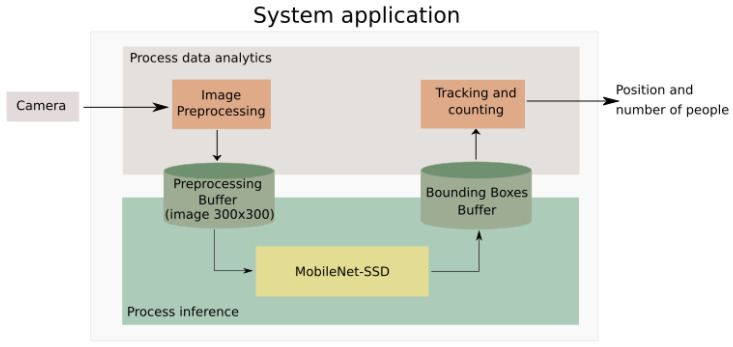
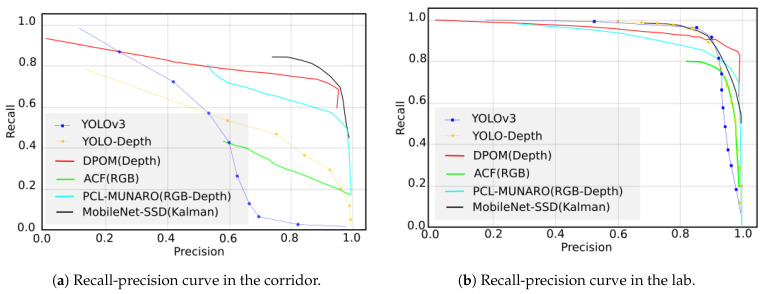
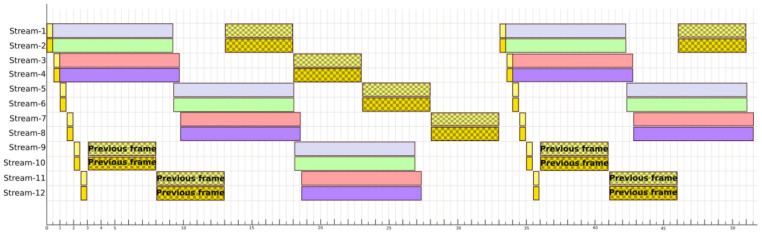
New processing methods based on artificial intelligence (AI) and deep learning are replacing traditional computer vision algorithms. The more advanced systems can process huge amounts of data in large computing facilities. In contrast, this paper presents a smart video surveillance system executing AI algorithms in low power consumption embedded devices. The computer vision algorithm, typical for surveillance applications, aims to detect, count and track people’s movements in the area. This application requires a distributed smart camera system. The proposed AI application allows detecting people in the surveillance area using a MobileNet-SSD architecture. In addition, using a robust Kalman filter bank, the algorithm can keep track of people in the video also providing people counting information. The detection results are excellent considering the constraints imposed on the process. The selected architecture for the edge node is based on a UpSquared2 device that includes a vision processor unit (VPU) capable of accelerating the AI CNN inference. The results section provides information about the image processing time when multiple video cameras are connected to the same edge node, people detection precision and recall curves, and the energy consumption of the system. The discussion of results shows the usefulness of deploying this smart camera node throughout a distributed surveillance system.
Overview
The claims and statistics of this paper haven’t been checked yet.
Free: it reads the open-access text and checks the first 5 claims that cite a source we can check. Create a free account to check every claim.
Integrity signals
Registry
Cites
Statistics
Figures


Verification
Claims the paper makes
The claims and statistics of this paper haven’t been checked yet.
Free: it reads the open-access text and checks the first 5 claims that cite a source we can check. Create a free account to check every claim.
Claims other papers make about this one
Each is checked against this paper’s own text: does it say what the citing paper says it does?
The source backs part of the claim, not all of it — or backs it for a different population, condition or comparison.
In the citing paper
“Cob-Parro et al. [90] proposed a system for human movement tracking using a Kalman filter bank on a low-power embedded device with an accuracy of 87.82% in 2021.”
From A Survey of Video Surveillance Systems in Smart City (2023) · cites this paper as [90]
Experimental — accuracy not yet measured
Self-check
Percentages, sums and reported differences re-computed from the paper’s own numbers.
The self-check needs the paper’s full text.
Citations
Cites
1 retracted
Video analytics-based intelligent surveillance system for smart buildings
Gautam, K. S., & Thangavel, S. K. (2019) · Soft Computing · doi:10.1007/s00500-019-03870-2 · Cited by 36
RetractedImageNet classification with deep convolutional neural networks
Krizhevsky, A., Sutskever, I., & Hinton, G. E. (2017) · Communications of the ACM · doi:10.1145/3065386 · Cited by 112,155 · cited 1×
“One of the first networks used was the so-called AlexNet in 2012 [36].”
MethodFaster R-CNN: Towards Real-Time Object Detection with Region Proposal Networks
Ren, S., He, K., Girshick, R., & Sun, J. (2017) · IEEE Transactions on Pattern Analysis and Machine Intelligence · doi:10.1109/tpami.2016.2577031 · Cited by 73,472
You Only Look Once: Unified, Real-Time Object Detection
Redmon, J., Divvala, S., Girshick, R., & Farhadi, A. (2016) · 2016 IEEE Conference on Computer Vision and Pattern Recognition (CVPR) · doi:10.1109/cvpr.2016.91 · Cited by 53,803 · cited 10×
“When it has grouped all regions, the algorithm terminates; • YOLO-v3 [63]: is a CNN that uses RGB information for object detection.”
MethodInfluentialMicrosoft COCO: Common Objects in Context
Lin, T.-Y., Maire, M., Belongie, S., Hays, J., Perona, P., Ramanan, D., Dollár, P., & Zitnick, C. L. (2014) · Lecture Notes in Computer Science · doi:10.1007/978-3-319-10602-1_48 · Cited by 45,460
Histograms of Oriented Gradients for Human Detection
Dalal, N., & Triggs, B. (2005) · 2005 IEEE Computer Society Conference on Computer Vision and Pattern Recognition (CVPR'05) · doi:10.1109/cvpr.2005.177 · Cited by 33,584 · cited 1×
“Belonging to the image pattern recognition classical methods, one of the most popular is the one proposed by Dalal and Triggs [24].”
MethodRich Feature Hierarchies for Accurate Object Detection and Semantic Segmentation
Girshick, R., Donahue, J., Darrell, T., & Malik, J. (2014) · 2014 IEEE Conference on Computer Vision and Pattern Recognition · doi:10.1109/cvpr.2014.81 · Cited by 32,684
(2016) · Cited by 31,590
Girshick, R. (2015) · 2015 IEEE International Conference on Computer Vision (ICCV) · doi:10.1109/iccv.2015.169 · Cited by 28,105
SSD: Single Shot MultiBox Detector
Liu, W., Anguelov, D., Erhan, D., Szegedy, C., Reed, S., Fu, C.-Y., & Berg, A. C. (2016) · Lecture Notes in Computer Science · doi:10.1007/978-3-319-46448-0_2 · Cited by 22,128 · cited 2×
“Among these algorithms, the most known are R-CNN [42], fast R-CNN [43], faster R-CNN [44], SSD (single shot detection) [45] and YOLO [46].”
MethodEdge computing: Vision and challenges
Shi, W., Cao, J., Zhang, Q., Li, Y., & Xu, L. (2016) · IEEE Internet of Things Journal · doi:10.1109/jiot.2016.2579198 · Cited by 8,733 · cited 1×
“Shi [15] defines edge computing as “enabling technologies that allow computing to be performed at the edge of the network, on downstream data on behalf of cloud services and on upstream data on behalf of IoT services”.”
BackgroundA survey of deep neural network architectures and their applications
Liu, W., Wang, Z., Liu, X., Zeng, N., Liu, Y., & Alsaadi, F. E. (2017) · Neurocomputing · doi:10.1016/j.neucom.2016.12.038 · Cited by 3,239 · cited 1×
“In particular, computer vision was the first research field in which deep learning took place [4].”
BackgroundOpportunities and obstacles for deep learning in biology and medicine
Ching, T., Himmelstein, D. S., Beaulieu-Jones, B. K., Kalinin, A. A., Do, B. T., Way, G. P., Ferrero, E., Agapow, P.-M., Zietz, M., Hoffman, M. M., et al. (2018) · Journal of The Royal Society Interface · doi:10.1098/rsif.2017.0387 · Cited by 2,310 · cited 1×
“Nowadays, deep learning has shown great advantages in several research fields, for example finance [1], medicine [2], automatic modulation classification in cognitive radios [3], and many others.”
BackgroundThe PASCAL visual object classes challenge 2006 (VOC2006) results
Everingham, M., Zisserman, A., Williams, C. K. I., & Gool, L. V. (2006) · Cited by 2,223
A Survey on the Edge Computing for the Internet of Things
Yu, W., Liang, F., He, X., Hatcher, W. G., Lu, C., Lin, J., & Yang, X. (2018) · IEEE Access · doi:10.1109/access.2017.2778504 · Cited by 1,520 · cited 1×
“On the other hand, the emergence of the Internet of Things (IoT) and the computing on the edge nodes [10], has led to the appearance of many research works that propose distributed video-surveillance systems based on this concept [11].”
BackgroundDeep Learning vs. Traditional Computer Vision
O’Mahony, N., Campbell, S., Carvalho, A., Harapanahalli, S., Hernandez, G. V., Krpalkova, L., Riordan, D., & Walsh, J. (2020) · Advances in Intelligent Systems and Computing · doi:10.1007/978-3-030-17795-9_10 · Cited by 1,025
Deep learning for finance: deep portfolios
Heaton, J. B., Polson, N. G., & Witte, J. H. (2017) · Applied Stochastic Models in Business and Industry · doi:10.1002/asmb.2209 · Cited by 752
Computer vision and deep learning techniques for pedestrian detection and tracking: A survey
Brunetti, A., Buongiorno, D., Trotta, G. F., & Bevilacqua, V. (2018) · Neurocomputing · doi:10.1016/j.neucom.2018.01.092 · Cited by 536 · cited 1×
“In this context, the literature related to people detection in video-surveillance applications is very extensive [22,23].”
BackgroundDeep Learning Strong Parts for Pedestrian Detection
Tian, Y., Luo, P., Wang, X., & Tang, X. (2015) · 2015 IEEE International Conference on Computer Vision (ICCV) · doi:10.1109/iccv.2015.221 · Cited by 509 · cited 1×
“In addition, this type of network can be used for the detection of specific elements, such as pedestrians, as shown in the paper [37], which uses a network based on the detection of pedestrians, which consists of extensive part detectors.”
BackgroundZheng, Q., Yang, M., Yang, J., Zhang, Q., & Zhang, X. (2018) · IEEE Access · doi:10.1109/access.2018.2810849 · Cited by 259 · cited 1×
“These datasets must be of large size for correct training, and in the case that it is not large enough, there are methods such as [41], which allow to improve the training with a smaller number of images reducing the problem of overfitting.”
MethodSurvey on Contemporary Remote Surveillance Systems for Public Safety
Räty, T. D. (2010) · IEEE Transactions on Systems, Man, and Cybernetics, Part C (Applications and Reviews) · doi:10.1109/tsmcc.2010.2042446 · Cited by 255 · cited 1×
“Old systems did not process video information and required the operator’s analysis, who was duty bound to carefully monitor any camera and whose analysis efficiency may decrease due to fatigue and boredom [6,7].”
BackgroundCrosstalk Cascades for Frame-Rate Pedestrian Detection
Dollár, P., Appel, R., & Kienzle, W. (2012) · Lecture Notes in Computer Science · doi:10.1007/978-3-642-33709-3_46 · Cited by 222 · cited 3×
“• ACF [60]: uses a RGB detector from [60], based on AdaBoost and aggregate channel features [61] to give a sense of what a state-of-the-art detector that does not use depth can do on these sequences; • PCL-MUNARO [62]: uses a RGB-D detector from [62], based on modified HOG features on regions extracted by depth segmen…”
MethodZheng, Q., Zhao, P., Li, Y., Wang, H., & Yang, Y. (2021) · Neural Computing and Applications · doi:10.1007/s00521-020-05514-1 · Cited by 204 · cited 1×
“Nowadays, deep learning has shown great advantages in several research fields, for example finance [1], medicine [2], automatic modulation classification in cognitive radios [3], and many others.”
BackgroundApplication of a Bank of Kalman Filters for Aircraft Engine Fault Diagnostics
Kobayashi, T., & Simon, D. L. (2003) · Volume 1: Turbo Expo 2003 · doi:10.1115/gt2003-38550 · Cited by 198
Smith, N. D., & Gales, M. (2001) · Cited by 168
Fast RGB-D people tracking for service robots
Munaro, M., & Menegatti, E. (2014) · Autonomous Robots · doi:10.1007/s10514-014-9385-0 · Cited by 164 · cited 3×
“• ACF [60]: uses a RGB detector from [60], based on AdaBoost and aggregate channel features [61] to give a sense of what a state-of-the-art detector that does not use depth can do on these sequences; • PCL-MUNARO [62]: uses a RGB-D detector from [62], based on modified HOG features on regions extracted by depth segmen…”
MethodImage Edge Detection: A New Approach Based on Fuzzy Entropy and Fuzzy Divergence
Versaci, M., & Morabito, F. C. (2021) · International Journal of Fuzzy Systems · doi:10.1007/s40815-020-01030-5 · Cited by 163 · cited 1×
“Before the preprocessing of the image, different algorithms such as noise reduction, image edge detector [53] or any image enhance low-level pixel processing could be applied.”
MethodRobust Head-Shoulder Detection by PCA-Based Multilevel HOG-LBP Detector for People Counting
Zeng, C., & Ma, H. (2010) · 2010 20th International Conference on Pattern Recognition · doi:10.1109/icpr.2010.509 · Cited by 127 · cited 1×
“The authors in [27] also proposed the use of HOG features for people’s head and shoulders detection, combined this time with a classifier based on principal components analysis (PCA).”
MethodJalal, A., Kamal, S., & Kim, D. (2017) · International Journal of Interactive Multimedia and Artificial Intelligence · doi:10.9781/ijimai.2017.447 · Cited by 122 · cited 3×
“Some of these works again use HOG features obtained from RGBD data [31,32], whereas other approaches are based on PCA [33].”
MethodVariational Adaptive Kalman Filter With Gaussian-Inverse-Wishart Mixture Distribution
Huang, Y., Zhang, Y., Shi, P. J., & Chambers, J. A. (2020) · IEEE Transactions on Automatic Control · doi:10.1109/tac.2020.2995674 · Cited by 120
The Xbox One System on a Chip and Kinect Sensor
Sell, J., & O'Connor, P. (2014) · IEEE Micro · doi:10.1109/mm.2014.9 · Cited by 110 · cited 1×
“In recent years, the use of RGBD cameras [30] that provide both RGB images and depth information (distance from each 3D point to the camera) using different technologies, such as stereo vision, or time of flight, has impressively increased.”
BackgroundDeep Learning Framework for Vehicle and Pedestrian Detection in Rural Roads on an Embedded GPU
Barba-Guamán, L., Naranjo, J. E., & Ortiz, A. (2020) · Electronics · doi:10.3390/electronics9040589 · Cited by 94 · cited 1×
“Apart from the rasberri pi, there are other hardware systems such as the NVIDIA Jetson Nano, which contains an internal GPU that allows the inference of networks with ease as in the case of [50].”
MethodA comprehensive review on intelligent surveillance systems
Ibrahim, S. (2016) · Communications in Science and Technology · doi:10.21924/cst.1.1.2016.7 · Cited by 93 · cited 1×
“The modern video processing centralised systems [8,9] store and process the video information retrieved from the camera network.”
BackgroundOpenVINO Deep Learning Workbench: Comprehensive Analysis and Tuning of Neural Networks Inference
Demidovskij, A. V., Gorbachev, Y., Fedorov, M., Slavutin, I., Tugaryov, A., Fatekhov, M., & Tarkan, Y. (2019) · IEEE International Conference on Computer Vision Workshops · doi:10.1109/iccvw.2019.00104 · Cited by 80 · cited 8×
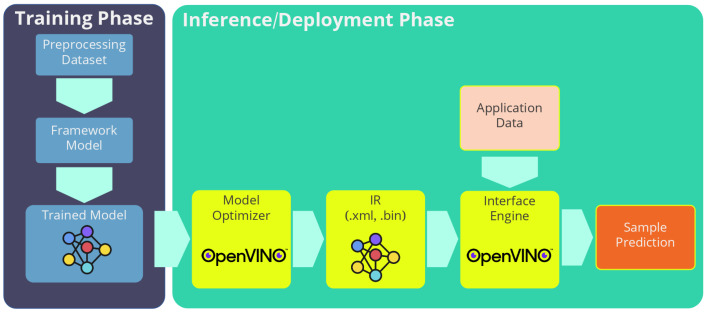
“The OpenVino framework includes two different tools, as shown in Figure 1: the model optimizer and the inference engine.”
MethodInfluentialAl-Nawashi, M. M., Al-Hazaimeh, O. M., & Saraee, M. H. (2016) · Neural Computing and Applications · doi:10.1007/s00521-016-2363-z · Cited by 78 · cited 1×
“Old systems did not process video information and required the operator’s analysis, who was duty bound to carefully monitor any camera and whose analysis efficiency may decrease due to fatigue and boredom [6,7].”
BackgroundReal-Time Multiple Human Perception With Color-Depth Cameras on a Mobile Robot
Zhang, H., Reardon, C., & Parker, L. E. (2013) · IEEE Transactions on Cybernetics · doi:10.1109/tcyb.2013.2275291 · Cited by 73 · cited 1×
“Some of these works again use HOG features obtained from RGBD data [31,32], whereas other approaches are based on PCA [33].”
MethodAn IoT Surveillance System Based on a Decentralised Architecture
Santamaria, A. F., Raimondo, P., Tropea, M., Rango, F. D., & Aiello, C. (2019) · Sensors · doi:10.3390/s19061469 · Cited by 66
iSEC: An Optimized Deep Learning Model for Image Classification on Edge Computing
Kristiani, E., Yang, C., & Huang, C. (2020) · IEEE Access · doi:10.1109/access.2020.2971566 · Cited by 59 · cited 1×
“in [19] by designing an object classification system, or Adnan et al.”
MethodProbability occupancy maps for occluded depth images
Bagautdinov, T., Fleuret, F., & Fua, P. (2015) · IEEE Computer Society Conference on Computer Vision and Pattern Recognition/Proceedings - IEEE Computer Society Conference on Computer Vision and Pattern Recognition/Proceedings · doi:10.1109/cvpr.2015.7298900 · Cited by 48 · cited 11×
“For the system evaluation, the EPFL [59] dataset was used.”
MethodInfluentialFast human detection for indoor mobile robots using depth images
Choi, B., Meriçli, Ç., Biswas, J., & Veloso, M. (2013) · Proceedings - IEEE International Conference on Robotics and Automation/Proceedings · doi:10.1109/icra.2013.6630711 · Cited by 47 · cited 1×
“Some of these works again use HOG features obtained from RGBD data [31,32], whereas other approaches are based on PCA [33].”
MethodRobust people detection using depth information from an overhead Time-of-Flight camera
Luna, C. A., Losada-Gutiérrez, C., Fuentes-Jiménez, D., Fernandez-Rincon, A., Mazo, M., & Macías-Guarasa, J. (2016) · Expert Systems with Applications · doi:10.1016/j.eswa.2016.11.019 · Cited by 45 · cited 1×
“Furthermore, there are also works that use only depth information to detect people in a robust way while preserving their privacy [34,35].”
BackgroundSelf-citationA New Deep Learning Application Based on Movidius NCS for Embedded Object Detection and Recognition
OTHMAN, N. A., & AYDIN, I. (2018) · 2018 2nd International Symposium on Multidisciplinary Studies and Innovative Technologies (ISMSIT) · doi:10.1109/ismsit.2018.8567306 · Cited by 45 · cited 1×
“in [20] with the optimisation of a detection system on a Rasberry.”
MethodBedő, J., Sanderson, C., & Kowalczyk, A. (2006) · Lecture notes in computer science · doi:10.1007/11941439_21 · Cited by 39 · cited 1×
“This algorithm obtains image features using a histogram of gradient (HOG) and then applies a support vector machine (SVM) classifier (widely used in other applications such as natural language [25] or speech recognition [26]).”
MethodMasuzawa, H., Miura, J., & Oishi, S. (2017) · IEEE/SICE International Symposium on System Integration (SII) · doi:10.1109/sii.2017.8279277 · Cited by 39 · cited 1×
“[47] which adopted the YOLO object detection method through a Darknet framework to generate the bounding box of detected people.”
MethodA new method combining HOG and Kalman filter for video-based human detection and tracking
Li, C., Guo, L., & Hu, Y. (2010) · International Congress on Image and Signal Processing (CISP) · doi:10.1109/cisp.2010.5648239 · Cited by 36 · cited 1×
“In this context, the proposal in [28] presents a method that combines a Kalman filter and HOG features, whereas [29] describes an approach based on image segmentation and a Kalman filter.”
MethodHuman detection and tracking using image segmentation and Kalman filter
Thombre, D. V., Nirmal, J. H., & Lekha, D. S. (2009) · International Conference on Intelligent Agent & Multi-Agent Systems (IAMA) · doi:10.1109/iama.2009.5228040 · Cited by 29 · cited 1×
“In this context, the proposal in [28] presents a method that combines a Kalman filter and HOG features, whereas [29] describes an approach based on image segmentation and a Kalman filter.”
MethodReal-Time HOG-based pedestrian detection in thermal images for an embedded system
Rujikietgumjorn, S., & Watcharapinchai, N. (2017) · IEEE International Conference on Advanced Video and Signal Based Surveillance (AVSS) · doi:10.1109/avss.2017.8078561 · Cited by 20 · cited 1×
“For this device, we find people detection systems using classical AI such as the use of HOG+SVM with thermal images in the case of the paper [48] or by using deep learning models as in the case of [49] which uses it for pedestrian detection in cars.”
MethodBoschi, A., Salvetti, F., Mazzia, V., & Chiaberge, M. (2020) · Machines · doi:10.3390/machines8030049 · Cited by 18 · cited 1×
“Previously obtained values were compared with other similar works, such as that of [65], whose architecture uses a Nano Jetson as an embedded system executing a YOLOv3tiny network.”
ResultReal-time pedestrian detection technique for embedded driver assistance systems
Chiang, C.-Y., Chen, Y., Ke, K.-C., & Yuan, S. (2015) · International Conference on Consumer Electronics · doi:10.1109/icce.2015.7066383 · Cited by 14
An Evaluation of Low-Cost Vision Processors for Efficient Star Identification
Agarwal, S., Hervas-Martin, E., Byrne, J., Dunne, A. K., Espinosa-Aranda, J. L., & Rijlaarsdam, D. (2020) · Sensors · doi:10.3390/s20216250 · Cited by 13 · cited 1×
“[21] describe the design of a star tracker using an NCS2.”
MethodHoffman, A. J., & Bester, N.-P. (2020) · IEEE Journal of Radio Frequency Identification · doi:10.1109/jrfid.2020.3025044 · Cited by 10
A people counting system for business analytics
Pane, C., Gasparini, M., Prati, A., Gualdi, G., & Cucchiara, R. (2013) · IEEE International Conference on Advanced Video and Signal Based Surveillance (AVSS) · doi:10.1109/avss.2013.6636629 · Cited by 8 · cited 1×
“• ACF [60]: uses a RGB detector from [60], based on AdaBoost and aggregate channel features [61] to give a sense of what a state-of-the-art detector that does not use depth can do on these sequences; • PCL-MUNARO [62]: uses a RGB-D detector from [62], based on modified HOG features on regions extracted by depth segmen…”
MethodFast heuristic method to detect people in frontal depth images
Luna, C. A., Losada-Gutiérrez, C., Fuentes-Jiménez, D., & Mazo, M. (2020) · Expert Systems with Applications · doi:10.1016/j.eswa.2020.114483 · Cited by 8 · cited 1×
“Furthermore, there are also works that use only depth information to detect people in a robust way while preserving their privacy [34,35].”
BackgroundSelf-citationTowards dense people detection with deep learning and depth images
Fuentes-Jiménez, D., Losada-Gutiérrez, C., Casillas-Pérez, D., Macías-Guarasa, J., Pizarro, D., López, R. M., & Luna, C. A. (2021) · Engineering Applications of Artificial Intelligence · doi:10.1016/j.engappai.2021.104484 · Cited by 6
Self-citationIntelligent Computing Paradigm and Cutting-edge Technologies
Jain, L. C., Peng, S., Alhadidi, B., & Pal, S. (2020) · Learning and analytics in intelligent systems · doi:10.1007/978-3-030-38501-9 · Cited by 6
Research works printed but not linked: 5
- Howard, A.G., Zhu, M., Chen, B., Kalenichenko, D., Wang, W., Weyand, T., Andreetto, M., and Adam, H. (2017). Mobilenets: Efficient convolutional neural networks for mobile vision applications. arXiv.
- Everingham, M., Van Gool, L., Williams, C.K.I., Winn, J., and Zisserman, A. (2012, May 08). The PASCAL Visual Object Classes Challenge 2007 (VOC2007) Results. Available online: http://www.pascal-network.org/challenges/VOC/voc2007/workshop/index.html.
- Veringham, M., Van Gool, L., Williams, C.K.I., Winn, J., and Zisserman, A. (2012, May 08). The PASCAL Visual Object Classes Challenge 2012 (VOC2012) Results. Available online: http://www.pascal-network.org/challenges/VOC/voc2012/workshop/index.html.
- Simonyan, K., and Zisserman, A. (2014). Very deep convolutional networks for large-scale image recognition. arXiv.
- Redmon, J., and Farhadi, A. (2018). Yolov3: An incremental improvement. arXiv.
Cited by
Azizi, S., Shojafar, M., Abawajy, J., & Buyya, R. (2022) · Journal of Network and Computer Applications · doi:10.1016/j.jnca.2022.103333 · Cited by 185
Edge AI for Smart Surveillance: Real-time Human Activity Recognition on Low-power DevicesPreprint
Godase, V. V. (2025) · SSRN Electronic Journal · doi:10.2139/ssrn.5383804 · Cited by 149
A Survey of Video Surveillance Systems in Smart City
Myagmar-Ochir, Y., & Kim, W. (2023) · Electronics · doi:10.3390/electronics12173567 · Cited by 134
“Cob-Parro et al. [90] proposed a system for human movement tracking using a Kalman filter bank on a low-power embedded device with an accuracy of 87.82% in 2021.”
MethodInfluentialA new framework for deep learning video based Human Action Recognition on the edge
Cob-Parro, A. C., Losada-Gutiérrez, C., Marrón-Romera, M., Gardel, A., & Bravo, I. (2023) · Expert Systems with Applications · doi:10.1016/j.eswa.2023.122220 · Cited by 99
Self-citationCob-Parro, A. C., Lalangui, Y., & Lazcano, R. (2024) · Agronomy · doi:10.3390/agronomy14020259 · Cited by 61
Self-citation
Metadata
- Authors
- Cob-Parro, A. C., Losada-Gutiérrez, C., Marrón-Romera, M., Gardel-Vicente, A., & Bravo-Muñoz, I.
- Affiliations
- Universidad de Alcalá (ES)
- Department of Electronics, University of Alcalá, Alcalá de Henares, 28801 Madrid, Spain
- ORCID
- Venue
- Sensors
- Publisher
- MDPI AG
- Published
- 2021-04-23
- Volume
- 21
- Issue
- 9
- Pages
- 2958
- ISSN
- 1424-8220 (ISSN-L)
- PMC
- PMC8122948
- OpenAlex
- W3157789903
- Cited by
- 84
- References
- 54
- Citations by year
- 2026: 20 · 2025: 19 · 2024: 19 · 2023: 14 · 2022: 10 · 2021: 2
- FWCI
- 4.05
- Type
- journal article
- Language
- en
- Open access
- gold
- doi.org
- Licence
- Locations
- Sensors (publishedVersion, cc-by)
- PubMed Central (publishedVersion, cc-by)
- PubMed (publishedVersion)
- e_Buah (submittedVersion, cc-by-nc-nd)
- DOAJ (DOAJ: Directory of Open Access Journals) (submittedVersion, cc-by-sa)
- Funders
- European Union’s Horizon 2020 Research and Innovation Programme (PALAEMON project (Grant Agreement nº 814962))
- Topics
- Physical Sciences › Computer Science › Computer Vision and Pattern Recognition › Video Surveillance and Tracking Methods
- Physical Sciences › Computer Science › Computer Networks and Communications › IoT and Edge/Fog Computing
- Physical Sciences › Computer Science › Computer Vision and Pattern Recognition › Advanced Neural Network Applications
- Keywords
- video surveillance, edge computing, smart cameras, human detection, people counting, human tracking, MobileNet-SSD, Kalman filter, embedded devices, low power consumption, energy consumption
About these checks
Registry, retraction, Cites and statistics results are computed, not judged, with one exception: a printed reference that no index lists is read once by a model before it counts as a citation error. Claims are extracted by a model and kept only when their quote appears verbatim in the text; each cited source is then checked, with a model’s help, for whether it says what the claim relies on. Those verdicts can be wrong — read the claim’s quote and the cited source before relying on one.
Statistics and arithmetic are recomputed, not judged.
Confidence bands are shown only for fields calibrated on our annotated test set. None is calibrated yet, so no band is shown.
What counts as a claim ›How we measure confidence ›How we check this ›
Are you an author, or do you see a problem with this page? Request a review
Data sources
Bibliographic data: Semantic Scholar, OpenAlex, Crossref.
Contains information from the Semantic Scholar Academic Graph Datasets, made available under the ODC Attribution License (ODC-BY 1.0).
Semantic Scholar’s data is described in: Kinney, R., et al. (2023). The Semantic Scholar Open Data Platform. arXiv:2301.10140.
