

The DOI matches its Crossref record; 5 of the 5 references it cites were found in a registry or an index.
A Spatio-Temporal Ensemble Deep Learning Architecture for Real-Time Defect Detection during Laser Welding on Low Power Embedded Computing Boards
Open accessPublished version of a preprint
Abstract
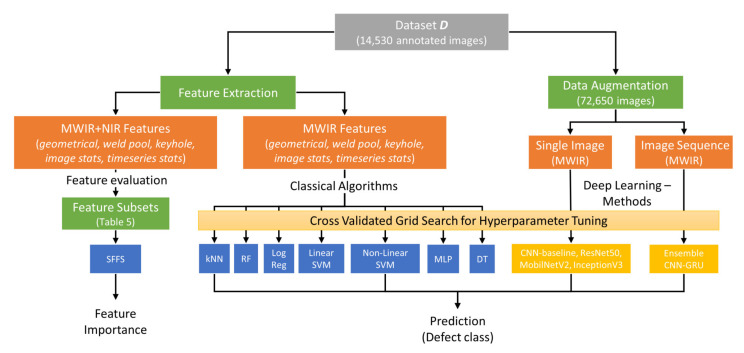
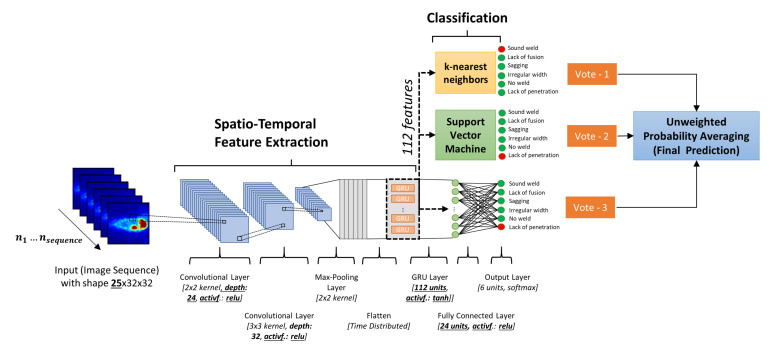
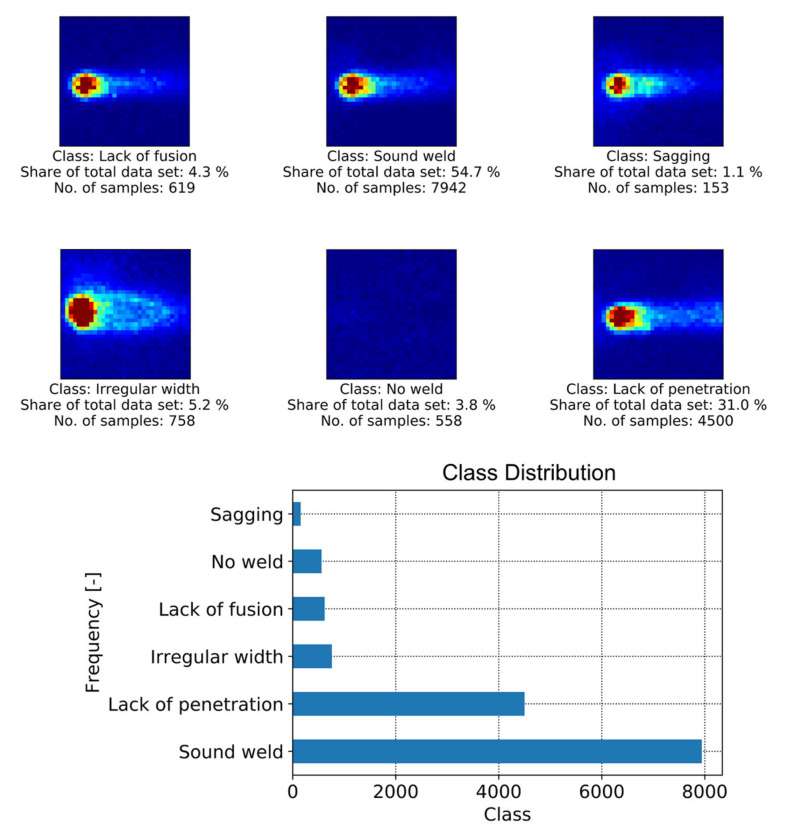
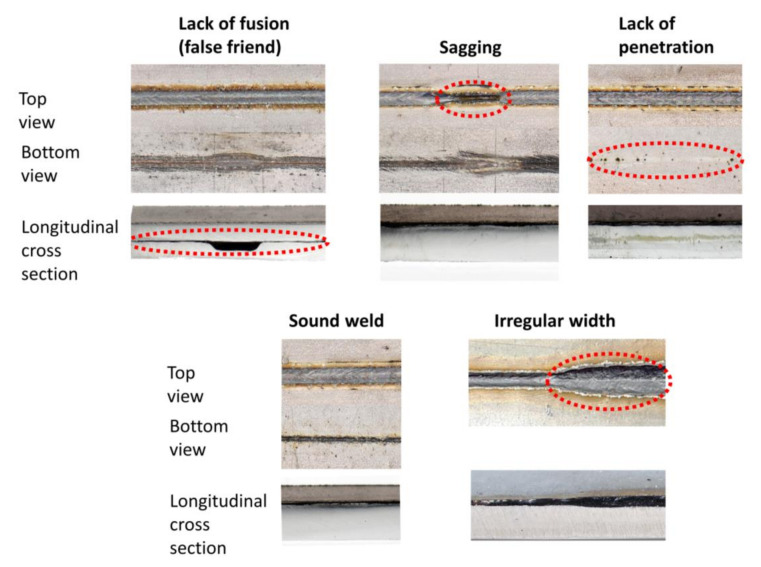
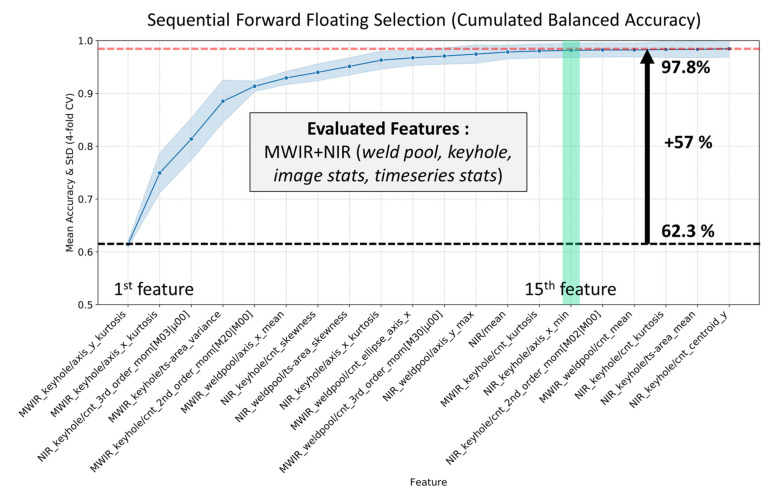
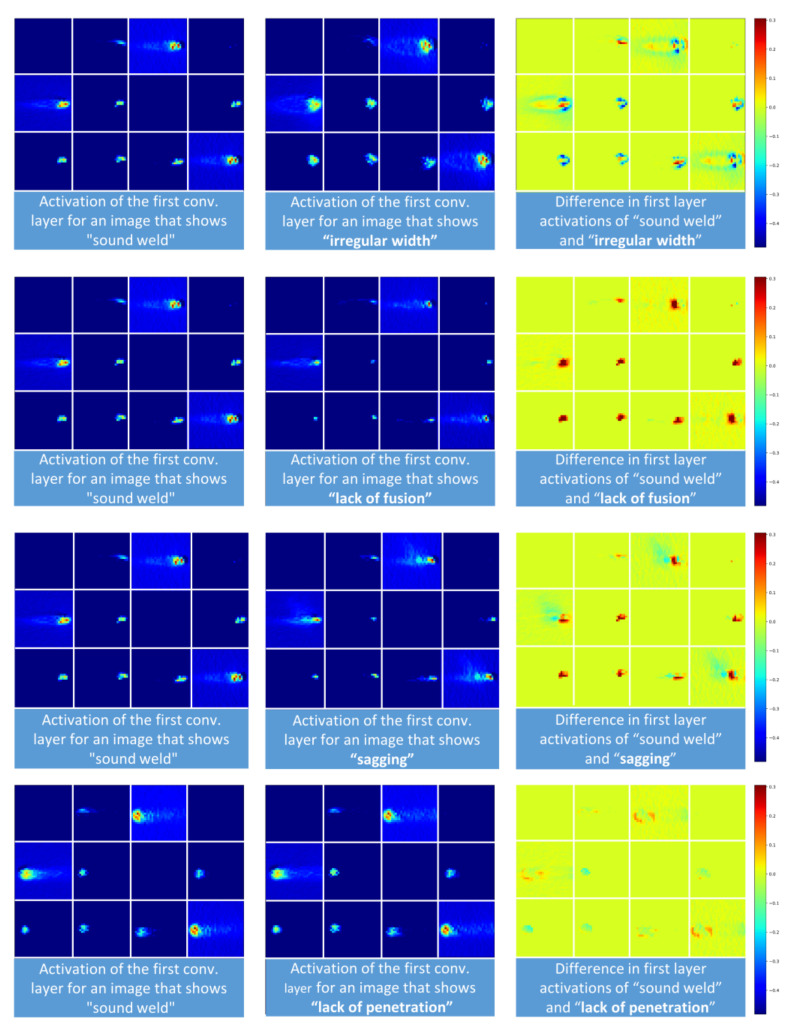
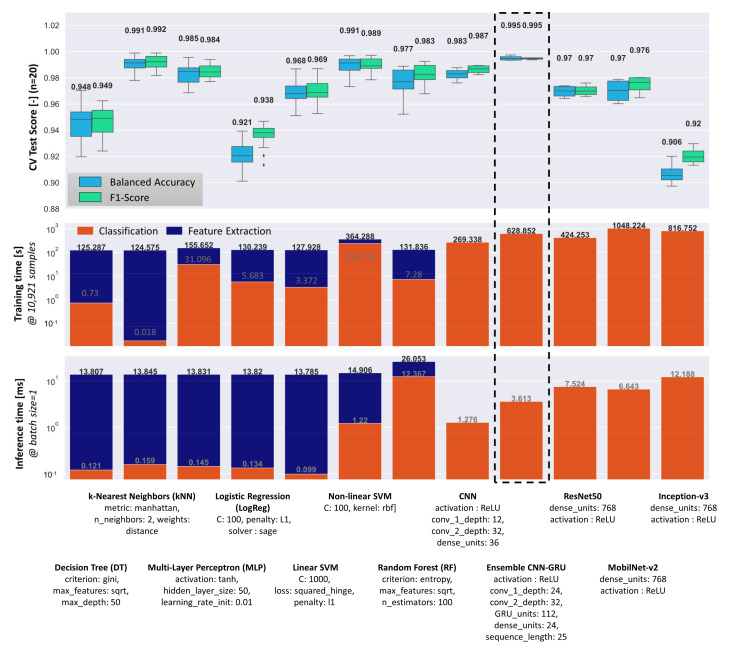
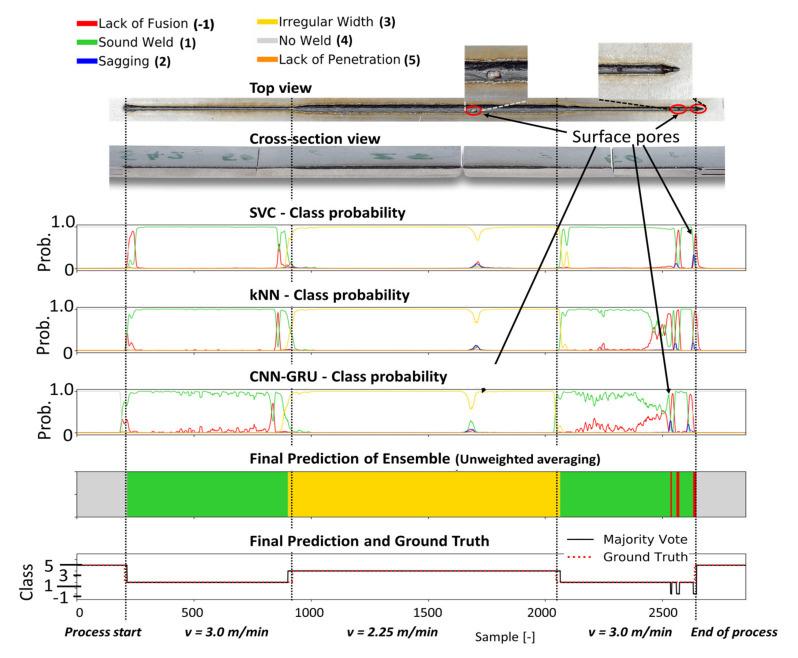
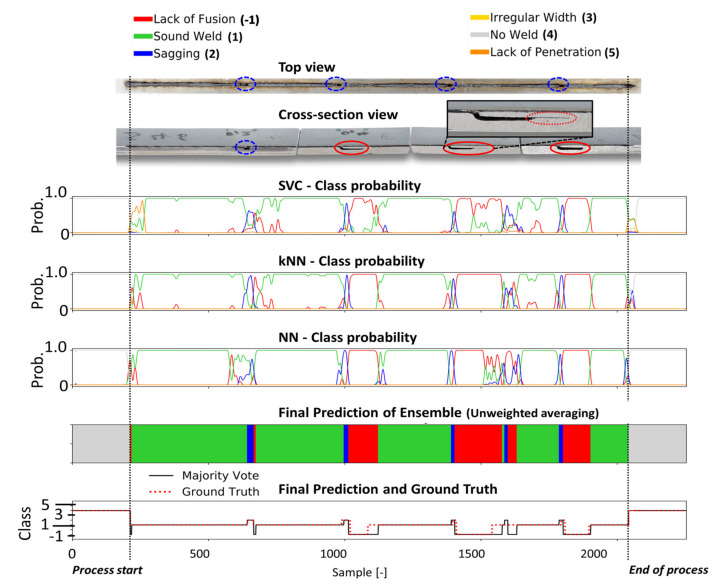
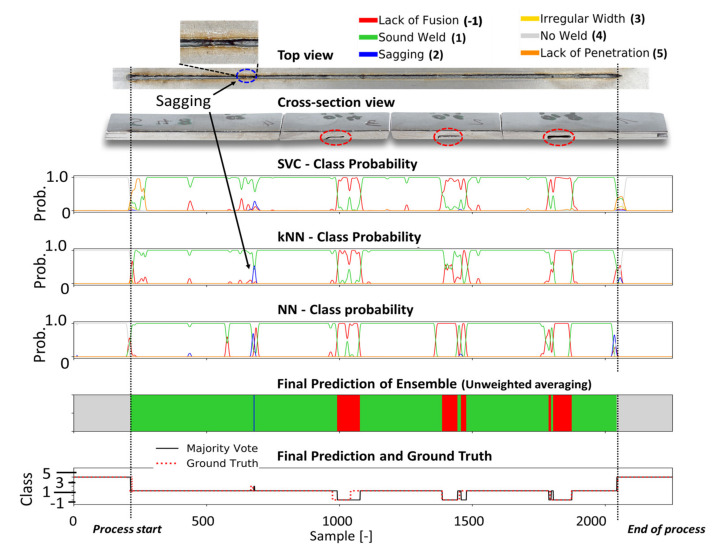
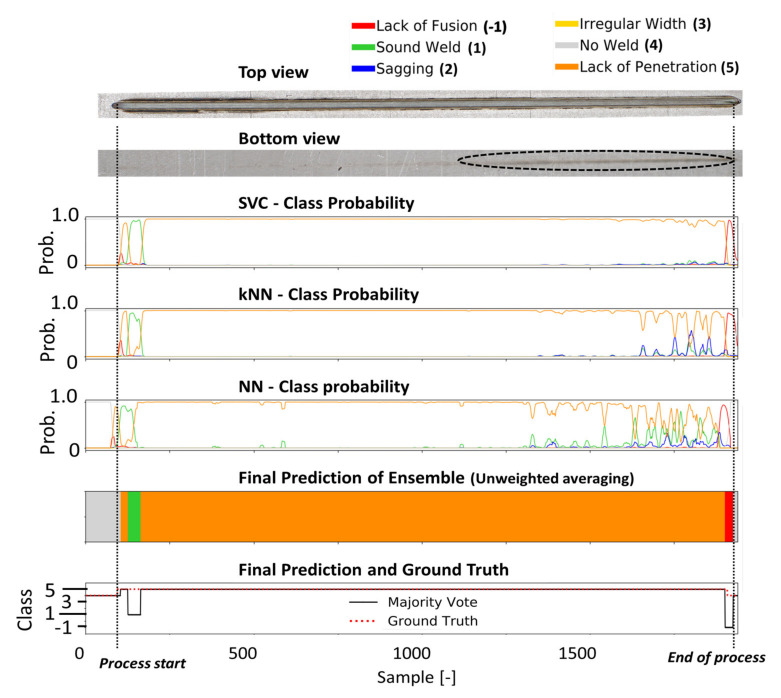
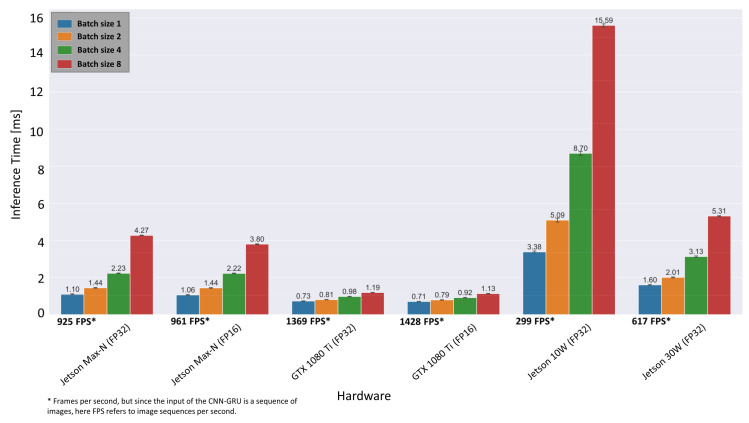
In modern production environments, advanced and intelligent process monitoring strategies are required to enable an unambiguous diagnosis of the process situation and thus of the final component quality. In addition, the ability to recognize the current state of product quality in real-time is an important prerequisite for autonomous and self-improving manufacturing systems. To address these needs, this study investigates a novel ensemble deep learning architecture based on convolutional neural networks (CNN), gated recurrent units (GRU) combined with high-performance classification algorithms such as k-nearest neighbors (kNN) and support vector machines (SVM). The architecture uses spatio-temporal features extracted from infrared image sequences to locate critical welding defects including lack of fusion (false friends), sagging, lack of penetration, and geometric deviations of the weld seam. In order to evaluate the proposed architecture, this study investigates a comprehensive scheme based on classical machine learning methods using manual feature extraction and state-of-the-art deep learning algorithms. Optimal hyperparameters for each algorithm are determined by an extensive grid search. Additional work is conducted to investigate the significance of various geometrical, statistical and spatio-temporal features extracted from the keyhole and weld pool regions. The proposed method is finally validated on previously unknown welding trials, achieving the highest detection rates and the most robust weld defect recognition among all classification methods investigated in this work. Ultimately, the ensemble deep neural network is implemented and optimized to operate on low-power embedded computing devices with low latency (1.1 ms), demonstrating sufficient performance for real-time applications.
Overview
The claims and statistics of this paper haven’t been checked yet.
Run the check — free, no account needed. It reads the open-access text and checks the sources it cites.
Integrity signals
Registry
Cites
Statistics
Figures
Verification
Claims the paper makes
The claims and statistics of this paper haven’t been checked yet.
Run the check — free, no account needed. It reads the open-access text and checks the sources it cites.
Self-check
Percentages, sums and reported differences re-computed from the paper’s own numbers.
The self-check needs the paper’s full text.
Citations
Cites
ImageNet classification with deep convolutional neural networks
Krizhevsky, A., Sutskever, I., & Hinton, G. E. (2017) · Communications of the ACM · doi:10.1145/3065386 · Cited by 112,155
Hochreiter, S., & Schmidhuber, J. (1997) · Neural Computation · doi:10.1162/neco.1997.9.8.1735 · Cited by 102,318
Note on the Sampling Error of the Difference Between Correlated Proportions or Percentages
McNemar, Q. (1947) · Psychometrika · doi:10.1007/bf02295996 · Cited by 4,754
Learning Phrase Representations using RNN Encoder-Decoder for Statistical Machine Translation
Cho, K., van Merrienboer, B., Gulcehre, C., Bahdanau, D., Bougares, F., Schwenk, H., & Bengio, Y. (2014) · arXiv · doi:10.48550/arxiv.1406.1078 · Cited by 3,317
Deep Convolutional and LSTM Recurrent Neural Networks for Multimodal Wearable Activity Recognition
Ordóñez, F., & Roggen, D. (2016) · Sensors · doi:10.3390/s16010115 · Cited by 2,761 · cited 1×
“In addition to the manufacturing domain, architectures based on CNN and RNN turned out to be successful in applications such as action and emotion recognition in video data [35,36] and wearable activity recognition [37].”
Method
Research works printed but not linked: 61
- You, 2013, Review of laser welding monitoring, Sci. Technol. Weld. Join., 19, 181, 10.1179/1362171813Y.0000000180 · DOI
- Shao, 2005, Review of techniques for on-line monitoring and inspection of laser welding, J. Phys. Conf. Ser., 15, 101, 10.1088/1742-6596/15/1/017 · DOI
- Stavridis, 2017, Quality assessment in laser welding: A critical review, Int. J. Adv. Manuf. Technol., 94, 1825, 10.1007/s00170-017-0461-4 · DOI
- Kim, 2012, Coaxial monitoring of keyhole during Yb:YAG laser welding, Opt. Laser Technol., 44, 1874, 10.1016/j.optlastec.2012.02.025 · DOI
- Courtois, 2014, A complete model of keyhole and melt pool dynamics to analyze instabilities and collapse during laser welding, J. Laser Appl., 26, 042001, 10.2351/1.4886835 · DOI
- Saeed, 2007, Weld pool surface depth measurement using a calibrated camera and structured light, Meas. Sci. Technol., 18, 2570, 10.1088/0957-0233/18/8/033 · DOI
- Bertrand, 2000, Application of near infrared pyrometry for continuous Nd:YAG laser welding of stainless steel, Appl. Surf. Sci., 168, 182, 10.1016/S0169-4332(00)00586-9 · DOI
- Kong, 2012, Real-time monitoring of laser welding of galvanized high strength steel in lap joint configuration, Opt. Laser Technol., 44, 2186, 10.1016/j.optlastec.2012.03.003 · DOI
- Purtonen, 2014, Monitoring and Adaptive Control of Laser Processes, Phys. Proc., 56, 1218, 10.1016/j.phpro.2014.08.038 · DOI
- Zhang, 2013, Coaxial monitoring of the fibre laser lap welding of Zn-coated steel sheets using an auxiliary illuminant, Opt. Laser Technol., 50, 167, 10.1016/j.optlastec.2013.03.001 · DOI
- Knaak, 2019, Deep learning-based semantic segmentation for in-process monitoring in laser welding applications, Appl. Mach. Learn., 11139, 1113905
- Tenner, 2017, Analytical model of the laser welding of zinc-coated steel sheets by the aid of videography, J. Laser Appl., 29, 22411, 10.2351/1.4983236 · DOI
- Schmidt, 2008, Analysis of YAG laser lap-welding of zinc coated steel sheets, CIRP Ann., 57, 213, 10.1016/j.cirp.2008.03.043 · DOI
- Wuest, 2016, Machine learning in manufacturing: Advantages, challenges, and applications, Prod. Manuf. Res., 4, 23
- Xing, 2017, Quality assessment of resistance spot welding process based on dynamic resistance signal and random forest based, Int. J. Adv. Manuf. Technol., 94, 327, 10.1007/s00170-017-0889-6 · DOI
- Knaak, 2018, Machine learning as a comparative tool to determine the relevance of signal features in laser welding, Procedia CIRP, 74, 623, 10.1016/j.procir.2018.08.073 · DOI
- Jager, 2008, Principal Component Imagery for the Quality Monitoring of Dynamic Laser Welding Processes, IEEE Trans. Ind. Electron., 56, 1307, 10.1109/TIE.2008.2008339 · DOI
- You, 2015, WPD-PCA-Based Laser Welding Process Monitoring and Defects Diagnosis by Using FNN and SVM, IEEE Trans. Ind. Electron., 62, 628, 10.1109/TIE.2014.2319216 · DOI
- Schmidhuber, 2015, Deep learning in neural networks: An overview, Neural Netw., 61, 85, 10.1016/j.neunet.2014.09.003 · DOI · Paper page
- Hinton, 2012, Deep Neural Networks for Acoustic Modeling in Speech Recognition: The Shared Views of Four Research Groups, IEEE Signal Process. Mag., 29, 82, 10.1109/MSP.2012.2205597 · DOI · Paper page
- Kruger, 2013, Deep Hierarchies in the Primate Visual Cortex: What Can We Learn for Computer Vision?, IEEE Trans. Pattern Anal. Mach. Intell., 35, 1847, 10.1109/TPAMI.2012.272 · DOI
- Mohamed, A.-R., Sainath, T.N., Dahl, G.E., Ramabhadran, B., Hinton, G.E., and Picheny, M.A. (2011, January 22–27). Deep Belief Networks using discriminative features for phone recognition. Proceedings of the 2011 IEEE International Conference on Acoustics, Speech and Signal Processing (ICASSP), Prague, Czech Republic. · DOI
- Wallach, H., Larochelle, H., Beygelzimer, A., Alché-Buc, F.D., Fox, E., and Garnett, R. (2019). PyTorch: An Imperative Style, High-Performance Deep Learning Library. Advances in Neural Information Processing Systems 32, Curran Associates Inc.
- Jia, Y., Shelhamer, E., Donahue, J., Karayev, S., Long, J., Girshick, R., Guadarrama, S., and Darrell, T. (2021, May 10). Caffe: Convolutional Architecture for Fast Feature Embedding. Available online: http://arxiv.org/pdf/1408.5093v1. · arXiv
- Wang, 2018, Deep learning for smart manufacturing: Methods and applications, J. Manuf. Syst., 48, 144, 10.1016/j.jmsy.2018.01.003 · DOI · Paper page
- Knaak, 2021, Improving Build Quality in Laser Powder Bed Fusion Using High Dynamic Range Imaging and Model-Based Reinforcement Learning, IEEE Access, 9, 55214, 10.1109/ACCESS.2021.3067302 · DOI
- Xue, B., Chang, B., and Du, D. (2021). Multi-Output Monitoring of High-Speed Laser Welding State Based on Deep Learning. Sensors, 21. · DOI
- Božič, A., Kos, M., and Jezeršek, M. (2020). Power Control during Remote Laser Welding Using a Convolutional Neural Network. Sensors, 20. · DOI
- Zhang, 2020, Real-time penetration state monitoring using convolutional neural network for laser welding of tailor rolled blanks, J. Manuf. Syst., 54, 348, 10.1016/j.jmsy.2020.01.006 · DOI
- Pilarski, 2014, First Steps towards an Intelligent Laser Welding Architecture Using Deep Neural Networks and Reinforcement Learning, Procedia Technol., 15, 474, 10.1016/j.protcy.2014.09.007 · DOI
- Pallas, 2019, A convolutional approach to quality monitoring for laser manufacturing, J. Intell. Manuf., 31, 789
- Liu, T., Bao, J., Wang, J., and Zhang, Y. (2018). A Hybrid CNN–LSTM Algorithm for Online Defect Recognition of CO2 Welding. Sensors, 18. · DOI
- Ouyang, 2019, A 3D-CNN and LSTM Based Multi-Task Learning Architecture for Action Recognition, IEEE Access, 7, 40757, 10.1109/ACCESS.2019.2906654 · DOI
- Fan, Y., Lu, X., Li, D., and Liu, Y. (2016, January 12–16). Video-based emotion recognition using CNN-RNN and C3D hybrid networks. Proceedings of the 18th ACM International Conference on Multimodal Interaction, Tokyo, Japan. · DOI · Paper page
- Valiente, R., Zaman, M., Ozer, S., and Fallah, Y.P. (2019, January 9–12). Controlling Steering Angle for Cooperative Self-driving Vehicles utilizing CNN and LSTM-based Deep Networks. Proceedings of the 30th IEEE Intelligent Vehicles Symposium, Paris, France. · DOI
- Yin, W., Kann, K., Yu, M., and Schütze, H. (2021, May 12). Comparative Study of CNN and RNN for Natural Language Processing. Available online: http://arxiv.org/pdf/1702.01923v1. · arXiv
- He, K., Zhang, X., Ren, S., and Sun, J. (2021, May 12). Identity Mappings in Deep Residual Networks. Available online: https://arxiv.org/pdf/1603.05027. · arXiv
- Sandler, M., Howard, A., Zhu, M., Zhmoginov, A., and Chen, L. (2018, January 18–23). Mobilenetv2: Inverted Residuals and Linear Bottlenecks. Proceedings of the 2018 IEEE Conference on Computer Vision and Pattern Recognition (CVPR), Salt Lake City, UT, USA. · DOI · Paper page
- Szegedy, C., Vanhoucke, V., Ioffe, S., Shlens, J., and Wojna, Z. (2021, May 11). Rethinking the Inception Architecture for Computer Vision. Available online: https://arxiv.org/pdf/1512.00567. · arXiv
- Bishop, C.M. (2006). Pattern recognition and machine learning. Information Science and Statistics, Springer.
- Nixon, M.S., and Aguado, A.S. (2012). Feature Extraction & Image Processing for Computer Vision, Academic Press. [3rd ed.].
- Runkler, T.A. (2012). Data Analytics: Models and Algorithms for Intelligent Data Analysis, Vieweg+Teubner Verlag. · DOI
- Pedregosa, 2011, Scikit-learn: Machine Learning in Python, J. Mach. Learn. Res., 12, 2825
- Lee, 2017, A Convolutional Neural Network for Fault Classification and Diagnosis in Semiconductor Manufacturing Processes, IEEE Trans. Semicond. Manuf., 30, 135, 10.1109/TSM.2017.2676245 · DOI · Paper page
- Arif, S., Wang, J., Hassan, T.U., and Fei, Z. (2019). 3D-CNN-Based Fused Feature Maps with LSTM Applied to Action Recognition. Future Internet, 11. · DOI
- Kim, D., Cho, H., Shin, H., Lim, S.-C., and Hwang, W. (2019). An Efficient Three-Dimensional Convolutional Neural Network for Inferring Physical Interaction Force from Video. Sensors, 19. · DOI
- Zhu, 2017, Multimodal Gesture Recognition Using 3-D Convolution and Convolutional LSTM, IEEE Access, 5, 4517, 10.1109/ACCESS.2017.2684186 · DOI
- Ullah, 2018, Action Recognition in Video Sequences using Deep Bi-Directional LSTM With CNN Features, IEEE Access, 6, 1155, 10.1109/ACCESS.2017.2778011 · DOI
- Rana, R. (2021, May 11). Gated Recurrent Unit (GRU) for Emotion Classification from Noisy Speech. Available online: http://arxiv.org/pdf/1612.07778v1. · arXiv
- Chung, J., Gulcehre, C., Cho, K., and Bengio, Y. (2014). Empirical Evaluation of Gated Recurrent Neural Networks on Sequence Modeling. arXiv.
- Ganaie, M.A., Hu, M., Tanveer, M., and Suganthan, P.N. (2021, May 11). Ensemble Deep Learning: A Review. Available online: https://arxiv.org/pdf/2104.02395. · arXiv
- DeWitt, D.P., and Nutter, G.D. (1988). Theory and Practice of Radiation Thermometry, John Wiley and Sons. · DOI
- Suzuki, 1985, Topological structural analysis of digitized binary images by border following, Comput. Vis. Graph. Image Process., 30, 32, 10.1016/0734-189X(85)90016-7 · DOI
- Goodfellow, I., Bengio, Y., and Courville, A. (2016). Deep Learning, The MIT Press.
- Sun, C., Shrivastava, A., Singh, S., and Gupta, A. (2017, January 22–29). Revisiting unreasonable effectiveness of data in deep learning era. Proceedings of the IEEE International Conference on Computer Vision, Venice, Italy. · DOI · Paper page
- Zongker, D., and Jain, A. (1996, January 29). Algorithms for feature selection: An evaluation. Proceedings of the 13th International Conference on Pattern Recognition, Vienna, Austria. · DOI
- Kotsiantis, 2005, Handling imbalanced datasets: A review, GESTS Int. Trans. Comput. Sci. Eng., 30, 25
- Chawla, 2002, SMOTE: Synthetic minority over-sampling technique, J. Artif. Intell. Res., 16, 321, 10.1613/jair.953 · DOI · Paper page
- Bifet, A., and Gavaldà, R. (2007, January 26–28). Learning from Time-Changing Data with Adaptive Windowing. Proceedings of the 2007 SIAM International Conference on Data Mining, Minneapolis, MN, USA. · DOI
- Lu, J., Liu, A., Dong, F., Gu, F., Gama, J., and Zhang, G. (2018). Learning under Concept Drift: A Review. IEEE Trans. Knowl. Data Eng. · DOI · Paper page
- Fitzgibbon, A.W., and Fisher, R.B. (1995, January 11–14). A Buyer’s Guide to Conic Fitting. Proceedings of the 6th British Machine Vision Conference, Birmingham, UK. · DOI
Metadata
- Authors
- Knaak, C., von Eßen, J., Kröger, M., Schulze, F., Abels, P., & Gillner, A.
- Affiliations
- Fraunhofer Institute for Laser Technology (DE)
- RWTH Aachen University (DE)
- Corresponding author
- Knaak, Christian
- Venue
- Sensors
- Publisher
- MDPI AG
- Published
- 2021-06-18
- Volume
- 21
- Issue
- 12
- Pages
- 4205
- ISSN
- 1424-8220 (ISSN-L)
- PMC
- PMC8235065
- OpenAlex
- W3173506310
- Cited by
- 73
- References
- 5
- Citations by year
- 2026: 9 · 2025: 14 · 2024: 18 · 2023: 19 · 2022: 10 · 2021: 3
- FWCI
- 6.47
- Type
- journal article
- Language
- en
- Open access
- gold
- doi.org
- Licence
- Locations
- Sensors (publishedVersion, cc-by)
- Preprints.org (acceptedVersion, cc-by)
- PubMed Central (publishedVersion, cc-by)
- PubMed (publishedVersion)
- DOAJ (DOAJ: Directory of Open Access Journals) (submittedVersion, cc-by-sa)
- Publikationsdatenbank der Fraunhofer-Gesellschaft (Fraunhofer-Gesellschaft) (submittedVersion, other-oa)
- Fraunhofer-Publica (Fraunhofer-Gesellschaft) (submittedVersion)
- RWTH Publications (RWTH Aachen) (submittedVersion, other-oa)
- RWTH Publications (RWTH Aachen)
- Funders
- H2020 Leadership in Enabling and Industrial Technologies (825030; 637081)
- Topics
- Physical Sciences › Engineering › Industrial and Manufacturing Engineering › Industrial Vision Systems and Defect Detection
- Physical Sciences › Engineering › Mechanical Engineering › Non-Destructive Testing Techniques
- Physical Sciences › Engineering › Mechanical Engineering › Welding Techniques and Residual Stresses
- Keywords
- laser welding, weld defect detection, spatio-temporal features, ensemble deep learning, convolutional neural networks, gated recurrent unit, infrared imaging, lack of fusion, lack of penetration, sagging, weld bead geometry, real-time classification, process monitoring, hyperparameter optimization
- MeSH terms
- Deep Learning, Algorithms, Lasers, Welding, Neural Networks, Computer
About these checks
Registry, retraction, Cites and statistics results are computed, not judged, with one exception: a printed reference that no index lists is read once by a model before it counts as a citation error. Claims are extracted by a model and kept only when their quote appears verbatim in the text; each cited source is then checked, with a model’s help, for whether it says what the claim relies on. Those verdicts can be wrong — read the claim’s quote and the cited source before relying on one.
Statistics and arithmetic are recomputed, not judged.
Confidence bands are shown only for fields calibrated on our annotated test set. None is calibrated yet, so no band is shown.
What counts as a claim ›How we measure confidence ›How we check this ›
Are you an author, or do you see a problem with this page? Request a review
How to cite
Cite CoChat for the checks on this page, and the paper for its own findings.
- This page
- CoChat. (2026). Citation check: A Spatio-Temporal Ensemble Deep Learning Architecture for Real-Time Defect Detection during Laser Welding on Low Power Embedded Computing Boards. https://app.cochat.ai/papers/10.3390/s21124205
- The paper
- Knaak, C., von Eßen, J., Kröger, M., Schulze, F., Abels, P., & Gillner, A. (2021). A Spatio-Temporal Ensemble Deep Learning Architecture for Real-Time Defect Detection during Laser Welding on Low Power Embedded Computing Boards. Sensors. https://doi.org/10.3390/s21124205
