

The DOI matches its Crossref record; 43 of the 43 references it cites were found in a registry or an index.
Wearable Sensor-Based Human Activity Recognition with Transformer Model
Open accessPublished version of a preprint
Abstract
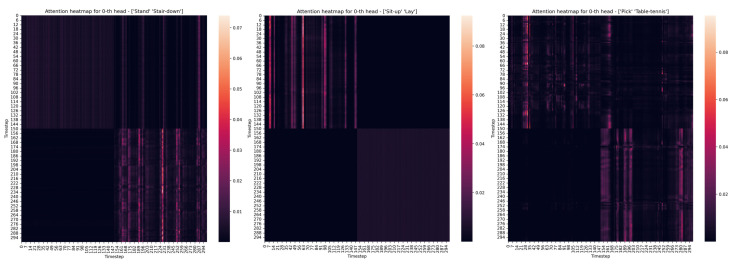
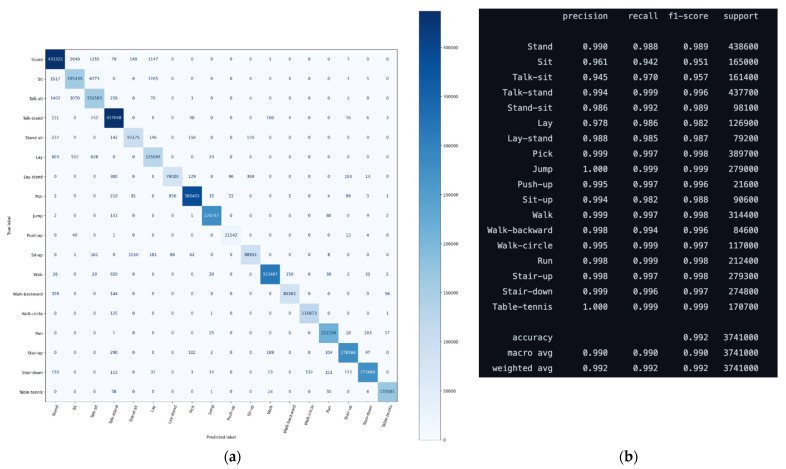
Computing devices that can recognize various human activities or movements can be used to assist people in healthcare, sports, or human-robot interaction. Readily available data for this purpose can be obtained from the accelerometer and the gyroscope built into everyday smartphones. Effective classification of real-time activity data is, therefore, actively pursued using various machine learning methods. In this study, the transformer model, a deep learning neural network model developed primarily for the natural language processing and vision tasks, was adapted for a time-series analysis of motion signals. The self-attention mechanism inherent in the transformer, which expresses individual dependencies between signal values within a time series, can match the performance of state-of-the-art convolutional neural networks with long short-term memory. The performance of the proposed adapted transformer method was tested on the largest available public dataset of smartphone motion sensor data covering a wide range of activities, and obtained an average identification accuracy of 99.2% as compared with 89.67% achieved on the same data by a conventional machine learning method. The results suggest the expected future relevance of the transformer model for human activity recognition.
Overview
The claims and statistics of this paper haven’t been checked yet.
Free: it reads the open-access text and checks the first 5 claims that cite a source we can check. Create a free account to check every claim.
Integrity signals
Registry
Cites
Statistics
Figures


Verification
Claims the paper makes
The claims and statistics of this paper haven’t been checked yet.
Free: it reads the open-access text and checks the first 5 claims that cite a source we can check. Create a free account to check every claim.
Claims other papers make about this one
Each is checked against this paper’s own text: does it say what the citing paper says it does?
The source backs part of the claim, not all of it — or backs it for a different population, condition or comparison.
In the citing paper
“This parallel design minimizes redundancy and improves efficiency relative to the sequential attention in [24] or the resource-intensive Transformer-based attention in [23].”
From Adaptive temporal attention mechanism and hybrid deep CNN model for wearable sensor-based human activity recognition (2025) · cites this paper as [23]
Experimental — accuracy not yet measuredThe source backs part of the claim, not all of it — or backs it for a different population, condition or comparison.
In the citing paper
“Previous studies, including [10, 18, 23, 24], have amalgamated convolutional neural networks (CNN), recurrent neural networks (RNN), and attention mechanisms;”
From Adaptive temporal attention mechanism and hybrid deep CNN model for wearable sensor-based human activity recognition (2025) · cites this paper as [23]
Experimental — accuracy not yet measuredIn the citing paper
“Moreover, replacing LSTM with BiGRU and using an optimized attention mechanism reduces computational cost, making CNNd-TAm more efficient than Transformer-based [23] and hierarchical models [19], and suitable for deployment on resource-constrained wearable devices without compromising accuracy.”
From Adaptive temporal attention mechanism and hybrid deep CNN model for wearable sensor-based human activity recognition (2025) · cites this paper as [23]
Self-check
Percentages, sums and reported differences re-computed from the paper’s own numbers.
The self-check needs the paper’s full text.
Citations
Cites
Vaswani, A., Shazeer, N., Parmar, N., Uszkoreit, J., Jones, L., Gomez, A. N., Kaiser, L., & Polosukhin, I. (2017) · arXiv · doi:10.48550/arxiv.1706.03762 · Cited by 120,404 · cited 6×
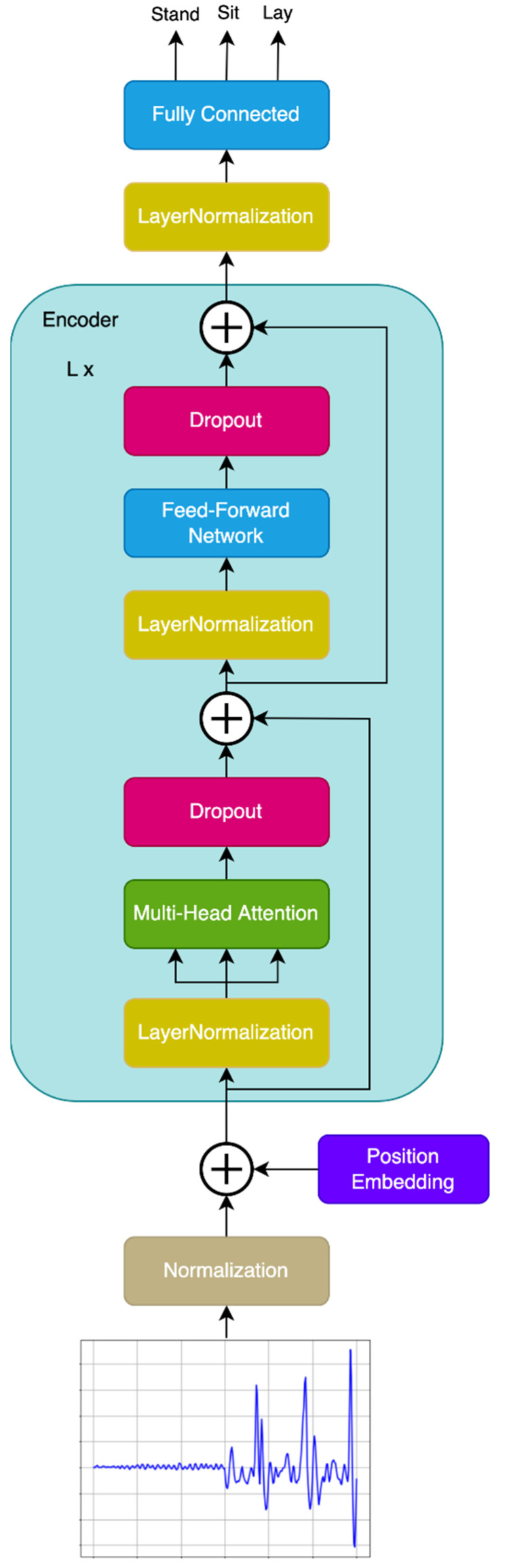
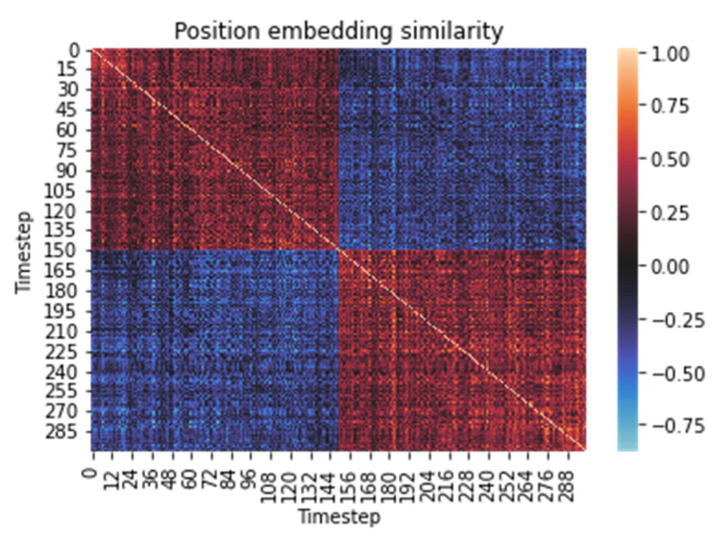
“The entry determining the position of the features within the series is also added to the network input, because the transformer does not know the order of the features, for example, within the processed sentence [34]:”
BackgroundMethodResultInfluentialExploiting Generative AI to Scale up Intelligent Tutoring Systems
Jakubův, J., Chvalovský, K., Goertzel, Z., Kaliszyk, C., Olšák, M., Piotrowski, B., Schulz, S., Suda, M., & Urban, J. (2023) · DROPS (Schloss Dagstuhl – Leibniz Center for Informatics) · doi:10.4230/lipics.itp.2023.19 · Cited by 76,658
Introducing a New Benchmarked Dataset for Activity Monitoring
Reiss, A., & Stricker, D. (2012) · 2012 16th International Symposium on Wearable Computers · doi:10.1109/iswc.2012.13 · Cited by 1,456
Doherty, A., Jackson, D., Hammerla, N., Plötz, T., Olivier, P., Granat, M. H., White, T., van Hees, V. T., Trenell, M. I., Owen, C. G., et al. (2017) · PLOS ONE · doi:10.1371/journal.pone.0169649 · Cited by 1,250 · cited 2×
“The dataset selected for testing is the largest currently available for smartphone motion sensor data, covering a wide range of activities [33,36–40].”
MethodMultiscale Convolutional Neural Networks for Fault Diagnosis of Wind Turbine Gearbox
Jiang, G., He, H., Yan, J., & Xie, P. (2019) · IEEE Transactions on Industrial Electronics · doi:10.1109/tie.2018.2844805 · Cited by 892 · cited 1×
“Several types of deep neural networks are typically used for time series classification of sensor signals, such as convolutional neural networks [14–16], fully convolutional neural networks [17], multiscale convolutional neural networks [18], time-LeNet [19], stacked denoising autoencoder [20], deep belief neural netw…”
MethodTransition-Aware Human Activity Recognition Using Smartphones
Reyes-Ortiz, J.-L., Oneto, L., Samà, A., Parra, X., & Anguita, D. (2016) · Neurocomputing · doi:10.1016/j.neucom.2015.07.085 · Cited by 740
Failure diagnosis using deep belief learning based health state classification
Tamilselvan, P., & Wang, P. (2013) · Reliability Engineering & System Safety · doi:10.1016/j.ress.2013.02.022 · Cited by 630 · cited 1×
“…fully convolutional neural networks [17], multiscale convolutional neural networks [18], time-LeNet [19], stacked denoising autoencoder [20], deep belief neural networks [21], Long Short-Term Memory (LSTM) deep recurrent neural network [22], echo state networks [23], or inception-ResNet [24].”
BackgroundDeep Learning in Human Activity Recognition with Wearable Sensors: A Review on Advances
Zhang, S., Li, Y., Zhang, S., Shahabi, F., Xia, S., Deng, Y., & Alshurafa, N. (2022) · Sensors · doi:10.3390/s22041476 · Cited by 625
mHealthDroid: A Novel Framework for Agile Development of Mobile Health Applications
Banos, O., Garcia, R., Holgado-Terriza, J. A., Damas, M., Pomares, H., Rojas, I., Saez, A., & Villalonga, C. (2014) · Lecture Notes in Computer Science · doi:10.1007/978-3-319-13105-4_14 · Cited by 583 · cited 3×
“The The random forest method prediction accuracy on this dataset [36] was slightly lower than deep learning methods achieved on other datasets. random forest method prediction accuracy on this dataset [36] was slightly lower than deep learning methods achieved on other datasets.”
MethodJang, B., Kim, M., Harerimana, G., Kang, S.-U., & Kim, J. W. (2020) · Applied Sciences · doi:10.3390/app10175841 · Cited by 442 · cited 1×
“Before the transformer model was introduced, the cutting-edge systems for complex time series problems such as natural language processing were based on gated recurrent neural networks with a superimposed attention mechanism [42].”
Method
Research works printed but not linked: 2
- Dosovitskiy, A., Beyer, L., Kolesnikov, A., Weissenborn, D., Zhai, X., Unterthiner, T., Dehghani, M., Minderer, M., Heigold, G., and Gelly, S. (2020). An image is worth 16x16 words: Transformers for image recognition at scale. arXiv.
- Bao, H., Dong, L., and Wei, F. (2021). Beit: Bert pre-training of image transformers. arXiv.
Cited by
Machine Learning Methods for Cancer Classification Using Gene Expression Data: A Review
Alharbi, F., & Vakanski, A. (2023) · Bioengineering · doi:10.3390/bioengineering10020173 · Cited by 241
The major human AP endonuclease (Ape1) is involved in the nucleotide incision repair pathway
Gros, L. (2004) · Nucleic Acids Research · doi:10.1093/nar/gkh165 · Cited by 209
A review of machine learning-based human activity recognition for diverse applications
Kulsoom, F., Narejo, S., Mehmood, Z., Chaudhry, H. N., Butt, A., & Bashir, A. K. (2022) · Neural Computing and Applications · doi:10.1007/s00521-022-07665-9 · Cited by 167
“Some research worked used attention models to extract feature-based spatiotemporal context [116, 130, 114].”
Method2D mapping of texture and lattice parameters of dental enamel
Al‐Jawad, M., Steuwer, A., Kilcoyne, S. H., Shore, R. C., Cywiński, R., & Wood, D. J. (2007) · Biomaterials · doi:10.1016/j.biomaterials.2007.02.019 · Cited by 119
Metadata
- Authors
- Dirgová Luptáková, I., Kubovčík, M., & Pospíchal, J.
- Affiliations
- Department of Applied Informatics, Faculty of Natural Sciences, University of Ss. Cyril and Methodius, J. Herdu 2, 917 01 Trnava, Slovakia
- University of Ss. Cyril and Methodius in Trnava (SK)
- Venue
- Sensors
- Publisher
- MDPI AG
- Published
- 2022-03-01
- Volume
- 22
- Issue
- 5
- Pages
- 1911
- ISSN
- 1424-8220 (ISSN-L)
- PMC
- PMC8914677
- OpenAlex
- W4214843096
- Cited by
- 270
- References
- 42
- Citations by year
- 2026: 60 · 2025: 54 · 2024: 64 · 2023: 47 · 2022: 16
- FWCI
- 14.80
- Type
- journal article
- Language
- en
- Open access
- gold
- doi.org
- Licence
- Locations
- Sensors (publishedVersion, cc-by)
- Preprints.org (acceptedVersion, cc-by)
- PubMed Central (publishedVersion, cc-by)
- PubMed (publishedVersion)
- DOAJ (DOAJ: Directory of Open Access Journals) (submittedVersion, cc-by-sa)
- Funders
- Slovak Research and Development Agency (APVV-17-0116)
- Cultural and Educational Grant Agency MŠVVaŠ SR (KEGA 012UCM-4/2021)
- Topics
- Physical Sciences › Computer Science › Computer Vision and Pattern Recognition › Context-Aware Activity Recognition Systems
- Physical Sciences › Computer Science › Signal Processing › Time Series Analysis and Forecasting
- Physical Sciences › Engineering › Biomedical Engineering › Gait Recognition and Analysis
- Keywords
- human activity recognition, wearable sensors, smartphone motion sensors, accelerometer, gyroscope, transformer models, self-attention, time series classification, motion signals
- MeSH terms
- Machine Learning, Wearable Electronic Devices, Algorithms, Humans, Human Activities, Neural Networks, Computer
About these checks
Registry, retraction, Cites and statistics results are computed, not judged, with one exception: a printed reference that no index lists is read once by a model before it counts as a citation error. Claims are extracted by a model and kept only when their quote appears verbatim in the text; each cited source is then checked, with a model’s help, for whether it says what the claim relies on. Those verdicts can be wrong — read the claim’s quote and the cited source before relying on one.
Statistics and arithmetic are recomputed, not judged.
Confidence bands are shown only for fields calibrated on our annotated test set. None is calibrated yet, so no band is shown.
What counts as a claim ›How we measure confidence ›How we check this ›
Are you an author, or do you see a problem with this page? Request a review
How to cite
Cite CoChat for the checks on this page, and the paper for its own findings.
- This page
- CoChat. (2026). Citation check: Wearable Sensor-Based Human Activity Recognition with Transformer Model. https://app.cochat.ai/papers/10.3390/s22051911
- The paper
- Dirgová Luptáková, I., Kubovčík, M., & Pospíchal, J. (2022). Wearable Sensor-Based Human Activity Recognition with Transformer Model. Sensors. https://doi.org/10.3390/s22051911
Data sources
Bibliographic data: Semantic Scholar, OpenAlex, Crossref.
Contains information from the Semantic Scholar Academic Graph Datasets, made available under the ODC Attribution License (ODC-BY 1.0).
Semantic Scholar’s data is described in: Kinney, R., et al. (2023). The Semantic Scholar Open Data Platform. arXiv:2301.10140.
