

Using SincNet for Learning Pathological Voice Disorders
Open accessThe DOI matches its Crossref record; 33 of the 33 references it cites were found in a registry or an index.
Abstract
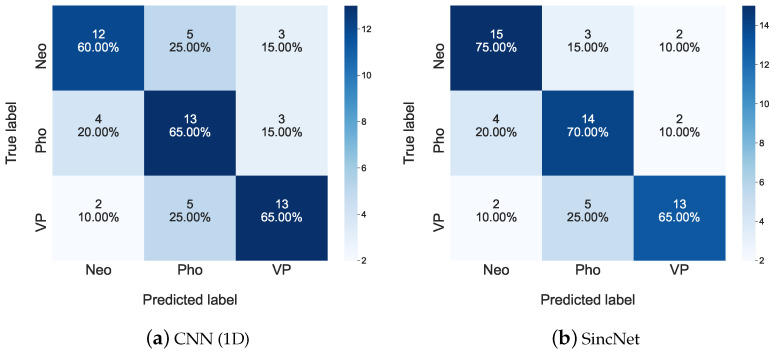
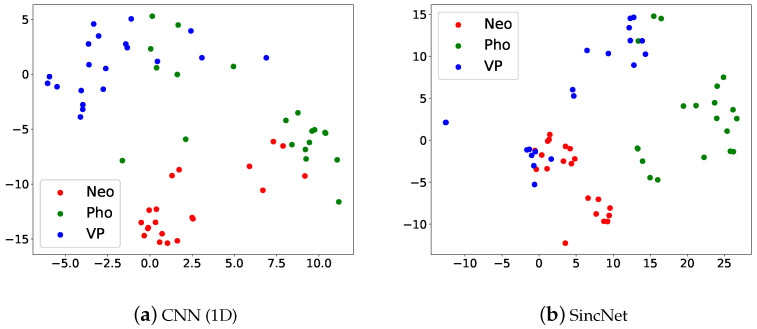
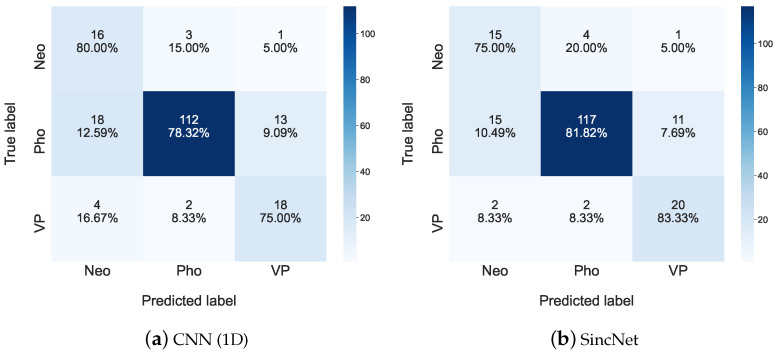
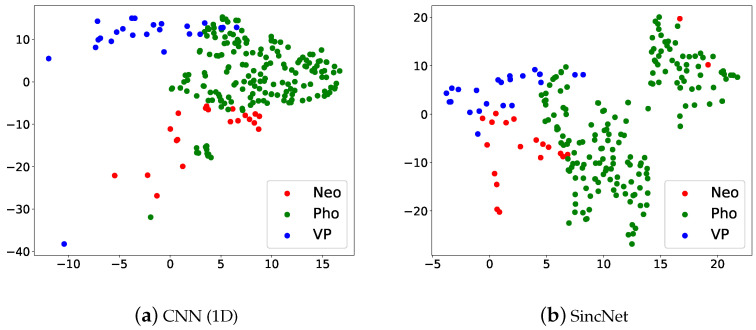
Deep learning techniques such as convolutional neural networks (CNN) have been successfully applied to identify pathological voices. However, the major disadvantage of using these advanced models is the lack of interpretability in explaining the predicted outcomes. This drawback further introduces a bottleneck for promoting the classification or detection of voice-disorder systems, especially in this pandemic period. In this paper, we proposed using a series of learnable sinc functions to replace the very first layer of a commonly used CNN to develop an explainable SincNet system for classifying or detecting pathological voices. The applied sinc filters, a front-end signal processor in SincNet, are critical for constructing the meaningful layer and are directly used to extract the acoustic features for following networks to generate high-level voice information. We conducted our tests on three different Far Eastern Memorial Hospital voice datasets. From our evaluations, the proposed approach achieves the highest 7%–accuracy and 9%–sensitivity improvements from conventional methods and thus demonstrates superior performance in predicting input pathological waveforms of the SincNet system. More importantly, we intended to give possible explanations between the system output and the first-layer extracted speech features based on our evaluated results.
Overview
The claims and statistics of this paper haven’t been checked yet.
Free: it reads the open-access text and checks the first 5 claims that cite a source we can check. Create a free account to check every claim.
Integrity signals
Registry
Cites
Statistics
Figures
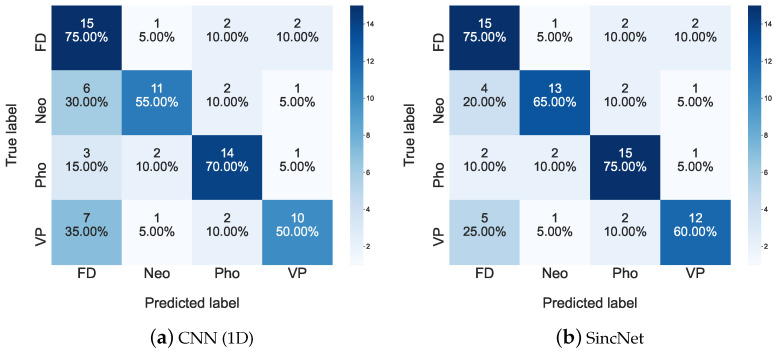
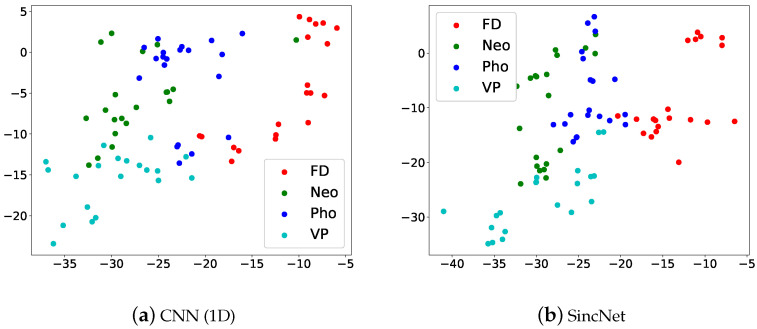
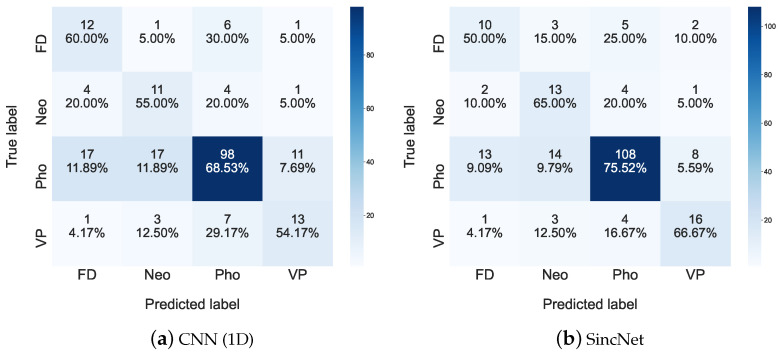
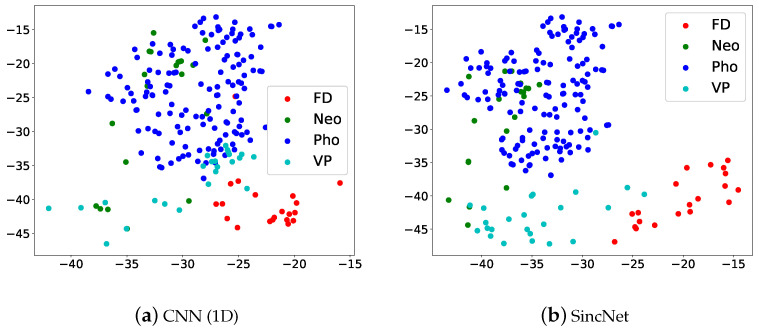
Verification
Claims the paper makes
The claims and statistics of this paper haven’t been checked yet.
Free: it reads the open-access text and checks the first 5 claims that cite a source we can check. Create a free account to check every claim.
Claims other papers make about this one
Each is checked against this paper’s own text: does it say what the citing paper says it does?
The check wasn’t confident either way, so it gives no verdict — never disputed.
In the citing paper
“Similar benefits arise from biologically inspired transforms, including scalograms and gammatonegrams [29,59,60].”
From Diagnostic Accuracy of Artificial Intelligence in Laryngeal Disorders: An Integrative Review (2026) · cites this paper as [59]
Experimental — accuracy not yet measuredIn the citing paper
“Additional representation-level analysis included inspection of learned convolutional filters [1320], parameterized filter structures (ie, Sinc filters) [5], and dimensionality reduction of feature maps (ie, Eigen class activation maps [Eigen-CAM]) [10]”
From Explainable and Interpretable AI for Voice and Speech Analysis in Clinical Care: Systematic Review (2026) · cites this paper as [5]
Self-check
Percentages, sums and reported differences re-computed from the paper’s own numbers.
The self-check needs the paper’s full text.
Citations
Cites
From local explanations to global understanding with explainable AI for trees
Lundberg, S. M., Erion, G., Chen, H., DeGrave, A., Prutkin, J. M., Nair, B., Katz, R., Himmelfarb, J., Bansal, N., & Lee, S.-I. (2020) · Nature Machine Intelligence · doi:10.1038/s42256-019-0138-9 · Cited by 10,551
(2002) · Cited by 1,635
2013 IEEE International Conference on Big Data
(2013) · doi:10.1109/bigdata21311.2013 · Cited by 1,390
Explainable AI: Interpreting, Explaining and Visualizing Deep Learning
(2019) · Lecture Notes in Computer Science · doi:10.1007/978-3-030-28954-6 · Cited by 1,377 · cited 1×
“This lack of explainability may be a vital bottleneck hindering the development of deep learning technology [32,33].”
BackgroundPrevalence of Voice Disorders in Teachers and the General Population
Roy, N., Merrill, R. M., Thibeault, S., Parsa, R. A., Gray, S. D., & Smith, E. M. (2004) · Journal of Speech, Language, and Hearing Research · doi:10.1044/1092-4388(2004/023 · Cited by 925
Speaker Recognition from Raw Waveform with SincNet
Ravanelli, M., & Bengio, Y. (2018) · 2018 IEEE Spoken Language Technology Workshop (SLT) · doi:10.1109/slt.2018.8639585 · Cited by 896
Approximated and User Steerable tSNE for Progressive Visual Analytics
Pezzotti, N., Lelieveldt, B. P. F., Maaten, L. V. D., Hollt, T., Eisemann, E., & Vilanova, A. (2017) · IEEE Transactions on Visualization and Computer Graphics · doi:10.1109/tvcg.2016.2570755 · Cited by 308
From Machine Learning to Explainable AI
Holzinger, A. (2018) · 2018 World Symposium on Digital Intelligence for Systems and Machines (DISA) · doi:10.1109/disa.2018.8490530 · Cited by 306 · cited 1×
“This lack of explainability may be a vital bottleneck hindering the development of deep learning technology [32,33].”
BackgroundDetection of Pathological Voice Using Cepstrum Vectors: A Deep Learning Approach
Fang, S.-H., Tsao, Y., Hsiao, M.-J., Chen, J.-Y., Lai, Y.-H., Lin, F.-C., & Wang, C.-T. (2019) · Journal of Voice · doi:10.1016/j.jvoice.2018.02.003 · Cited by 278 · cited 1×
“Due to the popularity of smartphones and smart speakers, the most convenient way for screening voice disorders may be using such end devices which contain the acoustic signals storage functions [3].”
BackgroundSelf-citationVoice Pathology Detection and Classification Using Convolutional Neural Network Model
Mohammed, M. A., Abdulkareem, K. H., Mostafa, S. A., Khanapi Abd Ghani, M., Maashi, M. S., Garcia-Zapirain, B., Oleagordia, I., Alhakami, H., & AL-Dhief, F. T. (2020) · Applied Sciences · doi:10.3390/app10113723 · Cited by 208
A Survey on Machine Learning Approaches for Automatic Detection of Voice Disorders
Hegde, S., Shetty, S., Rai, S., & Dodderi, T. (2019) · Journal of Voice · doi:10.1016/j.jvoice.2018.07.014 · Cited by 193
Al-Nasheri, A., Muhammad, G., Alsulaiman, M., Ali, Z., Malki, K. H., Mesallam, T. A., & Farahat Ibrahim, M. (2018) · IEEE Access · doi:10.1109/access.2017.2696056 · Cited by 174 · cited 1×
“To address this issue, the essential acoustic input signals are usually decomposed into several voice representations [7], such as cepstrum [8–10], jitters [11], and entropy [12].”
BackgroundUsing Ambulatory Voice Monitoring to Investigate Common Voice Disorders: Research Update
Mehta, D. D., Van Stan, J. H., Zañartu, M., Ghassemi, M., Guttag, J. V., Espinoza, V. M., Cortés, J. P., Cheyne, H. A., & Hillman, R. E. (2015) · Frontiers in Bioengineering and Biotechnology · doi:10.3389/fbioe.2015.00155 · Cited by 131
A Deep Learning Method for Pathological Voice Detection Using Convolutional Deep Belief Networks
Wu, H., Soraghan, J., Lowit, A., & Di-Caterina, G. (2018) · Interspeech 2018 · doi:10.21437/interspeech.2018-1351 · Cited by 108 · cited 2×
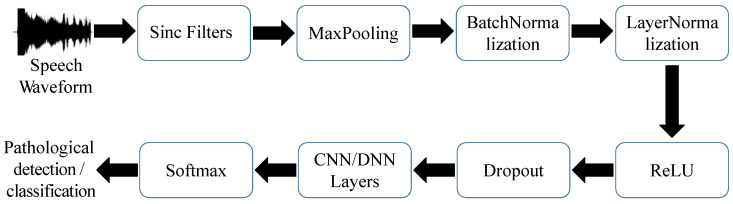
“More preciously, the [channel size, kernel size] in the first convolutional layer is [80, 251], and then followed by two [60, 5] ([channel size, kernel size]) convolutional and three 2048-node FC layers.”
BackgroundMethodA Survey on Signal Processing Based Pathological Voice Detection Techniques
Islam, R., Tarique, M., & Abdel-Raheem, E. (2020) · IEEE Access · doi:10.1109/access.2020.2985280 · Cited by 100 · cited 1×
“To address this issue, the essential acoustic input signals are usually decomposed into several voice representations [7], such as cepstrum [8–10], jitters [11], and entropy [12].”
BackgroundConvolutional Neural Networks for Pathological Voice Detection
Wu, H., Soraghan, J., Lowit, A., & Di Caterina, G. (2018) · 2018 40th Annual International Conference of the IEEE Engineering in Medicine and Biology Society (EMBC) · doi:10.1109/embc.2018.8513222 · Cited by 57
Conditional End-to-End Audio Transforms
Haque, A., Guo, M., & Verma, P. (2018) · Interspeech (USB) · doi:10.21437/interspeech.2018-38 · Cited by 41
Pathological Voice Classification Using Mel-Cepstrum Vectors and Support Vector Machine
Pishgar, M., Karim, F., Majumdar, S., & Darabi, H. (2018) · 2018 IEEE International Conference on Big Data (Big Data) · doi:10.1109/bigdata.2018.8622208 · Cited by 35
Continuous Speech for Improved Learning Pathological Voice Disorders
Wang, S., Wang, C., Lai, C.-C., Tsao, Y., & Fang, S. (2022) · IEEE Open Journal of Engineering in Medicine and Biology · doi:10.1109/ojemb.2022.3151233 · Cited by 35
Self-citationVocal folds pathologies classification using Naïve Bayes Networks
Dahmani, M., & Guerti, M. (2017) · International Conference on Systems and Control (ICSC) · doi:10.1109/icosc.2017.7958686 · Cited by 33
Diagnosing Voice Disorder with Machine Learning
Pham, M., Lin, J., & Zhang, Y. (2018) · IEEE International Conference on Big Data (BigData) · doi:10.1109/bigdata.2018.8622250 · Cited by 33
Combining acoustic signals and medical records to improve pathological voice classification
Fang, S.-H., Wang, C.-T., Chen, J.-Y., Tsao, Y., & Lin, F.-C. (2019) · APSIPA Transactions on Signal and Information Processing · doi:10.1017/atsip.2019.7 · Cited by 26 · cited 1×
“Details of the CNN model training and parameters optimization can be found in previous publications [39].”
ResultSelf-citationParameterization of Sequence of MFCCs for DNN-based voice disorder detection
Grzywalski, T., Maciaszek, A., Biniakowski, A., Orwat, J., Drgas, S., Piecuch, M., Belluzzo, R., Joachimiak, K., Niemiec, D., Ptaszynski, J., et al. (2018) · IEEE International Conference on Big Data (BigData) · doi:10.1109/bigdata.2018.8622012 · Cited by 18
Dahmani, M., & Guerti, M. (2018) · International Conference on Natural Language and Speech Processing (ICNLSP) · doi:10.1109/icnlsp.2018.8374384 · Cited by 17
A Transfer Learning Approach for the 2018 FEMH Voice Data Challenge
Islam, K. A., Pérez, D., & Jiang, L. (2018) · IEEE International Conference on Big Data (BigData) · doi:10.1109/bigdata.2018.8622447 · Cited by 17
Ensemble and Multimodal Learning for Pathological Voice Classification
Ariyanti, W., Hussain, T., Wang, J., Wang, C.-T., Fang, S., & Tsao, Y. (2021) · IEEE Sensors Letters · doi:10.1109/lsens.2021.3091141 · Cited by 17
Self-citationIEEE FEMH Voice Data Challenge 2018
Ramalingam, A., Kedari, S., & Vuppalapati, C. (2018) · IEEE International Conference on Big Data (BigData) · doi:10.1109/bigdata.2018.8622164 · Cited by 15
Voice pathology distinction using autoassociative neural networks
Hemmerling, D. (2017) · European Signal Processing Conference (EUSIPCO) · doi:10.23919/eusipco.2017.8081528 · Cited by 11
ByoVoz Automatic Voice Condition Analysis System for the 2018 FEMH Challenge
Arias-Londoño, J. D., Gómez-García, J. A., Moro-Velázquez, L., & Godino-Llorente, J. I. (2018) · IEEE International Conference on Big Data (BigData) · doi:10.1109/bigdata.2018.8622498 · Cited by 11
The UCD System for the 2018 FEMH Voice Data Challenge
Degila, K., Errattahi, R., & Hannani, A. E. (2018) · 2018 IEEE International Conference on Big Data (Big Data) · doi:10.1109/bigdata.2018.8622604 · Cited by 11
FEMH Voice Data Challenge: Voice disorder Detection and Classification using Acoustic Descriptors
Bhat, C. G., & Kopparapu, S. K. (2018) · IEEE International Conference on Big Data (BigData) · doi:10.1109/bigdata.2018.8622543 · Cited by 11
Acoustic Modeling from Frequency Domain Representations of Speech
Ghahremani, P., Hadian, H., Lv, H., Povey, D., & Khudanpur, S. P. (2018) · Interspeech (USB) · doi:10.21437/interspeech.2018-1453 · Cited by 10 · cited 1×
“Notably, we applied 80 sinc functions to extract voice features in this task to align with the conventional studies that 80-dimensional acoustic features are sufficient to represent the articulatory characters of an input voice [37,38].”
MethodWang, Y., Hu, Y., Li, C., Wang, B., & Guo, H. (2022) · IEEE Sensors Letters · doi:10.1109/lsens.2022.3225527 · Cited by 8
Research works printed but not linked: 6
- Hsu Y.T. Zhu Z. Wang C.T. Fang S.H. Rudzicz F. Tsao Y. Robustness against the channel effect in pathological voice detection arXiv 2018 1811.10376
- IEEE FEMH Challenge 2018 2018 Available online: https://femh-challenge2018.weebly.com/ (accessed on 10 August 2022)
- Doran D. Schulz S. Besold T.R. What Does Explainable AI Really Mean? A New Conceptualization of Perspectives arXiv 2017 1710.00794
- Hoffman R.R. Mueller S.T. Klein G. Litman J. Metrics for Explainable AI: Challenges and Prospects arXiv 2018 1812.04608
- Holzinger A. Biemann C. Pattichis C.S. Kell D.B. What do we need to build explainable AI systems for the medical domain? arXiv 2017 1712.09923
- Ravanelli M. Bengio Y. Interpretable Convolutional Filters with SincNet arXiv 2018 1811.09725
Cited by
Deep Learning Technologies for Time Series Anomaly Detection in Healthcare: A Review
Yang, X., Qi, X., & Zhou, X. (2023) · IEEE Access · doi:10.1109/access.2023.3325896 · Cited by 77
“This aids doctors in diagnosing and treating conditions like pathological voice disorders [30], [31], [32].”
BackgroundKim, H.-B., Song, J., Park, S., & Lee, Y. O. (2024) · Scientific Reports · doi:10.1038/s41598-024-58817-x · Cited by 49
Zhao, D., Qiu, Z., Jiang, Y., Zhu, X., Zhang, X., & Tao, Z. (2023) · Biomedical Signal Processing and Control · doi:10.1016/j.bspc.2023.105624 · Cited by 39
The Use of Deep Learning Software in the Detection of Voice Disorders: A Systematic Review
Barlow, J., Sragi, Z., Rivera‐Rivera, G., Al‐Awady, A., Daşdöğen, Ü., Courey, M. S., & Kirke, D. N. (2024) · Otolaryngology–Head and Neck Surgery · doi:10.1002/ohn.636 · Cited by 25
Sahoo, P. K., Mishra, S., & Sanjay, V. (2025) · Lecture notes in networks and systems · doi:10.1007/978-981-96-3244-2_32 · Cited by 22
Metadata
- Authors
- Hung, C.-H., Wang, S.-S., Wang, C.-T., & Fang, S.-H.
- Affiliations
- Yuan Ze University (TW)
- Far Eastern Memorial Hospital (TW)
- Corresponding author
- Fang, Shih-Hau
- Venue
- Sensors
- Publisher
- MDPI AG
- Published
- 2022-09-02
- Volume
- 22
- Issue
- 17
- Pages
- 6634
- ISSN
- 1424-8220 (ISSN-L)
- PMC
- PMC9460101
- OpenAlex
- W4295079846
- Cited by
- 39
- References
- 33
- Citations by year
- 2026: 10 · 2025: 12 · 2024: 10 · 2023: 6 · 2022: 1
- FWCI
- 4.49
- Type
- journal article
- Language
- en
- Open access
- gold
- doi.org
- Licence
- Locations
- Sensors (publishedVersion, cc-by)
- PubMed Central (publishedVersion, cc-by)
- PubMed (publishedVersion)
- DOAJ (DOAJ: Directory of Open Access Journals) (submittedVersion, cc-by-sa)
- Funders
- National Science and Technology Council (106-2314-B-418-003, 111-2622-E-155-002, 111-2221-E-155-020)
- Topics
- Health Sciences › Health Professions › Speech and Hearing › Voice and Speech Disorders
- Physical Sciences › Computer Science › Artificial Intelligence › Speech Recognition and Synthesis
- Physical Sciences › Computer Science › Signal Processing › Speech and Audio Processing
- Keywords
- SincNet, pathological voice detection, voice disorders, explainable deep learning, convolutional neural networks, audio feature extraction, speech processing
- MeSH terms
- Acoustics, Humans, Voice, Voice Disorders, Neural Networks, Computer
About these checks
Registry, retraction, Cites and statistics results are computed, not judged, with one exception: a printed reference that no index lists is read once by a model before it counts as a citation error. Claims are extracted by a model and kept only when their quote appears verbatim in the text; each cited source is then checked, with a model’s help, for whether it says what the claim relies on. Those verdicts can be wrong — read the claim’s quote and the cited source before relying on one.
Statistics and arithmetic are recomputed, not judged.
Confidence bands are shown only for fields calibrated on our annotated test set. None is calibrated yet, so no band is shown.
What counts as a claim ›How we measure confidence ›How we check this ›
Are you an author, or do you see a problem with this page? Request a review
Data sources
Bibliographic data: Semantic Scholar, OpenAlex, Crossref.
Contains information from the Semantic Scholar Academic Graph Datasets, made available under the ODC Attribution License (ODC-BY 1.0).
Semantic Scholar’s data is described in: Kinney, R., et al. (2023). The Semantic Scholar Open Data Platform. arXiv:2301.10140.
