

The DOI matches its Crossref record; 48 of the 48 references it cites were found in a registry or an index.
An Adaptive Real-Time Malicious Node Detection Framework Using Machine Learning in Vehicular Ad-Hoc Networks (VANETs)
Open accessAbstract
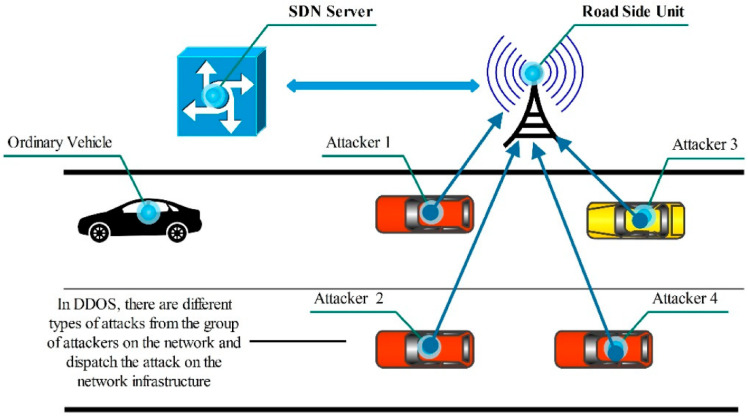
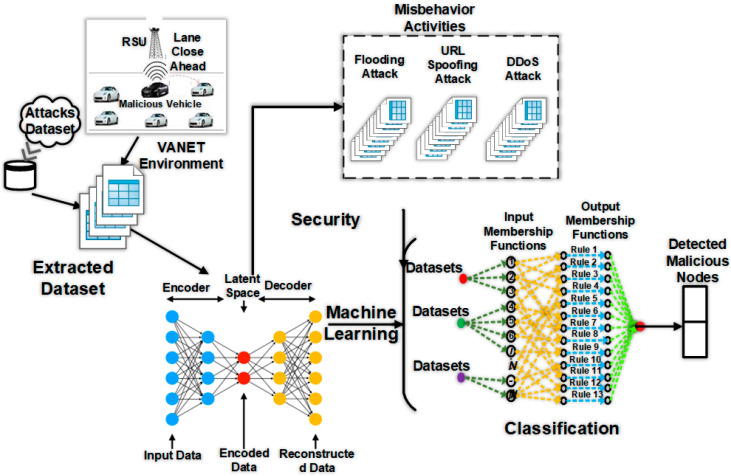
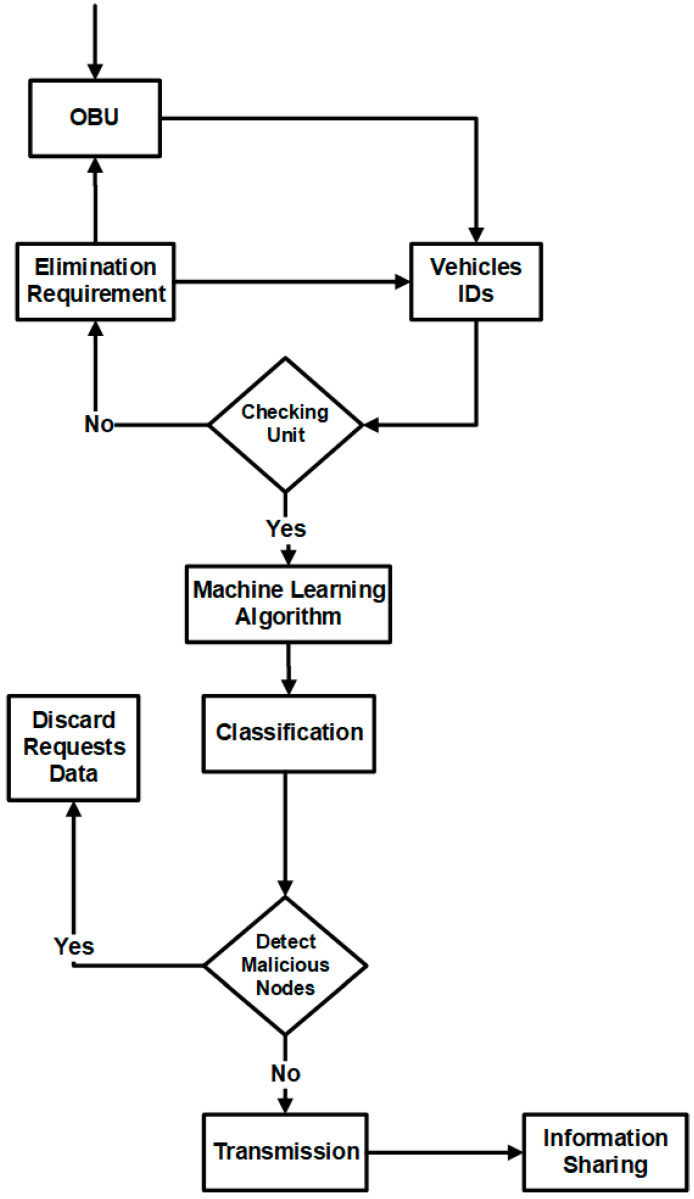
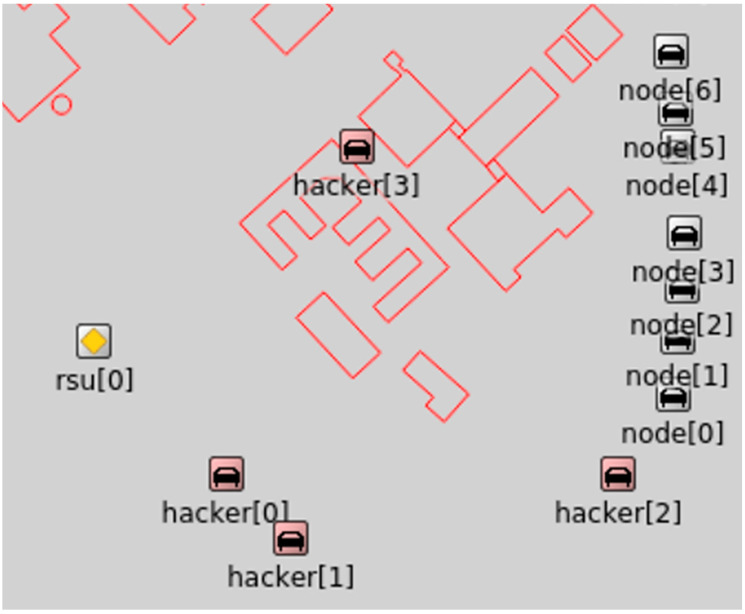
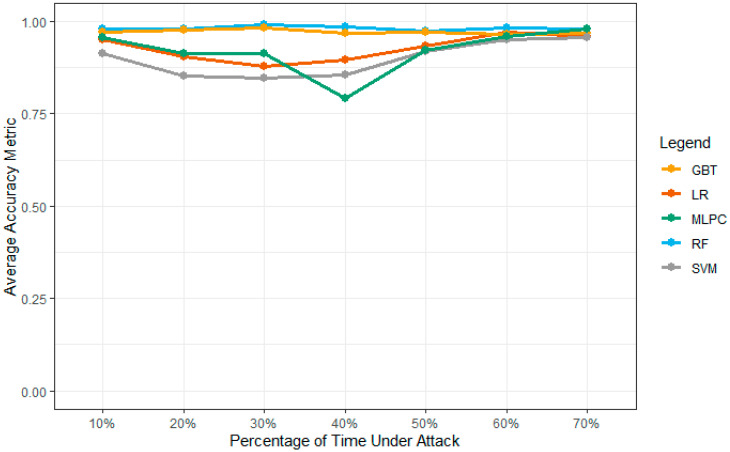
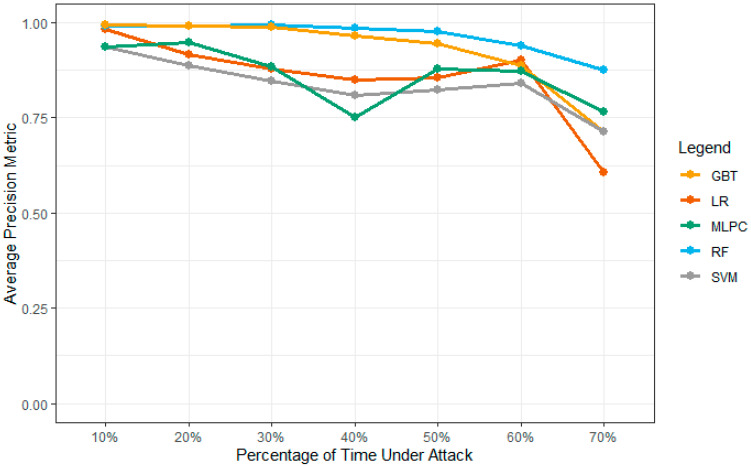
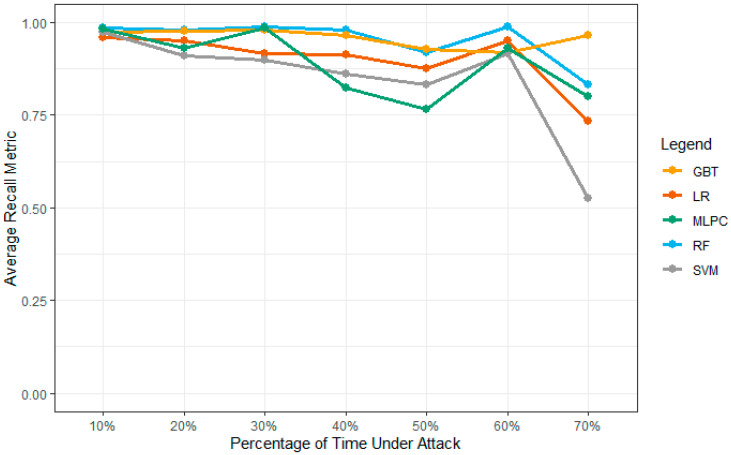
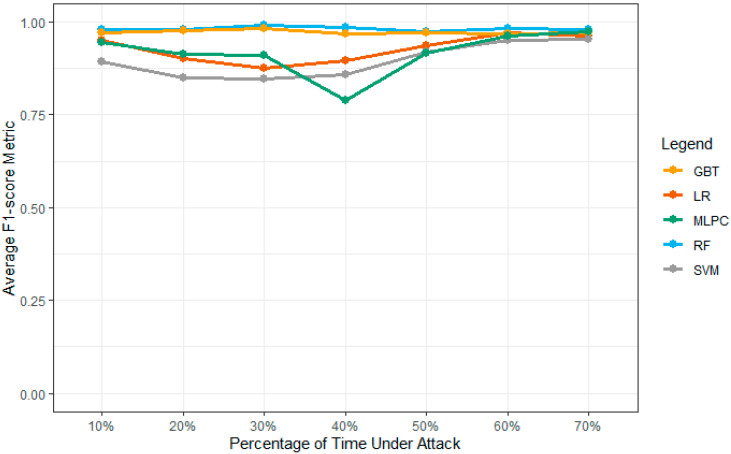
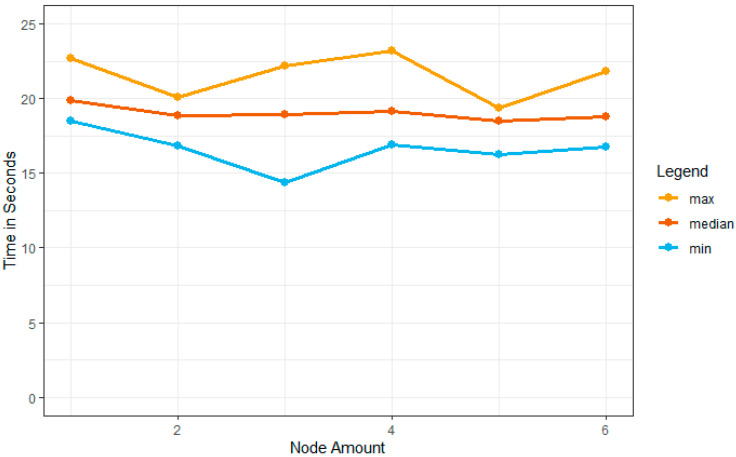
Modern vehicle communication development is a continuous process in which cutting-edge security systems are required. Security is a main problem in the Vehicular Ad Hoc Network (VANET). Malicious node detection is one of the critical issues found in the VANET environment, with the ability to communicate and enhance the mechanism to enlarge the field. The vehicles are attacked by malicious nodes, especially DDoS attack detection. Several solutions are presented to overcome the issue, but none are solved in a real-time scenario using machine learning. During DDoS attacks, multiple vehicles are used in the attack as a flood on the targeted vehicle, so communication packets are not received, and replies to requests do not correspond in this regard. In this research, we selected the problem of malicious node detection and proposed a real-time malicious node detection system using machine learning. We proposed a distributed multi-layer classifier and evaluated the results using OMNET++ and SUMO with machine learning classification using GBT, LR, MLPC, RF, and SVM models. The group of normal vehicles and attacking vehicles dataset is considered to apply the proposed model. The simulation results effectively enhance the attack classification with an accuracy of 99%. Under LR and SVM, the system achieved 94 and 97%, respectively. The RF and GBT achieved better performance with 98% and 97% accuracy values, respectively. Since we have adopted Amazon Web Services, the network’s performance has improved because training and testing time do not increase when we include more nodes in the network.
Overview
The claims and statistics of this paper haven’t been checked yet.
Free: it reads the open-access text and checks the first 5 claims that cite a source we can check. Create a free account to check every claim.
Integrity signals
Registry
Cites
Statistics
Figures


Verification
Claims the paper makes
The claims and statistics of this paper haven’t been checked yet.
Free: it reads the open-access text and checks the first 5 claims that cite a source we can check. Create a free account to check every claim.
Claims other papers make about this one
Each is checked against this paper’s own text: does it say what the citing paper says it does?
The source backs part of the claim, not all of it — or backs it for a different population, condition or comparison.
In the citing paper
“Edge Computing for Real-Time Threat Mitigation: Decentralized processing at edge nodes enhances response speed and scalability, reducing reliance on cloud servers [Rashid et al., 2023].”
From A Hybrid Deep Learning Model for Detection and Mitigation of DDoS Attacks in VANETs (2025) · cites this paper as Rashid et al., 2023
Experimental — accuracy not yet measured
Self-check
Percentages, sums and reported differences re-computed from the paper’s own numbers.
The self-check needs the paper’s full text.
Citations
Cites
1 retracted
Kalaiselvi, K., Vanitha, L., Thilak, K. D., Kumar, T. R., Saranya, S., & Kumaresan, K. (2021) · Wireless Personal Communications · doi:10.1007/s11277-021-08790-9 · Cited by 10 · cited 2×
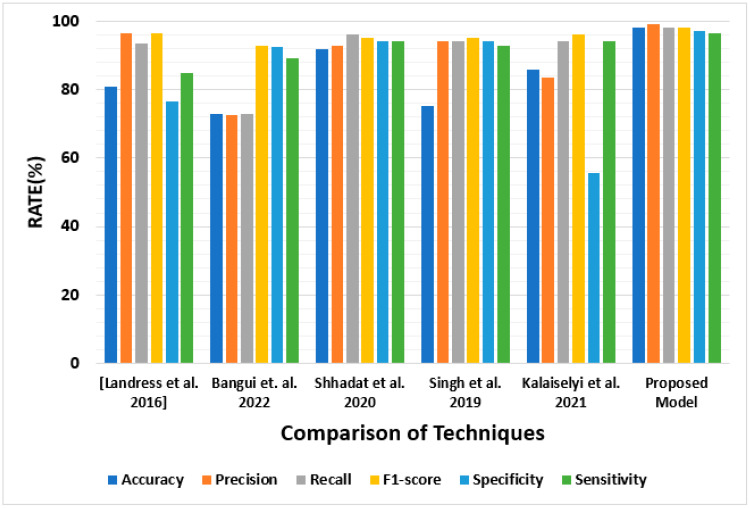
“Conclusions and Future Research The results show that the proposed approach presents accuracy, precision, recall, F1 score, specificity, and sensitivity with 98%, 99%, 98%, 98%, 97%, and 96.6% from the proposed results.”
ResultInfluentialRetractedAl-Heety, O. S., Zakaria, Z., Ismail, M., Shakir, M. M., Alani, S., & Alsariera, H. (2020) · IEEE Access · doi:10.1109/access.2020.2992580 · Cited by 258 · cited 1×
“Real-time means whenever a node starts behaving differently, we encounter the machine learning algorithm that starts detection of the malicious nodes [25].”
BackgroundAuthentication and privacy schemes for vehicular ad hoc networks (VANETs): A survey
Ali, I., Hassan, A., & Li, F. (2019) · Vehicular Communications · doi:10.1016/j.vehcom.2019.02.002 · Cited by 219 · cited 1×
“Real-time means whenever a node starts behaving differently, we encounter the machine learning algorithm that starts detection of the malicious nodes [25].”
BackgroundVANET applications: Past, present, and future
Lee, M., & Atkison, T. (2021) · Vehicular Communications · doi:10.1016/j.vehcom.2020.100310 · Cited by 196 · cited 1×
“Real-time means whenever a node starts behaving differently, we encounter the machine learning algorithm that starts detection of the malicious nodes [25].”
BackgroundKhatri, S., Vachhani, H., Shah, S., Bhatia, J., Chaturvedi, M., Tanwar, S., & Kumar, N. (2020) · Peer-to-Peer Networking and Applications · doi:10.1007/s12083-020-00993-4 · Cited by 167 · cited 1×
“…and enhances the work of different resources under a high level of mobility [13]. network provides fast technology change in different infrastructure management and enhances the work In VANET, the devices are equipped with wireless communication devices and computing technologies for…”
BackgroundSecurity of Vehicular Ad Hoc Networks using blockchain: A comprehensive review
Grover, J. (2022) · Vehicular Communications · doi:10.1016/j.vehcom.2022.100458 · Cited by 165 · cited 1×
“Real-time means whenever a node starts behaving differently, we encounter the machine learning algorithm that starts detection of the malicious nodes [25].”
BackgroundIntegrating Plausibility Checks and Machine Learning for Misbehavior Detection in VANET
So, S., Sharma, P., & Petit, J. (2018) · 2018 17th IEEE International Conference on Machine Learning and Applications (ICMLA) · doi:10.1109/icmla.2018.00091 · Cited by 164 · cited 1×
“Real-time means whenever a node starts behaving differently, we encounter the machine learning algorithm that starts detection of the malicious nodes [25].”
BackgroundNECPPA: A novel and efficient conditional privacy-preserving authentication scheme for VANET
Pournaghi, S. M., Zahednejad, B., Bayat, M., & Farjami, Y. (2018) · Computer Networks · doi:10.1016/j.comnet.2018.01.015 · Cited by 157 · cited 1×
“The main idea in this context is real-time malicious node detection.”
BackgroundA hybrid machine learning model for intrusion detection in VANET
Bangui, H., Ge, M., & Bühnová, B. (2021) · Computing · doi:10.1007/s00607-021-01001-0 · Cited by 150 · cited 2×
“Conclusions and Future Research The results show that the proposed approach presents accuracy, precision, recall, F1 score, specificity, and sensitivity with 98%, 99%, 98%, 98%, 97%, and 96.6% from the proposed results.”
MethodResultInfluentialAnyanwu, G. O., Nwakanma, C. I., Lee, J., & Kim, D. (2022) · IEEE Internet of Things Journal · doi:10.1109/jiot.2022.3199712 · Cited by 149 · cited 1×
“After the composition of clusters, the data is transferred to a neural network to check the DDoS attack in the case of this light scenario.”
Method
Research works printed but not linked: 5
- Gaurav, A., Gupta, B.B., Peñalvo, F.J.G., Nedjah, N., and Psannis, K. (2022). Security and Privacy Preserving for IoT and 5G Networks: Techniques, Challenges, and New Directions, Springer.
- Sánchez-Casado, L., Rodríguez-Gómez, R.A., Magán-Carrión, R., and Maciá-Fernández, G. (2013). International Conference on Security of Information and Communication Networks, Springer.
- Singh, 2022, A Real-Time Intrusion Detection System Based on Machine Learning for Wireless Sensor Networks, IEEE Sens. J., 23, 31
- Hossain, 2023, Real-time Malicious Node Detection in VANET using Ensemble Learning Algorithm, J. Netw. Comput. Appl., 184, 103113
- Singh, P.K., Gupta, S., Vashistha, R.V., Nandi, S.K., and Nandi, S. (2019). International Conference on Security & Privacy, Springer.
Cited by
Saoud, B., Shayea, I. A. M., Yahya, A. E., Shamsan, Z. A., Alhammadi, A., Alawad, M. A., & Alkhrijah, Y. M. (2024) · ICT Express · doi:10.1016/j.icte.2024.05.008 · Cited by 92
Security Challenges in Internet of Vehicles (IoV) for ITS: A Survey
Khezri, E., Hassanzadeh, H., Yahya, R. O., & Mir, M. (2025) · Tsinghua Science & Technology · doi:10.26599/tst.2024.9010083 · Cited by 85
Detecting and Preventing False Nodes and Messages in Vehicular Ad-Hoc Networking (VANET)
Masood, S., Saeed, Y., Ali, A., Jamil, H., Samee, N. A., Alamro, H., Muthanna, M. S. A., & Khakimov, A. (2023) · IEEE Access · doi:10.1109/access.2023.3308035 · Cited by 41
Self-citationDetection of DDoS attacks in SDN-based VANET using optimized TabNet
Setitra, M. A., & Fan, M. (2024) · Computer Standards & Interfaces · doi:10.1016/j.csi.2024.103845 · Cited by 40
El‐Shafai, W., Azar, A. T., & Ahmed, S. (2025) · IEEE Access · doi:10.1109/access.2025.3552544 · Cited by 44
Metadata
- Authors
- Rashid, K., Saeed, Y., Ali, A., Jamil, F., Alkanhel, R., & Muthanna, A.
- Affiliations
- University of Haripur (PK)
- University of Engineering and Technology Taxila (PK)
- Norwegian University of Science and Technology (NO)
- Princess Nourah bint Abdulrahman University (SA)
- Peoples' Friendship University of Russia (RU)
- Corresponding author
- Jamil, Faisal
- Alkanhel, Reem
- Venue
- Sensors
- Publisher
- MDPI AG
- Published
- 2023-02-26
- Volume
- 23
- Issue
- 5
- Pages
- 2594
- ISSN
- 1424-8220 (ISSN-L)
- PMC
- PMC10007041
- OpenAlex
- W4322502842
- Cited by
- 110
- References
- 48
- Citations by year
- 2026: 18 · 2025: 44 · 2024: 31 · 2023: 17
- FWCI
- 8.17
- Type
- journal article
- Language
- en
- Open access
- gold
- doi.org
- Licence
- Locations
- Sensors (publishedVersion, cc-by)
- PubMed Central (publishedVersion, cc-by)
- PubMed (publishedVersion)
- DOAJ (DOAJ: Directory of Open Access Journals) (submittedVersion, cc-by-sa)
- NORA - Norwegian Open Research Archives (submittedVersion, cc-by)
- Funders
- Norwegian University of Science (PNURSP2023R323)
- Topics
- Physical Sciences › Engineering › Electrical and Electronic Engineering › Vehicular Ad Hoc Networks (VANETs)
- Physical Sciences › Computer Science › Computer Networks and Communications › Network Security and Intrusion Detection
- Physical Sciences › Computer Science › Computer Networks and Communications › Security in Wireless Sensor Networks
- Keywords
- malicious node detection, vehicular ad hoc networks, DDoS attack detection, real-time intrusion detection, ensemble classifiers, random forest, gradient boosting, support vector machine, logistic regression, multilayer perceptron
About these checks
Registry, retraction, Cites and statistics results are computed, not judged, with one exception: a printed reference that no index lists is read once by a model before it counts as a citation error. Claims are extracted by a model and kept only when their quote appears verbatim in the text; each cited source is then checked, with a model’s help, for whether it says what the claim relies on. Those verdicts can be wrong — read the claim’s quote and the cited source before relying on one.
Statistics and arithmetic are recomputed, not judged.
Confidence bands are shown only for fields calibrated on our annotated test set. None is calibrated yet, so no band is shown.
What counts as a claim ›How we measure confidence ›How we check this ›
Are you an author, or do you see a problem with this page? Request a review
How to cite
Cite CoChat for the checks on this page, and the paper for its own findings.
- This page
- CoChat. (2026). Citation check: An Adaptive Real-Time Malicious Node Detection Framework Using Machine Learning in Vehicular Ad-Hoc Networks (VANETs). https://app.cochat.ai/papers/10.3390/s23052594
- The paper
- Rashid, K., Saeed, Y., Ali, A., Jamil, F., Alkanhel, R., & Muthanna, A. (2023). An Adaptive Real-Time Malicious Node Detection Framework Using Machine Learning in Vehicular Ad-Hoc Networks (VANETs). Sensors. https://doi.org/10.3390/s23052594
Data sources
Bibliographic data: Semantic Scholar, OpenAlex, Crossref.
Contains information from the Semantic Scholar Academic Graph Datasets, made available under the ODC Attribution License (ODC-BY 1.0).
Semantic Scholar’s data is described in: Kinney, R., et al. (2023). The Semantic Scholar Open Data Platform. arXiv:2301.10140.
