

Access Control Design Practice and Solutions in Cloud-Native Architecture: A Systematic Mapping Study
Open accessThe DOI matches its Crossref record; 49 of the 49 references it cites were found in a registry or an index; none of the 6 sources its claims cite is checked for support yet.
Abstract
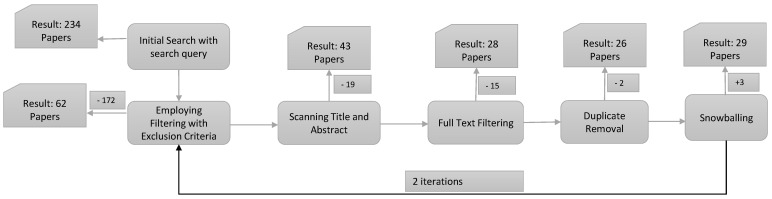
Protecting the resources of a cloud-native application is essential to meet an organization’s security goals. Cloud-native applications manage thousands of user requests, and an organization must employ a proper access control mechanism. However, unfortunately, developers sometimes grumble when designing and enforcing access decisions for a gigantic scalable application. It is sometimes complicated to choose the potential access control model for the system. Cloud-native software architecture has become an integral part of the industry to manage and maintain customer needs. A microservice is a combination of small independent services that might have hundreds of parts, where the developers must protect the individual services. An efficient access control model can defend the respective services and consistency. This study intends to comprehensively analyze the current access control mechanism and techniques utilized in cloud-native architecture. For this, we present a systematic mapping study that extracts current approaches, categorizes access control patterns, and provides developers guidance to meet security principles. In addition, we have gathered 234 essential articles, of which 29 have been chosen as primary studies. Our comprehensive analysis will guide practitioners to identify proper access control mechanisms applicable to ensuring security goals in cloud-native architectures.
Overview
CoChat Summary
TL;DR
This systematic mapping study analyzes access control mechanisms and design patterns in cloud-native/microservice architectures, selecting 29 primary studies from 234 articles. It concludes RBAC is the most efficient access control mechanism and recommends mTLS or JWT for secure communication, with security design patterns applied at the architectural level.
Key findings
- From 234 initially gathered articles, 29 were selected as primary studies after inclusion/exclusion criteria and snowballing.
- The results show that Role-based Access Control (RBAC) is the most efficient access control mechanism; RBAC bases access on users’ roles and rules specifying permitted accesses.
- For secure communication handling client requests, the study recommends Mutual Transport Layer Security (mTLS) or JSON Web Token (JWT); mTLS uses x.509 certificates, while JWT uses signed access tokens.
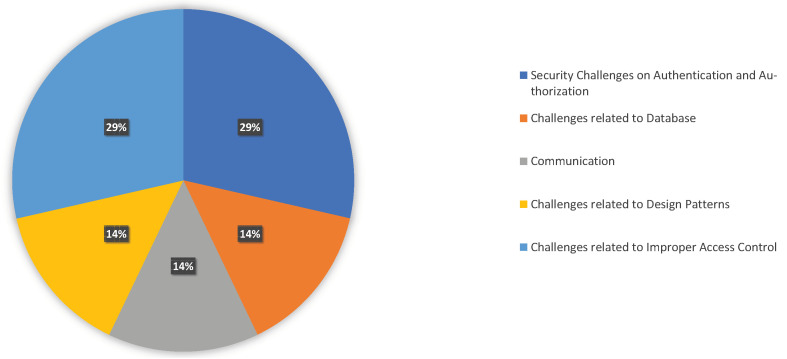
- Security design patterns need to be considered at the architectural level; identified patterns include API Gateway as the policy enforcement point, defense-in-depth, least privilege, and service monitoring. Challenges are grouped into authentication/authorization, database, communication, design patterns, and improper access control.
Methods
- Systematic mapping study searching five digital libraries (ACM Digital Library, IEEE Xplorer, Springer Link, Scopus, Science Direct) in February 2023; inclusion criteria included publications since 2012, English, peer-reviewed, full text available, and topics on access control design patterns or authentication/authorization security solutions.
- Two filtering stages (title/abstract then full text) plus backward snowballing; initially 234 publications were gathered, 172 were removed by criteria, and eventually 29 research papers were considered primary references.
- Data extraction encoded metadata and scanned documents per research questions on access control design patterns, authentication, authorization techniques, and existing tools/approaches.
Limitations
- Paper-stated threats to validity: construct validity risk in identifying primary studies and search strategy; internal validity risk in data extraction, mitigated by involving two authors and snowballing; external validity concerns usefulness in a wider context; conclusion validity concerns classification categories not accurately classifying all identified research.
- Paper-stated limitations of cloud-native access controls: often resource/service-level rather than granular object/data-level; incomplete visibility into access events; complex policies requiring specialized knowledge; dependence on cloud provider mechanisms; multi-tenancy can raise data breach and unauthorized access risk if suitable access control procedures are absent.
- Evident from the text: the study is a mapping study without empirical validation of the recommended mechanisms; the search was restricted to five databases, English, peer-reviewed, and since 2012, so grey literature, non-English, and older work may be missed; some IoT-based solutions were skipped due to the intended scope (the paper states this as a construct validity issue).
Model-written summary. Check it against the paper before relying on it.
Integrity signals
Registry
Cites
Statistics
Figures
Verification
Claims the paper makes
0 Valid · 9 Not valid · 5 Not checked · 25 Own results and interpretations
A result the paper reports from its own data — it cites no other source for it, so there is none to check. The quote shows it is in the paper.
In the paper
“Precisely, we found the security policy mainly employed in an API Gateway.”
§ Access Control Design Practice and Solutions in Cloud-Native Architecture: A Systematic Mapping Study > 4. Result > 4.3. Authentication and Authorization Mechanism in Cloud-Native: RQ2
plainstates an association- Asserted: passes — The authors put it forward as true.
- Checkable: passes — It can be checked against evidence.
- Load-bearing: unclear — It is unclear whether the paper’s conclusions depend on it.
- Based: passes — The paper gives a reason why it holds.
A result the paper reports from its own data — it cites no other source for it, so there is none to check. The quote shows it is in the paper.
In the paper
“Considerably, the solutions for authentication and authorization primarily depended on the architectural design and decision.”
§ Access Control Design Practice and Solutions in Cloud-Native Architecture: A Systematic Mapping Study > 4. Result > 4.3. Authentication and Authorization Mechanism in Cloud-Native: RQ2
plainstates a cause- Asserted: passes — The authors put it forward as true.
- Checkable: passes — It can be checked against evidence.
- Load-bearing: passes — The paper’s conclusions depend on it.
- Based: passes — The paper gives a reason why it holds.
A check of a cited source is scheduled, or we don’t hold its full text yet; the claim is checked once it runs.
In the paper
“According to Hinkley's industrial assessment, several firms have seen significant attacks on their microservice-based systems in recent years, ranging from single services to the entire system [9].”
§ Access Control Design Practice and Solutions in Cloud-Native Architecture: A Systematic Mapping Study > 1. Introduction
What the sources say
- Not checked yetcites [9] Microservices Available online: https://info.whitehatsec.com/rs/675-YBI-674/images/WhiteHatStatsReport2018.pdf (accessed on 12 July 2021)
A check is scheduled.
plain- Asserted: passes — The authors put it forward as true.
- Checkable: passes — It can be checked against evidence.
- Load-bearing: unclear — It is unclear whether the paper’s conclusions depend on it.
- Based: passes — The paper gives a reason why it holds.
- Not checked yet
A check of a cited source is scheduled, or we don’t hold its full text yet; the claim is checked once it runs.
In the paper
“This rising architectural approach improves the maintenance, scalability, availability, and resilience of complex systems and introduces new challenges, especially security [5,6].”
§ Access Control Design Practice and Solutions in Cloud-Native Architecture: A Systematic Mapping Study > 1. Introduction
What the sources say
- Not checked yetcites [5] Lu D. Huang D. Walenstein A. Medhi D. A Secure Microservice Framework for IoT Proceedings of the 2017 IEEE Symposium on Service-Oriented System Engineering (SOSE) San Francisco, CA, USA 6–9 April 2017 9 18 10.1109/SOSE.2017.27 source
A check is scheduled.
- Not checked yetcites [6] Chandramouli R. Security Strategies for Microservices-Based Application Systems 2019 Available online: https://csrc.nist.gov/publications/detail/sp/800-204/final (accessed on 15 March 2023)
A check is scheduled.
plainstates a cause- Asserted: passes — The authors put it forward as true.
- Checkable: passes — It can be checked against evidence.
- Load-bearing: passes — The paper’s conclusions depend on it.
- Based: passes — The paper gives a reason why it holds.
- Not checked yet
6 references still to check
A free account verifies the references that are still open.
- Probably not a substantial claim. 30
- It may state two separate claims as one. 17
- The quote only partly states this claim. 2
Citations
Cites
The pains and gains of microservices: A Systematic grey literature review
Soldani, J., Tamburri, D. A., & Van Den Heuvel, W.-J. (2018) · Journal of Systems and Software · doi:10.1016/j.jss.2018.09.082 · Cited by 435
Villamizar, M., Garces, O., Castro, H., Verano, M., Salamanca, L., Casallas, R., & Gil, S. (2015) · 2015 10th Computing Colombian Conference (10CCC) · doi:10.1109/columbiancc.2015.7333476 · Cited by 308
Current Research and Open Problems in Attribute-Based Access Control
Servos, D., & Osborn, S. L. (2017) · ACM Computing Surveys · doi:10.1145/3007204 · Cited by 260
Designing a Smart City Internet of Things Platform with Microservice Architecture
Krylovskiy, A., Jahn, M., & Patti, E. (2015) · 2015 3rd International Conference on Future Internet of Things and Cloud · doi:10.1109/ficloud.2015.55 · Cited by 232
Alonso, J., Orue-Echevarria, L., Casola, V., Torre, A. I., Huarte, M., Osaba, E., & Lobo, J. L. (2023) · Journal of Cloud Computing Advances Systems and Applications · doi:10.1186/s13677-022-00367-6 · Cited by 187
Securing microservices and microservice architectures: A systematic mapping study
Hannousse, A., & Yahiouche, S. (2021) · Computer Science Review · doi:10.1016/j.cosrev.2021.100415 · Cited by 173
On the pragmatic design of literature studies in software engineering: an experience-based guideline
Kuhrmann, M., Fernández, D. M., & Daneva, M. (2017) · Empirical Software Engineering · doi:10.1007/s10664-016-9492-y · Cited by 161
Design, monitoring, and testing of microservices systems: The practitioners’ perspective
Waseem, M., Liang, P., Shahin, M., Di Salle, A., & Márquez, G. (2021) · Journal of Systems and Software · doi:10.1016/j.jss.2021.111061 · Cited by 158
Security in microservice-based systems: A Multivocal literature review
Pereira-Vale, A., Fernández, E. B., Monge, R., Hernán Astudillo, R., & Márquez, G. (2021) · Computers & Security · doi:10.1016/j.cose.2021.102200 · Cited by 104
Integrating Continuous Security Assessments in Microservices and Cloud Native Applications
Torkura, K. A., Sukmana, M. I. H., & Meinel, C. (2017) · IEEE/ACM International Conference on Utility and Cloud Computing (UCC) · doi:10.1145/3147213.3147229 · Cited by 96
Smells and refactorings for microservices security: A multivocal literature review
Ponce, F., Soldani, J., Hernán Astudillo, R., & Antonio Brogi, A. (2022) · Journal of Systems and Software · doi:10.1016/j.jss.2022.111393 · Cited by 95
Authentication and Authorization in Microservices Architecture: A Systematic Literature Review
de Almeida, M. G., & Canedo, E. D. (2022) · Applied Sciences · doi:10.3390/app12063023 · Cited by 87
Designing Microservice Systems Using Patterns: An Empirical Study on Quality Trade-Offs
Vale, G., Correia, F. F., Guerra, E., Rosa, T. D. O., Fritzsch, J., & Bogner, J. (2022) · IEEE International Conference on Software Architecture (ICSA) · doi:10.1109/icsa53651.2022.00015 · Cited by 78
Security strategies for microservices-based application systems
Chandramouli, R. (2019) · doi:10.6028/nist.sp.800-204 · Cited by 78
Trakadas, P. T., Νομικός, Ν., Michailidis, E. T., Zahariadis, T. B., Facca, F. M., Breitgand, D., Rizou, S., Masip‐Bruin, X., & Gkonis, P. K. (2019) · Sensors · doi:10.3390/s19163591 · Cited by 77
Security Mechanisms Used in Microservices-Based Systems: A Systematic Mapping
Pereira-Vale, A., Márquez, G., Hernán Astudillo, R., & Fernández, E. B. (2019) · Latin American Computer Conference (CLEI) · doi:10.1109/clei47609.2019.235060 · Cited by 66
A Secure Microservice Framework for IoT
Lu, D., Huang, D., Walenstein, A., & Medhi, D. (2017) · 2017 IEEE Symposium on Service-Oriented System Engineering (SOSE) · doi:10.1109/sose.2017.27 · Cited by 58
Systematic Review of Authentication and Authorization Advancements for the Internet of Things
Trnka, M., Abdelfattah, A. S., Shrestha, A., Coffey, M., & Cerny, T. (2022) · Sensors · doi:10.3390/s22041361 · Cited by 56
Self-citationOn the Nature of Issues in Five Open Source Microservices Systems: An Empirical Study
Waseem, M., Liang, P., Shahin, M., Ahmad, A., & Nassab, A. R. (2021) · International Conference on Evaluation and Assessment in Software Engineering (EASE) · doi:10.1145/3463274.3463337 · Cited by 47
Billawa, P., Tukaram, A. B., Ferreyra, N. E. D., Steghöfer, J.-P., Scandariato, R., & Simhandl, G. (2022) · International Conference on Availability, Reliability and Security (ARES) · doi:10.1145/3538969.3538986 · Cited by 42
Towards Multi-party Policy-based Access Control in Federations of Cloud and Edge Microservices
Preuveneers, D., & Joosen, W. (2019) · IEEE European Symposium on Security and Privacy Workshops (EuroS&PW) · doi:10.1109/eurospw.2019.00010 · Cited by 41
Authentication and authorization orchestrator for microservice-based software architectures
Banati, A., Kail, E., Karóczkai, K., & Kozlovszky, M. (2018) · International Convention on Information and Communication Technology, Electronics and Microelectronics · doi:10.23919/mipro.2018.8400214 · Cited by 39
Interface Representation Patterns: Crafting and Consuming Message-Based Remote APIs
Zimmermann, O., Stocker, M., Lübke, D., & Zdun, U. (2017) · European Conference on Pattern Languages of Programs · doi:10.1145/3147704.3147734 · Cited by 39
Bypassing the load balancer without regrets
Kogias, M., Iyer, R., & Bugnion, E. (2020) · ACM Symposium on Cloud Computing (SoCC) · doi:10.1145/3419111.3421304 · Cited by 38
Microservices Orchestration vs. Choreography: A Decision Framework
Megargel, A., POSKITT, C. M., & Shankararaman, V. (2021) · IEEE International Enterprise Distributed Object Computing Conference (EDOC) · doi:10.1109/edoc52215.2021.00024 · Cited by 38
An Identity and Access Management Architecture in Cloud
Yang, Y. T., Chen, X., Wang, G., & Cao, L. (2014) · International Symposium on Computational Intelligence and Design · doi:10.1109/iscid.2014.221 · Cited by 36
Migrating Monoliths to Microservices-based Customizable Multi-tenant Cloud-native Apps
Haugeland, S. G., Nguyen, P. H., Song, H., & Chauvel, F. (2021) · Euromicro Conference on Software Engineering and Advanced Applications (SEAA) · doi:10.1109/seaa53835.2021.00030 · Cited by 35
A Multi-Tenant Framework for Cloud Container Services
Zheng, C., Zhuang, Q., & Guo, F. (2021) · IEEE International Conference on Distributed Computing Systems (ICDCS) · doi:10.1109/icdcs51616.2021.00042 · Cited by 27
Design of Cloud Native Application Architecture Based on Kubernetes
Jiao, Q., Xu, B., & Fan, Y. (2021) · IEEE Intl Conf on Dependable, Autonomic and Secure Computing, Intl Conf on Pervasive Intelligence and Computing, Intl Conf on Cloud and Big Data Computing, Intl Conf on Cyber Science and Technology Congress (DASC/PiCom/CBDCom/CyberSciTech) · doi:10.1109/dasc-picom-cbdcom-cyberscitech52372.2021.00088 · Cited by 25
Rahaman, M. S., Islam, A., Cerny, T., & Hutton, S. (2023) · Sensors · doi:10.3390/s23041755 · Cited by 21
Self-citationFog Native Architecture: Intent-Based Workflows to Take Cloud Native toward the Edge
Sebrechts, M., Volckaert, B., Turck, F. D., Yang, K., & Al-Naday, M. (2022) · IEEE Communications Magazine · doi:10.1109/mcom.003.2101075 · Cited by 21
DevSecOps: A Security Model for Infrastructure as Code Over the Cloud
Ibrahim, A., Yousef, A. H., & Medhat, W. (2022) · 2022 2nd International Mobile, Intelligent, and Ubiquitous Computing Conference (MIUCC) · doi:10.1109/miucc55081.2022.9781709 · Cited by 19
A Full Stack Microservices Framework with Business Modelling
Jayawardana, Y., Fernando, R., Jayawardena, G., Weerasooriya, D., & Perera, I. (2018) · International Conference on Advances in ICT for Emerging Regions · doi:10.1109/icter.2018.8615473 · Cited by 19
A cloud-based architecture for an interoperable, resilient, and scalable C2 information system
Bau, N., Endres, S., Gerz, M., & Gökgöz, F. (2018) · International Conference on Military Communications and Information Systems (ICMCIS) · doi:10.1109/icmcis.2018.8398692 · Cited by 17
Microservices: Architecture and Technologies
Desai, V. (2020) · International Journal for Research in Applied Science and Engineering Technology · doi:10.22214/ijraset.2020.31979 · Cited by 16
Can Container Fusion Be Securely Achieved?
Suneja, S., Kanso, A., & Isci, C. (2019) · International Workshop on Container Technologies and Container Clouds (WoC) · doi:10.1145/3366615.3368356 · Cited by 15
Analyzing Communications and Software Systems Security
Rao, S. P. (2023) · Aaltodoc (Aalto University) · Cited by 14
A Systematic Mapping Study of Cloud-native Application Design and Engineering
Odun-Ayo, I. A., Goddy-Worlu, R., Ajayi, L. K., Edosomwan, I. B., & Okezie, F. (2019) · Journal of Physics Conference Series · doi:10.1088/1742-6596/1378/3/032092 · Cited by 14
Security Design Patterns in Distributed Microservice ArchitecturePreprint
Rudrabhatla, C. K. (2020) · arXiv · doi:10.48550/arxiv.2008.03395 · Cited by 14
Reference Service Model Framework for Identity Management
Pöhn, D., & Hommel, W. (2022) · IEEE Access · doi:10.1109/access.2022.3219044 · Cited by 9
XSS Vulnerabilities in Cloud-Application Add-Ons
Bui, T., Rao, S. P., Antikainen, M., & Aura, T. (2020) · ACM Asia Conference on Computer and Communications Security (ASIA CCS) · doi:10.1145/3320269.3384744 · Cited by 9
Edge Security with an API Gateway
Siriwardena, P. (2019) · Apress eBooks · doi:10.1007/978-1-4842-2050-4_5 · Cited by 9
Semantically Rich Access Control in Cloud EHR Systems Based on MA-ABE
Dixit, S., Joshi, K. P., Choi, S. G., & Elluri, L. (2022) · IEEE International Conference on Big Data Security on Cloud, IEEE International Conference on High Performance and Smart Computing, and IEEE International Conference on Intelligent Data and Security (BigDataSecurity/HPSC/IDS) · doi:10.1109/bigdatasecurityhpscids54978.2022.00012 · Cited by 8
Security and Encryption at Modern Databases
Ocenas, M., Homoliak, I., Hanáček, P., & Malinka, K. (2020) · International Conference on Cryptography, Security and Privacy (CSP) · doi:10.1145/3377644.3377662 · Cited by 8
Advanced API Security: OAuth 2.0 and Beyond
Siriwardena, P. (2020) · doi:10.1007/978-1-4842-2050-4 · Cited by 7
Enhanced cloud patterns: A case studyof multi-tenancy patterns
Adewojo, A. A., Bass, J. M., & Allison, I. K. (2015) · International Conference on Information Society · doi:10.1109/i-society.2015.7366858 · Cited by 6
Development of Web Business Applications with the Use of Micro-services
Poniszewska-Marańda, A. (2018) · Advances in intelligent systems and computing · doi:10.1007/978-3-319-91446-6_35 · Cited by 2
Yan, K., Yu, P., Sui, Y., & Ye, S. (2022) · IEEE Information Technology and Mechatronics Engineering Conference (ITOEC) · doi:10.1109/itoec53115.2022.9734463 · Cited by 2
García, F. C., Rodríguez-Domínguez, C., & Garrido, J. L. G. (2021) · International Conference on Intelligent Environments (IE) · doi:10.1109/ie51775.2021.9486517 · Cited by 1
Cited by
Still being checked.
Metadata
- Authors
- Rahaman, M. S., Tisha, S. N., Song, E., & Cerny, T.
- Affiliations
- Baylor University (US)
- Department of Computer Science, ECS, Baylor University, Waco, TX 76798, USA
- Corresponding author
- Cerny, Tomas
- Venue
- Sensors
- Publisher
- MDPI AG
- Published
- 2023-03-24
- Volume
- 23
- Issue
- 7
- Pages
- 3413
- ISSN
- 1424-8220 (ISSN-L)
- PMC
- PMC10098865
- OpenAlex
- W4360859323
- Semantic Scholar
- e1ec0440a9521289c0f045e9d8d027b0645bd4b0
- Cited by
- 44
- References
- 49
- Citations by year
- 2026: 19 · 2025: 14 · 2024: 6 · 2023: 5
- FWCI
- 0.86
- Type
- journal article
- Language
- en
- Open access
- gold
- doi.org
- Licence
- Locations
- Sensors (publishedVersion, cc-by)
- PubMed Central (publishedVersion, cc-by)
- PubMed (publishedVersion)
- DOAJ (DOAJ: Directory of Open Access Journals) (submittedVersion)
- Topics
- Physical Sciences › Computer Science › Computer Networks and Communications › Access Control and Trust
- Physical Sciences › Computer Science › Information Systems › Cloud Data Security Solutions
- Physical Sciences › Computer Science › Information Systems › User Authentication and Security Systems
- Keywords
- access control, cloud-native architecture, microservices, access control models, security design, scalable applications, developer guidance
About these checks
Registry, retraction, Cites and statistics results are computed, not judged, with one exception: a printed reference that no index lists is read once by a model before it counts as a citation error. Claims are extracted by a model and kept only when their quote appears verbatim in the text; each cited source is then checked, with a model’s help, for whether it says what the claim relies on. Those verdicts can be wrong — read the claim’s quote and the cited source before relying on one.
A language model drew the claims from the paper on 2026-11-26, under version 3 of the claim definition (model deepseek-v4.1-flash, prompt extract-v3).
A second model labelled each claim on 2026-11-26 (model jev-1.13-20260917, definition revision gold-guideline-v0.2).
Statistics and arithmetic are recomputed, not judged.
Confidence bands are shown only for fields calibrated on our annotated test set. None is calibrated yet, so no band is shown.
What counts as a claim ›How we measure confidence ›How we check this ›
Are you an author, or do you see a problem with this page? Request a review
Data sources
Bibliographic data: Semantic Scholar, OpenAlex, Crossref.
Contains information from the Semantic Scholar Academic Graph Datasets, made available under the ODC Attribution License (ODC-BY 1.0).
Semantic Scholar’s data is described in: Kinney, R., et al. (2023). The Semantic Scholar Open Data Platform. arXiv:2301.10140.
