

Access Control Design Practice and Solutions in Cloud-Native Architecture: A Systematic Mapping Study
Open accessThe DOI matches its Crossref record; 49 of the 49 references it cites were found in a registry or an index; none of the 6 sources its claims cite is checked for support yet.
Abstract
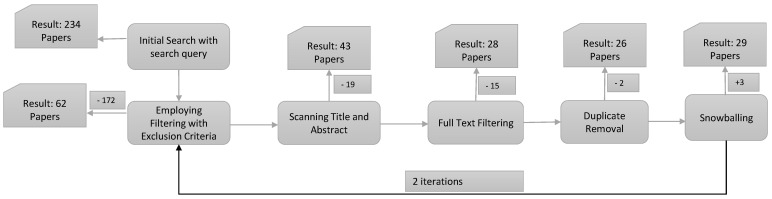
Protecting the resources of a cloud-native application is essential to meet an organization’s security goals. Cloud-native applications manage thousands of user requests, and an organization must employ a proper access control mechanism. However, unfortunately, developers sometimes grumble when designing and enforcing access decisions for a gigantic scalable application. It is sometimes complicated to choose the potential access control model for the system. Cloud-native software architecture has become an integral part of the industry to manage and maintain customer needs. A microservice is a combination of small independent services that might have hundreds of parts, where the developers must protect the individual services. An efficient access control model can defend the respective services and consistency. This study intends to comprehensively analyze the current access control mechanism and techniques utilized in cloud-native architecture. For this, we present a systematic mapping study that extracts current approaches, categorizes access control patterns, and provides developers guidance to meet security principles. In addition, we have gathered 234 essential articles, of which 29 have been chosen as primary studies. Our comprehensive analysis will guide practitioners to identify proper access control mechanisms applicable to ensuring security goals in cloud-native architectures.
Overview
CoChat Summary
TL;DR
This systematic mapping study analyzes access control mechanisms and design patterns in cloud-native/microservice architectures, selecting 29 primary studies from 234 articles. It concludes RBAC is the most efficient access control mechanism and recommends mTLS or JWT for secure communication, with security design patterns applied at the architectural level.
Key findings
- From 234 initially gathered articles, 29 were selected as primary studies after inclusion/exclusion criteria and snowballing.
- The results show that Role-based Access Control (RBAC) is the most efficient access control mechanism; RBAC bases access on users’ roles and rules specifying permitted accesses.
- For secure communication handling client requests, the study recommends Mutual Transport Layer Security (mTLS) or JSON Web Token (JWT); mTLS uses x.509 certificates, while JWT uses signed access tokens.
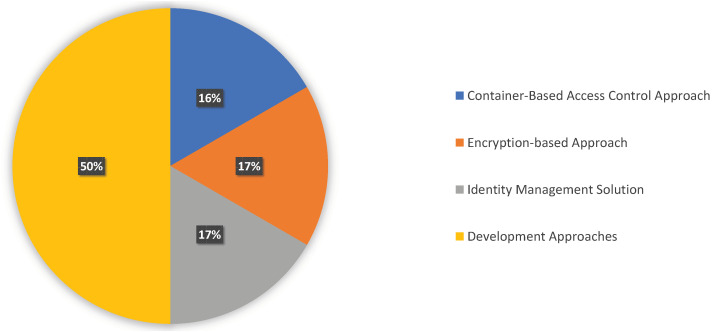
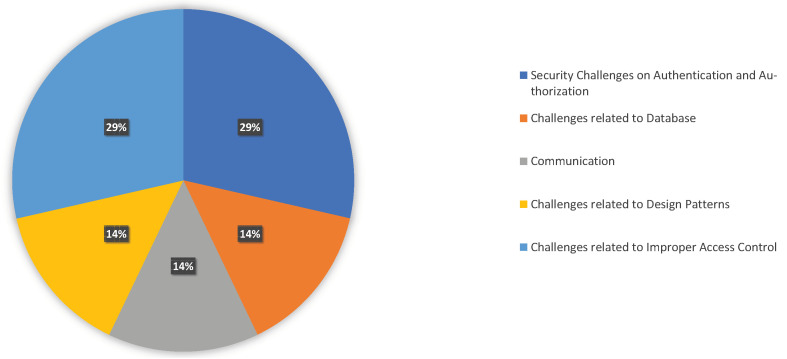
- Security design patterns need to be considered at the architectural level; identified patterns include API Gateway as the policy enforcement point, defense-in-depth, least privilege, and service monitoring. Challenges are grouped into authentication/authorization, database, communication, design patterns, and improper access control.
Methods
- Systematic mapping study searching five digital libraries (ACM Digital Library, IEEE Xplorer, Springer Link, Scopus, Science Direct) in February 2023; inclusion criteria included publications since 2012, English, peer-reviewed, full text available, and topics on access control design patterns or authentication/authorization security solutions.
- Two filtering stages (title/abstract then full text) plus backward snowballing; initially 234 publications were gathered, 172 were removed by criteria, and eventually 29 research papers were considered primary references.
- Data extraction encoded metadata and scanned documents per research questions on access control design patterns, authentication, authorization techniques, and existing tools/approaches.
Limitations
- Paper-stated threats to validity: construct validity risk in identifying primary studies and search strategy; internal validity risk in data extraction, mitigated by involving two authors and snowballing; external validity concerns usefulness in a wider context; conclusion validity concerns classification categories not accurately classifying all identified research.
- Paper-stated limitations of cloud-native access controls: often resource/service-level rather than granular object/data-level; incomplete visibility into access events; complex policies requiring specialized knowledge; dependence on cloud provider mechanisms; multi-tenancy can raise data breach and unauthorized access risk if suitable access control procedures are absent.
- Evident from the text: the study is a mapping study without empirical validation of the recommended mechanisms; the search was restricted to five databases, English, peer-reviewed, and since 2012, so grey literature, non-English, and older work may be missed; some IoT-based solutions were skipped due to the intended scope (the paper states this as a construct validity issue).
Model-written summary. Check it against the paper before relying on it.
Integrity signals
Registry
Cites
Statistics
Figures
Verification
Claims the paper makes
0 Valid · 9 Not valid · 5 Not checked · 25 Own results and interpretations
A result the paper reports from its own data — it cites no other source for it, so there is none to check. The quote shows it is in the paper.
In the paper
“Precisely, we found the security policy mainly employed in an API Gateway.”
§ Access Control Design Practice and Solutions in Cloud-Native Architecture: A Systematic Mapping Study > 4. Result > 4.3. Authentication and Authorization Mechanism in Cloud-Native: RQ2
plainstates an association- Asserted: passes — The authors put it forward as true.
- Checkable: passes — It can be checked against evidence.
- Load-bearing: unclear — It is unclear whether the paper’s conclusions depend on it.
- Based: passes — The paper gives a reason why it holds.
A result the paper reports from its own data — it cites no other source for it, so there is none to check. The quote shows it is in the paper.
In the paper
“Considerably, the solutions for authentication and authorization primarily depended on the architectural design and decision.”
§ Access Control Design Practice and Solutions in Cloud-Native Architecture: A Systematic Mapping Study > 4. Result > 4.3. Authentication and Authorization Mechanism in Cloud-Native: RQ2
plainstates a cause- Asserted: passes — The authors put it forward as true.
- Checkable: passes — It can be checked against evidence.
- Load-bearing: passes — The paper’s conclusions depend on it.
- Based: passes — The paper gives a reason why it holds.
A check of a cited source is scheduled, or we don’t hold its full text yet; the claim is checked once it runs.
In the paper
“According to Hinkley's industrial assessment, several firms have seen significant attacks on their microservice-based systems in recent years, ranging from single services to the entire system [9].”
§ Access Control Design Practice and Solutions in Cloud-Native Architecture: A Systematic Mapping Study > 1. Introduction
What the sources say
- Not checked yetcites [9] Microservices Available online: https://info.whitehatsec.com/rs/675-YBI-674/images/WhiteHatStatsReport2018.pdf (accessed on 12 July 2021)
A check is scheduled.
plain- Asserted: passes — The authors put it forward as true.
- Checkable: passes — It can be checked against evidence.
- Load-bearing: unclear — It is unclear whether the paper’s conclusions depend on it.
- Based: passes — The paper gives a reason why it holds.
- Not checked yet
A check of a cited source is scheduled, or we don’t hold its full text yet; the claim is checked once it runs.
In the paper
“This rising architectural approach improves the maintenance, scalability, availability, and resilience of complex systems and introduces new challenges, especially security [5,6].”
§ Access Control Design Practice and Solutions in Cloud-Native Architecture: A Systematic Mapping Study > 1. Introduction
What the sources say
- Not checked yetcites [5] Lu D. Huang D. Walenstein A. Medhi D. A Secure Microservice Framework for IoT Proceedings of the 2017 IEEE Symposium on Service-Oriented System Engineering (SOSE) San Francisco, CA, USA 6–9 April 2017 9 18 10.1109/SOSE.2017.27 source
A check is scheduled.
- Not checked yetcites [6] Chandramouli R. Security Strategies for Microservices-Based Application Systems 2019 Available online: https://csrc.nist.gov/publications/detail/sp/800-204/final (accessed on 15 March 2023)
A check is scheduled.
plainstates a cause- Asserted: passes — The authors put it forward as true.
- Checkable: passes — It can be checked against evidence.
- Load-bearing: passes — The paper’s conclusions depend on it.
- Based: passes — The paper gives a reason why it holds.
- Not checked yet
6 references still to check
A free account verifies the references that are still open.
- Probably not a substantial claim. 30
- It may state two separate claims as one. 17
- The quote only partly states this claim. 2
Citations
Cites
The pains and gains of microservices: A Systematic grey literature review
Soldani, J., Tamburri, D. A., & Van Den Heuvel, W.-J. (2018) · Journal of Systems and Software · doi:10.1016/j.jss.2018.09.082 · Cited by 435
Villamizar, M., Garces, O., Castro, H., Verano, M., Salamanca, L., Casallas, R., & Gil, S. (2015) · 2015 10th Computing Colombian Conference (10CCC) · doi:10.1109/columbiancc.2015.7333476 · Cited by 308
Current Research and Open Problems in Attribute-Based Access Control
Servos, D., & Osborn, S. L. (2017) · ACM Computing Surveys · doi:10.1145/3007204 · Cited by 260
Designing a Smart City Internet of Things Platform with Microservice Architecture
Krylovskiy, A., Jahn, M., & Patti, E. (2015) · 2015 3rd International Conference on Future Internet of Things and Cloud · doi:10.1109/ficloud.2015.55 · Cited by 232
Alonso, J., Orue-Echevarria, L., Casola, V., Torre, A. I., Huarte, M., Osaba, E., & Lobo, J. L. (2023) · Journal of Cloud Computing Advances Systems and Applications · doi:10.1186/s13677-022-00367-6 · Cited by 187
Securing microservices and microservice architectures: A systematic mapping study
Hannousse, A., & Yahiouche, S. (2021) · Computer Science Review · doi:10.1016/j.cosrev.2021.100415 · Cited by 173
On the pragmatic design of literature studies in software engineering: an experience-based guideline
Kuhrmann, M., Fernández, D. M., & Daneva, M. (2017) · Empirical Software Engineering · doi:10.1007/s10664-016-9492-y · Cited by 161
Design, monitoring, and testing of microservices systems: The practitioners’ perspective
Waseem, M., Liang, P., Shahin, M., Di Salle, A., & Márquez, G. (2021) · Journal of Systems and Software · doi:10.1016/j.jss.2021.111061 · Cited by 158
Security in microservice-based systems: A Multivocal literature review
Pereira-Vale, A., Fernández, E. B., Monge, R., Hernán Astudillo, R., & Márquez, G. (2021) · Computers & Security · doi:10.1016/j.cose.2021.102200 · Cited by 104
Integrating Continuous Security Assessments in Microservices and Cloud Native Applications
Torkura, K. A., Sukmana, M. I. H., & Meinel, C. (2017) · IEEE/ACM International Conference on Utility and Cloud Computing (UCC) · doi:10.1145/3147213.3147229 · Cited by 96
Cited by
Still being checked.
Metadata
- Authors
- Rahaman, M. S., Tisha, S. N., Song, E., & Cerny, T.
- Affiliations
- Baylor University (US)
- Department of Computer Science, ECS, Baylor University, Waco, TX 76798, USA
- Corresponding author
- Cerny, Tomas
- Venue
- Sensors
- Publisher
- MDPI AG
- Published
- 2023-03-24
- Volume
- 23
- Issue
- 7
- Pages
- 3413
- ISSN
- 1424-8220 (ISSN-L)
- PMC
- PMC10098865
- OpenAlex
- W4360859323
- Semantic Scholar
- e1ec0440a9521289c0f045e9d8d027b0645bd4b0
- Cited by
- 44
- References
- 49
- Citations by year
- 2026: 19 · 2025: 14 · 2024: 6 · 2023: 5
- FWCI
- 0.86
- Type
- journal article
- Language
- en
- Open access
- gold
- doi.org
- Licence
- Locations
- Sensors (publishedVersion, cc-by)
- PubMed Central (publishedVersion, cc-by)
- PubMed (publishedVersion)
- DOAJ (DOAJ: Directory of Open Access Journals) (submittedVersion)
- Topics
- Physical Sciences › Computer Science › Computer Networks and Communications › Access Control and Trust
- Physical Sciences › Computer Science › Information Systems › Cloud Data Security Solutions
- Physical Sciences › Computer Science › Information Systems › User Authentication and Security Systems
- Keywords
- access control, cloud-native architecture, microservices, access control models, security design, scalable applications, developer guidance
About these checks
Registry, retraction, Cites and statistics results are computed, not judged, with one exception: a printed reference that no index lists is read once by a model before it counts as a citation error. Claims are extracted by a model and kept only when their quote appears verbatim in the text; each cited source is then checked, with a model’s help, for whether it says what the claim relies on. Those verdicts can be wrong — read the claim’s quote and the cited source before relying on one.
A language model drew the claims from the paper on 2026-11-26, under version 3 of the claim definition (model deepseek-v4.1-flash, prompt extract-v3).
A second model labelled each claim on 2026-11-26 (model jev-1.13-20260917, definition revision gold-guideline-v0.2).
Statistics and arithmetic are recomputed, not judged.
Confidence bands are shown only for fields calibrated on our annotated test set. None is calibrated yet, so no band is shown.
What counts as a claim ›How we measure confidence ›How we check this ›
Are you an author, or do you see a problem with this page? Request a review
Data sources
Bibliographic data: Semantic Scholar, OpenAlex, Crossref.
Contains information from the Semantic Scholar Academic Graph Datasets, made available under the ODC Attribution License (ODC-BY 1.0).
Semantic Scholar’s data is described in: Kinney, R., et al. (2023). The Semantic Scholar Open Data Platform. arXiv:2301.10140.
