

The DOI matches its Crossref record; 38 of the 38 references it cites were found in a registry or an index.
Evaluation of Inference Performance of Deep Learning Models for Real-Time Weed Detection in an Embedded Computer
Open accessAbstract
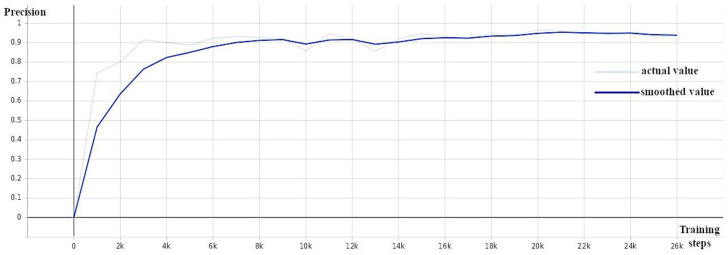
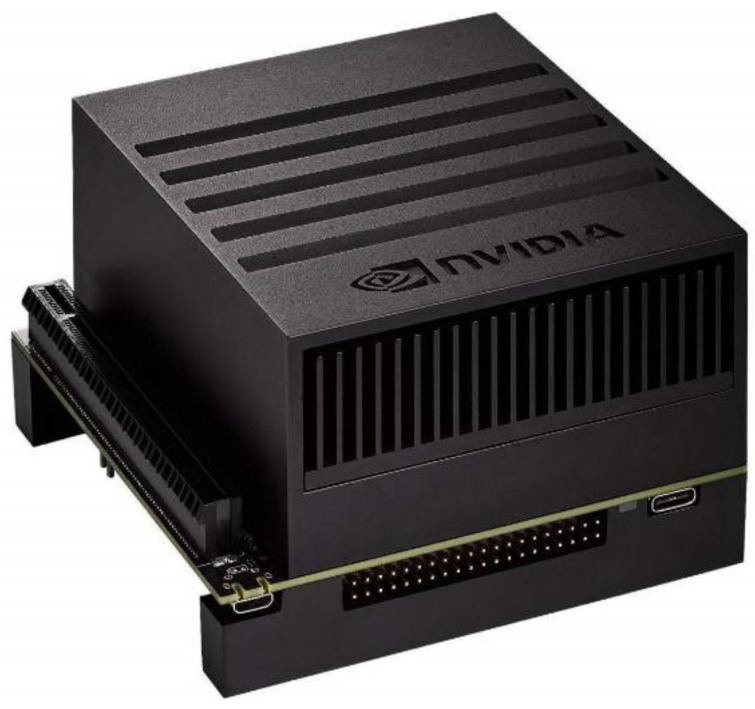
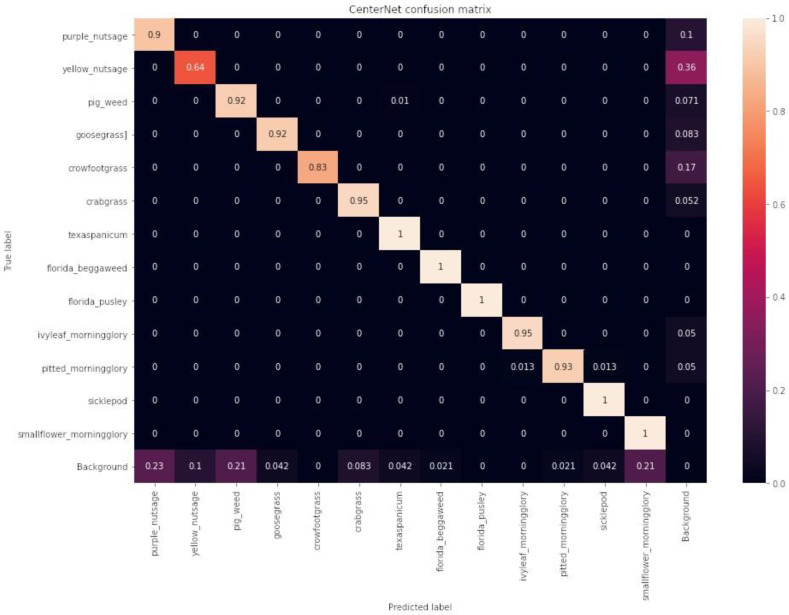
The knowledge that precision weed control in agricultural fields can reduce waste and increase productivity has led to research into autonomous machines capable of detecting and removing weeds in real time. One of the driving factors for weed detection is to develop alternatives to herbicides, which are becoming less effective as weed species develop resistance. Advances in deep learning technology have significantly improved the robustness of weed detection tasks. However, deep learning algorithms often require extensive computational resources, typically found in powerful computers that are not suitable for deployment in robotic platforms. Most ground rovers and UAVs utilize embedded computers that are portable but limited in performance. This necessitates research into deep learning models that are computationally lightweight enough to function in embedded computers for real-time applications while still maintaining a base level of detection accuracy. This paper evaluates the weed detection performance of three real-time-capable deep learning models, YOLOv4, EfficientDet, and CenterNet, when run on a deep-learning-enabled embedded computer, an Nvidia Jetson Xavier AGX. We tested the accuracy of the models in detecting 13 different species of weeds and assesses their real-time viability through their inference speeds on an embedded computer compared to a powerful deep learning PC. The results showed that YOLOv4 performed better than the other models, achieving an average inference speed of 80 ms per image and 14 frames per second on a video when run on an imbedded computer, while maintaining a mean average precision of 93.4% at a 50% IoU threshold. Furthermore, recognizing that some real-world applications may require even greater speed, and that the detection program would not be the only task running on the embedded computer, a lightweight version of the YOLOv4 model, YOLOv4-tiny, was tested for improved performance in an embedded computer. YOLOv4-tiny impressively achieved an average inference speed of 24.5 ms per image and 52 frames per second, albeit with a slightly reduced mean average precision of 89% at a 50% IoU threshold, making it an ideal choice for real-time weed detection.
Overview
The claims and statistics of this paper haven’t been checked yet.
Run the check — free, no account needed. It reads the open-access text and checks the sources it cites.
Integrity signals
Registry
Cites
Statistics
Figures
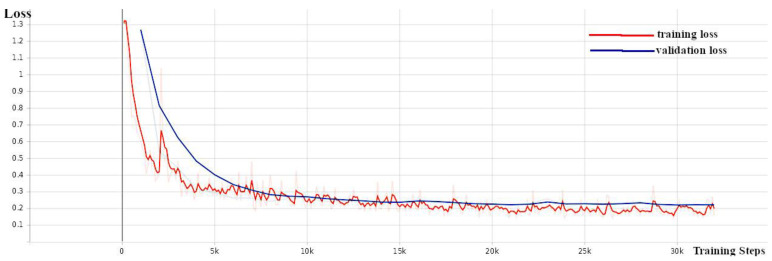
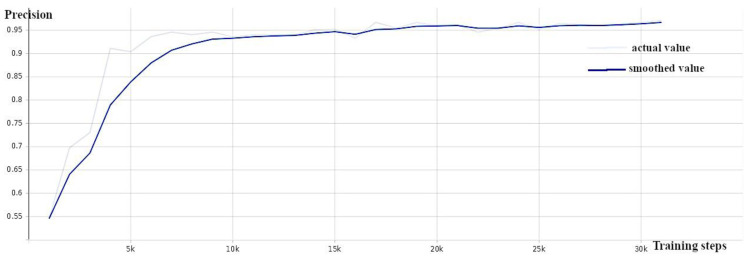
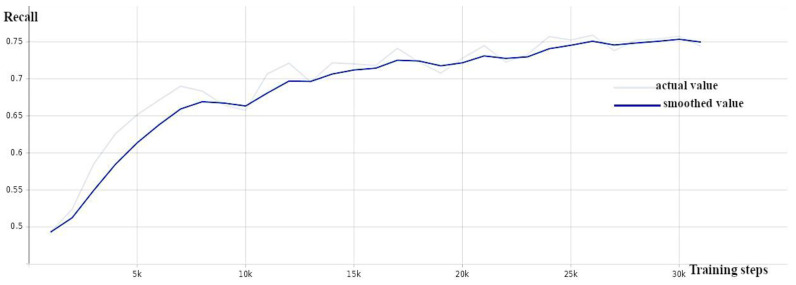
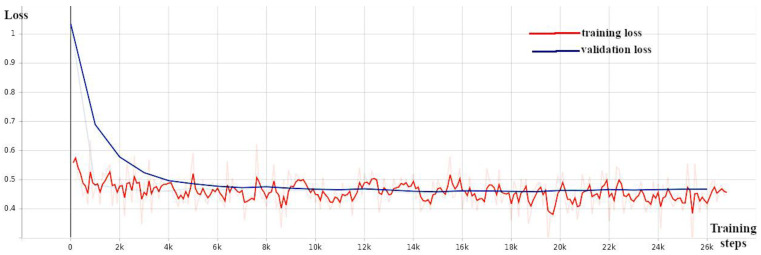
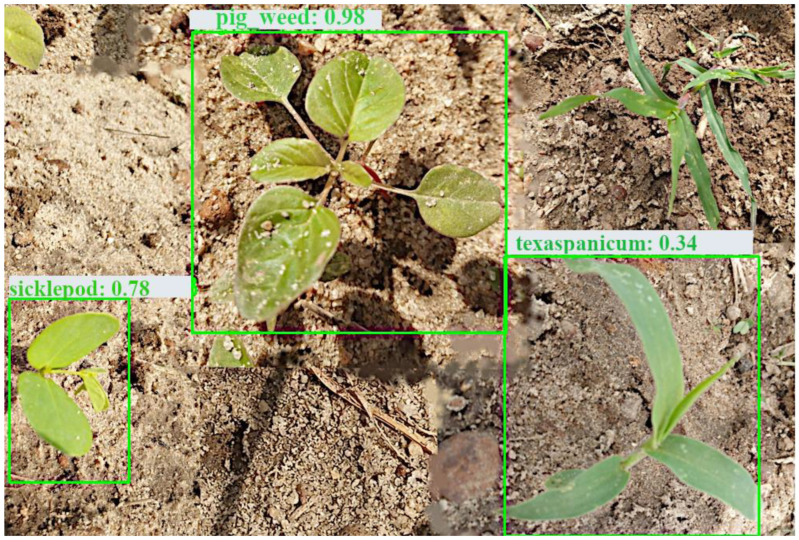
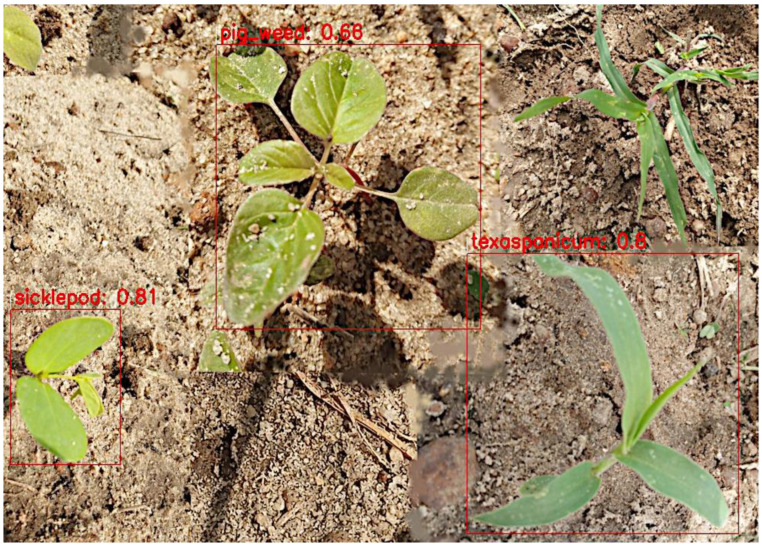
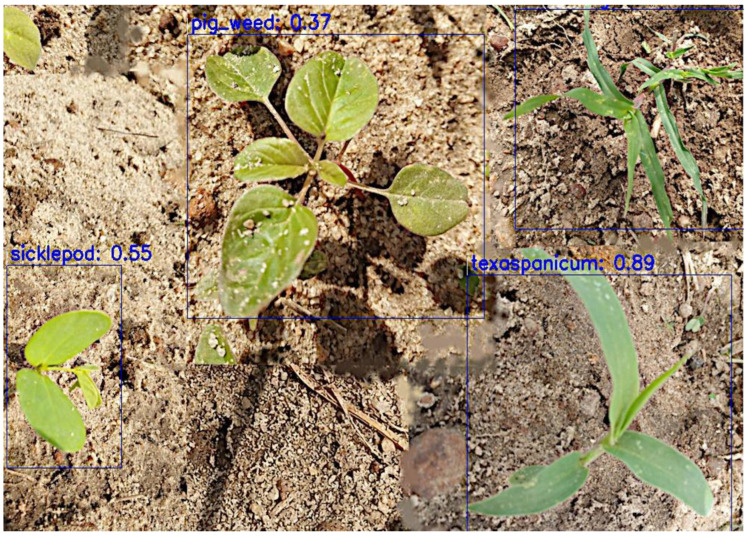
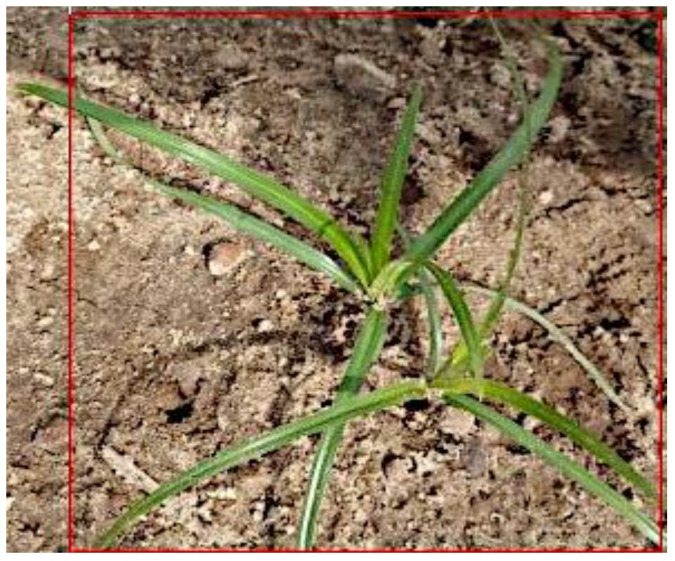
Verification
Claims the paper makes
The claims and statistics of this paper haven’t been checked yet.
Run the check — free, no account needed. It reads the open-access text and checks the sources it cites.
Claims other papers make about this one
Each is checked against this paper’s own text: does it say what the citing paper says it does?
The source backs part of the claim, not all of it — or backs it for a different population, condition or comparison.
In the citing paper
“Therefore, GPU acceleration plays an important practical role, enabling faster training and inference in modern deep learning workflows [19, 20].”
From GPU-Accelerated Deep Learning for Heatwave Prediction and Urban Heat Risk Assessment (2026) · cites this paper as [20]
Experimental — accuracy not yet measured
Self-check
Percentages, sums and reported differences re-computed from the paper’s own numbers.
The self-check needs the paper’s full text.
Citations
Cites
You Only Look Once: Unified, Real-Time Object Detection
Redmon, J., Divvala, S., Girshick, R., & Farhadi, A. (2016) · 2016 IEEE Conference on Computer Vision and Pattern Recognition (CVPR) · doi:10.1109/cvpr.2016.91 · Cited by 53,803
Microsoft COCO: Common Objects in Context
Lin, T.-Y., Maire, M., Belongie, S., Hays, J., Perona, P., Ramanan, D., Dollár, P., & Zitnick, C. L. (2014) · Lecture Notes in Computer Science · doi:10.1007/978-3-319-10602-1_48 · Cited by 45,460
The pascal visual object classes (VOC) challenge
Everingham, M., Van Gool, L., Williams, C. K. I., Winn, J., & Zisserman, A. (2010) · International Journal of Computer Vision · doi:10.1007/s11263-009-0275-4 · Cited by 19,599
TensorFlow: A system for large-scale machine learningPreprint
Abadi, M., Barham, P., Chen, J., Chen, Z., Davis, A., Dean, J., Devin, M., Ghemawat, S., Irving, G., Isard, M., et al. (2016) · arXiv (Cornell University) · doi:10.5555/3026877.3026899 · Cited by 16,548
A survey on Image Data Augmentation for Deep Learning
Shorten, C., & Khoshgoftaar, T. M. (2019) · Journal of Big Data · doi:10.1186/s40537-019-0197-0 · Cited by 13,203
EfficientDet: Scalable and Efficient Object Detection
Tan, M., Pang, R., & Le, Q. V. (2019) · arXiv · Cited by 9,841 · cited 1×
“This paper compares the performance of three single-stage deep learning models that are lightweight enough for real-time applications: YOLOv4 [28], EfficientDet [29], and CenterNet [30].”
BackgroundA Comprehensive Survey on Transfer Learning
Zhuang, F., Qi, Z., Duan, K., Xi, D., Zhu, Y., Zhu, H., Xiong, H., & He, Q. (2021) · Proceedings of the IEEE · doi:10.1109/jproc.2020.3004555 · Cited by 6,678
OERKE, E.-C. (2006) · The Journal of Agricultural Science · doi:10.1017/s0021859605005708 · Cited by 5,283
CenterNet: Keypoint Triplets for Object Detection
Duan, K., Bai, S., Xie, L., Qi, H., Huang, Q., & Tian, Q. (2019) · 2019 IEEE/CVF International Conference on Computer Vision (ICCV) · doi:10.1109/iccv.2019.00667 · Cited by 4,079
Text Data Augmentation for Deep Learning
Shorten, C., Khoshgoftaar, T. M., & Furht, B. (2021) · Journal Of Big Data · doi:10.1186/s40537-021-00492-0 · Cited by 1,852
A Survey on Performance Metrics for Object-Detection Algorithms
Padilla, R., Netto, S. L., & da Silva, E. A. B. (2020) · 2020 International Conference on Systems, Signals and Image Processing (IWSSIP) · doi:10.1109/iwssip48289.2020.9145130 · Cited by 1,605
Weed detection in soybean crops using ConvNets
Ferreira, A. D. S., Freitas, D. M., da Silva, G. G., Pistori, H., & Folhes, M. T. (2017) · Computers and Electronics in Agriculture · doi:10.1016/j.compag.2017.10.027 · Cited by 604
The Value of Herbicides in U.S. Crop Production
Gianessi, L., & Reigner, N. (2007) · Weed Technology · doi:10.1614/wt-06-130.1 · Cited by 250
Herbicide Resistance: Impact and Management
Powles, S. B., Preston, C. D., Bryan, I. B., & Jutsum, A. R. (1996) · Advances in agronomy · doi:10.1016/s0065-2113(08)60253-9 · Cited by 245
Benefits of Classical Biological Control for Managing Invasive Plants
Culliney, T. W. (2005) · Critical Reviews in Plant Sciences · doi:10.1080/07352680590961649 · Cited by 235
Sivakumar, A. N. V., Li, J., Scott, S., Psota, E. T., Jhala, A. J., Luck, J. D., & Shi, Y. (2020) · Remote Sensing · doi:10.3390/rs12132136 · Cited by 220
Gerhards, R., & Oebel, H. (2006) · Weed Research · doi:10.1111/j.1365-3180.2006.00504.x · Cited by 212
Robot for weed species plant‐specific management
Bawden, O., Kulk, J., Russell, R., McCool, C., English, A., Dayoub, F., Lehnert, C., & Pérez, T. (2017) · Journal of Field Robotics · doi:10.1002/rob.21727 · Cited by 204
Asad, M., & Bais, A. (2019) · Information Processing in Agriculture · doi:10.1016/j.inpa.2019.12.002 · Cited by 193
Robotic in-row weed control in vegetables
Utstumo, T., Urdal, F., Brevik, A., Dørum, J., Netland, J., Overskeid, Ø., Berge, T. W., & Gravdahl, J. T. (2018) · Computers and Electronics in Agriculture · doi:10.1016/j.compag.2018.08.043 · Cited by 180
Theoretical and practical challenges to an IPM approach to weed management
Buhler, D. D., Liebman, M., & Obrycki, J. J. (2000) · Weed Science · doi:10.1614/0043-1745(2000)048[0274:tapcta]2.0.co;2 · Cited by 178
Chen, D., Lu, Y., Li, Z., & Young, S. N. (2022) · Computers and Electronics in Agriculture · doi:10.1016/j.compag.2022.107091 · Cited by 167
Lessons Learned From the History of Herbicide Resistance
Shaner, D. L. (2014) · Weed Science · doi:10.1614/ws-d-13-00109.1 · Cited by 129
Zheng, Y., Zhu, Q., Huang, M., Guo, Y., & Qin, J. (2017) · Computers and Electronics in Agriculture · doi:10.1016/j.compag.2017.07.028 · Cited by 120
Weed Identification in Maize, Sunflower, and Potatoes with the Aid of Convolutional Neural Networks
Peteinatos, G. G., Reichel, P., Karouta, J., Andújar, D., & Gerhards, R. (2020) · Remote Sensing · doi:10.3390/rs12244185 · Cited by 102
A History of Weed Control in the United States and Canada
Timmons, F. L. (1970) · Weed Science · doi:10.1017/s0043174500079807 · Cited by 99
Data-augmentation for reducing dataset bias in person re-identification
McLaughlin, N., del Rincón, J. M., & Miller, P. C. (2015) · IEEE International Conference on Advanced Video and Signal Based Surveillance (AVSS) · doi:10.1109/avss.2015.7301739 · Cited by 95
Le, V. N. T., Apopei, B., & Alameh, K. (2018) · Information Processing in Agriculture · doi:10.1016/j.inpa.2018.08.002 · Cited by 95
Allmendinger, A., Spaeth, M., Saile, M., Peteinatos, G. G., & Gerhards, R. (2022) · Agronomy · doi:10.3390/agronomy12071620 · Cited by 88
A residual convolutional neural network for pan-shaprening
Rao, Y., He, L., & Zhu, J. (2017) · International Workshop on Remote Sensing with Intelligent Processing (RSIP) · doi:10.1109/rsip.2017.7958807 · Cited by 74
Field spectroscopy for weed detection in wheat and chickpea fields
Shapira, U., Herrmann, I., Karnieli, A., & Bonfil, D. J. (2013) · International Journal of Remote Sensing · doi:10.1080/01431161.2013.793860 · Cited by 71
Chechliński, Ł., Siemiątkowska, B., & Majewski, M. (2019) · Sensors · doi:10.3390/s19173787 · Cited by 59
Discrimination of corn, grasses and dicot weeds by their UV-induced fluorescence spectral signature
Longchamps, L., Panneton, B., Samson, G., Leroux, G. D., & Thériault, R. (2009) · Precision Agriculture · doi:10.1007/s11119-009-9126-0 · Cited by 56
Effect for a Paddy Weeding Robot in Wet Rice Culture
Hitoshi, S. O. R. I., Inoue, H., Hatta, H., & Ando, Y. (2018) · Journal of Robotics and Mechatronics · doi:10.20965/jrm.2018.p0198 · Cited by 46
Contributions of Weed Science to Weed Control and Management1
Hamill, A. S., Holt, J. S., & Mallory-Smith, C. A. (2004) · Weed Technology · doi:10.1614/0890-037x(2004)018[1563:cowstw]2.0.co;2 · Cited by 34
An attention‐based cascade R‐CNN model for sternum fracture detection in X‐ray images
Jia, Y., Wang, H., Chen, W., Wang, Y., & Yang, B. (2022) · CAAI Transactions on Intelligence Technology · doi:10.1049/cit2.12072 · Cited by 33
Evaluation of Diode Laser Treatments to Manage Weeds in Row Crops
Mwitta, C. J., Rains, G. C., & Prostko, E. P. (2022) · Agronomy · doi:10.3390/agronomy12112681 · Cited by 26
Self-citationUsing Electric Current as a Weed Control Method
Şahin, H., & Yalınkılıc, M. (2017) · European Journal of Engineering and Technology Research · doi:10.24018/ejeng.2017.2.6.379 · Cited by 23
Research works printed but not linked: 3
- Rueda-Ayala, V., Rasmussen, J., and Gerhards, R. (2010). Precision Crop Protection—the Challenge and Use of Heterogeneity, Springer.
- Zhu, W., and Zhu, X. (2009, January 20–22). The Application of Support Vector Machine in Weed Classification. Proceedings of the 2009 IEEE International Conference on Intelligent Computing and Intelligent Systems, Shanghai, China.
- Bochkovskiy, A., Wang, C.-Y., and Liao, H.-Y.M. (2020). YOLOv4: Optimal Speed and Accuracy of Object Detection. arXiv.
Cited by
Sorted by citations
Upadhyay, N., & Bhargava, A. (2025) · Iran Journal of Computer Science · doi:10.1007/s42044-025-00264-6 · Cited by 62
Lu, Z., Chengao, Z., Liu, L., Yang, Y., Wang, J., Wei, X., Xu, K., & Tie, J. (2025) · Computers and Electronics in Agriculture · doi:10.1016/j.compag.2025.110306 · Cited by 58
Mobile based deep CNN model for maize leaf disease detection and classification
Askale, G. T., Yibel, A. B., Taye, B. M., & Wubneh, G. D. (2025) · Plant Methods · doi:10.1186/s13007-025-01386-5 · Cited by 43
Min, X., Ye, Y., Xiong, S., & Chen, X. (2025) · Applied Sciences · doi:10.3390/app15147663 · Cited by 39
Mwitta, C. J., Rains, G. C., & Prostko, E. P. (2024) · Frontiers in Agronomy · doi:10.3389/fagro.2024.1388452 · Cited by 36
Self-citation
Metadata
- Authors
- Mwitta, C., Rains, G. C., & Prostko, E.
- Affiliations
- University of Georgia (US)
- Corresponding author
- Mwitta, Canicius
- Rains, Glen C.
- Venue
- Sensors
- Publisher
- MDPI AG
- Published
- 2024-01-14
- Volume
- 24
- Issue
- 2
- Pages
- 514
- ISSN
- 1424-8220 (ISSN-L)
- PMC
- PMC10819251
- OpenAlex
- W4390879300
- Cited by
- 41
- References
- 38
- Citations by year
- 2026: 12 · 2025: 19 · 2024: 10
- FWCI
- 10.01
- Type
- journal article
- Language
- en
- Open access
- gold
- doi.org
- Licence
- Locations
- Sensors (publishedVersion, cc-by)
- PubMed Central (publishedVersion, cc-by)
- PubMed (publishedVersion)
- DOAJ (DOAJ: Directory of Open Access Journals) (submittedVersion, cc-by-sa)
- Funders
- US Cotton Incorporated
- US Georgia Peanut Commission
- Topics
- Life Sciences › Agricultural and Biological Sciences › Plant Science › Smart Agriculture and AI
- Physical Sciences › Computer Science › Computer Vision and Pattern Recognition › Advanced Neural Network Applications
- Physical Sciences › Engineering › Industrial and Manufacturing Engineering › Industrial Vision Systems and Defect Detection
- Keywords
- weed detection, real-time object detection, embedded computing, YOLOv4, YOLOv4-tiny, EfficientDet, CenterNet, lightweight deep learning, autonomous agricultural robots, precision weed control, inference speed, mean average precision
About these checks
Registry, retraction, Cites and statistics results are computed, not judged, with one exception: a printed reference that no index lists is read once by a model before it counts as a citation error. Claims are extracted by a model and kept only when their quote appears verbatim in the text; each cited source is then checked, with a model’s help, for whether it says what the claim relies on. Those verdicts can be wrong — read the claim’s quote and the cited source before relying on one.
Statistics and arithmetic are recomputed, not judged.
Confidence bands are shown only for fields calibrated on our annotated test set. None is calibrated yet, so no band is shown.
What counts as a claim ›How we measure confidence ›How we check this ›
Are you an author, or do you see a problem with this page? Request a review
