

Improved YOLOv8-Based Target Precision Detection Algorithm for Train Wheel Tread Defects
Open accessThe DOI matches its Crossref record; 25 of the 25 references it cites were found in a registry or an index.
Abstract
Train wheels are crucial components for ensuring the safety of trains. The accurate and fast identification of wheel tread defects is necessary for the timely maintenance of wheels, which is essential for achieving the premise of conditional repair. Image-based detection methods are commonly used for detecting tread defects, but they still have issues with the misdetection of water stains and the leaking of small defects. In this paper, we address the challenges posed by the detection of wheel tread defects by proposing improvements to the YOLOv8 model. Firstly, the impact of water stains on tread defect detection is avoided by optimising the structure of the detection layer. Secondly, an improved SPPCSPC module is introduced to enhance the detection of small targets. Finally, the SIoU loss function is used to accelerate the convergence speed of the network, which ensures defect recognition accuracy with high operational efficiency. Validation was performed on the constructed tread defect dataset. The results demonstrate that the enhanced YOLOv8 model in this paper outperforms the original network and significantly improves the tread defect detection indexes. The average precision, accuracy, and recall reached 96.95%, 96.30%, and 95.31%.
Overview
The claims and statistics of this paper haven’t been checked yet.
Free: it reads the open-access text and checks the first 5 claims that cite a source we can check. Create a free account to check every claim.
Integrity signals
Registry
Cites
Statistics
Figures
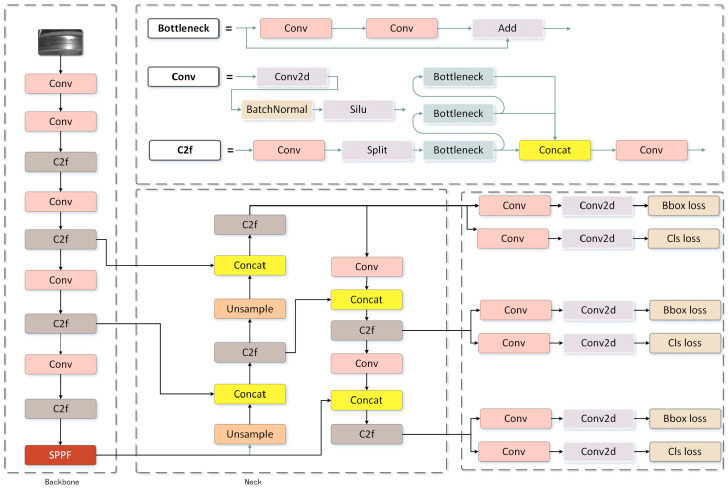
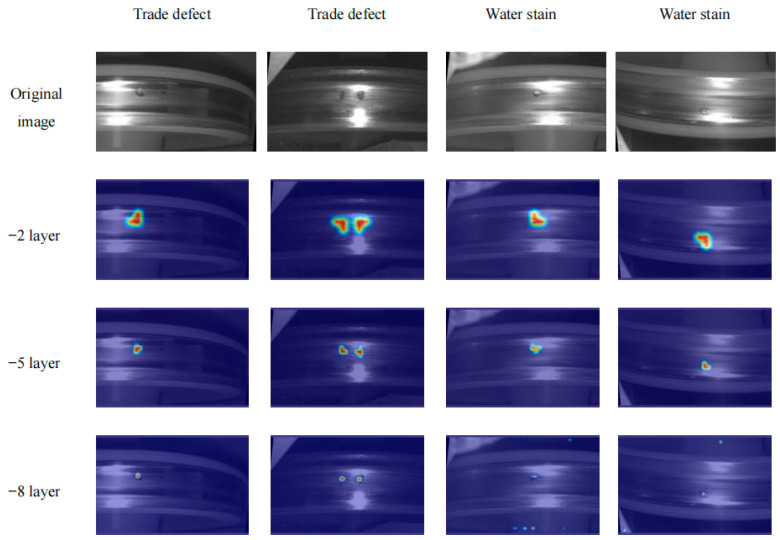
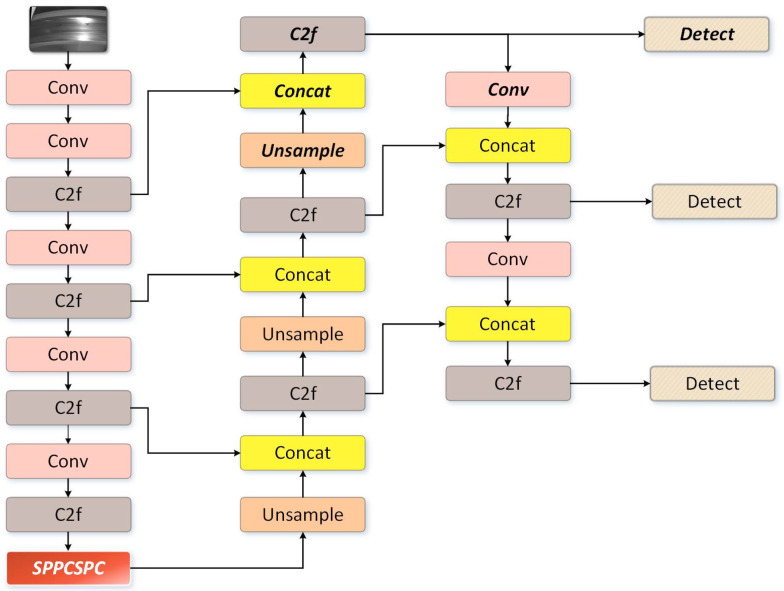

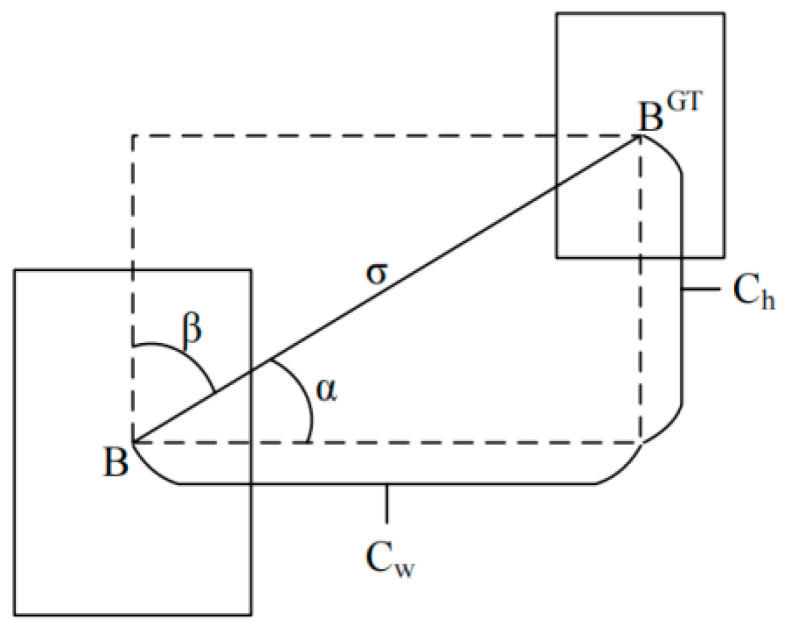
Verification
Claims the paper makes
The claims and statistics of this paper haven’t been checked yet.
Free: it reads the open-access text and checks the first 5 claims that cite a source we can check. Create a free account to check every claim.
Claims other papers make about this one
Each is checked against this paper’s own text: does it say what the citing paper says it does?
The source backs part of the claim, not all of it — or backs it for a different population, condition or comparison.
In the citing paper
“This unified detection framework is perfect for realtime object detection systems since it is incredibly fast and end-to-end-differentiable [53].”
From Visual Detection of Traffic Incident through Automatic Monitoring of Vehicle Activities (2024) · cites this paper as [53]
Experimental — accuracy not yet measured
Self-check
Percentages, sums and reported differences re-computed from the paper’s own numbers.
The self-check needs the paper’s full text.
Citations
Cites
Faster R-CNN: Towards Real-Time Object Detection with Region Proposal Networks
Ren, S., He, K., Girshick, R., & Sun, J. (2017) · IEEE Transactions on Pattern Analysis and Machine Intelligence · doi:10.1109/tpami.2016.2577031 · Cited by 73,472 · cited 1×
“Deep learning-based target detection methods are typically classified into two types: region-based, two-stage detection algorithms, such as regions with CNNs (R-CNNs) [2], and faster region-based convolutional neural networks (Faster R-CNNs) [3].”
MethodYou Only Look Once: Unified, Real-Time Object Detection
Redmon, J., Divvala, S., Girshick, R., & Farhadi, A. (2016) · 2016 IEEE Conference on Computer Vision and Pattern Recognition (CVPR) · doi:10.1109/cvpr.2016.91 · Cited by 53,803 · cited 1×
“The you-only-look-once (YOLO) [6] series of one-step detection algorithms represents another category.”
BackgroundRich Feature Hierarchies for Accurate Object Detection and Semantic Segmentation
Girshick, R., Donahue, J., Darrell, T., & Malik, J. (2014) · 2014 IEEE Conference on Computer Vision and Pattern Recognition · doi:10.1109/cvpr.2014.81 · Cited by 32,684
(2016) · Cited by 31,590
SSD: Single Shot MultiBox Detector
Liu, W., Anguelov, D., Erhan, D., Szegedy, C., Reed, S., Fu, C.-Y., & Berg, A. C. (2016) · Lecture Notes in Computer Science · doi:10.1007/978-3-319-46448-0_2 · Cited by 22,128
YOLOv3: An Incremental Improvement
Redmon, J., & Farhadi, A. (2018) · arXiv · doi:10.48550/arxiv.1804.02767 · Cited by 17,141
Spatial Pyramid Pooling in Deep Convolutional Networks for Visual Recognition
He, K., Zhang, X., Ren, S., & Sun, J. (2015) · IEEE Transactions on Pattern Analysis and Machine Intelligence · doi:10.1109/tpami.2015.2389824 · Cited by 11,971
Generalized Intersection Over Union: A Metric and a Loss for Bounding Box Regression
Rezatofighi, H., Tsoi, N., Gwak, J., Sadeghian, A., Reid, I., & Savarese, S. (2019) · 2019 IEEE/CVF Conference on Computer Vision and Pattern Recognition (CVPR) · doi:10.1109/cvpr.2019.00075 · Cited by 6,612 · cited 1×
“Representative methods include GloU [18], CloU [19], and EloU [20].”
MethodDistance-IoU Loss: Faster and Better Learning for Bounding Box Regression
Zheng, Z., Wang, P., Liu, W., Li, J., Ye, R., & Ren, D. (2020) · Proceedings of the AAAI Conference on Artificial Intelligence · doi:10.1609/aaai.v34i07.6999 · Cited by 5,288
Self-citationCSPNet: A New Backbone that can Enhance Learning Capability of CNN
Wang, C.-Y., Mark Liao, H.-Y., Wu, Y.-H., Chen, P.-Y., Hsieh, J.-W., & Yeh, I.-H. (2020) · 2020 IEEE/CVF Conference on Computer Vision and Pattern Recognition Workshops (CVPRW) · doi:10.1109/cvprw50498.2020.00203 · Cited by 5,265 · cited 1×
“…pyramid pooling (SPP) [15] and This novel SPPCSPC module integrates spatial pyramid pooling (SPP) [15] and a cross-stage Partial Channel (CSPC) [16], surpassing the performance of the SPPC alone. cross-stage Partial Channel By employing serial computation, the SP-PCSPC module adapts to images…”
Method
Research works printed but not linked: 1
- Leibe, B., Matas, J., Sebe, N., Welling, M., Eds.; Lecture Notes in Computer Science; Springer International Publishing: Cham, Switzerland, 2016; Volume 9905, pp. 21-37. ISBN 978-3-319-46447-3.
Cited by
Visual Detection of Traffic Incident through Automatic Monitoring of Vehicle Activities
Karim, A., Raza, M. A., Alharthi, Y. Z., Abbas, G., Othmen, S., Hossain, M. S., Nahar, A., & Mercorelli, P. (2024) · World Electric Vehicle Journal · doi:10.3390/wevj15090382 · Cited by 23
Chen, B., Ding, F., Ma, B., Wang, L., & Ning, S. (2024) · Sensors · doi:10.3390/s24134410 · Cited by 16
Chen, X., Zhang, Y., Lei, J., Li, L., Liu, L., & Zhang, D. (2025) · Remote Sensing · doi:10.3390/rs17203488 · Cited by 8
“Regarding YOLOv8, Wen et al. [21], Zhang et al. [22], and Yang et al. [23] have respectively improved accuracy, inference speed, and deployment through detection-layer optimization, lightweight convolutions, and global attention mechanisms.”
YOLOv8-SC: improving the YOLOv8 network for real-time detection of automotive coated surface defects
Ling, L., Zhu, C., Liu, M., Hu, J., Zhang, X., & Ge, M. (2025) · Measurement Science and Technology · doi:10.1088/1361-6501/adb05b · Cited by 8
“Wen et al [26] addressed the challenges posed by the detection of tread defects on wheels by improving the YOLOv8 model and introducing an improved SPPCPC module to enhance the detection of small objects.”
Zhan, D., Yang, H., Wang, X., Wang, H., Ma, N., & Liu, Z. (2025) · IEEE Transactions on Instrumentation and Measurement · doi:10.1109/tim.2025.3551489 · Cited by 5
“Popular, convenient, and fast target detection algorithms, the YOLO family was first adopted for wheel tread defect detection in trains and subways, such as improved YOLOv3 [12] and YOLOv8 [13].”
Wang, Z., Tao, Q., Zhong, Z., Yang, M., Wang, X., Luo, X., & Wu, Z. (2025) · International Journal of Pharmaceutics · doi:10.1016/j.ijpharm.2025.125704 · Cited by 4
Identification of wheel hollow-worn under complex environment based on mutability and continuity
Lei, L., Song, D., He, P., Zhang, W., Yu, C., & Yang, Y. (2025) · Nondestructive Testing And Evaluation · doi:10.1080/10589759.2025.2538787 · Cited by 3
“Wen et al. [15] avoided the influence of water stains on tread defect detection by optimising the structure of YOLOv8 detection layer and, based on an improved SPPCSPC module, enhanced the model’s detection of small targets.”
Research on tire appearance defect detection algorithm based on efficient multi-scale convolution
Gao, Z., Yang, Z., Xu, M., Yang, H., & Deng, F. Y. (2024) · Measurement Science and Technology · doi:10.1088/1361-6501/ad8469 · Cited by 3
“The above tire appearance defect detection method based on image processing technology has some problems, such as low detection efficiency [11], low detection accuracy, harsh detection conditions, and few types of detection defects.”
Ma, Z., Zhou, S., & Lin, C. (2025) · Electronics · doi:10.3390/electronics14050925 · Cited by 2
Real‐Time Tire Tread Identification From Wheel Tracks Using YOLOv11 and Triplet Embedding
Manh, H. T., Anh, D. P., & Huu, P. N. (2026) · International Journal of Intelligent Systems · doi:10.1155/int/7723883 · Cited by 2
Improved Algorithm of Elevator Blocking System Based on YOLOv8
Wan, Y., Hu, Y., Li, X., Song, Z., & Hou, T. (2024) · International Conference on Information Systems and Computing Technology (ISCTech) · doi:10.1109/isctech63666.2024.10845487 · Cited by 2
Kumar, A., Pant, K., Vishwakarma, S., & Harsha, S. P. (2026) · Lecture notes in mechanical engineering · doi:10.1007/978-3-032-11549-2_59 · Cited by 1
Real-time detection of high-speed railway wheel defects using a lightweight CNN-based NDT framework
Feng, X., Kong, Y., Chi, X., Kong, S., Duan, L., & Ma, L. (2025) · Engineering Research Express · doi:10.1088/2631-8695/ae1ed1 · Cited by 2
A low-complexity and lightweight detection network for surface defects on liquid crystal display
Ruan, G., Liao, Z., Shan, H., Ni, Y., Chen, L., Kong, X., & Yang, K. (2026) · The Journal of Supercomputing · doi:10.1007/s11227-026-08335-6
“Wen et al. [36] improved YOLOv8n by implementing an enhanced Spatial Pyramid Pooling Convolutional Pixel Connection (SPPCPC) module to boost small object detection.”
Kumar, A., Kushwaha, D. S., & Harsha, S. P. (2026) · Journal of Vibration Engineering & Technologies · doi:10.1007/s42417-026-02727-x
“Yu Wen et al. [23] improved the YOLOv8 network using an improved SPPCSPC module to address water-stain interference and missed small defects.”
A comprehensive review of artificial intelligence in transportation research
Chen, X. M., Wu, J., Zhen, L., Liang, Z., Chen, Y., Yin, H., Guo, X., Wu, J., Lu, Z., & Gao, Z. (2026) · ENGINEERING Management · doi:10.1007/s42524-026-6191-2 · Cited by 2
Dhanapaul, A. L., & Nandakumar, P. (2026) · Fatigue & Fracture of Engineering Materials & Structures · doi:10.1111/ffe.70395
Psilias, D., Thanos, S., Milidonis, A., & Voyiatzis, I. (2026) · Pan-Hellenic Conference on Progress in Computing and Informatics (PCI) · doi:10.1145/3829216.3829292
“In [12], researchers proposed an AI wheel defect detection system based on FPGA, that accomplished high accuracy and computation speed in real-time.”
Yan, H., Xu, S., Gao, C., Chen, Y., & Miao, B. (2026) · Sensors · doi:10.3390/s26216693
Metadata
- Authors
- Wen, Y., Gao, X., Luo, L., & Li, J.
- Affiliations
- Southwest Jiaotong University (CN)
- Corresponding author
- Gao, Xiaorong
- Venue
- Sensors
- Publisher
- MDPI AG
- Published
- 2024-05-28
- Volume
- 24
- Issue
- 11
- Pages
- 3477
- ISSN
- 1424-8220 (ISSN-L)
- PMC
- PMC11175294
- OpenAlex
- W4399102931
- Cited by
- 18
- References
- 21
- Citations by year
- 2026: 7 · 2025: 7 · 2024: 4
- FWCI
- 3.68
- Type
- journal article
- Language
- en
- Open access
- gold
- doi.org
- Licence
- Locations
- Sensors (publishedVersion, cc-by)
- PubMed Central (publishedVersion, cc-by)
- PubMed (publishedVersion)
- DOAJ (DOAJ: Directory of Open Access Journals) (submittedVersion, cc-by-sa)
- Funders
- National Natural Science Foundation of China (61960206010)
- Topics
- Physical Sciences › Engineering › Industrial and Manufacturing Engineering › Industrial Vision Systems and Defect Detection
- Physical Sciences › Engineering › Civil and Structural Engineering › Infrastructure Maintenance and Monitoring
- Physical Sciences › Computer Science › Computer Vision and Pattern Recognition › Advanced Neural Network Applications
- Keywords
- YOLOv8, small object detection, SIoU loss, image-based defect detection
About these checks
Registry, retraction, Cites and statistics results are computed, not judged, with one exception: a printed reference that no index lists is read once by a model before it counts as a citation error. Claims are extracted by a model and kept only when their quote appears verbatim in the text; each cited source is then checked, with a model’s help, for whether it says what the claim relies on. Those verdicts can be wrong — read the claim’s quote and the cited source before relying on one.
Statistics and arithmetic are recomputed, not judged.
Confidence bands are shown only for fields calibrated on our annotated test set. None is calibrated yet, so no band is shown.
What counts as a claim ›How we measure confidence ›How we check this ›
Are you an author, or do you see a problem with this page? Request a review
Data sources
Bibliographic data: Semantic Scholar, OpenAlex, Crossref.
Contains information from the Semantic Scholar Academic Graph Datasets, made available under the ODC Attribution License (ODC-BY 1.0).
Semantic Scholar’s data is described in: Kinney, R., et al. (2023). The Semantic Scholar Open Data Platform. arXiv:2301.10140.
