

A Life Cycle Framework for the Identification of Optimal Building Renovation Strategies Considering Economic and Environmental Impacts
Open accessThe DOI matches its Crossref record; 27 of the 27 references it cites were found in a registry or an index.
Abstract
It is well-known that the existing building stock is responsible for non-renewable resource depletion, energy and material consumption, and greenhouse gas (GHG) emissions. Life cycle analysis (LCA) procedures have thus been developed, in recent years, to assess the environmental impact of construction and operational phases through the entire building life cycle. Furthermore, the economic, environmental, and social consequences of recent natural disasters have encouraged the additional integration of hazard-induced impacts into common LCA procedures for buildings. Buildings are however expected to provide the population with safe living and working conditions, even when hit by different types of hazards during their service life, such as earthquakes. Hence, next-generation LCA procedures should include not only hazard-induced impacts, but also the contribution of potential retrofitting strategies that may alter the structural and energy performances of buildings throughout their remaining service life. This study presents a life cycle framework that accounts for the contributions of initial construction, operational energy consumption, earthquake-induced damage repair activities, potential retrofitting interventions, and demolition (considering also its associated potential material recycling), in terms of both monetary costs and environmental impacts. The proposed methodology can be used to undertake cost-benefit analyses aimed at identifying building renovation strategies that lead to an optimal balance, considering both economic and environmental impacts, between reduction of seismic vulnerability and increase of energy efficiency of a building, depending on the climatic conditions and the seismic hazard at the site of interest.
Overview
The claims and statistics of this paper haven’t been checked yet.
Free: it reads the open-access text and checks the first 5 claims that cite a source we can check. Create a free account to check every claim.
Integrity signals
Registry
Cites
Statistics
Figures
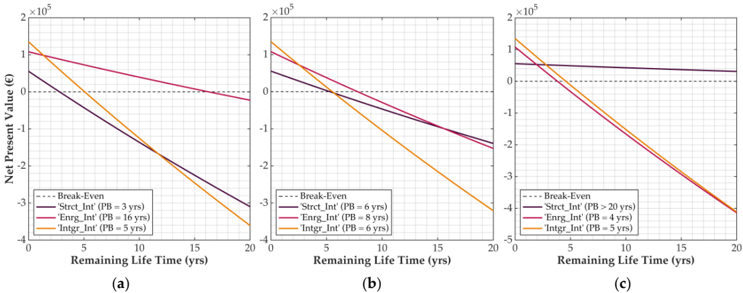
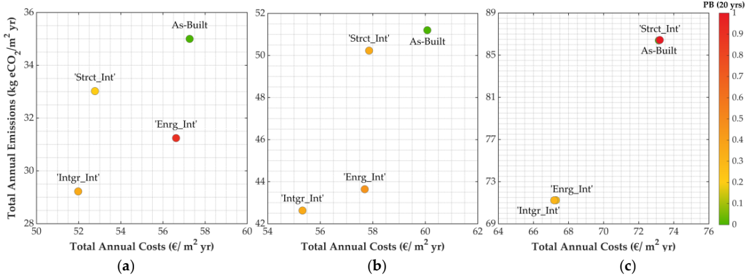
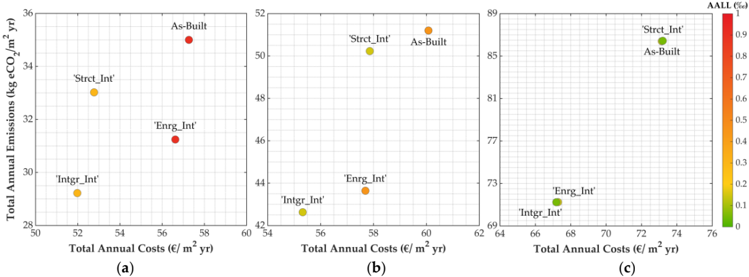
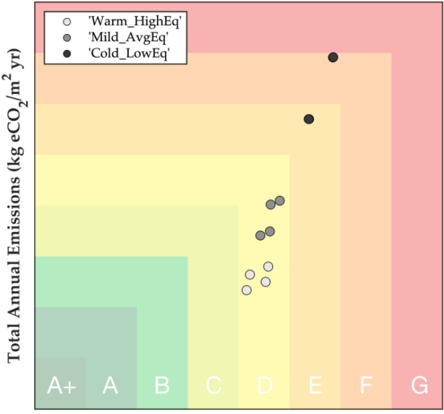
Verification
Claims the paper makes
The claims and statistics of this paper haven’t been checked yet.
Free: it reads the open-access text and checks the first 5 claims that cite a source we can check. Create a free account to check every claim.
Claims other papers make about this one
Each is checked against this paper’s own text: does it say what the citing paper says it does?
The check wasn’t confident either way, so it gives no verdict — never disputed.
In the citing paper
“Whereas fully wood-based building systems outperform steel-reinforced concrete systems normally in the range of 10-55% in most environmental impact categories”
From Integrating Regionalized Socioeconomic Considerations onto Life Cycle Assessment for Evaluating Bioeconomy Value Chains: A Case Study on Hybrid Wood–Concrete Ceiling Elements (2021) · cites this paper as [56]
Experimental — accuracy not yet measuredThe check wasn’t confident either way, so it gives no verdict — never disputed.
In the citing paper
“the case of wood-concrete systems may differ as they in some cases exhibit even higher environmental impacts as they lack in optimized substitution of cement [52-57].”
From Integrating Regionalized Socioeconomic Considerations onto Life Cycle Assessment for Evaluating Bioeconomy Value Chains: A Case Study on Hybrid Wood–Concrete Ceiling Elements (2021) · cites this paper as [56]
Experimental — accuracy not yet measured
Self-check
Percentages, sums and reported differences re-computed from the paper’s own numbers.
The self-check needs the paper’s full text.
Citations
Cites
Embodied energy and carbon in construction materials
Hammond, G. P., & Jones, C. I. (2008) · Proceedings of the Institution of Civil Engineers - Energy · doi:10.1680/ener.2008.161.2.87 · Cited by 994
HAZUS Earthquake Loss Estimation Methods
Kircher, C. A., Whitman, R. V., & Holmes, W. T. (2006) · Natural Hazards Review · doi:10.1061/(asce)1527-6988(2006)7:2(45 · Cited by 377
Seismic Performance Assessment of Buildings
Bento, R., & Simões, A. (2021) · Buildings · doi:10.3390/buildings11100440 · Cited by 347
Leontief, W. (1987) · The New Palgrave Dictionary of Economics · doi:10.1057/978-1-349-95121-5_1072-1 · Cited by 251
Does seismic risk affect the environmental impact of existing buildings?
Belleri, A., & Marini, A. (2016) · Energy and Buildings · doi:10.1016/j.enbuild.2015.10.048 · Cited by 143
Factors determining human casualty levels in earthquakes: Mortality prediction in building collapse.
Cobum, A. W., Spence, R. J. S., & Pomonis, A. (1992) · Medical Entomology and Zoology · Cited by 143
Passoni, C., Marini, A., Belleri, A., & Menna, C. (2020) · Sustainable Cities and Society · doi:10.1016/j.scs.2020.102519 · Cited by 143
Life cycle sustainability assessment of RC buildings in seismic regions
Gencturk, B., Hossain, K. A., & Lahourpour, S. (2015) · Engineering Structures · doi:10.1016/j.engstruct.2015.11.037 · Cited by 123 · cited 1×
“Other Average data-Eurostat - Energy prices ME (€) Gencturk et al. (2016) [14] BOM-various PEER PBEE - Damage/repair descr.”
Multi-hazard Approaches to Civil Infrastructure Engineering
Gardoni, P., & LaFave, J. M. (2016) · Springer eBooks · doi:10.1007/978-3-319-29713-2 · Cited by 118
Human Casualties in Earthquakes
Spence, R., So, E., & Scawthorne, C. (2011) · Advances in natural and technological hazards research · doi:10.1007/978-90-481-9455-1 · Cited by 111
Research works printed but not linked: 2
- 4. Negro, P.; Dimova, S.; Bournas, D.; Tsionis, G.; Strezova, D. Integrated Techniques for the Seismic Strengthening and Energy E ciency of Existing Buildings: A Pilot Project. In Proceedings of the 17th World Conference on Earthquake Engineering (17WCEE), Sendai, Japan, 13-18 September 2020.
- 42. European Parliament and Council. Directive 2008 / 98 / EC of the European Parliament and of the Council of 19 November 2008 on Waste and Repealing Certain Directives ;O cial Journal of the European Union: Brussels, Belgum, 2008; Volume 312.
Cited by
Cappellesso, V. G., di Summa, D., Pourhaji, P., Kannikachalam, N. P., Dabral, K., Ferrara, L., Alonso, C., Camacho, E., Gruyaert, E., & Belie, N. D. (2023) · International Materials Reviews · doi:10.1080/09506608.2022.2145747 · Cited by 140
“solution, complying with ISO 16627:2015, has to be ‘actualized’ through the annual real discount rate r according to the following equation [353,382].”
BackgroundMenna, C., Felicioni, L., Negro, P., Lupíšek, A., Romano, E., Prota, A., & Hájek, P. (2021) · Sustainable Cities and Society · doi:10.1016/j.scs.2021.103556 · Cited by 124
Conceptual design of integrated seismic and energy retrofit interventions
Menna, C., Vecchio, C. D., Ludovico, M. D., Mauro, G. M., Ascione, F., & Prota, A. (2021) · Journal of Building Engineering · doi:10.1016/j.jobe.2021.102190 · Cited by 85
Optimal seismic retrofitting of existing buildings considering environmental impact
Clemett, N., Carofilis, W., O’Reilly, G. J., Gabbianelli, G., & Monteiro, R. (2021) · Engineering Structures · doi:10.1016/j.engstruct.2021.113391 · Cited by 75
Caruso, M., Pinho, R., Bianchi, F., Cavalieri, F., & Lemmo, M. T. (2021) · Bulletin of Earthquake Engineering · doi:10.1007/s10518-021-01101-4 · Cited by 66
Self-citationdi Filippo, R., Bursi, O. S., & Maggio, R. D. (2022) · Energy and Buildings · doi:10.1016/j.enbuild.2022.112385 · Cited by 60
“Conversely, the carbon footprint of constructing and repairing buildings has been thoroughly investigated, paving the way to the inclusion of NHs in LCA analyses [31; 32].”
BackgroundOptimal Combined Seismic and Energy Efficiency Retrofitting for Existing Buildings in Italy
Clemett, N., Carofilis, W., Gabbianelli, G., O’Reilly, G. J., & Monteiro, R. (2022) · Journal of Structural Engineering · doi:10.1061/(asce)st.1943-541x.0003500 · Cited by 65
Passoni, C., Caruso, M., Felicioni, L., & Negro, P. (2024) · Bulletin of Earthquake Engineering · doi:10.1007/s10518-024-01991-0 · Cited by 43
“For instance, the MCDM approach conceived by (Caruso et al. 2020, 2021 ), and further extended by (Caruso et al. 2023), is based on the use of the so-called radar plots to, also visually, support the process of identification of optimal integrated retrofitting strategies.”
Self-citationCost-benefit analysis of sustainable upgrades in existing buildings: A critical review
Sharbaf, S. A., & Schneider-Marin, P. (2024) · Energy and Buildings · doi:10.1016/j.enbuild.2024.115142 · Cited by 46
Carofilis, W., Clemett, N., Gabbianelli, G., O’Reilly, G. J., & Monteiro, R. (2022) · Buildings · doi:10.3390/buildings12060845 · Cited by 36
di Filippo, R., Possidente, L., Tondini, N., & Bursi, O. S. (2023) · Journal of Building Engineering · doi:10.1016/j.jobe.2023.107124 · Cited by 30
Passoni, C., Caruso, M., Marini, A., Pinho, R., & Landolfo, R. (2022) · Buildings · doi:10.3390/buildings12081107 · Cited by 29
Self-citationCaruso, M., Buttazzoni, M., Passoni, C., Labò, S., Marini, A., & Pinho, R. (2024) · Journal of Building Engineering · doi:10.1016/j.jobe.2024.110967 · Cited by 27
Self-citationAljawhari, K., Gentile, R., & Galasso, C. (2025) · Earthquake Engineering & Structural Dynamics · doi:10.1002/eqe.4324 · Cited by 25
“This led Caruso et al. [19, 20] to propose combining structuralretrofitswithenergyupgrades(e.g.,thermalinsulation) to further enhance life-cycle sustainability.”
Bezama, A., Hildebrandt, J., & Thrän, D. (2021) · Sustainability · doi:10.3390/su13084221 · Cited by 22
Assessing the sustainability of a resilient built environment: Research challenges and opportunities
Tanguay, X., & Amor, B. (2024) · Journal of Cleaner Production · doi:10.1016/j.jclepro.2024.142437 · Cited by 27
Clay-Based Products Sustainable Development: Some Applications
Noce, M. L., Faro, A. L., & Sciuto, G. (2021) · Sustainability · doi:10.3390/su13031364 · Cited by 23
Ferrara, P. L., Noce, M. L., & Sciuto, G. (2023) · Sustainability · doi:10.3390/su152216047 · Cited by 21
Kavvada, I., Moura, S. J., & Horvath, A. (2022) · Environmental Research Infrastructure and Sustainability · doi:10.1088/2634-4505/aca9f3 · Cited by 18
Cheng, M., Khasani, R. R., & Citra, R. J. (2023) · Engineering Applications of Artificial Intelligence · doi:10.1016/j.engappai.2023.107164 · Cited by 19
FathiAzar, A., Angeli, S. D., & Cattari, S. (2024) · International Journal of Disaster Risk Reduction · doi:10.1016/j.ijdrr.2024.104884 · Cited by 18
Doukari, O., Kassem, M., Scoditti, E., Aguejdad, R., & Greenwood, D. J. (2023) · Construction Innovation · doi:10.1108/ci-12-2022-0314 · Cited by 21
A Practice-Oriented Approach for Seismic and Energy Performance Upgrading of Existing Buildings
Couto, R., Mucedero, G., Bento, R., & Monteiro, R. (2024) · Journal of Earthquake Engineering · doi:10.1080/13632469.2024.2382474 · Cited by 14
“(1) (Caruso et al. 2020), where the EAL and AEC are multiplied by the nominal design service life of the building (SL) and added to the total maintenance costs.”
Kochański, M., Lotz, M. T., & Korczak, K. (2024) · Journal of Cleaner Production · doi:10.1016/j.jclepro.2024.144337 · Cited by 15
Natech risk and the impact of high-GWP content release on LCA of industrial components
di Filippo, R., Bursi, O. S., Ragazzi, M., & Ciucci, M. M. (2022) · Process Safety and Environmental Protection · doi:10.1016/j.psep.2022.02.042 · Cited by 14
Life Cycle Assessment of a Coastal Concrete Bridge Aided by Non-Destructive Damage Detection Methods
Hadizadeh-Bazaz, M., Navarro, I. J., & Yepes, V. (2023) · Journal of Marine Science and Engineering · doi:10.3390/jmse11091656 · Cited by 10
“In recent years, comprehensive research has assessed the environmental ramifications associated with diverse infrastructural developments across their entire life cycle, such as buildings [4], pavements [5], railway tracks [6], or urban infrastructure elements [7].”
To the Issue of Assessment of the Technical Condition of Underground Structures of Buildings
Semko, O., Vynnykov, Y., Філоненко, О., Yurin, O., Ільченко, Т. М., Hranko, O., Semko, V., Salles, A., Mateus, R. F. M. S., Bragança, L., et al. (2025) · Sustainability · doi:10.3390/su17052264 · Cited by 10
Risk Analysis in Building Renovations: Strategies for Investors
Macek, D., & Vitásek, S. (2024) · Buildings · doi:10.3390/buildings14072219 · Cited by 9
“By accelerating the rate of deep renovation, the EU can not only contribute significantly to its climate commitments, but also foster economic growth, improve indoor comfort and health, and enhance the overall sustainability of its building stock [34].”
BackgroundDu, J., Wang, W., & Wang, S. (2024) · Journal of Constructional Steel Research · doi:10.1016/j.jcsr.2024.108902 · Cited by 10
Life cycle assessment of integrated energy and seismic retrofits for existing buildings
Kulthanaphanich, Y., Permata, R., & Lin, S.-Y. (2025) · Journal of Building Engineering · doi:10.1016/j.jobe.2025.112967 · Cited by 8
Quantification of Carbon Emissions of Building Decoration Processes
Zhang, L., Wu, H., Wang, X., Wu, F., Ding, Z., Song, L., Rong, X., Liu, J., Wen, X., & Zhong, P. (2024) · Buildings · doi:10.3390/buildings14113570 · Cited by 7
Unveiling the environmental impact of earthquakes in Europe
Caruso, M., Silva, V., Aljawhari, K., Nafeh, A. M. B., & Galasso, C. (2026) · Nature Communications · doi:10.1038/s41467-025-68120-6 · Cited by 6
“Some studies have further proposed integrating these impacts alongside conven-tionalriskmetrics,suchaseconomiclossesandfatalities,toinformthe design of rehabilitation strategies that enhance both structural resilience and environmental performance 9 – 15 .”
Self-citationInfrastructure-specific evaluation of building downtime due to earthquake-induced utility disruption
Cavalieri, F. (2023) · International Journal of Disaster Risk Reduction · doi:10.1016/j.ijdrr.2023.103875 · Cited by 5
Self-citationNguyen, T. D., & Pishdad, P. (2025) · Journal of Environmental Engineering and Science · doi:10.1680/jenes.24.00146 · Cited by 5
Pavel, F., & Nica, G. B. (2024) · Buildings · doi:10.3390/buildings14061742 · Cited by 4
“Thus, the study by Caruso et al. [1] proposes a life-cycle framework for the identi fi cation of the optimal renovation strategy for buildings.”
BackgroundÖberg, V., Jockwer, R., Goto, Y., & Al‐Emrani, M. (2025) · Building Research & Information · doi:10.1080/09613218.2025.2478063 · Cited by 7
“For Business-as-usual (BaU) buildings, the main factor influencing the economic feasibility of building adaptation seems to be the extent and complexity of the needed adaptation work (Alba-Rodríguez et al., 2017; P. Bullen & Love, 2011; Caruso et al., 2020).”
Yuan, H., Shen, J. M., Zheng, X., Bao, X., Chen, X., & Cui, H. (2024) · Sustainability · doi:10.3390/su16156319 · Cited by 3
Evolving dynamics of home renovation in Dubai: A case study of The Springs community
Jung, C., Samanoudy, G. E., & Mahmoud, N. S. A. (2024) · Ain Shams Engineering Journal · doi:10.1016/j.asej.2024.103018 · Cited by 3
Giresini, L., Graziotti, F., & Guerrini, G. (2024) · Journal of Building Engineering · doi:10.1016/j.jobe.2024.110017 · Cited by 7
Rios, F. C. (2026) · Journal of Industrial Ecology · doi:10.1007/s44498-026-00152-7 · Cited by 2
“The seismic papers of Caruso et al., (2020, 2021) are the clearest cases: both evaluate structural retrofits in terms of a payback period in which the embodied carbon of the intervention is offset against reductions in future average annual seismic emissions, implicitly encoding a bounce-forward…”
Giresini, L., Corona, F., Guerrini, G., & Graziotti, F. (2023) · COMPDYN Proceedings · doi:10.7712/120123.10437.20475 · Cited by 2
González, A. C., Rigaud, É., Pérez‐López, P., Gschwind, B., & Blanc, P. (2026) · The International Journal of Life Cycle Assessment · doi:10.1007/s11367-026-02589-1 · Cited by 1
Zapata, J. C. G., Nievas, C. I., Weatherill, G. A., & Cotton, F. (2025) · Geomatics Natural Hazards and Risk · doi:10.1080/19475705.2025.2512357 · Cited by 1
Marcellino, G., Piredda, G., Zanchetta, C., & da Porto, F. (2025) · Digital innovations in architecture, engineering and construction · doi:10.1007/978-3-031-87224-2_15
Hahn-Hundsdahl, M., & Petersen, S. (2026) · Lecture notes in civil engineering · doi:10.1007/978-3-032-06810-1_102
González, A. C. (2024) · theses.fr (ABES) · doi:10.70675/6946a14az4a4fz449az8293zfccc664165b7
Du, J., Wang, W., Lou, T., & Toma, C. L. (2026) · Engineering Structures · doi:10.1016/j.engstruct.2026.123066
Semko, O., Ільченко, Т. М., Semko, V., Rabenseifer, R., & Mahas, N. (2026) · Journal of Physics Conference Series · doi:10.1088/1742-6596/3251/1/012024
Aghdam, M. N., & Dixit, M. (2026) · Journal of Building Engineering · doi:10.1016/j.jobe.2026.116573
Integrated Rating System for Net-Zero and Resilient Building Design
Aghdam, M. N., Dixit, M., & Nasserzadeh, F. (2026) · Lecture notes in civil engineering · doi:10.1007/978-3-032-27698-8_92
Life-cycle assessment of integrated seismic–energy retrofitting: CLT panels versus TRM jacketing
Canning, A., Kallioras, S., & Bournas, D. A. (2026) · Developments in the Built Environment · doi:10.1016/j.dibe.2026.101035
Voroshilo, V. V. (2026) · World Journal of Advanced Research and Reviews · doi:10.30574/wjarr.2026.31.3.2347
Metadata
- Authors
- Caruso, M., Pinho, R., Bianchi, F., Cavalieri, F., & Lemmo, M. T.
- Affiliations
- Istituto Universitario di Studi Superiori di Pavia (IT)
- University of Pavia (IT)
- European Centre for Training and Research in Earthquake Engineering (IT)
- TEAM Srl, 27100 Pavia, Italy
- Corresponding author
- Caruso, Martina
- Venue
- Sustainability
- Publisher
- MDPI AG
- Published
- 2020-12-07
- Volume
- 12
- Issue
- 23
- Pages
- 10221
- ISSN
- 2071-1050 (ISSN-L)
- OpenAlex
- W3113049754
- Semantic Scholar
- 46d09d4c06c4cf1ca67539f94299e2a046982444
- Cited by
- 51
- References
- 27
- Citations by year
- 2026: 9 · 2025: 7 · 2024: 15 · 2023: 8 · 2022: 6 · 2021: 6
- FWCI
- 1.80
- Type
- journal article
- Language
- en
- Open access
- gold
- doi.org
- Licence
- Locations
- Sustainability (publishedVersion, cc-by)
- RePEc: Research Papers in Economics (submittedVersion)
- DOAJ (DOAJ: Directory of Open Access Journals) (submittedVersion, cc-by-sa)
- Funders
- Dipartimento della Protezione Civile, Presidenza del Consiglio dei Ministri (ReLUIS-DPC 2019-2021 WP5)
- Topics
- Physical Sciences › Environmental Science › Environmental Engineering › Environmental Impact and Sustainability
- Physical Sciences › Engineering › Building and Construction › Life Cycle Costing Analysis
- Physical Sciences › Engineering › Building and Construction › Sustainable Building Design and Assessment
- Keywords
- building renovation strategies, life cycle assessment, seismic retrofitting, building demolition, material recycling, energy efficiency, seismic vulnerability, cost-benefit analysis, building life cycle, economic impact
About these checks
Registry, retraction, Cites and statistics results are computed, not judged, with one exception: a printed reference that no index lists is read once by a model before it counts as a citation error. Claims are extracted by a model and kept only when their quote appears verbatim in the text; each cited source is then checked, with a model’s help, for whether it says what the claim relies on. Those verdicts can be wrong — read the claim’s quote and the cited source before relying on one.
Statistics and arithmetic are recomputed, not judged.
Confidence bands are shown only for fields calibrated on our annotated test set. None is calibrated yet, so no band is shown.
What counts as a claim ›How we measure confidence ›How we check this ›
Are you an author, or do you see a problem with this page? Request a review
Data sources
Bibliographic data: Semantic Scholar, OpenAlex, Crossref.
Contains information from the Semantic Scholar Academic Graph Datasets, made available under the ODC Attribution License (ODC-BY 1.0).
Semantic Scholar’s data is described in: Kinney, R., et al. (2023). The Semantic Scholar Open Data Platform. arXiv:2301.10140.
