

The DOI matches its Crossref record; 96 of the 99 references it cites were found in a registry or an index.
Artificial Intelligence and Business Strategy towards Digital Transformation: A Research Agenda
Open accessAbstract
In the past decade, current literature and businesses have drawn attention to Artificial Intelligence (AI) tools and in particular to the advances in machine learning techniques. Nevertheless, while the AI technology offers great potential to solve difficulties, challenges remain implicated in practical implementation and lack of expertise in the strategic usage of AI to create business value. This paper aims to implement a systematic literature review analyzing convergence of the AI and corporate strategy and develop a theoretical model incorporating issues based on the existing research in this field. Eighty-one peer-reviewed articles were discussed on the basis of research methodology from Webster and Watson (2002). In addition to gaps in future research, a theoretical model is developed, discussing the four sources of value creation: AI and Machine Learning in organizations; alignment of AI tools and Information Technology (IT) with organizational strategy; AI, knowledge management and decision-making process; and AI, service innovation and value. These outcomes lead to both theoretical and managerial viewpoints, with extensive possibilities to generate new methods and types of management practices.
Overview
The claims and statistics of this paper haven’t been checked yet.
Run the check — free, no account needed. It reads the open-access text and checks the sources it cites.
Integrity signals
Registry
Cites
Statistics
Figures
Verification
Claims the paper makes
The claims and statistics of this paper haven’t been checked yet.
Run the check — free, no account needed. It reads the open-access text and checks the sources it cites.
Claims other papers make about this one
Each is checked against this paper’s own text: does it say what the citing paper says it does?
In the citing paper
“Recent research on the role of strategy in digital trans formation comprises mainly conceptual and systematic reviews (Hanelt et al., 2020; Saleh and Awny, 2020; Kitsios and Kamariotou, 2021).”
From Mastering digital transformation: The nexus between leadership, agility, and digital strategy (2022) · cites this paper as Kitsios and Kamariotou, 2021
Self-check
Percentages, sums and reported differences re-computed from the paper’s own numbers.
The self-check needs the paper’s full text.
Citations
Cites
1 retracted
Lei, Z., & Wang, L. (2020) · Knowledge Management Research & Practice · doi:10.1080/14778238.2020.1831892 · Cited by 37 · cited 4×
“[18] 2020 x x Liu [19] 2013 x x Arnott [20] 2010 x x Goralski and Tan [21] 2020 x Nalchigar and Yu [22] 2017 x x x Dąbrowski [23] 2017 x x Ghasemaghaei [24] 2019 x Lei and Wang [25] 2020 x Ashrafi et al.”
BackgroundInfluentialRetractedAnalyzing the Past to Prepare for the Future: Writing a Literature Review
Webster, J., & Watson, R. T. (2002) · MIS Quarterly · doi:10.2307/4132319 · Cited by 7,449 · cited 4×
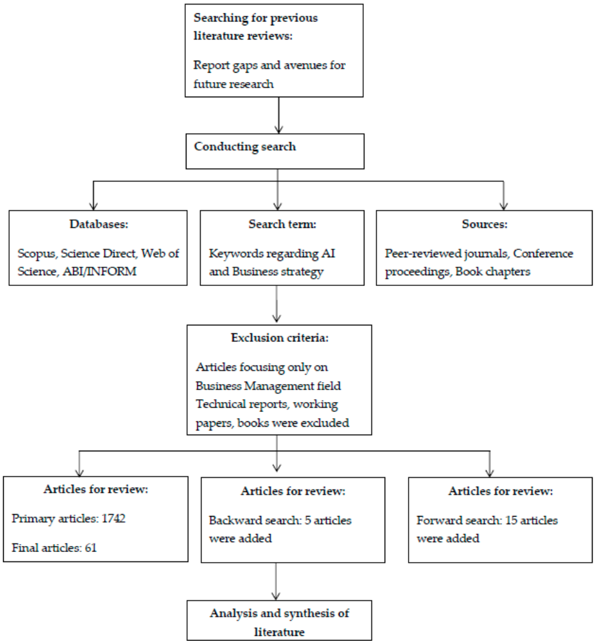
“Eighty-one peer-reviewed articles were evaluated on the basis of research methodology from Webster and Watson (2002) [37].”
BackgroundMethodInfluentialBuilding dynamic capabilities for digital transformation: An ongoing process of strategic renewal
Warner, K. S. R., & Wäger, M. (2018) · Long Range Planning · doi:10.1016/j.lrp.2018.12.001 · Cited by 4,650
Duan, Y., Edwards, J. S., & Dwivedi, Y. K. (2019) · International Journal of Information Management · doi:10.1016/j.ijinfomgt.2019.01.021 · Cited by 2,628 · cited 7×
“AI is referred to as the ability of a machine to learn from experience, adjust to new inputs and implement human-like tasks [3].”
BackgroundInfluentialA strategic framework for artificial intelligence in marketing
Huang, M.-H., & Rust, R. T. (2021) · Journal of the Academy of Marketing Science · doi:10.1007/s11747-020-00749-9 · Cited by 2,059 · cited 3×
“[66] 2017 x Becker and Schmid [67] 2020 x Hsieh [68] 2009 x x Schrettenbrunner [69] 2020 x Demirkan and Delen [70] 2013 x x Huang and Rust [71] 2020 x Caputo et al.”
BackgroundMethodAlignment Between Business and IS Strategies: A Study of Prospectors, Analyzers, and Defenders
Sabherwal, R., & Chan, Y. (2001) · Information systems research · doi:10.1287/isre.12.1.11.9714 · Cited by 1,319 · cited 3×
“[61] 2008 x x Sabherwal and Chan [62] 2001 x Aversa et al.”
BackgroundWamba-Taguimdje, S.-L., Fosso Wamba, S., Kala Kamdjoug, J. R., & Tchatchouang Wanko, C. E. (2020) · Business Process Management Journal · doi:10.1108/bpmj-10-2019-0411 · Cited by 1,280 · cited 3×
“[11] 2020 x Zaki [12] 2019 x x x Yin et al.”
BackgroundTallon, P. P., & Pinsonneault, A. (2011) · MIS Quarterly · doi:10.2307/23044052 · Cited by 1,187 · cited 2×
“Authors Year AI and Machine Learning in Organizations Aligning AI Tools and IT with Business Strategy AI, Knowledge Management and Decision-Making Process AI, Service Innovation and Value Akhtar et al. [1] 2019 x Balog [2] 2020 x Duan et al. [3] 2019 x Lichtenthaler [4] 2020b x Božič and Dimovski [5] 2019 x Chen and…”
BackgroundBig data analytics and firm performance: Findings from a mixed-method approach
Mikalef, P., Boura, M., Lekakos, G. D., & Krogstie, J. (2019) · Journal of Business Research · doi:10.1016/j.jbusres.2019.01.044 · Cited by 819 · cited 1×
“[16] 2019 x Ranjan and Foropon [17] 2021 x Reis et al.”
BackgroundBorges, A. F. S., Laurindo, F. J. B., Spínola, M. M., Gonçalves, R. F., & Mattos, C. A. (2021) · International Journal of Information Management · doi:10.1016/j.ijinfomgt.2020.102225 · Cited by 760 · cited 3×
“[44] 2020 Searching for peer-reviewed and conference papers in 2 databases using keywords regarding Artificial Intelligence, Machine Learning, Business strategy and Information Technology strategy Results were analyzed based on 4 perspectives: automation, decision-making, customer engagement and new products and servi…”
Background
Research works printed but not linked: 3
- Kitsios, F., Delimpasis, T., and Kamariotou, M. (2019, January 8–12). Digital Business Strategy: An Empirical Analysis of Mission statement content and Financial Performance. Proceedings of the 19th International Conference on Electronic Business, ICEB 2019, Newcastle upon Tyne, UK.
- Mitroulis, D., and Kitsios, F. (2019, January 19–20). Evaluating digital transformation strategies: A MCDA analysis of Greek tourism SMEs. Proceedings of the 14th European Conference on Innovation and Entrepreneurship (ECIE19), Kalamata, Greece.
- Arbatani, T.R., Norouzi, E., Omidi, A., and Valero-Pastor, J.M. (2019). Competitive strategies of mobile applications in online taxi services. Int. J. Emerg. Mark., in press.
Cited by
Sorted by citations
Mastering digital transformation: The nexus between leadership, agility, and digital strategy
AlNuaimi, B. K., Kumar Singh, S., Ren, S., Budhwar, P., & Vorobyev, D. (2022) · Journal of Business Research · doi:10.1016/j.jbusres.2022.03.038 · Cited by 820
“Recent research on the role of strategy in digital transformation comprises mainly conceptual and systematic reviews (Hanelt et al., 2020; Saleh and Awny, 2020; Kitsios and Kamariotou, 2021).”
BackgroundArtificial intelligence (AI) applications for marketing: A literature-based study
Haleem, A., Javaid, M., Qadri, M. A., Singh, R. P., & Suman, R. (2022) · International Journal of Intelligent Networks · doi:10.1016/j.ijin.2022.08.005 · Cited by 1,364
The Impact of Artificial Intelligence on Workers' Skills: Upskilling and Reskilling in Organisations
Morandini, S., Fraboni, F., De Angelis, M., Puzzo, G., Giusino, D., & Pietrantoni, L. (2023) · Informing Science: The International Journal of an Emerging Transdiscipline · doi:10.28945/5078 · Cited by 439
Perifanis, N.-A., & Kitsios, F. (2023) · Information · doi:10.3390/info14020085 · Cited by 407
Self-citationKitsios, F., Giatsidis, I., & Kamariotou, M. I. (2021) · Journal of Open Innovation Technology Market and Complexity · doi:10.3390/joitmc7030204 · Cited by 344
Self-citationYaqub, M., & Alsabban, A. (2023) · Sustainability · doi:10.3390/su15118553 · Cited by 180
The critical determinants impacting artificial intelligence adoption at the organizational level
Horani, O. M., Al‐Adwan, A. S., Yaseen, H., Hmoud, H., Al-Rahmi, W. M., & Alkhalifah, A. (2023) · Information Development · doi:10.1177/02666669231166889 · Cited by 207
“Several studies argue that the lack of alignment between IT and corporate strategies prevents fi rms from gaining value from investment in IT applications (Kitsios & Kamariotou, 2021; Liang et al., 2017).”
Digital transformation: A meta-review and guidelines for future research
dos Reis, J. C. G., & Melão, N. F. (2023) · Heliyon · doi:10.1016/j.heliyon.2023.e12834 · Cited by 201
“In particular, we can see that published studies have mainly focused on business model strategies [45 – 49], digital business [48,50,51], the use of disruptive technologies [47, 52 – 54], sustainability [55,56], human resources [57 – 59], and smart cities [45].”
BackgroundMethodInfluentialYaghoubi, E., Yaghoubi, E., Khamees, A. A., & Vakili, A. H. (2024) · Neural Computing and Applications · doi:10.1007/s00521-024-09893-7 · Cited by 166
“AI consists of a sophisticated collection of programming techniques [48, 49].”
Factors Affecting ESG towards Impact on Investment: A Structural Approach
Aich, S., Thakur, A., Nanda, D., Tripathy, S., & Kim, H.-C. (2021) · Sustainability · doi:10.3390/su131910868 · Cited by 105
How does digital transformation impact bank performance?
Nguyen-Thi-Huong, L., Nguyen-Viet, H., Nguyen-Phuong, A., & Nguyen, D. V. (2023) · doi:10.1080/23322039.2023.2217582 · Cited by 97
“Firstly, DT can be measured through a questionnaire about digital transformation in a business, such as the length of time digital banking has been used on the system (Kitsios & Kamariotou, 2021; Verhoef et al., 2021).”
BackgroundMethodHenderikx, M., & Stoffers, J. (2022) · Sustainability · doi:10.3390/su14020687 · Cited by 136
“During the last decade, access to big data, combined with improved algorithms and expansion of computer capacities, allowed increases in artificialintelligence-driven transfor ations [41,42].”
BackgroundMethodInfluentialImpact of Digital Strategic Orientation on Organizational Performance through Digital Competence
Yu, J., & Moon, T. (2021) · Sustainability · doi:10.3390/su13179766 · Cited by 93
“Digital transformation utilizes digital technology to achieve cross-border interactions with suppliers, customers, and competitors [11].”
MethodJanković, S. D., & Curović, D. (2023) · Sustainability · doi:10.3390/su152115208 · Cited by 124
“This convergence of AI and sustainability represents a pivotal step towards economic development, environmental stewardship, and social progress towards the European Union [85–87].”
Aldoseri, A., Al‐Khalifa, K. N., & Hamouda, A. M. S. (2024) · Applied System Innovation · doi:10.3390/asi7010014 · Cited by 115
Recent Advances of Artificial Intelligence in Healthcare: A Systematic Literature Review
Kitsios, F., Kamariotou, M. I., Syngelakis, A. I., & Talias, Μ. A. (2023) · Applied Sciences · doi:10.3390/app13137479 · Cited by 107
“A literature review approach that consists of three stages was put forward by Webster and Watson [41], and it has been recently used in IS research into management [45,46].”
MethodSelf-citationChotia, V., Cheng, Y., Agarwal, R., & Vishnoi, S. K. (2024) · Technological Forecasting and Social Change · doi:10.1016/j.techfore.2024.123315 · Cited by 93
Lu, H., & Shaharudin, M. S. (2024) · Cogent Business & Management · doi:10.1080/23311975.2024.2419489 · Cited by 68
The Business Intelligence impact on the financial performance of start-ups
Huang, Z.-X., Savita, K. S., & Jiang, Z. (2022) · Information Processing & Management · doi:10.1016/j.ipm.2021.102761 · Cited by 68
Wang, J.-W., Omar, A. H., Alotaibi, F. M., Daradkeh, Y., & Althubiti, S. A. (2022) · Information Processing & Management · doi:10.1016/j.ipm.2022.103075 · Cited by 57
Artificial intelligence governance: Understanding how public organizations implement it
de Almeida, P. G. R., & dos Santos, C. D. (2025) · Government Information Quarterly · doi:10.1016/j.giq.2024.102003 · Cited by 93
Beyari, H., & Hashem, T. (2025) · Behavioral Sciences · doi:10.3390/bs15050700 · Cited by 53
“A significant challenge that organizations face is lacking knowledge of AI technology (Kitsios & Kamariotou, 2021).”
Artificial Intelligence: The Attitude of the Public and Representatives of Various Industries
Vasiljeva, T., Kreituss, I., & Lulle, I. (2021) · Journal of risk and financial management · doi:10.3390/jrfm14080339 · Cited by 77
Ai-capable relationship marketing: Shaping the future of customer relationships
Roy, S. K., Tehrani, A. N., Pandit, A., Apostolidis, C., & Ray, S. (2025) · Journal of business research · doi:10.1016/j.jbusres.2025.115309 · Cited by 48
Marketing Strategies 4.0: Recent Trends and Technologies in Marketing
Kaur, R., Singh, R., Gehlot, A., Priyadarshi, N., & Twala, B. (2022) · Sustainability · doi:10.3390/su142416356 · Cited by 76
“A report on a brewing firm depicted that the use of AI in the business allowed for better customer segmentation, which significantly improved sales [69].”
BackgroundChen, Q., Zhang, W., Jin, N., Wang, X., & Dai, P. (2022) · Sustainability · doi:10.3390/su142013038 · Cited by 52
Enhancing Digital Presence for Maximizing Customer Value in Fast-Food Restaurants
Daradkeh, F. M., Hassan, T. H., Palei, T., Helal, M. Y., Mabrouk, S., Saleh, M., Salem, A. E., & Elshawarbi, N. (2023) · Sustainability · doi:10.3390/su15075690 · Cited by 43
Kim, K., & Kim, B. (2022) · Information · doi:10.3390/info13050253 · Cited by 68
Kim, J.-S., & Seo, D. (2023) · foresight · doi:10.1108/fs-06-2022-0069 · Cited by 60
Shehadeh, M., Alshurafat, H., & Arabiat, O. (2024) · Competitiveness Review: an international business journal · doi:10.1108/cr-11-2023-0299 · Cited by 39
Gurjar, K., Jangra, A., Baber, H., Islam, M., & Sheikh, S. A. (2024) · IEEE Engineering Management Review · doi:10.1109/emr.2024.3355973 · Cited by 85
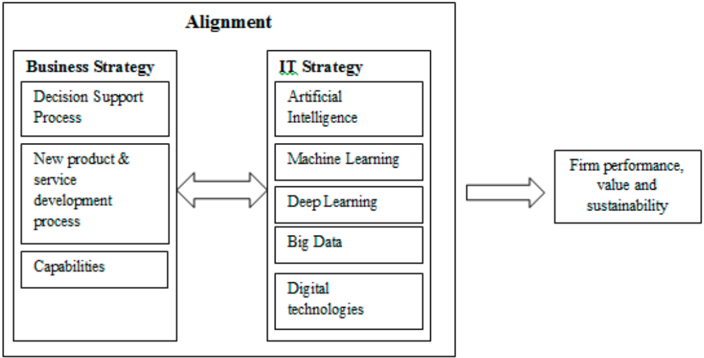
“Kitsios and Kamariotou [11] underscore the importance of aligning AI tools strategically with organizational goals.”
BackgroundStartups and Consumer Purchase Behavior: Application of Support Vector Machine Algorithm
Ebrahimi, P., Salamzadeh, A., Soleimani, M., Khansari, S. M., Zarea, H., & Fekete‐Farkas, M. (2022) · Big Data and Cognitive Computing · doi:10.3390/bdcc6020034 · Cited by 49
“Computers can automatically learn duplicated patterns without the help of humans through immense amounts of data [44].”
BackgroundŁapińska, J., Escher, I., Górka, J., Sudolska, A., & Brzustewicz, P. (2021) · Energies · doi:10.3390/en14071942 · Cited by 55
AI adoption in Chinese universities: Insights, challenges, and opportunities from academic leaders
Wang, X., Zhao, S., Xu, X., Zhang, H., & Lei, V. N.-L. (2025) · Acta Psychologica · doi:10.1016/j.actpsy.2025.105160 · Cited by 44
Reddy, R. C., Bhattacharjee, B., Mishra, D., & Mandal, A. (2022) · Information Systems and e-Business Management · doi:10.1007/s10257-022-00550-x · Cited by 43
“…Mikalef et al. 2019a; Singh et al. 2021; Sivarajah et al. 2017), Artificial Intelligence (Alsheiabni et al. 2020; Borges et al. 2021; Keding 2020; Kitsios and Kamariotou 2021; Markus 2017), Business Analytics (Cao and Duan 2017), and Business Intelligence and Analytics (BI&A) (Chen et al.…”
BackgroundA Critical Analysis of Generative AI: Challenges, Opportunities, and Future Research Directions
Uddin, M., Laghari, S. U. A., Alanazi, F., Hussain, S., Mazhar, T., & Rahman, M. A. (2025) · Archives of Computational Methods in Engineering · doi:10.1007/s11831-025-10355-z · Cited by 56
Enhancing the Competitiveness of AI Technology-Based Startups in the Digital Era
Lee, B., Kim, B., & Ivan, U. V. (2023) · Administrative Sciences · doi:10.3390/admsci14010006 · Cited by 33
“Better together”: Right blend of business strategy and digital transformation strategies
Mishra, D. B., Haider, I. I., Gunasekaran, A., Sakib, M. N., Malik, N., & Rana, N. P. (2023) · International Journal of Production Economics · doi:10.1016/j.ijpe.2023.109040 · Cited by 61
Kitsios, F., Chatzidimitriou, E., & Kamariotou, M. (2022) · Sustainability · doi:10.3390/su14031269 · Cited by 33
Self-citationShahzad, M. F., & Xu, S. (2024) · Technological Forecasting and Social Change · doi:10.1016/j.techfore.2024.123831 · Cited by 40
Mutambik, I. (2024) · Sustainability · doi:10.3390/su16104310 · Cited by 41
“It enables organisations, for example, to use available information to identify trends or quantum changes in stakeholder needs and expectations and respond appropriately in near real-time [53–55].”
BackgroundMethodComprehensive AI Assessment Framework: Enhancing Educational Evaluation with Ethical AI IntegrationPreprint
Kılınç, S. (2024) · arXiv (Cornell University) · doi:10.48550/arxiv.2407.16887 · Cited by 4
“Such applications have been developed to assist in the decision-making process of managerial functions, in the facilitation of operations, or in market competition (Kitsios & Kamariotou, 2021).”
BackgroundRoy, P., Ghose, B., Singh, P. K., Tyagi, P. K., & Vasudevan, A. (2025) · F1000Research · doi:10.12688/f1000research.160959.1 · Cited by 29
Rane, N., Choudhary, S. P., & Rane, J. (2024) · Social Science Research Network · doi:10.2139/ssrn.4842268 · Cited by 29
Ahmad, Z. (2025) · Journal of Management Development · doi:10.1108/jmd-05-2024-0171 · Cited by 36
Fioravante, R. (2024) · Sustainability · doi:10.3390/su16031232 · Cited by 46
Ali, M., Swiety, I. A., & Mansour, M. (2022) · Humanities and Social Sciences Letters · doi:10.18488/73.v10i3.3090 · Cited by 28
Citak, J., Owoc, M. L., & Weichbroth, P. (2021) · International Conference on Knowledge-Based Intelligent Information & Engineering Systems · doi:10.1016/j.procs.2021.09.233 · Cited by 28
Pu, Y., Li, H., Hou, W., & Pan, X.-C. (2025) · Scientific Reports · doi:10.1038/s41598-025-02842-x · Cited by 27
“The balanced scorecard method, although originally used for performance evaluation in strategic management, has gradually attracted attention in its application in the context of AI 10 .”
Digital Transformation in Healthcare 4.0: Critical Factors for Business Intelligence Systems
Kitsios, F., & Kapetaneas, N. (2022) · Inf. · doi:10.3390/info13050247 · Cited by 26
Self-citationFachrurazi, Rukmana, A. Y., Supriyanto, S., Syamsulbahri, S., & Iskandar, I. (2023) · Jurnal Bisnis dan Manajemen West Science · doi:10.58812/jbmws.v2i03.563 · Cited by 38
Digital Transformation of the Greek Banking Sector in the COVID Era
Boufounou, P., Mavroudi, M., Toudas, K. S., & Georgakopoulos, G. (2022) · Sustainability · doi:10.3390/su141911855 · Cited by 25
Moumtzidis, I., Kamariotou, M. I., & Kitsios, F. (2022) · Information · doi:10.3390/info13040196 · Cited by 28
“Most organizations struggle to achieve consistency in their repeated processes, and this is particularly true for industrial production processes [2,3].”
BackgroundSelf-citationLiu, Q. (2022) · Scientific Programming · doi:10.1155/2022/8223724 · Cited by 25
“Fotis and Maria [10] reor-ganized the characteristics of knowledge flow and believed that the higher the knowledge intensity of collaborative innovation, the higher the level of innovation and the stronger the relevance of the subsystem in the knowledge value chain [10]. collaborative innovation models and intelligent…”
BackgroundBessa, G., & Barbosa, B. (2025) · Global Economics Research · doi:10.1016/j.ecores.2025.100007 · Cited by 24
Chaturvedi, A., Yadav, N., & Dasgupta, M. (2025) · International Journal of Human-Computer Interaction · doi:10.1080/10447318.2025.2456534 · Cited by 30
“Analysis of existing literature reveals a dominance of qualitative methodologies such as systematic reviews (Duan et al., 2019; Keding, 2021; Kitsios & Kamariotou, 2021; Stone et al., 2020; Trunk et al., 2020), case-based methodology (Bader & Kaiser, 2019; Kowalczyk & Buxmann, 2014; Kruhse-Lehtonen…”
Choosing the right path for AI integration in engineering companies: A strategic guide
Джусупова, Р., Bosch, J., & Olsson, H. H. (2023) · Journal of Systems and Software · doi:10.1016/j.jss.2023.111945 · Cited by 42
“…very recent publications on systematic literature review where authors focus on integration of AI into organizational strategy, highlighting the potential benefits, challenges, and opportunities (Kitsios et al., 2021), or study business value creation with AI-based technology (Borges et al., 2021).”
BackgroundInfluentialStrategic AI adoption in SMEs: A Prescriptive FrameworkPreprint
Hussain, A., & Rizwan, R. (2024) · arXiv (Cornell University) · doi:10.48550/arxiv.2408.11825 · Cited by 55
“Further, since AI initiatives must remain aligned with organizational strategy (Kitsios & Kamariotou, 2021), regular reviews are also essential to assess the effectiveness of AI tools in meeting organizational goals, focusing on efficiency improvements and overall productivity gains.”
BackgroundAlshammari, K., Alshallaqi, M., & Al‐Mamary, Y. H. (2023) · Human Systems Management · doi:10.3233/hsm-230163 · Cited by 49
“Thus, this has led to the emergence of vital concerns around the need to enhance the abilities of existing employees in an organization, with a particular emphasis on the skills that will be needed for employees who will comprise the digital workforce of the future [90].”
Can artificial intelligence curb greenwashing? Firm-level evidence based on large language model
He, L., & Wang, L. (2025) · Energy Economics · doi:10.1016/j.eneco.2025.108954 · Cited by 31
Artificial intelligence and policy making; can small municipalities enable digital transformation?
Koliousis, I. G., Al-Surmi, A., & Bashiri, M. (2024) · International Journal of Production Economics · doi:10.1016/j.ijpe.2024.109324 · Cited by 31
“Despite many prior studies focused on the impact of DT on business performance (Mubarak et al., 2019; Popovi ´ c et al., 2019; Zhai et al., 2022), little was researched on the impact of generative AI on policy-making (Craglia, 2020; Kitsios and Kamariotou, 2021).”
BackgroundResultAdopting Artificial Intelligence Technology for Network Operations in Digital Transformation
Min, S., & Kim, B. (2024) · Administrative Sciences · doi:10.3390/admsci14040070 · Cited by 31
Messner, W. (2022) · International Journal of Information Management Data Insights · doi:10.1016/j.jjimei.2022.100118 · Cited by 27
Yuwono, E. I., Tjondronegoro, D., Riverola, C., & Loy, J. (2024) · Computers and Education Artificial Intelligence · doi:10.1016/j.caeai.2024.100272 · Cited by 39
Setyawati, A., Suggangga, A., Wibowo, N. A., Rahma, A., & Maula, F. I. (2023) · International Journal of Economics and Management Research · doi:10.55606/ijemr.v2i2.94 · Cited by 21
“Digital literacy "does not only revolve around the ability to use new technology, learn to use new devices, or even apply these devices and technologies to the learning process (Kitsios & Kamariotou, 2021; Ukko et al., 2019).”
BackgroundConnecting artificial intelligence to value creation in services: mechanism and implications
Kim, M. (2023) · Service Business · doi:10.1007/s11628-023-00547-7 · Cited by 36
“This topic covers the strategies and future research issues of business model planning of AI services (Kitsios and Kamariotou 2021), the improvement of customer acceptance and satisfaction of AI services (Atwal and Bryson 2021), strategies for enhancing the value co-creation process of AI services…”
BackgroundKesuksesan Wirausaha di Era Digital dari Perspektif Orientasi Kewirausahaan (Study Literature)
Zulkifli, Sugiarto, I., Napu, F., Rukmana, A. Y., & Hastuti, P. (2023) · Sanskara Ekonomi dan Kewirausahaan · doi:10.58812/sek.v1i02.87 · Cited by 34
Kavak, M. T., & Rusu, L. (2025) · Procedia Computer Science · doi:10.1016/j.procs.2025.02.132 · Cited by 28
Abbas, A. F., & Al-Lawati, E. H. (2025) · Journal of the International Council for Small Business · doi:10.1080/26437015.2025.2549059 · Cited by 21
Hundal, G. S., Rhodes, D. H., & Laux, C. M. (2025) · Sustainability · doi:10.3390/su17135690 · Cited by 20
Mitigating AI-induced professional identity threat and fostering adoption in the workplace
Shonhe, L., & Min, Q.-F. (2025) · Ai & Society · doi:10.1007/s00146-024-02170-0 · Cited by 16
“In the contemporary era of digital transformation, the integration of artificial intelligence (AI) technologies has reshaped the dynamics of numerous industries, offering unparalleled opportunities for enhancing efficiency, fostering creativity, and facilitating growth (Kitsios and Kamariotou 2021).”
Anser, M. K., Shahzad, M. F., & Xu, S. (2024) · Environment Development and Sustainability · doi:10.1007/s10668-024-05580-8 · Cited by 13
“Large sample sizes may make it more difficult for researchers to collect and manage data, taking more time and even diminishing the purpose of sampling (Kitsios & Kamariotou, 2021).”
The Role of Artificial Intelligence in Shaping the Islamic Worldview of the Digital Economy
Firnando, H. G., & Wahyudi, M. (2024) · Journal of Islamic Economics and Philanthropy · doi:10.21111/jiep.v6i3.11386 · Cited by 30
“One of the key areas affected is the perspective on the digital economy (Kitsios & Kamariotou, 2021).”
BackgroundImpact of digitalization on entrepreneurial ecosystems: a bibliometric exploration
Shahzad, M., Asif, M., Xu, S., & Wang, C.-C. (2025) · Journal of Business & Industrial Marketing · doi:10.1108/jbim-07-2024-0524 · Cited by 15
Alarefi, M. (2024) · Engineering, Technology & Applied Science Research · doi:10.48084/etasr.7871 · Cited by 15
“Prior literature on the role of AI is derived from literature reviews and conceptual articles that attempt to operationalize or conceptualize the term and its link with the organizational outcome [7].”
Nugroho, A. P. (2023) · West Science Interdisciplinary Studies · doi:10.58812/wsis.v1i05.72 · Cited by 15
“However, Indonesian MSMEs face various challenges, especially in accessing financial services[8], [24], [25].”
BackgroundHanandeh, A., al Qudah, M. A., Mansour, A., Al-Qudah, S., Abualfalayeh, G., Kilani, Q., & Khasawneh, M. (2024) · Uncertain Supply Chain Management · doi:10.5267/j.uscm.2024.5.012 · Cited by 15
Schrettenbrunner, M. (2023) · IEEE Engineering Management Review · doi:10.1109/emr.2023.3288609 · Cited by 15
Digital Transformation (DT) and Artificial Intelligence (AI) Convergence in Organizations
Feroz, K., & Kwak, M. (2024) · Journal of Computer Information Systems · doi:10.1080/08874417.2024.2424372 · Cited by 24
Neiroukh, S., Aljuhmani, H. Y., & Alnajdawi, S. (2024) · ASU International Conference in Emerging Technologies for Sustainability and Intelligent Systems (ICETSIS) · doi:10.1109/icetsis61505.2024.10459356 · Cited by 33
“AI-driven decision-making assists in refining strategies, optimizing logistics, and predicting market trends [16].”
BackgroundFajimolu, O., Okonji, P., & Onyemaobi, C. (2023) · Business and Entrepreneurial Review · doi:10.25105/ber.v23i1.15300 · Cited by 14
“…there is need for innovative technological solutions that will specifically address the new challenges emanating from the kind of data required in artificial intelligence (Häfner, Burkhard, Bettis, Piezunka, Posen, Puranam, … & Teodoridis, 2020; Kitsios & Kamariotou, 2021; Mikalef & Gupta, 2021).”
BackgroundInfluentialAI Technology Adoption in Corporate IT Network Operations Based on the TOE Model
Min, S., & Kim, B. (2024) · Digit. · doi:10.3390/digital4040047 · Cited by 13
(2019) · Disfrutando la prórroga · doi:10.2307/j.ctvr7f5q7.39 · Cited by 13
“Tal como lo exponen el Ministerio de Tecnologías de la Información y las Comunicaciones (2020a) en la Guía con lineamientos generales para el uso de tecnologías emergentes y Kitsios & Kamariotou (2021), algunas aplicaciones sobre el uso de la tecnología de IA pueden ser:”
BackgroundInfluentialAn Integrative Literature Review on Leadership and Organizational Readiness for AI
Frangos, P. (2022) · International Conference on AI Research · doi:10.34190/icair.4.1.834 · Cited by 12
“AI is transforming how organizations create and capture value (Borges et al. 2021; Güngör 2020; Kitsios & Kamariotou 2021; Wilson & Daugherty 2021).”
BackgroundSiemon, D., Ahmad, R., Harms, H., & de Vreede, T. (2022) · Sustainability · doi:10.3390/su14073832 · Cited by 14
“In this context, AI has been studied primarily for ethical aspects [12], for possible sustainable business practices [52], or specifically how AI in the context of the sustainable development goals [53].”
BackgroundHuman-guided collective LLM intelligence for strategic planning via two-stage information retrieval
Kim, S., Ha, J., Lee, H., Park, S., & Cho, S. (2025) · Information Processing & Management · doi:10.1016/j.ipm.2025.104288 · Cited by 14
Lazar, M., Lifshitz‐Assaf, H., Ayoubi, C., & Emuna, H. (2025) · Academy of Management Journal · doi:10.5465/amj.2023.1307 · Cited by 11
Digital transformation in banking: Curbing procyclical leverage to strengthen financial stability
Wang, L., Huang, Z., Wang, Y., & Yang, Y. (2025) · International Review of Financial Analysis · doi:10.1016/j.irfa.2025.104205 · Cited by 11
Siricharoen, W. V. (2024) · EAI Endorsed Transactions on Context-aware Systems and Applications · doi:10.4108/eetcasa.4211 · Cited by 13
“AI emerges as a key facilitator in transcending language challenges [13].”
BackgroundArtificial Intelligence in Human Resource Management: Transforming Business Practices
Das, S. R., Sarkar, P., Patil, S. D., Sharma, R., Aggarwal, S., & Lourens, M. (2023) · IEEE Uttar Pradesh Section International Conference on Electrical, Electronics and Computer Engineering (UPCON) · doi:10.1109/upcon59197.2023.10434524 · Cited by 19
“Artificial intelligence algorithms also can be trained to disregard some personal kind of information and that is how it makes sure that the candidates are evaluated only on their qualifications and experiences [5].”
BackgroundSugangga, A., Handayati, P., & Zagladi, A. N. (2023) · Brilliant International Journal Of Management And Tourism · doi:10.55606/bijmt.v3i3.2225 · Cited by 11
“Dimensions of competitive advantage proposed by (Kitsios & Kamariotou, 2021; Li et al., 2021; Purbasari et al., 2020) This involves providing adequate resources and support to launch a sustainable financial education program.”
BackgroundArdiansyah, B. W., Muwarni, F. D., Wardana, L. W., & Maula, F. I. (2023) · Journal of Applied Business Taxation and Economics Research · doi:10.54408/jabter.v2i6.203 · Cited by 11
Identifying Industry 4.0 technologies enablers for knowledge management – a scoping review
Lista, A. P., Tortorella, G. L., Bouzon, M., Gao, S., & Chan, T. K. (2023) · The TQM Journal · doi:10.1108/tqm-05-2022-0173 · Cited by 13
Getting organizational adaptability in the context of digital transformation
Sun, X., He, Z., & Yu, Q. (2023) · Chinese Management Studies · doi:10.1108/cms-06-2022-0222 · Cited by 22
Seseli, E. M. I., Risakotta, K. A., & Bawono, A. (2023) · The ES Accounting And Finance · doi:10.58812/esaf.v1i02.65 · Cited by 11
“However, digital accounting tools can also improve data security by providing secure access to financial data [3], [37], [38], [58].”
BackgroundMethodInfluentialUnwrapping generative AI paradigms for product and service innovation differentiation
Shonubi, O. A. (2026) · Journal of Strategy & Innovation · doi:10.1016/j.jsinno.2025.200562 · Cited by 16
Binsar, F., Wahyudi, I., Atmoko, G. D. P., Nurdin, F., & Santoso, T. (2026) · Advances in Business and Management Research · doi:10.1016/j.abmr.2026.100002 · Cited by 11
Gabelaia, I., & Hendieh, J. (2025) · International Journal of Innovation Science · doi:10.1108/ijis-02-2025-0051 · Cited by 10
A review of the application of artificial intelligence in South African Higher Education
Funda, V., & Piderit, R. (2024) · Conference on Information Communications Technology and Society (ICTAS) · doi:10.1109/ictas59620.2024.10507113 · Cited by 23
“In Uganda and Ethiopia, the role of AI is especially pronounced [19].”
Background
Metadata
- Authors
- Kitsios, F., & Kamariotou, M.
- Affiliations
- University of Macedonia (GR)
- Corresponding author
- Kamariotou, Maria
- Venue
- Sustainability
- Publisher
- MDPI AG
- Published
- 2021-02-13
- Volume
- 13
- Issue
- 4
- Pages
- 2025
- ISSN
- 2071-1050 (ISSN-L)
- OpenAlex
- W3130265534
- Cited by
- 360
- References
- 99
- Citations by year
- 2026: 62 · 2025: 98 · 2024: 91 · 2023: 68 · 2022: 28 · 2021: 13
- FWCI
- 17.68
- Type
- journal article
- Language
- en
- Open access
- gold
- doi.org
- Licence
- Locations
- Sustainability (publishedVersion, cc-by)
- RePEc: Research Papers in Economics (acceptedVersion)
- DOAJ (DOAJ: Directory of Open Access Journals) (acceptedVersion)
- Funders
- Hellenic Foundation for Research and Innovation (188)
- Topics
- Physical Sciences › Computer Science › Artificial Intelligence › Artificial Intelligence Applications
- Social Sciences › Business, Management and Accounting › Management Information Systems › Information Technology Governance and Strategy
- Social Sciences › Business, Management and Accounting › Management of Technology and Innovation › Digital Innovation in Industries
- Keywords
- artificial intelligence, business strategy, digital transformation, machine learning, value creation, IT strategy alignment, knowledge management, decision-making, service innovation, AI implementation challenges
About these checks
Registry, retraction, Cites and statistics results are computed, not judged, with one exception: a printed reference that no index lists is read once by a model before it counts as a citation error. Claims are extracted by a model and kept only when their quote appears verbatim in the text; each cited source is then checked, with a model’s help, for whether it says what the claim relies on. Those verdicts can be wrong — read the claim’s quote and the cited source before relying on one.
Statistics and arithmetic are recomputed, not judged.
Confidence bands are shown only for fields calibrated on our annotated test set. None is calibrated yet, so no band is shown.
What counts as a claim ›How we measure confidence ›How we check this ›
Are you an author, or do you see a problem with this page? Request a review
