

The DOI matches its Crossref record; 2 of the 2 references it cites were found in a registry or an index.
Framing Disaster Risk Perception and Vulnerability in Social Media Communication: A Literature Review
Open accessAbstract
The paper presents the results of a literature review on how social media can impact on disaster risk perception and vulnerability and how these two aspects are interconnected, trying to understand what factors have consequences especially on informational vulnerability. The paper answers to the increasing requests at an international level to move from a technocratic approach to disaster risk management and reduction to a holistic one, where social perspective is integrated. The paper states that this change of paradigm is relevant, especially considering the role that new technologies in communication and information systems are acquiring in disaster risk management and reduction. What emerges from the literature review is that there is a limited scientific production on the topic and further works are desired, to improve knowledge on how new communication and information technologies can impact on vulnerability and risk perception. Furthermore, the two topics are usually discussed separately. However, the role that risk perception can have in increasing or reducing vulnerability deserves to be better discussed.
Overview
The claims and statistics of this paper haven’t been checked yet.
Run the check — free, no account needed. It reads the open-access text and checks the sources it cites.
Integrity signals
Registry
Cites
Statistics
Figures
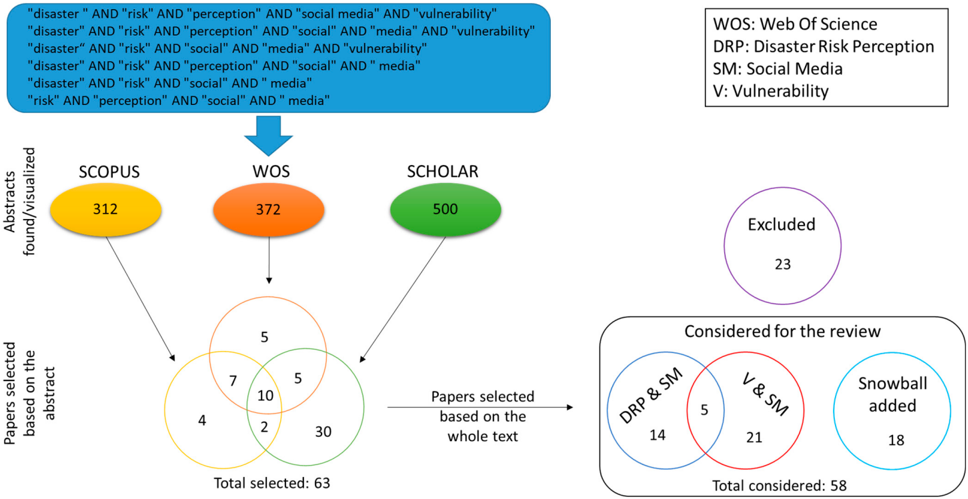
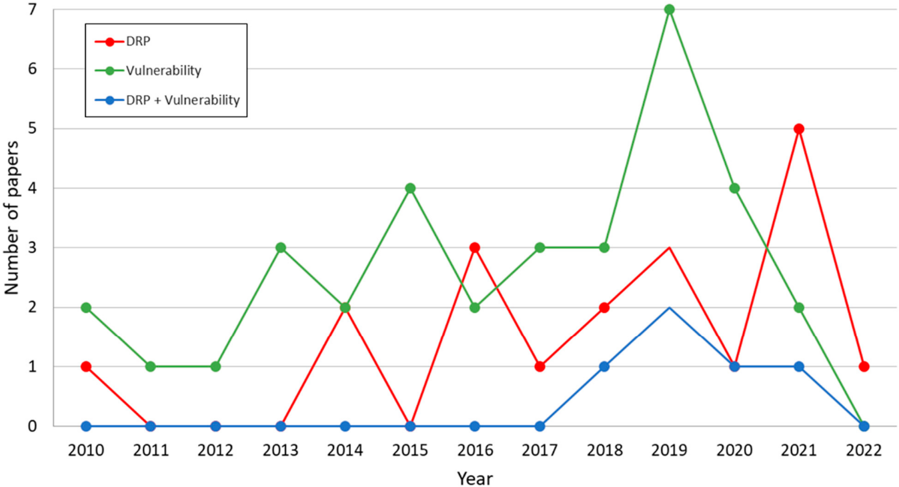
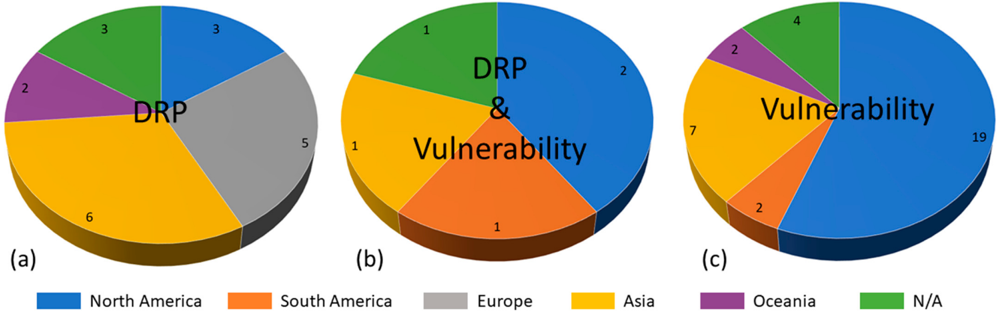
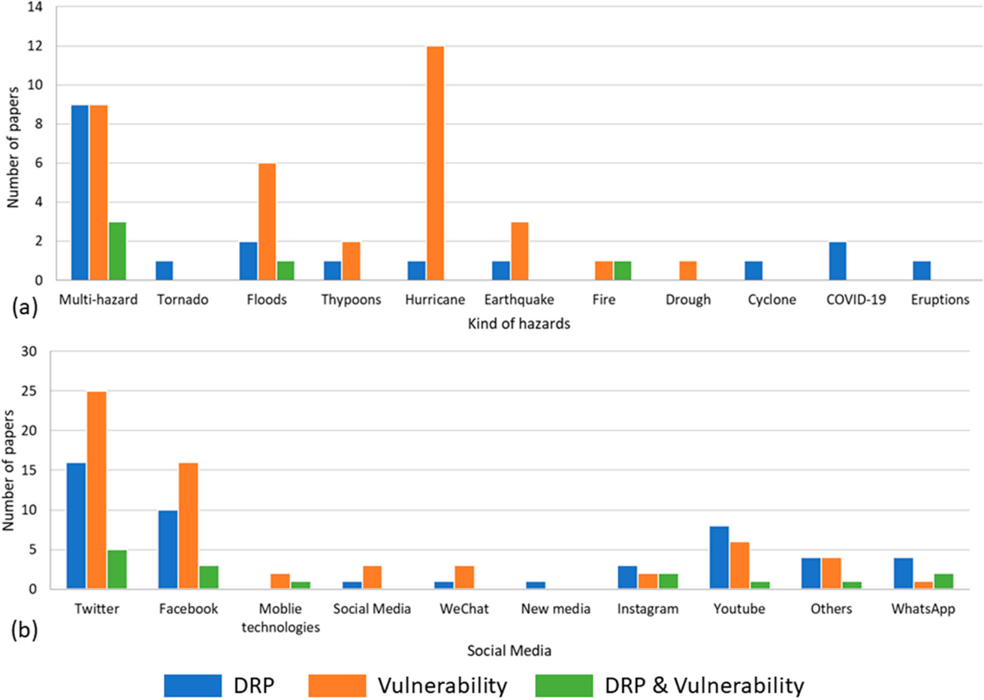
Verification
Claims the paper makes
The claims and statistics of this paper haven’t been checked yet.
Run the check — free, no account needed. It reads the open-access text and checks the sources it cites.
Claims other papers make about this one
Each is checked against this paper’s own text: does it say what the citing paper says it does?
The source backs part of the claim, not all of it — or backs it for a different population, condition or comparison.
In the citing paper
“Research shows that risk perception strengthens the relationship between information literacy and preparedness, especially on disaster-prone campuses (Morelli et al., 2022).”
From The Mediating Role of Risk Perception in the Effect of Information Literacy on Students’ Disaster Preparedness (2026) · cites this paper as Morelli et al., 2022
Experimental — accuracy not yet measured
Self-check
Percentages, sums and reported differences re-computed from the paper’s own numbers.
The self-check needs the paper’s full text.
Citations
Cites
Building a Conceptual Framework: Philosophy, Definitions, and Procedure
Jabareen, Y. (2009) · International Journal of Qualitative Methods · doi:10.1177/160940690900800406 · Cited by 1,559
Processing Social Media Messages in Mass Emergency: A Survey
Imran, M., Castillo, C., Diaz, F., & Vieweg, S. (2015) · ACM Computing Surveys · doi:10.1145/2771588 · Cited by 804
Research works printed but not linked: 104
- Westgate, 1976, Taking the naturalness out of natural disasters, Nature, 260, 566, 10.1038/260566a0 · DOI
- Hewitt, K. (1983). Interpretations of Calamity: From the Viewpoint of Human Ecology, Routledge. [1st ed.].
- Peacock, W.G., Morrow, B.H., and Gladwin, H. (1997). Hurricane Andrew: Ethnicity, Gender and the Sociology of Disaster, Routledge. [1st ed.].
- Weichselgartner, 2001, Disaster mitigation: The concept of vulnerability revisited, Disaster Prev. Manag., 10, 85, 10.1108/09653560110388609 · DOI
- Alexander, D. (2002). Principles of Emergency Planning and Management, Oxford University Press. [1st ed.].
- Wisner, B., Blaikie, P.M., Blaikie, P., Cannon, T., and Davis, I. (2004). At Risk: Natural Hazards, People’s Vulnerability and Disasters, Psychology Press. · DOI
- Alexander, 1991, Natural disasters: A framework for research and teaching, Disasters, 15, 209, 10.1111/j.1467-7717.1991.tb00455.x · DOI
- Eiser, 2012, Risk interpretation and action: A conceptual framework for responses to natural hazards, Int. J. Disaster Risk Reduct., 1, 5, 10.1016/j.ijdrr.2012.05.002 · DOI
- Palliyaguru, 2014, Constructing a holistic approach to disaster risk reduction: The significance of focusing on vulnerability reduction, Disasters, 38, 45, 10.1111/disa.12031 · DOI
- Tierney, K. (2019). Disasters: A Sociological Approach, John Wiley & Sons.
- Andharia, J. (2020). Thinking about disasters: A call for intersectionality and transdisciplinarity in disaster studies. Disaster Studies, Springer. · DOI
- Orru, 2022, Approaches to ‘vulnerability’ in eight European disaster management systems, Disasters, 46, 742, 10.1111/disa.12481 · DOI
- McCallum, 2016, Technologies to support community flood disaster risk reduction, Int. J. Disaster Risk Sci., 7, 198, 10.1007/s13753-016-0086-5 · DOI
- Reuter, 2018, Fifteen years of social media in emergencies: A retrospective review and future directions for crisis informatics, J. Conting. Crisis Manag., 26, 41, 10.1111/1468-5973.12196 · DOI
- Nicholson, 2019, A spatial regression and clustering method for developing place-specific social vulnerability indices using census and social media data, Int. J. Disaster Risk Reduct., 38, 101, 10.1016/j.ijdrr.2019.101224 · DOI
- Singh, D., Shams, S., Kim, J., Park, S.J., and Yang, S. (2020). Fighting for Information Credibility: An End-to-End Framework to Identify Fake News during Natural Disasters. ISCRAM 2020 Conference Proceedings, 17th International Conference on Information Systems for Crisis Response and Management, Virginia Tech.
- Thomas, D.S., Phillips, B.D., Lovekamp, W.E., and Fothergill, A. (2013). Understanding social vulnerability. Social Vulnerability to Disasters, CRC Press. · DOI
- Lewis, J. (2012). The good, the bad and the ugly: Disaster Risk Reduction (DRR) versus Didsaster Risk Creation (DRC). PLoS Curr., 4. · DOI
- Uekusa, 2017, Vulnerable and resilient?, Immigrants and refugees in the 2010-2011 Canterbury and Tohoku disasters. Int. J. Disaster Risk Reduct., 22, 355
- Schanze, 2006, Flood Damage, Vulnerability and Risk Perception—Challenges for Flood Damage Research, Hazards, Vulnerability and Mitigation Measuresœ, Volume 67, 149, 10.1007/978-1-4020-4598-1_13 · DOI
- 2008, Social vulnerability and seismic risk perception. Case study: The historic center of the Bucharest Municipality/Romania, Nat. Hazards, 47, 397, 10.1007/s11069-008-9229-3 · DOI
- Buchanan, D., and Bryman, A. (2009). Producing a Systematic Review, Sage Publications Inc.. The Sage Handbook of Organizational Research Methods.
- Lee, 2015, Predictors of public climate change awareness and risk perception around the world, Nat. Clim. Change, 5, 1014, 10.1038/nclimate2728 · DOI
- Wachinger, 2013, The risk perception Paradox—Implications for governance and communication of natural hazards, Risk Anal., 33, 1049, 10.1111/j.1539-6924.2012.01942.x · DOI · Paper page
- Knuth, 2014, Risk Perception, Experience, and Objective Risk: A Cross-National Study with European Emergency Survivors, Risk Anal., 34, 1286, 10.1111/risa.12157 · DOI
- Cornia, 2016, Risk cultures and dominant approaches towards disasters in seven European countries, J. Risk Res., 19, 288, 10.1080/13669877.2014.961520 · DOI
- Hagen, 2016, European Climate Change Perceptions: Public support for mitigation and adaptation policies, Environ. Policy Gov., 26, 170, 10.1002/eet.1701 · DOI
- Gregory, 1997, Social and Cultural Aspects of Natural Hazards, N. Z. Geogr., 53, 47, 10.1111/j.1745-7939.1997.tb00476.x · DOI
- Kellens, 2011, An analysis of the public perception of flood risk on the Belgian coast, Risk Anal., 31, 1055, 10.1111/j.1539-6924.2010.01571.x · DOI · Paper page
- Slovic, 1987, Perception of Risk, Science, 236, 280, 10.1126/science.3563507 · DOI · Paper page
- Fischhoff, 1982, Lay foibles and expert fables in judgements about risk, Am. Stat., 36, 240N255
- Gough, 2000, Perceptions of risk from natural hazards in two remote New Zealand communities, Australas. J. Disaster Trauma Stud., 2, 1
- Bandecchi, 2019, Geo-hydrological and seismic risk awareness at school: Emergency preparedness and risk perception evaluation, Int. J. Disaster Risk Reduct., 40, 101280, 10.1016/j.ijdrr.2019.101280 · DOI
- Yong, 2019, Getting Canadians prepared for natural disasters: A multi-method analysis of risk perception, behaviors, and the social environment, Nat. Hazards, 98, 319, 10.1007/s11069-019-03669-2 · DOI
- Lai, 2018, Digital disparities and vulnerability: Mobile phone use, information behaviour, and disaster preparedness in Southeast Asia, Disasters, 42, 734, 10.1111/disa.12279 · DOI · Paper page
- Hargittai, 2002, Beyond logs and surveys: In-depth measures of people’s web use skills, J. Am. Soc. Inf. Sci. Technol., 53, 1239, 10.1002/asi.10166 · DOI
- Wang, 2019, Are vulnerable communities digitally left behind in social responses to natural disasters?, An evidence from Hurricane Sandy with Twitter data. Appl. Geogr., 108, 1
- Zou, 2018, Mining Twitter data for improved understanding of disaster resilience, Ann. Am. Assoc. Geogr., 108, 1422
- Madianou, 2015, Digital inequality and second-order disasters: Social media in the Typhoon Haiyan recovery, Soc. Media+ Soc., 1, 2056305115603386, 10.1177/2056305115603386 · DOI
- Hansson, 2020, Communication-related vulnerability to disasters: A heuristic framework, Int. J. Disaster Risk Reduct., 51, 101931, 10.1016/j.ijdrr.2020.101931 · DOI
- Kent, 2015, People with disability and new disaster communications: Access and the social media mash-up, Disabil. Soc., 30, 419, 10.1080/09687599.2015.1021756 · DOI
- Samuels, R., and Taylor, J.E. (2019, January 17–19). Applied Methodology for Identifying Hurricane-Induced Social Media Signal Changes in Vulnerable Populations. Proceedings of the ASCE International Conference on Computing in Civil Engineering, Atlanta, GA, USA. · DOI
- Cutter, 2008, Temporal and spatial changes in social vulnerability to natural hazards, Proc. Natl. Acad. Sci. USA, 105, 2301, 10.1073/pnas.0710375105 · DOI
- Adger, 2009, Nested and teleconnected vulnerabilities to environmental change, Front. Ecol Environ., 7, 150, 10.1890/070148 · DOI
- Eakin, 2009, Nested vulnerability: Exploring cross-scale linkages and vulnerability teleconnections in Mexican and Vietnamese coffee systems, Environ. Sci Policy, 12, 398, 10.1016/j.envsci.2008.09.003 · DOI
- Fordham, 2007, Social vulnerability and capacity, Nat. Hazards Obs., 23, 1
- Clark, 2021, Exploring the impacts of social media and crowdsourcing on disaster resilience. [version 1; peer review: 1 approved with reservations], Open Res. Eur., 1, 60, 10.12688/openreseurope.13721.1 · DOI
- Simons, 2015, Standing on the shoulders of giants: Challenges and recommendations of literature search in information systems research, Commun. Assoc. Inf. Syst., 37, 205
- Walkling, 2020, Flood risk perceptions and coping capacities among the retired population, with implications for risk communication: A study of residents in a north Wales coastal town, UK, Int. J. Disaster Risk Reduct., 51, 101793, 10.1016/j.ijdrr.2020.101793 · DOI
- Reuter, 2016, Emergency services’ attitudes towards social media: A quantitative and qualitative survey across Europe, Int. J. Hum.-Comput. Stud., 95, 96, 10.1016/j.ijhcs.2016.03.005 · DOI
- Mehta, 2017, Trust, but verify: Social media models for disaster management, Disasters, 41, 549, 10.1111/disa.12218 · DOI
- Dargin, 2021, Vulnerable populations and social media use in disasters: Uncovering the digital divide in three major US hurricanes, Int. J. Disaster Risk Reduct., 54, 102043, 10.1016/j.ijdrr.2021.102043 · DOI
- Reuter, 2019, The impact of risk cultures: Citizens’ perception of social media use in emergencies across Europe, Technol. Forecast. Soc. Chang., 148, 119724, 10.1016/j.techfore.2019.119724 · DOI
- Howard, 2017, “They’ll tell us when to evacuate”: The experiences and expectations of disaster-related communication in vulnerable groups, Int. J. Disaster Risk Reduct., 22, 139, 10.1016/j.ijdrr.2017.03.002 · DOI
- Moorthy, 2018, Disaster communication in managing vulnerabilities, J. Komun. Malays. J. Commun., 34, 51
- Vieweg, S., Hughes, A.L., Starbird, K., and Palen, L. (2010, January 10–15). Microblogging During Two Natural Hazards Events: What Twitter May Contribute to Situational Awareness. Proceedings of the SIGCHI Conference on Human Factors in Computing Systems, Atlanta, GA, USA. · DOI
- Alexander, 2014, Social Media in Disaster Risk Reduction and Crisis Management, Sci. Eng. Ethics, 20, 717, 10.1007/s11948-013-9502-z · DOI
- Velev, 2012, Use of social media in natural disaster management, Int. Proc. Econ. Dev. Res., 39, 41
- Kent, 2013, Spatial patterns and demographic indicators of effective social media content during the Horsethief Canyon fire of 2012, Cartogr. Geogr. Inf. Sci., 40, 78, 10.1080/15230406.2013.776727 · DOI
- Veer, 2016, Sharing cathartic stories online: The internet as a means of expression following a crisis event, J. Consum. Behav., 15, 314, 10.1002/cb.1569 · DOI
- Cutter, 2020, Using geotagged tweets to track population movements to and from Puerto Rico after Hurricane Maria, Popul. Environ., 42, 4, 10.1007/s11111-020-00338-6 · DOI
- Jurgens, 2018, The effect of social media on the dynamics of (self) resilience during disasters: A literature review, J. Conting. Crisis Manag., 26, 79, 10.1111/1468-5973.12212 · DOI · Paper page
- Geng, 2021, Spatial–temporal differences in disaster perception and response among new media users and the influence factors: A case study of the Shouguang Flood in Shandong province, Nat. Hazards, 105, 2241, 10.1007/s11069-020-04398-7 · DOI
- Silver, 2016, The use of Facebook for information seeking, decision support, and self-organization following a significant disaster, Inf. Commun. Soc., 20, 1680, 10.1080/1369118X.2016.1253762 · DOI
- Kaufhold, 2019, Avoiding chaotic use of social media before, during, and after emergencies: Design and evaluation of citizens’ guidelines, J. Conting. Crisis Manag., 27, 198, 10.1111/1468-5973.12249 · DOI
- Tauzer, E., Borbor-Cordova, M.J., Mendoza, J., De La Cuadra, T., Cunalata, J., and Stewart-Ibarra, A.M. (2019). A participatory community case study of periurban coastal flood vulnerability in southern Ecuador. PLoS ONE, 14. · DOI
- Yue, 2021, Assessing wild fire risk in the United States using social media data, J. Risk Res., 24, 972, 10.1080/13669877.2019.1569098 · DOI
- Bec, 2021, Risk perceptions and emotional stability in response to Cyclone Debbie: An analysis of Twitter data, J. Risk Res., 24, 721, 10.1080/13669877.2019.1673798 · DOI
- Wu, 2021, Extracting disaster information based on Sina Weibo in China: A case study of the 2019 Typhoon Lekima, Int. J. Disaster Risk Reduct., 60, 102304, 10.1016/j.ijdrr.2021.102304 · DOI
- Earle, 2011, Twitter earthquake detection: Earthquake monitoring in a social world, Ann. Geophys., 54, 708
- Chatfield, A.T., Reddick, C.G., Inan, D.I., and Brajawidagda, U. (2014, January 18–21). E-government, social media, and risk perception communication at the edge of disaster: Findings from the Mt. Sinabung eruption in Indonesia. Proceedings of the 15th Annual International Conference on Digital Government Research, Aguascalientes, Mexico. · DOI
- Kongthon, 2014, The role of social media during a natural disaster: A case study of the 2011 Thai Flood, Int. J. Innov. Technol. Manag., 11, 1440012
- Zhang, 2021, Revealing Unfairness in social media contributors’ attention to vulnerable urban areas during disasters, Int. J. Disaster Risk Reduct., 58, 102160, 10.1016/j.ijdrr.2021.102160 · DOI
- Zhang, 2018, A cyberGIS-enabled multi-criteria spatial decision support system: A case study on flood emergency management, Int. J. Digit. Earth, 12, 1364, 10.1080/17538947.2018.1543363 · DOI
- Chen, 2021, Rapid damage assessment following natural disasters through information integration, Nat. Hazards Rev., 22, 04021043, 10.1061/(ASCE)NH.1527-6996.0000504 · DOI
- Wu, Z., Shen, Y., and Wang, H. (2019). Assessing urban areas’ vulnerability to flood disaster based on text data: A case study in Zhengzhou city. Sustainability, 11. · DOI
- Wu, 2020, Quantitative assessment of urban flood disaster vulnerability based on text data: Case study in Zhengzhou, Water Supply, 20, 408, 10.2166/ws.2019.171 · DOI
- Bhavaraju, 2019, Quantitative analysis of social media sensitivity to natural disasters, Int. J. Disaster Risk Reduct., 39, 101251, 10.1016/j.ijdrr.2019.101251 · DOI
- Fan, 2020, Spatial biases in crowdsourced data: Social media content attention concentrates on populous areas in disasters, Comput. Environ. Urban Syst., 83, 101514, 10.1016/j.compenvurbsys.2020.101514 · DOI
- Checker, 2017, Stop FEMA Now: Social media, activism and the sacrificed citizen, Geoforum, 79, 124, 10.1016/j.geoforum.2016.07.004 · DOI
- Fadaee, 2014, The occupy movement and the politics of vulnerability, Globalizations, 11, 777, 10.1080/14747731.2014.916552 · DOI
- Schmeltz, 2013, Lessons from hurricane sandy: A community response in Brooklyn, New York, J. Urban Health, 90, 799, 10.1007/s11524-013-9832-9 · DOI
- Shklovski, 2010, Technology adoption and use in the aftermath of Hurricane Katrina in New Orleans, Am. Behav. Sci., 53, 1228, 10.1177/0002764209356252 · DOI
- Martín, Y., Li, Z., and Cutter, S.L. (2017). Leveraging Twitter to gauge evacuation compliance: Spatiotemporal analysis of Hurricane Matthew. PLoS ONE, 12. · DOI
- Sarker, M.N.I., Wu, M., Chanthamith, B., and Ma, C. (2020). Resilience Through Big Data: Natural Disaster Vulnerability Context. International Conference on Management Science and Engineering Management, Springer. · DOI
- Wisner, B., Blaikie, P., Cannon, T., and Davis, I. (2014). At Risk: Natural Hazards, People’s Vulnerability, and Disasters, Routledge. [2nd ed.]. · DOI
- Bryant, 1998, Power, knowledge and political ecology in the third world: A review, Prog. Phys. Geogr., 22, 79, 10.1177/030913339802200104 · DOI
- Harrison, 2019, Challenges in the adoption of crisis crowdsourcing and social media in Canadian emergency management, Gov. Inf. Q., 36, 501, 10.1016/j.giq.2019.04.002 · DOI
- Zhuang, 2021, Mechanism of WeChat’s Impact on Public Risk Perception During COVID-19, Risk Manag. Healthc. Policy, 14, 4223, 10.2147/RMHP.S328175 · DOI
- Weyrich, 2021, Using serious games to evaluate the potential of social media information in early warning disaster management, Int. J. Disaster Risk Reduct., 56, 102053, 10.1016/j.ijdrr.2021.102053 · DOI
- Mohanty, 2021, A multi-modal approach towards mining social media data during natural disasters-a case study of hurricane irma, Int. J. Disaster Risk Reduct., 54, 102032, 10.1016/j.ijdrr.2020.102032 · DOI
- Hassan, M.S., Al Halbusi, H., Najem, A., Razali, A., and Williams, K.A. (2022). Impact of risk perception on trust in government and self-efficiency during COVID-19 pandemic: Does social media content help users adopt preventative measures?. Res. Sq., preprint. · DOI
- Endsley, 1995, Toward a theory of situation awareness in dynamic system, Hum. Factors, 37, 32, 10.1518/001872095779049543 · DOI · Paper page
- Stanton, 2001, Situational awareness and safety, Saf. Sci., 39, 189, 10.1016/S0925-7535(01)00010-8 · DOI
- 2004, Perceptions of hazard and risk on Santorini, J. Volcanol. Geotherm. Res., 137, 285, 10.1016/j.jvolgeores.2004.06.002 · DOI
- Gregg, 2004, The perception of volcanic Risk in Kona communities from Mauna Loa and Hualalai volcanoes, Hawai’i, J. Volcanol. Geotherm. Res., 130, 179, 10.1016/S0377-0273(03)00288-9 · DOI
- Cheng, 2016, Cultivation effects of mass and social media on perceptions and behavioural intentions in post-disaster recovery–The case of the 2011 Great East Japan Earthquake, Telemat. Inform., 33, 753, 10.1016/j.tele.2015.12.001 · DOI · Paper page
- Krukar, 2018, Risk perception during urban cycling: An assessment of crowdsourced and authoritative data, Accid. Anal. Prev., 121, 109, 10.1016/j.aap.2018.09.009 · DOI
- 2000, Risk perception and the media, J. Risk Res., 3, 31, 10.1080/136698700376699 · DOI · Paper page
- Xiao, 2015, Understanding social media data for disaster management, Nat. Hazards, 79, 1663, 10.1007/s11069-015-1918-0 · DOI
- Li, 2013, Spatial, temporal, and socioeconomic patterns in the use of Twitter and Flickr, Cartogr. Geogr. Inf. Sci., 40, 61, 10.1080/15230406.2013.777139 · DOI
- Viswanath, 1996, The knowledge gap hypothesis: Twenty-five years later, Ann. Int. Commun. Assoc., 19, 187
- Chatfield, A.T., and Brajawidagda, U. (2013, January 7–10). Twitter early tsunami warning system: A case study in Indonesia’s natural disaster management. Proceedings of the 2013 46th Hawaii International Conference on System Sciences, Wailea, HI, USA. · DOI
- Wu, 2019, Vulnerability assessment of urban socio⁃ecological systems in coastal zones under the influence of typhoons: Big data perspective, Acta Ecol. Sin., 39, 7079
Cited by
Andini, N. F., Putra, R. W., & Aldebaran, M. F. (2026) · JURNAL GEOGRAFI · doi:10.24114/jg.v18i1.72188
Metadata
- Authors
- Morelli, S., Pazzi, V., Nardini, O., & Bonati, S.
- Affiliations
- University of Urbino (IT)
- University of Trieste (IT)
- University of Florence (IT)
- Corresponding author
- Morelli, Stefano
- Venue
- Sustainability
- Publisher
- MDPI AG
- Published
- 2022-07-26
- Volume
- 14
- Issue
- 15
- Pages
- 9148
- ISSN
- 2071-1050 (ISSN-L)
- OpenAlex
- W4288068979
- Cited by
- 35
- References
- 2
- Citations by year
- 2026: 7 · 2025: 13 · 2024: 9 · 2023: 5 · 2022: 1
- FWCI
- 7.66
- Type
- journal article
- Language
- en
- Open access
- gold
- doi.org
- Licence
- Locations
- Sustainability (publishedVersion, cc-by)
- ArTS Archivio della ricerca di Trieste (University of Trieste https://www.units.it/) (submittedVersion, cc-by)
- Florence Research (University of Florence) (submittedVersion, other-oa)
- RePEc: Research Papers in Economics (submittedVersion)
- DOAJ (DOAJ: Directory of Open Access Journals) (submittedVersion)
- CINECA IRIS Institutial Research Information System (University of Genoa) (submittedVersion, other-oa)
- CINECA IRIS Institutional Research information system (University of Urbino) (submittedVersion, cc-by)
- Funders
- European Union’s Horizon 2020 Research and Innovation Programme (883490)
- Topics
- Social Sciences › Sociology and Political Science › Disaster Management and Resilience
- Social Sciences › Communication › Public Relations and Crisis Communication
- Social Sciences › Sociology and Political Science › Risk Perception and Management
- Keywords
- disaster risk perception, vulnerability, social media, disaster risk management, disaster risk reduction, communication technology, holistic approach, societal perspective
About these checks
Registry, retraction, Cites and statistics results are computed, not judged, with one exception: a printed reference that no index lists is read once by a model before it counts as a citation error. Claims are extracted by a model and kept only when their quote appears verbatim in the text; each cited source is then checked, with a model’s help, for whether it says what the claim relies on. Those verdicts can be wrong — read the claim’s quote and the cited source before relying on one.
Statistics and arithmetic are recomputed, not judged.
Confidence bands are shown only for fields calibrated on our annotated test set. None is calibrated yet, so no band is shown.
What counts as a claim ›How we measure confidence ›How we check this ›
Are you an author, or do you see a problem with this page? Request a review
