

Towards Sustainable Wildlife Conservation: Automatic Recognition of Endangered Animal Behavior Using a Multimodal Contrastive Learning Framework
Open accessThe DOI matches its Crossref record; 35 of the 35 references it cites were found in a registry or an index.
Abstract
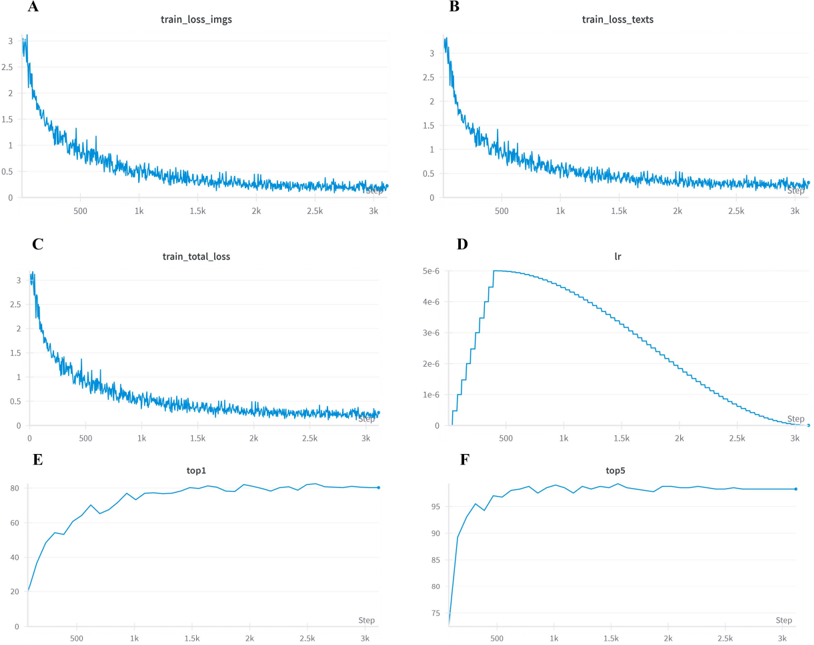
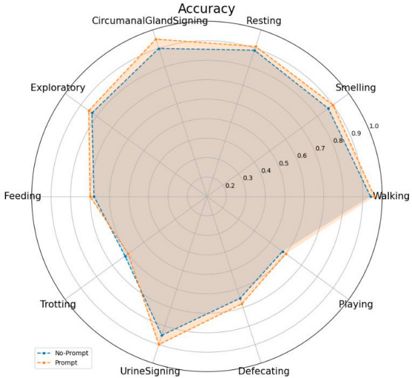
Automatic recognition of endangered animal behavior is crucial for biodiversity conservation and improving animal welfare, yet traditional manual observation remains inefficient and invasive. This work contributes directly to sustainable wildlife management by enabling non-invasive, scalable, and efficient monitoring, which supports long-term ecological balance and aligns with several United Nations Sustainable Development Goals (SDGs), particularly SDG 15 (Life on Land) and SDG 12 (Responsible Consumption and Production). The current deep learning approaches often struggle with the scarcity of behavioral data and complex environments, leading to poor model generalization. To address these challenges, this study focuses on endangered animal behavior monitoring and proposes a multimodal learning framework termed ABCLIP. This model leverages multimodal contrastive learning between video-and-text pairs, utilizing natural language supervision to enhance representation ability. The framework integrates pre-training, prompt learning, and fine-tuning to optimize performance specifically for small-scale animal behavior datasets, with a focus on the specific social and ecological behaviors of giant pandas. The experimental results demonstrate that ABCLIP achieves remarkable accuracy and robustness in recognizing endangered animal behaviors, attaining Top-1 and Top-5 accuracy of 82.50% and 99.25%, respectively, on the LoTE-Animal dataset, which outperforms strong baseline methods such as SlowFast (78.54%/97.55%). Furthermore, in zero-shot recognition scenarios for unseen behaviors, ABCLIP achieves an accuracy of 58.00%. This study highlights the potential of multimodal contrastive learning in wildlife monitoring and provides efficient technical support for precise protection measures and scientific management of endangered species.
Overview
The claims and statistics of this paper haven’t been checked yet.
Free: it reads the open-access text and checks the first 5 claims that cite a source we can check. Create a free account to check every claim.
Integrity signals
Registry
Cites
Statistics
Figures
Verification
Claims the paper makes
The claims and statistics of this paper haven’t been checked yet.
Free: it reads the open-access text and checks the first 5 claims that cite a source we can check. Create a free account to check every claim.
Self-check
Percentages, sums and reported differences re-computed from the paper’s own numbers.
The self-check needs the paper’s full text.
Citations
Cites
Making Pre-trained Language Models Better Few-shot Learners
Gao, T., Fisch, A., & Chen, D. (2021) · Proceedings of the 59th Annual Meeting of the Association for Computational Linguistics and the 11th International Joint Conference on Natural Language Processing (Volume 1: Long Papers) · doi:10.18653/v1/2021.acl-long.295 · Cited by 1,380
Machine Learning Applications for Precision Agriculture: A Comprehensive Review
Sharma, A., Jain, A., Gupta, P., & Chowdary, V. (2021) · IEEE Access · doi:10.1109/access.2020.3048415 · Cited by 1,102
ActionCLIP: Adapting Language-Image Pretrained Models for Video Action Recognition
Wang, M., Xing, J., Mei, J., Liu, Y., & Jiang, Y. (2023) · IEEE Transactions on Neural Networks and Learning Systems · doi:10.1109/tnnls.2023.3331841 · Cited by 705
Machine learning to classify animal species in camera trap images: Applications in ecology
Tabak, M. A., Norouzzadeh, M. S., Wolfson, D. W., Sweeney, S. J., Vercauteren, K. C., Snow, N. P., Halseth, J. M., Di Salvo, P. A., Lewis, J. S., White, M. D., et al. (2019) · Methods in Ecology and Evolution · doi:10.1111/2041-210x.13120 · Cited by 504
Scaling‐up camera traps: monitoring the planet's biodiversity with networks of remote sensors
Steenweg, R., Hebblewhite, M., Kays, R., Ahumada, J., Fisher, J. T., Burton, C., Townsend, S. E., Carbone, C., Rowcliffe, J. M., Whittington, J., et al. (2017) · Frontiers in Ecology and the Environment · doi:10.1002/fee.1448 · Cited by 452
Emerging Technologies to Conserve Biodiversity
Pimm, S. L., Alibhai, S., Bergl, R., Dehgan, A., Giri, C., Jewell, Z., Joppa, L., Kays, R., & Loarie, S. (2015) · Trends in Ecology & Evolution · doi:10.1016/j.tree.2015.08.008 · Cited by 349
X-CLIP: End-to-End Multi-grained Contrastive Learning for Video-Text Retrieval
Ma, Y., Xu, G., Sun, X., Yan, M., Zhang, J., & Ji, R. (2022) · Proceedings of the 30th ACM International Conference on Multimedia · doi:10.1145/3503161.3547910 · Cited by 321
Smart poultry management: Smart sensors, big data, and the internet of things
Astill, J., Dara, R. A., Fraser, E. D. G., Roberts, B., & Sharif, S. (2020) · Computers and Electronics in Agriculture · doi:10.1016/j.compag.2020.105291 · Cited by 316
Animal Kingdom: A Large and Diverse Dataset for Animal Behavior Understanding
Ng, X. L., Ong, K. E., Zheng, Q., Ni, Y., Yeo, S. Y., & Liu, J. (2022) · IEEE Computer Society Conference on Computer Vision and Pattern Recognition/Proceedings - IEEE Computer Society Conference on Computer Vision and Pattern Recognition/Proceedings · doi:10.1109/cvpr52688.2022.01844 · Cited by 235
Big behavior: challenges and opportunities in a new era of deep behavior profiling
von Ziegler, L., Sturman, O., & Bohacek, J. (2020) · Neuropsychopharmacology · doi:10.1038/s41386-020-0751-7 · Cited by 186
Research works printed but not linked: 3
- Radford, A.; Kim, J.W.; Hallacy, C.; Ramesh, A.; Goh, G.; Agarwal, S.; Sastry, G.; Askell, A.; Mishkin, P.; Clark, J. Learning transferable visual models from natural language supervision. In Proceedings of the International Conference on Machine Learning (ICML), Online, 18-24 July 2021; pp. 8748-8763.
- Brown, T.; Mann, B.; Ryder, N.; Subbiah, M.; Kaplan, J.D.; Dhariwal, P.; Neelakantan, A.; Shyam, P.; Sastry, G.; Askell, A. Language models are few-shot learners. Adv. Neural Inf. Process. Syst. 2020, 33, 1877-1901.
- Gherardi, F.C. Operative versus conceptual classification of animal behaviour. Hist. Philos. Life Sci. 1983, 5, 87-99.
Metadata
- Authors
- Liu, S., Xu, A., & Hou, Z.
- Affiliations
- Changzhou University (CN)
- Corresponding author
- Hou, Zhenjie
- ORCID
- Hou, Zhenjie
- Venue
- Sustainability
- Publisher
- MDPI AG
- Published
- 2026-02-05
- Volume
- 18
- Issue
- 3
- Pages
- 1612
- ISSN
- 2071-1050 (ISSN-L)
- OpenAlex
- W7127957261
- Cited by
- 0
- References
- 31
- FWCI
- 0.00
- Type
- journal article
- Language
- en
- Open access
- gold
- doi.org
- Licence
- Locations
- Sustainability (publishedVersion, cc-by)
- Topics
- Physical Sciences › Computer Science › Computer Vision and Pattern Recognition › Human Pose and Action Recognition
- Physical Sciences › Computer Science › Computer Vision and Pattern Recognition › Multimodal Machine Learning Applications
- Physical Sciences › Computer Science › Artificial Intelligence › Domain Adaptation and Few-Shot Learning
- Keywords
- wildlife monitoring, multimodal contrastive learning, giant panda, non-invasive animal monitoring, natural language supervision, prompt learning, biodiversity conservation, animal welfare
About these checks
Registry, retraction, Cites and statistics results are computed, not judged, with one exception: a printed reference that no index lists is read once by a model before it counts as a citation error. Claims are extracted by a model and kept only when their quote appears verbatim in the text; each cited source is then checked, with a model’s help, for whether it says what the claim relies on. Those verdicts can be wrong — read the claim’s quote and the cited source before relying on one.
Statistics and arithmetic are recomputed, not judged.
Confidence bands are shown only for fields calibrated on our annotated test set. None is calibrated yet, so no band is shown.
What counts as a claim ›How we measure confidence ›How we check this ›
Are you an author, or do you see a problem with this page? Request a review
Data sources
Bibliographic data: Semantic Scholar, OpenAlex, Crossref.
Contains information from the Semantic Scholar Academic Graph Datasets, made available under the ODC Attribution License (ODC-BY 1.0).
Semantic Scholar’s data is described in: Kinney, R., et al. (2023). The Semantic Scholar Open Data Platform. arXiv:2301.10140.
