

T-2 and HT-2 Toxins: Toxicity, Occurrence and Analysis: A Review
Open accessThe DOI matches its Crossref record; 178 of the 184 references it cites were found in a registry or an index.
Abstract
One of the major classes of mycotoxins posing serious hazards to humans and animals and potentially causing severe economic impact to the cereal industry are the trichothecenes, produced by many fungal genera. As such, indicative limits for the sum of T-2 and HT-2 were introduced in the European Union in 2013 and discussions are ongoing as to the establishment of maximum levels. This review provides a concise assessment of the existing understanding concerning the toxicological effects of T-2 and HT-2 in humans and animals, their biosynthetic pathways, occurrence, impact of climate change on their production and an evaluation of the analytical methods applied to their detection. This study highlights that the ecology of F. sporotrichioides and F. langsethiae as well as the influence of interacting environmental factors on their growth and activation of biosynthetic genes are still not fully understood. Predictive models of Fusarium growth and subsequent mycotoxin production would be beneficial in predicting the risk of contamination and thus aid early mitigation. With the likelihood of regulatory maximum limits being introduced, increased surveillance using rapid, on-site tests in addition to confirmatory methods will be required. allowing the industry to be proactive rather than reactive.
Overview
The claims and statistics of this paper haven’t been checked yet.
Free: it reads the open-access text and checks the first 5 claims that cite a source we can check. Create a free account to check every claim.
Integrity signals
Registry
Cites
Statistics
Figures
Verification
Claims the paper makes
The claims and statistics of this paper haven’t been checked yet.
Free: it reads the open-access text and checks the first 5 claims that cite a source we can check. Create a free account to check every claim.
Claims other papers make about this one
Each is checked against this paper’s own text: does it say what the citing paper says it does?
The source backs part of the claim, not all of it — or backs it for a different population, condition or comparison.
In the citing paper
“Sample extraction or pre-con centration is, therefore, always required prior to instrumen tal analysis using gas chromatography (GC) and liquid chromatography (LC) coupled with mass spectrometry, enzyme-linked immunosorbent assays, biosensors, and lateral flow immunoassays (6).”
From Evaluating the green credentials and performance of deep eutectic solvents in the extraction of antibiotics and mycotoxins in foods (2024) · cites this paper as [6]
Experimental — accuracy not yet measuredThe source backs part of the claim, not all of it — or backs it for a different population, condition or comparison.
In the citing paper
“Naturally occurring toxins (mycotoxins, phycotoxins, and marine biotoxins), antibiotics, and pesticides are the most prevalent chemi cal contaminants in agricultural commodities worldwide (6,7).”
From Evaluating the green credentials and performance of deep eutectic solvents in the extraction of antibiotics and mycotoxins in foods (2024) · cites this paper as [6]
Experimental — accuracy not yet measured
Self-check
Percentages, sums and reported differences re-computed from the paper’s own numbers.
The self-check needs the paper’s full text.
Citations
Cites
Bennett, J. W., & Klich, M. (2003) · Clinical Microbiology Reviews · doi:10.1128/cmr.16.3.497-516.2003 · Cited by 3,127 · cited 7×
“Analysing for other Fusarium mycotoxins such as DON and ZEN, as well as some of the more important emerging mycotoxins according to EFSA, may also be advantageous, as although they are not regulated at present, routine analysis may highlight emerging threats brought about by climate change, which may aid the implement…”
InfluentialHeading for disaster: Fusarium graminearum on cereal crops
GOSWAMI, R. S., & KISTLER, H. C. (2004) · Molecular Plant Pathology · doi:10.1111/j.1364-3703.2004.00252.x · Cited by 1,283 · cited 1×
“Factors such as temperature, agricultural practices and moisture markedly a ff ect fungal”
A review of worldwide contamination of cereal grains and animal feed with Fusarium mycotoxins
Placinta, C. M., D'Mello, J. P. F., & Macdonald, A. M. C. (1999) · Animal Feed Science and Technology · doi:10.1016/s0377-8401(98)00278-8 · Cited by 912 · cited 1×
“In addition, the necrosis of lymphoid tissues was shown to be triggered by T-2 toxin [37], and bovine infertility and abortion resulting from consumption of T-2toxin-contaminated feed has been reported [38].”
BackgroundToxic effects of mycotoxins in humans.
Peraica, M., Radić, B., Lucić, A., & Pavlović, M. (1999) · Europe PMC (PubMed Central) · Cited by 764
Sulyok, M., Berthiller, F., Krska, R., & Schuhmacher, R. (2006) · Rapid Communications in Mass Spectrometry · doi:10.1002/rcm.2640 · Cited by 681 · cited 1×
“Some examples of this modified approach in the analysis of mycotoxins include: the analysis of 4 major Fusarium mycotoxins including HT-2 and T-2 toxins in oats, the multi-detection of 22 mycotoxins in various animal feeds, the simultaneous determination of 23 mycotoxins in grains, and the analysis of 14 mycotoxins in…”
BackgroundFusarium mycotoxins: a review of global implications for animal health, welfare and productivity
D’Mello, J. P. F., Placinta, C. M., & Macdonald, A. M. C. (1999) · Animal Feed Science and Technology · doi:10.1016/s0377-8401(99)00059-0 · Cited by 673
Effects of trichothecene mycotoxins on eukaryotic cells: A review
Rocha, O., Ansari, K., & Doohan, F. M. (2005) · Food Additives and Contaminants · doi:10.1080/02652030500058403 · Cited by 591 · cited 2×
“Moreover, these toxins are potent inhibitors of protein synthesis and are immunosuppressive [7,13].”
BackgroundIMMUNOMODULATION BY FUNGAL TOXINS
Genevieve S. Bondy, J. J. P. (2000) · Journal of Toxicology and Environmental Health, Part B · doi:10.1080/109374000281113 · Cited by 575 · cited 1×
“Moreover, these toxins are potent inhibitors of protein synthesis and are immunosuppressive [7,13].”
BackgroundTrichothecenes: From Simple to Complex Mycotoxins
McCormick, S. P., Stanley, A. M., Stover, N. A., & Alexander, N. J. (2011) · Toxins · doi:10.3390/toxins3070802 · Cited by 532 · cited 2×
“However, type A, including HT-2 and T-2 toxins, and B (3-acetyldeoxynivalenol, nivalenol (NIV), and deoxynivalenol (DON)) are the most prevalent in agricultural commodities worldwide [1,64].”
BackgroundFusarium graminearum Trichothecene Mycotoxins: Biosynthesis, Regulation, and Management
Chen, Y., Kistler, H. C., & Ma, Z. (2019) · Annual Review of Phytopathology · doi:10.1146/annurev-phyto-082718-100318 · Cited by 469 · cited 3×
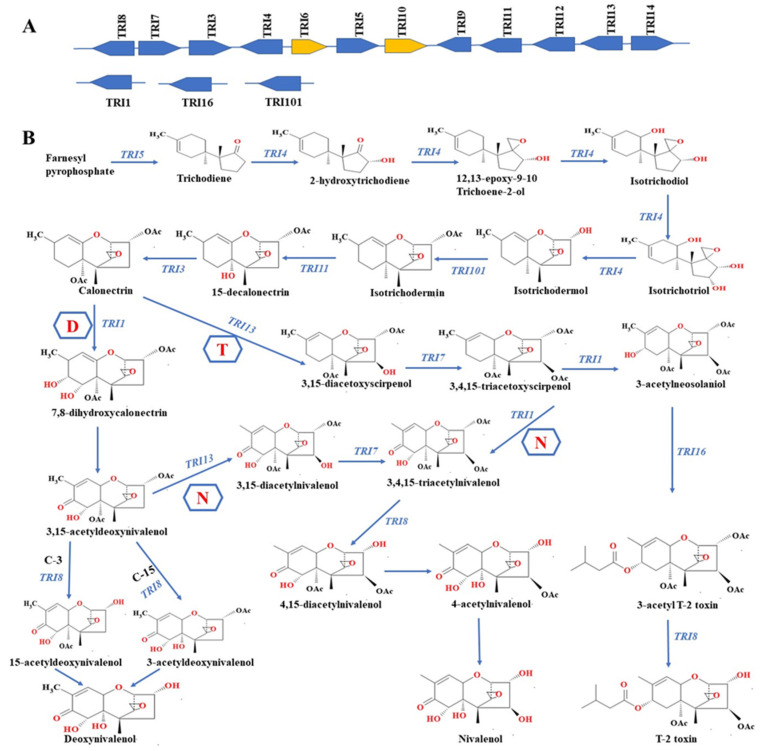
“A gene (TRI5) encoding trichodiene synthase enzyme cyclises FFP to yield trichodiene [65,67].”
Background
Research works printed but not linked: 2
- Yiannikouris, A.; Jouany, J.P. Mycotoxins in feeds for ruminants; fate and effects on animals. Prod. Anim. 2002, 15, 3-16.
- Diaz, D.E. The Mycotoxin Blue Book; Nottingham University Press: Nottingham, UK, 2005.
Cited by
A comprehensive review of mycotoxins, their toxicity, and innovative detoxification methods
Shekhar, R., Raghavendra, V. B., & Rachitha, P. (2025) · Toxicology Reports · doi:10.1016/j.toxrep.2025.101952 · Cited by 121
“The incident spurred research into cost-effective detection technologies and improved awareness campaigns [110].”
Mycotoxins in food: Occurrence, health implications, and control strategies-A comprehensive review
Khan, R. (2024) · Toxicon · doi:10.1016/j.toxicon.2024.108038 · Cited by 96
Early warning technologies for mycotoxins in grains and oilseeds: A review
Fu, J., Yue, X., Zhang, Q., & Li, P. (2024) · Trends in Food Science & Technology · doi:10.1016/j.tifs.2024.104479 · Cited by 53
Recent advances in the role of mass spectrometry in the analysis of food: a review
Nwachukwu, S. C., Edo, G. I., Jikah, A. N., Emakpor, O. L., Akpoghelie, P. O., & Agbo, J. J. (2024) · Journal of Food Measurement & Characterization · doi:10.1007/s11694-024-02492-z · Cited by 52
Pathological consequences, metabolism and toxic effects of trichothecene T-2 toxin in poultry
Vörösházi, J., Neogrády, Z., Mátis, G., & Mackei, M. (2024) · Poultry Science · doi:10.1016/j.psj.2024.103471 · Cited by 37
Lapris, M., Errico, M., Rocchetti, G., & Gallo, A. (2024) · Foods · doi:10.3390/foods13111746 · Cited by 25
“T-2 and HT-2 toxins are produced by many species of fungi (such as Fusarium , Trichoderma , Cephalosporium , and others) and can negatively affect, among other things, heart muscle functionality and the immune system [22,23].”
BackgroundMaher, S., Sweeney, T., & O’Doherty, J. V. (2025) · Animals · doi:10.3390/ani15101403 · Cited by 27
“Trichothecenes such as deoxynivalenol (DON), HT-2, and T-2 toxins, mainly from Fusarium , reduce feed intake, damage the gastrointestinal tract (GIT), and may cause vomiting [181,182].”
A scoping review on mycotoxin-induced neurotoxicity
Abia, W. A., Foupouapouognigni, Y., Njitoyap, H. P. N., Ngoungoure, L. V. N., Ntungwe, E. N., Salah‐Abbès, J. B., & Tchana, A. N. (2025) · Discover Toxicology · doi:10.1007/s44339-024-00013-7 · Cited by 26
Mycotoxins in Ready-to-Eat Foods: Regulatory Challenges and Modern Detection Methods
Salvo, E. D., Bartolomeo, G., Vadalà, R., Costa, R., & Cicero, N. (2025) · Toxics · doi:10.3390/toxics13060485 · Cited by 22
“The most prevalent metabolites that have been identified in agricultural produce include monoacetoxyscirpenol, di-acetoxyscirpenol, neosolaniol, nivalenol, fusarenon-x, HT-2 toxin, and T-2 toxin [58].”
Adunphatcharaphon, S., Kolawole, O., Sooksimuang, T., Panchan, W., Wasuthep, W., Petdum, A., Pichayawaytin, G., Jintamethasawat, R., Doljirapisit, N., Somboonkaew, A., et al. (2024) · npj Science of Food · doi:10.1038/s41538-024-00342-2 · Cited by 20
Self-citationFranchino, C., Vita, V., Iammarino, M., & Pace, R. D. (2024) · Microorganisms · doi:10.3390/microorganisms12010173 · Cited by 17
“T-2 and HT-2 toxins belong to Trichothecenes, a family of mycotoxins (more than 200 compounds) produced by many species of fungi, such as Fusarium , Trichothecium , Trichoderma , Myrothecium , Cephalosporium , Spicellum , and Stachybotrys [16].”
BackgroundHarnessing machine learning for grain mycotoxin detection
Rayhana, R., Sangha, J. S., Ruan, Y., & Liu, Z. (2025) · Smart Agricultural Technology · doi:10.1016/j.atech.2025.100923 · Cited by 19
Huang, C., Ou, Z., Kong, L., Huang, Y., Yang, W., He, J., Yang, M., Wu, J., Xiang, S., Zhou, Y., et al. (2024) · Toxicon · doi:10.1016/j.toxicon.2024.107652 · Cited by 16
Plant's cellular response to biotic stress: A review
Chaurasia, S. K., Acharya, C., & Pandey, J. K. (2025) · Physiological and Molecular Plant Pathology · doi:10.1016/j.pmpp.2025.102718 · Cited by 13
Liang, X., Li, Q., Li, J., Zhao, W., Yang, D., Yang, Y., & Zhong, Z. (2025) · Food Chemistry · doi:10.1016/j.foodchem.2025.143179 · Cited by 12
Masquelier, J., Tangni, E. K., Becker, P., Sanders, J., Laporte, J., & Mertens, B. (2025) · Chemosensors · doi:10.3390/chemosensors13030106 · Cited by 11
Mycotoxins Occurrence in Herbs, Spices, Dietary Supplements, and Their Exposure Assessment
Kanabus, J., Bryła, M., Wnuczek, K., Waśkiewicz, A., & Twarużek, M. (2025) · Toxins · doi:10.3390/toxins18010020 · Cited by 11
Casado, N., Berenguer, C. V., Câmara, J. S., & Pereira, J. A. M. (2024) · Molecules · doi:10.3390/molecules29030579 · Cited by 13
“[83] Zearalenone”
Kolawole, O., Thammakhet-Buranachai, C., Petchkongkaew, A., Sooksimuang, T., Elliott, C., & Karoonuthaisiri, N. (2024) · Green Chemistry Letters and Reviews · doi:10.1080/17518253.2024.2427797 · Cited by 10
“Consequently, monitoring systems have been established in many parts of the world to ensure that the levels of chemical contaminants in food and feed supply chains are within the regulated limits (4–6).”
InfluentialSelf-citationZhang, G., Liu, T., Chen, J., Yu, S., Zheng, Z., Deng, S., Peng, J., & Lai, W. (2024) · Talanta · doi:10.1016/j.talanta.2024.127092 · Cited by 10
Raza, A., Niazi, S., Shoaib, M., Khan, I. M., Haq, F. U., Ali, K., Khan, I., Zhang, Y., & Wang, Z. (2024) · Trends in Food Science & Technology · doi:10.1016/j.tifs.2024.104784 · Cited by 10
Pierzgalski, A., Bryła, M., Cramer, B., Humpf, H., & Twarużek, M. (2024) · Journal of Agricultural and Food Chemistry · doi:10.1021/acs.jafc.3c07465 · Cited by 9
Review of the Protective Effects of Selenium against T-2 Toxin-Induced Toxicity
Tinkov, A. A., Skalny, A. V., Guo, X., Korobeinikova, T. V., Ning, Y., da Rocha, J. B. T., Zhang, F., & Aschner, M. (2025) · Chemical Research in Toxicology · doi:10.1021/acs.chemrestox.5c00095 · Cited by 9
Mycotoxins in oilseeds and vegetable edible oils: an overview of toxicity, occurrence and exposure
Durant, A., Pinton, P., Puel, O., & Oswald, I. P. (2025) · OCL · doi:10.1051/ocl/2025014 · Cited by 9
Żybura, A., & Jedziniak, P. (2024) · Journal of Veterinary Research · doi:10.2478/jvetres-2024-0023 · Cited by 9
“It and its metabolite HT-2 cause vomiting, diarrhoea, weight loss, skin problems, as well as necrosis and intestinal mucosal haemorrhaging (20).”
BackgroundLu, C., Yang, W., Chu, F., Wang, S., Ji, Y., Liu, Z., Yu, H., Qin, S., Sun, D., Jiao, Z., et al. (2024) · Nutrients · doi:10.3390/nu16183107 · Cited by 9
“This potent toxin poses significant health risks to both humans and animals, capable of inducing a spectrum of acute and chronic poisoning symptoms [1].”
BackgroundOluwakayode, A., Greer, B., Meneely, J. P., Berthiller, F., Krska, R., & Medina, Á. (2024) · Toxins · doi:10.3390/toxins16040166 · Cited by 8
Self-citationDeng, F., Zhao, L., Wei, P., Mai, E., Chen, M., Yang, H., Mu, P., Wu, J., Wu, J., & Deng, Y. (2024) · Journal of Hazardous Materials · doi:10.1016/j.jhazmat.2024.136437 · Cited by 8
Looking for Fusarium Resistance in Oats: An Update
Morcia, C., Terzi, V., Ghizzoni, R., Carrara, I., & Gazzetti, K. (2024) · Agronomy · doi:10.3390/agronomy14030505 · Cited by 7
“…(LC-HRMS), gas chromatography-tandem mass spectrometry (GC-MS/MS), immuno-chemical methods lateral flow device (LFDs), enzyme-linked immunosorbent assay technology (ELISA), surface-enhanced Raman Spectroscopy (SERS), fluorescence polarization immunoassay (FPIA), electronic nose [65–67].”
MethodFan, J., Song, W., Wang, Y., Li, S., Zhang, C., Wang, X., & Yang, X. (2024) · Food and Chemical Toxicology · doi:10.1016/j.fct.2024.114986 · Cited by 7
Apoptotic Effect of Combinations of T-2, HT-2, and Diacetoxyscirpenol on Human Jurkat T Cells
Wattanasuntorn, P., Poapolathep, S., Phuektes, P., Alassane‐Kpembi, I., Fink‐Gremmels, J., Oswald, I. P., & Poapolathep, A. (2025) · Toxins · doi:10.3390/toxins17040203 · Cited by 7
“Several studies have demonstrated that HT-2 binds to ribosomes, leading to a ribotoxic stress, inhibition of protein synthesis, cell cycle arrest, and decreased cell proliferation [11–13].”
A Ten-Year Trend Analysis of Fusarium Mycotoxins in Croatian Maize (2014–2024)
Kudumija, N., Lešić, T., Zadravec, M., Vulić, A., & Pleadin, J. (2025) · Foods · doi:10.3390/foods14132209 · Cited by 7
“In addition, the data on the worldwide occurrence of the mycotoxin mentioned above vary depending on the climate zone of the individual regions [22].”
Ensley, S. M., & Mostrom, M. S. (2023) · Veterinary Clinics of North America Equine Practice · doi:10.1016/j.cveq.2023.10.002 · Cited by 7
Povolotckaia, A., Pankin, D. V., Gareev, M., Serebriakov, D. A., Gulyaev, A., Borisov, E. V., Boyko, А. А., Игоревич, Б. С., Belousov, S. V., Noy, O. V., et al. (2025) · Molecules · doi:10.3390/molecules30122586 · Cited by 6
Giannitti, F., Machado, M., Silveira, C. D. S., Cibils‐Stewart, X., Baráibar, N., Queiroz-Machado, C. R. R., Poppenga, R. H., Menchaca, A., Uzal, F. A., García, J. A., et al. (2024) · Veterinary Pathology · doi:10.1177/03009858241231557 · Cited by 6
“Toxic diseases that are characterized by similar lesions in the forestomachs include intoxications with the plant Baccharis coridifolia , 25 to which the cattle in our study were not exposed, trichothecenes, 20 and lead arsenate.”
From feed to food – Understanding the impact of aflatoxins consumption by Pakistani livestock
Umar, A., Qanita, S., Zada, N., & Honey, S. F. (2025) · CABI One Health · doi:10.1079/cabionehealth.2025.0021 · Cited by 5
Comprehensive transcriptomic profiling of T-2 toxin-induced nephrotoxicity in mice
Wu, G., Wu, X., Wu, Y., Wu, Y., Li, H., & Dai, C. (2024) · Ecotoxicology and Environmental Safety · doi:10.1016/j.ecoenv.2024.116909 · Cited by 5
Yang, X., Xu, X., Zhong, Q., Cui, H., Xu, J., & Wei, W. (2024) · Biochemistry and Biophysics Reports · doi:10.1016/j.bbrep.2024.101840 · Cited by 5
“Its potent toxicity leads to intestinal inflammation, posing significant threats to human health and animal husbandry [2].”
BackgroundBiodegradation of T‐2 Toxin by a Dominant Microbial Consortium Isolated From Chinese Yeast Ball
Yang, C., Mahror, N., Li, S., Liu, L., & Cheng, L. (2025) · eFood · doi:10.1002/efd2.70047 · Cited by 4
Chauhan, D., Khanal, S., Sharma, S., Pillai, M., Verma, R., & Kumar, D. (2025) · Food and Humanity · doi:10.1016/j.foohum.2025.100825 · Cited by 4
Glycosylated mycotoxins: a hidden enemy
Stranska-Zachariasova, M., Řezanka, T., & Křen, V. (2025) · Natural Product Reports · doi:10.1039/d5np00057b · Cited by 4
Yao, C., Hao, S., Zhang, C., Liu, L., Jia, Y., Meng, P., Wu, C., & Guo, X. (2024) · Food and Chemical Toxicology · doi:10.1016/j.fct.2024.114630 · Cited by 4
Occurrence of mycotoxins in swine feed from South Korea
Jin, W., Park, S.-Y., Kim, Y., Kim, S. J., & Han, J. (2024) · Journal of Advanced Veterinary and Animal Research · doi:10.5455/javar.2024.k756 · Cited by 4
Wang, Y., Nie, D., Shao, K., Zhang, S., Wang, Q., Han, Z., & Chen, L. (2024) · Chemosphere · doi:10.1016/j.chemosphere.2024.142388 · Cited by 4
Gu, W., Hou, L., Bao, Q., Xu, Q., & Chen, G. (2024) · Animals · doi:10.3390/ani14152281 · Cited by 4
“T-2 toxin is a type A trichothecene produced by Fusarium species and is widespread in corn and grain feed, posing a threat to growth and development and animal welfare in poultry [40,41].”
BackgroundPuvača, N., Kika, T. S., Brkić, I., Pelić, D. L., Tufarelli, V., Nikolova, N., Kostić, B., Radojičić, I., Brkanlić, S., & Bursić, V. (2025) · Journal of the Hellenic Veterinary Medical Society · doi:10.12681/jhvms.37778 · Cited by 3
“This inefficiency in feed utilization elevates production costs and diminishes the economic viability of egg production enterprises (Meneely et al., 2023).”
Wang, M., Zhang, Y., Qi, C., Lu, X., Xu, H. J., Ma, X., & Zhang, W. (2025) · Microchemical Journal · doi:10.1016/j.microc.2025.114610 · Cited by 3
Liu, Q., Xu, X., Yang, Y. Y., Li, X., Sun, P., Xie, P., Zong, Y., Xue, H., & Bi, Y. (2025) · Food Microbiology · doi:10.1016/j.fm.2025.104943 · Cited by 4
Ma, C., Ong, H. T., Teoh, H. K., Wang, Y., Zhu, Z. H., Liu, Y., & Du, J. (2025) · Frontiers in Sustainable Food Systems · doi:10.3389/fsufs.2025.1659936 · Cited by 3
Gordon, M., Daud, N., Cantlay, L. L., & Gratz, S. W. (2026) · Toxins · doi:10.3390/toxins18070295 · Cited by 3
“Type A trichothecenes pose a particular problem in oats with over 90% of grain samples found to be contaminated with T-2 and HT-2 in several studies [7–15].”
Sacco, M. A., Gualtieri, S., Tarallo, A. P., Verrina, M. C., Carbone, A., Mazzuca, W., Gratteri, S., & Aquila, I. (2024) · Toxins · doi:10.3390/toxins16120514 · Cited by 3
Lawson, A., Annunziato, M., Bashirova, N., Eeza, M. N. H., Matysik, J., Alia, A., & Berry, J. P. (2024) · Toxins · doi:10.3390/toxins16100424 · Cited by 2
“With respect to animal health, this toxicity can consequently reduce productivity in both livestock and aquaculture [2,3].”
BackgroundMitigating T-2 toxin toxicity in Quail: The protective power of sodium butyrate
Song, H., Zhu, X., Hua, W., He, Y., Liu, Y., & Cao, C. (2025) · Poultry Science · doi:10.1016/j.psj.2025.105186 · Cited by 2
Fakhri, Y., Ranaei, V., Pilevar, Z., Mahmoudizeh, A., & Khaneghah, A. M. (2025) · Journal of Food Science and Technology · doi:10.1007/s13197-025-06367-z · Cited by 2
Mycotoxins in Food and Feed: Relevance to Human and Animal Health
Biranjia-Hurdoyal, S. D. (2025) · Fungal biology · doi:10.1007/978-3-031-90994-8_5 · Cited by 2
Chin, T., Kurera, S., Gamage, N. W., Ashfaq, T., Bamforth, J. M., Bakker, M. G., Huang, M., Tittlemier, S. A., Walkowiak, S., & Punja, Z. K. (2025) · Canadian Journal of Plant Pathology · doi:10.1080/07060661.2025.2543779 · Cited by 2
“Isolate FB3, identified as F. culmorum , produced nivalenol and NX (Varga et al. 2018; Foroud et al. 2019; Meneely et al. 2023).”
Punja, Z. K., Scott, C., & Tso, H. H. (2025) · Canadian Journal of Plant Pathology · doi:10.1080/07060661.2025.2557486 · Cited by 2
“…causing head blight or wheat scab (Nazari et al. 2019), and it is reported to produce mycotoxins including type A trichothecenes such as T -2 toxin, HT-2 toxin, neoso-laniol and diacetoxyscirpenol (Mateo et al. 2002; Foroud et al. 2019; Meneely et al. 2023; Punja, Tittlemier, and Walkowiak 2025).”
Abubakar, Y. S., Ji, S., Chen, Q., Zheng, H., Wang, Z., Zheng, W., & Lou, Y. (2025) · PLoS Pathogens · doi:10.1371/journal.ppat.1013726 · Cited by 2
“F. graminearum is known to produce the mycotoxin deoxynivalenol (DON), which suppresses host immunity and facilitates colonization and disease progression [56].”
RetractedOccurrence of mycotoxins in pastures and conserved forages in the Southeast region of Brazil
Rodrigues, J. P., Nestlehner, M. V., Cerqueira, C. S., Silva, S. S., Fumes-Ghantous, G., Rosim, R. E., Corassin, C. H., & de Oliveira, C. A. F. (2025) · Mycotoxin Research · doi:10.1007/s12550-025-00625-x · Cited by 2
“Type A trichot-hecenes such as such as T-2, HT-2 and diacetoxyscirpenol are generally more toxic, causing cytotoxicity, immunological alterations, diarrhea, hemorrhages in intestinal tissues, edema, oral lesions, blisters and ulceration in the skin (Meneely et al. 2023 ).”
Kumari, S., Misra, J. P., Jha, N. K., Kumar, N., Ravi, K., & Gupta, R. V. (2026) · Journal of Biochemical and Molecular Toxicology · doi:10.1002/jbt.70794 · Cited by 3
Sampling and sample preparation techniques for the determination of mycotoxins in food matrices
Carbonell‐Rozas, L., Marín‐Sáez, J., Vargas‐Pérez, M., García-Campaña, A. M., & Romero‐González, R. (2024) · Elsevier eBooks · doi:10.1016/b978-0-443-15978-7.00059-x · Cited by 2
Recent Advances in Electrochemical Affinity Biosensors: Detection of Biological Toxin Agents
Orhan, D. E., Yıldız, M. M., Aybi, E. N., & Dogan‐Topal, B. (2025) · Critical Reviews in Analytical Chemistry · doi:10.1080/10408347.2025.2501709 · Cited by 2
Effects of T-2 and deoxynivalenol mycotoxins on mouse spinal bone growth and integrity
Hao, S., Yao, C., Meng, P., Jia, Y., Liu, L., & Zhang, C. (2024) · Toxicon · doi:10.1016/j.toxicon.2024.108079 · Cited by 1
Wysocka, K., Cacak‐Pietrzak, G., Buśko, M., & Studnıckı, M. (2024) · Agronomy · doi:10.3390/agronomy14112535 · Cited by 1
Study of Bacillus cereus as an Effective Multi-Type A Trichothecene Inactivator
García-García, F. A., Cristiani-Urbina, E., Morales-Barrera, L., Rodríguez-Peña, O. N., Hernández-Portilla, L. B., Campos, J. E., & Flores-Ortíz, C. M. (2024) · Microorganisms · doi:10.3390/microorganisms12112236 · Cited by 1
Rizzo, M., Licata, P., Niutta, P. P., Pugliese, M., Macaluso, V., Costa, G. L., Bruschetta, G., & Bruno, F. (2025) · Toxins · doi:10.3390/toxins17030120 · Cited by 1
“These effects can severely impact the animal’s ability to function normally and reduce its overall performance [31].”
Urinary mycotoxins and esophageal cancer risk in China: A case‐cohort study
Su, Q., Feng, R., Du, S., Zhao, H., Jiang, Y., Suo, C., Yuan, Z., Chen, X., Wu, Y., & Ye, W. (2025) · International Journal of Cancer · doi:10.1002/ijc.70206 · Cited by 1
“35 FB1 is a mycotoxin produced by Fusarium species, commonly found in maize and maize-based products.”
Occurrence and co-occurrence of aflatoxins, T-2, and HT-2 in instant coffee collected from China
Wang, X., Peng, X., Wang, X., Chen, N., Wang, H., & Han, X. (2025) · Food Chemistry · doi:10.1016/j.foodchem.2025.146949 · Cited by 1
Biological poisons targeting the pituitary gland: insights across the five kingdoms
Sanchis-Pascual, D., Gómez, R. C., Morillas-Amat, P., Lara-Gálvez, D., Pérez-Cervantes, V., Masdeu-López-Cerón, P., & Merino-Torres, J. F. (2025) · Frontiers in Endocrinology · doi:10.3389/fendo.2025.1708792 · Cited by 1
“Most of current scienti fi c evidence on pituitary dysfunction related to fungi centers around T-2 toxin, a trichothecene mycotoxin produced by Fusarium species (124).”
Sawangkeattikul, M., Poapolathep, A., Fink‐Gremmels, J., Khidkhan, K., Klangkaew, N., Phaochoosak, N., & Poapolathep, S. (2025) · Mycotoxin Research · doi:10.1007/s12550-025-00623-z · Cited by 1
“(Meneely et al. 2023; Commission Recommendation (EU) 2016/1319).”
Immunolocalization of p53 and p21 in Kidneys Exposed to T-2 Mycotoxin
Hussar, P., Blagoevska, K., Dovenska, M., Pendovski, L., & Popovska‐Perčinić, F. (2025) · Current Issues in Molecular Biology · doi:10.3390/cimb47121045 · Cited by 1
“T-2 mycotoxin, produced by the genus Fusarium , is known for its toxic effects in various organs and organ systems, presenting considerable risks to both animals and humans, while also resulting in significant economic losses for the cereal industry [1,2].”
Cheng, S., Shi, S., Cheng, B., Liu, C., Yang, X., Liu, L., Liu, H., Wen, Y. F., Tinkov, A. A., Skalny, A. V., et al. (2026) · Food and Chemical Toxicology · doi:10.1016/j.fct.2026.116007 · Cited by 1
From invisible to quantifiable: unmasking non-extractable HT2/T2 glycosides
Dolezalova, T., Průšová, N., Behner, A., Džuman, Z., Michlmayr, H., Berthiller, F., Hajšlová, J., Křen, V., & Stranska-Zachariasova, M. (2026) · Food Chemistry · doi:10.1016/j.foodchem.2026.149121 · Cited by 1
Wu, F., Qu, H., Jin, J., & Zhang, R. (2026) · Reproductive Toxicology · doi:10.1016/j.reprotox.2026.109252 · Cited by 1
Zhao, H., Guo, W., Wang, J., Zhu, Z., & Yang, J. (2026) · Food and Chemical Toxicology · doi:10.1016/j.fct.2026.116148 · Cited by 1
Li, J., Wang, C., Lin, B., Li, J., Qi, F., Liu, Y., Du, H., Zhao, Y., & Yu, J. (2026) · Food and Chemical Toxicology · doi:10.1016/j.fct.2026.116161 · Cited by 1
Features of the metabolic profile of cows with combined mycotoxicosis
Белоусов, А. И., Shkuratova, I. A., Krasnoperov, A. S., CHERNITSKIY, A. E., Безбородова, Н. А., Oparina, O. Y., & Малков, С. В. (2025) · Achievements of Science and Technology in Agro-Industrial Complex · doi:10.53859/02352451-2025-39-4-86 · Cited by 2
Vijeandran, K., Larionov, A. A., Cervini, C., Campbell, K., Walkowiak, S., Pasquali, M., Richard-Forget, F. C., Brown, D. N., Rose, L. J., & Verheecke‐Vaessen, C. (2026) · Comprehensive Reviews in Food Science and Food Safety · doi:10.1111/1541-4337.70612 · Cited by 1
“NIV is considered more cytotoxic than DON and can impair intestinal barrier integrity, immune function, and hematopoiesis, while T-2 and HT-2 toxins exhibit particularly high acute toxicity, affecting the immune system and multiple organ systems in humans (Meneely et al. 2023 ).”
Noel, A., Pincemaille, J., Creta, M., Carnero, B. A., Duca, R. C., Denis, F., Burgart, M., Rutledge, D. N., Habchi, B., Mehta, S., et al. (2026) · npj Science of Food · doi:10.1038/s41538-026-01126-6 · Cited by 1
Awuchi, C. G. (2026) · Food Safety and Health · doi:10.1002/fsh3.70119 · Cited by 1
Wyman, E. M., Branstad-Spates, E. H., Rajasekaran, K., & Lebar, M. D. (2026) · Food Safety · doi:10.14252/foodsafetyfscj.d-25-00005 · Cited by 1
The spinal consequences of HT-2 toxin and selenium deficiency during bone maturation in mice
Hao, S., Yao, C., Meng, P., Jia, Y., li, L., & Zhang, C. (2024) · Mycotoxin Research · doi:10.1007/s12550-024-00554-1 · Cited by 1
“The contamination issue of mycotoxins, particularly HT-2 toxin, has escalated to a global public health concern (Meneely et al. 2023).”
Borowsky, A. M. (2025) · Digital Library of Theses and Dissertations (Universidade de São Paulo) · doi:10.11606/t.11.2025.tde-05052025-171842 · Cited by 1
The Influence of Low Pesticide Doses on Fusarium Molds
Ursan, M., Oana-Alina, B.-S., Irina, C. I., & Cornea, P. C. (2024) · IgMin Research · doi:10.61927/igmin226
Góral, T. (2024) · Biuletyn Instytutu Hodowli i Aklimatyzacji Roślin · doi:10.37317/biul-2024-0008
Allmang, C., Hussar, P., Popovska-Percinic, F., & Popovska‐Perčinić, F. (2024) · Current Issues in Molecular Biology · doi:10.3390/cimb46120854
Chemistry of Biotoxins and Mode of Action/Antidotes
Parida, G., Bhanjadeo, M. M., & Singh, N. R. (2025) · Springer eBooks · doi:10.1007/978-3-031-75309-1_1 · Cited by 1
Yang, L., Wang, C., Zhou, J., Chen, F., Liu, L., Bai, L., Wang, X., Guo, X., & Yi, S. (2025) · Journal of Biochemical and Molecular Toxicology · doi:10.1002/jbt.70231
Savoie, J., Pinson‐Gadais, L., Vidal, R., & Vindras‐Fouillet, C. (2025) · Agriculture · doi:10.3390/agriculture15101064
Garrido, R. A. P., Arcangioli, M.-A., & de Oliveira, L. A. (2025) · Springer eBooks · doi:10.1007/978-3-031-52133-1_63-1
Clinical Examination and Routes of Administration
Dhondt, K. P., Jen, K., & Williams, A. (2025) · Elsevier eBooks · doi:10.1016/b978-0-12-822528-8.00006-5
Mycotoxins: characteristics and implication in human health.
Otero García, L. (2023) · RUC (Universidade Da Coruña)
Exploring the intersection of fungal products and human immunology
Edo, G. I., Jikah, A. N., Yousif, E., Onyibe, P. N., Opiti, R. A., Ikpekoro, V. O., Ezekiel, G. O., Thomas, B. E., Eboh, S. O., Ekokotu, H. A., et al. (2025) · Elsevier eBooks · doi:10.1016/b978-0-443-30102-5.00007-7
Fromme, H. (2026) · Springer eBooks · doi:10.1007/978-3-032-06538-4_6
Lakatos, I., Plank, P., Tóth, A., Molnár, Z., Skoda, G., Ferenczi, S., Sükösd, F., Nagyéri, G., Szemethy, L., & Szőke, Z. (2026) · Toxins · doi:10.3390/toxins18020093
“Even T-2 and HT-2 toxins, previously associated with colder climates, are becoming more prevalent in temperate regions due to moderate but prolonged temperature rises [5,21].”
The critical role and catalytic mechanism of pig liver esterase F2 in the hydrolysis of T-2 toxin
Li, Y., Hong, Y., Wu, J., Guan, Z., Wu, J., Mu, P., Yan, X., Wang, X., Deng, Y., & Jiang, J. (2026) · International Journal of Biological Macromolecules · doi:10.1016/j.ijbiomac.2026.150948
Garrido, R. A. P., Arcangioli, M.-A., & de Oliveira, L. A. (2026) · Springer eBooks · doi:10.1007/978-3-031-61549-8_63
Metabolic Profiling in Cows with Combined Mycotoxicosis
Belousov, A. I., Shkuratova, I. A., Krasnoperov, A. S., Chernitsky, A. E., Безбородова, Н. А., Oparina, O. Y., & Малков, С. В. (2025) · Russian Agricultural Sciences · doi:10.3103/s1068367425701344
Sustainable Control of Alternaria and Fusarium spp. – a review
Fous, K., & Brányik, T. (2026) · Kvasny Prumysl · doi:10.18832/kp2026.72.1181
Mycotoxins: Fungal Metabolites and Human Health
Raj, Y., Bisht, S., Singh, A., Mukherjee, C., & Tiwari, K. (2026) · Springer eBooks · doi:10.1007/978-3-032-23507-7_6
Metadata
- Authors
- Meneely, J., Greer, B., Kolawole, O., & Elliott, C.
- Affiliations
- Queen's University Belfast (GB)
- Thammasat University (TH)
- Corresponding author
- Meneely, Julie
- Venue
- Toxins
- Publisher
- MDPI AG
- Published
- 2023-07-29
- Volume
- 15
- Issue
- 8
- Pages
- 481
- ISSN
- 2072-6651 (ISSN-L)
- PMC
- PMC10467144
- OpenAlex
- W4385423396
- Cited by
- 107
- References
- 184
- Citations by year
- 2026: 27 · 2025: 43 · 2024: 35 · 2023: 2
- FWCI
- 2.56
- Type
- journal article
- Language
- en
- Open access
- gold
- doi.org
- Licence
- Locations
- Toxins (publishedVersion, cc-by)
- PubMed Central (publishedVersion, cc-by)
- PubMed (publishedVersion)
- Research Portal (Queen's University Belfast) (publishedVersion, cc-by)
- DOAJ (DOAJ: Directory of Open Access Journals) (submittedVersion, cc-by-sa)
- Funders
- safefood (01-2021)
- Topics
- Life Sciences › Agricultural and Biological Sciences › Plant Science › Mycotoxins in Agriculture and Food
- Life Sciences › Agricultural and Biological Sciences › Plant Science › Plant Pathogens and Fungal Diseases
- Life Sciences › Immunology and Microbiology › Applied Microbiology and Biotechnology › Microbial Natural Products and Biosynthesis
- Keywords
- T-2 toxin, HT-2 toxin, trichothecenes, mycotoxins, Fusarium sporotrichioides, Fusarium langsethiae, mycotoxin biosynthesis, mycotoxin toxicity, cereal contamination, mycotoxin detection, upper limits
- MeSH terms
- Animals, Humans, Mycotoxins, T-2 Toxin, Trichothecenes, Climate Change
About these checks
Registry, retraction, Cites and statistics results are computed, not judged, with one exception: a printed reference that no index lists is read once by a model before it counts as a citation error. Claims are extracted by a model and kept only when their quote appears verbatim in the text; each cited source is then checked, with a model’s help, for whether it says what the claim relies on. Those verdicts can be wrong — read the claim’s quote and the cited source before relying on one.
Statistics and arithmetic are recomputed, not judged.
Confidence bands are shown only for fields calibrated on our annotated test set. None is calibrated yet, so no band is shown.
What counts as a claim ›How we measure confidence ›How we check this ›
Are you an author, or do you see a problem with this page? Request a review
Data sources
Bibliographic data: Semantic Scholar, OpenAlex, Crossref.
Contains information from the Semantic Scholar Academic Graph Datasets, made available under the ODC Attribution License (ODC-BY 1.0).
Semantic Scholar’s data is described in: Kinney, R., et al. (2023). The Semantic Scholar Open Data Platform. arXiv:2301.10140.
