

Mental model development of preservice science teachers with slow-motion animation and visual material: The case of circulatory system
Open accessThe DOI matches its Crossref record; 47 of the 48 references it cites were found in a registry or an index.
Abstract
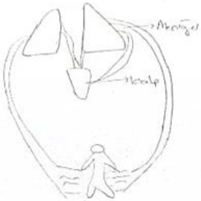
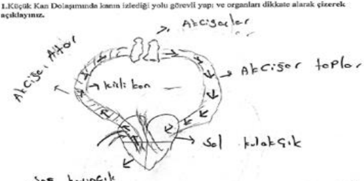
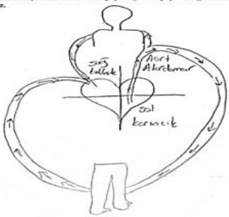
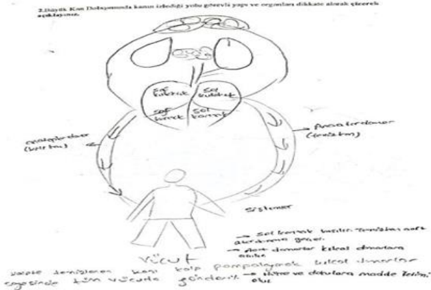
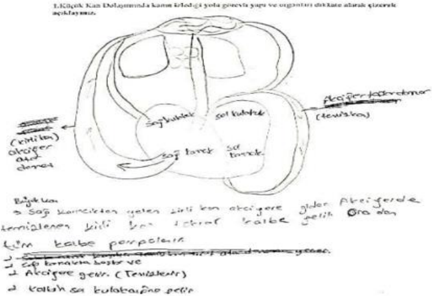
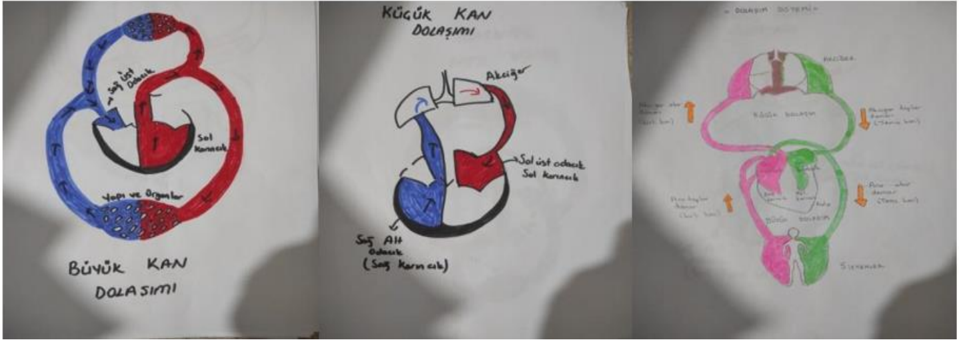
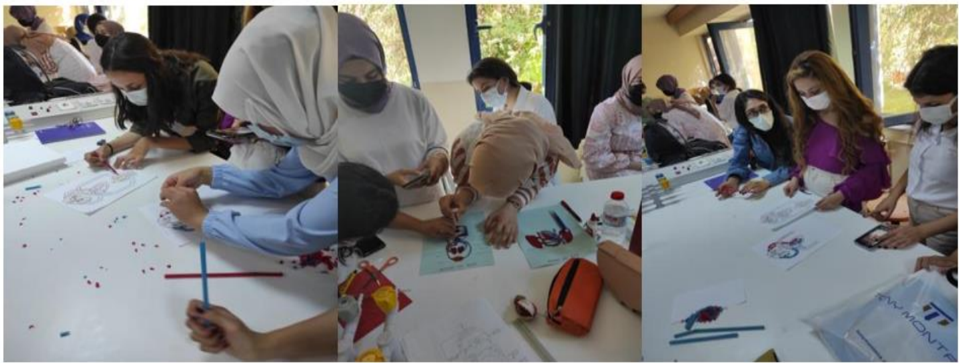
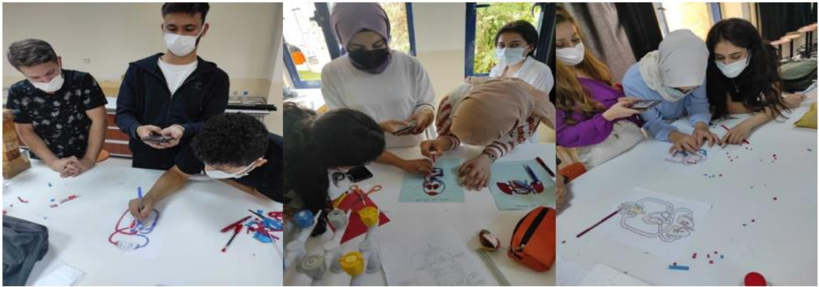
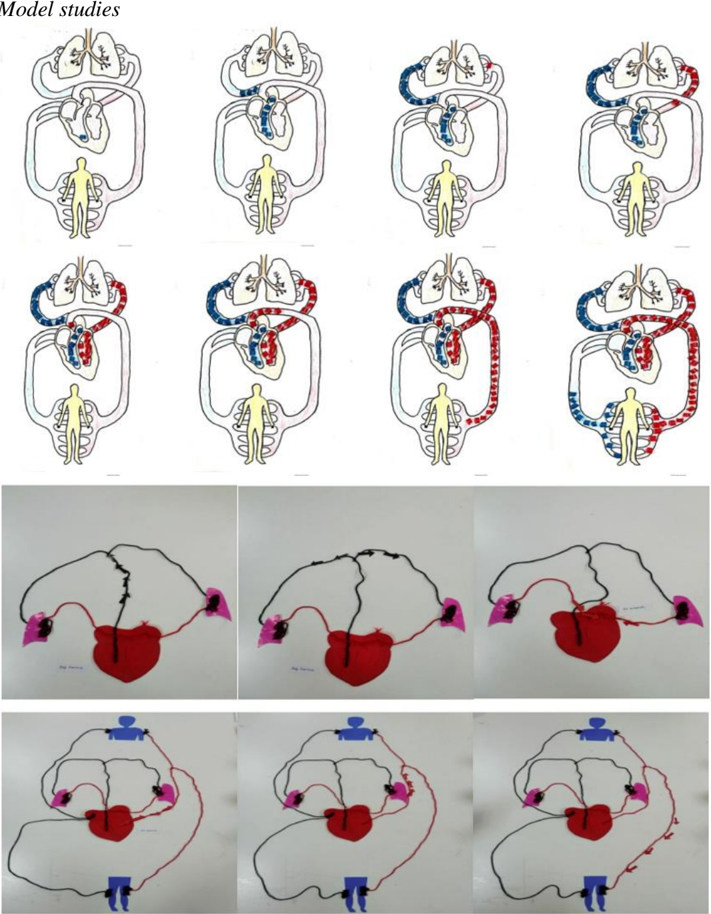
This case study aimed to examine whether slow-motion animation and visual materials provide to enhance mental model developments of preservice science teachers (PSTs). A total of 34 PSTs (16 in visual material group and 18 in slow-motion animation group) participated into the study. A mental model application related to circulatory system subject, an observation form, and an open-ended interview form based on the slow-motion animation process were used to collect data. Content analysis was performed to systematically analyze the data. The results showed that the correct model-correct explanation ratios of the PSTs in the slow-motion animation group were higher than those in the visual material group. Based on the observations, the PSTs performed the slow-motion animation in five steps, and the group generally demonstrated these behaviors at the desired level. PSTs expressed their opinions about the slow-motion animation technique in interviews as learning by doing, having fun while learning, and technology supporting and facilitating learning. Using slow-motion animation in education is recommended since it creates an active learning environment for students.
Overview
The claims and statistics of this paper haven’t been checked yet.
Free: it reads the open-access text and checks the first 5 claims that cite a source we can check. Create a free account to check every claim.
Integrity signals
Registry
Cites
Statistics
Figures
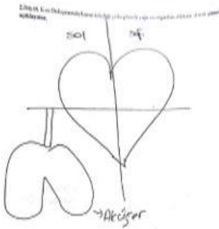
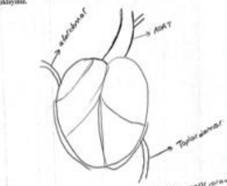
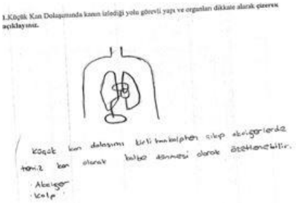
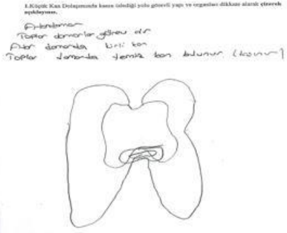
Verification
Claims the paper makes
The claims and statistics of this paper haven’t been checked yet.
Free: it reads the open-access text and checks the first 5 claims that cite a source we can check. Create a free account to check every claim.
Claims other papers make about this one
Each is checked against this paper’s own text: does it say what the citing paper says it does?
The source backs part of the claim, not all of it — or backs it for a different population, condition or comparison.
In the citing paper
“They found that students in the animation group achieved significantly higher rates of correct models and correct explanations than those in the visual material group, once again demonstrating the superiority of animation-based instruction.”
From The Impact of Educational Video Display Styles on Elementary Students’ Learning Outcomes (2026) · cites this paper as [13]
Experimental — accuracy not yet measuredThe cited source says what the claim attributes to it.
In the citing paper
“the result that students have a better performance after watching aligns with Bilginer and Uzun [2022], who found animationbased instruction superior to visual materials in a science context (13).”
From The Impact of Educational Video Display Styles on Elementary Students’ Learning Outcomes (2026) · cites this paper as Bilginer and Uzun [2022]
The cited source says what the claim attributes to it.
In the citing paper
“the result that students have a better performance after watching aligns with Bilginer and Uzun [2022], who found animationbased instruction superior to visual materials in a science context (13).”
From The Impact of Educational Video Display Styles on Elementary Students’ Learning Outcomes (2026) · cites this paper as [13]
Self-check
Percentages, sums and reported differences re-computed from the paper’s own numbers.
The self-check needs the paper’s full text.
Citations
Cites
(2010) · Intellectum (Universidad de La Sabana) · doi:10.1111/j.1467- · Cited by 16,131
Content Analysis: An Introduction to Its Methodology
Krippendorff, K. (2019) · doi:10.4135/9781071878781 · Cited by 15,448
(2013) · Cited by 12,072
Purposeful Sampling in Qualitative Research Synthesis
Suri, H. (2011) · Qualitative Research Journal · doi:10.3316/qrj1102063 · Cited by 2,284
The qualitative interview in IS research: Examining the craft
Myers, M. D., & Newman, M. (2007) · Information and Organization · doi:10.1016/j.infoandorg.2006.11.001 · Cited by 1,941
Schwarz, C. V., Reiser, B. J., Davis, E. A., Kenyon, L., Achér, A., Fortus, D., Shwartz, Y., Hug, B., & Krajcik, J. (2009) · Journal of Research in Science Teaching · doi:10.1002/tea.20311 · Cited by 1,155
A typology of school science models
Harrison, A. G., & Treagust, D. F. (2000) · International Journal of Science Education · doi:10.1080/095006900416884 · Cited by 558
Students Becoming Chemists: Developing Representationl Competence
Kozma, R., & Russell, J. (2005) · Visualization in Science Education · doi:10.1007/1-4020-3613-2_8 · Cited by 508
Metamodeling Knowledge: Developing Students' Understanding of Scientific Modeling
Schwarz, C. V., & White, B. Y. (2005) · Cognition and Instruction · doi:10.1207/s1532690xci2302_1 · Cited by 505
Justi, R. S., & Gilbert, J. K. (2002) · International Journal of Science Education · doi:10.1080/09500690110110142 · Cited by 465
Research works printed but not linked: 20
- Atalay, N. (2015). Slowmation application to student's learning and innovation skills improvement in science course [Unpublished doctoral dissertation]. Anadolu University, Eskişehir.
- Bogiages, C., & Hitt, A. M. (2008). Movie mitosis: Students make stop-animation films to illustrate the process of mitosis. The Science Teacher, 75(9), 36-43. https://doi.org/10.2307/24144165 · doi:10.2307/24144165
- Coll, R. K. (2008). Chemistry learners' prefered mental models for chemical bonding. Journal of Turkish Science Education, 5(3), 22-46.
- Çamloğlu, N. (2014). The effect of slowmation technic on academic success, motivation and academic self efficacy of the students [Unpublished master's thesis]. Akdeniz University, Antalya.
- H.Ş. Ayvacı (Eds.) Fen öğretiminde model ve modelleme [Modeling and modeling in science teaching] (pp. 1-37). PegemA.
- Duit, R., Glynn, S. (1996). Mental Modelling. In G. Welford, J. Osborne and P. Scott (Eds.) Research in science education in Europe (pp. 166-176). The Falmer Press.
- Ekici, E. & Ekici, F. (2011). A new and effective way to use information technologies in science education: slow-motion animations. Elementary Education Online, 10(2), 1-9.
- Gunning, A. M., & Marrero, M. E. (2017). Examining inservice teachers'mental models on teaching science through online learning. The Online Journal of New Horizons in Education-January, 7(1), 103-112.
- Güneş, B.,Gülçiçek, Ç., & Bağcı, N. (2004). Examining the views of science and mathematics instructors in education faculties about modeling and modelling. Journal of Turkish Science Education, 1(1). 35-48.
- Hoban, G. (2005). From claymation to slowmation: A teaching procedure to develop students' science understandings. Teaching Science: Australian Science Teachers Journal, 51(2), 26-30.
- Jablonski, D., Hoban, G., Ransom, H. S., & Ward, K. S. (2015). Exploring the use of "Slowmation" as a pedagogical alternative in science teaching and learning. Pacific-Asian Education Journal, 27, 5-20.
- v11n10p16 · DOI
- Lehrer, R., & Schauble, L. (2006). Scientific thinking and science literacy: Supporting development in learning in contexts. In W. Damon, R. M. Lerner, K. A. Renninger & I. E. Sigel (Eds.), Handbook of child psychology (pp. 153-196).
- Paige, K., Bentley, B., & Dobson, S. (2016). Slowmation: An innovative twenty-first century teaching and learning tool for science and mathematics pre-service teachers. Australian Journal of Teacher Education, 41(2). 1-15. http://doi.org/10.14221/ajte.2016v41n2. · DOI
- Uzun, E. (2015). A research for prospective science teachers' learning with photoelectric modeling and slow motion animation [Unpublished doctoral dissertation)]. Ataturk University, Erzurum.
- Uzun, E., & Karaman, İ. (2015). Modeling of photoelectric effect by means slow motion animation technique and students' views. KSU Journal of Social Sciences, 12(2), 1-10.
- Uzuner, Ö. (2018). The effect of slowmation technique in science education on the secondary school students' achievement towards science lesson, scientific thinking skills and achievement goals [Unpublished master's thesis]. Amasya University, Amasya.
- Uzuner, Ö. N. & Çakır, R. (2019). The effect of slowmation technique on the students' achievement, scientific thinking skills and goal orientations. Cumhuriyet International Journal of Education, 8(2), 323-341.
- Ültay, E., Dönmez Usta, N., & Durmuş, T. (2017). Descriptive content analysis of mental model studies in education. Education for Life, 31(1), 21-40.
- Ünal, G. ve Ergin, Ö. (2006). Science education and models. Journal of National Education, 35(171), 188-196.
Cited by
Kleftodimos, A. (2024) · Digital · doi:10.3390/digital4030031 · Cited by 26
Yassar, R. A., Yulisatria, G., Bhakti, Y. H., & Suhariyanti, M. (2025) · Journal for Lesson and Learning Studies · doi:10.23887/jlls.v8i3.100932 · Cited by 3
Wiji, W. (2025) · Journal of Turkish Science Education · doi:10.36681/tused.2025.005 · Cited by 2
The Impact of Educational Video Display Styles on Elementary Students’ Learning Outcomes
Zeng, Q. (2026) · American Journal of Student Research · doi:10.70251/hyjr2348.43592602
Nurjanah, W. L. (2024) · Repository at Universitas Pendidikan Indonesia (Universitas Pendidikan Indonesia)
Ibrahimi, L., & Gajević, M. (2026) · European Journal of Health and Biology Education · doi:10.29333/ejhbe/19435
Metadata
- Authors
- Bilginer, E. B., & Uzun, E.
- Affiliations
- Kahramanmaraş Sütçü İmam University (TR)
- Corresponding author
- Uzun, Emine
- Venue
- Journal of Pedagogical Research
- Publisher
- Journal of Pedagogical Research
- Published
- 2022-12-12
- ISSN
- 2602-3717 (ISSN-L)
- OpenAlex
- W4312138255
- Semantic Scholar
- a7f7b21ce88e5c20e4c037850823e5fd399bf11c
- Cited by
- 3
- References
- 48
- Citations by year
- 2026: 1 · 2025: 1 · 2024: 1
- FWCI
- 0.46
- Type
- journal article
- Language
- en
- Open access
- diamond
- doi.org
- Licence
- cc-by
- Locations
- Journal of Pedagogical Research (publishedVersion, cc-by)
- DOAJ (DOAJ: Directory of Open Access Journals) (submittedVersion)
- Topics
- Social Sciences › Psychology › Experimental and Cognitive Psychology › Visual and Cognitive Learning Processes
- Social Sciences › Education › Science Education and Pedagogy
- Social Sciences › Education › Science and Education Research
- Keywords
- mental models, pre-service science teachers, visual resources, cardiovascular system, science teacher education, active learning, technology-supported learning, hands-on learning
About these checks
Registry, retraction, Cites and statistics results are computed, not judged, with one exception: a printed reference that no index lists is read once by a model before it counts as a citation error. Claims are extracted by a model and kept only when their quote appears verbatim in the text; each cited source is then checked, with a model’s help, for whether it says what the claim relies on. Those verdicts can be wrong — read the claim’s quote and the cited source before relying on one.
Statistics and arithmetic are recomputed, not judged.
Confidence bands are shown only for fields calibrated on our annotated test set. None is calibrated yet, so no band is shown.
What counts as a claim ›How we measure confidence ›How we check this ›
Are you an author, or do you see a problem with this page? Request a review
Data sources
Bibliographic data: Semantic Scholar, OpenAlex, Crossref.
Contains information from the Semantic Scholar Academic Graph Datasets, made available under the ODC Attribution License (ODC-BY 1.0).
Semantic Scholar’s data is described in: Kinney, R., et al. (2023). The Semantic Scholar Open Data Platform. arXiv:2301.10140.
