

GP-delivered brief weight loss interventions: a cohort study of patient responses and subsequent actions, using conversation analysis in UK primary care
Open accessThe DOI matches its Crossref record; 17 of the 17 references it cites were found in a registry or an index.
Abstract
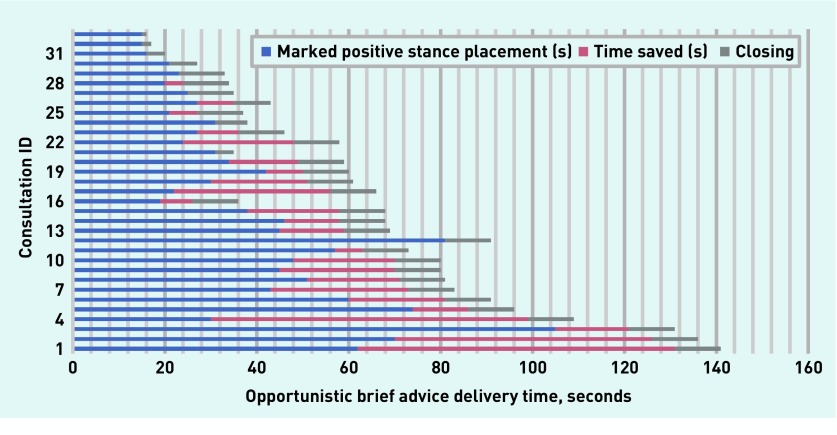
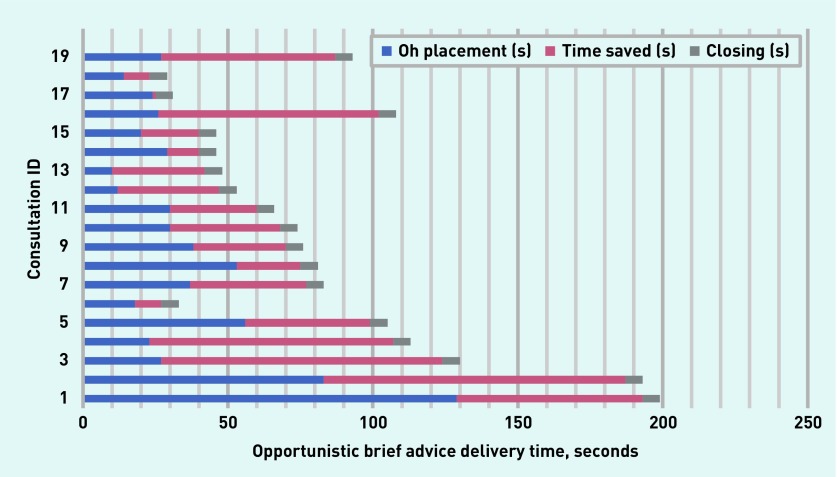
Background: Guidelines encourage GPs to make brief opportunistic interventions to support weight loss. However, GPs fear that starting these discussions will lead to lengthy consultations. Recognising that patients are committed to take action could allow GPs to shorten brief interventions. Aim: To examine which patient responses indicated commitment to action, and the time saved if these had been recognised and the consultation closed sooner. Design and setting: A mixed-method cohort study of UK primary care patients participating in a trial of opportunistic weight management interventions. Method: Conversation analysis was applied to 226 consultation audiorecordings to identify types of responses from patients that indicated that an offer of referral to weight management was well received. Odds ratios (OR) were calculated to examine associations between response types and likelihood of weight management programme attendance. Results: Affirmative responses, for example ‘yes’, displayed no conversational evidence that the referral was well received and showed no association with attendance: ‘yes’ (OR 1.2, 95% confidence interval [CI] = 0.37 to 3.95, P = 0.97). However, ‘oh’-prefaced responses and marked positive responses, for example ‘lovely’, showed conversational evidence of enthusiasm and were associated with higher odds of commercial weight management service attendance. Recognising these could have saved doctors a mean of 31 seconds per consultation. Conclusion: When doctors make brief opportunistic interventions that incorporate the offer of help, ‘oh’-prefaced or marked positive responses indicate enthusiastic acceptance of the offer and a higher likelihood of take-up. Recognising these responses and moving swiftly to facilitate patient action would shorten the brief intervention in many cases.
Overview
The claims and statistics of this paper haven’t been checked yet.
Free: it reads the open-access text and checks the first 5 claims that cite a source we can check. Create a free account to check every claim.
Integrity signals
Registry
Cites
Statistics
Figures
Verification
Claims the paper makes
The claims and statistics of this paper haven’t been checked yet.
Free: it reads the open-access text and checks the first 5 claims that cite a source we can check. Create a free account to check every claim.
Claims other papers make about this one
Each is checked against this paper’s own text: does it say what the citing paper says it does?
The cited source says what the claim attributes to it.
In the citing paper
“As the risk factors for dementia are shared with other non-communicable diseases,17 with established programmes on risk reduction and health promotion (for example, weight management, smoking cessation, and physical activity18–20), primary care professionals are well placed to engage in preventive practice for dementia.”
From Dementia prevention and the GP’s role: a qualitative interview study (2024) · cites this paper as [19]
Self-check
Percentages, sums and reported differences re-computed from the paper’s own numbers.
The self-check needs the paper’s full text.
Citations
Cites
Sequence Organization in Interaction: A Primer in Conversation Analysis
Schegloff, E. A. (2007) · Cambridge University Press eBooks · doi:10.1017/cbo9780511791208 · Cited by 4,684
Primary Care Physicians’ Attitudes about Obesity and Its Treatment
Foster, G. D., Wadden, T. A., Makris, A. P., Davidson, D., Sanderson, R. S., Allison, D. B., & Kessler, A. (2003) · Obesity Research · doi:10.1038/oby.2003.161 · Cited by 744
Transcribing for Social Research
Hepburn, A., & Bolden, G. B. (2017) · SAGE Publications Ltd eBooks · doi:10.4135/9781473920460 · Cited by 410 · cited 1×
“48 positive 2 this response 3 referral 4 PAT: Oh right yeah I’ll – 3 (16) 23 (55) try anything,”
BackgroundDrew, P., Chatwin, J., & Collins, S. (2001) · Health Expectations · doi:10.1046/j.1369-6513.2001.00125.x · Cited by 365
The News Delivery Sequence: Bad News and Good News in Conversational Interaction
Maynard, D. W. (1997) · Research on Language & Social Interaction · doi:10.1207/s15327973rlsi3002_1 · Cited by 351
Problems and Prospects in the Study of Physician-Patient Interaction: 30 Years of Research
Heritage, J., & Maynard, D. W. (2006) · Annual Review of Sociology · doi:10.1146/annurev.soc.32.082905.093959 · Cited by 347
Screening and brief intervention for obesity in primary care: a parallel, two-arm, randomised trial
Aveyard, P., Lewis, A., Tearne, S., Hood, K., Christian-Brown, A., Adab, P., Begh, R., Jolly, K., Daley, A., Farley, A., et al. (2016) · The Lancet · doi:10.1016/s0140-6736(16)31893-1 · Cited by 297
Self-citationProsodic features of bad news and good news in conversation
Freese, J., & Maynard, D. W. (1998) · Language in Society · doi:10.1017/s0047404500019850 · Cited by 238
Non-antibiotic treatment recommendations: delivery formats and implications for parent resistance
Stivers, T. (2005) · Social Science & Medicine · doi:10.1016/j.socscimed.2004.06.040 · Cited by 178
(1995) · PubMed · Cited by 115
Research works printed but not linked: 2
- Robinson JD Thompson TL Parrot R Nussbaum JF Conversation analysis and health communication The Routledge handbook of health communication. 2007 New York, NY Routledge 32
- Heritage J Sefi S Drew P H J Dilemmas of advice: aspects of the delivery and reception of advice in interactions between health visitors and first-time mothers. Talk at work: interaction in institutional settings studies in interactional sociolinguistics 1992 Cambridge Cambridge University Press 359 417
Cited by
Gaps to bridge: Misalignment between perception, reality and actions in obesity
Caterson, I. D., Alfadda, A. A., Auerbach, P., Coutinho, W., Cuevas, A., Dicker, D., Hughes, C., Iwabu, M., Kang, J., Nawar, R., et al. (2019) · Diabetes, Obesity and Metabolism · doi:10.1111/dom.13752 · Cited by 210
“Recognizing positive patient responses to conversational cues may allow for therapeutic intervention or development of a management plan.(9,15,31) Our data suggest that PwO are motivated to engage in weight loss efforts and would like their HCPs to initiate a conversation about weight.”
BackgroundAlbury, C., Hall, A., Syed, A., Ziébland, S., Stokoe, E. H., Roberts, N. W., Webb, H., & Aveyard, P. N. (2019) · BMC Family Practice · doi:10.1186/s12875-019-0992-x · Cited by 83
Self-citationKeyworth, C., Epton, T., Goldthorpe, J., Calam, R. M., & Armitage, C. J. (2020) · PLoS ONE · doi:10.1371/journal.pone.0233399 · Cited by 60
Dementia prevention and the GP’s role: a qualitative interview study
Jones, D., Drewery, R., Windle, K., Humphrey, S., & de Paiva, A. F. (2024) · British Journal of General Practice · doi:10.3399/bjgp.2023.0103 · Cited by 27
Leydon, G., & Barnes, R. (2019) · Wiley eBooks · doi:10.1002/9781119410867.ch10 · Cited by 26
Lifestyle advice in UK Primary Care consultations: Doctors’ use of conditional forms of advice
Connabeer, K. (2021) · Patient Education and Counseling · doi:10.1016/j.pec.2021.03.033 · Cited by 23
Albury, C., Webb, H., Stokoe, E. H., Ziébland, S., Koshiaris, C., Lee, J. J., & Aveyard, P. N. (2023) · Annals of Internal Medicine · doi:10.7326/m22-2360 · Cited by 26
“Therefore, we coded only GP action before these responses, which could generate this positive or negative reception (43) (illustrated in Supplement Table 2 ).”
BackgroundSelf-citationLanguage and persuasion: A discursive psychological approach
Humă, B. (2023) · Social and Personality Psychology Compass · doi:10.1111/spc3.12755 · Cited by 35
“…or discourse particles, individuals mark a response as, for example, a “qualified acceptance” (Kendrick & Torreira, 2015, p. 273) that conveys low commitment to the agreed-upon course of action or as an “enthusiastic acceptance” (Albury et al., 2018, p. 646) that conveys a clear positive stance.”
BackgroundBourhill, J., Lee, J. J., Frie, K., Aveyard, P. N., & Albury, C. (2020) · Annals of Behavioral Medicine · doi:10.1093/abm/kaaa046 · Cited by 16
“, “yes” or “yes please”) or a display of “marked positive stance” [29] (e.”
Self-citationDambha-Miller, H., Day, A., Kinmonth, A. L., & Griffin, S. J. (2021) · Family Practice · doi:10.1093/fampra/cmaa086 · Cited by 12
“Previous evidence in UK primary care cohorts suggest that opportunistic discussions about weight loss should occur more frequently as they can lead to adherence to weight loss activities (27).”
BackgroundHayes, J., Lachman, P. I., Edbrooke-Childs, J. H., Stapley, E., Wolpert, M., & Deighton, J. (2019) · BMJ Open · doi:10.1136/bmjopen-2018-023437 · Cited by 12
Achieving patient weighing in UK primary care. A conversation analytic study
Ross, J., Poduval, S., Albury, C., Lau, A. Y. S., Whitaker, N., & Stevenson, F. A. (2023) · SSM - Qualitative Research in Health · doi:10.1016/j.ssmqr.2023.100384 · Cited by 4
“…et al., 2001) and a small number of studies have used CA in this way to examine how weight is discussed in real-life settings (Pillet-Shore, 2006, Wiggins, 2009, Webb, 2010, Albury et al., 2018, Speer & McPhillips, 2018, Thille, 2019, Tremblett, Poon et al., 2022, Tremblett, Webb et al., 2022)).”
BackgroundSelf-citationSocial and environmental determinants of health
Kirtchuk, L., & Wylie, A. (2021) · Elsevier eBooks · doi:10.1016/b978-0-12-821573-9.00001-1 · Cited by 8
When ‘yes’ means ‘no’: why the small details of clinical interactions matter
Swinglehurst, D., & Atkins, S. (2018) · British Journal of General Practice · doi:10.3399/bjgp18x698441 · Cited by 4
Samuel, M., Park, R. Y., Eastwood, S. V., Eto, F., Morton, C. E., Stow, D., Bacon, S., Goldacre, B. M., Mehrkar, A., Morley, J., et al. (2024) · British Journal of General Practice · doi:10.3399/bjgp.2023.0492 · Cited by 3
“27 The population subgroups that were at greatest risk of unhealthy patterns of weight gain during the pandemic and may consequently benefit the most from weight-management interventions have been highlighted.”
BackgroundDelivering high value therapies in COPD: the secret is in the marketing
Ashdown, H. F., & STEINER, M. C. (2019) · European Respiratory Journal · doi:10.1183/13993003.00215-2019 · Cited by 3
Formulating and managing neighbourhood complaints: a comparative study of service provision
Alexander, M. (2018) · Loughborough University Institutional Repository (Loughborough University) · Cited by 4
Hilder, J., Gray, L., Stubbe, M. H., Duncan, S., & Dowell, A. C. (2020) · Family Practice · doi:10.1093/fampra/cmaa122 · Cited by 2
Ho, E. Y., Leung, G. Y., & Jih, J. (2022) · Health Communication · doi:10.1080/10410236.2022.2071390 · Cited by 1
“Some work has examined the ways that attending to talk and affirmations (Albury et al., 2018) as well as talk about non-clinical matters (Bergen, 2020) can advance behavioral change.”
Joyce, J. B., Hajizadeh, A., Begh, R. A., Jolly, K. B., Jebb, S. A., & Aveyard, P. N. (2025) · Clinical Obesity · doi:10.1111/cob.70020 · Cited by 1
“Communicating the strong body of evidence in favour of brief opportunistic weight management referrals, 17,41 and continued engagement in weight management referrals in spite of reluctance may, over time, reduce these concerns.”
Self-citationLi, X., Tian, Y., Li, B., Liu, L., & Su, Y. (2025) · Health Communication · doi:10.1080/10410236.2025.2499711 · Cited by 1
“…empathy (Wu, 2021), repair (Chinn, 2022; McCabe & Healey, 2018), justification (Li et al., 2024) in different scenarios including primary settings (Albury et al., 2018; Ross et al., 2024), inpatient and outpatient settings (S. Clark & Hudak, 2011; Land et al., 2017), and those for therapy of…”
Stubbe, M. H., Macdonald, L., Tester, R., Gray, L., Hilder, J., Dew, K. P., & Dowell, T. (2020) · Communicating in professions and organizations · doi:10.1007/978-3-030-41668-3_7 · Cited by 1
Communication with the relatives and friends of imminently dying patients in a hospice
Anderson, R. (2020) · UCL Discovery (University College London)
Complexity and coding lifestyle talk in GP consultations
White, S. J., Kruszelnicki, L., Grunsell, T., & Gilligan, C. (2025) · Health Literacy and Communication Open · doi:10.1080/28355245.2024.2444602 · Cited by 1
Weight-related conversations with patients: reducing stigma and promoting healthful change
Mulrooney, H. M. (2025) · Practice Nursing · doi:10.12968/pnur.2025.0089
Yang, X., Begh, R. A., Lindson, N., Albury, C., Barnes, R., Dyson, J., Morrison, L. G., Bradbury, K. J., Molodynski, A., Coleman, T. J., et al. (2026) · Patient Education and Counseling · doi:10.1016/j.pec.2026.109744
Self-citationHagiwara, N., Cheng, S., Bú, E. A. D., Denton, A. H., & Krukowski, R. A. (2026) · Patient Education and Counseling · doi:10.1016/j.pec.2026.109749
Joyce, J. B., Newbert, C., Guess, N. D., Fryer, K., Mitchell, C. A., Morris, E., Aveyard, P. N., Jebb, S. A., & Albury, C. (2026) · PEC Innovation · doi:10.1016/j.pecinn.2026.100506
“These insights highlighted the importance of positively delivered advice [36] coupled with language choices that assume the patient will take up the advice/recommendation (known as ‘high-entitled ’ requests) [37,38] e.g. “ It's really convenient for you, so let's give this programme a go ” .”
Self-citation
Metadata
- Authors
- Albury, C., Stokoe, E., Ziebland, S., Webb, H., & Aveyard, P.
- Affiliations
- University of Oxford (GB)
- Loughborough University (GB)
- Venue
- British Journal of General Practice
- Published
- 2018-08-13
- Volume
- 68
- Issue
- 674
- Pages
- e646-e653
- ISSN
- 0960-1643 (ISSN-L)
- 1478-5242
- PMC
- PMC6104861
- OpenAlex
- W2885572867
- Cited by
- 28
- References
- 17
- Citations by year
- 2026: 3 · 2025: 4 · 2024: 1 · 2023: 4 · 2022: 1 · 2021: 2 · 2020: 6 · 2019: 5 · 2018: 2
- FWCI
- 7.43
- Type
- journal article
- Language
- en
- Open access
- hybrid
- doi.org
- Licence
- cc-by
- Locations
- British Journal of General Practice (publishedVersion, cc-by)
- Europe PMC (PubMed Central) (publishedVersion, other-oa)
- PubMed Central (publishedVersion, cc-by)
- PubMed (publishedVersion)
- Loughborough University Institutional Repository (Loughborough University) (submittedVersion, cc-by)
- Loughborough University Research Repository (Loughborough University) (submittedVersion, cc-by)
- Funders
- Wellcome Trust
- Alzheimer's Society
- Cancer Research UK
- National Institute for Health and Care Research (NF-SI-0617-10064, NF-SI-0512-10128, SPCR-081)
- British Heart Foundation
- Diabetes UK
- Public Health Agency
- Directorate for Biological Sciences
- Medical Research Council (MR/J000515/1)
- Engineering and Physical Sciences Research Council
- Economic and Social Research Council
- World Cancer Research Fund (MR/J000515/1)
- NIHR School for Primary Care Research
- Topics
- Health Sciences › Medicine › Public Health, Environmental and Occupational Health › Obesity and Health Practices
- Health Sciences › Health Professions › General Health Professions › Patient-Provider Communication in Healthcare
- Social Sciences › Arts and Humanities › Language and Linguistics › Language, Discourse, Communication Strategies
- Keywords
- patient response, consultation time, physician-patient communication, primary care, obesity
- MeSH terms
- United Kingdom, Humans, Obesity, Physician-Patient Relations, Primary Health Care, Referral and Consultation, Video Recording, Cohort Studies, Patient Satisfaction, Weight Reduction Programs
About these checks
Registry, retraction, Cites and statistics results are computed, not judged, with one exception: a printed reference that no index lists is read once by a model before it counts as a citation error. Claims are extracted by a model and kept only when their quote appears verbatim in the text; each cited source is then checked, with a model’s help, for whether it says what the claim relies on. Those verdicts can be wrong — read the claim’s quote and the cited source before relying on one.
Statistics and arithmetic are recomputed, not judged.
Confidence bands are shown only for fields calibrated on our annotated test set. None is calibrated yet, so no band is shown.
What counts as a claim ›How we measure confidence ›How we check this ›
Are you an author, or do you see a problem with this page? Request a review
Data sources
Bibliographic data: Semantic Scholar, OpenAlex, Crossref.
Contains information from the Semantic Scholar Academic Graph Datasets, made available under the ODC Attribution License (ODC-BY 1.0).
Semantic Scholar’s data is described in: Kinney, R., et al. (2023). The Semantic Scholar Open Data Platform. arXiv:2301.10140.
